


Report Overview
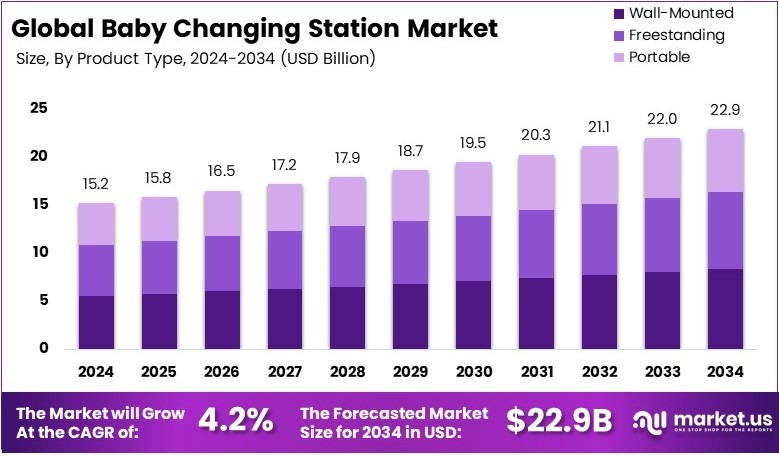
The Global Baby Changing Station Market size is expected to be worth around USD 22.9 Billion by 2034, from USD 15.2 Billion in 2024, growing at a CAGR of 4.2% during the forecast period from 2025 to 2034.
A Baby Changing Station is a designated facility for parents to change infants’ diapers. It is usually found in public restrooms, malls, or family-friendly venues. The design focuses on safety, convenience, and hygiene. These stations often include a safe platform and waste disposal for used diapers.
The Baby Changing Station Market involves the sale and distribution of these facilities. Businesses offer different models for various settings. The market covers design, production, and supply chain management. This industry serves public, private, and commercial clients looking to provide family amenities.
Growing birth rates fuel demand for baby changing stations. As of 2024, 132 million babies are born each year, creating a significant market opportunity. Additionally, eco-conscious parents push for sustainable designs. However, over 100 billion baby wipes in landfills annually highlight the need for environmental innovation in this sector.
In developed regions, the market is nearing saturation, with most public spaces already equipped. By contrast, emerging economies still offer untapped potential. Competition is high, with brands differentiating on features like ease of use, safety, and material sustainability. New entrants face challenges due to the dominance of established players.
Globally, baby changing stations contribute to a more inclusive public infrastructure. Locally, they improve the reputation of businesses like restaurants and malls, attracting families. On a larger scale, sustainable products could reduce waste and plastic pollution, addressing the microplastic crisis caused by discarded baby wipes in landfills.
Governments encourage baby-friendly facilities through funding and policies. Regulations in many countries require public venues to install changing stations, boosting market growth. For example, laws mandating accessible restrooms directly increase demand for such products. These investments also align with sustainability goals, promoting greener designs and materials.
Key Takeaways
- The Baby Changing Station Market was valued at USD 15.2 Billion in 2024, and is expected to reach USD 22.9 Billion by 2033, with a CAGR of 4.2%.
- In 2024, Wall-Mounted Baby Changing Stations dominates the type segment with 36.4% due to its secure installation and space-saving design.
- In 2024, Laminate dominates the material segment with 26.2% because of its durability and aesthetic appeal in household settings.
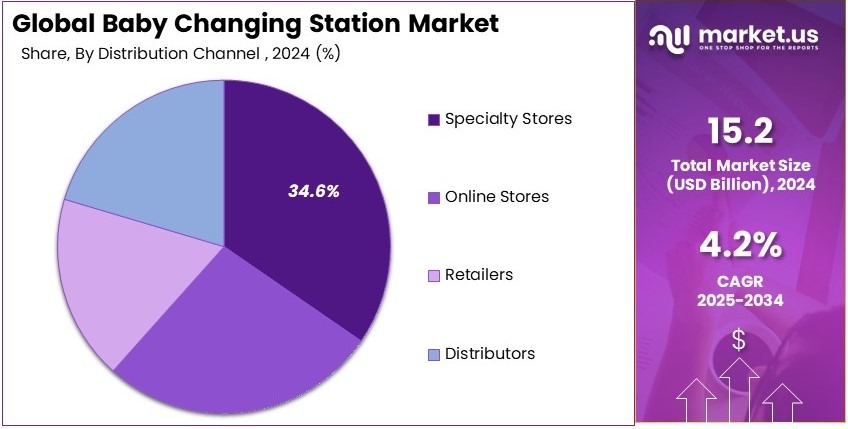
- In 2024, Specialty Stores lead the distribution channel with 34.6% owing to their specialized services and expert product selections.
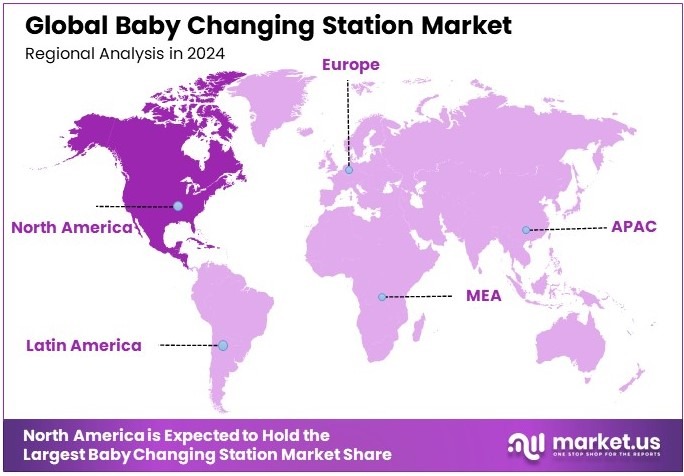
- In 2024, North America is the dominant region, reflecting significant market presence and leading revenue contributions.
Type Analysis
Wall-mounted changing stations dominate with 36.4% due to their widespread installation in public and private facilities.
Wall-mounted baby changing stations have emerged as the leading product type in the baby changing station market, capturing a significant 36.4% market share. This dominance is primarily due to their convenience and space-saving features, which make them ideal for installation in both public restrooms and compact private facilities.
They are commonly found in shopping malls, airports, and restaurants, where space optimization is crucial. The design of these stations typically involves a fold-down mechanism, which allows them to be retracted when not in use, further enhancing the usability of the space.
Freestanding baby changing stations also play a crucial role in the market, particularly in settings that require mobility within the facility, like in banquet halls or large offices. These units are versatile but typically occupy more space and are less common than wall-mounted types.
Portable baby changing stations are essential for travel or outdoor activities, offering a temporary solution for caregivers on the move. They contribute to market growth by addressing the need for convenient, on-the-go changing solutions that are lightweight and collapsible.
Material Analysis
Laminate dominates with 26.2% due to its durability and aesthetic flexibility.
In the material segment, laminate baby changing stations lead with a 26.2% share, favored for their durability and ease of maintenance. Laminate materials are capable of withstanding heavy use and are resistant to stains and water, making them ideal for high-traffic public bathrooms.
Additionally, laminate offers aesthetic versatility, with a range of finishes that can mimic more expensive materials like wood or stone, thus enhancing the interior decor without substantial costs.
Plastic, as another material type, is widely used due to its lightweight and cost-effective properties. It is particularly popular in less demanding environments or where budget constraints are more stringent.
Stainless steel changing stations are prized for their robust construction and modern appearance, often used in high-end establishments where style and longevity are paramount. Wood and aluminum materials are less common but serve niche markets that prioritize natural aesthetics or desire a distinctive look.
Distribution Channel Analysis
Specialty stores dominate with 34.6% due to specialized customer service and product variety.
The distribution channel of specialty stores is the most significant, holding a 34.6% share in the market. These stores are preferred for their specialized customer service and wide range of baby changing station products, catering to discerning customers who seek expert advice and a tailored shopping experience.
Specialty stores typically offer a variety of options in terms of designs, materials, and brands, making it easier for customers to find products that specifically meet their needs and preferences.
Online stores are increasingly popular due to the convenience of home shopping and the breadth of products available. They are crucial for reaching a broader customer base, including those in remote areas.
Retailers and distributors also contribute to the market by offering widespread availability of changing stations in various local and international markets, thus supporting the distribution chain and ensuring product accessibility across different regions.
Key Market Segments
By Product Type
- Wall-Mounted Baby Changing Stations
- Freestanding Baby Changing Stations
- Portable Baby Changing Stations
By Material Type
- Plastic
- Stainless Steel
- Laminate
- Wood
- Aluminum
By Distribution Channel
- Online Stores
- Specialty Stores
- Retailers
- Distributors
Driving Factors
Population Growth and Design Innovation Drives Market Growth
Increasing birth rates and a focus on ergonomic designs are key drivers for the Baby Changing Station Market. These factors encourage companies to innovate and meet consumer needs. As families grow, the demand for safe and convenient baby products rises. In addition, public places seek to enhance family-friendly amenities, which boosts market expansion.
Awareness about hygiene drives more establishments to include proper changing facilities. For example, a large shopping mall in a metropolitan area recently upgraded its baby stations to provide a safer and cleaner environment for parents. This change not only attracts more visitors but also builds a reputation for child-friendly spaces.
Ergonomic design and safety standards ensure durability and ease of use. By considering these factors, manufacturers can create products that align with consumer expectations. With innovative solutions like adjustable heights and secure locking mechanisms, companies address multiple needs at once.
Restraining Factors
High Costs and Safety Concerns Restraint Market Growth
High costs associated with advanced baby stations restrain market expansion. Limited availability in rural areas and safety concerns create further hurdles. These restraining factors slow adoption in smaller markets. For instance, a regional hospital may hesitate to invest in high-end stations due to budget constraints.
Space and layout dependency complicate installations, especially in historic buildings where renovations are challenging. On the contrary, these factors serve as caution for manufacturers, pushing them to balance cost and safety. They must ensure materials meet safety standards without escalating prices.
Awareness campaigns can help reduce hesitance among consumers and institutions. For example, a local government initiative might educate about affordable, safe options. This highlights the need for affordable design without compromising quality. By addressing cost and safety, stakeholders can work toward solutions that ease these restraints.
Growth Opportunities
Portable Solutions and Smart Features Provides Opportunities
The development of portable and smart changing stations opens new avenues for growth. Expanding into healthcare facilities and maternity centers presents significant opportunities. As demand rises for smart features like automated cleaning or electronic monitoring, players can respond with innovative solutions.
For instance, a healthcare provider might integrate compact, smart stations to enhance patient care. The market can benefit from eco-friendly and sustainable designs that appeal to environmentally conscious consumers. By introducing portable models, companies can cater to varying space requirements and mobility needs.
Similarly, focusing on compact designs aids in locations with limited space. Rising interest in smart stations encourages manufacturers to embed sensors and digital interfaces that improve usability. As a result, products become more appealing to modern consumers.
Emerging Trends
Advanced Materials and AI Solutions Are Latest Trending Factor
Anti-microbial and easy-to-clean materials are trending in baby station design. These trends meet rising hygiene concerns. Multi-functional solutions with storage options also gain popularity. For example, a new station model might combine diaper changing space with built-in storage for wipes and clothes.
This trend reflects consumer demand for convenience and safety. Similarly, sleek and modern designs suit public spaces where aesthetics matter. In addition, AI-driven features are emerging. Companies are now embedding smart technology to enhance usability.
For instance, sensors could automatically adjust height for different users, improving safety. Such innovations make stations more user-friendly and efficient. As these materials and tech become mainstream, they set new industry standards.
Regional Analysis
North America Dominates with Major Market Share
North America leads the Baby Changing Station Market with a significant share, capitalizing on strong infrastructure for public facilities and high standards of parental care. This dominance is supported by widespread adoption in numerous public and private spaces, such as shopping centers, airports, and restaurants, which are prioritizing family-friendly amenities.
The region benefits from a well-established retail sector and stringent safety regulations, which ensure the availability and safety of baby changing stations. Additionally, cultural trends towards family inclusivity in public spaces and ongoing renovations in commercial establishments contribute to the market strength.
The future influence of North America in the Baby Changing Station Market looks promising. Anticipated growth in commercial real estate and increased emphasis on family-friendly policies in business environments are expected to drive further adoption. The region’s focus on inclusive and accessible public facilities also suggests a continuing rise in market share.
Regional Mentions:
- Europe: Europe maintains a strong position in the Baby Changing Station Market, driven by high safety standards and progressive family-centric public policies. The region is known for its focus on child-friendly facilities in public venues, contributing to steady market expansion.
- Asia Pacific: Asia Pacific shows significant growth in the Baby Changing Station Market, fueled by rapid urban development and increasing investments in public infrastructure. Countries like Japan and South Korea are enhancing family-oriented public amenities, boosting regional market growth.
- Middle East & Africa: Middle East and Africa are gradually adopting more baby changing stations, with a focus on improving public infrastructure for families. Investments in tourism and commercial sectors are likely to increase the demand for such facilities in the region.
- Latin America: Latin America is witnessing growing adoption of baby changing stations as part of efforts to modernize and internationalize public and commercial facilities. This development is particularly noticeable in shopping malls and new commercial complexes.
Key Regions and Countries Covered in the Report
- North America
- US
- Canada
- Europe
- Germany
- France
- The UK
- Spain
- Italy
- Rest of Europe
- Asia Pacific
- China
- Japan
- South Korea
- India
- Australia
- Rest of APAC
- Latin America
- Brazil
- Mexico
- Rest of Latin America
- Middle East & Africa
- South Africa
- Saudi Arabia
- UAE
- Rest of MEA
Competitive Landscape
In the Baby Changing Station Market, four major companies stand out due to their strong product offerings, innovative designs, and solid market presence. Koala Kare Products leads with its diverse range of durable and safe wall-mounted and countertop stations, favored in high-traffic public areas like airports and malls.
Next, Rubbermaid Commercial Products excels with its ergonomic and antimicrobial designs, making its changing stations a staple in commercial and institutional settings. American Specialties, Inc. (ASI) offers both surface-mounted and recessed models, focusing on space efficiency and aesthetic appeal to meet the demands of busy public spaces.
Foundations Worldwide caters to the premium market segment, integrating advanced features such as privacy enhancements and built-in sanitary dispensers, appealing to upscale venues and luxury establishments.
Together, these companies dominate the market by continuously innovating and improving their product lines to meet stringent safety standards and consumer expectations for convenience and functionality. Their leadership and commitment to quality have set high industry standards and driven market growth.
Major Companies in the Market
- Angelcare
- Boppy
- Chicco
- Dream On Me
- Euronics
- Evenflo
- Foundations Worldwide
- Graco
- Jonti-Craft
- Koala Kare Products
- Munchkin
- Safety 1st
- Skip Hop
Recent Developments
- NYC Parks Department: On May 2024, New York City’s Parks Department installed 600 new baby changing tables in public park restrooms, increasing the total to over 1,200. This initiative ensures that 90% of park restrooms, including men’s, women’s, and gender-neutral facilities, are now equipped with these amenities, enhancing convenience for parents and caregivers.
- Kempegowda International Airport: On July 2022, Kempegowda International Airport (KIA) in Bangalore introduced diaper-changing facilities in men’s restrooms. This move promotes gender inclusivity, acknowledges the evolving role of fathers in childcare, and aims to provide equal parenting support.









