


Report Overview
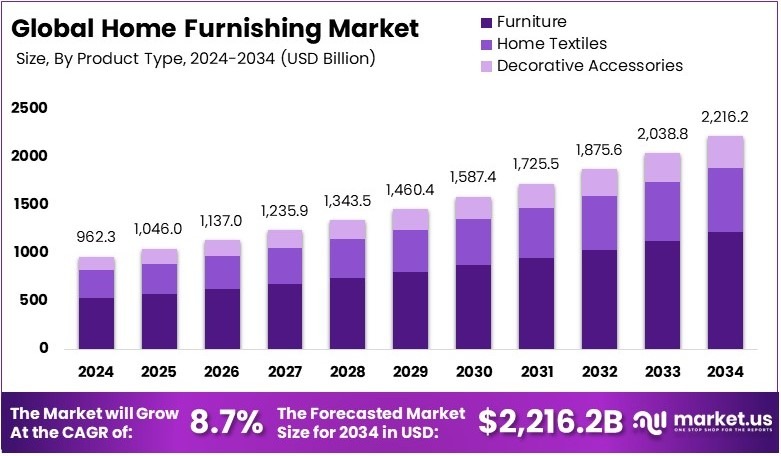
The Global Home Furnishing Market size is expected to be worth around USD 2,216.2 Billion by 2034, from USD 962.3 Billion in 2024, growing at a CAGR of 8.7% during the forecast period from 2025 to 2034.
Home Furnishing refers to items used to decorate and equip homes. It includes furniture, textiles, and decorative objects. The focus is on enhancing comfort, aesthetics, and functionality. Furnishings reflect style preferences and can be customized for various living spaces.
The Home Furnishing Market comprises businesses that design, produce, and sell home decor items. It covers furniture, textiles, lighting, and accessories. The market serves retailers, designers, and consumers seeking to style their living environments. It spans both online and offline sales channels.
Home furnishing enhances living spaces through furniture, home decor, and appliances. A 2022 study by the National Association of Home Builders showed new homeowners spend $12,000 on renovations, $5,000 on furnishings, and $4,000 on appliances within the first year. This reflects the growing importance of creating functional and stylish interiors, driven by rising incomes and a focus on personalized spaces.
The home furnishing market is competitive and dynamic. Social media and home improvement shows boost interest in interior design. According to the U.S. Bureau of Labor Statistics, interior designer jobs are projected to grow by 4% from 2022 to 2032, indicating sustained demand. Emerging trends like open layouts and eco-friendly designs provide opportunities for innovation in this evolving market.
Rising incomes create more disposable funds for home improvement. According to the U.S. Bureau of Economic Analysis, personal incomes increased by $50.5 billion in August, encouraging spending on furnishings and decor. Additionally, 66% of homeowners opt for cost-effective updates like fresh paint, showcasing how affordability drives purchasing decisions alongside style and functionality.
Globally, home furnishing shapes how people experience their environments. Locally, it drives economic activity, supporting furniture manufacturers and retailers. For example, the U.S. restaurant industry, forecasted to achieve $1 trillion in sales by the end of 2024, requires stylish furniture to attract diners. This highlights how furnishings impact broader sectors beyond individual homes.
Key Takeaways
- The Home Furnishing Market was valued at USD 962.3 Billion in 2024, and is expected to reach USD 2,216.2 Billion by 2033, with a CAGR of 8.7%.
- In 2024, Furniture dominates the product type segment with 55.2% due to its essential role in household and office setups.
- In 2024, Residential leads the end-user segment with 68.3% reflecting a high demand for home furnishing products in private homes.
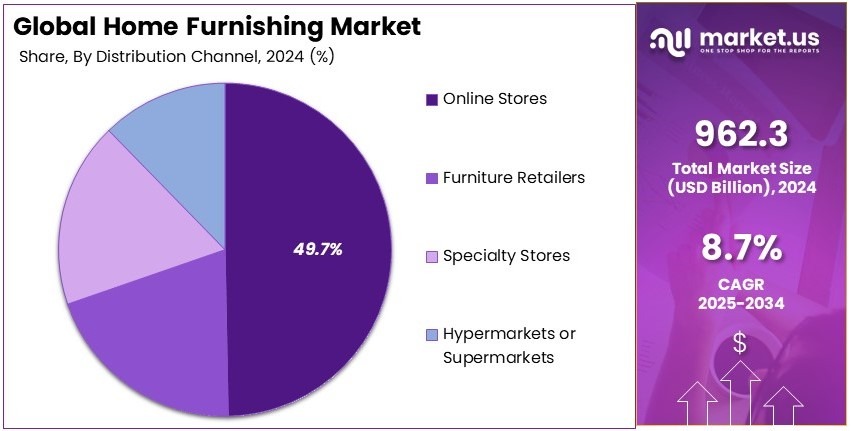
- In 2024, Online Stores lead the distribution channel with 49.7% driven by convenience and expanding digital retail.
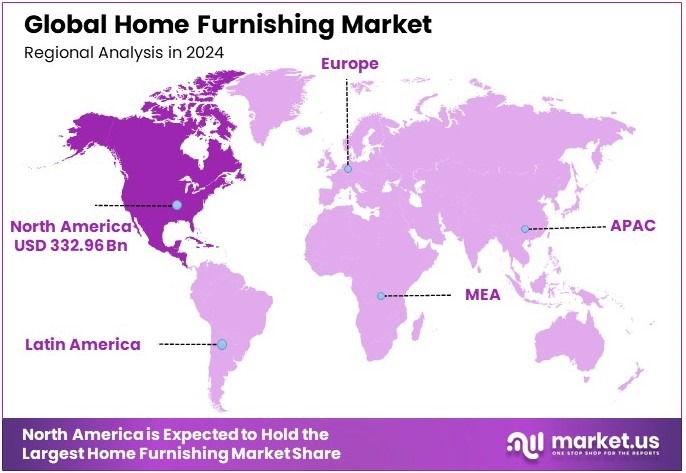
- In 2024, North America is a key region with 34.6% market share and a value of USD 332.96 Billion, highlighting its significant contribution.
Product Type Analysis
Furniture dominates with 55.2% due to its essential role in both functionality and aesthetics within spaces.
Furniture is the leading sub-segment in the home furnishing market, holding a substantial 55.2% of the market share. This dominance is largely due to the fundamental need for furniture in residential and commercial spaces, serving both functional and aesthetic purposes.
Pieces like sofas, beds, tables, and chairs are essential in everyday life, providing comfort and convenience while also defining the style and usability of living and workspaces. The growth in the housing market and the rise in home personalization trends have further bolstered the demand for high-quality and customized furniture.
Home textiles, which include items like rugs, curtains, and bed linens, contribute to the comfort and visual appeal of indoor environments. They play a critical role in the overall ambiance of a room and are essential for personalizing space to reflect individual tastes and themes.
Decorative accessories, though smaller in share, significantly influence the market by allowing for quick and often cost-effective room transformations. These items include lamps, wall art, and other decor pieces that add character and style to interiors.
End-User Analysis
Residential dominates with 68.3% due to the growing demand for personalized living spaces.
The residential sector is the most significant end-user in the home furnishing market, with a commanding 68.3% share. This segment’s dominance is driven by increasing homeownership rates, coupled with a rising interest in home decor influenced by digital media platforms and home improvement shows.
As families grow and change, so do their living spaces, which continually drives the demand for new and updated home furnishings. Residential consumers tend to invest in quality furniture and decor that will offer comfort and durability over time, supporting sustained growth in this segment.
The commercial sector, while smaller, is also vital as businesses continually update their interiors to attract and retain customers and employees.
Whether it’s a boutique hotel requiring unique furnishings to enhance guest experience or an office space needing functional furniture for its workforce, the commercial sector remains a crucial part of the home furnishing market.
Distribution Channel Analysis
Online Stores dominate with 49.7% due to the convenience and wide selection available.
Online stores have become the dominant distribution channel in the home furnishing market, capturing 49.7% of the market share. This dominance is attributed to the convenience of shopping from home, the ability to compare prices and styles quickly, and the expansive range of products available online.
E-commerce platforms have made it easier for consumers to access a wide array of furnishings, from standard pieces to custom and luxury items, often at more competitive prices than traditional retail settings.
Furniture retailers are integral to the market, providing consumers the opportunity to see and feel the furniture before making a purchase, which is particularly important for larger or more expensive items.
Specialty stores focus on specific types of home furnishings, offering expertise and specialized selections that attract discerning shoppers. Hypermarkets and supermarkets also play a role, especially for budget-conscious consumers looking for convenience and competitive pricing on home essentials.
Key Market Segments
By Product Type
- Furniture
- Home Textiles
- Decorative Accessories
By End-User
- Residential
- Commercial
By Distribution Channel
- Online Stores
- Furniture Retailers
- Specialty Stores
- Hypermarkets or Supermarkets
Driving Factors
Rising Disposable Income and Urbanization Drives Market Growth
Rising disposable income and rapid urbanization fuel the growth of the Home Furnishing Market. As people earn more and move into cities, they seek stylish and comfortable home decor. These factors boost demand for personalized and customizable furnishings.
Interior design services and home makeovers further stimulate the market. For example, a family moving into a new urban apartment may invest in custom furniture to reflect their taste and lifestyle.
The expansion of online retail platforms also enhances market reach. Consumers can browse a wide variety of products from home comfort to luxury pieces. Online stores provide convenience and often lower prices, which appeals to a broader audience. This trend pushes manufacturers and retailers to innovate and offer unique designs.
Furthermore, urban living often requires space-efficient and smart solutions. Companies respond by designing multifunctional furniture that fits compact spaces. The combined effect of higher incomes, urban lifestyles, and digital shopping drives market expansion.
Restraining Factors
Intense Competition and Economic Fluctuations Restrain Market Growth
Intense competition among manufacturers and retailers poses significant challenges in the Home Furnishing Market. Many brands vie for consumer attention, often leading to price wars. These competitive pressures can shrink profit margins. For example, a small retailer might struggle to differentiate itself in a crowded market.
Limited awareness of sustainable and eco-friendly products also restrains growth. Some consumers are unaware of the benefits of green furnishings. Dependency on the real estate and construction sectors further ties market health to broader economic conditions. Fluctuating economies can reduce consumer spending on home decor, making companies cautious.
In addition, supply chain issues or construction slowdowns impact demand. Economic uncertainty may lead consumers to postpone purchases. These factors create a complex environment for decision-makers.
Growth Opportunities
Smart and Sustainable Innovations Provide Opportunities
The development of smart and connected home furnishings opens up vast opportunities in the market. Consumers now seek furniture that integrates technology for comfort and convenience. For example, a smart sofa with built-in charging ports and speakers appeals to modern families.
Expansion of sustainable and biodegradable furniture solutions meets environmental concerns. As awareness of climate change grows, customers look for eco-friendly options. Modular and space-efficient designs also attract urban dwellers. By offering customizable pieces that adapt to small spaces, companies win customer loyalty.
Opportunities abound in using eco-friendly and renewable materials. This not only meets consumer demand for green products but also reduces environmental impact. Companies investing in these technologies gain a competitive edge.
Emerging Trends
Luxury and Biophilic Trends Are Latest Trending Factor
The rise of luxury and premium home furnishings is trending in the market. Consumers increasingly favor high-quality, nature-inspired designs. Biophilic and nature-inspired elements bring calm and comfort to homes. For instance, a living room decorated with indoor plants and natural wood furniture creates a soothing environment.
Integration of artificial intelligence in home furnishings is also gaining attention. AI can adjust lighting or comfort settings automatically, enhancing user experience. Focus on ergonomic and comfort-oriented furniture reflects the demand for wellness at home.
These trends reflect a move toward personalized and sustainable lifestyles. Popularity of smart, nature-inspired, and ergonomic furniture appeals to modern consumers. Manufacturers adapt by using renewable materials and innovative designs.
Regional Analysis
North America Dominates with 34.6% Market Share in the Home Furnishing Market
North America holds a commanding position in the Home Furnishing Market with a 34.6% share, representing a value of USD 332.96 billion. This dominance is largely fueled by the region’s robust housing market, high consumer spending capability, and a strong trend towards home personalization and smart home products.
The region’s market dynamics are shaped by consumer preferences for quality and sustainability, driving demand for eco-friendly and premium furnishing products. North America’s diverse demographic and cultural trends also influence design preferences, resulting in a wide variety of products and styles that cater to different tastes and needs.
Looking forward, North America is expected to maintain its lead in the Home Furnishing Market as new housing developments continue and renovations increase. The growing interest in interior design, driven by social media and lifestyle influencers, is likely to further boost the market, with a significant portion of consumers willing to invest more in their living spaces.
Regional Mentions:
- Europe: Europe is a major player in the Home Furnishing Market, with a focus on luxury and designer brands that appeal to a discerning consumer base. The region’s rich history in design contributes to its strong market position, with high demand for both modern and traditional furnishings.
- Asia Pacific: Asia Pacific is rapidly growing in the Home Furnishing Market, driven by increasing urbanization and the rising middle class. The region is seeing a surge in demand for modern and space-saving furniture to suit smaller urban homes.
- Middle East & Africa: The Middle East and Africa are seeing growth in luxury and high-end furnishings, driven by economic diversification and increasing disposable incomes. The market is expanding particularly in urban centers, where there is a rising demand for modern living standards.
- Latin America: Latin America’s Home Furnishing Market is growing steadily, with an increasing emphasis on local craftsmanship and sustainable materials. The market is supported by a growing middle class and increasing urbanization, which are driving demand for new and diverse home furnishings.
Key Regions and Countries Covered in the Report
- North America
- US
- Canada
- Europe
- Germany
- France
- The UK
- Spain
- Italy
- Rest of Europe
- Asia Pacific
- China
- Japan
- South Korea
- India
- Australia
- Rest of APAC
- Latin America
- Brazil
- Mexico
- Rest of Latin America
- Middle East & Africa
- South Africa
- Saudi Arabia
- UAE
- Rest of MEA
Competitive Landscape
In the competitive Home Furnishing Market, four major companies stand out due to their innovative designs, quality products, and strong market influence. These leaders have shaped consumer preferences and trends across various regions with their diverse offerings and strategic market approaches.
IKEA dominates with its globally recognized brand and wide range of affordable furniture and home accessories. IKEA’s strength lies in its efficient supply chain and flat-pack products that appeal to cost-conscious consumers seeking stylish but budget-friendly options. Their market presence is bolstered by a strong focus on sustainability and customer-centric designs.
Home Depot is another key player, especially in North America, known for providing a vast selection of home improvement products including furnishings. Home Depot attracts DIY enthusiasts and professionals alike with its extensive inventory, competitive prices, and strong emphasis on customer service.
Wayfair offers a different approach through its online platform, providing customers with an extensive variety of home furnishings from various suppliers. Its strong online presence and sophisticated digital marketing strategies have made it a popular choice among consumers who prefer shopping from home.
Williams-Sonoma, recognized for its high-quality products and premium pricing, caters to the upper segment of the market. This company stands out for its specialty in high-end kitchenware, furniture, and home decor items, and is favored by consumers with a preference for luxury and exclusivity.
These companies excel in the Home Furnishing Market by continuously innovating and adapting to changing consumer trends. Each has developed a distinct brand identity and targeted approach to catering to their customer base, whether through cost efficiency, product quality, digital presence, or luxury offerings.
Major Companies in the Market
- IKEA
- The Home Depot
- Bed Bath & Beyond
- Nitori Holdings Co. Ltd.
- Williams-Sonoma Inc.
- Walmart Inc.
- Wayfair Inc.
- Macy’s Inc.
- Ashley Furniture Industries Inc.
- Haworth
- Carrefour
- J.C. Penney Company, Inc.
- Kimball International Inc.
Recent Developments
- Nitori: On November 2024, Japanese furniture and home furnishing retail chain Nitori announced plans to open its first store in India at R City Mall, Mumbai, in December 2024. This expansion is part of Nitori’s strategy to tap into the growing Indian market, offering a wide range of affordable home furnishings to Indian consumers.
- Fabcuro: On March 2024, Fabcuro, a home décor brand, launched its new store in Bengaluru, expanding its presence in the Indian market. The Bengaluru store offers a diverse range of home décor products, including furniture, furnishings, and accessories, catering to the evolving tastes of urban consumers.









