


Report Overview
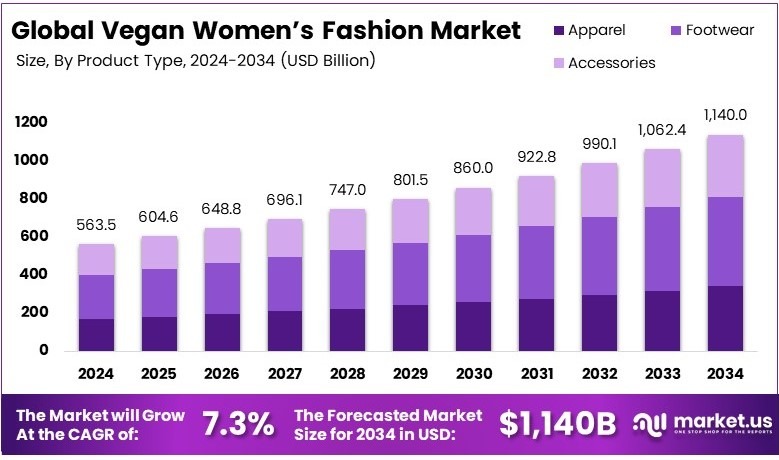
The Global Vegan Women’s Fashion Market size is expected to be worth around USD 1,140 Billion by 2034, from USD 563.5 Billion in 2024, growing at a CAGR of 7.3% during the forecast period from 2025 to 2034.
Vegan Womens Fashion refers to clothing and accessories made without animal products. It uses alternative materials such as synthetic leather, cotton, and plant-based fabrics. The focus is on style, quality, and ethical production. This category appeals to consumers who prioritize cruelty-free products.
The Vegan Womens Fashion Market encompasses companies that design, produce, and distribute cruelty-free apparel and accessories. It includes various brands and retailers committed to ethical sourcing. The market serves consumers looking for sustainable and animal-friendly style options.
Vegan women’s fashion emphasizes cruelty-free and sustainable fashion. Over 6,500 vegan fashion items were certified by The Vegan Society by January 2022, up from 12 items in 1999. This growth reflects rising consumer demand for sustainable alternatives. Popular items include clothing, footwear, and accessories, appealing to environmentally conscious and ethical shoppers worldwide.
The vegan women’s fashion market has significant growth potential. Participation in Veganuary has surged, with 1.8 million participants in 2024, compared to 706,000 in 2023. This highlights a broader interest in vegan lifestyles, driving demand for ethical fashion. Brands increasingly compete on innovation and sustainability, with eco-friendly materials becoming a key differentiator.
Saturation in developed markets is limited, with growth driven by shifting consumer preferences. Emerging markets also show promise as awareness spreads. Government initiatives like the EU’s Ecodesign for Sustainable Products Regulation (ESPR), effective July 2024, encourage sustainable production. Regulations like these push the market toward circular, environmentally friendly designs.
Key Takeaways
- The Vegan Womens Fashion Market was valued at USD 563.5 Billion in 2024, and is expected to reach USD 1,140 Billion by 2033, with a CAGR of 7.3%.
- In 2024, Footwear dominates the product type segment with 41.3% due to increasing consumer demand for sustainable and ethical shoes.
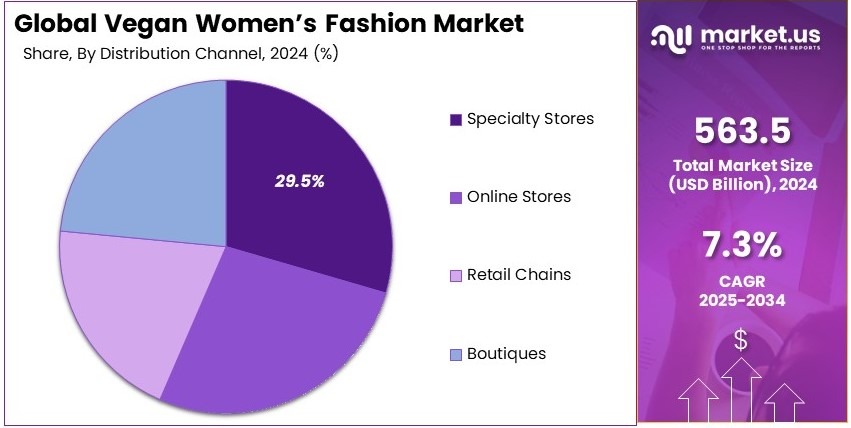
- In 2024, Specialty Stores lead the distribution channel with 29.5% because of their curated selections and targeted customer experiences.
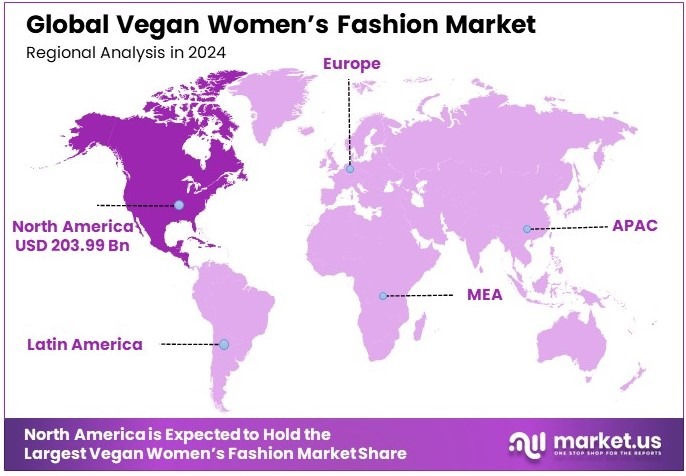
- In 2024, North America dominates the region with 36.2% market share and a value of USD 203.99 Billion, highlighting its market influence.
Product Type Analysis
Footwear dominates with 41.3% due to its wide appeal and innovation in sustainable materials.
Footwear is the dominant sub-segment in the vegan women’s fashion market, commanding a significant 41.3% share. This lead is largely attributed to the growing consumer interest in sustainable and ethical fashion, particularly in footwear.
Vegan footwear includes shoes made from non-animal materials that are also environmentally friendly, such as synthetic leathers made from recycled plastics or plant-based materials. The innovation in this sector has expanded the range of available styles, appealing to a broader audience who seek both style and ethical reassurance.
In the apparel segment, tops, dresses, pants, and jackets and coats are made from various vegan materials like organic cotton, bamboo, and synthetic fibers designed to replace wool and silk. These items cater to everyday needs and special occasions, emphasizing comfort and style while adhering to ethical standards.
Accessories such as handbags, wallets, belts, and jewelry are also crucial, offering consumers complete outfits that align with vegan principles. These accessories are crafted from innovative materials like cork, recycled plastics, and plant-based leathers, expanding the market’s reach and influence.
Distribution Channel Analysis
Specialty Stores dominate with 29.5% due to their focused product curation and customer service.
Specialty stores are the leading distribution channel for vegan women’s fashion, holding a 29.5% market share. These stores specialize in eco-friendly and vegan fashion items, providing a curated selection that attracts ethically conscious consumers.
The success of specialty stores lies in their ability to offer a tailored shopping experience, with knowledgeable staff who can educate customers on the benefits of vegan fashion and help them make informed choices.
Online stores are another key player in the distribution of vegan women’s fashion, offering the convenience of shopping from home and a vast selection of products. They are essential for reaching a global market and often feature extensive product descriptions and reviews that help consumers make choices online.
Retail chains and boutiques also contribute to the market, with boutiques offering unique and often locally sourced items that appeal to niche markets looking for exclusive designs.
Key Market Segments
By Product Type
- Apparel
- Tops
- Dresses
- Pants
- Jackets and Coats
- Footwear
- Flats
- Heels
- Boots
- Sneakers
- Accessories
- Handbags
- Wallets
- Belts
- Jewelry
By Distribution Channel
- Online Stores
- Specialty Stores
- Retail Chains
- Boutiques
Driving Factors
Growing Awareness and Ethical Choices Drives Market Growth
Growing awareness of sustainable and ethical fashion practices fuels the Vegan Women’s Fashion Market. As consumers learn more about the impact of their choices, demand for plant-based and cruelty-free materials rises. This trend is linked to the increase in vegan lifestyle choices and plant-based diets.
For example, a consumer switching to vegan leather bags not only avoids animal products but also supports sustainable practices. The expansion of eco-friendly and vegan fashion retailers further boosts market growth. These retailers offer a wide range of products made from sustainable fabrics.
Their growth brings more visibility to vegan fashion. Consequently, brands invest in ethical production and marketing to meet this rising demand. Fashion companies that embrace these values can attract a loyal customer base.
The combination of ethical awareness, lifestyle changes, and retail expansion creates a strong foundation for market growth. This drive towards sustainability shapes industry trends and opens up new business opportunities. Retailers become more competitive by aligning with consumer values.
Restraining Factors
Material Shortages and Competition Restrain Market Growth
Limited availability of raw materials for vegan fashion presents significant challenges. Sustainability in the supply chain and eco-friendly production add complexity to sourcing. This dependency on stable supply chains can hinder growth.
For instance, a designer may face delays if vegan fabrics are scarce. Competition from fast fashion and mass-produced vegan apparel also places pressure on ethical brands. These larger brands may offer lower prices, making it hard for smaller ones to compete.
Concerns about the durability and longevity of vegan fashion products add to consumer hesitancy. Customers may doubt whether sustainable materials can match the quality of conventional ones. As a result, market growth may slow.
Manufacturers must invest in research to improve product durability and reliability. Additionally, building resilient supply chains that can source sustainable materials is essential. Addressing these restraints requires strategic planning and investment in quality control.
Growth Opportunities
Inclusive Innovation Provides Opportunities
The development of inclusive and diverse vegan clothing lines presents significant opportunities. Expanding into sustainable and ethical accessory collections diversifies product offerings. For example, brands now create vegan handbags, shoes, and jewelry that appeal to a broader audience.
Opportunities in sustainable and biodegradable packaging for fashion also arise. These packaging solutions reduce waste and appeal to eco-conscious shoppers. Rising demand for vegan activewear and sportswear adds another growth avenue.
Consumers seek performance gear that aligns with their ethical values. Such innovations attract new customer segments and increase market share. Brands adopting recycled and upcycled vegan materials respond to consumer desire for high-quality and sustainable products.
By focusing on high-tech and performance vegan fabrics, companies can innovate in activewear lines. These inclusive approaches meet diverse needs and preferences. They foster customer loyalty and enhance brand reputation.
Emerging Trends
Minimalist Trends and Unisex Collections Are Latest Trending Factor
Adoption of recycled and upcycled vegan materials marks a growing trend in fashion. Consumers value high-tech and performance vegan fabrics for their quality and durability. Development of gender-neutral and unisex vegan collections attracts a wider audience.
For instance, minimalist designs that suit any gender become increasingly popular. Influence of minimalist and sustainable fashion movements drives this trend. These movements emphasize simplicity, eco-friendliness, and timeless design.
Brands respond by creating versatile pieces that appeal to diverse consumers. This trend not only supports environmental goals but also challenges traditional fashion norms. By blending minimalism with sustainability, companies set new industry standards.
Offering unisex options reduces waste and encourages inclusivity. This focus on versatile, eco-friendly fashion resonates with modern consumers. It shapes the latest product lines and marketing strategies. The result is a dynamic market that evolves with ethical and aesthetic demands.
Regional Analysis
North America Dominates with 36.2% Market Share in the Vegan Women’s Fashion Market
North America leads the Vegan Women’s Fashion Market with a 36.2% share, representing a market value of USD 203.99 billion. This substantial market presence is primarily driven by a strong consumer shift towards ethical and sustainable fashion, coupled with high awareness and purchasing power.
The region’s market dynamics are influenced by its progressive consumer base that values cruelty-free and environmentally friendly products. Factors such as diverse fashion tastes, expansive e-commerce platforms, and influential social media campaigns promoting vegan lifestyles contribute significantly to this trend. Moreover, the presence of numerous pioneering vegan fashion brands and designers in North America fosters continuous growth and innovation within this segment.
The forecast for North America’s role in the Vegan Women’s Fashion Market remains optimistic. The growing trend of sustainability in fashion and increasing consumer advocacy for animal rights are expected to propel further growth. The market is likely to expand as more consumers choose vegan options and as mainstream fashion brands continue to introduce vegan lines, consolidating North America’s leading position.
Regional Mentions:
- Europe: Europe is a key player in the Vegan Women’s Fashion Market, noted for its strong regulatory framework supporting sustainable practices. The region’s rich fashion heritage and consumer preference for ethically made products drive its robust market position.
- Asia Pacific: Asia Pacific is experiencing rapid growth in the Vegan Women’s Fashion Market, driven by increasing environmental consciousness and ethical considerations among its expanding middle class. Urban centers in China and India are particularly pivotal to this growth.
- Middle East & Africa: The Middle East and Africa are gradually embracing vegan fashion, with a growing niche market focused on luxury and sustainability. Increasing urbanization and the influence of Western fashion trends contribute to this developing market.
- Latin America: Latin America is witnessing a slow yet steady rise in the Vegan Women’s Fashion Market, influenced by increasing consumer awareness about animal rights and environmental issues. The region is seeing more local brands adopting vegan principles.
Key Regions and Countries Covered in the Report
- North America
- US
- Canada
- Europe
- Germany
- France
- The UK
- Spain
- Italy
- Rest of Europe
- Asia Pacific
- China
- Japan
- South Korea
- India
- Australia
- Rest of APAC
- Latin America
- Brazil
- Mexico
- Rest of Latin America
- Middle East & Africa
- South Africa
- Saudi Arabia
- UAE
- Rest of MEA
Competitive Landscape
In the dynamic Vegan Women’s Fashion Market, four standout companies are redefining style with their commitment to cruelty-free and sustainable fashion. These market leaders are distinguished by their innovative approaches to materials and designs that cater to the growing consumer demand for ethical fashion.
Stella McCartney is a pioneer in high-end vegan fashion, with a strong emphasis on sustainability and ethical practices. The brand is renowned for its luxurious, innovative designs that do not compromise on style or quality, utilizing alternatives to leather and fur that set industry standards for luxury vegan fashion.
Matt & Nat is recognized for its stylish handbags, footwear, and accessories made entirely from vegan materials. The company is committed to not using leather or any other animal-based materials, instead focusing on recycled and sustainable materials. Their products are popular for their quality and sleek, modern designs that appeal to fashion-conscious consumers.
Angela Roi creates premium handbags that showcase the possibilities of vegan leather. With a focus on craftsmanship and classic styles, Angela Roi offers pieces that are both elegant and practical, proving that ethical fashion can be accessible and desirable.
Reformation makes eco-friendly fashion a priority, producing trendy and vintage-inspired clothing and accessories. They utilize sustainable practices in every aspect of their production to minimize environmental impact. Reformation is popular among young, eco-conscious consumers who are looking for stylish and sustainable wardrobe options.
Together, these companies are leading the charge in the Vegan Women’s Fashion Market by offering diverse and attractive options that align with ethical and environmental values. Their success is driven by their ability to blend style, sustainability, and ethics into desirable fashion choices that resonate with today’s consumers, paving the way for a more sustainable fashion industry.
Major Companies in the Market
- MATT & NAT CANADA
- MooShoes
- Will’s Vegan Shoes
- BHAVA NY
- GANNI A/S
- Reformation
- Stella McCartney
- Vaute Couture
- Beyond Skin
- Hiraeth Collective
- Mayamiko
- Whimsy & Row
- Stine Goya
Recent Developments
- UGG: On September 2024, UGG collaborated with New York-based fashion label Collina Strada to launch its first vegan collection. The collection features eight styles, including classic mini platform and thigh-high boots, crafted from materials like Tencel, polyester microfiber, and sugarcane-derived components. This initiative marks UGG’s entry into the vegan footwear market, catering to consumers seeking cruelty-free fashion options.
- Monrow: On November 2024, Monrow, a premium direct-to-consumer footwear brand based in Bangalore, India, received PETA India’s 2024 Vegan Fashion Award for Best Vegan Women’s Footwear. Monrow is recognized for its commitment to cruelty-free fashion, offering a range of stylish and comfortable vegan footwear options.









