


Report Overview
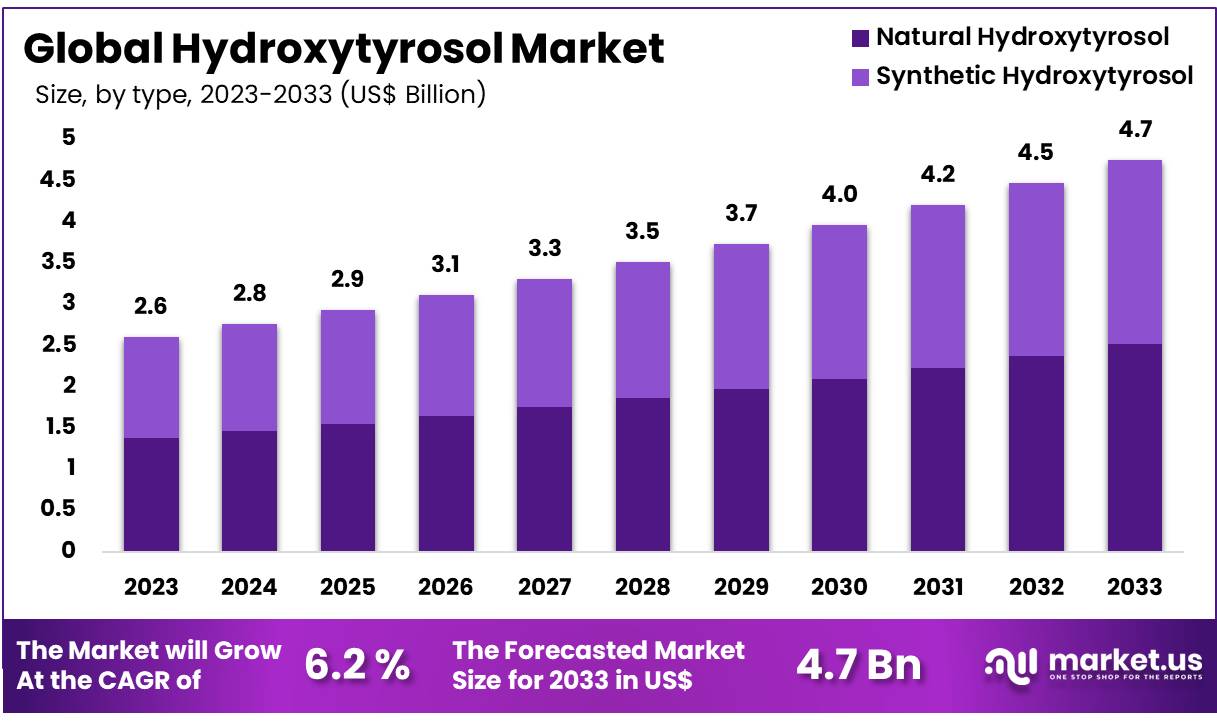
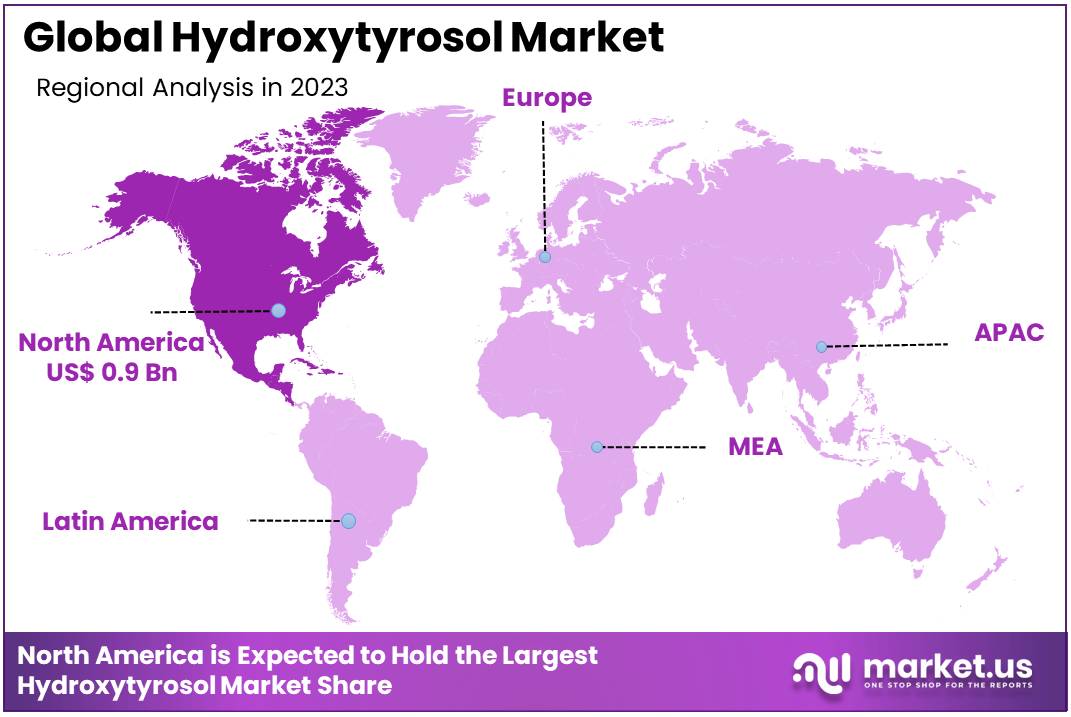
Global Hydroxytyrosol Market size is expected to be worth around US$ 4.7 Billion by 2033 from US$ 2.6 Billion in 2023, growing at a CAGR of 6.2% during the forecast period from 2023 to 2033. In 2023, North America led the market, achieving over 37% share with a revenue of US$ 0.9 Billion.
Hydroxytyrosol, a phenolic compound derived from olives, is celebrated for its powerful antioxidant properties that contribute to various health benefits, including anti-inflammatory effects and cardiovascular health enhancement. This compound is increasingly sought after in the food, cosmetics, and pharmaceutical sectors due to its natural and organic qualities. The hydroxytyrosol market is witnessing significant growth driven by heightened consumer awareness of health and wellness, and a shift towards natural ingredients.
The demand for hydroxytyrosol is bolstered by its application in nutritional supplements and its regulatory approvals for food uses. Innovations in extraction technologies further support market growth, making it easier to integrate into various products. This trend is aligned with the rising consumer preference for clean label products, which underscores the desire for transparency and sustainability in product ingredients.
The expansion of the hydroxytyrosol market is also fueled by its benefits in anti-aging and skin health, appealing to an increasingly health-conscious consumer base that values preventative care. As the food and beverage industry continues to explore natural preservatives, hydroxytyrosol’s role as a potent polyphenolic ingredient positions it favorably in the market. The compound’s ability to combat oxidative stress and support overall well-being makes it a key component in a range of health-related products.
Hydroxytyrosol, recognized for its significant antioxidant properties, is considered Generally Recognized As Safe (GRAS) by the FDA when used as an antioxidant and antimicrobial agent in food at levels up to 5 mg per serving. This recognition is based on comprehensive research and expert reviews confirming its safety for consumption within specified limits. The daily intake is capped at 51.06 mg per person per day, ensuring it stays within safe consumption levels based on its presence in foods such as beverages, fats and oils, and various fruit and vegetable products.
Further information on hydroxytyrosol can be accessed through the National Institutes of Health’s database, which provides detailed insights into its use and benefits, particularly highlighting its role in the diet and its potential therapeutic applications. For additional scientific details and definitions related to hydroxytyrosol, resources such as the National Cancer Institute provide valuable context and descriptions.
Key Takeaways
- Market Size: Hydroxytyrosol Market size is expected to be worth around US$ 4.7 Billion by 2033 from US$ 2.6 Billion in 2023, growing at a CAGR of 6.2% during the forecast period from 2023 to 2033.
- Market Growth: In 2023, North America led the market, achieving over 37% share with a revenue of US$ 0.9 Billion.
- Product Type Analysis: Natural Hydroxytyrosol dominates the market, accounting for 53% of the total market share.
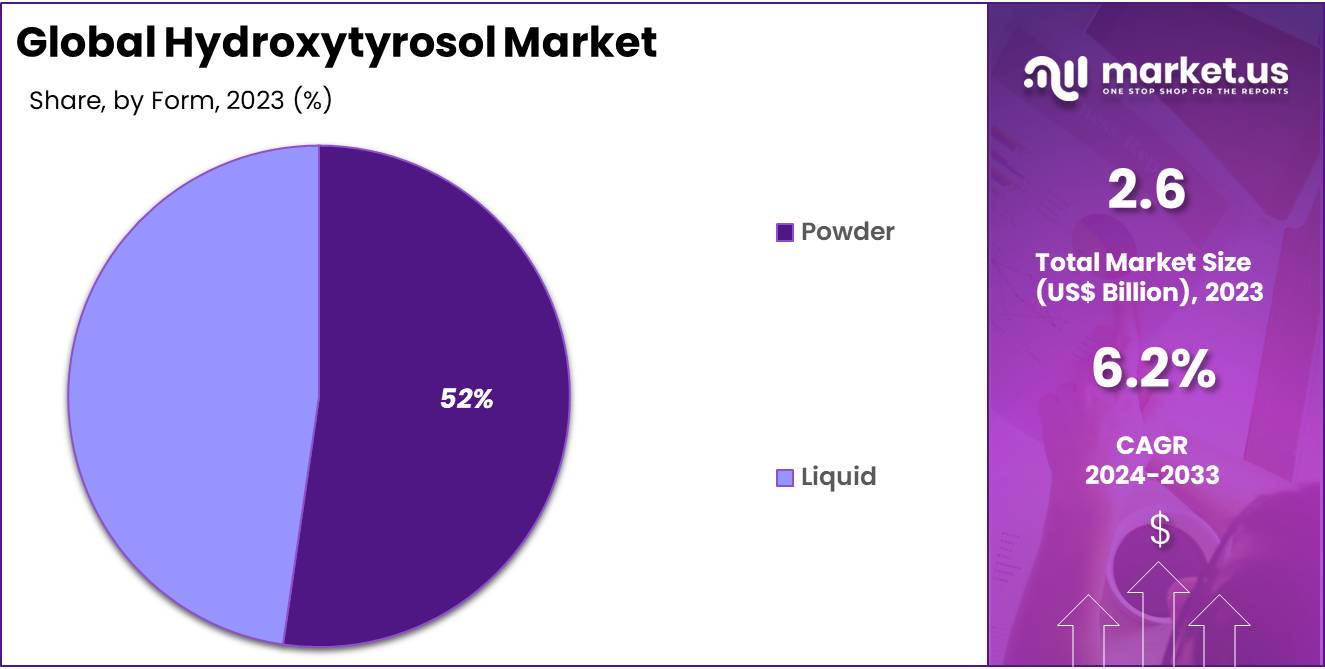
- Form Analysis: Powder Hydroxytyrosol holds a dominant position, accounting for 52% of the market share.
- Source Analysis: Catechol-derived Hydroxytyrosol leads the market with 36% market share.
- Application Analysis: Pharmaceuticals lead the market with 34% market share, driven by Hydroxytyrosol’s potent antioxidant and anti-inflammatory properties.
- Regional Analysis: In 2023, North America accounted for 37% of the Hydroxytyrosol Market revenue.
Product Type Analysis
The Hydroxytyrosol Market is segmented into two primary product types: Natural Hydroxytyrosol and Synthetic Hydroxytyrosol. Natural Hydroxytyrosol dominates the market, accounting for 53% of the total market share. This dominance is attributed to growing consumer preferences for natural and organic products, driven by sustainability trends and environmental consciousness. Extracted primarily from olives and olive leaves, Natural Hydroxytyrosol contains synergistic compounds that enhance its health benefits, making it highly favored in dietary supplements, functional foods, and cosmetics.
Synthetic Hydroxytyrosol, although less prevalent, is gaining traction due to advancements in production technology that ensure high purity and cost-effectiveness. This segment is primarily utilized in applications where consistency and large-scale production are required, such as pharmaceuticals and certain food formulations.
Overall, while Synthetic Hydroxytyrosol caters to industrial demand, the market’s growth is largely fueled by the rising inclination towards natural and minimally processed products, solidifying the leadership position of Natural Hydroxytyrosol in this expanding market.
Form Analysis
The Hydroxytyrosol Market is segmented into two primary forms: Powder and Liquid. Powder Hydroxytyrosol holds a dominant position, accounting for 52% of the market share. This form is widely preferred due to its stability, extended shelf life, and ease of incorporation into various product formulations, such as dietary supplements, capsules, and powdered drink mixes. Its precision in measurement and storage convenience make it the preferred choice for manufacturers in the nutraceutical and functional food sectors.
Liquid Hydroxytyrosol, while holding a smaller market share, is favored in applications requiring solubility and ease of blending, such as in beverages, skincare products, and certain pharmaceuticals. Its rapid absorption and suitability for liquid formulations make it an attractive option in cosmetics and topical applications.
Overall, while the powder form leads due to its versatility and logistical advantages, the liquid form continues to gain popularity in specific end-use applications, showcasing the adaptability of Hydroxytyrosol across diverse industry segments.
Source Analysis
The Hydroxytyrosol Market is segmented by source into Catechol, Standard Olive Oil, and Virgin Olive Oil. Catechol-derived Hydroxytyrosol leads the market with 36% market share. Its dominance is attributed to advanced production methods that ensure high yields and purity, making it a cost-effective option for large-scale industrial applications such as pharmaceuticals and cosmetics. Catechol’s availability and efficiency in synthetic processes further enhance its adoption.
Standard Olive Oil serves as another significant source, benefiting from its widespread availability and established extraction methods. This source is popular for producing Hydroxytyrosol for functional foods and beverages, offering a balance between quality and cost.
Virgin Olive Oil is highly valued for its purity and minimal processing, retaining the highest concentration of Hydroxytyrosol. It is preferred in premium product formulations, including high-quality dietary supplements and cosmetics, where natural and organic sourcing is prioritized. While Catechol dominates in industrial applications, demand for Hydroxytyrosol from Standard and Virgin Olive Oils continues to grow, driven by the increasing preference for natural products.
Application Analysis
The Hydroxytyrosol Market is segmented by application into Pharmaceuticals, Cosmetics, Dietary Supplements, Nutraceuticals, and Functional Foods. Pharmaceuticals lead the market with 34% market share, driven by Hydroxytyrosol’s potent antioxidant and anti-inflammatory properties. Its therapeutic applications, such as in cardiovascular and neuroprotective treatments, make it a preferred ingredient in the pharmaceutical industry.
Cosmetics represent a significant segment, benefiting from Hydroxytyrosol’s anti-aging and skin-rejuvenating properties. Its ability to combat oxidative stress and promote skin health makes it a sought-after component in premium skincare formulations. Dietary Supplements are another key application, leveraging Hydroxytyrosol’s role in promoting overall health and wellness. Its use in capsules, tablets, and powdered supplements continues to grow as consumers seek natural solutions for preventative healthcare.
Nutraceuticals and Functional Foods also contribute to market growth, with increasing demand for natural ingredients that enhance health benefits. Hydroxytyrosol’s versatility in improving food quality and providing added nutritional value bolsters its presence in these categories.
Key Market Segments
Product Type
- Natural Hydroxytyrosol
- Synthetic Hydroxytyrosol
Form
- Powder
- Liquid
Source
- Standard Olive Oil
- Virgin Olive Oil
- Catechol
Application
- Functional Foods
- Nutraceuticals
- Dietary Supplements
- Cosmetics
- Pharmaceuticals
Driving Factors
The Hydroxytyrosol Market is driven by increasing consumer awareness about the health benefits of antioxidants and natural products. Hydroxytyrosol, derived from olives, is recognized for its anti-inflammatory and cardiovascular health properties, boosting its demand in dietary supplements, functional foods, and cosmetics.
The growing focus on natural and organic ingredients, coupled with advancements in extraction technologies, has further fueled market growth. Regulatory approvals for hydroxytyrosol in food and pharmaceutical applications also contribute to its rising adoption across industries.
Trending Factors
A notable trend in the Hydroxytyrosol Market is the shift towards sustainable and clean-label products. Consumers increasingly seek natural ingredients, pushing manufacturers to adopt eco-friendly extraction methods and transparent labeling.
The integration of hydroxytyrosol into innovative formulations, such as anti-aging skincare and nutraceuticals, aligns with the growing preference for preventative healthcare and wellness. Additionally, its combination with other bioactive compounds is driving innovation in personalized health products.
Restraint Factors
High production costs and limited availability of natural hydroxytyrosol pose significant challenges to market growth. The reliance on olives and specific extraction processes results in fluctuating raw material costs and supply constraints.
Moreover, synthetic alternatives, though cost-effective, face consumer skepticism due to preferences for natural products. Regulatory complexities and the need for rigorous quality standards further limit the scalability of hydroxytyrosol production.
Opportunity Factors
The Hydroxytyrosol Market offers opportunities through its expanding application in pharmaceuticals and nutraceuticals. Emerging research highlights its potential in neuroprotection, cardiovascular health, and anti-cancer properties, opening avenues for therapeutic uses.
Growing demand in developing regions, where health awareness and disposable incomes are rising, also presents untapped potential. Investments in sustainable production technologies and partnerships for product innovation can help capitalize on these opportunities.
Regional Analysis
- North America: In 2023, North America accounted for 37% of the Hydroxytyrosol Market revenue. This is driven by increasing consumer awareness of hydroxytyrosol’s health benefits and its growing use in dietary supplements and functional foods. The region’s robust healthcare infrastructure and advanced research capabilities further support market growth.
- Europe: Europe remains a significant market for hydroxytyrosol, supported by stringent food safety and quality regulations. The rising demand for natural and organic products in the region bolsters its market share in 2024.
- APAC: The Asia-Pacific region is projected to witness rapid growth during the forecast period, driven by rising disposable income, changing lifestyles, and increased health consciousness in countries like China and India. These factors are expected to accelerate hydroxytyrosol adoption in the region.
- South America: While contributing a smaller share, South America’s market is steadily growing. Brazil, as the largest economy in the region, is leading this growth due to the increasing demand for hydroxytyrosol’s antioxidant and anti-inflammatory properties.
- MEA: Moderate growth is anticipated in the MEA region, driven by an expanding healthcare sector and rising awareness about hydroxytyrosol’s benefits in countries like Saudi Arabia and the UAE. These factors contribute to the gradual expansion of the market in the region.
Key Regions and Countries
North America
- The US
- Canada
- Mexico
Western Europe
- Germany
- France
- The UK
- Spain
- Italy
- Portugal
- Ireland
- Austria
- Switzerland
- Benelux
- Nordic
- Rest of Western Europe
Eastern Europe
- Russia
- Poland
- The Czech Republic
- Greece
- Rest of Eastern Europe
APAC
- China
- Japan
- South Korea
- India
- Australia & New Zealand
- Indonesia
- Malaysia
- Philippines
- Singapore
- Thailand
- Vietnam
- Rest of APAC
Latin America
- Brazil
- Colombia
- Chile
- Argentina
- Costa Rica
- Rest of Latin America
Middle East & Africa
- Algeria
- Egypt
- Israel
- Kuwait
- Nigeria
- Saudi Arabia
- South Africa
- Turkey
- United Arab Emirates
- Rest of MEA
Key Players Analysis
The Hydroxytyrosol Market features a competitive landscape with key players focusing on innovation, quality improvement, and strategic collaborations. These companies leverage advanced extraction technologies to produce high-purity hydroxytyrosol, catering to diverse applications in pharmaceuticals, cosmetics, and functional foods.
They invest significantly in research and development to enhance product efficiency and expand their market presence. Strategic activities such as partnerships, mergers, and acquisitions are common, enabling access to broader distribution networks and advanced production facilities. Additionally, companies emphasize sustainability by sourcing natural ingredients and adopting eco-friendly manufacturing processes, aligning with the increasing consumer demand for natural and organic products.
Market Key Players
- Collagen Inc.
- Genosa
- Alvinesa Natural Ingredients
- Seprox BIOTECH
- Changsha Sunfull Bio-tech
- Wacker Chemie AG
- Zhejiang Multinpharma Co., Ltd
- Natac
- Spring Pharma Tech Co, Ltd.
- Shaanxi Yuantai Biological Technology Co., Ltd
Recent Developments
- In 2023, Alvinesa Natural Ingredients completed the acquisition of Genosa, a prominent producer of natural hydroxytyrosol, strengthening its position in the market.
- In 2023, Wacker Chemie AG launched a new high-purity hydroxytyrosol product, expanding its portfolio to meet the growing demand in the nutraceutical and cosmetic industries.
- In March 2024, Natac announced a strategic partnership with a leading dietary supplement manufacturer to develop innovative hydroxytyrosol-based products, aiming to enhance health benefits for consumers.
- In April 2024, Changsha Sunfull Bio-tech expanded its production capacity for hydroxytyrosol by 30% to meet increasing global demand, particularly in the functional food sector.
- In May 2024, Seprox BIOTECH received regulatory approval for its new hydroxytyrosol extraction technology, which improves yield and purity, positioning the company as a leader in sustainable production methods.
- In June 2024, Zhejiang Multinpharma Co., Ltd. launched a line of hydroxytyrosol-infused skincare products, capitalizing on the antioxidant properties of the compound to cater to the beauty and personal care market.
- In July 2024, Collagen Inc. introduced a novel dietary supplement combining hydroxytyrosol with collagen peptides, targeting joint health and anti-aging benefits, and expanding its product offerings in the wellness industry.









