


Report Overview
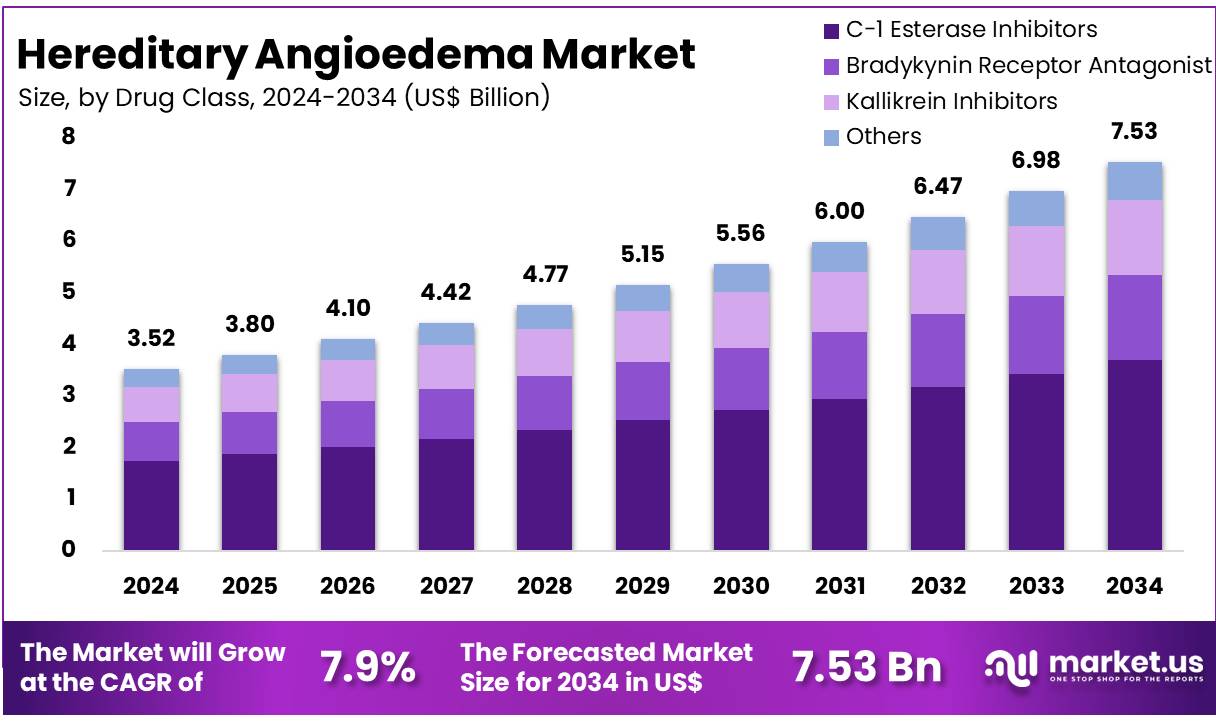
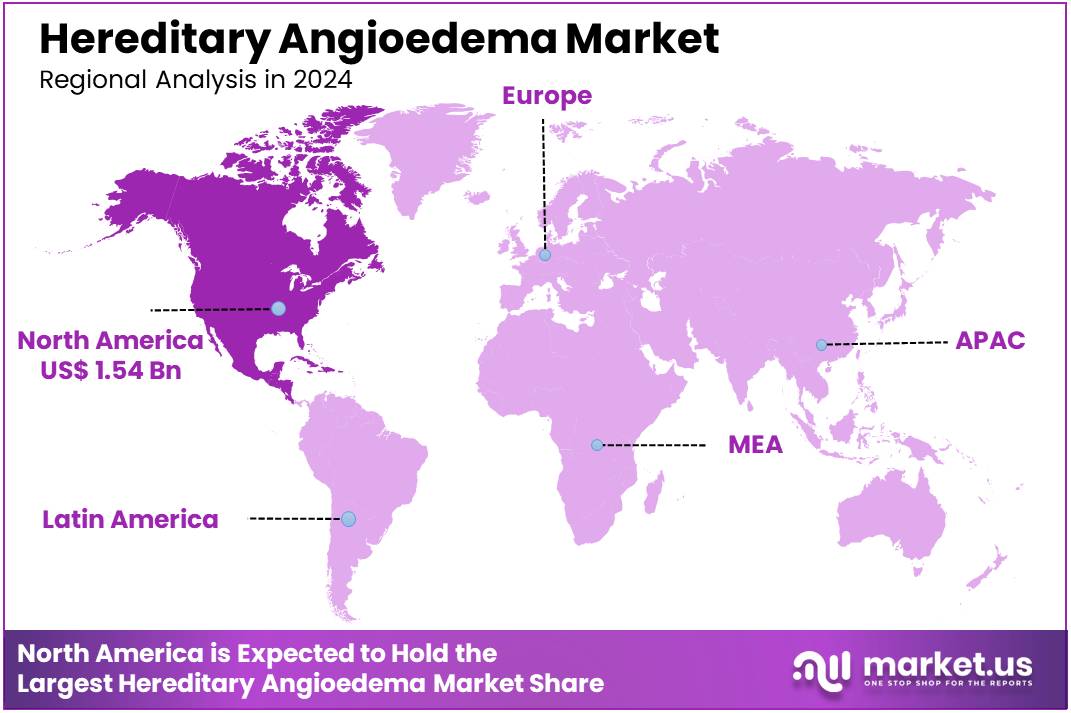
The Global Hereditary Angioedema Market size is expected to be worth around US$ 7.53 billion by 2034 from US$ 3.52 billion in 2024, growing at a CAGR of 7.9% during the forecast period 2025 to 2034. In 2023, North America led the market, achieving over 46.8% share with a revenue of US$ 1.54 Billion.
The hereditary angioedema (HAE) market is a rapidly growing segment of the rare disease therapeutics landscape, driven by increasing awareness, improved diagnosis, and the development of targeted therapies. HAE is a rare genetic disorder characterized by recurrent, unpredictable episodes of severe swelling in various parts of the body, often caused by a deficiency or dysfunction of the C1 inhibitor protein.
Treatment options have expanded in recent years, with the development of both acute and prophylactic therapies, including C1 esterase inhibitors, bradykinin receptor antagonists, and monoclonal antibodies.
This condition is potentially life-threatening, affecting between 1 in 10,000 and 1 in 50,000 individuals. The primary cause of hereditary angioedema is a familial history, with a 50% chance that a child may inherit the disorder from their parents. However, even without a familial history, the disorder can still occur due to genetic mutations, although the risk is lower.
Key Takeaways
- Market Size: Global Hereditary Angioedema Market size is expected to be worth around US$ 7.53 billion by 2034 from US$ 3.52 billion in 2024.
- Market Growth: The market growing at a CAGR of 7.9% during the forecast period 2025 to 2034.
- Drug Class Analysis: In 2023, the C1-esterase inhibitor segment led the market with a revenue share of 49.2%,
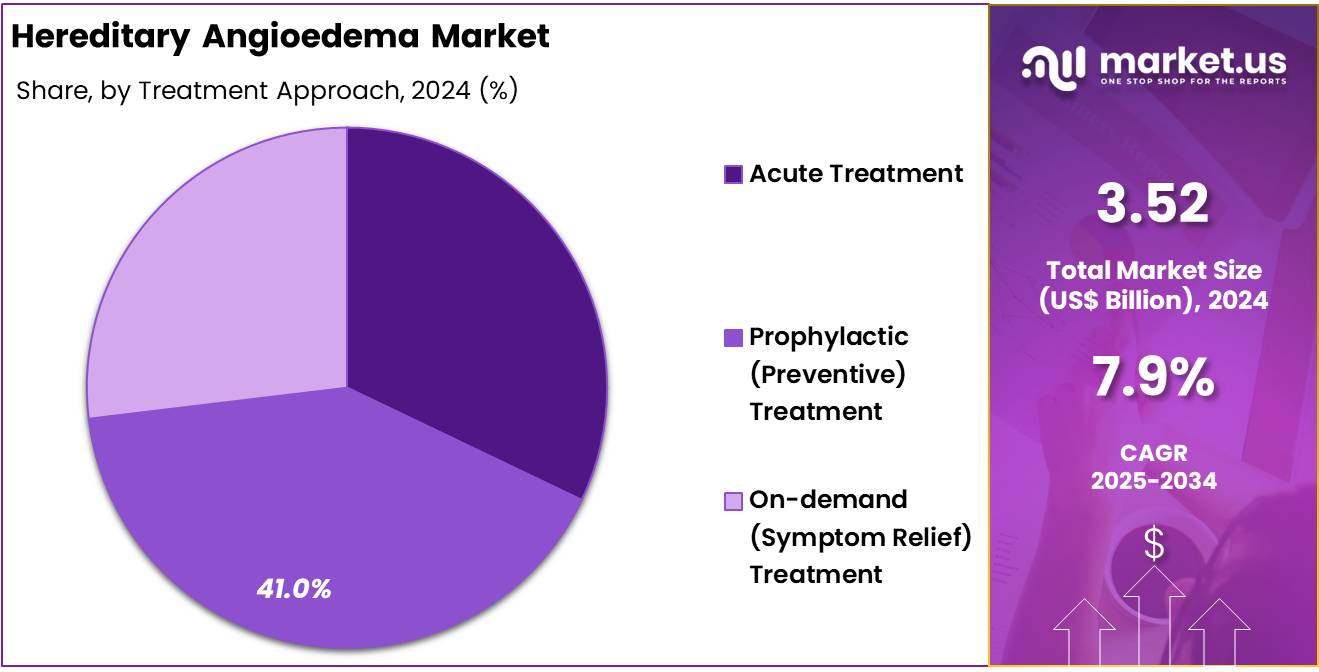
- Treatment Approach Analysis: Prophylactic (Preventive) Treatment is currently the dominating segment with 41.0% of market share.
- Route of Administration Analysis: Intravenous (IV) treatments dominate in the HAE market, which held 49.2% of market share, particularly for acute or emergency care.
- Distribution Channel Analysis: Among distribution channels for Hereditary Angioedema (HAE) treatments, Hospital Pharmacies are the dominant segment with 45.5% of market share.
- Regional Analysis: In 2023, North America led the market, achieving over 46.8% share with a revenue of US$ 1.54 Billion.
Drug Class Analysis
In 2023, the C1-esterase inhibitor segment led the market with a revenue share of 49.2%, due to its use in both on-demand and prophylactic treatments for HAE. The kallikrein inhibitor segment is projected to experience the fastest growth rate during the forecast period.
By inhibiting kallikrein, the production of bradykinin is reduced, which in turn decreases the frequency of HAE attacks. This growth is driven by the introduction of kallikrein inhibitors as a targeted treatment option, offering HAE patients new therapeutic possibilities.
Treatment Approach Analysis
Prophylactic (Preventive) Treatment is currently the dominating segment with 41.0% of market share. Prophylactic treatments aim to prevent HAE attacks before they occur, which is especially important for patients who experience frequent or severe attacks. Given the unpredictable nature of the disease, reducing attack frequency is a priority for both patients and clinicians.
Moreover, the approval and use of therapies like Lanadelumab (Takhzyro) and C1-INH products (e.g., Haegarda, Cinryze) for long-term prevention have significantly boosted this segment. These therapies are highly effective in reducing the frequency and severity of attacks, making them a key choice for patients who require ongoing management.
Route of Administration Analysis
Intravenous (IV) treatments dominate in the HAE market, which held 49.2% of market share, particularly for acute or emergency care. Intravenous infusion of C1 esterase inhibitors (e.g., Cinryze, Berinert) is the gold standard for treating severe attacks in healthcare settings.
Subcutaneous (SC) treatments are gaining popularity and will show highest CAGR, especially for preventive care. Drugs like Icatibant (Firazyr) and Lanadelumab (Takhzyro) are administered subcutaneously, offering convenience for home use and long-term management.
Distribution Channel Analysis
Among distribution channels for Hereditary Angioedema (HAE) treatments, Hospital Pharmacies are the dominant segment with 45.5% of market share. Hospitals are the primary setting for acute treatment, where intravenous infusions of C1 esterase inhibitors and other therapies are administered during emergency episodes.
Given the severity of some HAE attacks, hospital pharmacies remain essential for immediate and intensive care. Retail Pharmacies are also significant, especially for patients using prophylactic or on-demand treatments that can be self-administered at home, like Icatibant or Lanadelumab.
Key Market Segments
By Drug Class
- C-1 Esterase Inhibitors
- Bradykynin Receptor Antagonist
- Kallikrein Inhibitors
- Others
By Treatment Approach
- Acute Treatment
- Prophylactic (Preventive) Treatment
- On-demand (Symptom Relief) Treatment
By Route of Administration
- Intravenous
- Subcutaneous
- Oral
By Distribution channel
- Hospital Pharmacies
- Retail Pharmacies
- Online Pharmacies
Drivers
Increasing Awareness and Diagnosis
The increasing awareness of Hereditary Angioedema (HAE) among healthcare professionals, patients, and the general public is a significant driver in the growth of the HAE market. Improved understanding of the disease, its symptoms, and genetic origins is leading to earlier and more accurate diagnoses.
For instance, in May 2022, Pharvaris, a clinical-stage company focused on creating novel, oral bradykinin-B2-receptor antagonists to treat and prevent HAE attacks, proudly announced its support for Hereditary Angioedema International (HAEi) Day 2022, a global awareness day for hereditary angioedema (HAE). This initiative underscores Pharvaris’ commitment to advancing treatments for HAE, building on their deep expertise in this field.
HAE, a rare genetic disorder, often goes undiagnosed or misdiagnosed for years, as its symptoms—such as swelling of the skin, abdomen, and airway—are similar to other conditions. However, with better education and awareness programs, patients are more likely to receive a proper diagnosis, enabling timely intervention. This is especially crucial; as early diagnosis significantly improves treatment outcomes by initiating appropriate therapies.
Additionally, advancements in genetic testing and biomarkers are making it easier to identify individuals at risk. As healthcare systems globally prioritize rare diseases, HAE awareness is on the rise, which results in increased demand for treatments and improved access to care. The growth of specialized HAE centers and patient advocacy groups is also playing a crucial role in driving diagnosis rates, particularly in underserved regions.
Restraints
High Treatment Costs
High treatment costs remain a significant challenge in the Hereditary Angioedema (HAE) market, impacting both patients and healthcare systems. Modern therapies, including biologics like Lanadelumab (Takhzyro) and intravenous C1 esterase inhibitors (e.g., Cinryze), offer substantial clinical benefits but come at a high price. For instance, the cost of a year’s supply of some medications can exceed tens of thousands of dollars, creating a financial burden for patients, especially those without comprehensive insurance coverage.
The expensive nature of these treatments limits their accessibility in low- and middle-income countries, where healthcare systems may lack the resources to provide specialized care. In developed regions, while treatments may be covered by insurance, co-pays, and out-of-pocket expenses can still pose challenges for patients.
For instance, according to a study conducted by Prime Therapeutics LLC in August 2020, claimed that the average cost of Haegarda, a drug to treat HAE was nearly $227,000, while Takhzyro’s (another drug used in the treatment of HAE) average cost exceeded $278,000, resulting in a difference of $51,000 (22%). Additionally, on-demand drug therapy is sometimes required at the onset of events such as swelling of the face, throat, or intestines.
The mean cost for Haegarda therapy, including on-demand therapy, was $335,000. In comparison, Takhzyro therapy, combined with on-demand therapy, had a mean cost of $361,000. Overall, the combined initial prophylactic and on-demand treatment costs for a 6-month period were $26,000 higher for Takhzyro compared to Haegarda.
Opportunities
Pipeline Development
The pipeline development for Hereditary Angioedema (HAE) treatments is a key growth driver, as pharmaceutical companies continue to explore novel therapies aimed at improving patient outcomes. Ongoing research is focusing on a variety of approaches, including biologics, small molecules, and gene therapies.
For example, monoclonal antibodies like Lanadelumab (Takhzyro) are designed to prevent HAE attacks by targeting the kallikrein pathway, offering a new class of preventive treatments. Other promising drugs in development include oral therapies, which, if successful, could simplify treatment regimens and increase patient adherence.
Additionally, research into gene therapies is exploring the potential for long-term, durable solutions that could correct the genetic defects underlying the disorder, offering a potential cure for certain patients. The development of individualized treatment plans, based on genetic profiling or specific triggers of HAE attacks, is another area of focus.
For example, an investigational biological drug NTLA-2002, developed by Intellia Therapeutics is currently in Phase 3 clinical trial which is expected to conclude its study in September 2027. Additionally, Deucrictibant by Pharvaris Netherlands B.V. is also in Phase 3 trial and estimated to be completed in August 2026. These advancements are expected to expand the treatment landscape significantly, providing patients with more effective, convenient, and targeted therapies, and helping to address unmet needs in HAE care.
Impact of Macroeconomic / Geopolitical Factors
During periods of economic instability or recession, healthcare budgets may be reduced, leading to limited access to expensive treatments like biologics and C1 esterase inhibitors. This could affect patients’ ability to afford necessary medications, especially in regions with high out-of-pocket costs or inadequate insurance coverage. The availability of treatments often depends on a country’s healthcare infrastructure.
In countries with strong public health systems (e.g., the U.S. or EU nations), access to advanced therapies is typically better. However, in developing markets, limited healthcare resources, lower healthcare expenditure, and lack of specialized care can delay diagnosis and limit treatment options. Geopolitical tensions, such as trade wars or conflicts, can disrupt the global supply chain, causing shortages of essential treatments or increasing drug prices, particularly for complex biologics.
Latest Trends
Personalized Medicine
Personalized medicine is a growing trend in the treatment of Hereditary Angioedema (HAE), offering more tailored and effective therapeutic options for patients. Advances in genetic testing and biomarker research allow for a deeper understanding of the underlying genetic mutations that cause HAE, enabling clinicians to design more individualized treatment plans.
For example, patients with different genetic mutations or varying attack frequencies may benefit from different forms of treatment, such as Lanadelumab for frequent attacks or Icatibant for acute symptom relief. Genetic profiling also allows for a better understanding of patient-specific triggers, such as stress, infections, or hormonal changes, which can lead to more precise prophylactic and on-demand therapies.
Additionally, personalized medicine approaches aim to optimize drug dosages based on patient-specific factors, improving efficacy and minimizing side effects. This trend is also driving the development of targeted therapies that address specific pathways involved in the disease, such as kallikrein inhibition or C1-inhibitor replacement.
Regional Analysis
North America is leading the Hereditary Angioedema Market
The Hereditary Angioedema (HAE) market in North America, particularly in the United States and Canada, is one of the largest and most developed globally. North America benefits from advanced healthcare infrastructure, high awareness, and early diagnosis of HAE, leading to timely access to treatment. The availability of a wide range of therapies, including C1 esterase inhibitors, monoclonal antibodies (e.g., Lanadelumab), and bradykinin receptor antagonists (e.g., Icatibant), has significantly improved patient outcomes and quality of life.
North America held a 46.8% of the market share in the global hereditary angioedema market. As per the NIH report, the estimated prevalence of hereditary angioedema (HAE) in the general population in U.S. is approximately one individual per 50,000.
However, reported prevalence rates can vary widely, ranging from 1 in 10,000 to 1 in 150,000 people. There are no significant differences in the occurrence of HAE based on sex or ethnicity, making this condition equally likely to affect individuals regardless of these factors.
Key Regions and Countries
North America
- US
- Canada
Europe
- Germany
- France
- The UK
- Spain
- Italy
- Russia
- Netherland
- Rest of Europe
Asia Pacific
- China
- Japan
- South Korea
- India
- Australia
- New Zealand
- Singapore
- Thailand
- Vietnam
- Rest of APAC
Latin America
- Brazil
- Mexico
- Rest of Latin America
Middle East & Africa
- South Africa
- Saudi Arabia
- UAE
- Rest of MEA
Key Players Analysis
The Hereditary Angioedema Market is highly competitive, with a variety of companies focusing on innovation, regulatory approvals, and consumer trust to capture market share. Key players include Merck & Co., Inc., Bristol-Myers Squibb, Recordati Rare Diseases, Pfizer Inc., Sun Pharmaceutical Industries Ltd., Cipla Inc., Actiza Pharmaceutical Private Limited, Teva Pharmaceutical Industries Ltd., Alvogen, Accord Healthcare Ireland Ltd., Amneal Pharmaceuticals LLC., Cadila, Xediton, Eli Lilly and Co., Sanofi, and Novartis.
Bristol-Myers Squibb (BMS) is a leading global biopharmaceutical company with a strong portfolio in oncology, particularly in immuno-oncology and targeted therapies. While BMS does not currently have drugs specifically approved for nephroblastoma (Wilms tumor), its portfolio includes treatments that may potentially play a role in pediatric cancers like nephroblastoma, especially in high-risk or recurrent cases. BMS’s ongoing research in immuno-oncology may lead to promising future options for nephroblastoma patients, particularly those with more aggressive or resistant forms of the disease.
Top Key Players
- BioCryst Pharmaceuticals, Inc.
- Ionis Pharmaceuticals
- CSL
- Attune Pharmaceuticals
- Adverum Biotechnologies, Inc.
- KalVista Pharmaceuticals, Inc.
- Takeda Pharmaceutical Company Limited
- Pharming
- Shire plc.
- Arrowhead Pharmaceuticals, Inc.
- Adverum
- Other players
Recent Developments
- In September 2024, KalVista Pharmaceuticals, Inc. announced that the U.S. Food and Drug Administration (FDA) has accepted its New Drug Application (NDA) for sebetralstat, a novel, investigational oral plasma kallikrein inhibitor for the on-demand treatment of hereditary angioedema (HAE) attacks in adult and pediatric patients aged 12 years and older.
- In May 2024, Ionis Pharmaceuticals, Inc. announced positive results from the Phase 3 OASIS-HAE and OASISplus studies of donidalorsen in patients with hereditary angioedema (HAE) demonstrating significant and sustained reduction in mean monthly HAE attack rates and continued attack rate improvement of >90% with one year of treatment for both monthly or every two-month dosing.
- In February 2023, Takeda announced that the U.S. Food and Drug Administration (FDA) has approved the supplemental Biologics License Application (sBLA) for the expanded use of TAKHZYRO® (lanadelumab-flyo) for prophylaxis to prevent attacks of hereditary angioedema (HAE) in pediatric patients 2 to <12 years of age.1 Prior to today’s approval, the only approved routine prophylaxis treatment options for children 6 to <12 years of age required dosing every three to four days, and children with HAE 2 to <6 years of age had no approved prophylaxis treatment, making TAKHZYRO the first prophylaxis treatment for this age group.









