


Report Overview
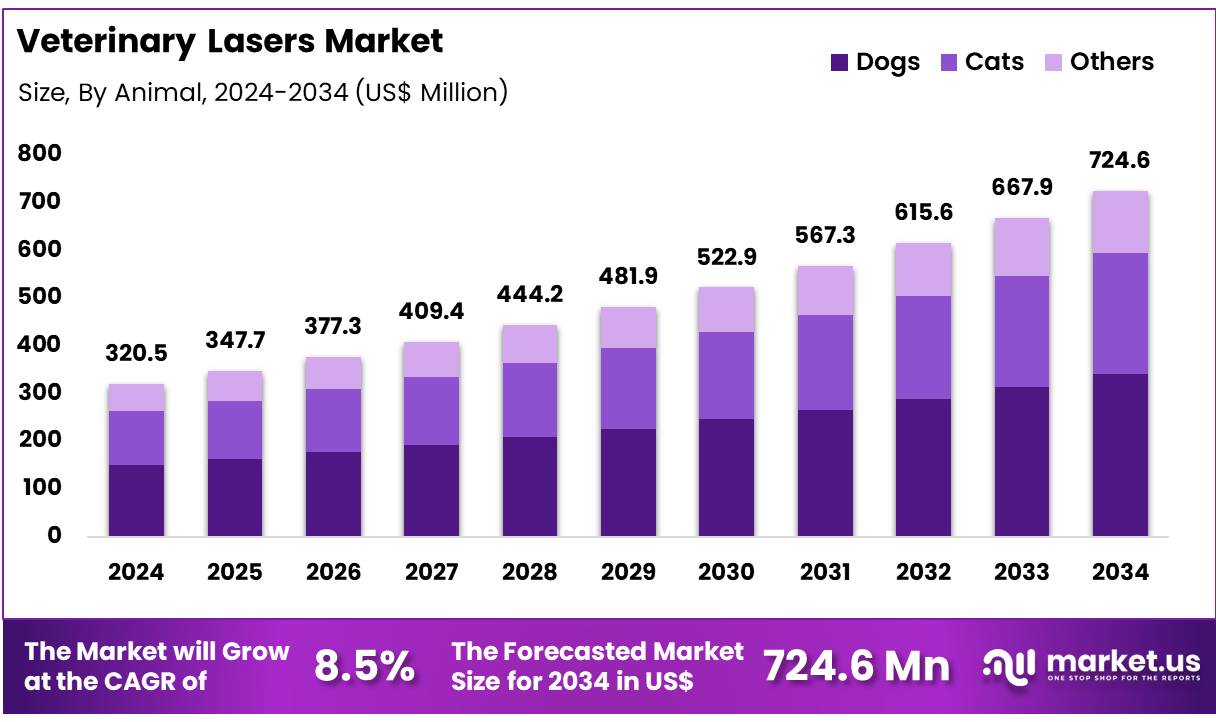
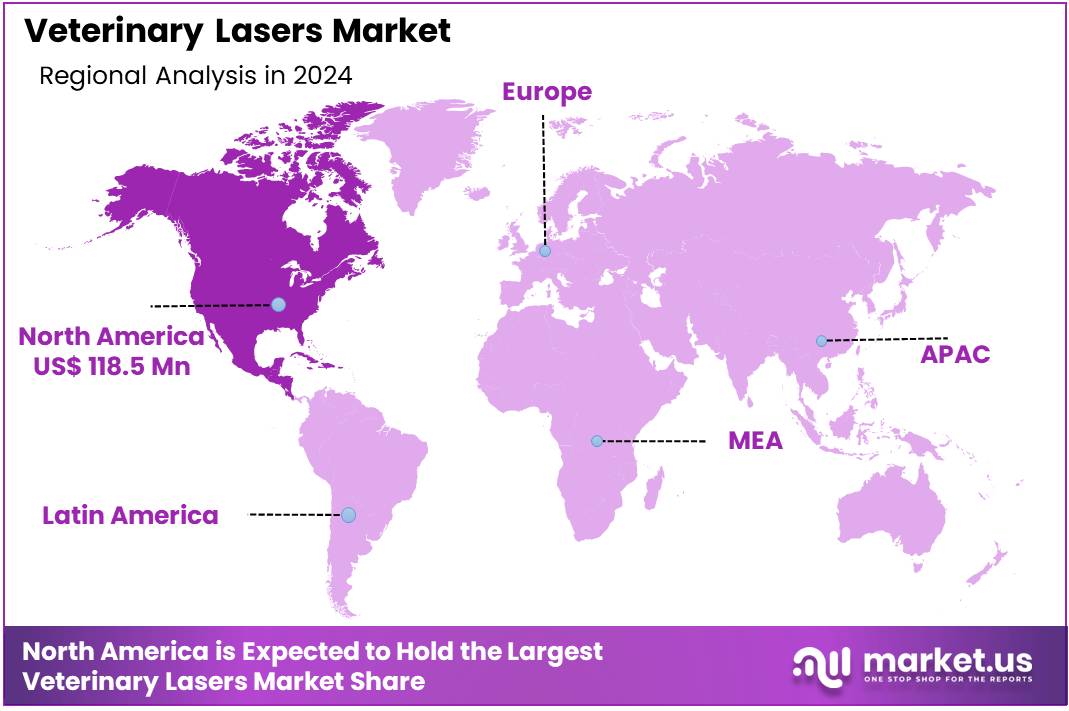
Global Veterinary Lasers Market was valued at USD 320.5 million in 2024 and is anticipated to register substantial growth of USD 724.6 million by 2034, with 8.5% CAGR. In 2023, North America led the market, achieving over 37% share with a revenue of US$ 118.5 Million.
The global veterinary lasers market is witnessing significant growth, driven by increasing demand for non-invasive treatment options for pets and livestock. Advances in laser technology, particularly in therapeutic and surgical applications, have contributed to broader adoption in veterinary practices. The growing awareness of the benefits of laser therapy, such as pain reduction, accelerated healing, and improved outcomes, is further fuelling market expansion.
The rising pet ownership rates, particularly in emerging economies, and the increasing focus on animal healthcare are additional factors propelling market demand. However, challenges such as high initial costs of laser equipment and a lack of trained professionals may hinder market growth. Moreover, stringent regulatory requirements in some regions also pose barriers to market entry.
Despite these challenges, the market is expected to grow, supported by continuous innovations and expanding veterinary care access globally, including increasing the use of lasers in treating soft tissue injuries and post-operative recovery.
- According to the American Pet Products Association (APPA), in 2023, 70% of U.S. households (around 90.5 million families) own a pet. The U.S. Pet Ownership & Demographics Sourcebook (latest edition) states that approximately 69 million households in the U.S. have at least one dog, and 45 million own a cat.
Key Takeaways
- The global veterinary lasers market was valued at USD 320.5 million in 2024 and is anticipated to register substantial growth of USD 724.6 million by 2034, with 8.5% CAGR.
- In 2024, the dogs segment took the lead in the global market, securing 47% of the total revenue share.
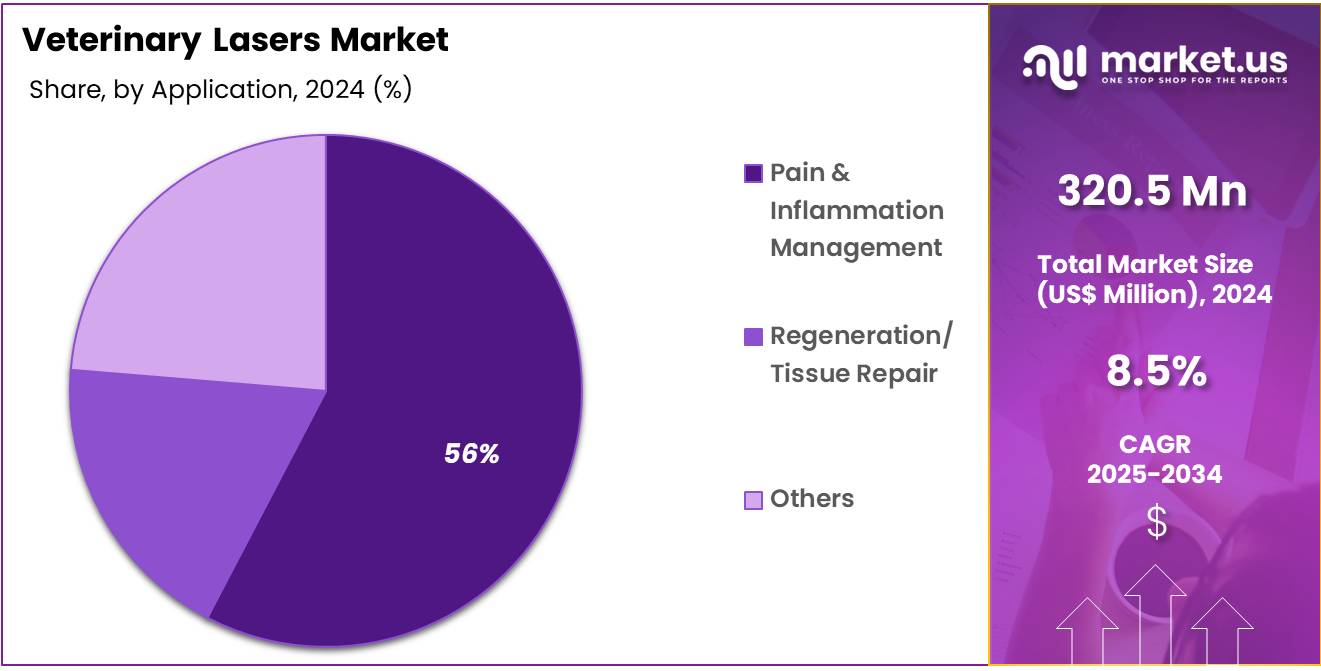
- The veterinary hospitals & clinics segment took the lead in the global market, securing 56% of the total revenue share.
- North America maintained its leading position in the global market with a share of over 37% of the total revenue.
By Animal Analysis
Based on animals the market is fragmented into dogs, cats, and others. Amongst these, dogs dominated the global veterinary lasers market capturing a significant market share of 47% in 2024. Dogs dominate the global veterinary laser market due to the rising prevalence of chronic diseases, bone and joint problems, and obesity. As dogs live longer lives and are increasingly considered family members, the incidence of conditions such as arthritis, hip dysplasia, and obesity has surged.
The primary contributors to these conditions are a lack of exercise and overfeeding, which not only affect the dogs’ overall health but also lead to a higher need for treatments like laser therapy to manage pain and promote healing. Laser therapy is particularly effective in treating musculoskeletal issues, improving joint mobility, and aiding in weight management. As more pet owners seek non-invasive, effective solutions for these prevalent health problems, the demand for veterinary lasers continues to rise.
- According to a 2022 survey, 40% to 45% of dogs between the ages of 5 and 11 are overweight, and over 50% of North American dogs are obese.
End Use Analysis
The market is fragmented by end use into veterinary hospitals & clinics, and others. Veterinary hospitals & clinics dominated the global veterinary lasers market capturing a significant market share of 56% in 2024. Veterinary hospitals and clinics dominate the global veterinary lasers market, primarily due to their widespread use of laser therapy as a primary treatment option. The increasing prevalence of laser applications in both therapeutic and surgical procedures, such as pain management, wound healing, and soft tissue surgeries, is driving this dominance.
The growing adoption of advanced technologies in these clinical settings, coupled with the rising demand for non-invasive, effective treatments, is accelerating the use of veterinary lasers. Additionally, the shift towards more specialized treatments and personalized care in veterinary practices is boosting the segment’s growth.
As more veterinary hospitals integrate these lasers into their practices, their accessibility and availability are increasing, making laser therapy an essential part of veterinary care, and driving the continued growth of this market segment.
- In the U.S., the U.S. Census Bureau estimates that by 2024, there will be over 35,203 veterinary facilities, further contributing to the market’s expansion.
Application Analysis
The market is fragmented by application into pain & inflammation management, regeneration/tissue repair, and others. Pain & inflammation management dominated the global veterinary lasers market capturing a significant market share of 32% in 2024. Pain and inflammation management dominate the global veterinary lasers market due to the growing demand for non-invasive, effective treatments for various conditions affecting pets, particularly dogs and cats.
Laser therapy is widely used in veterinary practices to alleviate pain and reduce inflammation associated with musculoskeletal issues, such as arthritis, hip dysplasia, and post-surgical recovery. By promoting cellular regeneration and improving blood flow, laser therapy helps to speed up healing, reduce swelling, and ease discomfort, making it a preferred option for managing chronic pain in animals.
This therapeutic approach is gaining traction because it offers a pain-free, drug-free alternative to traditional pain management techniques, which is especially beneficial for pets with long-term conditions.
Key Segments Analysis
By Animal
- Dogs
- Cats
- Others
By End Use
- Veterinary Hospitals & Clinics
- Others
By Application
- Pain & Inflammation Management
- Regeneration/Tissue Repair
- Others
Dynamics
Increasing Prevalence of Diseases
The increasing prevalence of diseases in pets is driving the growth of the veterinary lasers market, as laser therapy becomes an essential treatment option for managing various conditions. Chronic diseases such as arthritis, hip dysplasia, and musculoskeletal disorders are on the rise, particularly in aging pets, which increases the demand for non-invasive pain management solutions.
Additionally, conditions like obesity, which affect a significant portion of the pet population, lead to joint problems and inflammation, further boosting the need for effective therapies. Veterinary lasers are increasingly used to treat pain, reduce inflammation, and promote healing, making them a valuable tool in managing these prevalent conditions.
With the growing awareness among pet owners about the benefits of laser therapy, including faster recovery and minimal side effects, veterinary clinics are more inclined to adopt these technologies. This increasing prevalence of health issues in pets, coupled with the rising demand for alternative treatment options, is driving the expansion of the veterinary lasers market.
- According to The Veterinary Cancer Society, cancer is the leading cause of death in 47% of dogs, particularly those over 10 years old, and 32% of cats. Additionally, approximately 1 in 4 dogs will develop abnormal tissue growth or neoplasia during their lifetime.
Restraints
High Cost of Treatment
The high costs associated with surgery and veterinary lasers are a significant restraint on the growth of the veterinary lasers market. While laser therapy offers non-invasive and effective treatments for pain management, inflammation, and wound healing, the initial investment in laser equipment can be prohibitive for many veterinary clinics, especially smaller or independent practices. Additionally, the cost of ongoing maintenance and the need for skilled professionals to operate the technology further adds to the financial burden.
For some pet owners, the expense of laser therapy, in addition to standard treatment costs, may deter them from opting for these advanced treatments, particularly when compared to more affordable, traditional methods. These financial barriers limit the widespread adoption of veterinary lasers, especially in regions with fewer resources. As a result, the high costs associated with both the purchase and use of laser equipment are slowing the overall market growth despite its potential benefits.
Opportunities
Increasing Veterinary Establishments
The rise in the number of veterinarians is creating significant growth opportunities for the veterinary lasers market, as an increasing number of veterinary professionals adopt advanced technologies in their practices. As the demand for specialized animal care grows, the number of veterinarians continues to expand, especially in regions with rising pet ownership and greater awareness of animal health.
More veterinarians are recognizing the benefits of laser therapy in treating various conditions, such as pain management, inflammation, and wound healing, and are incorporating laser devices into their practices.
- For instance, the AVMA reports that in 2023, there were 127,131 veterinary practitioners in the United States, with 82,704 working in clinical practice and 14,488 employed in public or corporate roles.
Impact of macroeconomic factors / Geopolitical factors
Macroeconomic and geopolitical factors have a notable impact on the veterinary lasers market, influencing both demand and supply. Economic downturns or recessions can reduce discretionary spending, affecting pet owners’ willingness to invest in advanced treatments like laser therapy for their animals.
Similarly, during periods of economic uncertainty, veterinary clinics may delay or reduce their investment in high-cost technologies due to budget constraints. Geopolitical factors, such as trade restrictions, tariffs, or supply chain disruptions, can also affect the availability and pricing of veterinary laser equipment, particularly if components are sourced from different regions. Additionally, political instability or regulatory changes in key markets may create challenges for the market, including shifts in healthcare policies or stricter animal welfare regulations.
Latest Trends
The veterinary lasers market is experiencing several key trends that are shaping its growth. One prominent trend is the increasing adoption of laser therapy for non-invasive pain management, particularly in treating conditions like arthritis, soft tissue injuries, and post-surgical recovery. With a growing emphasis on animal wellness and holistic care, many veterinary clinics are incorporating laser therapy into their routine treatments.
Another trend is the integration of portable and user-friendly laser devices, making it easier for smaller clinics and even mobile veterinary practices to offer laser treatments. Additionally, there is a rising focus on laser therapies for both companion animals and livestock, with expanding applications in treating chronic conditions and improving healing times. The market is also seeing advancements in laser technology, with devices becoming more efficient, precise, and affordable.
Finally, growing awareness among pet owners about the benefits of laser therapy is further driving market demand, particularly in developed markets.
Regional Analysis
North America held a significant 37% share of the veterinary laser market. North America holds a significant share of the veterinary laser market, driven by a combination of high pet ownership rates, rising spending, advanced veterinary care, and widespread adoption of innovative treatment options.
The United States, in particular, is a major contributor, with a large number of veterinary clinics incorporating laser therapy into their practices to treat pain, inflammation, and musculoskeletal disorders in pets. The increasing awareness among pet owners about the benefits of laser therapy, along with a growing focus on non-invasive treatments, has fuelled demand for veterinary lasers in the region.
- For example, the American Pet Products Association reports that U.S. pet owners spent USD 147.0 billion on their companion animals in 2023, with USD 38.3 billion allocated to veterinary care and product purchases.
Key Regions and Countries
North America
- US
- Canada
Europe
- Germany
- France
- The UK
- Spain
- Italy
- Russia
- Netherland
- Rest of Europe
Asia Pacific
- China
- Japan
- South Korea
- India
- New Zealand
- Singapore
- Thailand
- Vietnam
- Rest of APAC
Latin America
- Brazil
- Mexico
- Rest of Latin America
Middle East & Africa
- South Africa
- Saudi Arabia
- UAE
- Rest of MEA
Key Players Analysis
The veterinary laser market is characterized by key players focusing on product innovation, technological advancements, and expanding their global reach. Major companies are increasingly investing in research and development to enhance the efficacy and safety of their products, catering to a growing demand for non-invasive treatments in veterinary care. The market is also witnessing new entrants and smaller players offering cost-effective solutions, creating price competition.
Strategic partnerships and acquisitions are common, with companies seeking to broaden their product portfolios or enter new geographic markets. Additionally, regulatory approvals and veterinary practitioners’ adoption of laser therapy are driving growth. The market’s expansion is further fuelled by increasing pet ownership and awareness of alternative therapies in animal healthcare.
SpectraVET specializes in providing high-quality therapeutic laser systems for veterinary practices. Their lasers are designed to promote healing, reduce pain, and improve mobility in animals. The company offers a range of veterinary lasers focused on ease of use, efficiency, and non-invasive treatment for conditions like arthritis, soft tissue injuries, and postoperative recovery.
VBS Direct Limited is a UK-based company that supplies advanced veterinary equipment, including laser therapy devices. They focus on providing cost-effective solutions to veterinary clinics, with an emphasis on enhancing animal wellness and recovery.
Top Key Players
- SpectraVET
- VBS Direct Limited
- Omega Laser Systems Ltd
- Excel Lasers Limited
- SOUND
- Multi Radiance Medical
- ASALaser
- BIOLASE, Inc.
- Cutting Edge Laser Technologies
- Summus Medical Laser, LLC
Recent Developments
- In March 2024, Cutting Edge Laser Technologies and the Veterinary Academy of Higher Learning (VAHL) enhanced their partnership. As part of this expanded collaboration, VAHL’s RACE-approved Certified Dog Rehabilitation Practitioner and Certified Equine Rehabilitation Practitioner programs at the University of Tennessee will now predominantly use Cutting Edge’s laser therapy equipment.
- In October 2024, Cutting Edge Laser Technologies introduced the Robotic M7 MLS Therapy Laser, a groundbreaking advancement in photobiomodulation therapy.









