


Report Overview
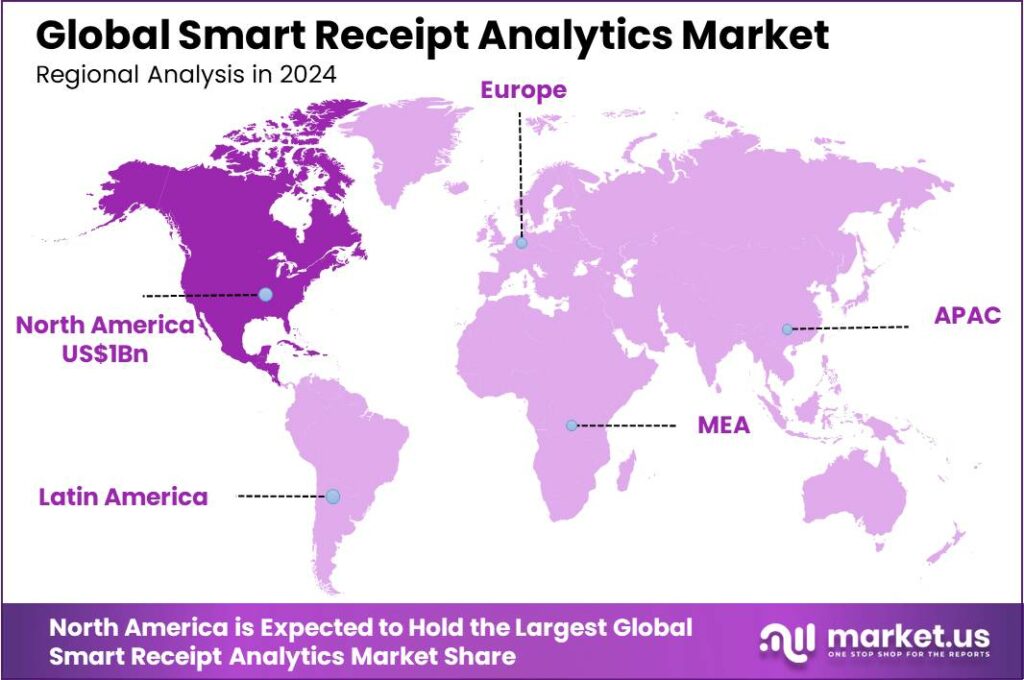
The Global Smart Receipt Analytics Market size is expected to be worth around USD 20.5 Billion By 2034, from USD 2.7 Billion in 2024, growing at a CAGR of 22.50% during the forecast period from 2025 to 2034. In 2024, North America led the Smart Receipt Analytics market, holding over 40.1% of the share and generating revenues of approximately USD 1 billion.
Smart Receipt Analytics refers to the advanced processing and analysis of digital receipt data to extract valuable insights about consumer behavior, sales trends, and operational efficiency. This technology leverages machine learning algorithms and data analytics to turn unstructured receipt information into structured data.
Businesses can use this data to enhance customer relationship management, optimize marketing strategies, and improve product offerings. Smart Receipt Analytics also facilitates compliance with tax and financial regulations by automating record-keeping and reducing errors.
The growth of the smart receipt analytics market is driven by the digitalization of retail and e-commerce, which creates a need for efficient data analysis tools to manage large transaction volumes. The increasing focus on personalized marketing and enhancing customer experience requires the detailed consumer insights that smart receipt analytics can deliver.
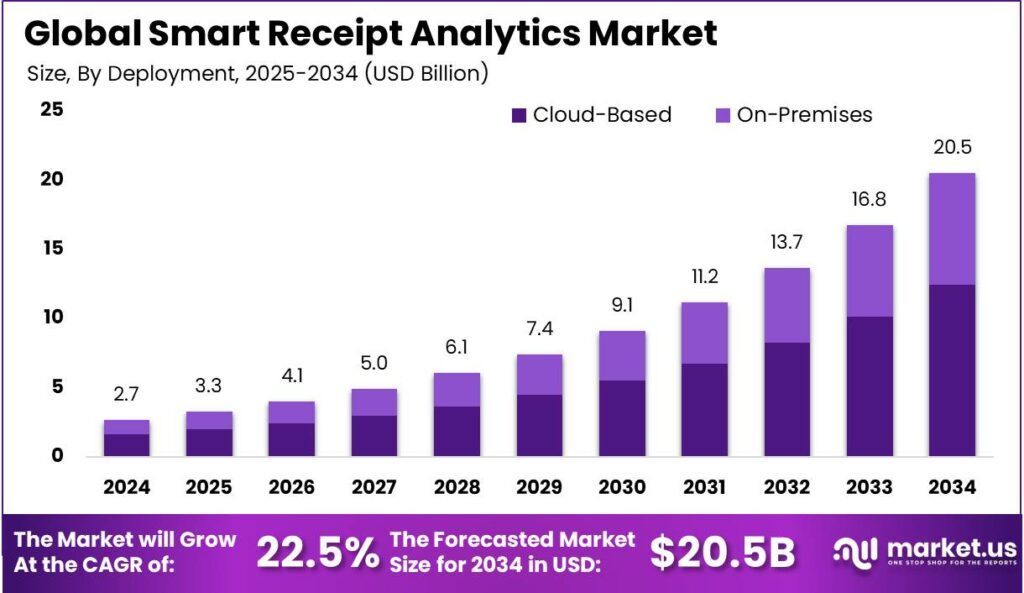
Businesses are increasingly adopting automated data processing systems like smart receipt analytics to cut costs and boost efficiency. With growing data security concerns and compliance requirements, companies are turning to advanced analytics solutions. These factors are driving the continued expansion of the smart receipt analytics market as industries see its value.
Smart receipt analytics is gaining popularity as digital transformation accelerates globally. Businesses are integrating these systems with financial software and CRM platforms to harness automated data capture and analysis. This integration is key to improving customer engagement and personalizing marketing efforts based on real spending behaviors.
According to Kepler Analytics, smart receipts are becoming a key tool for businesses to gain valuable insights into customer behavior. With a 34% view rate for promotions embedded in smart receipts, customers are engaging significantly with offers, while 23% of them are returning to view the receipts again. This interaction has been linked to a 19% increase in shopping frequency. Additionally, businesses can expect potential savings of around $200,000 per year by reducing paper receipt usage.
There are numerous opportunities in the smart receipt analytics market, especially with the advent of machine learning and AI technologies that can further refine data processing capabilities. Innovations such as image recognition for digitizing paper receipts and natural language processing to categorize expenditures are opening new avenues for service enhancement and market growth.
As businesses across various sectors recognize the benefits of smart receipt analytics, from improving budgeting practices to enhancing customer loyalty programs, the market is expected to grow robustly in the coming years. These trends underscore a dynamic field ripe with potential for technological advancements and increased market penetration.
Key Takeaways
- The Global Smart Receipt Analytics Market size is expected to reach USD 20.5 Billion by 2034, growing from USD 2.7 Billion in 2024, with a CAGR of 22.50% during the forecast period from 2025 to 2034.
- In 2024, the Smart Receipt Analytics Solution segment captured more than 75.3% of the overall market share, maintaining a dominant position.
- The Cloud-Based segment also held a dominant position, with more than 60.6% share of the Smart Receipt Analytics market in 2024.
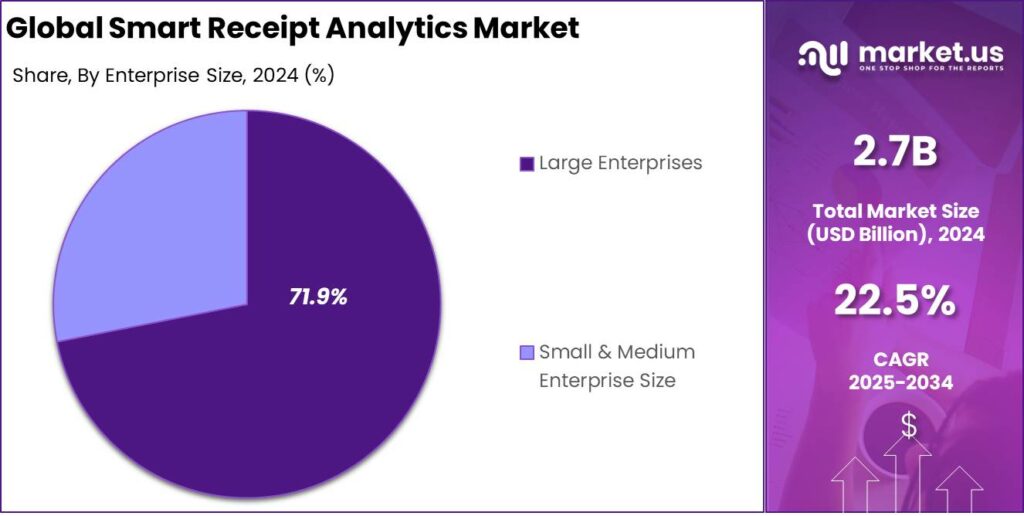
- Large Enterprises led the market in 2024, accounting for more than 71.9% of the Smart Receipt Analytics market share.
- The BFSI (Banking, Financial Services, and Insurance) segment had the largest share in 2024, holding more than 32.8% of the market.
- In 2024, North America dominated the Smart Receipt Analytics market, capturing more than 40.1% share, with revenues reaching approximately USD 1 billion.
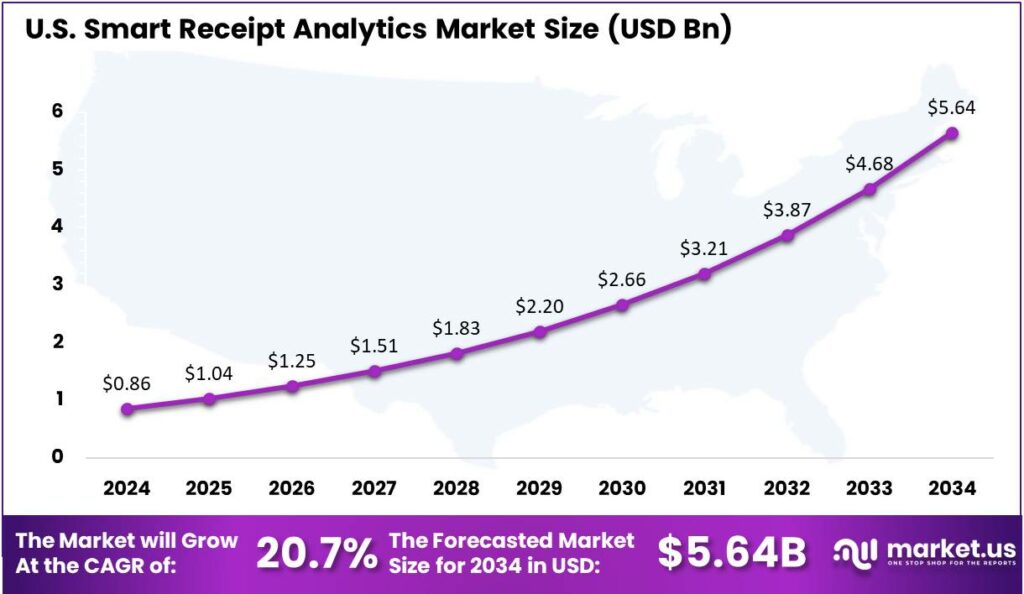
- The U.S. market for smart receipt analytics was valued at $0.86 billion in 2024, and it is expected to expand at a CAGR of 20.7%.
U.S. Smart Receipt Analytics Market Size
In 2024, the U.S. market for smart receipt analytics was valued at $0.86 billion. It is anticipated to expand at a compound annual growth rate (CAGR) of 20.7%. This significant growth underscores the increasing adoption of smart receipt analytics across various sectors.
The rise in demand for smart receipt analytics is driven by retail digitalization and the need for data-driven strategies. As companies embrace digital receipts for eco-friendly goals, these systems reduce paper use while enabling real-time data collection and analysis, enhancing decision-making and personalized customer engagement.
The integration of AI and machine learning is boosting the capabilities of smart receipt systems, allowing them to better recognize spending patterns and predict future trends. This progression is set to drive further innovations, pushing the market toward more advanced and comprehensive analytics solutions to meet the evolving needs of modern businesses.
In 2024, North America held a dominant market position in the Smart Receipt Analytics Market, capturing more than a 40.1% share with revenues reaching approximately USD 1 billion. This leading stance is primarily due to the region’s rapid adoption of digital technologies and a strong emphasis on enhancing consumer engagement through data analytics in the retail sector.
The significant growth in North America can also be attributed to advanced infrastructure and a high degree of digital literacy among businesses and consumers alike. There is a widespread acceptance of electronic receipts among both large enterprises and small and medium-sized enterprises (SMEs), which fuels the demand for smart receipt analytics.
Furthermore, regulatory frameworks in North America that favor data protection and privacy encourage businesses to adopt secure and efficient data analytics solutions. This regulatory environment assures consumers about the safety of their personal information, thus promoting higher adoption rates of digital receipt solutions.
Solution Analysis
In 2024, the Smart Receipt Analytics Solution segment held a dominant market position, capturing more than a 75.3% share of the overall market. This segment’s leadership is attributed to the critical need for businesses to transform digital receipts into actionable insights.
As companies increasingly rely on data-driven strategies to drive business decisions, the demand for robust analytics solutions that can process and analyze large volumes of digital receipt data has surged. These solutions provide core functionalities that enable businesses to enhance operational efficiency, customer engagement, and compliance management.
The services segment within the Smart Receipt Analytics market is further divided into implementation and integration services, consulting and training services, and support and maintenance services. Each of these services plays a vital role in ensuring that analytics solutions are effectively tailored and integrated into existing business infrastructures.
Consulting and training services are crucial for businesses to fully leverage smart receipt analytics. They help organizations apply insights to strategy and operations while training employees to effectively use these systems, promoting a data-driven culture.
Deployment Analysis
In 2024, the Cloud-Based segment held a dominant position in the Smart Receipt Analytics market, capturing more than a 60.6% share.The strong market presence of cloud-based analytics is driven by its flexibility and scalability. Businesses with fluctuating or growing needs benefit from the ability to easily scale resources on these platforms.
The leadership of the cloud-based segment is further bolstered by its capacity to facilitate remote access to data. With the increasing mobility of the workforce and the expansion of remote working arrangements, companies appreciate the ability to access analytics and insights from anywhere and at any time.
Another reason for the dominance of the cloud-based segment is its robust security measures. Despite initial concerns over data security on the cloud, continuous improvements and stringent security protocols have made cloud platforms highly secure.
Cloud-based platforms are popular due to their integration capabilities, allowing seamless connections with digital payment systems and CRM tools. These integrations help businesses streamline operations and gain valuable insights into consumer behaviors and financial health, boosting the demand for cloud-based solutions in smart receipt analytics.
Enterprise Size Analysis
In 2024, the Large Enterprises segment held a dominant position in the Smart Receipt Analytics Market, capturing more than a 71.9% share. This substantial market share can be attributed to the robust infrastructure and significant financial resources that large enterprises possess, allowing them to invest in advanced smart receipt analytics solutions.
These organizations have the scale to leverage big data technologies, which are integral to extracting valuable insights from complex and voluminous transaction data. The ability to implement comprehensive analytics platforms supports these enterprises in enhancing operational efficiencies and customer experiences, driving their dominant market share.
Large enterprises, with their multiple points of sale and vast data, are better positioned to leverage smart receipt analytics. These systems provide valuable insights into consumer behavior, sales trends, and product performance, enabling data-driven decisions that can improve strategy and profitability. Smaller enterprises may face challenges due to cost constraints.
Large enterprises lead in adopting innovations like cloud-based platforms and AI-driven analytics, boosting their data management capabilities. By integrating smart receipt analytics, they can quickly adapt to market changes and consumer preferences, maintaining a competitive edge and setting industry benchmarks.
End User Analysis
In 2024, the BFSI (Banking, Financial Services, and Insurance) segment held a dominant market position in the Smart Receipt Analytics Market, capturing more than a 32.8% share. This leadership is primarily driven by the sector’s high volume of transactional data and the critical need for enhanced data analytics to ensure operational efficiency and regulatory compliance.
The BFSI sector’s emphasis on security and fraud prevention further amplifies its investment in smart receipt analytics. These tools enable banks and financial institutions to detect anomalies in transaction data that could indicate fraudulent activities.
By integrating advanced analytics into their systems, these organizations can proactively address potential threats and reduce the risk of financial losses. This proactive approach not only safeguards the institution but also builds customer trust and loyalty, which are crucial in this highly competitive sector.
Digital transformation in the BFSI sector drives the need for advanced analytics to manage growing digital receipts and transaction records. As customers shift to online banking and mobile transactions, smart receipt analytics help institutions analyze data, offering deeper insights into customer habits and preferences.
Key Market Segments
By Solution
- Smart Receipt Analytics Solution
- Services
- Implementation & Integration Services
- Consulting & Training
- Support & Maintenance
By Deployment
- Cloud-Based
- On-Premises
By Enterprise Size
- Small & Medium Enterprise Size (SME’s)
- Large Enterprises
By End User
- BFSI
- IT & Telecom
- Retail
- Government & Public Sector
- Healthcare
- Manufacturing
- Media & Entertainment
- Others
Key Regions and Countries
- North America
- US
- Canada
- Europe
- Germany
- France
- The UK
- Spain
- Italy
- Rest of Europe
- Asia Pacific
- China
- Japan
- South Korea
- India
- Australia
- Singapore
- Rest of Asia Pacific
- Latin America
- Brazil
- Mexico
- Rest of Latin America
- Middle East & Africa
- South Africa
- Saudi Arabia
- UAE
- Rest of MEA
Driver
Enhancing Efficiency and Reducing Costs
Businesses today are increasingly turning to AI-powered receipt automation to streamline their financial processes. By automating tasks such as data entry and invoice processing, companies can significantly reduce manual labor, minimize errors, and speed up transaction times.
This efficiency not only leads to substantial cost savings but also allows employees to focus on more strategic activities. For example, AI systems can swiftly extract and categorize data from receipts, ensuring accurate record-keeping and timely financial reporting. This move towards automation is driven by the need for businesses to remain competitive and responsive in a fast-paced market.
Restraint
Data Privacy and Security Concerns
Despite the advantages, the adoption of AI-powered receipt automation is often hindered by concerns over data privacy and security. Financial receipts contain sensitive information, and businesses must ensure that this data is protected from breaches and unauthorized access.
Implementing robust security measures and complying with data protection regulations can be complex and costly. These challenges may deter some organizations from fully embracing automated solutions, as they weigh the benefits against the potential risks to their reputation and customer trust.
Opportunity
Integration with Mobile Commerce and Loyalty Programs
The rise of mobile commerce presents a significant opportunity for smart receipt analytics. By integrating digital receipts with mobile apps and loyalty programs, retailers can enhance the shopping experience for consumers.
Digital receipts can be used to track purchasing behaviors, allowing businesses to offer personalized promotions and rewards. This not only increases customer engagement but also provides valuable data that can inform marketing strategies and inventory management. As mobile shopping continues to grow, leveraging smart receipt analytics can help businesses stay ahead of the curve.
Challenge
Integration with Legacy Systems
A major challenge in implementing smart receipt analytics is integrating new technologies with existing legacy systems. Many organizations operate with outdated infrastructure that may not be compatible with modern analytics solutions.
This incompatibility can lead to data silos, inconsistencies, and increased complexity in managing information across platforms. Overcoming this challenge requires significant investment in system upgrades and a strategic approach to data management. Without addressing these integration issues, businesses may struggle to fully realize the benefits of smart receipt analytics.
Emerging Trends
By digitizing receipts, companies can gather detailed insights into purchasing behaviors, preferences, and trends. This shift from traditional paper receipts to digital formats not only reduces environmental waste but also opens avenues for personalized marketing and improved customer experiences.
Moreover, the integration of artificial intelligence (AI) and machine learning (ML) into receipt analytics allows for real-time data processing. This means businesses can quickly identify emerging consumer trends and adjust their strategies accordingly.
A notable trend is the integration of digital receipts with mobile wallets and banking apps, offering convenience to customers and valuable insights to businesses. Companies like Slyp are leading this shift by delivering smart receipts directly to banking apps, eliminating paper and improving the post-purchase experience.
Business Benefits
Adopting smart receipt analytics offers numerous benefits for businesses. It leads to cost savings by reducing the need for paper and printing resources. Additionally, digital receipts simplify record-keeping and expense analysis by automatically storing transactions in a digital format, making it easier to track sales and returns.
Furthermore, the data collected through digital receipts can be instrumental in refining marketing strategies. By analyzing purchasing behaviors, businesses can tailor promotions and product recommendations to individual customers, thereby increasing the likelihood of repeat purchases.
The move towards smart receipt analytics is reshaping the retail landscape. By embracing this technology, businesses can gain deeper insights into consumer behavior, streamline operations, and foster stronger customer relationships, all while contributing to environmental sustainability.
Key Player Analysis
The key players in Smart Receipt Analytics Market play a significant role in shaping its future by providing innovative solutions for expense management, data processing, and financial transparency.
- SKALE offers a cloud-based receipt and expense management platform that focuses on simplifying financial tracking for businesses and individuals. Their solution uses advanced artificial intelligence (AI) to extract data from receipts and categorize it for easy analysis.
- SEB Kort Bank AB, a prominent player in the banking sector, has entered the smart receipt analytics market with an emphasis on enhancing financial management for their customers. By offering a powerful tool for receipt digitization and expense tracking, SEB Kort has integrated their solution with their banking services.
- SmartReceipts is a popular app-based solution that targets individuals and businesses seeking to digitize their receipts and streamline expense reporting. With a simple, user-friendly interface, SmartReceipts lets users scan receipts and organize them for reporting, tax purposes, or reimbursement requests.
Top Key Players in the Market
- SKALE
- SEB Kort Bank AB
- SmartReceipts
- iisal
- NETSCOUT
- Altair Engineering Inc.
- Smartlook.com
- SparkReceipt Oy
- Rydoo
- Weel Holdings Pty Ltd
- Paymob
- Others
Top Opportunities Awaiting for Players
- AI and Machine Learning Enhancements: Artificial intelligence and machine learning continue to transform data analytics, making it possible to automate routine tasks, analyze large data volumes, and uncover trends that might otherwise go unnoticed. For smart receipt analytics, this means improved accuracy in extracting and processing data from receipts, leading to better customer insights and enhanced decision-making capabilities.
- Data Democratization: Making data accessible across all levels of an organization is becoming increasingly important. Companies that promote data democratization can empower their employees to make data-driven decisions without needing a deep technical background. This approach enhances overall productivity and leverages diverse insights across the company.
- Edge Computing: This technology processes data close to where it is generated rather than relying on a central location. For smart receipt analytics, edge computing can facilitate faster processing and real-time analytics, essential for businesses that require immediate insights from their transactional data.
- Cross-Platform Integration: There is a significant push towards integrating various data sources and analytics platforms. For companies in the smart receipt analytics sector, the ability to integrate data from different platforms, like combining sales data from point-of-sale systems with marketing data from other analytics tools, can provide a more comprehensive understanding of consumer behavior and business performance.
- Enhanced Privacy and Security Measures: As data breaches become more common, there is an increasing need for robust security frameworks to protect sensitive customer and business data. Companies that prioritize advanced security measures in their smart receipt analytics solutions will not only comply with global data protection regulations but also gain customer trust.
Recent Developments
- In July 2023, TransactionTree forged a partnership with a leading retail chain to roll out its innovative digital receipt solution. This collaboration aims to elevate customer engagement by delivering personalized digital receipts, while also unlocking the potential for targeted marketing strategies.
- In January 2024, QUICK Corp. partnered with Toshiba Data to leverage data from the ‘Smart Receipt’ service. This collaboration aims to analyze purchase statistics to provide insights into consumer behavior for institutional investors.









