


Report Overview
The Global Fencing Equipment Market size is expected to be worth around USD 1.9 Billion by 2034, from USD 1.2 Billion in 2024, growing at a CAGR of 4.6% during the forecast period from 2025 to 2034.
Fencing equipment includes all the gear needed for the sport of fencing. This includes swords (foils, épées, and sabers), protective clothing like jackets, gloves, masks, and footwear. The equipment is designed to ensure safety and performance while competing in fencing matches.
The fencing equipment market involves the sale and distribution of various fencing gear to individuals and organizations. This market caters to competitive fencers, schools, clubs, and professional athletes. It includes products such as swords, protective gear, and accessories. The market also sees demand from various fencing competitions and events.
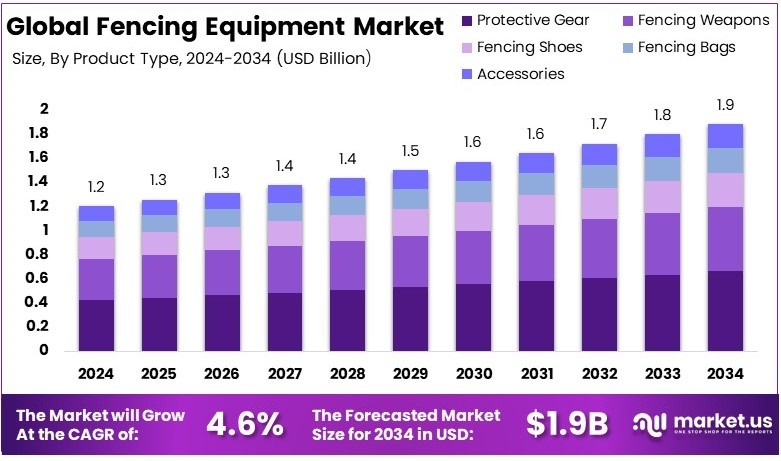
The fencing equipment market is steadily growing. With around 150,000 to 200,000 registered fencers worldwide, the demand for specialized gear is increasing. This growth is driven by the rise of school and college programs in countries like the U.S., where 1,200 high schools offer fencing. Manufacturers are responding with high-quality swords, protective gear, and masks.
The demand for fencing equipment is tied to the sport’s increasing popularity, especially in schools and universities. The global fencing community is expanding, and new players are entering the market. For instance, European countries like France and Germany have robust national programs that fuel demand for competitive gear. This creates growth opportunities for manufacturers.
The market is moderately competitive. Established brands have strong market presence, but new players can still find opportunities by offering innovative products. Demand for high-quality equipment, such as fencing swords weighing between 350-500 grams, encourages manufacturers to improve and diversify their offerings, ensuring the market remains dynamic and competitive.
Fencing’s growth on a global scale boosts the demand for specialized sports equipment. Locally, this trend benefits retail and sports facilities. Increased participation leads to more competitions, driving demand for durable and high-performance gear. Countries with large fencing communities are seeing an uptick in local business activity, creating a ripple effect in regional economies.
Government regulations, like those from the International Fencing Federation (FIE), play a critical role in shaping the market. Strict safety standards for protective gear, such as jackets weighing between 500-1000 grams, ensure player safety while driving demand for compliant products. Local governments also support fencing programs, helping to increase participation and equipment sales.
Key Takeaways
- The Fencing Equipment Market was valued at USD 1.2 Billion in 2024, and is expected to reach USD 1.9 Billion by 2034, with a CAGR of 4.6%.
- In 2024, Protective Gear dominates the product type segment with 34.8% due to its critical role in ensuring safety during fencing matches.
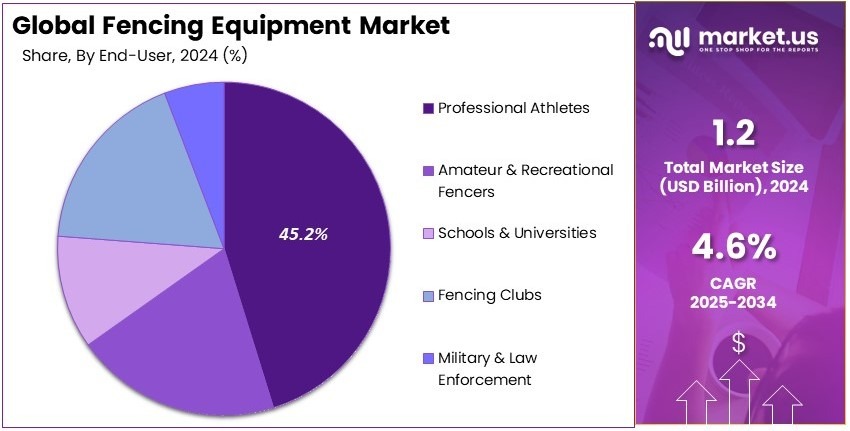
- In 2024, Professional Athletes account for 45.2% of the end-user segment, highlighting the high demand for premium gear among competitive fencers.
- In 2024, Offline Retail leads distribution channels with 57.3%, reflecting consumer preference for hands-on product selection and fitting in stores.
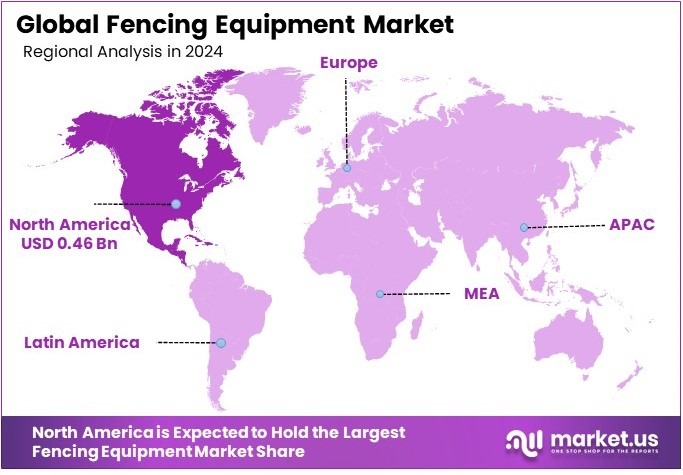
- In 2024, North America is the dominant region with 38.2% share, valued at USD 0.46 Billion, driven by the presence of major suppliers and high fencing participation.
Product Type Analysis
Protective Gear sub-segment dominates with 34.8% due to its critical role in ensuring safety.
In the Fencing Equipment Market, Protective Gear emerges as the dominant sub-segment, capturing 34.8% of the market share. This dominance stems from the essential need for safety in fencing, a sport involving direct physical combat with weapons. Protective gear includes items such as masks, jackets, and gloves, which are crucial for preventing injuries.
Fencing Weapons are the tools of the trade and are necessary for all practitioners, but the diversity in weapon types—foil, épée, and sabre—leads to more fragmented market share. Fencing Shoes provide athletes with the necessary grip and mobility on the fencing piste and are designed specifically to enhance footwork and agility.
Fencing Bags are important for transporting and protecting equipment but have a smaller market share due to their longer replacement cycles. Accessories such as grips, pommels, and body cords play supportive roles in the market, essential but less visible in terms of sales.
End-User Analysis
Professional Athletes sub-segment dominates with 45.2% due to high equipment standards and frequent replacement.
The End-User segment of the Fencing Equipment Market is significantly led by Professional Athletes, holding a 45.2% market share. This group demands the highest quality equipment to meet the rigorous standards of international competition, contributing to their dominant market share.
Amateur & Recreational Fencers contribute to market growth through their numbers, though their equipment needs are less frequent and less specialized. Schools & Universities are key players in developing beginner fencers, providing a steady demand for entry-level gear.
Fencing Clubs are essential for ongoing training and competition at all levels, supporting sustained equipment sales. Military & Law Enforcement use fencing as a training tool for hand-to-hand combat skills, adding to the market from a niche angle.
Distribution Channel Analysis
Offline Retail sub-segment dominates with 57.3% due to customer preference for personal service and product fit.
Distribution Channels in the Fencing Equipment Market are crucial for understanding consumer purchasing behaviors. Offline Retail holds the largest share with a 57.3% market presence, driven by customers’ preference to try on and test equipment before purchase. This is particularly important in a sport where fit and comfort significantly affect performance.
Online Retail, though smaller in market share, is growing as consumers become more comfortable purchasing standard equipment items without a fitting. Direct Sales are utilized primarily by manufacturers or specialized retailers who sell directly to fencing clubs or teams, offering customized solutions that cater to specific needs.
Key Market Segments
By Product Type
- Fencing Weapons
- Protective Gear
- Fencing Shoes
- Fencing Bags
- Accessories
By End-User
- Professional Athletes
- Amateur & Recreational Fencers
- Schools & Universities
- Fencing Clubs
- Military & Law Enforcement
By Distribution Channel
- Online Retail
- Offline Retail
- Direct Sales
Driving Factors
Participation and Innovation Drive Market Growth
Fencing is gaining worldwide popularity as both a competitive and recreational sport. Many people now appreciate its blend of skill and strategy. In addition, more communities are embracing the sport, which broadens the market for fencing equipment. For example, local clubs in Europe and Asia are seeing increased participation.
Furthermore, fencing is increasingly included in school and college-level sports programs. Educational institutions now offer fencing as an elective sport. Consequently, young athletes are introduced to the sport at an early age, which boosts demand for beginner-friendly gear. This inclusion helps build a strong foundation for future growth.
Moreover, significant advancements in fencing gear technology have improved both safety and performance. Manufacturers are designing equipment with better materials and enhanced features. As a result, players experience reduced risks and improved competitive edge. These innovations encourage more athletes to invest in high-quality gear.
Additionally, rising government and private funding for Olympic and national fencing teams has had a positive impact. Financial support enables teams to access state-of-the-art equipment. Therefore, the sport’s profile is elevated on the international stage. This funding not only fuels elite performance but also stimulates market expansion.
Restraining Factors
Cost and Safety Restrain Market Growth
High costs of professional-grade fencing equipment often limit market accessibility. Many amateur fencers find it challenging to invest in expensive gear. Similarly, this pricing barrier can discourage newcomers from entering the sport. In consequence, market growth is affected in regions with limited disposable income.
In contrast, the popularity of fencing remains restricted in certain regions. While the sport thrives in some countries, others show limited interest. Therefore, regional disparities hinder overall market expansion. This uneven demand results in challenges for global brands seeking a broader customer base.
Moreover, strict safety regulations and certification standards increase production costs. Manufacturers must adhere to rigorous guidelines, which sometimes slow down the innovation process. Consequently, the elevated costs are often passed on to consumers. This situation may discourage potential buyers from opting for high-end equipment.
Additionally, the inherent risk of injuries can lead to hesitation among newcomers. Although safety measures are continually improving, fear of injury persists for some. As a result, hesitant players may delay or avoid purchasing equipment. This concern further restrains the market’s growth potential.
Growth Opportunities
Personalization and Digital Growth Provide Opportunities
The development of smart fencing equipment with sensors and performance tracking is opening new doors in the market. These devices offer real-time feedback to improve technique and performance. For instance, coaches can monitor athletes’ progress using data from these tools. Consequently, innovation drives interest among tech-savvy fencers.
In addition, there is a growing demand for sustainable and eco-friendly fencing gear materials. Manufacturers are beginning to use recycled and environmentally safe materials. As a result, eco-conscious consumers are more inclined to invest in such products. This shift supports a greener and more responsible market.
Furthermore, increasing female participation in fencing is creating a demand for specialized equipment. Women now seek gear designed to fit their needs and enhance performance. In turn, brands are expanding their product lines to include options tailored for female athletes. This inclusivity further diversifies the market.
Similarly, the growth of fencing in emerging markets and collaborations between sportswear brands and professional fencers provide fresh opportunities. Emerging economies show rising interest in niche sports like fencing. Moreover, partnerships with professionals boost credibility and appeal. Consequently, these factors collectively expand the market reach.
Emerging Trends
Digital Trends and Material Innovation Are Latest Trending Factors
The use of carbon fiber and other advanced materials is becoming popular for lightweight and durable fencing gear. Manufacturers are adopting these materials to offer superior performance and comfort. For example, athletes benefit from equipment that is both strong and easy to handle. Hence, advanced materials are setting new industry standards.
In addition, LED-enabled and high-tech fencing suits are gaining traction for enhanced visibility. These suits not only add a modern look but also improve safety during competitions. As a result, players can better monitor their movements on the strip. This innovation is quickly becoming a favorite among elite fencers.
Moreover, the increasing influence of social media and online content is promoting fencing as a sport. Influential athletes share their experiences and endorse top brands online. Consequently, social platforms have become crucial for marketing and product launches. This digital influence drives trends and expands consumer interest.
Lastly, there is a rising demand for multi-purpose fencing gear adaptable for different combat sports. Manufacturers are designing versatile products that can be used in various disciplines. Therefore, these innovative designs meet the needs of a broader audience. In summary, material innovation and digital trends continue to reshape the fencing equipment market.
Regional Analysis
North America Dominates with 38.2% Market Share
North America leads the Fencing Equipment Market with a 38.2% share, translating to USD 0.46 billion. This strong market presence is largely attributed to the well-established sports culture in the region, including a significant number of fencing clubs and a high participation rate in collegiate fencing competitions.
The region benefits from affluent consumers who invest in quality sports equipment and from a number of elite fencing academies that foster high levels of participation from a young age. Additionally, the United States hosts numerous national and international fencing events, which drives the demand for fencing gear.
Looking ahead, the influence of North America in the global Fencing Equipment Market is expected to remain strong. Increased interest in fencing driven by its inclusion in school curriculums and growing public exposure through media are likely to further boost demand. Technological advancements in equipment, such as lighter and more durable materials, will also likely attract more participants to the sport.
Regional Mentions:
- Europe: Europe remains a major player in the Fencing Equipment Market, with its rich fencing history and many world-class fencers. The region’s manufacturers are known for their high-quality craftsmanship and innovation in fencing gear.
- Asia Pacific: Asia Pacific is seeing rapid growth in fencing, particularly in countries like China and Japan, where increased investment in sports and rising interest in fencing as a competitive sport are expanding the market.
- Middle East & Africa: The Middle East and Africa are gradually exploring fencing, with increasing investments in sports infrastructure and initiatives to promote fencing in schools contributing to the market’s growth.
- Latin America: Latin America is experiencing gradual growth in the Fencing Equipment Market, with increased visibility of the sport and growing participation at the competitive level boosting the demand for equipment.
Key Regions and Countries Covered in the Report
- North America
- US
- Canada
- Europe
- Germany
- France
- The UK
- Spain
- Italy
- Rest of Europe
- Asia Pacific
- China
- Japan
- South Korea
- India
- Australia
- Rest of APAC
- Latin America
- Brazil
- Mexico
- Rest of Latin America
- Middle East & Africa
- South Africa
- Saudi Arabia
- UAE
- Rest of MEA
Competitive Landscape
The Fencing Equipment Market is dominated by four key companies known for their quality and innovation: Absolute Fencing Gear, Alliance Fencing Equipment, Allstar Fecht-Center GmbH & Co. KG, and American Fencers Supply Co.
Absolute Fencing Gear offers a wide range of fencing equipment that is both high in quality and competitively priced, making it a favorite among beginners and professionals alike. They are known for their reliable gear that meets the diverse needs of fencers.
Alliance Fencing Equipment provides specialized fencing gear that includes a variety of blades and protective clothing. Their focus on quality and customer service has earned them a solid reputation in the fencing community.
Allstar Fecht-Center GmbH & Co. KG is a leading European manufacturer known for its innovative designs and the use of cutting-edge technology in fencing apparel and equipment, enhancing both safety and performance for fencers.
American Fencers Supply Co. has a long-standing history in the market, offering a comprehensive range of gear that supports fencers from practice to competition. Their products are celebrated for their durability and adherence to international fencing standards.
These leaders in the Fencing Equipment Market are recognized for their commitment to quality, innovation, and the enhancement of the fencer’s experience, securing their position at the forefront of the market.
Major Companies in the Market
- Absolute Fencing Gear
- Alliance Fencing Equipment
- Allstar Fecht-Center GmbH & Co. KG
- American Fencers Supply Co.
- Blue Gauntlet Fencing
- Leon Paul
- PBT Hungary Ltd.
- Triplette Competition Arms
- Victory Fencing Gear
Recent Developments
- UIPM: On December 2024, the UIPM announced the renewal of its partnership with Absolute Fencing Gear, extending support for the Modern Pentathlon through 2028. The agreement includes a significant increase in investment and expanded provision of fencing equipment to UIPM events and programs worldwide.
- World Para Fencing: On January 2025, World Para Fencing announced its rebranding to better reflect the inclusivity of the sport, aiming to expand wheelchair fencing to include more impairment groups. The new name and logo will launch in 2025, coinciding with a series of international competitions, including the World Championships in Iksan, South Korea, in September.









