


Report Overview
The Global Pubs, Bars and Nightclubs Market size is expected to be worth around USD 58.4 Billion by 2034, from USD 36.2 Billion in 2024, growing at a CAGR of 4.9% during the forecast period from 2025 to 2034.
Pubs, bars, and nightclubs are establishments that serve alcoholic beverages to customers. Pubs are usually casual, social places where people drink and often eat. Bars focus on a variety of drinks, while nightclubs provide entertainment like dancing and music. These venues often operate late into the night.
The Pubs, Bars and Nightclubs market refers to the business of providing alcoholic beverages and entertainment. It includes establishments like pubs, bars, and nightclubs. This market includes food and beverage sales, entertainment services, and sometimes event hosting. The focus is on customer enjoyment and nightlife experiences.
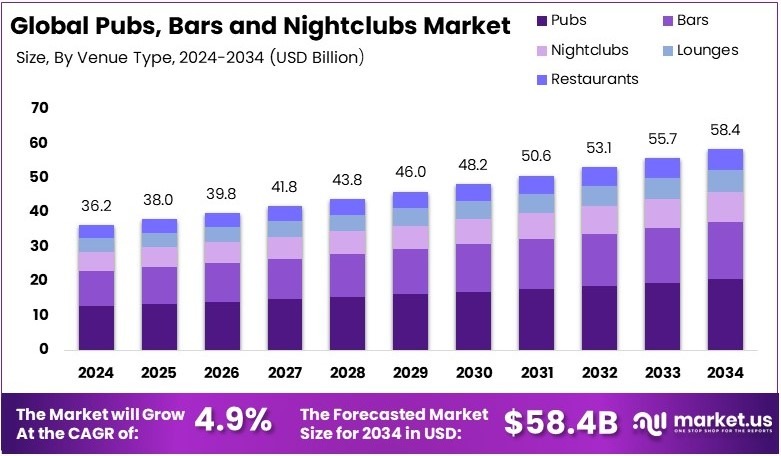
The pubs, bars, and nightclubs sector is experiencing strong growth driven by post-pandemic socialising. For example, consumer spending in the UK night-time economy reached £136.5bn in 2022, up from £95.7bn in 2021. The market benefits from high profit margins, with bars typically generating 65-80% gross profit, which is substantially higher than many industries.
There is significant demand for nightlife entertainment, especially in major cities. For instance, New York’s nightlife industry generates US$35 billion annually and supports 300,000 jobs. The UK market also contributes $85 billion annually, making it the fifth-largest industry. The desire for social experiences continues to drive growth, especially as alcohol consumption rebounds post-pandemic.
Despite its growth, the market faces increasing saturation, particularly in urban areas. With many new bars and clubs opening, competition is fierce. However, the industry still offers profitable opportunities, especially for innovative concepts or locations with high foot traffic. Yet, operators must adapt to consumer trends to stay ahead in such a competitive space.
On a broader scale, the nightlife industry contributes significantly to the economy, supporting millions of jobs worldwide. On a local level, nightclubs, bars, and pubs can boost tourism, increase local employment, and support related businesses, such as transport and hospitality services. This ripple effect strengthens the overall economic landscape.
Governments regulate alcohol consumption and nightlife venues, influencing how bars and clubs operate. For example, alcohol laws in the EU and the U.S. set legal drinking ages, affecting sales strategies. Additionally, local governments invest in the nightlife sector by supporting safe environments, which further stimulates market growth while ensuring public health and safety.
Key Takeaways
- The Pubs, Bars and Nightclubs Market was valued at USD 36.2 billion in 2024 and is expected to reach USD 58.4 billion by 2034, growing at a CAGR of 4.9%.
- In 2024, Pubs dominate the venue type segment with 35.4%, reflecting their widespread popularity for casual and community-focused gatherings.
- In 2024, Full-Service leads the service type segment with 40.7%, showing the market’s preference for comprehensive, quality service offerings.
- In 2024, Independent ownership leads with 50.5%, indicating that smaller, privately owned establishments remain dominant in this sector.
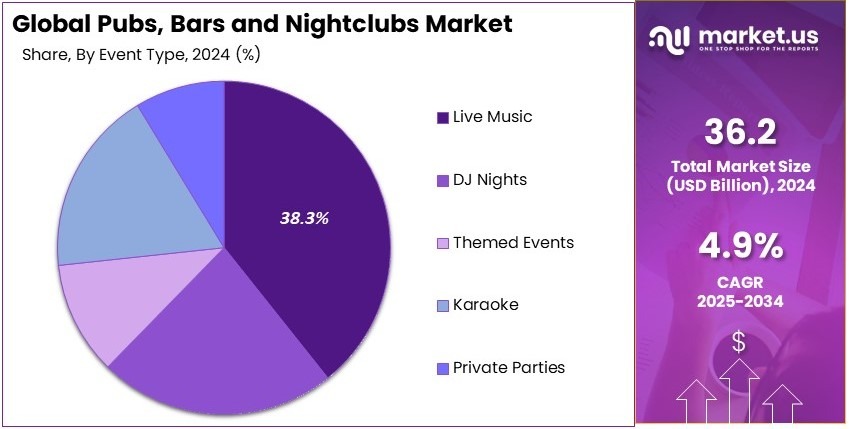
- In 2024, Live Music events lead the event type segment with 38.3%, showing the high demand for live entertainment in bars and nightclubs.
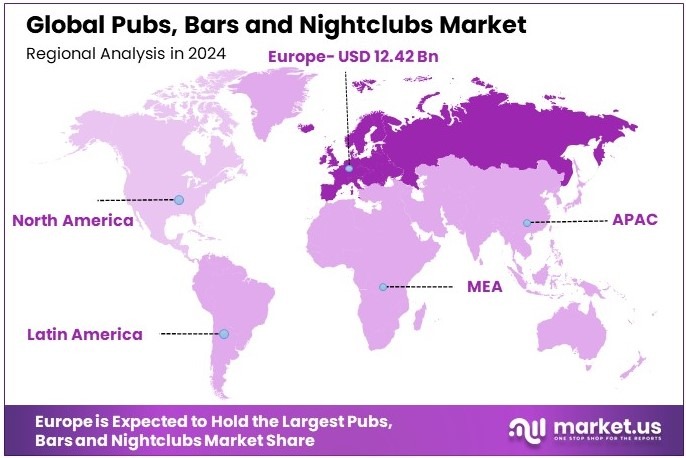
- In 2024, Europe dominates the market region with 34.3%, contributing USD 12.42 billion to the market, due to strong consumer demand and nightlife culture.
Venue Type Analysis
Pubs sub-segment dominates with 35.4% due to a strong consumer base and traditional appeal.
Pubs have long been the social heart of many communities, offering a relaxed environment for friends and families. They hold the largest share in the Pubs, Bars, and Nightclubs market, with a significant 35.4%. This dominance stems from their broad consumer appeal and historical presence in almost every city and town.
Pubs cater to a variety of customers, from casual drinkers to people looking for a place to unwind after work. The traditional pub setting with hearty meals and a local, community-oriented feel makes it popular for repeat visits.
The rising trend of “gastropubs” that focus on high-quality food and craft and alcoholic beverages further enhances the market’s growth. Pubs also offer an inviting atmosphere for groups to socialize, making them a consistent favorite across demographics.
Bars, while contributing to the market, hold a smaller share compared to pubs, focusing on serving drinks, cocktails, and providing an energetic nightlife experience. The bar sub-segment caters to customers looking for lively environments with music and themed nights.
Nightclubs are popular with younger crowds looking for dancing, DJ performances, and late-night entertainment, but they tend to have a niche audience compared to pubs.
Lounges provide a more upscale, relaxed environment but remain less prominent in market share. Lastly, restaurants that include alcohol services blend dining with casual drinking but do not typically compete with pubs in terms of sheer volume of patrons seeking solely a drinking experience.
Service Type Analysis
Full-Service sub-segment dominates with 40.7% due to the comprehensive experience it offers.
The Full-Service segment takes the lead in the service type category, making up a 40.7% market share. This dominance is due to its ability to provide a complete experience for customers. Full-service venues typically offer a mix of food, drinks, and entertainment, attracting a broad range of customers.
They cater to those seeking not only drinks but also a higher level of comfort and variety, with menus that can include everything from snacks to fine dining. The rising trend of customers wanting value for their money in a single location has fueled the growth of full-service establishments. These venues provide a memorable experience, whether it’s a casual dinner with drinks or a special night out with friends.
Self-Service, while gaining traction, holds a smaller percentage. It appeals to those looking for convenience and cost-effective options, often found in fast-casual settings or automated environments.
Casual service models, such as bars offering limited food and drink choices, also appeal to customers looking for a quick, straightforward experience. Premium services, found in upscale venues, focus on offering an exclusive environment and top-quality service, catering to a high-end demographic willing to pay for luxury experiences.
Ownership Type Analysis
Independent sub-segment dominates with 50.5% due to flexibility and local appeal.
The Independent ownership type leads this market segment with a 50.5% share. Independently owned pubs, bars, and nightclubs tend to be more flexible and cater specifically to local tastes. These establishments often stand out for their unique ambiance, more personalized customer service, and the ability to adapt quickly to market demands.
For example, a locally owned pub may adjust its menu to reflect the preferences of the local community, while a chain may have standardized offerings. Independent venues often create strong relationships with their customer base, which helps retain loyal patrons.
Chains, while offering consistency and a recognizable brand, hold a smaller share. They benefit from economies of scale, allowing for cost-effective marketing and menu offerings. Franchises, on the other hand, combine aspects of both independent and chain ownership.
They offer brand recognition and consistency but still allow for local adaptations in terms of service or decor. However, they remain niche in comparison to independent venues, which dominate in both number and popularity.
Event Type Analysis
Live Music sub-segment dominates with 38.3% due to the high demand for entertainment experiences.
Live Music events lead this segment with 28.3% of the market share, driven by a strong demand for live entertainment across bars and nightclubs. Many customers seek live performances as part of their night out, whether it’s for small local bands or major touring acts.
Live music events create a vibrant atmosphere that attracts diverse audiences, from young people looking to hear popular genres to older individuals attending tribute shows. The experience of watching live performances enhances the overall appeal of venues, making them hubs for social gatherings and entertainment.
DJ Nights are another popular event type, often hosted in nightclubs. These events, which focus on popular electronic dance music, attract a younger crowd looking for a nightlife experience. Themed events, often held in bars or pubs, create excitement by offering unique experiences like costume nights or special drink promotions.
Karaoke is a favorite for individuals or groups seeking fun and interaction. Finally, Private Parties, often booked in lounges or exclusive areas within bars and nightclubs, contribute a smaller yet significant portion to the market. These events offer a personalized experience, such as corporate gatherings or birthday parties, attracting those seeking a more intimate and private setting.
Key Market Segments
By Venue Type
- Pubs
- Bars
- Nightclubs
- Lounges
- Restaurants
By Service Type
- Full-Service
- Self-Service
- Casual
- Premium
By Ownership Type
- Independent
- Chain
- Franchise
By Event Type
- Live Music
- DJ Nights
- Themed Events
- Karaoke
- Private Parties
Driving Factors
Consumer Preferences and Income Boost Market Growth
The growing demand for unique and memorable experiences drives the Pubs, Bars, and Nightclubs Market. As consumers seek more than just food and drinks, experiential dining and nightlife have gained significant attention.
Additionally, increased disposable income allows more people to indulge in socializing and entertainment. With more money available, consumers are willing to spend on premium experiences at pubs, bars, and nightclubs.
Moreover, the rise of online food and beverage delivery services has enhanced the accessibility of these venues. People now have the flexibility to enjoy pub-style meals and drinks at home, promoting greater visibility and engagement.
Finally, evolving social norms and cultural shifts have further supported the trend toward more dynamic and vibrant nightlife experiences. These factors collectively foster market growth, as they push both consumers and businesses to adapt to a more interactive and diverse nightlife culture.
Restraining Factors
Government Regulations and Rising Costs Restrict Market Growth
While the market is growing, several factors limit its full potential. Stringent government regulations on alcohol consumption, licensing, and operating hours present challenges for businesses in the industry. Bars and nightclubs often need to navigate complex rules that vary by region, making expansion or late-night events more difficult.
Additionally, rising operating costs, such as rent, wages, and supplies, squeeze margins for these businesses. Inflation contributes to increasing prices, which can limit profitability.
Increased competition from alternative entertainment, such as online streaming and gaming, also affects foot traffic in pubs and nightclubs. With more people staying home, traditional venues face difficulties in attracting customers.
Negative perceptions about alcohol consumption and nightlife safety also contribute to lower turnout, as some individuals may choose safer or healthier alternatives for social activities. Together, these restraining factors limit the growth of the pubs, bars, and nightclubs market.
Growth Opportunities
New Opportunities for Market Players to Innovate
There are multiple opportunities for market players to explore. One significant opportunity is the rise of wellness-focused nightlife experiences. Sober bars and health-conscious menus appeal to consumers looking for alcohol-free or healthier options.
Another growth avenue is the development of exclusive VIP and membership-based experiences. Targeting high-net-worth individuals with premium services can help venues stand out in a crowded market.
Sustainable practices, such as zero-waste initiatives and eco-friendly venues, also offer businesses a chance to differentiate themselves by appealing to environmentally conscious consumers.
Additionally, the use of data analytics and personalized marketing allows businesses to create customized customer experiences and loyalty programs, ensuring higher retention rates and repeat visits. These opportunities provide innovative solutions that can drive growth and success in the market.
Emerging Trends
Hybrid Experiences and Aesthetic Venues Are the Latest Trends
In the ever-changing nightlife landscape, several trends are driving market growth. The rise of hybrid nightlife experiences that combine physical venues with virtual events is one such trend. By offering live streaming or virtual experiences, venues can reach a broader audience beyond their immediate geographic location.
Another key trend is the increased demand for Instagrammable, aesthetically designed venues. As social media plays a larger role in consumer decision-making, venues with photogenic designs encourage guests to share their experiences, attracting more visitors.
Additionally, the popularity of craft cocktails and unique drink offerings has pushed bars and pubs to innovate their menus. Consumers are no longer satisfied with generic drinks, so offering distinctive and high-quality options has become crucial.
Finally, the growth of alcohol-free and low-alcohol beverage options caters to the growing sober-curious demographic, providing a fresh angle for businesses to attract health-conscious consumers. These trends highlight the evolving preferences of consumers and underscore the need for businesses to adapt and innovate in order to stay competitive.
Regional Analysis
Europe Dominates with 34.3% Market Share
Europe holds a dominant 34.3% share of the Pubs, Bars, and Nightclubs Market, equating to USD 12.42 billion. This strong position is driven by a deep-rooted social culture of dining, drinking, and nightlife, along with robust consumer spending. Europe’s extensive tourism industry also plays a significant role, with cities like London, Berlin, and Paris being global nightlife hubs.
Key factors include the region’s high disposable income, which supports a thriving hospitality sector, and a stable regulatory environment that ensures fair competition. Additionally, European consumers are known for their love of local pub and bar experiences, which contributes to the steady demand in this market.
The dynamic nature of the European Pubs, Bars, and Nightclubs Market is influenced by diverse cultural trends and international tourism. The mix of local customs with global influences has allowed the region to adapt quickly to emerging trends, such as craft beer movements and live music events.
Regional Mentions:
- North America:
North America holds a significant portion of the Pubs, Bars, and Nightclubs Market. The U.S. is a major player with its diverse nightlife options, large urban centers, and strong drinking culture. The trend of premiumization in alcoholic beverages and the rise of experience-based venues further boosts market growth. - Asia Pacific:
Asia Pacific is experiencing rapid growth in the Pubs, Bars, and Nightclubs Market, especially in countries like China, Japan, and India. These nations are increasingly adopting Western-style nightlife, driven by urbanization, young populations, and rising disposable incomes, leading to a higher demand for trendy venues. - Middle East & Africa:
The Middle East & Africa’s market is driven by evolving nightlife and entertainment options in major cities such as Dubai and Cape Town. The region is seeing significant growth in luxury entertainment, with high-end bars and nightclubs attracting both local consumers and international tourists. - Latin America:
Latin America shows a steady growth in the Pubs, Bars, and Nightclubs Market, with Brazil and Mexico leading the charge. This market is influenced by vibrant nightlife cultures, with festivals and events like Carnival contributing to the sector’s strength and encouraging foreign investment in the entertainment industry.
Key Regions and Countries Covered in the Report
- North America
- US
- Canada
- Europe
- Germany
- France
- The UK
- Spain
- Italy
- Rest of Europe
- Asia Pacific
- China
- Japan
- South Korea
- India
- Australia
- Rest of APAC
- Latin America
- Brazil
- Mexico
- Rest of Latin America
- Middle East & Africa
- South Africa
- Saudi Arabia
- UAE
- Rest of MEA
Competitive Landscape
The Pubs, Bars, and Nightclubs market is highly competitive, with key players focusing on different aspects of the industry, from casual dining and pub chains to upscale nightlife experiences.
Greene King is one of the largest pub and restaurant operators in the UK, known for its traditional pub experiences. It operates a vast network of pubs, offering a mix of food, drinks, and entertainment. With a focus on value for money and community engagement, Greene King has a strong presence across the UK, catering to both casual and dining customers.
JD Wetherspoon is a major force in the UK pub sector. The brand is known for its low-cost, no-frills model, providing food and drinks in spacious, often historic, locations. Wetherspoon operates hundreds of pubs, with a focus on affordability, quick service, and a wide-ranging menu. Its pubs cater to a broad demographic, from students to working professionals, with a significant presence in both urban and suburban areas.
Mitchells & Butlers is another dominant player in the UK, operating a diverse portfolio of pub and restaurant brands. These include Harvester, All Bar One, and Toby Carvery, which target different customer segments ranging from family dining to casual drinks and meals. Mitchells & Butlers’ strength lies in its ability to cater to various tastes and preferences, maintaining a broad appeal across different age groups and income levels.
Stonegate Pub Company is one of the largest pub operators in the UK, with a wide array of brands, from traditional pubs to vibrant nightclubs. With a focus on customer experience, Stonegate has expanded rapidly through acquisitions, bolstering its position in the market. The company operates a range of venues, from relaxed local pubs to more energetic party spots, making it a key player in the diverse Pubs, Bars, and Nightclubs market.
These companies have successfully combined extensive product portfolios, strong brand identities, and market strategies that allow them to maintain leadership in the global Pubs, Bars, and Nightclubs market. Their ability to adapt to local preferences and trends ensures their continued dominance in this competitive space.
Major Companies in the Market
- Greene King
- Wetherspoon (JD Wetherspoon)
- Mitchells & Butlers
- Stonegate Pub Company
- Marston’s
- Ministry of Sound
- Pacha
- Fabric London
- The O2 Academy Group
- Amnesia
- Cirque Le Soir
- XS Nightclub
- The Dead Rabbit
- The Black Swan
- The Artesian
- PDT (Please Don’t Tell)
- Dante
Recent Developments
- NEOS Hospitality: On September 2024, NEOS Hospitality (formerly REKOM UK) secured £25M to launch Bonnie Rogue’s Pub (party pub) and Barbara’s Bier Haus (après ski-themed bar). The group aims to double its party bar portfolio by 2025, citing 12% revenue growth in 2024 driven by extended hours and diverse customer appeal.
- Oakleaf Group: On 2024, Northern Ireland’s Oakleaf Group acquired The Central Inn (Coatbridge) and Hagan’s Bar (Dungannon) as part of a £3M investment. Plans include transforming The Central Inn into “The 40 Thieves” and refurbishing Time Cookstown into a sports bar, targeting growth in hospitality hubs.
- Stormzy: On June 2024, Rapper Stormzy partnered with Cream Group to open House Party, a themed bar in Soho featuring retro gaming, karaoke, and craft cocktails. The venue offers QR-code ordering and £1 drink promotions, blending nostalgia with modern tech to attract millennials and Gen Z.









