


Report Overview
The Global Concert Halls and Theatres Market size is expected to be worth around USD 298.6 Billion by 2034, from USD 181.6 Billion in 2024, growing at a CAGR of 5.1% during the forecast period from 2025 to 2034.
Concert halls and theatres are venues designed for live performances, such as music concerts, plays, and other cultural events. Concert halls are focused on music performances, often classical. Theatres are designed for theatrical performances. Both offer seating for large audiences and provide a stage for performances.
The Concert Halls and Theatres market involves the business of providing venues for live performances and events. It includes ticket sales, venue management, and event hosting. The market also covers operations related to staging concerts, theatre plays, and other artistic performances, offering cultural and entertainment services to the public.
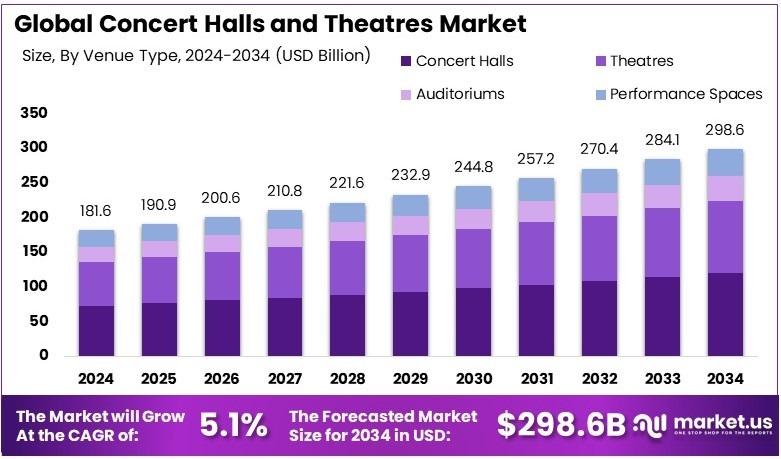
The concert halls and theatres market continues to grow, supported by increasing demand for live performances. In the U.S., the National Endowment for the Arts allocated nearly $36.8 million to fund arts projects. This financial backing highlights the government’s role in sustaining the cultural sector and fostering market expansion.
Concert halls, primarily designed for classical music performances, offer capacities ranging from 300 to 2,500 seats. The demand for live music and theatrical experiences remains strong, especially with people seeking in-person cultural events. This consistent demand presents opportunities for further growth, even as competition increases in urban areas with many similar venues.
Market saturation is becoming a concern in larger cities. However, the continued interest in live performances provides avenues for growth, especially in smaller cities or towns. Concert halls and theatres that differentiate themselves with unique offerings or high-quality productions can still find success, despite the competitive landscape.
On a broader scale, the market for concert halls and theatres positively impacts the economy by creating jobs and boosting art tourism. Locally, these venues contribute to community engagement, cultural enrichment, and can attract visitors to nearby restaurants, hotels, and retail businesses. Their presence strengthens the local economy and social fabric.
Governments play a crucial role in supporting the sector. The $36.8 million in funding from the National Endowment for the Arts, for example, helps ensure that a variety of artistic projects remain accessible. Regulations also ensure that venues adhere to safety and accessibility standards, fostering a stable environment for cultural activities.
Key Takeaways
- The Concert Halls and Theatres Market was valued at USD 181.6 billion in 2024 and is expected to reach USD 298.6 billion by 2034, growing at a CAGR of 5.1%.
- In 2024, Concert Halls dominate the venue type segment with 38.7%, emphasizing their role in hosting large-scale performances and events.
- In 2024, Music Concerts lead the event type segment with 42.3%, highlighting the demand for live musical performances.
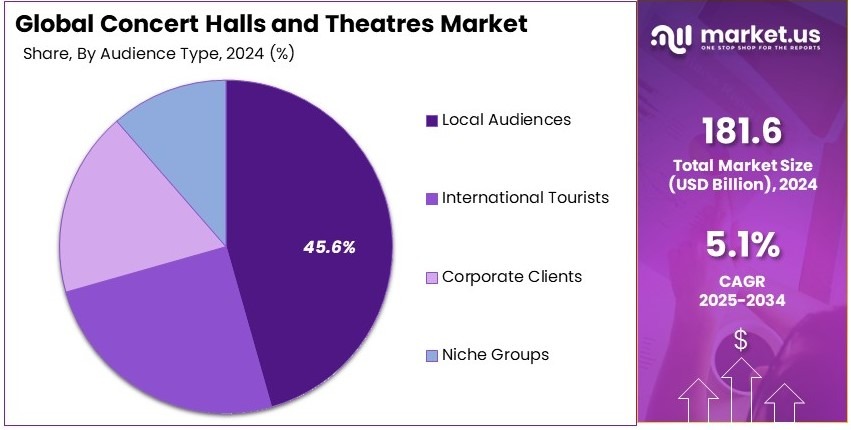
- In 2024, Local Audiences dominate the audience type segment with 45.6%, showcasing the strong presence of regional support for local events.
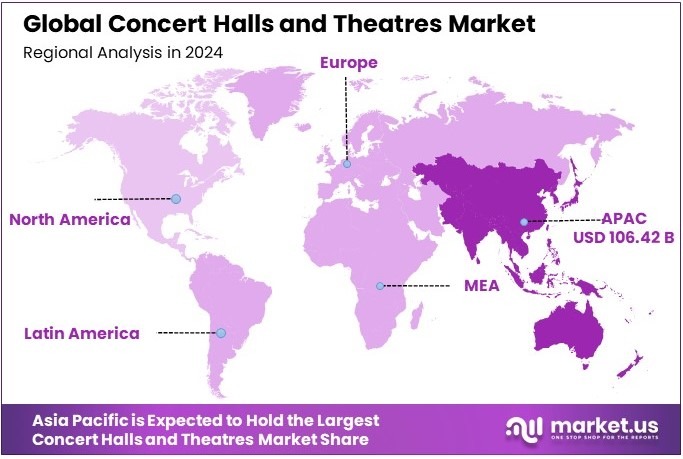
- In 2024, Asia Pacific dominates the market region with 58.6%, contributing USD 106.42 billion due to high growth in entertainment and tourism.
Venue Type Analysis
Concert Halls sub-segment dominates with 38.7% due to high demand for live music events and large-scale performances.
In the Concert Halls and Theatres Market, Concert Halls hold the largest share, representing 38.7%. This dominance is driven by their ability to host large-scale musical performances, including orchestras, rock concerts, and classical recitals, which attract a wide audience. The demand for live music events has been growing in recent years, with people increasingly seeking in-person musical experiences.
Concert halls are designed to accommodate large crowds and provide exceptional acoustics, which enhances the overall experience. High-profile performances, such as international music tourism and gala concerts, further contribute to the popularity of concert halls. Additionally, these venues offer specialized seating and viewing arrangements that cater to a broad range of spectators, from classical music aficionados to pop music fans.
Theatres, while an important segment, take up a smaller market share than concert halls. They cater to theatrical performances like plays, musicals, and operas, and typically attract a different audience. Theatres are more focused on drama and the arts, offering intimate settings that draw in cultural enthusiasts.
Auditoriums are similar to theatres but are often used for a wider range of events, including conferences and seminars, and therefore have a more versatile audience. Performance spaces, which can be smaller and more flexible, are ideal for smaller acts or experimental performances. These venues typically cater to niche audiences and offer a more informal experience compared to larger, more structured concert halls.
Event Type Analysis
Music Concerts sub-segment dominates with 42.3% due to the broad appeal of live performances and high ticket sales.
Music Concerts lead the Event Type segment with a dominant share of 42.3%. The widespread popularity of live music performances across various genres—whether classical, rock, pop, or electronic—has solidified music concerts as the largest driver of traffic in concert halls and theatres.
People are drawn to the live music experience, where they can see their favorite artists and bands perform in real-time. This market segment benefits from both local and international touring artists, making it a key revenue generator for venues. Concert halls, in particular, are well-equipped for hosting large-scale events with high sound quality and seating capacities.
Theatre Performances, while popular, represent a smaller portion of the market. They cater to people interested in drama, arts, and culture, providing performances like plays and musicals. Theatre performances often appeal to more niche audiences, such as theatergoers or those interested in classical productions.
Ballet & Dance shows also hold a notable share, providing cultural experiences with performances that attract a loyal, albeit smaller, audience. Comedy Shows, on the other hand, have been growing in popularity, particularly in urban areas. These events cater to audiences looking for entertainment that is more light-hearted and comedic.
Corporate Events, while less frequent, contribute to venue growth by bringing in businesses looking for space for meetings, seminars, and corporate entertainment. Film Screenings, especially in venues designed for visual experiences, are seeing a resurgence, attracting movie lovers and audiences who want the cinematic experience in a larger-than-life format.
Audience Type Analysis
Local Audiences sub-segment dominates with 45.6% due to the consistent demand for cultural experiences and entertainment.
Local Audiences make up the dominant segment in the Audience Type category, holding 45.6% of the market share. Local residents tend to be regular attendees at concert halls, theatres, and other performance venues, forming the backbone of the audience base. This segment is crucial for the ongoing success of venues, as they ensure consistent foot traffic and long-term sustainability.
Local audiences often attend regular performances, from local orchestras and plays to comedy nights and small concerts. These regular visitors contribute to the vibrancy of the local cultural scene, helping venues build a loyal customer base. Additionally, community events and local collaborations in venues such as theatres further strengthen this segment’s dominance.
International Tourists, while contributing to market growth, make up a smaller share compared to local audiences. Tourists are drawn to major performances and events that occur in popular cities, particularly those visiting from abroad. This segment benefits from large-scale, internationally renowned events, such as opera performances or classical music concerts, and often adds to the venue’s international reputation.
Corporate Clients, though more niche, contribute significantly during corporate events and seminars. These events are typically high revenue drivers, as companies pay premium prices for event spaces. Lastly, Niche Groups, while accounting for a smaller share, offer valuable market growth by attending specialized performances like experimental theatre or independent music shows.
Key Market Segments
By Venue Type
- Concert Halls
- Theatres
- Auditoriums
- Performance Spaces
By Event Type
- Music Concerts
- Theatre Performances
- Ballet & Dance
- Comedy Shows
- Corporate Events
- Film Screenings
By Audience Type
- Local Audiences
- International Tourists
- Corporate Clients
- Niche Groups
Driving Factors
Increasing Demand for Live Entertainment Drives Market Growth
The Concert Halls and Theatres Market has seen a boost due to growing consumer demand for live entertainment experiences. People are increasingly seeking out live performances, from concerts to theatre shows, as a way to engage with culture and entertainment in a unique way.
Additionally, the resurgence of cultural tourism has contributed to the growth of these venues. International travelers are more likely to seek live performances and art exhibitions, especially in renowned cultural cities.
Furthermore, growing disposable income in developed markets has fueled the demand for premium concert and theatre tickets. As more people have the financial means, they are willing to spend on high-quality experiences.
Technological advancements in sound, lighting, and stage design have also played a critical role in enhancing the overall live entertainment experience. These innovations allow venues to deliver immersive performances, attracting larger audiences and providing greater value to attendees. These driving factors are creating a dynamic and expanding market for concert halls and theatres.
Restraining Factors
High Costs and Economic Pressures Limit Market Growth
Despite growth in the sector, there are significant challenges that impact profitability in the Concert Halls and Theatres Market. High operating costs, including venue maintenance, artist fees, and security, can be substantial for businesses in this space. These costs can sometimes outweigh revenue, making it difficult for smaller venues to stay afloat.
Economic downturns and uncertainties also affect consumer behavior. In times of financial strain, people tend to reduce spending on non-essential entertainment, such as live performances. This can lead to lower ticket sales and fewer patrons attending events.
Increased competition from alternative forms of entertainment, such as streaming services and home-based experiences, further impacts the market. With the convenience of watching performances from home, some consumers are opting to stay in rather than attend live events.
Regulatory restrictions and logistical challenges related to crowd management and safety during large-scale events have also created roadblocks. These factors can complicate event planning, increase costs, and reduce overall event profitability, limiting the growth of the market.
Growth Opportunities
New Opportunities for Innovation in Live Entertainment
Several opportunities exist for players in the Concert Halls and Theatres Market to capitalize on new trends. One key area of opportunity is the expansion of live-streamed performances and virtual concerts. These formats allow venues to reach a global audience and provide convenience for consumers who cannot attend in person.
Incorporating multi-genre programming, such as blending theatre with live music or immersive experiences, has the potential to attract a broader, more diverse audience. This flexibility allows venues to tap into different entertainment preferences and boost attendance.
Collaboration with tech firms to integrate augmented reality (AR) or virtual reality (VR) can enhance the viewer experience. These technologies can create more interactive, engaging performances that provide unique experiences for the audience.
Finally, there is a growing demand for sustainable and eco-friendly practices in the construction and operation of concert halls and theatres. By adopting greener practices, venues can appeal to environmentally conscious consumers while reducing operational costs in the long term. These opportunities offer creative solutions that can drive market success and growth.
Emerging Trends
Latest Trends Reshaping Live Entertainment Venues
Several key trends are currently shaping the Concert Halls and Theatres Market. The rising popularity of “unplugged” or acoustic performances is a notable trend. These performances contrast with highly produced shows, offering a raw, authentic experience that resonates with audiences seeking intimacy and simplicity.
The growth of hybrid events, which blend in-person performances with virtual components, is another significant trend. This format allows venues to reach wider audiences, offering a more accessible and flexible entertainment option.
Additionally, there is a growing demand for non-traditional performance spaces, such as warehouses, open-air venues, and immersive pop-up theatres. These alternative spaces provide unique experiences for attendees and are gaining traction among both performers and audiences.
Finally, the integration of social media and live interaction into performances is becoming increasingly popular. This enables real-time audience participation and feedback, fostering greater engagement and a more interactive experience.
Regional Analysis
Asia Pacific Dominates with 58.6% Market Share
Asia Pacific holds a commanding 58.6% share of the Concert Halls and Theatres Market, amounting to USD 106.42 billion. This dominant position is largely driven by the region’s fast-growing entertainment sector, massive urbanization, and increasing disposable income. Major cities like Tokyo, Beijing, and Mumbai are thriving cultural hubs with an increasing demand for live performances and events.
Key factors contributing to this dominance include a rich cultural heritage that drives local and international tourism, coupled with a booming middle class that seeks entertainment options. The growing influence of Western-style concerts and performances, along with government investments in infrastructure, also contribute significantly to the region’s high market share.
The market dynamics in Asia Pacific are shaped by diverse cultural preferences and rapid urban development. The region is home to a vast and youthful population, which fuels the demand for both traditional performances and modern live entertainment. Additionally, the increasing number of international artists touring in Asia, along with rising tourism, boosts the region’s concert hall and theatre industry.
Regional Mentions:
- North America: North America is a strong player in the Concert Halls and Theatres Market, with cities like New York, Los Angeles, and Toronto offering a variety of high-quality entertainment options. The region benefits from advanced infrastructure, large audiences, and significant investments in large-scale productions like Broadway shows and music festivals.
- Europe: Europe maintains a prominent position in the Concert Halls and Theatres Market. Countries like the UK, Germany, and France are cultural epicenters, with rich histories in theatre and opera. The demand for classical music, theatre productions, and modern concerts continues to drive strong market performance across the region.
- Middle East & Africa: The Middle East and Africa are developing rapidly in the Concert Halls and Theatres Market. Cities such as Dubai are investing in world-class theatres and concert halls, with high-end cultural events attracting both regional and international tourists. This growth is supported by government-driven tourism initiatives and luxury entertainment offerings.
- Latin America: Latin America’s Concert Halls and Theatres Market is growing, particularly in countries like Brazil and Mexico. The region’s cultural scene is diverse, with a high demand for music festivals, theatre productions, and other live performances. Increasing disposable income and the expansion of tourism contribute to the sector’s growth.
Key Regions and Countries Covered in the Report
- North America
- US
- Canada
- Europe
- Germany
- France
- The UK
- Spain
- Italy
- Rest of Europe
- Asia Pacific
- China
- Japan
- South Korea
- India
- Australia
- Rest of APAC
- Latin America
- Brazil
- Mexico
- Rest of Latin America
- Middle East & Africa
- South Africa
- Saudi Arabia
- UAE
- Rest of MEA
Competitive Landscape
The Concert Halls and Theatres market is shaped by a few dominant players who control major venues, events, and ticket sales. Live Nation Entertainment, AEG Live, The Nederlander Organization, and The Shubert Organization are the main companies driving the industry.
Live Nation Entertainment is the world’s largest live entertainment company, known for managing concert venues and promoting major tours. With partnerships and ownership of thousands of venues, it plays a crucial role in shaping the live entertainment scene across the globe.
AEG Live, another leader, owns and operates major venues, including the Staples Center in Los Angeles. They also produce large-scale events and concerts. AEG Live’s strong presence in both the US and internationally makes them a key player in the concert halls and theatres market.
The Nederlander Organization has been a key player in theatre operations for decades. With a long history of producing Broadway shows and managing historic venues, the company is an important part of the theatrical landscape, especially in the US.
The Shubert Organization is one of the oldest and most influential theatre companies in the US. They own and operate several Broadway theatres, making them a powerhouse in the live theatre market. Their portfolio also includes a wide range of iconic shows and performances.
These companies dominate the concert halls and theatres market through their extensive venue ownership, event management expertise, and strong brand recognition. Their ability to attract top talent and produce high-quality performances ensures they remain leaders in the live entertainment industry.
Major Companies in the Market
- Live Nation Entertainment
- AEG Live
- The Nederlander Organization
- The Shubert Organization
- Ticketmaster
- Madison Square Garden Company
- Cirque du Soleil
- The Royal Shakespeare Company
- Broadway Across America
- The Walt Disney Company
Recent Developments
- Arena One: On Spring 2025, Artist One Entertainment Group, in partnership with Tata Communications, is set to launch Arena One, the world’s first globally connected arena. This innovative concept will initially open with 230,000 available seats across 1,600 connected AMC Theatres auditoriums, with plans for international expansion.
- Madison Square Garden Entertainment Corp.: On Q1 Fiscal 2025, Madison Square Garden Entertainment Corp. reported revenues of $138.7 million for the first quarter of fiscal 2025, representing a slight decrease of $3.5 million (2%) compared to the previous year’s quarter.









