


Report Overview
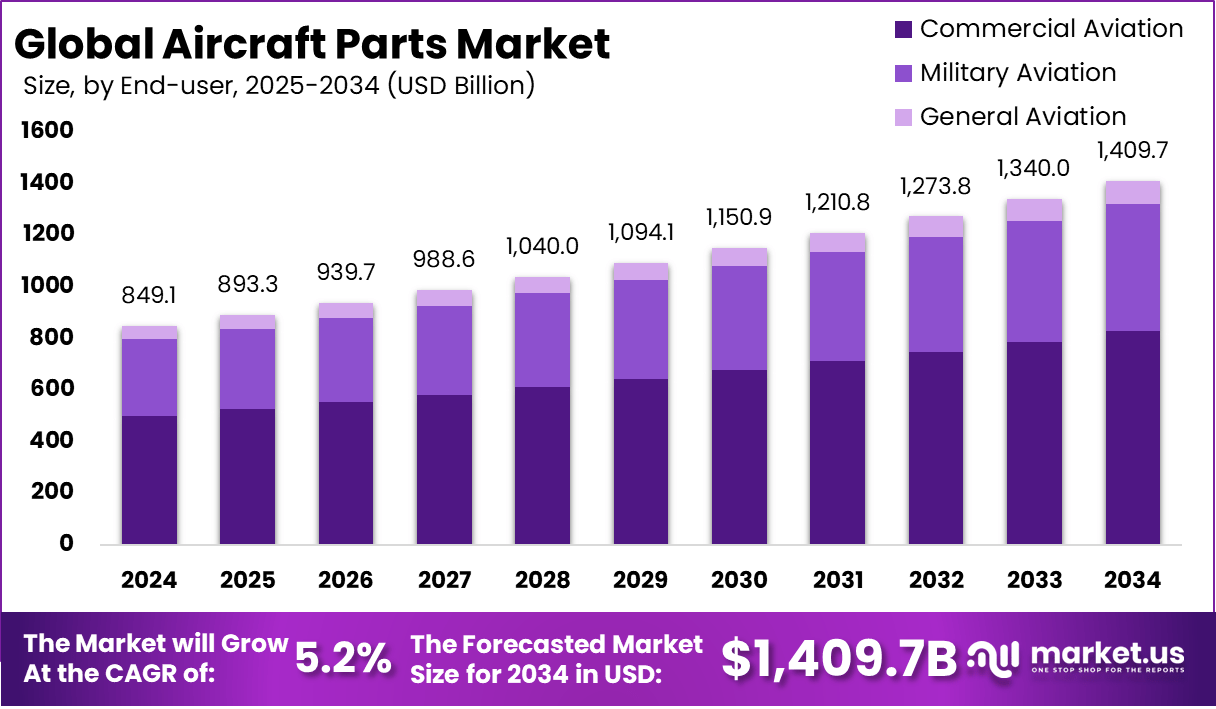
The Global Aircraft Parts Market size is expected to be worth around USD 1409.7 billion by 2034, from USD 849.1 billion in 2024, growing at a CAGR of 5.2% during the forecast period from 2024 to 2033.
Aircraft parts are the components and systems that make up an aircraft and ensure it operates safely and efficiently. These parts may include, Wings, Fuselage, empennage, engines, landing gear, cockpit, control surfaces, flaps & slats, and others.
The market for aircraft parts is growing rapidly, attributed to the growing air traffic. According to DCGA, Passengers carried by domestic airlines during January – November 2024 were 1464.02 lakhs as against 1382.34 lakhs during the corresponding period of the previous year thereby registering an annual growth of 5.91 %and monthly growth of 11.90 % in India.
With the increasing demand for air travel, airlines need to maintain and expand their fleet, driving the demand for the market. Moreover, various aircraft are becoming old, thus increasing the need for frequent maintenance, repairs, and overhaul (MRO) services, which increases the demand for replacement parts.
Additionally, innovations in materials like carbon fiber and titanium alloys, 3D printing, and smart sensors are improving aircraft performance and efficiency. These trends are providing a huge opportunity for the market growth.
Key Statistics
Materials & Manufacturing:
- Aluminum Usage: Aluminum alloys typically make up 50-60% of the structural weight of a commercial aircraft.
- Composite Materials Usage: Composite materials (carbon fiber reinforced polymers) account for approximately 50% of the weight of newer aircraft like the Boeing 787 and Airbus A350.
- Titanium Usage: Titanium alloys typically constitute 10-15% of the structural weight of an aircraft, primarily in engine components and critical structural parts.
- Additive Manufacturing (3D Printing): The market for 3D-printed aircraft parts is projected to reach $3 billion by 2030, with a CAGR of over 20% from 2020 to 2030.
- Fastener Count: A typical commercial aircraft contains millions of fasteners (rivets, bolts, screws) holding the structure together. For example, a Boeing 747 may have around 6 million individual parts, many of which are fasteners.
Maintenance, Repair & Overhaul (MRO):
- Global MRO Market Size: The global aircraft MRO market is valued at over $80 billion annually and is projected to reach $120 billion by 2030.
- Engine Overhaul Costs: Engine overhauls can account for 30-40% of an airline’s MRO costs.
- Airframe Maintenance Costs: Airframe maintenance (inspections, repairs, modifications) accounts for approximately 20-25% of MRO spending.
- Component Repair Costs: Component repair (avionics, hydraulics, landing gear) makes up around 30-35% of total MRO expenses.
- Average Aircraft Downtime for Maintenance: A major aircraft overhaul (D-check) can take 2-4 weeks to complete.
- Regularity of Heavy Maintenance Checks: Aircraft typically undergo heavy maintenance checks (C-checks and D-checks) every 6-10 years.
Spare Parts & Inventory:
- Spare Parts Inventory Value: Airlines and MRO providers hold billions of dollars worth of spare parts inventory to ensure aircraft availability.
- Spare Parts Availability: A key performance indicator (KPI) in the MRO industry is spare parts availability, which aims to keep aircraft downtime to a minimum. Target availability rates are often above 95%.
Key Takeaways
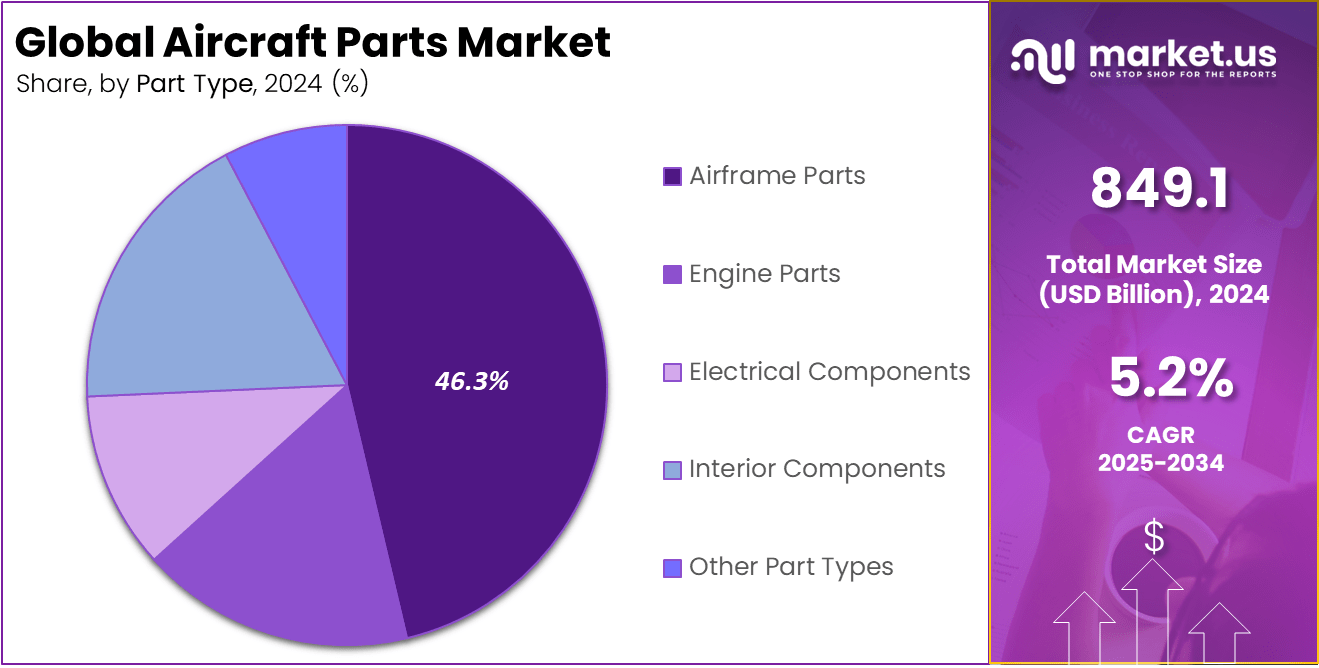
- In 2024, the Airframe Parts segment held a dominant market position, capturing more than a 46.3% share of the Global Aircraft Parts Market.
- In 2024, the Commercial Aviation segment held a dominant market position, capturing more than a 58.8% share of the Global Aircraft Parts Market.
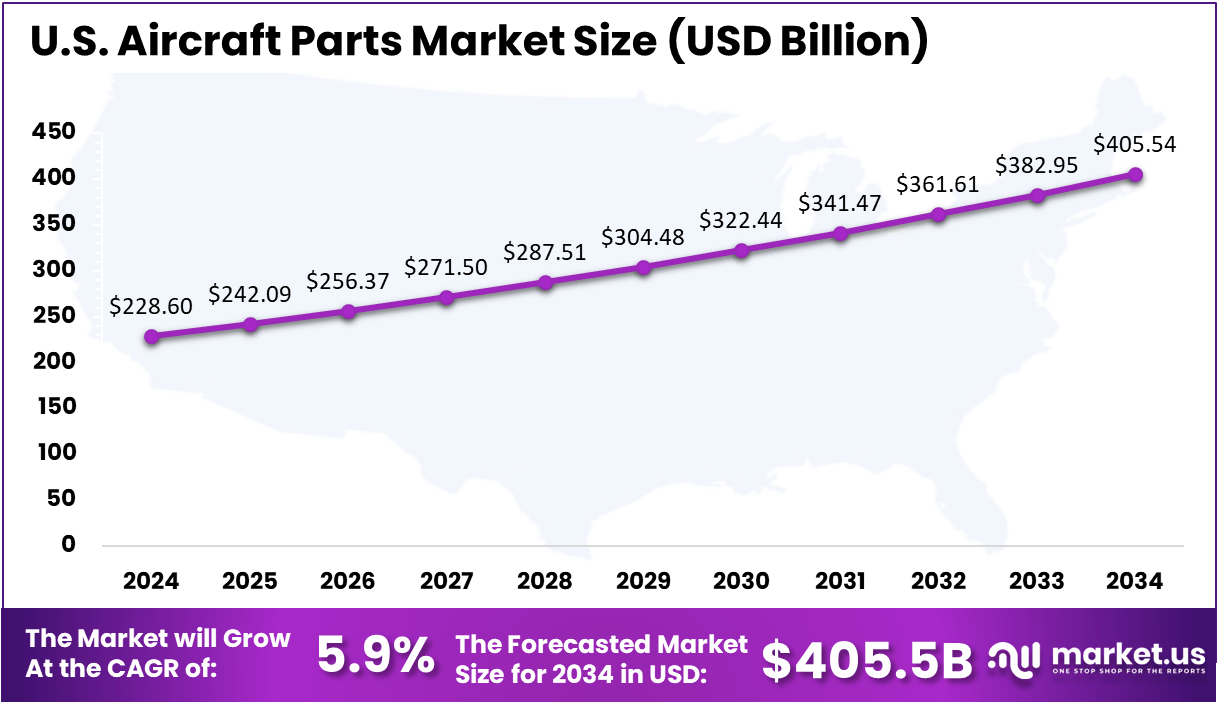
- The US Aircraft Parts Market was valued atUSD 228.6 billionin 2024, with a robust CAGR of 9%.
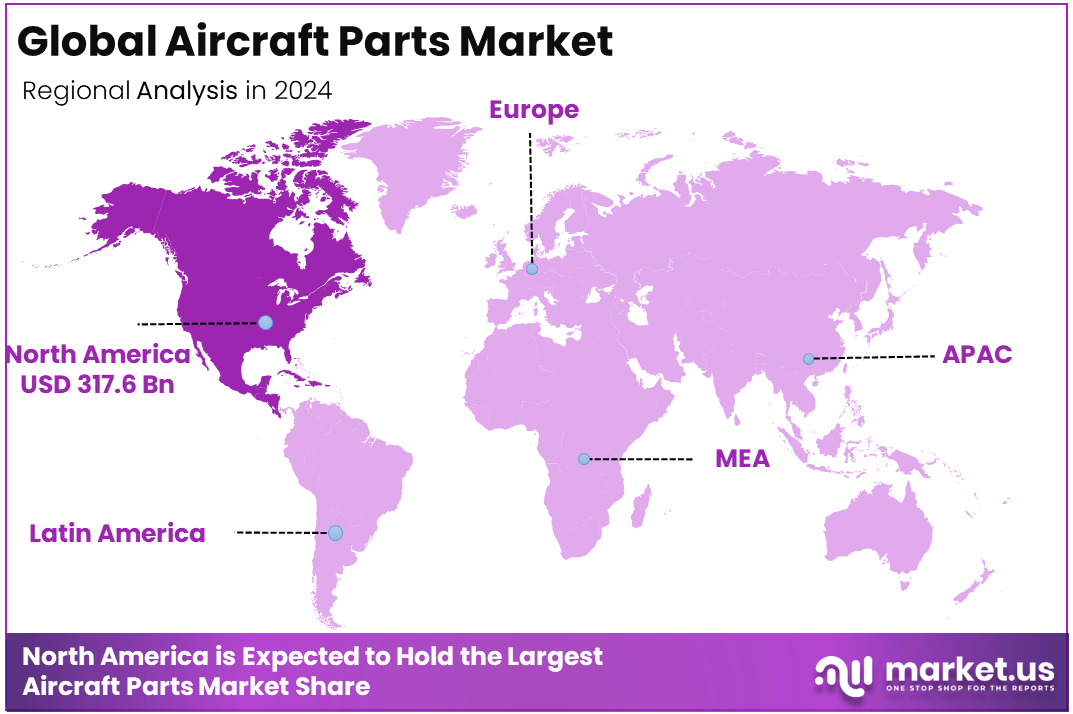
- In 2023, North America held a dominant market position in the global Aircraft Parts Market, capturing more than a 37.4% share.
- According to OEC, Trade in Aircraft Parts represents 0.27% of total world trade. The top importers of Aircraft parts are the United States ($13.3B), France ($9.38B), Germany ($7.34B), the United Kingdom ($4.73B), and Canada ($4.46B).
- According to DSIR, the Indian aerospace industry has shown tremendous growth over the years growing at nearly 20% per year. India‘s total exports for the sector stood at USD 1.5 billion in 2010, out of which more than 96% of the contribution was from aircraft parts.
U.S. Aircraft Parts Market Size
TheUS Aircraft Parts Market was valued atUSD 228.6 billionin 2024, with a robust CAGR of5.9%. This is due to the presence of various established industry leaders in this region. The.S. is home to major aerospace and defense companies like Lockheed Martin, General Electric Aviation, and Boeing. These companies have a higher brand reputation for producing high-quality aircraft parts.
Moreover, the U.S. has a large fleet of both commercial and military aircraft, many of which are aging and need frequent maintenance and replacement parts. This tends to create a steady demand for aircraft parts.
In 2023, North America held a dominant market position in the global Aircraft Parts Market, capturing more than a 37.4% share. North America is known for its technological innovations, including the development of new materials, manufacturing processes, and cutting-edge technologies that tend to enhance aircraft performance and safety.
Moreover, the region also has a well-established supply chain ecosystem for aircraft parts, with numerous suppliers and manufacturers providing a wide range of components. This tends to ensure a reliable and efficient supply of parts.
Part Type Segment Analysis
In 2024, the Airframe Parts segment held a dominant market position, capturing more than a 46.3% share of the Global Aircraft Parts Market. Airframe parts are essential for ensuring the structural integrity and safety of the aircraft. Regulatory needs mandate regular inspection and maintenance of these parts to comply with safety standards, driving demand for airframe components.
Moreover, maintaining and replacing airframe parts is crucial for enquiring about the operational efficiency of aircraft. Additionally, many airlines and maintenance organizations outsource MRO services to a specialized provider.
For instance, Spain’s Air Nostrum operates a fleet of CRJs and ATR72s. Their 300-person maintenance department provides line, base maintenance, and limited component maintenance These providers often focus on airframe maintenance and repair, further driving the demand for airframe parts.
End-Use Segment Analysis
In 2024, the Commercial Aviation segment held a dominant market position, capturing more than a 58.8% share of the Global Aircraft Parts Market. Commercial airlines often rotate their fleets to keep up with their demand and ensure operational efficiency. This frequent turnover necessitates a continuous supply of new parts.
Additionally, these aircraft have higher utilization rates, operating multiple flights per day. This intensive use could lead to faster wear and tear, increasing the need for regular maintenance and parts replacements.
The integration of advanced technologies, such as predictive maintenance and IoT, helps airlines monitor the condition of aircraft parts in real-time. This proactive approach to maintenance increases the demand for replacement parts.
Key Market Segments
By Part Type
- Airframe Parts
- Engine Parts
- Electrical Components
- Interior Components
- Other Part Types
By End-use
- Commercial Aviation
- Military Aviation
- General Aviation
Driving Factors
Increasing air traffic
With the increasing need to travel by air, the need to utilize fleets has increased intensively. This has led to a high wear and tear on aircraft, necessitating more frequent maintenance and replacements of parts.
Moreover, with more flights operating, there is a growing need for routine maintenance, repairs, and overhaul services to ensure aircraft safety and reliability. This drives the demand for a wide range of aircraft parts.
Additionally, airlines strive to enhance the passenger experience and operational efficiency. This often includes the upgradation of existing aircraft with newer, more advanced parts and technologies, further boosting the demand.
Restraining Factors
Supply Chain Disruption
Disruptions in the supply chain can lead to delays in the deliveries of essential parts, causing maintenance schedules to be postponed and aircraft to be grounded longer than planned. Additionally, this often results in higher transportation and logistics costs, making the parts more expensive, and straining the budgets of airlines and maintenance organizations.
Manufacturers may also experience production halts due to the unavailability of raw materials or components. This can lead to a backlog of orders, and extended lead times for the aircraft, thus hampering the market growth.
Growth Opportunities
Growth in Aftermarket services
Growth in aftermarket services is an opportunity for the market to grow. Aftermarket services such as repairs, maintenance, and overhaul, create a consistent demand for aircraft parts. This demand is driven by the need to keep aircraft in optimal condition and extend their service life.
Additionally, aftermarket services also offer a significant revenue stream for parts manufacturers and suppliers. Providing high-quality, reliable parts of MRO activities ensures a continuous flow of income beyond the initial scale of aircraft.
Challenging Factors
Ensuring high-quality standards
The aviation industry is heavily regulated and manufacturers must adhere to strict quality and safety standards set by organizations like FAA, EASA, and ICAO. Compliance with these regulations needs rigorous testing, documentation, and quality control processes, which can be time-consuming and costly.
Moreover, aircraft parts are highly complex and require precision engineering. Ensuring that each component meets the necessary specifications and tolerances demands advanced manufacturing techniques and thorough quality assurance processes.
Growth Factors
The aviation industry is focused on reducing its environmental impact. This includes the development and adoption of more efficient and eco-friendly aircraft parts that tend to reduce fuel consumption and emissions, thus driving the demand in the market.
Additionally, significant investments in defense and aerospace by governments, drive the demand for military aircraft parts. These investments support the overall growth of aircraft part markets.
For instance, in India, The Defence Acquisition Council approved 10 capital acquisition proposals worth Rs 145 billion, including the procurement of Future-Ready Combat Vehicles (FRCVs) and seven Project 17B stealth frigates for the Indian Navy.
Latest Trends
Automation, robotics, and AI are revolutionizing the aircraft part sales and distribution processes. These technologies aid in streamlining operations, reducing human error, and improving efficiency.
Moreover, trends like 3D printing, smart sensors, enhanced aerodynamics, advanced materials, big data, and digitization are also reshaping the market for aircraft parts effectively, thus driving market growth.
Key Regions and Countries
North America
- US
- Canada
Europe
- Germany
- France
- The UK
- Spain
- Italy
- Russia
- Netherlands
- Rest of Europe
Asia Pacific
- China
- Japan
- South Korea
- India
- Australia
- Singapore
- Thailand
- Vietnam
- Rest of APAC
Latin America
- Brazil
- Mexico
- Rest of Latin America
Middle East & Africa
- South Africa
- Saudi Arabia
- UAE
- Rest of MEA
Key Players Analysis
One of the leading players in the market is Airbus which offers a wide range of aircraft parts and components to ensure the smooth operation of their aircraft.
Airbus provides guaranteed spare parts availability through its Flight Hour Services (FHS) Components program. This service ensures the availability of all primary Line Replaceable Units (LRUs) spare parts, keeping aircraft flying.
Another prominent player in the market is Collins Aerospace, which offers extensive repair services, rotatable spares, and emergency services to keep aircraft flying. They provide recertified parts, rental and exchange services, and repair parts that meet Original Equipment Manufacturer (OEM) quality and performance specifications.
Top Key Players in the Market
- The Boeing Company
- Airbus
- Collins Aerospace
- Safran
- Rolls-Royce plc
- Honeywell International Inc.
- General Electric Company
- Textron Aviation
- Northrop Grumman
- L3Harris Technologies, Inc.
- BAE Systems
- Parker Hannifin Corp
- Other Key Players
Recent Developments
- In July 2024, Flitetec, an EASA/CAA-approved 145 repair organization, officially unveiled its OEMRepair Hub service at the Farnborough International Airshow this month. The company, which is based in the UK, is aiming to “revolutionize” the way requirements are handled for customers needing repair and overhaul for components and equipment initially supplied by Original Equipment Manufacturers (OEMs). The primary focus will be on electro-mechanical and avionics components, as well as door locks and latches.
- In February 2024, Collin Aerospace and HNA Aviation Group announced an MRO agreement under which Collin Aerospace would offer its maintenance, repair, and overhaul services to the air service provider’s subsidiaries. HNA and its subsidiaries are one of the largest operating groups in China providing domestic and international air services.
- In November 2023, Vietnam Airlines signed a long-term agreement with Airbus for the Skywise Predictive Maintenance (SPM) digital solution. The long-term agreement covers up to 65 A321 Family aircraft (A321ceo and A321neo).









