


Report Overview
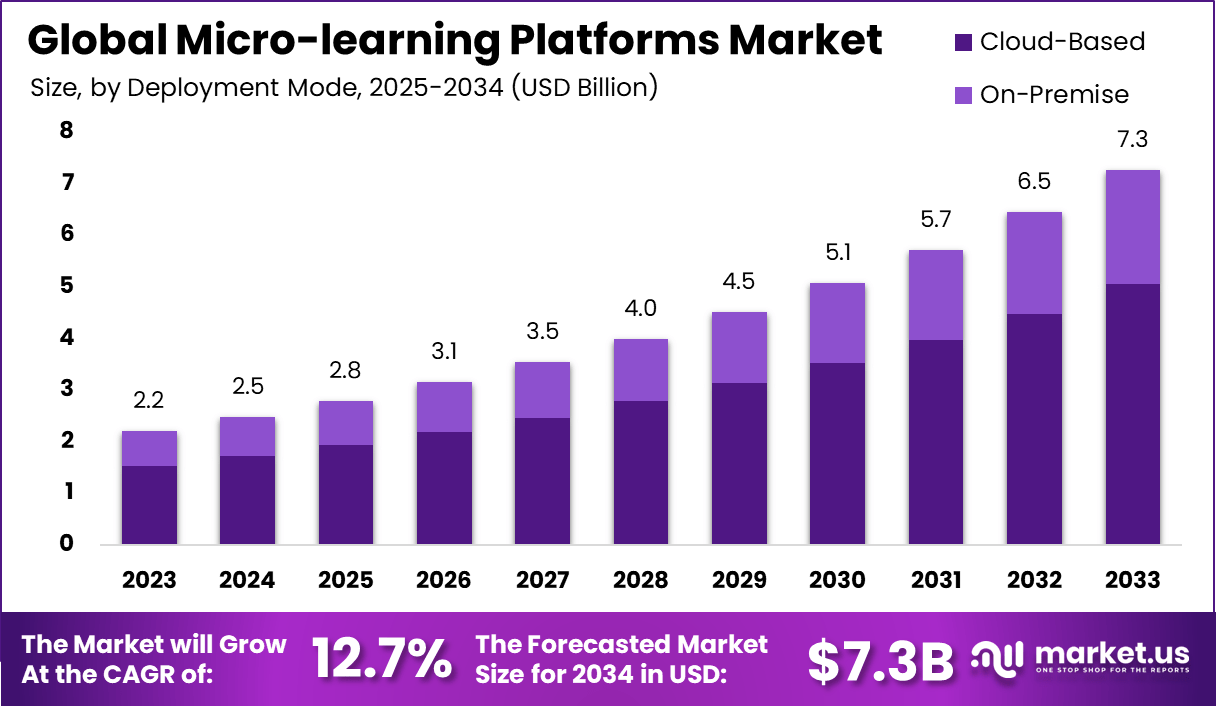
The Global Micro-learning Platforms Market size is expected to be worth around USD 7.3 million by 2034, from USD 2.2 billion in 2024, growing at a CAGR of 12.7% during the forecast period from 2024 to 2033.
Micro-learning platforms are cutting-edge educational tools that are designed to deliver, small-sized, targeted learning content in a concise format. These platforms break down the complex information, into small, focused modules, each of which addresses specific learning objectives or skills.
The market for micro-learning platforms is growing due to the increasing number of employees working remotely in various industries. This has enhanced the need for implementing skill-based training remotely, thus increasing the demand for educating a large number of people according to the requirements of the company.
Moreover, the growing adoption of cloud-based micro-learning throughout various industry verticals has also allowed the end users to access the content from the service provider’s site. This trend is further reshaping the market by providing huge opportunities for growth.
Key Statistics
User Engagement & Satisfaction:
- Improved Learner Engagement: 45% of companies using microlearning platforms reported improved learner engagement.
- High Learner Satisfaction: Learners report a 94% satisfaction rate with microlearning platforms.
Completion Rates & Time Savings:
- Higher Completion Rates: Microlearning achieves an 80% completion rate, compared to around 20% for conventional long-form courses.
- Time Savings in Training: Employees using a mobile micro-learning platform spent 45%-80% less time in training and displayed no loss of comprehension.
- Training Duration Reduction: Training durations can be cut by up to 60% without compromising learning effectiveness.
- Microlearning is 17% more efficient compared to traditional courses and learning methods.
Content Preferences & Modalities:
- Video-Based Microlearning: 85% of organizations incorporate videos into their microlearning lessons.
- When visual microlearning content was used, information retention increased by up to 42% compared to text-only microlearning modules.
- Auditory microlearning modules improved information recall by 30% for auditory learners compared to text-based microlearning content.
- Optimal Lesson Length: An optimal microlearning lesson is just 7-12 minutes long.
Mobile Learning:
- Mobile Learning Integration: In North America, 74% of companies are now integrating mobile learning into their training strategies.
- Mobile Microlearning Use: Employees using a mobile microlearning platform spent 45%–80% less time in training and displayed no loss of comprehension.
Key Takeaways
- In 2024, the Cloud-Based segment held a dominant market position, capturing more than a 69.5% share of the Global Micro-learning platforms Market.
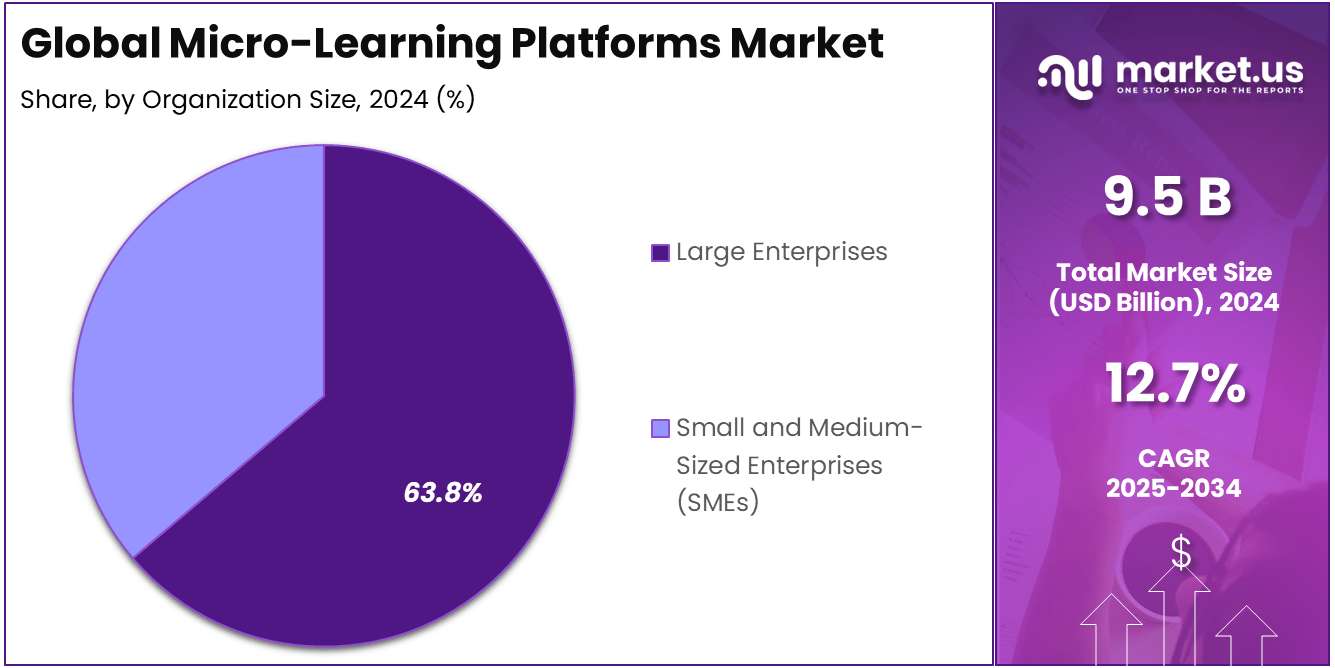
- In 2024, the Large Enterprises segment held a dominant market position, capturing more than a 63.8% share of the Global Micro-learning platforms Market.
- In 2024, the IT and Telecommunications segment held a dominant market position, capturing more than a 21% share of the Global Micro-learning platforms Market.
- The micro-learning platforms Market was valued atUSD 0.6 billionin 2024, with a robust CAGR of1%.
- In 2023, North America held a dominant market position in the global Micro-learning platforms Market, capturing more than a 36.4% share.
- In sparxservices.org, online learning has witnessed an incredible surge in popularity and has grown more than 900%.
U.S. Micro-learning Platforms Market Size
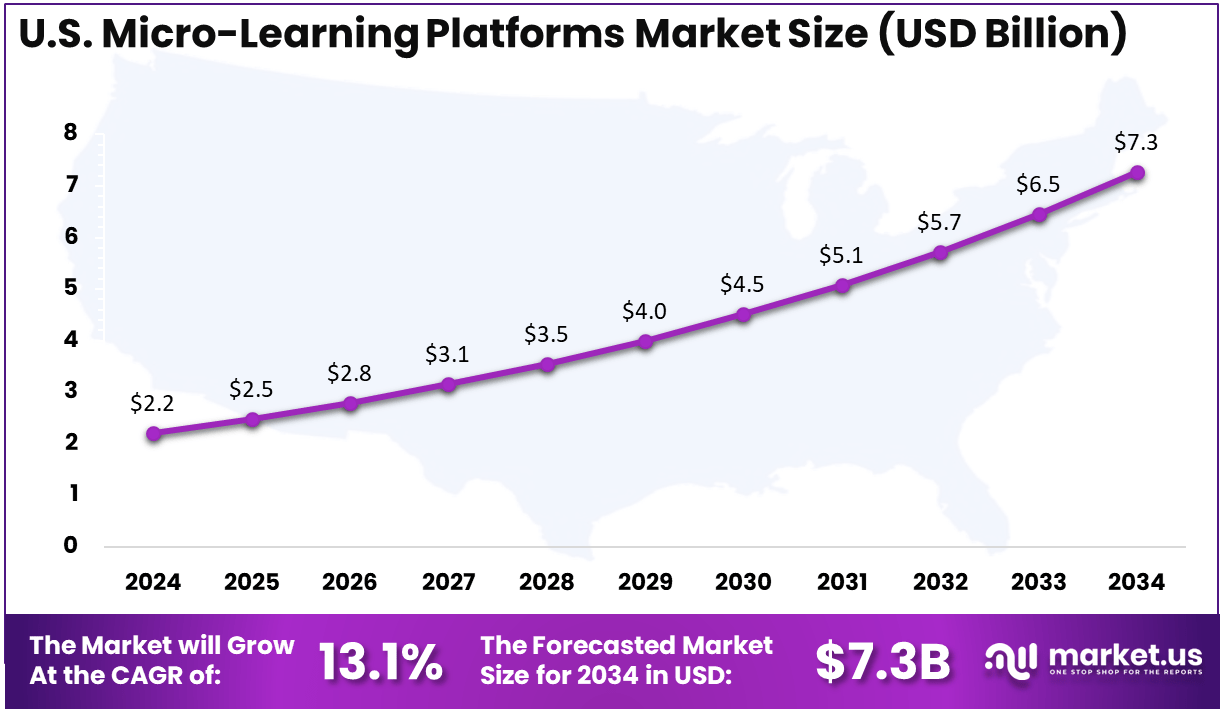
TheUS Micro-learning platforms Market was valued atUSD 0.6 billionin 2024, with a robust CAGR of13.1%. This is majorly due to the widespread adoption of technological advancements by industries as well as individuals across the U.S.
Moreover, U.S.S-based companies prioritize continuous learning and innovation. Thus the integration of micro-learning platforms into corporate training programs has reflected its commitment to fostering the skilled workforce.
For instance, Walmart collaborated with Axonify to implement a micro-learning program to enhance safety practices among its employees. The program was designed to be engaging and accessible, allowing employees to spend just a few minutes during their shifts playing a game that involved answering safety questions.
In 2023, North America held a dominant market position in the global Micro-learning platforms Market, capturing more than a 36.4% share. This is attributed to the widespread internet access, advanced mobile networks, and the presence of tech companies in the North American region.
Moreover, North America has a robust venture capital ecosystem that actively invests in educational technology (EdTech) start-ups. For instance, recently TalentCards secured $3 million in funding from Marathon Venture Capital.
It uses a flashcard format for micro-learning, includes gamified micro-assessments, and has a dedicated mobile app. This support has enabled the rapid growth and innovation of micro-learning platforms.

Deployment Mode Segment Analysis
In 2024, the Cloud-Based segment held a dominant market position, capturing more than a 69.5% share of the Global Micro-learning platforms Market. This is attributed to the increased scalability of the cloud-based platforms. This flexibility ensures that the platform can handle a large amount of users without compromising performance.
Moreover, cloud deployment also eliminates the need for significant upfront investments in the physical infrastructure by adopting pay-as-you-go models. These could be accessed from anywhere with an internet connection, making it easier for the end users to learn.
Cloud-based deployment modes offer robust security measures to protect the data. These may include encryption, regular backups, and compliance with the industry standards, ensuring that the sensitive information is safe. It also facilitates collaboration by allowing multiple users to work on the same project simultaneously.
Organization Size Segment Analysis
In 2024, the Large Enterprises segment held a dominant market position, capturing more than a 63.8% share of the Global Micro-learning platforms Market. This is majorly due to the availability of more financial resources and IT infrastructure, allowing large enterprises to invest in advanced learning solutions.
These businesses focus more on employee development, prioritizing their development and training as a part of their strategic goals. This aligns with the offerings of micro-learning platforms as it provides efficient and effective ways to upskill employees.
Moreover, many large enterprises often have a global workforce, requiring consistent training across different regions and time zones. Micro-learning platforms, particularly cloud-based, offer the flexibility and accessibility needed to manage training programs on a global scale.
Additionally, large-scale enterprises can collect and analyze data on employee performance and learning outcomes. Microlearning platforms can add to this by providing valuable insights about employee growth and aid in undertaking strategic decisions.
Industry Vertical Segment Analysis
In 2024, the IT and Telecommunications segment held a dominant market position, capturing more than a 21% share of the Global Micro-learning platforms Market. The IT and Telecommunications industry evolves rapidly, thus necessitating constant skill upgradation for employees. Microlearning platforms are ideal for providing regular, up-to-date training on new upgrades, technologies, programming languages, and tools.
Moreover, the industry needs complex and specialized knowledge that is needed to bring innovations to the market. Microlearning platforms break this complex knowledge or information into manageable, bite-sized modules, making it easier for employees to learn.
The onboarding rates of employees in the IT and Telecommunication industry are relatively higher. For instance, according to TSSC, in India 2.8M people are employed in roles directly related to the Telecom Sector, and 7M are employed in in-direct roles related to the Telecom Sector. This makes it necessary for companies to adapt micro-learning platforms as they assist in quick and effective onboarding processes, thus helping new hires become productive.
Key Market Segments
By Deployment Mode
- Cloud-Based
- On-Premise
By Organization Size
- Large Enterprises
- Small and Medium-Sized Enterprises (SMEs)
By Industry Vertical
- IT and Telecommunications
- Manufacturing
- BFSI
- Healthcare
- Retail
- Education
- Other Industry Verticals
Driving Factors
Increasing demand for mobile learning
The increasing demand for mobile learning has driven the market for micro-learning platforms. It has allowed users to access educational content anytime and anywhere, thus making it convenient. TMobilelearning provides flexibility for the learners to choose when and where they want to learn. This is particularly appealing for the busy professional who may not have time to engage in longer and traditional sessions.
Moreover, the small screen size of mobile devices is suited for the micro learning’s bite-sized content. Short modules are easier to navigate and complete on mobile devices, enhancing the overall learning experience.
Features such as push notifications, reminders, and interactive and multimedia content of mobile devices, have driven the adoption of micro-learning platforms. For instance, Duolingo is a language learning platform that has harnessed the power of mobile learning to achieve remarkable success.
Restraining Factors
Limited content customization
Limited content customization is a significant restraint for the micro-learning platform market. Learners have varying needs, preferences, and learning styles, thus the one-size-fits-all approach may not effectively cater to this diversity, leading to disengagement and lowering the learning outcomes.
Furthermore, limited customization could also make it difficult to provide relevant and compliant content for specific industry needs, thus hampering organizational growth.
Limited content customization in micro-learning platforms could hamper the learning process as every employee has a varying skill level and prior knowledge. This could also lead to monotonous and irrelevant content, reducing the learner engagement and motivation to complete the training.
Growth Opportunities
Incorporation of AI and other technologies
Incorporating AI and other technologies tends to bring in new opportunities for the micro-learning platform market. This could offer a personalized learning experience as AI can analyze learner behaviors and performance to create customized learning paths. This also ensures that each learner receives the content tailored to their specific needs and knowledge level.
Furthermore, technologies such as Augmented Reality and Virtual Reality are also creating an opportunity for market growth by providing an immersive learning experience.
Chatbots and virtual assistants are making learning more engaging and memorable by simulating real-world scenarios. For instance, Axonify raised $27 million in Series B funding in 2016, led by JMI Equity. It uses AI to deliver personalized learning experiences and AR/VR to create immersive training scenarios.
Challenging Factors
Lack of standardization
Lack of standardization poses a significant challenge to the market growth Without standardization, micro-learning platforms, and tools find it difficult to work together. This could lead to fragmented learning experiences and inefficiencies. This also creates an inconsistency in the quality of content created on the platforms, hampering the overall effectiveness of the training.
Moreover, standardized assessment and certification are required to validate the learner’s skills and knowledge. Lack of standardization makes it challenging to ensure that our learners are assessed and certified consistently across different platforms.
Growth Factors
Various factors are driving the micro-learning platforms market. With the evolution of industries, there is a growing need for continuous skill development and reskilling. Micro-learning offers an efficient way to keep up with these demands by providing targeted, bite-sized learning modules.
There is an increasing adoption of remote and hybrid work models, increasing the demand for flexible and accessible learning solutions. Microlearning platforms tend to cater to this need by providing on-demand learning opportunities.
Latest Trends
The incorporation of games-like elements including badges, leaderboards, and rewards to make learning more engaging and interactive has evolved as a trend in the market. This helps in increasing learner motivation and retention.
Micro-learning platforms are also increasingly being integrated with existing Learning Management Systems (LMS) to provide a seamless learning experience. This allows for better tracking and management of learner progress.
Key Regions and Countries
North America
- US
- Canada
Europe
- Germany
- France
- The UK
- Spain
- Italy
- Russia
- Netherlands
- Rest of Europe
Asia Pacific
- China
- Japan
- South Korea
- India
- Australia
- Singapore
- Thailand
- Vietnam
- Rest of APAC
Latin America
- Brazil
- Mexico
- Rest of Latin America
Middle East & Africa
- South Africa
- Saudi Arabia
- UAE
- Rest of MEA
Key Players Analysis
One of the leading players in the market is Axonify Inc. Its microlearning platform is designed to enhance employee performance and organizational success through bite-sized, engaging training content.
The platform leverages brain science and AI to drive knowledge retention and behavior change. Another firm operating in the market is Blinkist. It offers 15-minute summaries of thousands of books and podcasts, making it easy to fit learning into a busy schedule.
Top Key Players in the Market
- Axonify Inc.
- Qstream, Inc.
- Spekit
- Tovuti LMS
- Blinkist
- Epignosis
- EdApp
- Bigtincan Holdings Limited
- iSpring
- Docebo
- eduMe Ltd
- Whatfix
- Other Key Players
Recent Developments
- In January 2025, Dealer Tire is teaming with auto sales and service training platform RockED to develop and launch a new tire sales certification program for parts and service associates at select dealerships, combining Dealer Tire’s expertise in tire distribution and services with RockED’s micro-learning and gamified training systems.
- In June 2024, Udemy, a leading online skills marketplace and learning platform, today announced the launch of a new generative artificial intelligence (AI) upskilling program developed in collaboration with Amazon Web Services (AWS). Offered through Udemy Business Leadership Academy (UBLA), Unlocking GenAI Opportunities with AWS is a six-week cohort learning program designed to equip leaders across all industries with generative AI (GenAI) tools and change management strategies.
- In January 2024, Toronto-based Spiffy, which provides a digital training platform for workplaces, was acquired by regulated e-learning and compliance solutions firm Oliver Solutions.









