


Report Overview
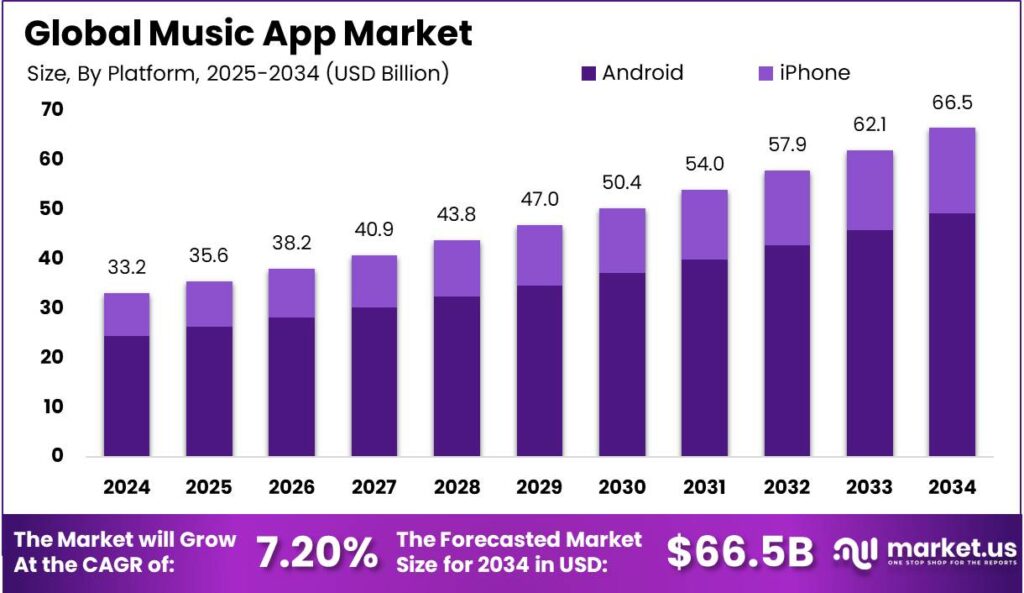
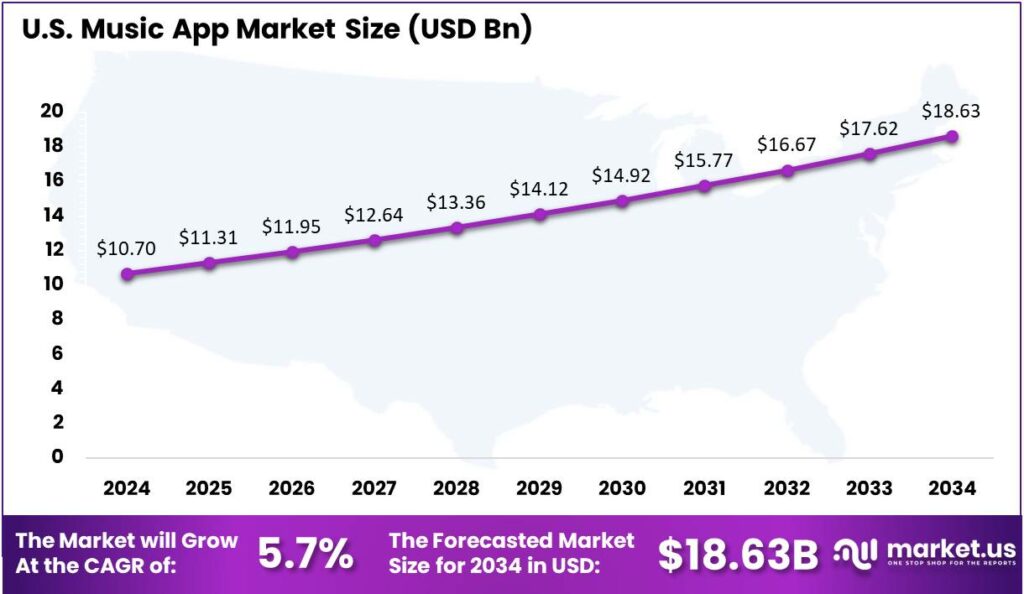
The Global Music App Market size is expected to be worth around USD 66.5 Billion By 2034, from USD33.2 Billion in 2024, growing at a CAGR of 7.20% during the forecast period from 2025 to 2034. In 2024, North America dominated the music app market with over 35% share and revenues of USD 11.6 billion. The U.S. market is projected to reach USD 10.7 billion, growing at a CAGR of 5.7%.
The Music App Market comprises businesses involved in the development, distribution, and monetization of music apps. This market has witnessed significant growth due to the widespread adoption of smartphones and increasing internet penetration globally. It includes various stakeholders such as app developers, music production companies, digital advertisers, and subscription services.
The primary driving force behind the growth of the music app market is the global increase in mobile device usage. As smartphones become more affordable and ubiquitous, more people are turning to mobile apps for entertainment. Additionally, improvements in mobile data infrastructure and the widespread availability of Wi-Fi have made streaming music more accessible than ever before.
According to Exploding Topics, music streaming accounts for 84% of the total music industry revenue, making it the dominant force in the market. Over the past year, the industry has grown by more than 10%, showing strong and consistent demand. Right now, global music streaming revenue stands at $17.5 billion, driven by millions of users worldwide.
Interestingly, paid music streaming makes up just 23% of all streaming activity, meaning the majority of listeners still rely on free, ad-supported options. In total, 78% of people stream music, and more than 600 million users have a paid subscription to a streaming service
Key Takeaways
- The Global Music App Market size is expected to be worth around USD 66.5 Billion by 2034, growing from USD 33.2 Billion in 2024, at a CAGR of 7.20% during the forecast period from 2025 to 2034.
- In 2024, the Subscription-Based segment dominated the music app market, capturing more than 56% share.
- The Android segment held a dominant position in the music app market in 2024, capturing more than 74% share.
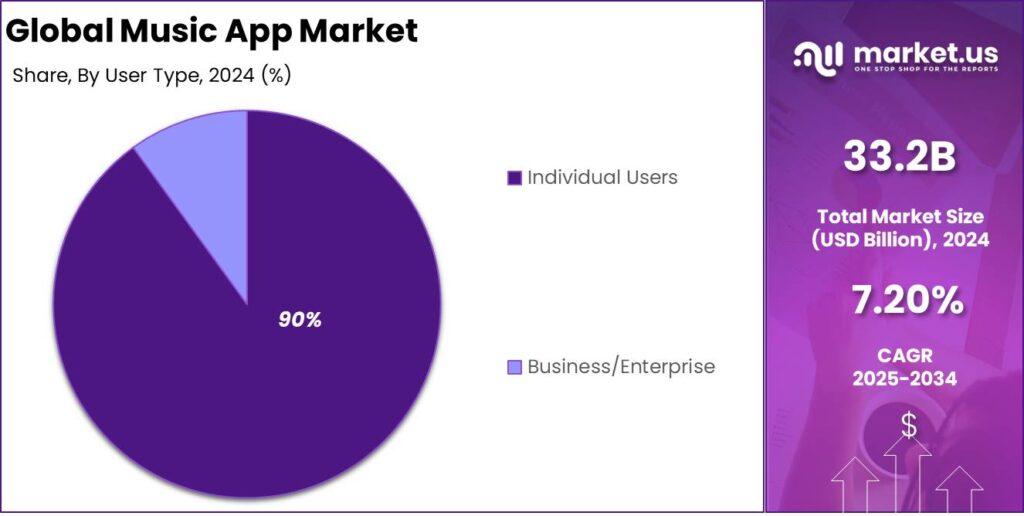
- The Individual Users segment dominated the music app industry in 2024, capturing more than 90% share.
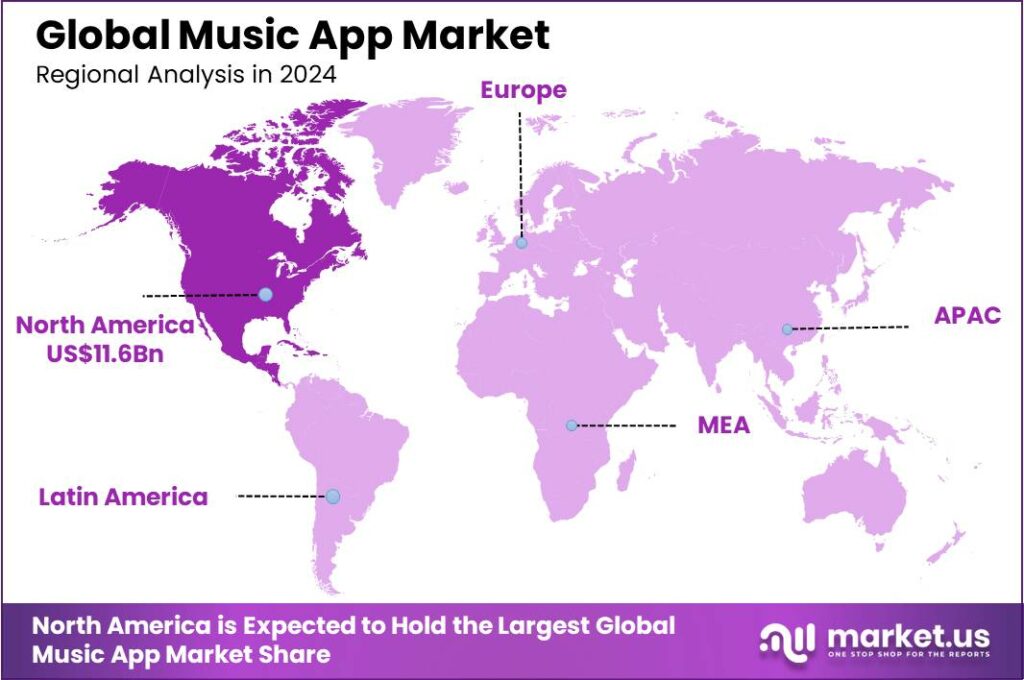
- North America held a dominant market position in the music app market in 2024, capturing more than 35% share, with revenues reaching USD 11.6 billion.
- The U.S. music app market is projected to reach a valuation of USD 10.7 billion in 2024, with a CAGR of 5.7%.
U.S. Music App Market
The projected valuation of the U.S. music app market is expected to hit $10.7 billion by the year 2024, exhibiting a compound annual growth rate (CAGR) of 5.7%. This growth is indicative of the increasing consumer demand for digital music services and the continuous adoption of streaming platforms among diverse demographics.
As consumer behavior shifts, music apps are evolving to offer more personalized experiences, integrating sophisticated algorithms that suggest music based on listening habits and preferences. Additionally, the integration of social features, where users can share playlists or discover music through social networks, is enhancing user engagement and retention.
Partnerships between music apps and telecom providers are driving market growth through bundled offers that include music streaming with mobile plans. This strategy increases accessibility, expands customer bases, and strengthens revenue streams for music app companies, supporting market expansion.
In 2024, North America held a dominant market position in the music app market, capturing more than a 35% share with revenues reaching USD 11.6 billion. This leading stance can be attributed to several key factors that are characteristic of the region’s market dynamics.
The cultural prominence of music in North America boosts the region’s market dominance, with major music labels and independent artists driving growth. High smartphone penetration and widespread internet connectivity ensure streaming services are easily accessible, increasing user engagement across diverse demographics.
The region’s regulatory framework fosters digital innovation and copyright protection, creating a secure space for artists and companies to monetize their content. Strategic partnerships between music apps and telecom providers are also on the rise, promoting streaming services through mobile data packages, boosting market penetration and revenue growth.
Regions like Europe, APAC, Latin America, the Middle East, and Africa show varied growth rates due to differing economic conditions, tech adoption, and cultural music preferences. Each region presents unique challenges and opportunities, reflecting the global diversity and potential of the music app market.
Analysts’ Viewpoint
- Investment Opportunities & Risks: Investment potential is particularly strong in the areas of technological integration and market expansion in developing regions, driven by increasing smartphone penetration and internet access. However, investors must consider risks associated with high competition, the costs of content licensing, and regulatory challenges that vary by region.
- Consumer Insights Consumers are increasingly favoring music streaming apps that offer extensive libraries and personalized experiences. There is a marked shift from ownership of music to access through subscription services, which aligns with the digital lifestyle that prioritizes convenience and variety. Social features within these apps also enhance user engagement by allowing users to share their musical experiences, which helps in organic growth through virality.
- Technological Impact: Technological advancements play a critical role in shaping the music app industry. Innovations such as artificial intelligence for personalized music recommendations and high-quality audio streaming are pivotal in enhancing user satisfaction and retention. Integration with wearable technology and smart home devices represents the next frontier for expanding user interaction and deepening immersion in music experiences.
- Regulatory Environment: Navigating the regulatory environment is crucial for music app developers, especially concerning data privacy and copyright laws, which can differ significantly across territories. Compliance with regulations such as GDPR in Europe and similar laws in other regions adds layers of complexity and cost to operations, potentially impacting the speed and scope of market expansion.
Type Analysis
In 2024, the Subscription-Based segment held a dominant position in the music app market, capturing more than a 56% share. This model, which typically involves users paying a recurring fee for unlimited access to a music library, has gained popularity due to its convenience and the value it provides.
The primary reason for the leadership of the Subscription-Based segment is its alignment with consumer preferences for continuous access without the interruptions of ads. In a digital age where consumers are accustomed to on-demand services, subscription models meet the demand for instant and uninterrupted access to music.
Another driver of the Subscription-Based model’s success is strategic partnerships between music streaming services and tech or media companies. These collaborations often include bundled offers, where subscriptions are packaged with services like video streaming or premium social media features, making them more appealing to consumers.
Moreover, subscription services are leading the way in integrating advanced technologies like artificial intelligence and machine learning to enhance user experience. These technologies are used to analyze listening habits and provide personalized recommendations, which not only improves user satisfaction but also increases the likelihood of subscription renewals.
Platform Analysis
In 2024, the Android segment held a dominant position in the music app market, capturing more than a 74% share. This significant market presence can be attributed to the widespread adoption of Android devices globally, which are generally more affordable and accessible compared to other operating systems.
Android’s leadership in the music app market is strengthened by its large app selection on the Google Play Store. With a bigger user base, developers prioritize Android, offering a diverse range of apps, from streaming services to tools for musicians, broadening its appeal.
Moreover, Android devices offer fewer restrictions on app installations and integrations, allowing for a more customizable user experience. This flexibility lets users tailor their devices to suit their musical preferences, including high-quality audio formats and advanced playback features, making them particularly attractive to audiophiles and dedicated music enthusiasts.
Additionally, Google’s investments in AI and machine learning have significantly enhanced the functionality of music apps on Android. These technologies improve music discovery and recommendation algorithms, making it easier for users to find music that suits their tastes and increasing user engagement.
User Type Analysis
In 2024, the Individual Users segment held a dominant market position in the music app industry, capturing more than a 90% share. This substantial market share is largely due to the widespread personal use of music apps, which have become an integral part of daily entertainment for millions of consumers.
The prevalence of smartphones and affordable data plans has further facilitated the growth of the individual user base. Music apps are often designed with a mobile-first approach, capitalizing on the ubiquity of mobile devices to ensure that users have access to their favorite music anytime and anywhere.
Marketing strategies have been key to the success of the Individual Users segment. Music apps often use targeted advertising that taps into the personal and emotional aspects of music, connecting deeply with users. Promotional offers, like free trials and discounted subscriptions, also help attract new users and convert them into paying subscribers.
The Business/Enterprise segment, while benefiting from music apps for ambiance and customer engagement in commercial settings, represents a smaller market share. This is due to the niche nature of music streaming in business environments and a lower volume of users compared to the individual consumer market.
Key Market Segments
By Type
- Subscription-Based
- Ad-Supported
- Download-Purchase Model
By Platform
- Android
- iPhone
By User Type
- Individual Users
- Business/Enterprise
Key Regions and Countries
- North America
- US
- Canada
- Europe
- Germany
- France
- The UK
- Spain
- Italy
- Rest of Europe
- Asia Pacific
- China
- Japan
- South Korea
- India
- Australia
- Singapore
- Rest of Asia Pacific
- Latin America
- Brazil
- Mexico
- Rest of Latin America
- Middle East & Africa
- South Africa
- Saudi Arabia
- UAE
- Rest of MEA
Driver
Rising Smartphone Usage
The surge in smartphone adoption worldwide has significantly propelled the popularity of music apps. With more individuals owning smartphones, accessing music on-the-go has become seamless. This convenience encourages users to stream and download music directly to their devices, fostering a culture of instant musical gratification.
The integration of user-friendly interfaces and personalized features in these apps enhances the listening experience, making them indispensable to daily life. As smartphones continue to evolve with better storage and processing capabilities, music apps are poised to offer even richer and more immersive experiences to users globally. AI recommendations and cross-platform integration are making music discovery more personalized and convenient.
Restraint
Licensing and Royalty Challenges
Navigating the complex web of licensing agreements and royalty payments presents a significant hurdle for music app developers. Securing rights to stream a vast array of songs involves intricate negotiations with record labels and artists, often leading to substantial financial commitments.
Additionally, differing regulations across regions can complicate global distribution strategies. These challenges not only increase operational costs but can also limit the diversity of music available on the platform, potentially affecting user satisfaction. Therefore, establishing fair and transparent agreements with rights holders is crucial for the sustainable growth of music streaming services and their market expansion.
Opportunity
Expansion into Emerging Markets
Emerging markets, particularly in regions like Asia-Pacific, Latin America, and Africa, offer a vast, untapped user base for music apps. With increasing internet penetration and a growing middle class, these areas present ripe opportunities for expansion.
Tailoring services to local tastes, languages, and pricing models can attract a significant number of new subscribers. Moreover, collaborating with local artists and incorporating regional music can enhance the platform’s appeal, fostering user loyalty and opening new revenue streams. By investing in these markets, music apps can establish a strong foothold and drive substantial growth in the coming years.
Challenge
User Retention in a Competitive Landscape
In the crowded music streaming industry, retaining users poses a considerable challenge. With numerous platforms offering similar features, users can easily switch services if their expectations aren’t met. Additionally, the increasing availability of free or ad-supported options makes it even harder for paid services to maintain long-term customer loyalty.
Overcoming habitual behavior and developing offers that reduce the costs of switching from one application to another are major challenges that many music application companies confront when attempting to win over customers from rivals. To address this, companies must continuously innovate, offering unique features, exclusive content, and personalized experiences to keep users engaged and loyal.
Emerging Trends
One notable trend is the use of artificial intelligence (AI) to create personalized listening experiences. For instance, Spotify’s AI-driven playlists, like Discover Weekly, suggest songs based on your listening habits, introducing you to new music that aligns with your tastes.
Another emerging trend is the integration of social features within music apps. Platforms like SoundCloud enable users to comment on tracks and share music, building a community. High-fidelity streaming services such as Tidal and Amazon Music HD cater to audiophiles by offering lossless audio for superior sound quality.
Additionally, the fusion of music with augmented reality (AR) and virtual reality (VR) is creating immersive experiences. Artists are hosting virtual concerts, allowing fans to enjoy live performances from the comfort of their homes, which became especially significant during the pandemic.
Business Benefits
For businesses, developing a music streaming app offers several advantages. It opens up diverse monetization opportunities. Implementing subscription models, advertisements, and in-app purchases can generate substantial revenue.
Music apps can achieve high customer retention rates. By offering personalized playlists and exclusive content, users are more likely to remain engaged and loyal. Features such as curated playlists and early access to new releases can enhance user satisfaction and encourage continued use.
Scalability is another significant benefit. As the user base grows, the app can be expanded to include new features and services, such as podcasts, live streaming, or integration with other platforms, ensuring the app remains relevant and competitive.
Key Player Analysis
The music streaming industry has become highly competitive, with several platforms vying for market share.
Spotify remains the leader in the music streaming space, with a vast catalog of over 70 million tracks. Its freemium model offers a free version with ads and a premium paid subscription. Spotify’s personalization features, such as curated playlists and the popular “Discover Weekly,” have revolutionized how users find new music.
Apple Music has carved its niche by integrating deeply with Apple’s ecosystem. It boasts a vast library of over 75 million songs and offers high-quality audio streaming, including Lossless and Spatial Audio for premium subscribers. Apple Music excels at offering seamless integration with Apple devices like iPhones, iPads, and MacBooks, ensuring a smooth user experience.
Amazon Music offers competitive pricing and integrates well with Amazon’s vast ecosystem, including smart speakers like Alexa. With access to over 70 million tracks, Amazon Music provides two primary tiers: a free, ad-supported version and a paid service that offers high-definition audio. The platform also offers bundled subscriptions with Amazon Prime, making it an attractive option for Prime members.
Top Key Players in the Market
- Spotify
- Apple Music
- Amazon Music
- YouTube Music
- Tidal
- Deezer
- Pandora
- SoundCloud
- Tencent Music Entertainment
- JioSaavn
- Gaana
- Boomplay
- Anghami
- Other Key Players
Top Opportunities Awaiting for Players
- Integration of Advanced Technologies: The integration of artificial intelligence (AI) and machine learning (ML) in music apps is revolutionizing how users interact with music services. These technologies help in understanding user preferences to deliver a personalized music experience. Major market participants like Apple, Google, and Pandora are leveraging these advancements to enhance user engagement and satisfaction.
- Expanding Geographic Reach: There’s substantial growth potential in North American markets due to high internet penetration and smartphone usage. However, expanding into emerging markets where digital infrastructure is rapidly improving could also be lucrative. Companies can leverage local trends and consumer behavior to cater to new audiences, especially in regions like Asia-Pacific and South America.
- Monetization Strategies: Enhancing in-app purchases and advertisements provides a dual revenue stream. The market is seeing a trend where non-gaming apps are focusing on sophisticated monetization strategies, which include combining in-app purchases with advertisements to boost revenue. This approach not only enhances user engagement but also helps in capitalizing on the digital shift from physical to online media.
- Collaborations and Partnerships: Collaborations between companies can lead to innovative solutions and market expansion. Recent partnerships, such as the one between Pandora and SiriusXM, focus on artist promotion and targeted programming, demonstrating the power of collaborative efforts in reaching new audiences and creating unique content offerings.
- Diverse Content Offerings: There is an increasing demand for diverse and niche music content. Providers that offer extensive libraries covering various genres and support emerging artists can differentiate themselves from competitors. Additionally, specialized apps, such as Apple’s planned classical music app, cater to specific segments of music enthusiasts, offering tailored experiences that meet the refined tastes of niche audiences.
Recent Developments
- In July 2024, Suno launched a mobile app for both iOS and Android that allows users to make songs from text prompts or by recording audio.
- In December 2024, UMG took a 25.8% stake in Chord Music Partners for $240 million. UMG also acquired the remaining 51% of shares from [PIAS] co-founders Kenny Gates and Michel Lambot.









