


Report Overview
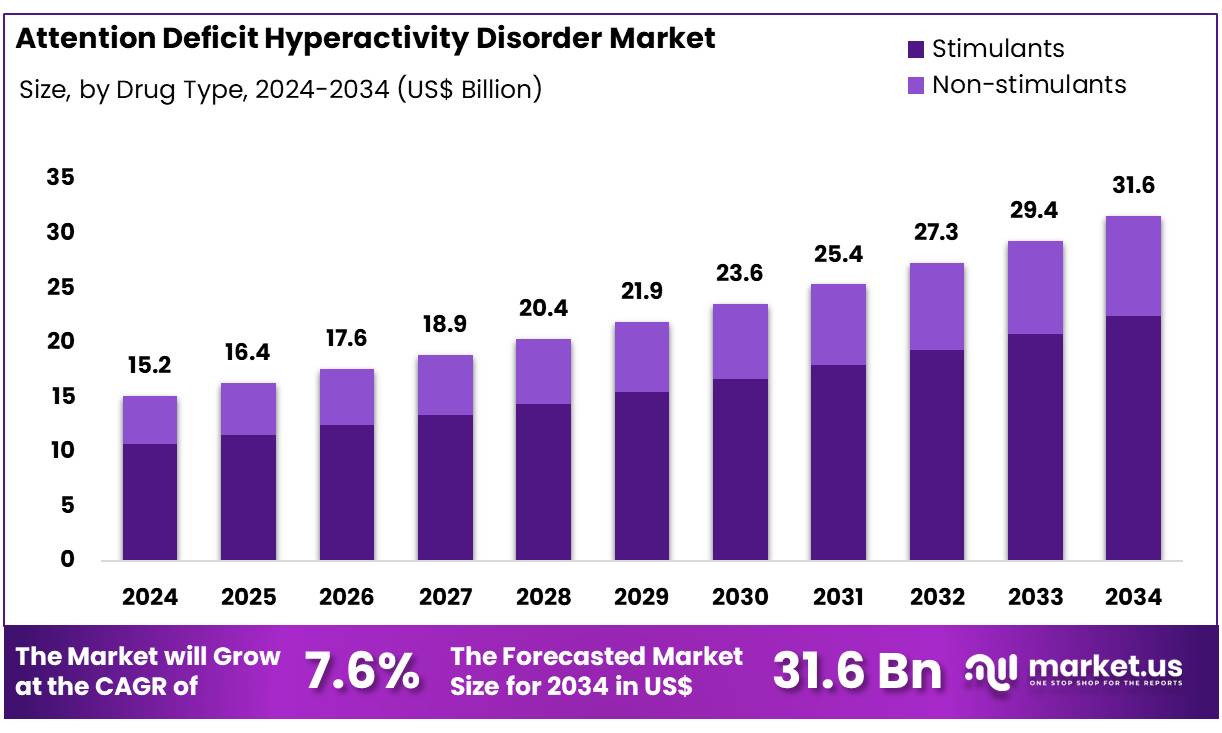
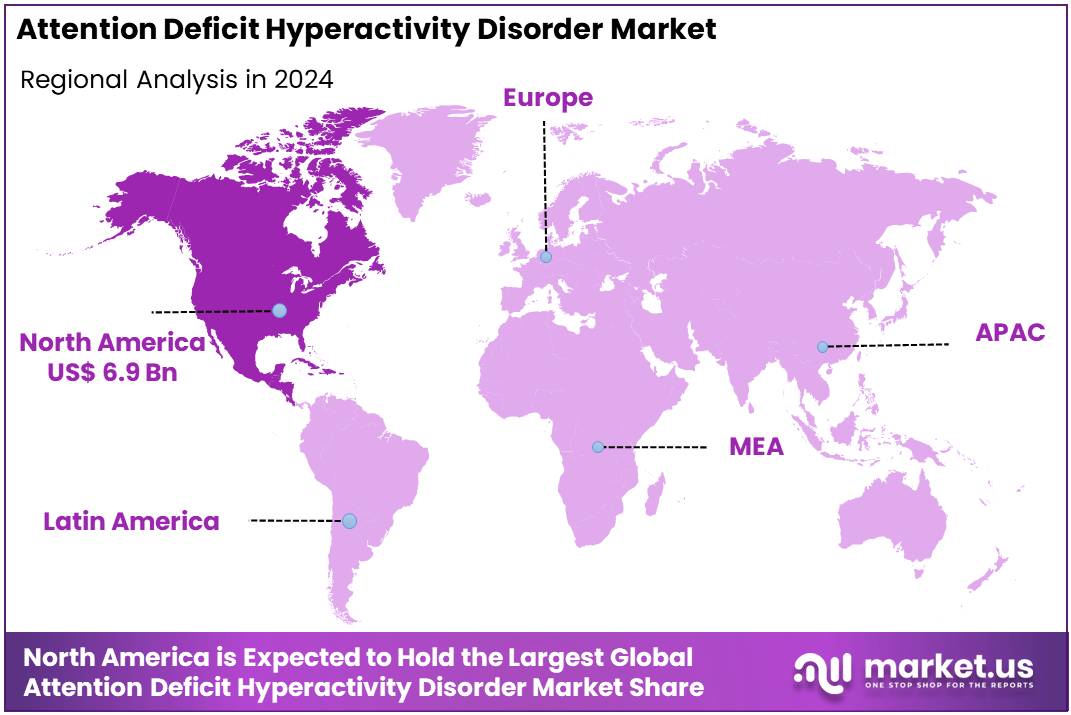
Global Attention Deficit Hyperactivity Disorder Market size is expected to be worth around US$ 31.6 Billion by 2033 from US$ 15.2 Billion in 2024, growing at a CAGR of 7.6% during the forecast period from 2024 to 2033. In 2023, North America led the market, achieving over 46% share with a revenue of US$ 6.9 Billion.
The global attention deficit hyperactivity disorder (ADHD) market is driven by several key factors. Increasing awareness of ADHD, coupled with improved diagnostic capabilities, has led to a rise in diagnosed cases, particularly in children, though adult ADHD awareness is growing as well. This heightened recognition is further supported by the destigmatization of the disorder, encouraging more individuals to seek diagnosis and treatment.
Advances in treatment options, including novel pharmacological therapies such as non-stimulants and personalized medications, are boosting market growth. Alongside medication, there is growing emphasis on behavioural therapies, further expanding treatment choices. In addition to the efforts of the National Institute for Children’s Health Quality, organizations like the ADHD Coaches Organization (ACO), the Attention Deficit Disorder Association (ADDA), and CHADD are actively working to raise global awareness about ADHD and available treatment options through a variety of campaigns.
- For example, in 2022, these groups hosted a program titled “Reframing ADHD: Discovering New Perspectives,” which focused on topics such as ADHD in relationships and communication, diagnosis in both children and adults, treatment strategies, and co-occurring conditions.
Key Takeaways
- The global attention deficit hyperactivity disorder market was valued at USD 15.2 billion in 2024 and is anticipated to register substantial growth of USD 31.6 billion by 2034, with 7.6% CAGR.
- In 2024, the stimulants segment took the lead in the global market, securing 71% of the total revenue share.
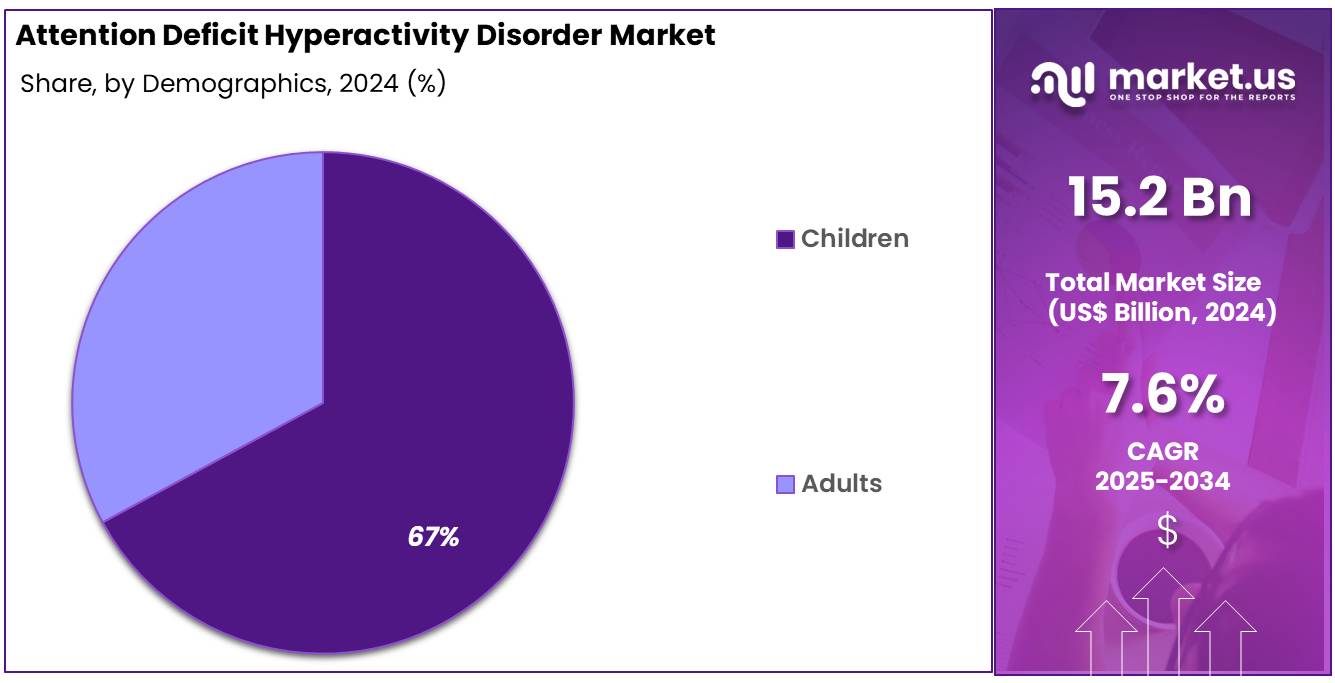
- The adults segment took the lead in the global market, securing 67% of the total revenue share.
- North America maintained its leading position in the global market with a share of over 46% of the total revenue.
Type Analysis
Based on type the market is fragmented into stimulants and non-stimulants. Amongst these, stimulants dominated the global attention deficit hyperactivity disorder market capturing a significant market share of 71% in 2024. The high percentage of prescription stimulant use can be traced to several factors, including the introduction of new ADHD medications, the growing misuse of these drugs, and the approval of extended-release formulations, which are seen as more effective for long-term management of symptoms.
Extended-release versions allow for more consistent symptom control throughout the day, making them increasingly popular among patients and doctors. Additionally, the rising rates of drug abuse, particularly among adolescents and young adults, contribute to the widespread use of these stimulants. Together, these factors have driven both medical and illicit demand, significantly impacting prescription stimulant consumption.
- According to the U.S. Substance Abuse and Mental Health Services Administration (SAMHSA), in 2020, there were 16.1 million users of prescription stimulants, including 5.1 million youth (ages 12 and older) and 1.6 million young adults (ages 18-25). Stimulants are the most extensively studied medication for ADHD treatment, with over 250 controlled trials involving 6,000 children, making this the most profitable market.
Demographics Analysis
The market is fragmented by demographics into adults and children. Children dominated the global attention deficit hyperactivity disorder market capturing a significant market share of 67% in 2024. The increasing prevalence of ADHD among children is a major driver of market growth, particularly in the sectors of diagnosis, treatment, and medication. As more children are diagnosed with ADHD, the demand for effective treatments, including medications and behavioral therapies, rises accordingly.
- A study published by BioMed Central Ltd. in April 2023 analyzed the prevalence of ADHD among children and adolescents, emphasizing its impact on the pediatric population. The study found that 7.6% of children aged 3 to 12 are affected by ADHD, highlighting the disorder’s widespread occurrence. These findings stress the need for early diagnosis, targeted interventions, and increased awareness to support affected children. Addressing ADHD in this age group is crucial for improving long-term developmental and educational outcomes, reinforcing the importance of accessible healthcare and tailored support systems.
Distribution Channel Analysis
The market is fragmented by distribution channel into retail pharmacy and hospital pharmacy. Hospital pharmacy dominated the global attention deficit hyperactivity disorder market capturing a significant market share of 53% in 2024. Hospital pharmacies have dominated the global ADHD market due to their critical role in providing specialized medications and treatments for patients with Attention Deficit Hyperactivity Disorder.
Hospitals are often the first point of contact for individuals seeking diagnosis and treatment, particularly for more severe cases of ADHD that may require comprehensive care. These pharmacies offer a wide range of ADHD medications, including stimulants and non-stimulants, as well as customized treatment plans tailored to individual patient needs. They are equipped to manage complex cases, provide detailed guidance on medication usage, and monitor patient progress.
Key Segments Analysis
By Drug Type
- Stimulants
- Amphetamine
- Methylphenidate
- Lisdexamfetamine
- Dexmethylphenidate
- Non-stimulants
- Atomoxetine
- Guanfacine
- Clonidine
- Others
By Demographics
- Adults
- Children
By Distribution Channel
- Retail Pharmacy
- Hospital Pharmacy
Increasing Prevalence of ADHD
The increasing prevalence of Attention Deficit Hyperactivity Disorder (ADHD) is a key driver of growth in the ADHD market. With rising awareness and improved diagnostic capabilities, more children and adults are being diagnosed with ADHD globally. In particular, the growing recognition of ADHD in adults, who were often undiagnosed in the past, has significantly expanded the patient pool.
- It is estimated that approximately 5-7% of the global population is affected by Attention Deficit Hyperactivity Disorder (ADHD) in 2023. This translates to roughly 350-500 million people worldwide. However, the exact number of ADHD patients in 2023 may vary based on regional prevalence rates, diagnostic practices, and reporting accuracy.
Market Restraints
High Cost of Treatment
The high cost of treatment, particularly for prescription medications and long-term management. While there are effective ADHD medications available, many of them, especially brand-name stimulants and non-stimulants, can be expensive, making them less accessible for a significant portion of the population. This is particularly challenging in regions with limited healthcare coverage or in countries where healthcare systems do not fully subsidize ADHD treatment.
Even in countries with insurance coverage, co-payments and out-of-pocket expenses can still be prohibitive for some patients. Furthermore, long-term therapy, which may include regular doctor visits, behavioral therapy, and medication refills, adds to the financial burden. As a result, some individuals may forego or delay seeking treatment, limiting the overall market potential and hindering efforts to provide comprehensive care to all ADHD patients.
Market Opportunities
Increasing Drug Approvals
The increasing number of drug approvals is creating significant growth opportunities for the Attention Deficit Hyperactivity Disorder (ADHD) market. As regulatory agencies such as the U.S. FDA and European Medicines Agency approve new ADHD medications, including both stimulants and non-stimulants, patients gain access to more treatment options that cater to individual needs.
These new drugs often offer improved efficacy, fewer side effects, or alternative formulations, such as extended-release versions, which appeal to a broader range of patients, including those with co-occurring conditions. For example, the approval of novel non-stimulant treatments like Qelbree and new formulations of methylphenidate have expanded the market by addressing concerns about side effects and abuse potential.
- In May 2022, the U.S. FDA expanded its approval of viloxazine extended-release capsules, marketed as Qelbree, to include the treatment of ADHD in adults. Initially approved in 2021 for managing ADHD in children aged 6 to 17, Qelbree became the first non-stimulant medication in two decades to be authorized for ADHD treatment in adults.
Impact of macroeconomic factors / Geopolitical factors
Macroeconomic and geopolitical factors can significantly influence the attention deficit hyperactivity disorder (ADHD) market by affecting both the demand for treatments and the accessibility of healthcare services. Economic conditions, such as recessions or inflation, can impact household income, leading to reduced spending on healthcare and medications, which may limit access to ADHD treatments, especially in lower-income regions. Additionally, healthcare budgets and funding in public health systems can fluctuate due to economic pressures, affecting the availability of ADHD medications and therapy.
Geopolitical factors, such as international trade policies, supply chain disruptions, and conflicts, can also affect the production and distribution of ADHD medications. For instance, trade barriers may lead to shortages of key drug ingredients or delays in drug delivery. Furthermore, shifting healthcare policies in different regions can influence how ADHD is diagnosed, treated, and covered by insurance, ultimately shaping market dynamics and patient access to care across borders.
Latest Trends
The ADHD market is experiencing several key trends, driven by advancements in treatment options, increased awareness, and evolving diagnostic practices. One prominent trend is the growing use of personalized medicine, with treatments being tailored to individual genetic profiles, which can improve efficacy and reduce side effects.
Additionally, there is a rising demand for non-stimulant medications, as more parents and patients seek alternatives to traditional stimulant drugs due to concerns over side effects and potential for abuse. Digital health solutions, including mobile apps and telemedicine, are also gaining traction, offering tools for symptom tracking, remote consultations, and behavioral therapy, which enhance patient engagement and management. Another trend is the increasing focus on ADHD in adults, as awareness grows that the disorder often persists beyond childhood.
Regional Analysis
North America holds a significant share of the global ADHD market due to several factors, including high awareness, advanced healthcare infrastructure, and widespread access to treatment options. The United States, in particular, has a well-established market for ADHD medications, with a large number of diagnosed cases and a strong demand for both pharmaceutical and behavioral treatments. Moreover the introduction of new products are expected to drive market growth in the coming years.
Furthermoreover, favorable reimbursement policies, extensive research funding, and continuous advancements in ADHD-related therapies further support the region’s dominance. The prevalence of ADHD in both children and adults, coupled with increasing efforts to reduce stigma, has contributed to the region’s substantial market share.
- For instance, in September 2023, Tris Pharma, Inc. announced that Health Canada had granted approval for Quillivant ER (extended-release) to treat ADHD in children aged six to 12. Quillivant ER will be available in both oral suspension and chewable tablet forms, marking the first approval in Canada for once-daily, long-acting methylphenidate formulations for ADHD treatment in chewable and oral suspension formats.
Key Regions and Countries
North America
- US
- Canada
Europe
- Germany
- France
- The UK
- Spain
- Italy
- Russia
- Netherland
- Rest of Europe
Asia Pacific
- China
- Japan
- South Korea
- India
- New Zealand
- Singapore
- Thailand
- Vietnam
- Rest of APAC
Latin America
- Brazil
- Mexico
- Rest of Latin America
Middle East & Africa
- South Africa
- Saudi Arabia
- UAE
- Rest of MEA
Key Players Analysis
The attention deficit hyperactivity disorder market is characterized by intense competition, driven by the presence of both established healthcare technology companies and emerging players offering innovative solutions. The major pharmaceutical companies such as Shire (Takeda), Janssen Pharmaceuticals, and Eli Lilly, which dominate the market with established stimulant and non-stimulant drugs. These companies focus on continuous innovation through the development of extended-release formulations, combination therapies, and non-stimulant alternatives to address growing patient needs.
Additionally, smaller biopharma companies are emerging with novel drug candidates and digital health solutions, including telemedicine and mobile apps, to improve patient management. Intense competition drives both product differentiation and ongoing research, leading to new treatment options and expanded market growth.
Eli Lilly, a global leader in pharmaceuticals, focuses on developing and marketing innovative medicines in areas such as oncology, diabetes, immunology, and neuropsychiatry. Founded in 1876, the company is known for its ADHD treatments, including stimulants like Adderall. In addition, Pfizer is one of the world’s largest pharmaceutical companies,
with a broad portfolio spanning vaccines, oncology, cardiology, immunology, and neurology. Founded in 1849, Pfizer is known for its significant contributions to ADHD treatment, including medications like Vyvanse. The company focuses on creating breakthroughs in medical science, leveraging cutting-edge research and development to address diverse health issues globally.
Top Key Players
- Eli Lilly and Company.
- Pfizer Inc.
- Johnson & Johnson Services Inc.
- Lupin
- Novartis AG
- Takeda Pharmaceutical Company Limited
- Mallinckrodt Inc.
- Purdue Pharma LP
- NEOS Therapeutics Inc.
- Supernus Pharmaceutical, Inc.
Recent Developments
- In July 2022, Swedish pharmaceutical company AGB-Pharma launched Adaflex, the first melatonin-based product in the UK specifically designed for treating insomnia in children and adolescents aged 6 to 17 with ADHD, when standard sleep hygiene measures are inadequate.
- In April 2022, Supernus Pharmaceuticals, Inc. received FDA approval for Qelbree, a treatment developed for ADHD in adults aged 18 and older. This approval is expected to expand the product’s consumer base.









