


Report Overview
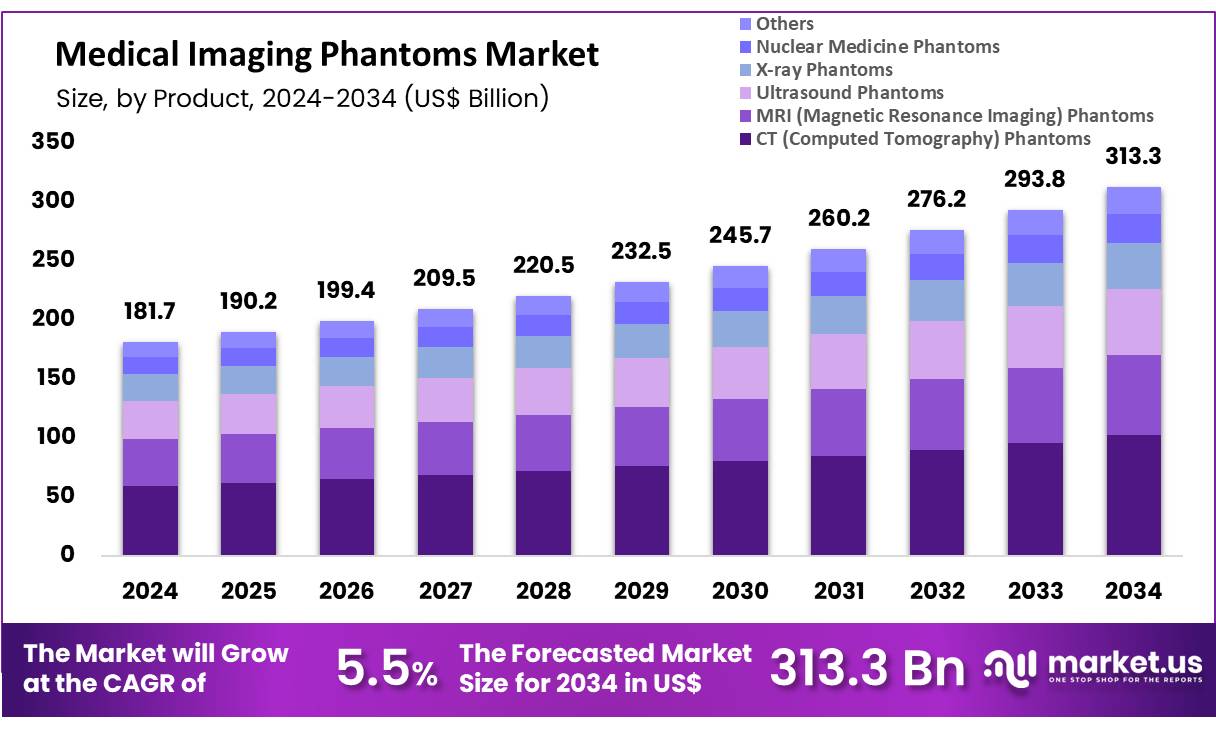
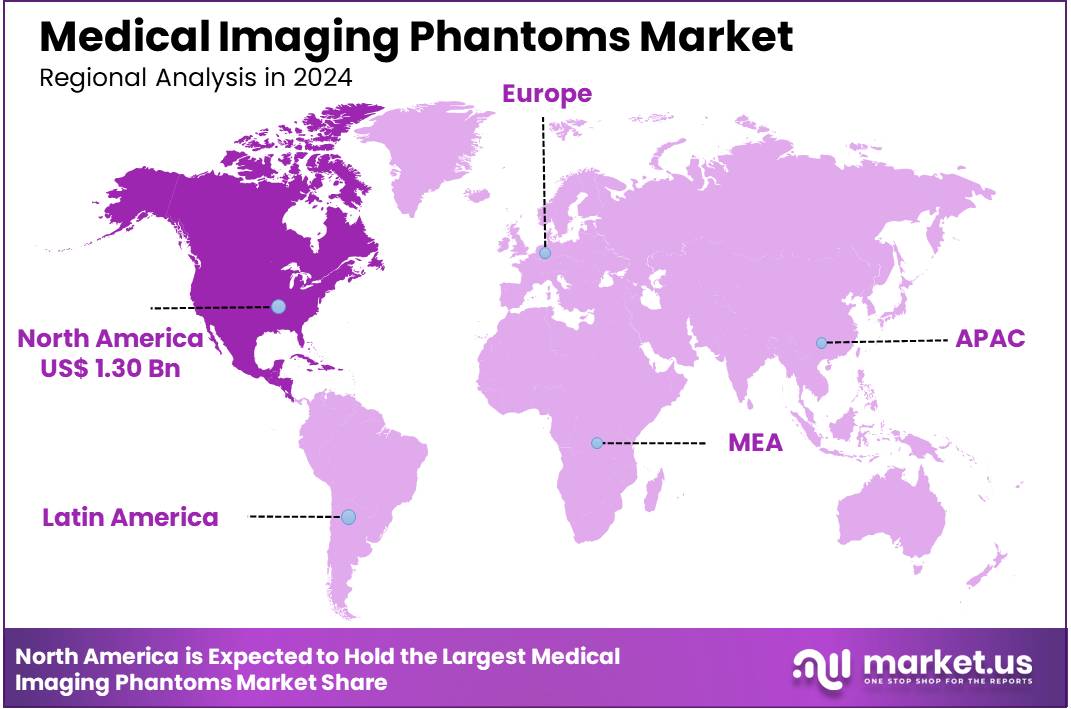
Global Medical Imaging Phantoms Market size is expected to be worth around US$ 313.32 Billion by 2034 from US$ 181.70 Billion in 2024, growing at a CAGR of 5.5% during the forecast period from 2025 to 2034. In 2023, North America led the market, achieving over 36.40% share with a revenue of US$ 1.30 Billion.
The Medical Imaging Phantoms Market is driven by the rising demand for precise diagnostic imaging techniques and the growing prevalence of chronic diseases. Imaging phantoms are essential tools for calibrating, testing, and validating imaging systems like MRI, CT, and ultrasound, ensuring accurate diagnostics. As chronic conditions such as cancer, cardiovascular, and neurological disorders surge globally, the need for reliable imaging systems intensifies.
Additionally, advancements in imaging technologies and the increasing adoption of minimally invasive diagnostic procedures further boost the market. Healthcare providers emphasize quality assurance, leading to higher demand for imaging phantoms to improve diagnostic accuracy and patient outcomes.
- The WHO reported that chronic diseases such as cardiac failure and chronic obstructive pulmonary disease (COPD) affected millions globally, with approximately 251 million cases of COPD recorded in 2023.
Technological advancements in the design and materials of medical imaging phantoms highlight their increasing significance in healthcare. In 2023, innovations led to the creation of advanced phantoms specifically designed for imaging modalities like MRI and CT. Leading organizations introduced new phantoms with enhanced calibration accuracy, meeting the growing demand for precision in diagnostic imaging. These developments improve the reliability of imaging systems and strengthen quality assurance protocols, ultimately enhancing patient outcomes.
Stricter regulations from authorities like the FDA now mandate routine testing and quality assurance for imaging devices, prompting healthcare providers to adopt imaging phantoms to comply with safety standards, driving market growth.
Additionally, expanding healthcare infrastructure in countries like Japan, India, and China, supported by substantial investments in diagnostic centers, is boosting demand for phantoms. Notably, in December 2024, China unveiled a detailed plan to establish wholly foreign-owned hospitals in nine cities, reinforcing its commitment to healthcare reform and foreign investment.
Key Takeaways
- The Medical Imaging Phantoms Market generated a revenue of US$ 181.70 Billion in 2024 and is predicted to reach US$ 313.32 Billion, with a CAGR of 5.5%.
- Based on the Product, the CT (Computed Tomography) Phantoms segment generated the most revenue for the market with a market share of 32.6%.
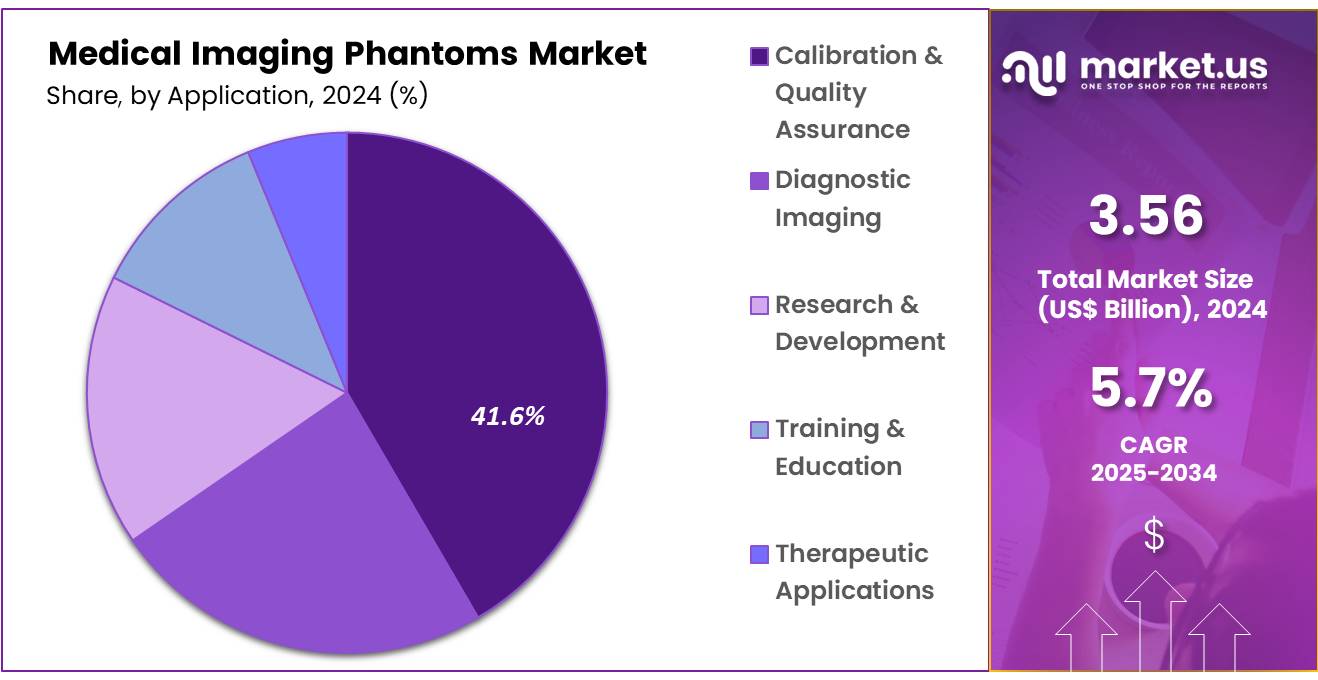
- Based on the Application, the Calibration & Quality Assurance segment generated the most revenue for the market with a market share of 41.6%.
- By End-use, the Hospitals & Diagnostic Imaging Centers segment contributed the most to the market and secured a market share of 47.8%.
- Region-wise North America remained the lead contributor to the market, by claiming the highest market share, amounting to 36.40%.
Product Analysis
CT (Computed Tomography) phantoms led the medical imaging phantoms market in 2024, holding a 32.6% share. Their dominance is attributed to their critical role in ensuring accurate calibration and quality assurance of imaging systems.
With the increasing adoption of advanced imaging technologies in healthcare facilities, the demand for reliable CT phantoms has risen significantly to improve diagnostic accuracy and enhance patient safety. These phantoms are indispensable for optimizing system performance and maintaining high-quality imaging standards, making them a vital component in modern diagnostic practices.
MRI (Magnetic Resonance Imaging) phantoms are projected to witness the fastest growth, over the forecast period. This rapid growth is driven by their essential role in quality assurance and research applications in magnetic resonance imaging.
The increasing need for precise diagnostic tools and advancements in imaging technologies are fueling their demand, particularly in hospitals and research institutions. MRI phantoms are instrumental in system calibration, performance evaluation, and ensuring consistent imaging quality, making them crucial for achieving accurate and reliable diagnostics.
As healthcare systems globally invest in cutting-edge imaging technologies, the demand for both CT and MRI phantoms continues to grow, reflecting their importance in delivering high-quality patient care.
Application Analysis
The calibration and quality assurance segment dominated the medical imaging phantoms market in 2024, accounting for a revenue share of 41.6%. This leadership is attributed to the essential role phantoms play in maintaining imaging accuracy and ensuring diagnostic reliability. With healthcare facilities increasingly prioritizing standardized performance, regulatory compliance, and enhanced patient safety, phantoms have become indispensable.
They enable precise evaluation, routine maintenance, and calibration of imaging equipment, ensuring optimal functionality and consistency in diagnostic outcomes. These attributes not only improve the quality of diagnostic services but also reduce errors, fostering confidence among healthcare providers and patients alike.
The diagnostic imaging segment is anticipated to grow at the fastest rate over the forecast period. This growth is driven by the escalating demand for accurate and high-quality imaging in clinical settings, particularly in light of rising chronic disease prevalence. Innovations in imaging technologies, such as advanced CT, MRI, and ultrasound systems, have heightened the need for phantoms that can ensure precision and reliability.
Furthermore, the push for quality assurance in diagnostic procedures is propelling the development of novel imaging phantoms, designed to support advanced diagnostic techniques. These advancements ultimately contribute to improved patient outcomes and the overall efficiency of healthcare delivery systems globally.
By End-use Analysis
Hospitals and diagnostic imaging centers dominated the medical imaging phantoms market in 2024, accounting for the largest share of 47.8%. This significant share is driven by the increasing prevalence of chronic diseases and the critical need for precise diagnostic imaging.
These facilities depend heavily on imaging phantoms for a variety of purposes, including quality assurance, staff training, and compliance with stringent regulatory standards. By integrating phantoms into their clinical workflows, hospitals and imaging centers enhance diagnostic accuracy, maintain equipment reliability, and improve patient safety, further solidifying their widespread adoption in the healthcare sector.
The medical device manufacturers segment is expected to grow at the fastest pace, with a projected CAGR of 6.4% over the forecast period. These manufacturers utilize imaging phantoms extensively for the development, testing, and calibration of new diagnostic devices. Phantoms play a pivotal role in ensuring that devices meet industry standards, operate reliably, and deliver accurate imaging results.
This has become increasingly important as manufacturers innovate to meet the growing demand for advanced imaging technologies. The use of phantoms in research and development not only supports compliance with regulatory requirements but also accelerates advancements in medical device technology, underscoring their essential role in driving innovation within the healthcare industry.
Key Market Segments
By Product
- CT (Computed Tomography) Phantoms
- MRI (Magnetic Resonance Imaging) Phantoms
- Ultrasound Phantoms
- X-ray Phantoms
- Nuclear Medicine Phantoms
- Others
By Application
- Calibration & Quality Assurance
- Diagnostic Imaging
- Research & Development
- Training & Education
- Therapeutic Applications
By End-use
- Hospitals & Diagnostic Imaging Centers
- Medical Device Manufacturers
- Others
Drivers
Advancements in Imaging Technologies is driving the Market Growth
Advancements in imaging technologies, particularly in modalities like CT, MRI, ultrasound, and PET, have significantly enhanced diagnostic capabilities in healthcare. These innovations, however, demand highly sophisticated imaging phantoms to maintain system accuracy and reliability. Phantoms play a pivotal role in calibrating and testing these advanced systems, ensuring they deliver precise and consistent imaging results.
As imaging technologies become more complex, such as the development of higher-resolution scanners and multi-modality imaging systems, the need for phantoms designed for specific applications and modalities has grown. For instance, modern CT and MRI machines require phantoms that can simulate human tissue properties to validate imaging quality and ensure diagnostic reliability.
This trend underscores the growing importance of phantoms in facilitating the adoption of cutting-edge imaging technologies, supporting quality assurance protocols, and enhancing patient safety. Their role is vital in meeting the evolving standards of precision and performance in medical diagnostics.
Restrains
High Initial Costs
The high initial costs of advanced imaging phantoms present a significant challenge for small healthcare facilities and research institutions. These phantoms, often made with specialized materials and designed to simulate complex anatomical and physiological properties, require substantial investment in production, development, and quality control.
For smaller organizations with limited budgets, the expense of acquiring these sophisticated tools can be prohibitive. This is particularly true for facilities in developing regions where funding constraints are more pronounced. As a result, some healthcare providers may rely on older, less advanced imaging technologies or forego regular calibration and quality assurance, potentially compromising diagnostic accuracy and patient safety.
Additionally, research institutions that depend on grants or limited funding may face difficulties integrating advanced phantoms into their studies, hindering innovation. Addressing this barrier through cost-effective solutions or subsidized programs is essential to ensure widespread adoption and equitable access to high-quality diagnostic imaging tools globally.
Opportunities
Focus on Multi-Modality Phantoms
The growing demand for multi-modality phantoms reflects the need for versatile tools that can be utilized across various imaging systems, such as CT, MRI, PET, and ultrasound. These advanced phantoms are designed to simulate human anatomy and tissue properties, enabling healthcare providers and researchers to evaluate the performance of multiple imaging modalities using a single phantom.
This versatility is particularly valuable in modern healthcare environments, where integrated diagnostic approaches are increasingly common. Multi-modality phantoms streamline quality assurance processes, reduce the need for multiple specialized phantoms, and optimize costs for hospitals and research institutions.
They also support innovation in hybrid imaging systems, such as PET/CT or MRI/PET scanners, by ensuring seamless calibration and performance testing. The adoption of these phantoms enhances efficiency, improves diagnostic accuracy, and meets the evolving demands of precision medicine, making them an essential component of contemporary medical imaging practices.
Impact of Macroeconomic / Geopolitical Factors
Macroeconomic and geopolitical factors significantly influence the global Medical Imaging Phantoms Market. Economic instability, inflation, and fluctuating healthcare budgets in developing regions can limit investments in advanced imaging technologies, hindering market growth. Geopolitical tensions and trade restrictions may disrupt the global supply chain, delaying the availability of medical imaging phantoms.
Conversely, government initiatives to strengthen healthcare infrastructure, particularly in emerging economies, boost market demand. For example, increasing investments in diagnostic centers in Asia-Pacific and Middle Eastern countries support growth. Additionally, global efforts toward regulatory harmonization and healthcare reforms can positively impact the adoption of phantoms worldwide.
Latest Trends
The Medical Imaging Phantoms Market is witnessing several emerging trends driven by advancements in technology and evolving healthcare demands. One significant trend is the development of multi-modality phantoms, designed for use across various imaging systems such as CT, MRI, and PET, enhancing versatility and cost-effectiveness.
Customization is another growing trend, with manufacturers creating phantoms tailored for specific clinical applications, including pediatric imaging and oncology diagnostics. The integration of 3D printing technology has enabled the production of highly detailed and anatomically accurate phantoms, facilitating better training and research.
The adoption of AI in diagnostic imaging is also influencing the market, as phantoms are increasingly used to validate and train AI algorithms for enhanced imaging accuracy. Additionally, there is a rising focus on eco-friendly and sustainable phantoms, aligning with global sustainability goals. These trends collectively underscore the market’s dynamic evolution toward precision, efficiency, and innovation.
Regional Analysis
North America Dominated the Global Medical Imaging Phantoms Market
In 2024, North America led the global medical imaging phantoms market with a dominant revenue share of 36.40%. The region’s leadership is attributed to its advanced healthcare infrastructure, which is equipped with state-of-the-art diagnostic imaging systems, driving the demand for accurate calibration and quality assurance.
Additionally, North America boasts substantial investments in research and development, enabling continuous innovation in medical imaging technologies. These advancements have increased the need for sophisticated phantoms to ensure the reliability and precision of diagnostic imaging systems, such as CT, MRI, and X-ray.
The high prevalence of chronic diseases, including cancer, cardiovascular, and neurological disorders, further fuels the demand for medical imaging, as early diagnosis and accurate imaging are crucial for effective treatment. The region’s focus on early detection and preventative care also promotes the adoption of advanced imaging techniques. As a result, medical imaging phantoms are essential in maintaining quality assurance standards and optimizing patient outcomes, reinforcing North America’s dominance in the global market.
Key Regions and Countries
North America
- US
- Canada
Europe
- Germany
- France
- The UK
- Spain
- Italy
- Russia
- Netherland
- Rest of Europe
Asia Pacific
- China
- Japan
- South Korea
- India
- New Zealand
- Singapore
- Thailand
- Vietnam
- Rest of APAC
Latin America
- Brazil
- Mexico
- Rest of Latin America
Middle East & Africa
- South Africa
- Saudi Arabia
- UAE
- Rest of MEA
Key Players Analysis
The competitive landscape of the Medical Imaging Phantoms Market is characterized by the presence of several key players focused on innovation, product development, and strategic collaborations. Major companies, including Kyoto Kagaku, CIRS (Computerized Imaging Reference Systems), and Gammex, lead the market with advanced imaging phantoms tailored for various modalities like CT, MRI, and ultrasound.
These companies invest heavily in research and development to enhance phantom accuracy and functionality. Additionally, new entrants and regional players are gaining traction by offering cost-effective solutions and specialized phantoms for emerging applications, such as pediatric imaging and AI validation. Strategic partnerships are also driving market growth.
Top Key Players
- BARTEC Top Holding GmbH
- Biodex Medical Systems, Inc.
- Capintec
- Carville Limited
- CIRS
- Computerized Imaging Reference Systems, Inc.
- Dielectric Corporation
- Gold Standard Phantoms
- IBA Worldwide
- Kyoto Kagaku Co., Ltd.
- Leeds Test Objects Ltd.
- Mirion Technologies, Inc.
- Modus Medical Devices Inc.
- PhantomX
- Pro-Project
Recent Developments
- In December 2024, Siemens Healthineers expanded its 1.5 Tesla Magnetom Flow MRI platform with the introduction of a 70-centimeter bore scanner, prioritizing patient comfort, sustainability, enhanced image quality, and automated workflows.
- In July 2024, RSD Radiology Support Devices announced the upcoming launch of Multi-Modality Phantoms, aimed at improving precision and reliability in diagnostics across multiple imaging technologies, including CT, MRI, and X-ray.
- In June 2024, Festo acquired Carville’s process technologies and production facilities for multilayer plastic manifolds, with production scheduled to begin in 2025, bolstering their innovative solutions in laboratory automation and medical technology.
- In February 2024, Philips unveiled the AI-enabled CT 5300 at #ECR2024, enhancing diagnostic capabilities and efficiency, driving further advancements in medical imaging phantoms for more accurate patient assessments and complex cardiac diagnostics.









