


Report Overview
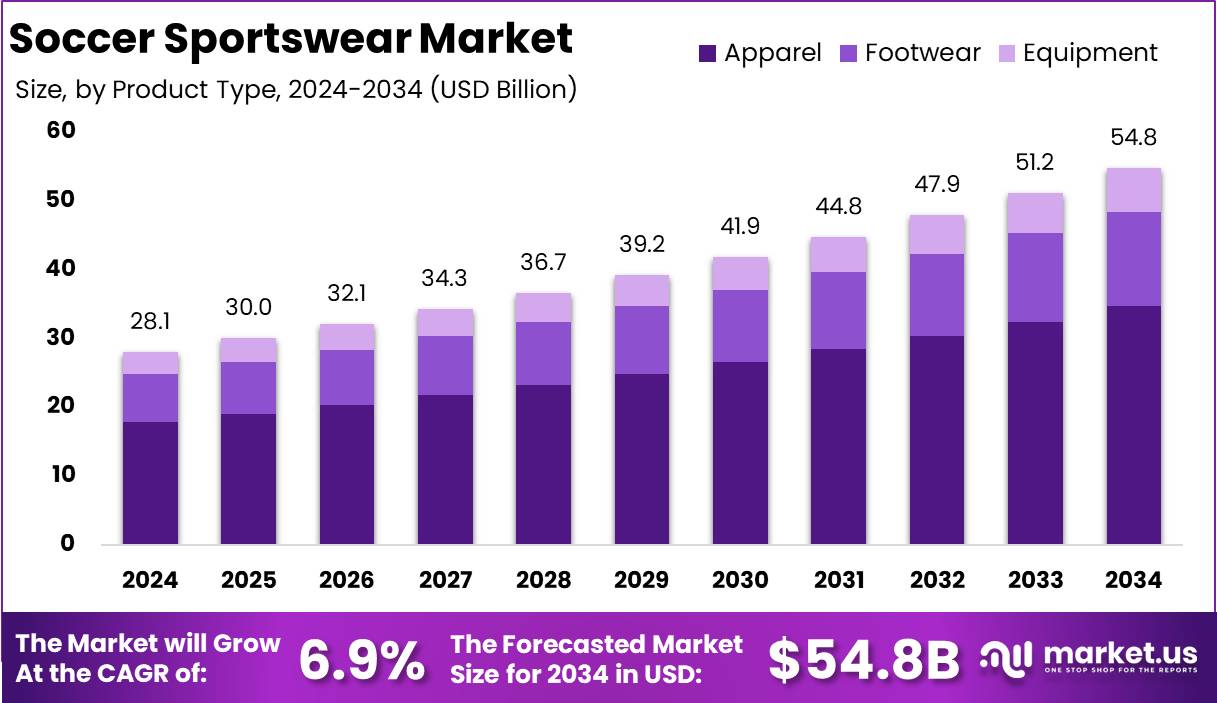
The Global Soccer Sportswear Market size is expected to be worth around USD 54.8 Billion by 2034 from USD 28.1 Billion in 2024, growing at a CAGR of 6.9% during the forecast period from 2025 to 2034.
Soccer sportswear encompasses the attire specifically designed for the sport of soccer. This includes jerseys, shorts, socks, cleats, and other specialized gear such as goalkeeper gloves and shin guards. The design and materials of soccer sportswear are optimized to enhance player comfort, performance, and safety. Fabrics are typically lightweight, breathable, and moisture-wicking to manage the rigorous physical demands of the game, while also maintaining the aesthetic and color integrity of team uniforms.
The soccer sportswear market refers to the commercial sector involved in the design, manufacturing, and sale of clothing and equipment required for soccer. This market serves a wide range of consumers, from amateur enthusiasts to professional athletes, and includes a broad array of products from basic practice gear to advanced competitive apparel. Key stakeholders include sportswear brands, athletic goods manufacturers, and specialty sports retailers, all of whom play a vital role in the distribution and promotion of these products globally.
The growth of the soccer sportswear market is propelled by several factors. Increasing participation in soccer at all levels, from youth to professional leagues, worldwide boosts the demand for sportswear. Additionally, growing health consciousness and the rising popularity of sporting activities as a means to achieve fitness contribute to market expansion.
Technological advancements in materials and garment construction that enhance player performance and comfort also drive innovation and product adoption. Furthermore, strategic endorsements and marketing campaigns by high-profile athletes and teams magnify consumer interest and engagement.
The soccer sportswear market is driven by the sport’s global popularity and its status as the most-watched sport in the world. Seasonal sport cycles, international tournaments, and league games ensure year-round demand for soccer apparel and accessories. The market’s demand dynamics are also influenced by trends in fashion and consumer preferences, which dictate design elements like color and fit. The youth segment represents a significant portion of the market’s demand, spurred by organized school sports and club participation.
The soccer sportswear market presents numerous opportunities for growth and innovation. Expansion into emerging markets, particularly in Asia and Africa, where soccer is gaining popularity, offers potential for significant market penetration. There is also an increasing opportunity for the integration of technology in sportswear, such as wearables that monitor performance metrics or fabrics that adapt to environmental conditions.
The Soccer Sportswear Market reflects dynamic consumer engagement and diverse purchasing platforms, according to Fashion Discounts. With 44% of activewear buyers preferring in-store experiences, the tactile aspect of shopping plays a significant role. Europe holds a substantial 25% share in sports apparel footwear, indicating a robust market presence.
Nike leads with 5.3 million UK consumers, demonstrating strong brand loyalty. Women’s activewear comprises 35% of the market, highlighting its significant impact. Additionally, 55% of athleisure revenue comes from online sales, showcasing the shift towards digital platforms, while 46% of top online apparel retailers now include athleisure in their offerings, pointing to its growing popularity.
According to Study, the soccer sportswear market is set to see significant revenue generation, particularly in the United States, where it is expected to reach $1,416.00 million by 2025. This market is characterized by an average revenue per user (ARPU) of $17.47. By 2029, the market is projected to grow to encompass 400 million users, with a penetration rate of 5.0% by 2025, indicating a strong uptake of soccer merchandise among consumers.
Key Takeaways
- The Soccer Sportswear market is projected to grow at a CAGR of 6.9% from 2025 to 2034, doubling in value from USD 28.1 Billion in 2024 to USD 54.8 Billion by 2034.
- Apparel dominates the product type segment with a 63.4% market share, reflecting high consumer demand and ongoing innovations in soccer apparel.
- Fan Wear/Licensed Products lead the purpose segment, holding a 57.4% market share, boosted by high-profile events and sponsorships.
- Men’s soccer sportswear is the leading application segment with a 56.7% share, driven by high participation rates and specialized product designs.
- Individual Users (B2C) dominate the end-user market with a substantial 72.3% share, fueled by personalized, high-quality sportswear and the rise of e-commerce.
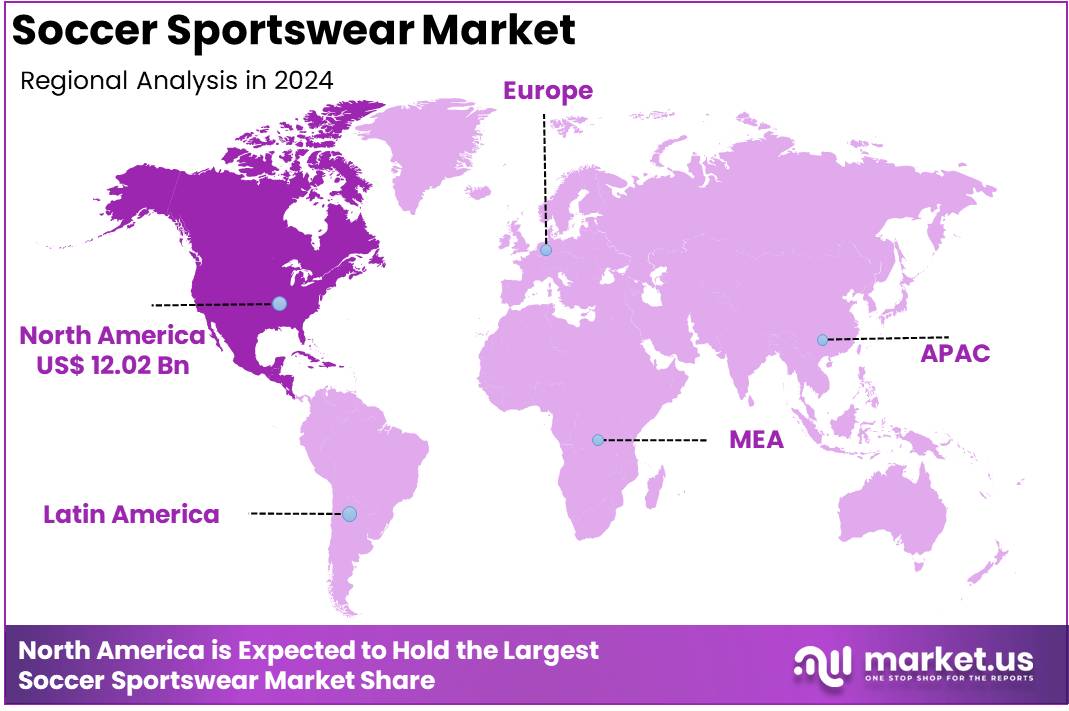
- North America holds the largest market share in the global Soccer Sportswear market at 42.8%, driven by a robust sporting culture and significant investments in soccer development.
By Product Type Analysis
In 2024, Apparel secured a dominant market position in the Soccer Sportswear market by product type, capturing more than a 63.4% share. This substantial market share reflects the high demand and consistent preference for soccer apparel among consumers. Apparel in soccer sportswear includes jerseys, shorts, training gear, and team uniforms, essential for both amateur and professional players.
The segment’s dominance is propelled by ongoing innovations in material technology, design, and partnerships with major soccer clubs and national teams that enhance brand visibility and consumer loyalty.
The footwear segment in soccer sportswear, while smaller compared to apparel, plays a critical role in the market. It includes soccer cleats, practice shoes, and other related footwear products designed for optimal performance and comfort on the field. Advances in technology, such as improved grip designs and lightweight materials, continue to drive the segment’s growth, catering to the evolving needs of soccer players at all levels.
The equipment segment of the Soccer Sportswear market encompasses a variety of products necessary for the sport, including soccer balls, gloves, and protective gear like shin guards and goalkeeper gear. This segment benefits from continuous product development aimed at enhancing safety and performance, which is crucial in sustaining demand among consumers seeking high-quality and reliable soccer equipment.
Each segment Apparel, Footwear, and Equipment contributes uniquely to the overall growth of the Soccer Sportswear market, supported by trends in sports fashion, player safety concerns, and global soccer culture’s expansion.
By Purpose Analysis
In 2024, Fan Wear/Licensed Products held a dominant market position in the Soccer Sportswear market by purpose, capturing more than a 57.4% share. This segment outperformed others due to the growing popularity of soccer as a global sport and the increasing fan base eager to connect with their favorite teams through official merchandise.
Fan Wear/Licensed Products include jerseys, training gear, and other apparel endorsed by professional soccer teams and players. This category benefits from high-profile sponsorships and marketing campaigns that align with major events like the FIFA World Cup and regional championships, which significantly boost consumer demand during the event years.
Conversely, Non-Licensed Products, which encompass generic or non-branded sportswear used in soccer, held a smaller portion of the market. These products cater to a more price-sensitive segment of consumers who seek functional attire without the premium cost associated with licensed branding. Despite their lower market share, there is a steady demand for non-licensed products driven by grassroots soccer activities and amateur leagues where affordability is often more crucial than brand allegiance.
Together, these segments illustrate the diverse consumer preferences within the Soccer Sportswear market, highlighting the strong influence of brand partnerships and event-driven marketing on consumer purchases in the sportswear industry.
By Application Analysis
In 2024, Men held a dominant market position in the Soccer Sportswear market by application, capturing more than a 56.7% share. This segment leads due to the high participation rate of men in soccer across both amateur and professional levels. Men’s soccer sportswear includes specialized apparel designed to enhance performance, such as moisture-wicking fabrics, ergonomic fits, and durable materials that withstand rigorous use.
The Women’s segment, although smaller in comparison, is rapidly growing, driven by increasing female participation in soccer and greater social movements toward gender equality in sports. Women-specific designs that cater to comfort and performance requirements are helping to expand this market segment.
The Kids’ segment also holds a significant portion of the market, supported by the growing interest in youth soccer leagues and the emphasis on sports education in schools. This segment benefits from seasonal peaks during school sports seasons and recreational league enrollments, which often require uniforms and practice attire.
These segments together depict the varying needs and preferences across different demographics within the Soccer Sportswear market, underscoring the importance of targeted product offerings to meet the specific demands of each group.
By End-User Analysis
In 2024, Individual Users (B2C) held a dominant market position in the Soccer Sportswear market by end-user, capturing more than a 72.3% share. This substantial market share is primarily driven by the direct consumer purchase of soccer apparel and accessories.
Individual buyers, ranging from amateur enthusiasts to professional athletes, prefer personalized and high-quality sportswear that offers both functionality and style. The rise in e-commerce platforms and digital marketing has also facilitated easier access and customization options, which significantly appeal to individual consumers.
On the other hand, Teamwear (B2B) accounts for a smaller share of the market. This segment caters to soccer clubs and institutions purchasing uniforms and gear in bulk. Despite its smaller size, this segment is vital for manufacturers as it involves high-volume orders and opportunities for long-term partnerships and branding collaborations with sports teams.
Both segments demonstrate the diverse approaches in targeting end-users in the Soccer Sportswear market, highlighting a robust demand in the B2C sector driven by individual preferences and a solid foundation in the B2B sector through institutional sales.
By Distribution Channel Analysis
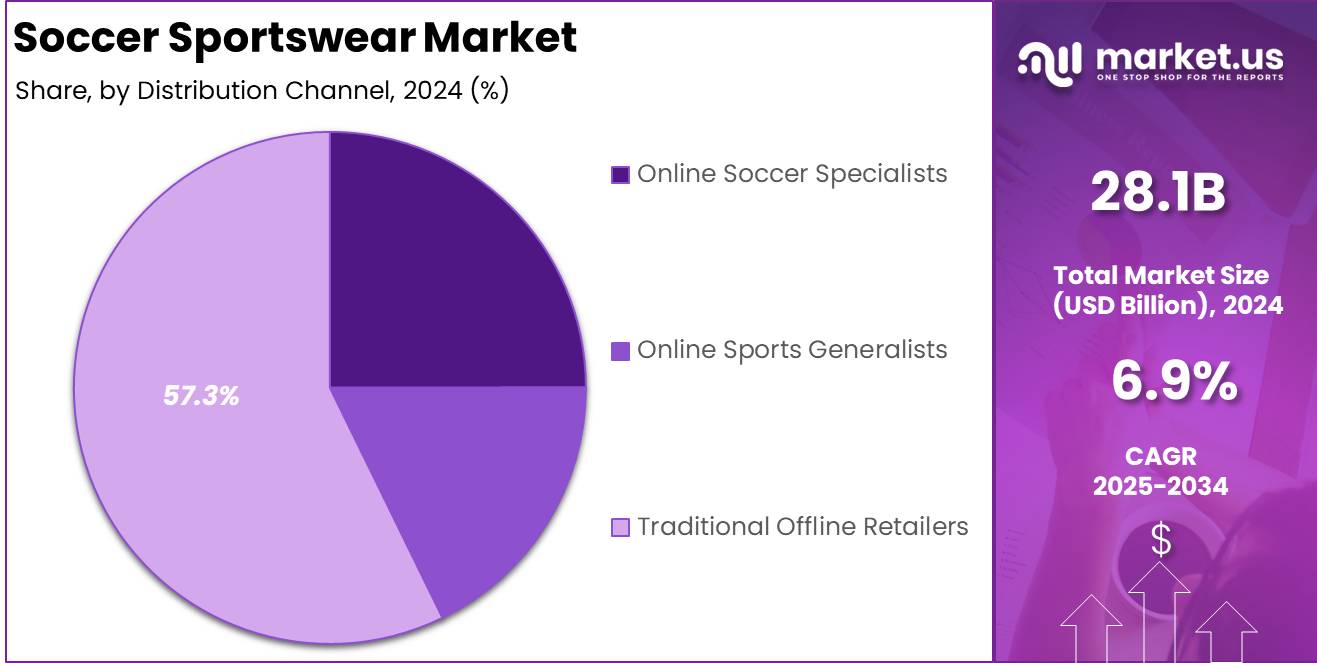
In 2024, Traditional Offline Retailers held a dominant market position in the Soccer Sportswear market by distribution channel, capturing more than a 57.3% share. This segment’s strength lies in the consumer preference for trying on sportswear before purchase, which is crucial for ensuring fit and comfort key factors in sports apparel. Traditional retailers offer the advantage of immediate product accessibility and personalized service, which are highly valued in the sports apparel industry.
Despite the growth of digital platforms, Online Soccer Specialists and Online Sports Generalists segments hold smaller market shares. Online Soccer Specialists cater specifically to soccer enthusiasts and offer a range of specialized products, often including exclusive items that are not available in general stores. Meanwhile, Online Sports Generalists provide a broad range of sports apparel and equipment, appealing to a wider audience but with less focus on soccer-specific gear.
Together, these segments highlight the evolving landscape of consumer shopping behaviors in the Soccer Sportswear market, with traditional offline retailers maintaining a strong lead due to their established presence and customer service advantages.
Key Market Segments
By Product Type
- Apparel
- Footwear
- Equipment
By Purpose
- Fan Wear/ Licensed Products
- Non-Licensed Products
By Application
- Men
- Women
- Kids
By End-User
- Individual users (B2C)
- Teamwear (B2B)
By Distribution Channel
- Online Soccer Specialists
- Online Sports Generalists
- Traditional Offline Retailers
Driver
Rising Participation in Soccer Globally
The global soccer sportswear market is experiencing significant growth driven by increasing participation in soccer across various demographics and geographies. Soccer, being the most popular sport worldwide, has seen a substantial increase in grassroots initiatives and youth enrollment in soccer programs, particularly in emerging economies.
This surge is fueled by the sport’s growing popularity through international tournaments and extensive media coverage, which inspires a larger audience to engage in soccer. As more people participate, the demand for soccer sportswear, including jerseys, shorts, and specialized footwear, escalates.
Manufacturers and retailers are capitalizing on this trend by expanding their product lines to cater to diverse consumer needs, from amateur enthusiasts to professional athletes. The expansion is not just in terms of quantity but also quality, with innovations in fabric technology and garment design to enhance performance and comfort.
This demand growth is a robust driver for the soccer sportswear market, as the attire is not only a requirement for play but increasingly a fashion statement and a marker of identity and allegiance to clubs and countries, further propelling the market forward.
Restraint
Environmental Concerns and Sustainability Issues
Environmental concerns pose significant restraints on the growth of the soccer sportswear market. The production of sportswear, particularly synthetic fabrics which are prevalent in the industry, has a substantial environmental footprint. These materials often involve petroleum-based production processes and contribute to environmental degradation through greenhouse gas emissions and non-biodegradable waste.
Additionally, the lifecycle of sportswear often leads to significant waste, as consumers tend to replace their kits frequently in response to changing team designs and sponsorships.
This environmental impact is becoming increasingly significant in consumer purchase decisions. The market faces pressure from consumers and regulatory bodies to adopt more sustainable practices. Brands that fail to address these concerns risk losing market share to more sustainable competitors, as there is a growing segment of the consumer base that values ethical and environmentally friendly products.
This shift necessitates innovation in sustainable fabrics and more efficient manufacturing processes, which could involve initial capital outlays and potential disruptions in supply chains, posing a restraint on the market’s growth.
Opportunity
Technological Advancements in Fabric and Production
Technological advancements in fabric and production processes represent a significant opportunity for growth within the soccer sportswear market. Innovations such as moisture-wicking fabrics, temperature control technologies, and enhanced durability materials offer manufacturers the chance to differentiate their products in a competitive market.
These advancements not only improve the performance and comfort of the sportswear but also cater to the increasing consumer demand for high-quality, durable products. Moreover, the integration of technology in manufacturing processes, such as automated cutting and sewing, and digital printing, has streamlined production, reduced waste, and lowered the costs of production.
This technological leap allows brands to offer better-quality products at competitive prices, expanding their market reach. Additionally, advancements in e-commerce and digital marketing enable direct-to-consumer sales models that increase brand engagement and customer loyalty, further enhancing market opportunities.
Trends
The Influence of Fashion and Lifestyle Brands
The convergence of fashion and sports, particularly in soccer sportswear, marks a prevailing trend that significantly impacts market growth. Lifestyle and fashion brands are increasingly collaborating with sports franchises and athletes to launch co-branded sportswear lines.
This trend is fueled by the growing cultural significance of soccer, which transcends the sport itself to influence fashion, music, and entertainment. Soccer jerseys and apparel are now fashion statements, worn both on and off the pitch, which broadens the consumer base beyond just active players to include fans and fashion-conscious individuals.
These collaborations are often limited edition releases, which create a buzz and drive demand through exclusivity and brand association. Additionally, the use of influencers and celebrities to endorse these products amplifies visibility and desirability.
This blurring of boundaries between sport and fashion elevates the position of soccer sportswear in the consumer market, making it a versatile component of everyday wardrobes. The trend not only boosts sales but also redefines the cultural impact of soccer sportswear, influencing its growth in the market.
Regional Analysis
Soccer Sportswear Market North America with Largest Market Share of 42.8%
In 2024, North America emerged as the leading region in the global Soccer Sportswear market, boasting the largest market share of 42.8% and reaching a valuation of USD 12.02 billion. This dominance is attributed to a well-established sporting culture, significant investments in soccer development, and the presence of several major soccer leagues that enjoy widespread popularity. The high consumer spending power in this region also contributes to the substantial demand for both licensed and high-performance soccer sportswear.
Europe follows closely, representing a mature market with a deep-rooted soccer history and fan base. The region’s strong emphasis on sports, particularly soccer, is supported by extensive club infrastructures and youth development programs. This environment fosters continual demand for soccer sportswear, from grassroots to professional levels, with a particular interest in eco-friendly and technologically advanced fabrics.
The Asia Pacific region is witnessing rapid growth in the Soccer Sportswear market, driven by increasing interest in soccer sports among the youth and strategic expansion by global brands into these emerging markets. The rising middle-class population and growing internet penetration have also propelled the popularity of both online and offline soccer sportswear shopping.
In the Middle East & Africa, the market is gradually expanding, thanks to initiatives aimed at integrating sports into the standard lifestyle and diversifying economies away from oil dependency. Countries like Qatar and the UAE are heavily investing in sports infrastructure, which is expected to increase the regional demand for soccer sportswear significantly in the coming years.
Latin America maintains a steady growth in the market, supported by the region’s passionate soccer culture. Although facing economic volatility, the enthusiasm for soccer remains a driving force behind the consumption of both modern and traditional soccer sportswear.
Key Regions and Countries
- North America
- The US
- Canada
- Europe
- Germany
- France
- The UK
- Spain
- Italy
- Russia & CIS
- Rest of Europe
- APAC
- China
- Japan
- South Korea
- India
- ASEAN
- Rest of APAC
- Latin America
- Brazil
- Mexico
- Rest of Latin America
- Middle East & Africa
- GCC
- South Africa
- United Arab Emirates
Key Players Analysis
In the global soccer sportswear market of 2024, key players are set to play a pivotal role in shaping industry dynamics. Adidas AG and NIKE Inc., with their robust brand equity and extensive marketing capabilities, are likely to continue their dominance by leveraging innovative product launches and strategic partnerships with leading soccer clubs and national teams. PUMA SE, also a significant contributor, is expected to enhance its market share through aggressive geographic and demographic expansion strategies.
Emerging players like ANTA Sports Products Ltd. and Li-Ning Company Limited are positioned to strengthen their market presence in Asia, capitalizing on regional growth opportunities and increasing interest in soccer. Meanwhile, companies like Under Armour Inc. and Lululemon Athletica are anticipated to focus on the high-end market segment by integrating cutting-edge technologies and sustainable materials into their offerings, catering to a more health-conscious and environmentally aware consumer base.
Other companies such as ASICS Corp., Mizuno Corp., and Columbia Sportswear are likely to enhance their competitive edge by diversifying their product portfolios to include soccer sportswear tailored to varying climatic conditions and player needs, ensuring broad appeal across different markets. This diverse approach among key players underscores a dynamic and competitive market landscape heading into 2024, with innovation and strategic branding at the core of market competition strategies.
Top Key Players in the Market
- 361sport
- Adidas AG
- Amer Sports
- ANTA Sports Products Ltd.
- ASICS Corp.
- Billabong
- Columbia Sportswear
- Gap Inc.
- Hanesbrands
- Kappa
- LiNing
- Li-Ning Company Limited
- Lululemon Athletica
- Mizuno Corp.
- NIKE Inc.
- PEAK
- PUMA SE
- Ralph Lauren
- Under Armour Inc.
- VF
- Xtep
Recent Developments
- In 2025, PUMA disclosed its preliminary financial outcomes for 2024, showcasing a notable currency adjusted sales increase of 9.8%, reaching €2,289 million in the fourth quarter, alongside a full-year growth of 4.4% amounting to €8,817 million, reflecting a robust performance in the global athletic wear market.
- On February 11, 2025, Soccerex publicized a significant multi-year global partnership with Sports.com, marking Sports.com as the title sponsor for six international Soccerex events scheduled for 2025, including venues in Cairo, Amsterdam, and Miami, enhancing global engagement and brand visibility.
- On February 22, 2023, DICK’S Sporting Goods announced its strategic acquisition of Moosejaw from Walmart, a move set to significantly expand DICK’S offerings in the outdoor retail sector and bolster its presence in the growing multibillion-dollar outdoor market.
- In 2024, lululemon athletica inc. delivered its financial results for the second quarter of fiscal 2024, emphasizing sustained revenue and earnings growth with strong performance across international markets, and continued efforts to optimize product assortment and market opportunities in the U.S.
- In 2024, Sports Endeavors, backed by Seawall Capital, successfully acquired Ewing Sports, a regional soccer specialty retailer based in New Jersey, thereby expanding its footprint in the soccer retail space and enhancing its market share in the American soccer market.
- In 2025, Columbia Sportswear Company announced its fourth-quarter 2024 financial results, with Chairman, President, and CEO Tim Boyle highlighting a return to sales growth and outlining expectations for continued expansion in 2025. The year was marked by significant advancements in inventory reduction, cost savings through the Profit Improvement Program, and strategic groundwork for Columbia’s upcoming ACCELERATE Growth Strategy.









