


Report Overview
The Global Sports Facilities Market size is expected to be worth around USD 1,084.0 Billion by 2034, from USD 132.4 Billion in 2024, growing at a CAGR of 23.4% during the forecast period from 2025 to 2034.
Sports facilities are dedicated spaces for athletic activities, training, and competitions. They include stadiums, arenas, gymnasiums, and community sports complexes. Some focus on professional events, while others serve schools and local leagues. These facilities support various sports, offering equipment, seating, and amenities for players and spectators.
The sports facilities market includes businesses that develop, operate, and manage venues for sports activities. It covers public and private stadiums, fitness centers, and training complexes. The market depends on sports popularity, event hosting, and investments in infrastructure. Revenue comes from ticket sales, sponsorships, memberships, and government funding.
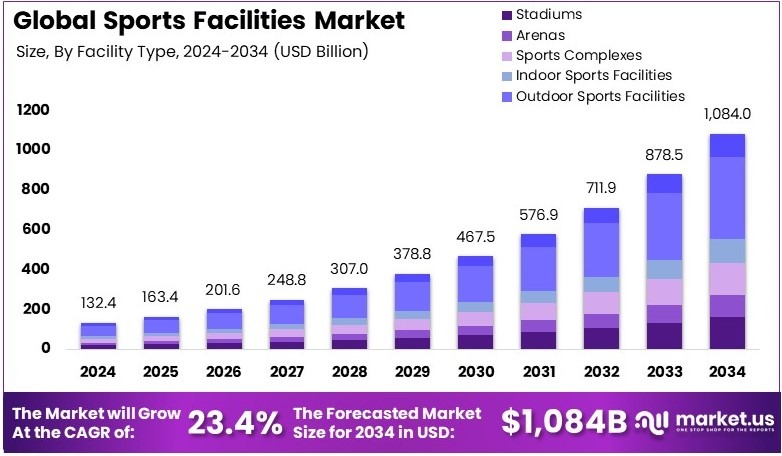
Sports facilities are evolving to meet rising demand. Governments and private investors are upgrading stadiums, gyms, and training centers to attract more visitors. According to TheSun, Ireland allocated €24.7 million for Dalymount Park’s redevelopment and €16.4 million for The Showgrounds. These investments improve infrastructure and enhance fan experiences.
Major sports events significantly impact local economies. According to Wikipedia, every $1 spent on operating costs and venues generates $2 for the host city. Additionally, these events create over 18,000 jobs on average. For this reason, cities continue to bid for global tournaments despite the high cost of construction and maintenance.
Growth in this market is driven by increased sports participation and tourism. New multi-purpose venues host concerts, exhibitions, and esports events alongside traditional sports. However, competition is intense, with regions vying for sponsorships and government funding. As a result, operators focus on technology, sustainability, and unique fan experiences to stay competitive.
Some markets face saturation, especially in developed countries with numerous stadiums and training centers. However, emerging economies offer untapped opportunities. In contrast, some facilities struggle with underuse. For instance, Brazil’s Arena da Amazônia cost $300 million, yet remains underutilized post-World Cup, raising concerns about long-term viability.
The impact of sports facilities extends beyond entertainment. Locally, they create jobs, boost tourism, and promote community engagement. On a larger scale, they strengthen the global sports economy. Well-maintained venues attract international events, driving revenue from ticket sales, sponsorships, and broadcasting rights. Consequently, sports infrastructure plays a key role in economic growth.
Key Takeaways
- The Sports Facilities Market was valued at USD 132.4 billion in 2024 and is expected to reach USD 1,084.0 billion by 2034, with a CAGR of 23.4%.
- In 2024, Outdoor Sports Facilities dominated the facility type segment with 38.2%, driven by rising investments in large-scale stadiums and recreational parks.
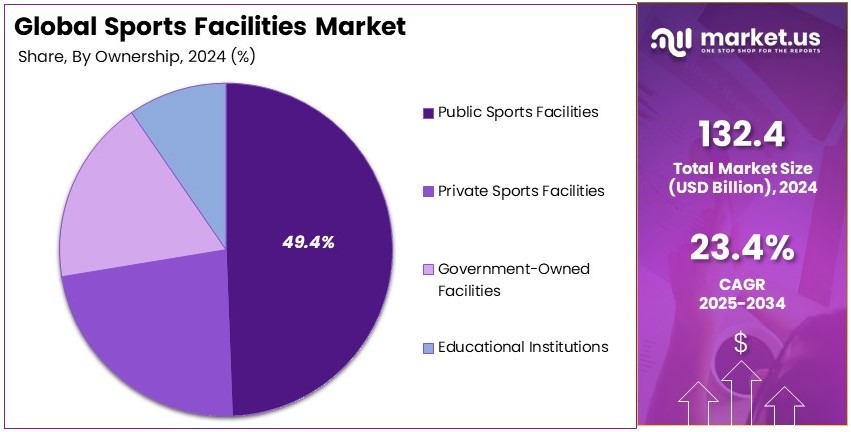
- In 2024, Public Sports Facilities led the ownership segment with 49.4%, supported by government initiatives and funding for sports infrastructure.
- In 2024, Football (Soccer & American Football) was the top sport type, holding 27.7%, due to high global participation and media coverage.
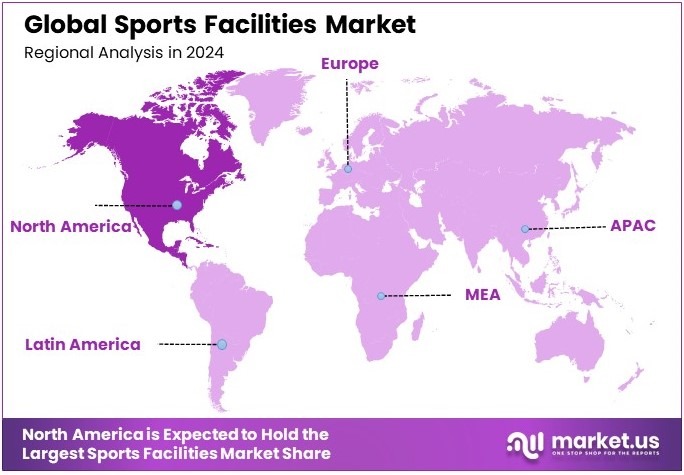
- In 2024, North America dominated the market, with strong investments in sports infrastructure and a thriving professional sports industry.
Facility Type Analysis
Outdoor Sports Facilities dominate with 38.2% due to their versatility and broad accessibility.
Outdoor Sports Facilities are the most prevalent sub-segment within the sports facilities market. Their dominance is attributed to their versatility in hosting a wide range of sports, including football, athletics, and tennis, which require large, open spaces. These facilities appeal broadly to public and private sectors for their capacity to host significant events and community programs, enhancing their utilization and financial viability.
Indoor Sports Facilities and Multi-Purpose Venues also play critical roles in the market. Indoor facilities provide year-round access for sports like basketball and swimming, crucial in regions with harsh weather conditions. Multi-Purpose Venues, adaptable to various events, from concerts to sports, offer unique opportunities to maximize usage and revenue, contributing significantly to the growth and sustainability of the sports facilities market.
Ownership Analysis
Public Sports Facilities dominate with 49.4% due to government investments in health and fitness initiatives.
Public Sports Facilities lead the market, largely due to increased government investments in health and wellness programs. These facilities are accessible to the general public, providing essential services to communities and supporting national health objectives. Their widespread presence is vital for fostering grassroots sports development and offering affordable recreation options.
Private Sports Facilities and Educational Institutions, although smaller in market share, are indispensable for providing specialized training environments and promoting sports as a part of educational development. Government-Owned Facilities are crucial for national sports agendas and international sporting events, emphasizing the role of sports in cultural and international diplomacy.
Sport Type Analysis
Football (Soccer & American Football) dominates with 27.7% due to its global popularity and substantial fan base.
Football facilities, whether for soccer or American football, lead the sport type segment due to the sport’s global popularity and extensive fan base. These facilities are often large-scale investments capable of generating significant revenue through ticket sales, merchandising, and broadcasting rights.
The universal appeal of football drives substantial public and private investment into developing facilities that can host local and international competitions.
Other sports like Tennis and Athletics also contribute to the market dynamics. Tennis facilities are essential for both recreational and professional play, often included in community centers and private clubs. Athletics facilities support a range of activities from school events to international competitions, playing a crucial role in athletic development and community engagement.
Key Market Segments
By Facility Type
- Stadiums
- Arenas
- Sports Complexes
- Indoor Sports Facilities
- Outdoor Sports Facilities
- Multi-Purpose Venues
By Ownership
- Public Sports Facilities
- Private Sports Facilities
- Government-Owned Facilities
- Educational Institutions
By Sport Type
- Football (Soccer & American Football)
- Basketball
- Baseball & Softball
- Tennis
- Swimming
- Athletics & Track Events
- Golf
- Ice Sports (Hockey & Skating)
- Motorsports
- Other Niche Sports
Driving Factors
Sports Investments and Event Popularity Drive Market Growth
Sports facilities are growing quickly due to strong government support and rising public interest. Public investments in sports infrastructure boost community health and create modern venues. The government funds new stadiums and refurbishes old ones to support national pride and sports development.
National and international sports events attract fans and investors alike. These events bring global attention and drive sports tourism. Fans travel far to see competitions, which increases revenue for sports facilities. In addition, strategic partnerships between educational institutions and developers create strong ties that nurture young talent and support sports programs.
Moreover, developers are adopting green building practices in stadium construction. Eco-friendly designs reduce environmental impact and lower operational costs. Such innovations attract sponsors and appeal to modern audiences.
Restraining Factors
High Costs and Environmental Concerns Restrain Market Growth
Sports facilities face significant challenges that slow market expansion. The high cost of building and maintaining state-of-the-art venues puts pressure on budgets. These costs include advanced technology, premium materials, and skilled labor, which are not always affordable for developers.
Environmental concerns also arise with large-scale constructions. Expansive sports complexes can disrupt local ecosystems and strain natural resources. Communities often worry about pollution and habitat loss. These issues may delay projects and increase regulatory scrutiny, adding uncertainty and extra costs to development plans.
Limited public funding further constrains sports facility projects, especially in emerging economies. Financial constraints force developers to seek private investment or reduce project scope. Seasonal use of outdoor facilities adds to the challenge. In colder months or adverse weather, utilization drops, affecting revenue and overall viability.
The cumulative effect of these challenges restricts growth significantly. Developers face tough decisions balancing quality, sustainability, and cost. Unpredictable funding and seasonal factors further complicate planning.
Growth Opportunities
Sustainable and Multipurpose Expansion Offers Opportunities
Sports facilities have many growth opportunities that can revitalize the market. Integrating sustainable materials and eco-friendly designs helps lower costs and reduce environmental impact. Developers can create modern venues that meet green standards and appeal to eco-conscious fans.
There is great potential for expansion in middle and low-income countries. Many regions lack modern sports facilities, creating a significant demand for quality infrastructure. Investments in these areas can boost local economies and improve community health through sports programs.
Developing multipurpose facilities that host various sports events can attract diverse audiences. Such venues allow simultaneous use for games, concerts, and community gatherings. This flexibility increases usage rates and enhances revenue streams, making investments more attractive to private and public stakeholders.
Leveraging digital technologies further boosts growth by enhancing fan engagement. Virtual tours, mobile ticketing, and social media interactions create immersive experiences that attract younger audiences. These digital tools also provide real-time data for improved facility management and marketing strategies.
Emerging Trends
AI and Smart Technologies Are Latest Trending Factor
Sports facilities are embracing new technologies that change the way they operate. The increasing use of artificial intelligence improves facility management and enhances security. AI systems monitor crowd behavior and optimize maintenance schedules, reducing costs and ensuring safety for visitors.
Smart stadiums are also on the rise with IoT technologies. These stadiums use connected devices to monitor energy use, manage crowd flow, and improve communication. The integration of sensors and data analytics creates a responsive environment that meets modern demands and increases operational efficiency.
There is a strong focus on enhancing the spectator experience. Virtual and augmented reality bring immersive features to live events. Fans can enjoy interactive views and real-time statistics that deepen their engagement. This digital shift creates a more personalized and exciting environment in sports venues.
The private sector is increasingly involved in sports facility development. Investors and developers collaborate to fund modern projects that incorporate these advanced technologies. This growing involvement fuels innovation and accelerates market transformation.
Regional Analysis
North America Dominates with Major Market Share
North America leads the Sports Facilities Market with a major share, driven by a robust sports culture and substantial investments in facility upgrades and technologies. The region benefits from a high participation rate in sports at all levels, from youth to professional, supported by extensive collegiate and professional sports programs.
The market dynamics are influenced by factors such as advanced infrastructure, diverse climate conditions allowing year-round sports, and significant private and public funding. The presence of numerous world-class sports facilities that can host international events also bolsters the region’s market position.
The future influence of North America on the global sports facilities market is expected to grow with increasing trends in health and fitness and the rising popularity of sports tourism. The region’s focus on sustainable and multi-use facilities that can adapt to various sports and events is likely to attract more international tournaments and athletes.
Regional Mentions:
- Europe: Europe’s market is characterized by a strong emphasis on football and other team sports, with considerable investments in modernizing facilities to enhance fan experience and safety.
- Asia Pacific: Rapid development in the sports infrastructure, driven by upcoming international events and increasing interest in sports, is expanding the sports facilities market in Asia Pacific.
- Middle East & Africa: Investments in new sports infrastructure, particularly for global sporting events, are boosting the sports facilities market in the Middle East & Africa.
- Latin America: Growth in Latin America’s sports facilities market is fueled by the passion for football and increasing government initiatives to improve sports infrastructure and public health.
Key Regions and Countries Covered in the Report
- North America
- US
- Canada
- Europe
- Germany
- France
- The UK
- Spain
- Italy
- Rest of Europe
- Asia Pacific
- China
- Japan
- South Korea
- India
- Australia
- Rest of APAC
- Latin America
- Brazil
- Mexico
- Rest of Latin America
- Middle East & Africa
- South Africa
- Saudi Arabia
- UAE
- Rest of MEA
Competitive Landscape
In the Sports Facilities Market, prominent firms like Populous, AECOM, HOK, and Skanska AB are leading the way, setting high standards in sports architecture and construction. These companies are renowned for their innovative designs and substantial contributions to sports infrastructure globally.
Populous stands at the forefront as a specialist in creating iconic sports facilities that are not only architectural marvels but also highly functional. Their portfolio includes well-known stadiums and arenas that host major international sports events. Populous’ expertise in large-scale project management and fan-centric designs makes them a leader in the field.
AECOM follows closely, bringing a broad spectrum of services from planning and design to construction and maintenance of sports facilities. Their global reach and comprehensive approach enable them to handle complex projects that require integrated solutions, making them a favorite among international clients.
HOK is another key player, with a strong emphasis on sustainable and energy-efficient designs. Their innovative approach to incorporating environmental considerations into sports facilities sets them apart. HOK’s projects often become community landmarks and are celebrated for both aesthetic and functional excellence.
Skanska AB specializes in constructing eco-friendly and technologically advanced sports facilities. Their commitment to sustainability and the use of cutting-edge construction techniques have earned them a reputation as a go-to contractor for sports projects that require high standards of environmental stewardship.
These top companies shape the Sports Facilities Market through their pioneering approaches to design and construction, their global operational capabilities, and their commitment to sustainability, significantly influencing the development of sports infrastructure worldwide.
Major Companies in the Market
- Populous
- AECOM
- HOK
- Skanska AB
- Turner Construction Company
- Balfour Beatty Plc.
- Jacobs Engineering Group
- Sodexo
- ESSMA
- SportsArt
- HNTB Corporation
- Delaware North
- Anschutz Entertainment Group
Recent Developments
- David Lloyd Leisure: On February 2025, David Lloyd Leisure reported a 33% increase in adjusted profits for 2024, reaching £231 million. This growth is driven by the rising popularity of racket sports such as padel and pickleball. To meet the growing demand, the company plans to introduce padel courts at an additional 20 clubs in 2025.
- The Sports Facilities Companies (SFC) and Firland Management: On September 2024, The Sports Facilities Companies (SFC) announced the acquisition of ice rink operator Firland Management and the launch of a new Ice Division. This move includes a partnership with the Central Park Conservancy to manage the $150 million Meer Center pool and rink complex in New York, reflecting the growing popularity of major sports events and the expansion into multipurpose sports facilities.









