


Report Overview
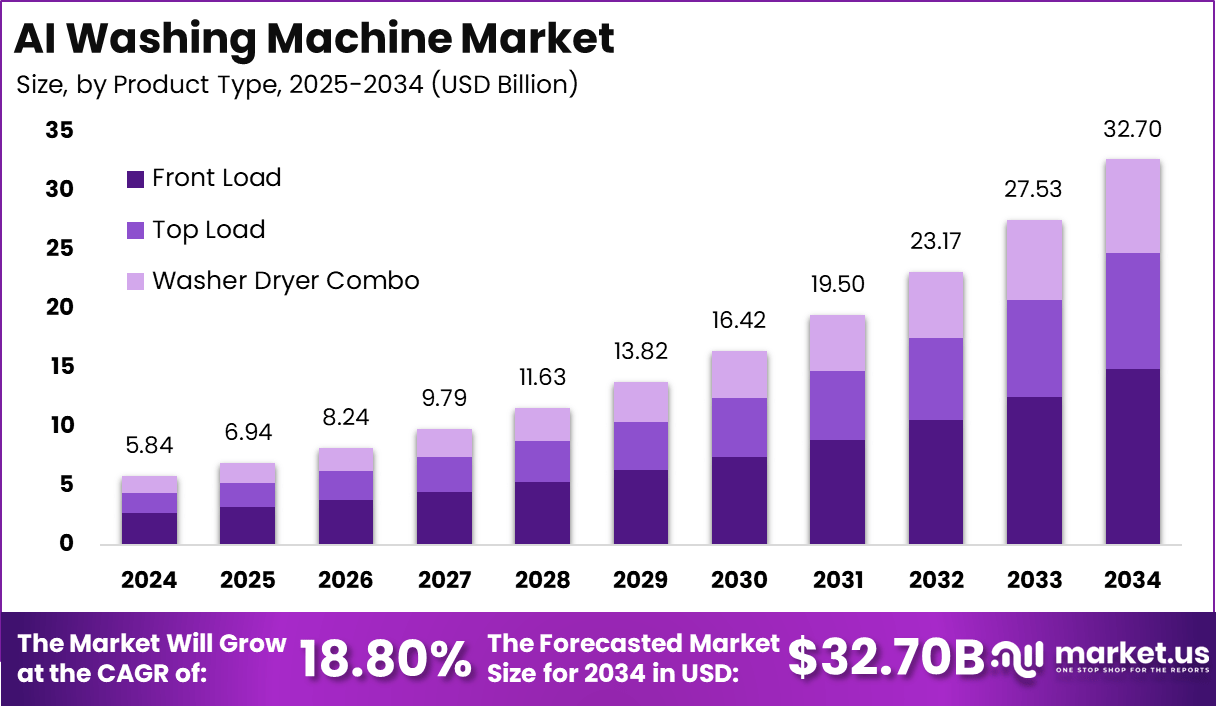
The Global AI Washing MachineMarket was valued at USD 5.84 billion in 2024 and is expected to grow significantly, reaching approximately USD 32.70 billion by 2032, reflecting a robust CAGR of 18.80% over the forecast period. North America holds a dominant position in this market, accounting for 33.6% of the global share, with a revenue of USD 1.96 billion. The US alone contributed USD 1.66 billion to this figure, with a projected CAGR of 15.5% throughout the forecast span.
Samsung launched its new Bespoke AI Washer with a standout A-65% energy efficiency rating, meaning it uses 65% less energy than the minimum required for Class A in Europe. This model features the intelligent AI Wash+ that adapts washing settings based on fabric type, weight, and soil level for better cleaning and energy savings. It also offers a smart 7” touchscreen and integrates with SmartThings for connected home use. Samsung also introduced a matching dryer with AI Dry+ technology, reducing energy use and drying time by 20% each.
Market challenges remain around the relatively high price of AI washing machines and concerns regarding maintenance complexity. However, growing investments in AI robustness, enhanced user experience, cost-effective models, and better customer support aim to overcome these hurdles.
Industry outlook for 2025 and beyond anticipates more personalized AI washing machines with enhanced data privacy and smarter diagnostics. Strategic mergers and acquisitions are expected to accelerate as companies reinforce AI and IoT capabilities. Pricing is expected to stabilize, driving accessibility across different consumer groups.
Top Market Takeaways
- By product type, front-load washing machines lead with 45.6%, driven by their popularity for energy efficiency and superior cleaning performance.
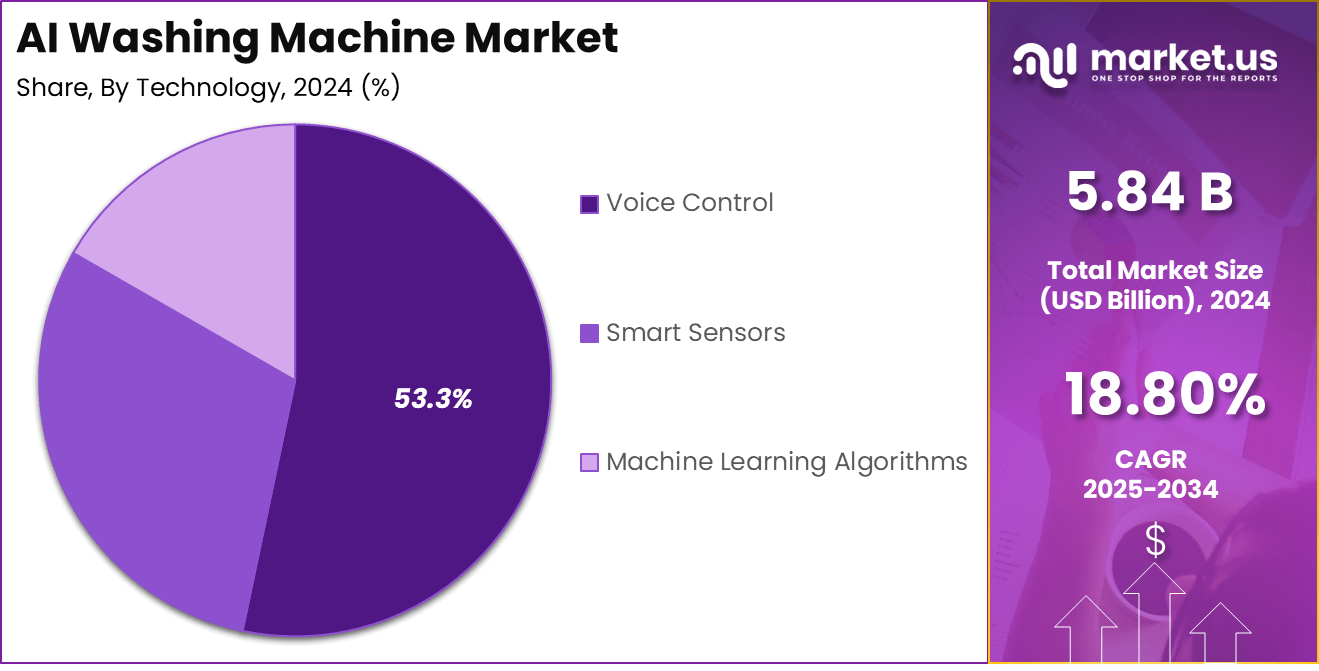
- By technology, voice control dominates with 53.3%, highlighting the growing integration of smart features for enhanced user convenience.
- By capacity, washing machines with a 6-10 kg capacity capture 42.7%, reflecting the demand for medium-sized machines suited for a variety of households.
- By distribution channel, online stores lead with 37.7%, reflecting the increasing preference for online shopping in the appliance market.
- By end-user, the commercial segment holds a dominant 70.5%, supported by the widespread use of AI washing machines in laundromats and the hospitality industry.
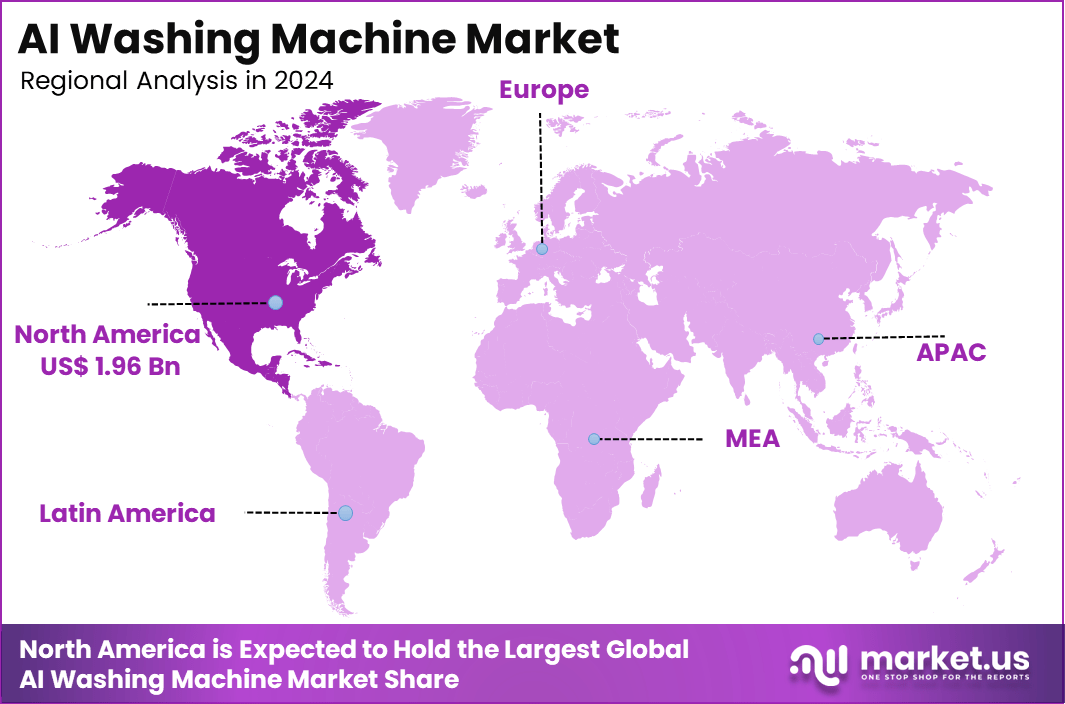
- North America accounts for 33.6% of the market share, with a market size of USD 1.96 billion in 2024.
- The US market reached USD 1.66 billion and is projected to grow at a CAGR of 15.5%, reinforcing its dominance in the AI washing machine market.
- The global market value stood at USD 5.84 billion in 2024, expected to reach USD 32.70 billion by 2032, with a robust CAGR of 18.80%.
AI Washing Machine Industry Growth
AI-powered washing machines are redefining the smart appliance landscape through precision, energy savings, and advanced automation. These machines can reduce water usage by up to 45%, energy consumption by around 30%, and detergent waste by 25–35% compared to older models. Using built-in sensors, they identify load weight, dirt levels, and fabric types, then automatically adjust water and detergent volumes to achieve optimal cleaning results. Many models can complete standard wash cycles 10–15% faster while maintaining performance levels.
Connectivity is another growing feature of the AI washing machine economy. Over 70% of new-generation smart washers now include Wi-Fi capabilities, allowing users to track cycle status, receive maintenance alerts, and control the appliance remotely through smartphones or voice assistants. Predictive maintenance features can identify operational issues with an accuracy rate of over 90%, preventing costly repairs and extending machine life by 20–25%.
On a global scale, smart and AI-enabled washers account for nearly one-third of all washing machine sales, with steady annual growth driven by eco-conscious consumers. As homes become increasingly automated, AI washing machines serve as a cornerstone of connected living—delivering efficiency, sustainability, and intelligent performance for modern households.
Analysts’ Viewpoint
The AI Washing Machine Market is poised for significant growth in the coming years, driven by technological advancements and increasing consumer demand for smarter, more efficient home appliances. The market is expected to grow at a steady compound annual growth rate. This growth is supported by the growing adoption of AI technologies, such as voice control, smart wash cycle optimization, and energy-efficient features, which provide both convenience and cost savings for users.
The demand for medium-capacity washing machines is particularly strong, as they cater to both residential users and commercial establishments such as laundromats and hotels. The commercial sector is expected to expand significantly as businesses increasingly recognize the operational benefits of AI-powered machines, including reduced energy consumption and improved laundry efficiency.
Additionally, the rise of e-commerce is contributing to the market’s growth, as consumers increasingly turn to online platforms for purchasing home appliances. North America continues to be a major player in this market, fueled by technological innovation and strong consumer interest in smart home solutions. As AI capabilities continue to evolve, the market for AI washing machines is expected to maintain a strong growth trajectory, with innovations shaping the future of the industry.
Role of Generative AI
Generative AI is playing a transformative role in the evolution of AI washing machines by enhancing their ability to personalize and optimize washing cycles based on user preferences and laundry conditions. Through machine learning algorithms, generative AI enables washing machines to adapt to different fabric types, load sizes, and soil levels, ensuring the most efficient use of water, detergent, and energy. This personalization not only leads to better cleaning results but also reduces operational costs and environmental impact.
One of the key benefits of generative AI is its ability to predict and generate the optimal settings for a washing cycle. By analyzing historical data, the AI can continuously improve its predictions, adapting to specific user habits and preferences. This ability to learn and evolve results in a more intuitive and hands-off user experience, as consumers can rely on the machine to adjust settings automatically.
Furthermore, generative AI can enable voice-controlled interfaces, allowing users to interact with their washing machines more naturally. It can also facilitate predictive maintenance by identifying potential issues before they become major problems, alerting users when maintenance is needed. As AI technologies continue to advance, generative AI will play an even greater role in making washing machines smarter, more efficient, and more user-friendly, significantly enhancing the consumer experience.
US Market Size
The US market for AI washing machines is experiencing robust growth, with a market size of approximately USD 1.66 billion in 2024. As part of the broader North American market, which holds a share of 33.6%, the US plays a pivotal role in driving this growth. North America, with a total market size of USD 1.96 billion, benefits from high consumer demand for innovative home appliances and a strong inclination towards smart home technology. This growth is supported by technological advancements, such as AI integration, voice control features, and energy-efficient washing cycles, which are attracting both residential and commercial consumers.
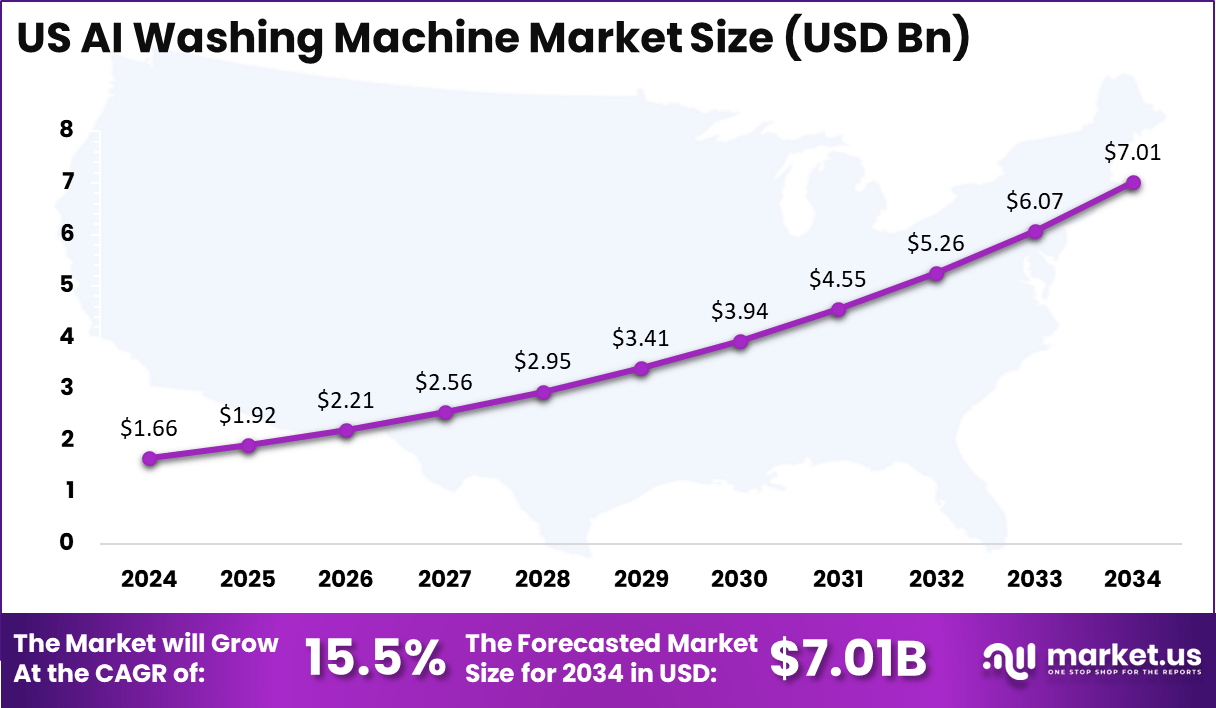
The US market is projected to grow at a steady compound annual growth rate (CAGR) of 15.5%, reflecting the increasing adoption of AI-powered washing machines across households, laundromats, and businesses. The rise of e-commerce, coupled with growing awareness of energy-saving technologies, has further bolstered the demand for these smart appliances.
As consumer preferences continue to evolve toward convenience and sustainability, the US is expected to remain a dominant market for AI washing machines. The market’s expansion will likely be fueled by continuous innovations in machine learning, automation, and connectivity, ensuring a significant contribution to the global AI washing machine market in the coming years.
Investment and Business Benefits
The AI Washing Machine market offers substantial investment and business benefits, driven by the increasing demand for smart appliances that offer both efficiency and convenience. For investors, the market presents a promising opportunity with an anticipated growth rate of CAGR, as AI-powered washing machines become more mainstream. This growth is fueled by innovations in AI, such as voice control, energy-efficient algorithms, and intelligent wash cycle optimization, which are gaining significant traction in both residential and commercial segments.
Businesses in the home appliance industry stand to benefit from the increasing consumer preference for smart appliances, offering them the chance to diversify product portfolios and capture a larger share of the growing market. Additionally, manufacturers can capitalize on the demand for energy-efficient solutions, as consumers become more conscious of environmental sustainability and operational costs. AI washing machines, with their enhanced capabilities, provide businesses with a competitive edge by differentiating their products in a crowded market.
Furthermore, e-commerce platforms are emerging as key distribution channels, offering businesses a cost-effective way to reach a wider consumer base. The commercial segment, which accounts for a significant share, also presents a valuable opportunity for businesses in sectors like laundromats and hospitality. As AI technology evolves, businesses investing in these advancements are poised to lead in a rapidly expanding market.
By Product Type
By product type, front-load washing machines dominate the market, accounting for 45.6% of the total share. This is primarily driven by their superior cleaning performance, energy efficiency, and space-saving design. Front-load machines are known for their ability to provide more thorough washing by tumoring clothes through the water, reducing wear and tear on fabrics. Additionally, they consume less water and detergent compared to top-load models, making them a preferred choice for environmentally-conscious consumers and those seeking long-term savings on utility bills.
Top-load washing machines, while still popular, hold a smaller share of the market. They are typically preferred for their more traditional design, ease of use, and faster wash cycles. However, top-load machines generally use more water and energy than front-loaders, which has led to a shift toward front-load models for consumers looking to reduce their environmental impact and operational costs.
Washer-dryer combos, which combine both washing and drying functions into a single appliance, are also gaining traction. These machines are especially popular in smaller homes or apartments where space is limited. While they account for a smaller portion of the market compared to front-load and top-load models, their convenience and multifunctionality are driving their growth, especially in urban areas with limited space.
By Technology
By technology, voice control leads the AI washing machine market, capturing 53.3% of the share. This technology allows users to operate their washing machines through voice commands, offering a seamless, hands-free experience. The integration of voice control enhances the convenience and accessibility of AI washing machines, making them a popular choice among consumers seeking smart home solutions. This feature allows users to initiate wash cycles, adjust settings, and receive notifications simply by speaking to their machine, which aligns with the growing trend of voice-activated technology in modern appliances.
Smart sensors are another key technology, contributing to the growing popularity of AI washing machines. These sensors automatically detect load size, fabric type, and soil level, adjusting the wash cycle accordingly to optimize water, detergent, and energy usage. The integration of smart sensors increases operational efficiency and helps reduce environmental impact, making the machines more sustainable and cost-effective.
Machine learning algorithms further enhance the intelligence of AI washing machines by enabling them to learn from usage patterns. These algorithms allow the machines to optimize washing cycles over time, improving cleaning performance and energy efficiency based on user preferences and historical data. As AI technology continues to evolve, machine learning algorithms are expected to play a more prominent role in refining the washing experience, making machines even more intuitive and efficient.
By Capacity
By capacity, washing machines with a 6-10 kg capacity lead the market, accounting for 42.7% of the total share. These machines are the most popular choice for both residential and commercial use, as they provide an ideal balance between size and functionality. They are perfect for medium-sized households, offering enough capacity to handle average laundry loads while maintaining efficient use of water and energy. This segment has also seen significant adoption in laundromats and small businesses, where flexibility and efficiency are key.
Washing machines with a capacity of below 6 kg hold a smaller share of the market but are still preferred in households with lower laundry volumes, such as single-person or small apartments. These compact machines offer space-saving benefits and are typically more affordable, appealing to consumers with limited space or budget constraints.
On the other hand, washing machines with a capacity above 10 kg cater to larger households and commercial establishments that require higher load capacities for heavy-duty washing. Though these machines represent a smaller portion of the market, their demand is rising in households with larger families and businesses like hotels or hospitals, where large volumes of laundry need to be processed efficiently. The growing trend of family-size machines highlights the diversity in consumer needs within the AI washing machine market.
By Distribution Channel
By distribution channel, online stores lead the market, accounting for 37.7% of the total share. The increasing shift toward e-commerce is driving this trend, as more consumers prefer the convenience of shopping for AI washing machines online. Online platforms offer easy access to a wide range of brands, models, and prices, along with the ability to compare features and read reviews, making it a preferred shopping method. Additionally, e-commerce platforms often provide attractive deals, discounts, and home delivery options, further enhancing the appeal of purchasing washing machines online.
Supermarkets and hypermarkets hold a significant share of the market as well, providing consumers with the opportunity to view and purchase washing machines in-store. These retail outlets often feature competitive pricing and allow customers to see and experience the appliances firsthand, which is an important factor for many buyers when making significant purchases like washing machines.
Specialty stores also play a role in the distribution of AI washing machines, though their share is smaller compared to online stores and larger retail outlets. These stores often offer expert advice and personalized service, appealing to consumers who are looking for specific models or brands. Other distribution channels, such as direct sales and franchise networks, account for a smaller portion of the market but continue to support the broader reach of AI washing machines.
By End-User
By end-user, the commercial segment dominates the AI washing machine market, accounting for 70.5% of the total share. This is primarily driven by the widespread adoption of AI washing machines in laundromats, hotels, hospitals, and other businesses that require high-volume, efficient laundry operations.
Commercial establishments benefit from the advanced features of AI washing machines, such as optimized wash cycles, energy efficiency, and automated settings, which help reduce operational costs and improve productivity. The growing demand for laundry services in both urban and rural areas further fuels the expansion of this segment.
The residential segment, while smaller, still plays a crucial role in the market. As consumers increasingly seek smart home solutions, AI washing machines are becoming a popular choice for households that prioritize convenience, energy savings, and superior cleaning performance.
The rise of smart homes and the integration of AI technology into everyday appliances is driving growth in this segment, as consumers look for more personalized and efficient ways to manage their laundry. As AI washing machines continue to evolve, the residential segment is expected to see steady growth, though it will remain significantly smaller compared to the commercial sector.
Emerging trends
Emerging trends in the AI washing machine market are reshaping the landscape, driven by technological innovations and changing consumer preferences. One of the most notable trends is the increasing integration of voice control and smart home connectivity. As consumers continue to embrace smart homes, AI washing machines with voice control capabilities are gaining popularity.
These appliances allow users to operate washing machines with simple voice commands, enhancing convenience and streamlining household chores. Integration with home automation systems also enables users to control their machines remotely via smartphone apps, adding further flexibility.
Another significant trend is the focus on energy efficiency and sustainability. As environmental concerns grow, consumers are increasingly opting for AI washing machines that optimize water and energy usage. Smart sensors and machine learning algorithms are being used to detect the optimal settings for each load, minimizing waste and reducing the environmental impact.
Additionally, the rise of AI-powered predictive maintenance is revolutionizing the market. AI algorithms can predict when a machine is likely to require maintenance or repairs, preventing breakdowns and extending the lifespan of the appliance. This trend not only enhances the user experience but also reduces the long-term cost of ownership.
Key Market Segments
By Product Type
- Front Load
- Top Load
- Washer Dryer Combo
By Technology
- Voice Control
- Smart Sensors
- Machine Learning Algorithms
By Capacity
- Below 6 kg
- 6-10 kg
- Above 10 kg
By Distribution Channel
- Online Stores
- Supermarkets/Hypermarkets
- Specialty Stores
- Others
By End-User
- Residential
- Commercial
Regional Analysis
North America holds a significant share of the global AI washing machine market, accounting for 33.6% in 2024. The United States is a major contributor, with a market size of USD 1.66 billion and a projected CAGR of 15.5%. This growth is driven by high consumer demand for smart home appliances, energy efficiency, and advanced features like AI-driven wash cycles and voice control. Companies such as Samsung and LG are at the forefront, offering products that integrate seamlessly into connected home ecosystems.
Asia-Pacific (APAC) is expected to dominate the AI washing machine market. Rapid urbanization, increasing disposable incomes, and a growing middle class in countries like China, India, and Japan are propelling demand. The region’s market is characterized by a shift towards premium models featuring larger drum capacities, smart connectivity, and sustainability features. Chinese brands, in particular, are expanding their market share by offering affordable yet feature-rich products tailored to local preferences.
Europe also holds a substantial share in the AI washing machine market, driven by a strong preference for energy-efficient and eco-friendly appliances. Countries like Germany, the United Kingdom, and France are leading the adoption of smart washing machines, supported by government incentives and consumer awareness of environmental issues. The market is marked by the presence of established appliance manufacturers and a growing trend towards smart home integration.
Latin America and the Middle East & Africa (MEA) represent emerging markets with growth potential. In Latin America, countries like Brazil and Mexico are witnessing increased adoption of smart appliances, driven by urbanization and rising disposable incomes. In the MEA region, the demand for AI washing machines is gradually increasing, particularly in urban areas where consumers are seeking advanced home appliances that offer convenience and efficiency.
Regional Analysis and Coverage
- North America
- US
- Canada
- Europe
- Germany
- France
- The UK
- Spain
- Italy
- Russia
- Netherlands
- Rest of Europe
- Asia Pacific
- China
- Japan
- South Korea
- India
- Australia
- Singapore
- Thailand
- Vietnam
- Rest of Latin America
- Latin America
- Brazil
- Mexico
- Rest of Latin America
- Middle East & Africa
- South Africa
- Saudi Arabia
- UAE
- Rest of MEA
Driving Factors
One of the key drivers of growth in the AI washing machine market is the increasing demand for smart home technology. As consumers adopt smart home systems, AI-powered appliances, including washing machines, are gaining popularity due to their ability to optimize performance and offer convenience. The integration of features like voice control, machine learning algorithms, and smart sensors allows users to control their washing machines remotely and customize wash cycles for better efficiency. These advanced features appeal to environmentally-conscious consumers looking to reduce energy and water consumption while also providing better cleaning results.
Restraint Factors
A significant restraint for the AI washing machine market is the high initial cost compared to traditional washing machines. The advanced technology and features integrated into AI machines contribute to their higher purchase price, which can deter price-sensitive consumers, particularly in emerging markets. Additionally, the complexity of these machines may result in higher repair and maintenance costs, further discouraging some potential buyers from investing.
Growth Opportunity
An exciting opportunity in the AI washing machine market is the growing demand for sustainability and energy efficiency. As consumers become more eco-conscious, there is increasing interest in appliances that reduce water and energy consumption. AI washing machines equipped with smart sensors and machine learning algorithms can optimize water and detergent use, presenting an opportunity for manufacturers to capitalize on the sustainability trend and offer more environmentally-friendly products.
Challenging Factors
A major challenge for the AI washing machine market is the integration of technology with existing infrastructure. Many consumers may face difficulties in adopting new technologies, especially in regions where smart home infrastructure is not yet widespread. Additionally, there may be concerns about the compatibility of AI washing machines with existing home networks, leading to potential barriers in adoption. Overcoming these challenges will require manufacturers to offer user-friendly solutions and ensure seamless integration with existing smart home ecosystems.
Competitive Analysis
Samsung Electronics Co., Ltd. and LG Electronics Inc. lead the market with their advanced AI-driven technologies. Samsung’s Bespoke AI ecosystem and LG’s AI DD technology offer personalized washing cycles tailored to fabric types and load sizes. Both companies are investing heavily in research and development to enhance their smart home integration and user experience.
Whirlpool Corporation maintains a strong presence with its diverse product portfolio, including the innovative 2-in-1 Removable Agitator and advanced hygiene features. The company focuses on delivering high-performance and reliable appliances, catering to both mass-market and premium segments.
Bosch Home Appliances and Siemens AG emphasize energy efficiency and sustainability. Bosch’s i-DOS detergent system and EcoSilence motor, along with Siemens’ advanced technologies, appeal to environmentally conscious consumers seeking cost-effective solutions.
Haier Group Corporation, through its subsidiary GE Appliances, offers a range of AI-powered washing machines that integrate seamlessly into smart home ecosystems. The company’s global reach and commitment to innovation position it as a formidable competitor.
Other notable players include Panasonic Corporation, Electrolux AB, Midea Group Co., Ltd., Hitachi Appliances, Inc., Toshiba Corporation, Hisense Group, Sharp Corporation, Fisher & Paykel Appliances, Arçelik A.Ş., Smeg S.p.A., Vestel, Godrej & Boyce Mfg. Co. Ltd., and Beko. These companies are focusing on regional market needs, affordability, and localized features to capture diverse consumer segments.
Top Key Players in the Market
- Samsung Electronics Co., Ltd.
- LG Electronics Inc.
- Whirlpool Corporation
- Bosch Home Appliances
- Haier Group Corporation
- Panasonic Corporation
- Electrolux AB
- Midea Group Co., Ltd.
- Siemens AG
- Hitachi Appliances, Inc.
- Toshiba Corporation
- GE Appliances
- Hisense Group
- Sharp Corporation
- Fisher & Paykel Appliances
- Arçelik A..
- Smeg S.p.A.
- Vestel
- Godrej & Boyce Mfg. Co. Ltd.
- Beko
- Other Major Players
Top Major Developments
- October 2025: Samsung Unveils Bespoke AI Washer with A-65% Energy Efficiency
Samsung introduced its new Bespoke AI Washer at IFA 2025 in Berlin, boasting an industry-leading A-65% energy efficiency rating. The washer features AI Wash+ technology, which customizes wash cycles based on laundry type and soil level, optimizing water and detergent usage. This innovation underscores Samsung’s commitment to sustainability and smart home integration.
- September 2025: Haier Launches Next-Generation AI Wash Sense System
Haier debuted its Next Generation AI-powered washers at IFA 2025, incorporating the AI Wash Sense system with nine sensors and an AI Vision camera. This system offers step-by-step guidance and learns user habits to suggest optimal wash cycles, enhancing convenience and energy efficiency.
- August 2025: LG Showcases AI-Driven Energy-Efficient Laundry Solutions
At IFA 2025, LG unveiled a comprehensive suite of AI-powered laundry solutions designed for maximum energy efficiency. These new models cater to the growing demand for sustainable appliances in the European market, offering smart features that accommodate various lifestyles and living spaces.









