


Report Overview
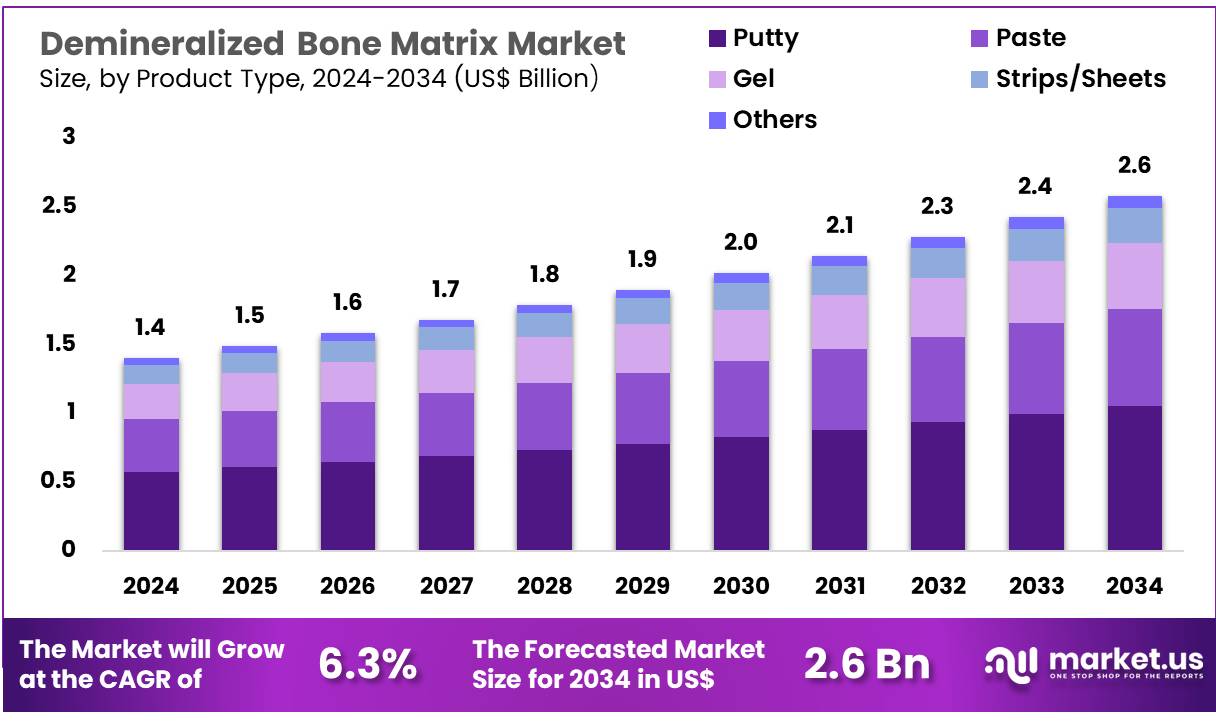
The Global Demineralized Bone Matrix Market size is expected to be worth around US$ 2.6 billion by 2034 from US$ 1.4 billion in 2024, growing at a CAGR of 6.3% during the forecast period 2025 to 2034.
Increasing demand for advanced orthopedic and spinal treatments is driving the growth of the demineralized bone matrix (DBM) market. DBM, a biological material derived from human bone, is widely used in regenerative medicine for bone grafting and spinal fusion surgeries due to its osteoinductive properties. The rising prevalence of musculoskeletal diseases, spinal injuries, and bone fractures contributes to the increasing adoption of DBM in surgical procedures.
In 2022, the Road Accidents in India report indicated that States and Union Territories documented 4,61,312 road accidents, leading to a significant number of bone-related injuries and fatalities. This underscores the need for effective bone regeneration solutions, boosting the demand for DBM in trauma care. Recent trends show that the market is expanding with the development of more advanced, safer, and more cost-effective DBM products, offering improved performance in bone healing.
The growing preference for minimally invasive surgeries and advancements in tissue engineering also present new opportunities for DBM-based applications. Additionally, the increasing number of geriatric patients, who are more prone to fractures and bone degeneration, further drives market growth. As research into bone regeneration continues to evolve, DBM is expected to play a key role in enhancing surgical outcomes, making it an essential component in the future of orthopedic treatments.
Key Takeaways
- In 2024, the market for Demineralized Bone Matrix generated a revenue of US$ 1.4 billion, with a CAGR of 6.3%, and is expected to reach US$ 2.6 billion by the year 2033.
- The product type segment is divided into putty, paste, gel, strips/sheets, and others, with putty taking the lead in 2023 with a market share of 40.9%.
- Considering tissue source, the market is divided into xenograft and allograft. Among these, allograft held a significant share of 64.7%.
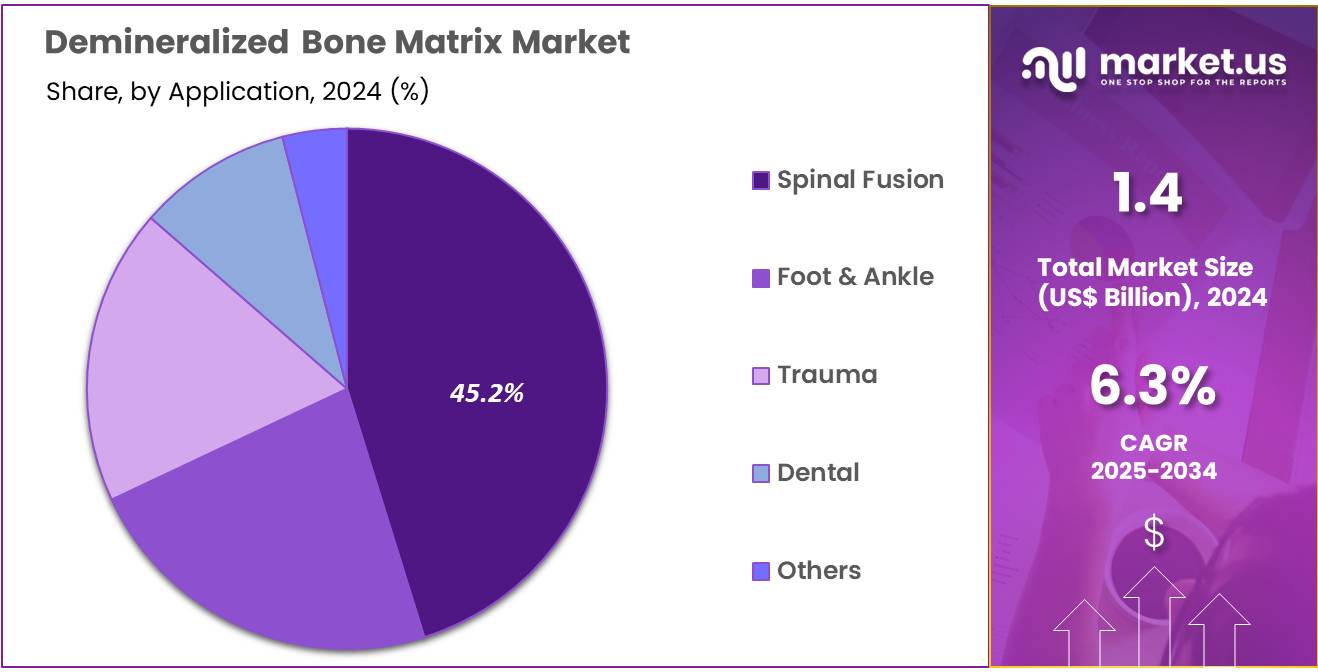
- Furthermore, concerning the application segment, the market is segregated into spinal fusion, foot & ankle, trauma, dental, and others. The spinal fusion sector stands out as the dominant player, holding the largest revenue share of 45.2% in the Demineralized Bone Matrix market.
- The end user segment is segregated into hospitals, academic & research institutes, orthopedic clinics, ambulatory surgical centers, and others, with the hospitals segment leading the market, holding a revenue share of 52.3%.
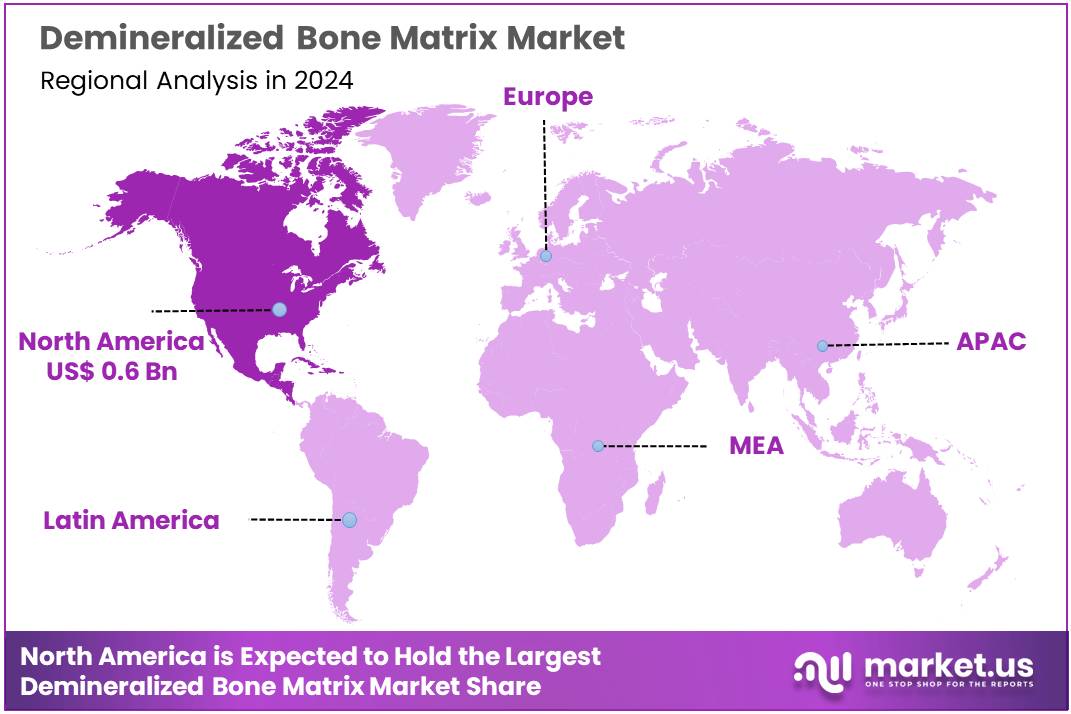
- North America led the market by securing a market share of 40.2% in 2024.
Product Type Analysis
The putty segment led in 2023, claiming a market share of 40.9% owing to its ease of use and effectiveness in orthopedic and dental procedures. Putty is widely utilized because it is easy to mold and handle, making it ideal for bone regeneration, particularly in irregularly shaped bone defects.
The segment’s growth is driven by the increasing demand for minimally invasive surgical techniques and bone grafting procedures, where putty-based products can be applied directly into the surgical site. Additionally, the development of advanced putty formulations that provide improved osteoinductive properties is anticipated to further fuel its market growth, especially in spinal and dental surgeries.
Tissue Source Analysis
The allograft held a significant share of 64.7% as a result of the growing preference for allograft tissue in various surgical applications. Allografts offer several advantages, including better integration with the recipient’s bone and the reduction of complications related to donor site morbidity.
The segment’s growth is projected to be driven by increasing patient acceptance, reduced recovery times, and advancements in allograft tissue preservation techniques. As the demand for bone regeneration solutions rises, particularly for orthopedic and spinal fusion surgeries, the allograft segment is expected to see substantial growth due to its clinical efficacy and availability.
Application Analysis
The spinal fusion segment had a tremendous growth rate, with a revenue share of 45.2% as spinal fusion surgeries become more prevalent. Demineralized bone matrix plays a critical role in spinal fusion procedures, promoting bone healing and offering a biologically active scaffold for cell growth.
The growth of this segment is expected to be fueled by the increasing incidence of spinal disorders, such as degenerative disc disease and scoliosis, coupled with the rise in aging populations. Additionally, advancements in bone grafting technologies that enhance the success rate of spinal fusion procedures will likely contribute to the ongoing expansion of this segment.
By End-User Analysis
The hospitals segment grew at a substantial rate, generating a revenue portion of 52.3% due to the increasing use of bone grafting materials in surgical procedures performed in hospital settings. Hospitals are expected to remain the primary end-users of demineralized bone matrix products due to their vast infrastructure and resources for performing complex orthopedic, spinal, and dental surgeries.
The growth of this segment is driven by the rising number of surgeries and increasing hospital investments in advanced surgical technologies. Furthermore, hospitals are anticipated to continue adopting demineralized bone matrix products to enhance surgical outcomes and reduce complications associated with bone regeneration.
Key Market Segments
Product Type
- Putty
- Paste
- Gel
- Strips/Sheets
- Others
Tissue Source
- Xenograft
- Allograft
Application
- Spinal Fusion
- Foot & Ankle
- Trauma
- Dental
- Others
End User
- Hospitals
- Academic & Research Institutes
- Orthopedic Clinics
- Ambulatory Surgical Centers
- Others
Drivers
Growing Occurrence of Road Traffic Accidents Driving the Demineralized Bone Matrix Market
Growing occurrence of road traffic accidents is anticipated to drive the demineralized bone matrix market significantly. In 2023, the World Health Organization reported that road traffic accidents claim approximately 1.19 million lives annually, with an additional 20 to 50 million individuals sustaining non-fatal injuries. Many of these injuries result in fractures and complex bone defects, requiring effective grafting solutions for recovery.
Demineralized bone matrix offers superior osteoconductive and osteoinductive properties, making it a preferred option for orthopedic surgeons in trauma cases. Surgeons increasingly use this material to enhance healing outcomes in spinal, pelvic, and extremity reconstructions. Rising advancements in minimally invasive surgical techniques drive the adoption of injectable formulations of demineralized bone matrix.
Expanding awareness about the benefits of biologic grafting solutions further supports market growth. Collaborations between healthcare providers and manufacturers improve the availability of these solutions in emerging markets. These trends underscore the critical role of advanced bone graft substitutes in addressing the growing global burden of trauma-related injuries.
Restraints
High Costs Are Restraining the Demineralized Bone Matrix Market
High costs associated with demineralized bone matrix products are restraining the market. Advanced formulations and processing techniques involve significant R&D investments, increasing production expenses. Hospitals and clinics in low-income regions face financial barriers to adopting these premium grafting materials. Limited insurance coverage for biologic grafts discourages patients from opting for these solutions, particularly in cost-sensitive markets.
Smaller healthcare facilities struggle to maintain adequate inventories due to high procurement costs. Training requirements for healthcare providers to effectively use these materials add to overall expenses. Regulatory compliance and stringent quality control measures further elevate production costs, restricting market accessibility. Addressing these affordability issues requires cost-efficient innovations and supportive reimbursement policies to expand adoption.
Opportunities
Rise in Innovation as an Opportunity for the Demineralized Bone Matrix Market
Rising innovation is projected to create significant opportunities for the demineralized bone matrix market. In October 2022, Orthofix Medical introduced its Legacy Demineralized Bone Matrix (DBM) and reported its first successful patient application. This innovative putty, designed to fill voids caused by trauma or bone defects, showcases the advancements in biologic grafting solutions.
Manufacturers focus on enhancing product formulations to improve handling properties, biocompatibility, and structural integrity. Research efforts drive the development of DBM products that offer superior osteoinductive potential, enabling faster and more effective bone regeneration. Injectable and moldable variants cater to the growing demand for minimally invasive surgical options.
Collaborative research initiatives between academic institutions and medical device companies accelerate the introduction of next-generation grafting solutions. Government funding for regenerative medicine supports the commercialization of advanced DBM products. These trends highlight the transformative potential of innovation in addressing the complex needs of trauma and orthopedic surgery.
Impact of Macroeconomic / Geopolitical Factors
Macroeconomic and geopolitical factors significantly influence the demineralized bone matrix market. On the positive side, increasing healthcare expenditures and a growing focus on advanced orthopedic treatments drive demand for innovative solutions like demineralized bone matrices. As the global population ages and the prevalence of musculoskeletal disorders rises, the need for effective bone regeneration treatments accelerates.
However, economic slowdowns or reduced healthcare budgets can limit access to these specialized treatments, especially in lower-income regions. Geopolitical factors, such as trade tariffs and regulatory differences, can disrupt the supply chain for essential raw materials, raising costs for manufacturers.
Political instability or changing regulations in key markets may also affect the approval and distribution of these products. Despite these challenges, the growing trend of personalized medicine and increasing demand for minimally invasive surgical procedures ensures a positive outlook for the demineralized bone matrix market.
Latest Trends
Surge in Mergers and Acquisitions Driving the Demineralized Bone Matrix Market:
Rising mergers and acquisitions are playing a crucial role in driving the demineralized bone matrix market. High levels of consolidation among key players in the orthopedic and musculoskeletal treatment sectors are expected to enhance the development and availability of advanced bone regeneration products. These strategic alliances enable companies to expand their product portfolios and leverage each other’s expertise in developing innovative solutions.
Growing partnerships and acquisitions in the field allow for more efficient research, manufacturing, and distribution of demineralized bone matrices. In September 2023, Globus Medical, Inc. and NuVasive, Inc. merged to create a unified company specializing in musculoskeletal treatment solutions and advanced surgical technologies tailored for patients and healthcare professionals.
As the trend of mergers and acquisitions continues, the market is anticipated to experience increased innovation and enhanced access to cutting-edge bone regeneration technologies, driving further growth in the sector.
Regional Analysis
North America is leading the Demineralized Bone Matrix Market
North America dominated the market with the highest revenue share of 40.2% owing to a surge in sports-related injuries and the increasing prevalence of orthopedic conditions. A report by Johns Hopkins Medicine revealed that over 30 million children and teenagers in the U.S. participate in organized sports, resulting in more than 3.5 million injuries annually.
This rising incidence of bone fractures and ligament tears drove the demand for effective bone graft substitutes, including demineralized bone matrix solutions. Additionally, the aging population, coupled with higher rates of osteoporosis and degenerative bone disorders, further boosted the market. Technological advancements in bone grafting materials and their widespread adoption in minimally invasive surgeries contributed to market expansion.
The growing preference for biologics in spinal fusion surgeries and trauma cases also enhanced market penetration. Favorable reimbursement policies and substantial investments in healthcare infrastructure played a significant role in facilitating product accessibility.
Moreover, collaborations between manufacturers and healthcare providers to develop innovative solutions propelled growth. The presence of well-established medical institutions and the increasing number of surgical procedures strengthened the market’s position in the region.
The Asia Pacific region is expected to experience the highest CAGR during the forecast period
Asia Pacific is expected to grow with the fastest CAGR owing to an aging population and increasing healthcare investments. The India Ageing Report 2023 highlighted that the population aged 60 and above reached 149 million, accounting for 10.5% of the country’s total population. This demographic shift is projected to elevate the demand for bone graft substitutes, including demineralized bone matrix solutions, as age-related orthopedic issues rise.
Expanding healthcare infrastructure across countries like India and China is likely to improve access to advanced surgical options. Increased awareness about the benefits of biologics in bone repair is expected to drive adoption. Collaborations between global manufacturers and regional distributors are anticipated to enhance product availability and affordability. Government initiatives supporting medical advancements and subsidies for orthopedic care are projected to fuel market growth.
Local production capabilities for cost-effective biologics are likely to make these solutions accessible to a broader patient base. Growing medical tourism in the region, supported by competitive pricing and skilled healthcare professionals, is estimated to further stimulate demand. Rising investment in research and development for innovative bone grafting materials is expected to strengthen the market’s trajectory in Asia Pacific.
Key Regions and Countries
North America
- US
- Canada
Europe
- Germany
- France
- The UK
- Spain
- Italy
- Russia
- Netherland
- Rest of Europe
Asia Pacific
- China
- Japan
- South Korea
- India
- Australia
- New Zealand
- Singapore
- Thailand
- Vietnam
- Rest of APAC
Latin America
- Brazil
- Mexico
- Rest of Latin America
Middle East & Africa
- South Africa
- Saudi Arabia
- UAE
- Rest of MEA
Key Players Analysis
Key players in the demineralized bone matrix market focus on strategies like advancing product formulations to enhance osteoinductive and osteoconductive properties for improved bone regeneration. Companies invest in research and development to create innovative, ready-to-use graft materials tailored for various orthopedic and dental applications.
Strategic partnerships with hospitals and surgical centers drive product adoption and expand their market reach. Geographic expansion into regions with rising healthcare investments and increasing orthopedic procedures supports sustained growth. Many players also prioritize regulatory compliance and rigorous quality assurance to maintain reliability and trust among healthcare providers.
Medtronic plc is a prominent company in this market, offering high-quality demineralized bone matrix solutions designed to support effective bone healing. The company combines advanced processing techniques with a focus on safety and efficacy, catering to diverse surgical needs. Medtronic’s strong global presence and dedication to innovation make it a leader in the bone grafting and regenerative medicine sector.
Top Key Players
- Zimmer Biomet
- Stryker
- SeaSpine Holdings Corporation
- Ossifix Orthopedics
- Medtronic Plc
- Globus Medical
- Essent Biologics
- DePuy Synthes
- Arthrex Inc
Recent Developments
- In September 2022, Ossifix Orthopedics, a subsidiary of Umbra Applied Technologies Group Inc., unveiled an innovative demineralized bone matrix product designed to support advanced bone repair and regeneration procedures, further expanding its orthopedic product range.
- In May 2022, SeaSpine Holdings Corporation, a leading medical device company, introduced its OsteoTorrent and OsteoTorrent C demineralized bone matrix (DBM) products. These new additions, developed using the Evo3/OsteoSurge 300 DBM technology, aim to provide enhanced solutions for bone grafting in spinal and orthopedic surgeries.
- In September 2021, Essent Biologics, a nonprofit biotechnology organization, introduced a human demineralized bone matrix (DBM) Bioink. This innovative product is designed for use in 3D bioprinting and tissue engineering research, offering advanced solutions for creating biologically relevant tissue models.









