


Report Overview
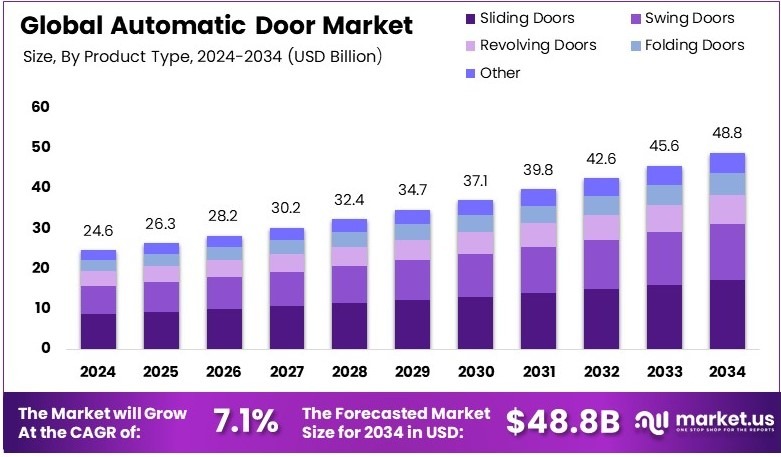
The Global Automatic Door Market size is expected to be worth around USD 48.8 Billion by 2034, from USD 24.6 Billion in 2024, growing at a CAGR of 7.1% during the forecast period from 2025 to 2034.
An automatic door is a self-operating entrance system. It opens and closes using sensors and electronic controls. These doors reduce manual effort and improve convenience. They are widely installed in commercial buildings, retail spaces, and offices. Automatic doors enhance accessibility and safety while offering efficient, reliable performance in busy environments.
Automatic door market refers to the industry sector engaged in the production and distribution of self-operating door systems. It includes manufacturers, suppliers, and service providers. The market involves design, installation, and maintenance services. It covers various applications in commercial, residential, and industrial sectors while ensuring compliance with safety and standards.
According to a study by the Association for Smart Homes & Buildings (ASHB) conducted in November 2024, financial and environmental efficiencies are major motivators for the adoption of smart technologies like automatic doors.
Technological advancements, particularly in Artificial Intelligence (AI) and the Internet of Things (IoT), have significantly contributed to this trend. For instance, the proliferation of AI has heightened the demand for infrastructure upgrades, with the U.S. market’s power demand projected to reach 35 gigawatts by 2030, up from 17 gigawatts in 2022.
Moreover, the integration of smart home technologies has also seen a marked increase. In 2024, approximately 69.91 million U.S. households were actively utilizing these devices, indicating a 10.2% increase from the previous year. Consequently, the automatic door market has become highly competitive, with companies continually innovating to meet consumer expectations for convenience, security, and energy efficiency.
Furthermore, on a broader scale, the impact of these technologies extends to enhanced operational efficiency in buildings, contributing to global sustainability efforts. Locally, the effects are seen in the form of improved building management practices, often bolstered by government regulations that promote energy efficiency.
Therefore, the market is not only expanding due to consumer demand but is also being shaped by regulatory frameworks that support sustainable development in infrastructure. This evolving landscape suggests a robust future for the automatic door market as it becomes integral to modern building management and design.
Key Takeaways
- The Automatic Door Market was valued at USD 24.6 billion in 2024 and is expected to reach USD 48.8 billion by 2034, with a CAGR of 7.1%.
- In 2024, Sliding Doors dominated the type segment with 45.5%, driven by their widespread use in commercial and residential buildings.
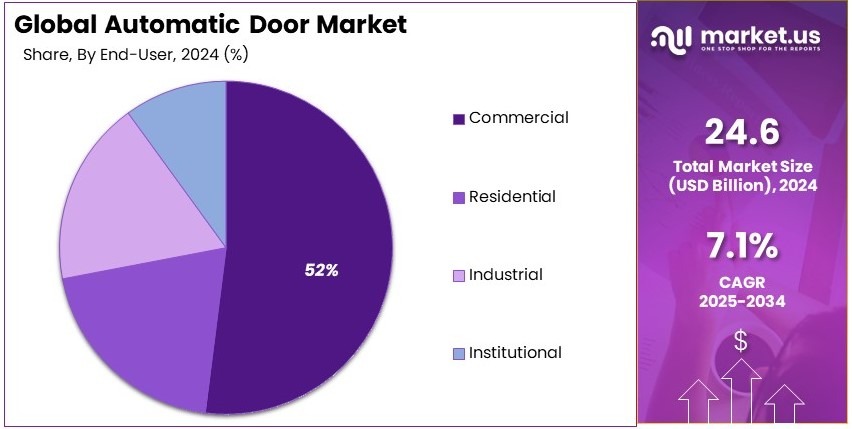
- In 2024, the Commercial sector led the end-use industry with 52%, attributed to increasing installations in malls, airports, and offices.
- In 2024, Sensor-Based technology accounted for 60%, due to its efficiency, automation, and growing adoption in smart infrastructure.
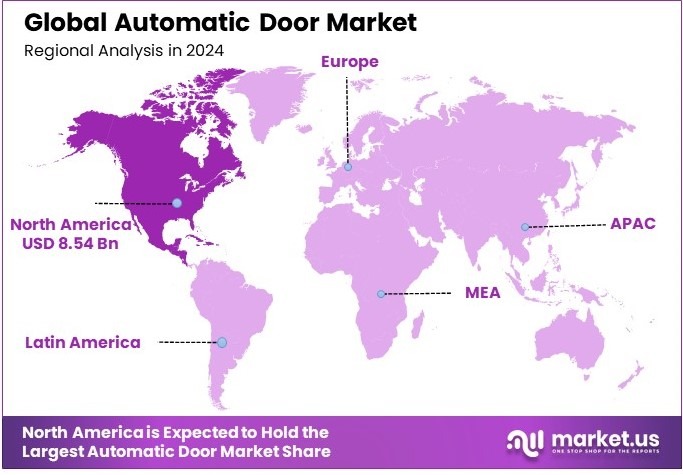
- In 2024, North America dominated the market with 34.7% and a value of USD 8.54 billion, driven by advanced infrastructure and automation demand.
Type Analysis
Sliding doors dominate with 45.5% due to their versatility and space efficiency.
The sliding door segment holds the largest market share in the automatic door market. This segment benefits from growing demand in both residential and commercial sectors, as these doors are ideal for spaces with limited room for traditional swing doors. Sliding doors are commonly used in homes, shopping malls, airports, and other high-traffic locations.
The increasing adoption of energy-efficient solutions and aesthetic preferences in urban construction further enhances the demand for sliding automatic doors. For example, in modern apartments and office buildings, sliding doors are favored for their space-saving and contemporary appeal. As such, the sliding door segment is expected to continue its dominant position due to these practical benefits.
On the other hand, swing doors offer easy accessibility, especially in healthcare and institutional environments. These doors are popular in high-traffic settings like hospitals or public facilities because they can be easily opened in emergencies.
Revolving doors are particularly useful in hotels and commercial buildings, where maintaining temperature control and managing high volumes of people flow are essential. Folding doors are commonly used for residential and small business applications, providing a convenient way to open up large spaces.
End-User Analysis
Commercial end-users dominate with 52.0% due to growing demand for automated solutions in businesses.
Commercial establishments, including shopping malls, airports, and office buildings, represent the largest segment in the automatic door market. The increasing focus on customer experience, convenience, and security drives the adoption of automatic doors in these sectors.
For instance, shopping malls and airports use automatic doors to accommodate high volumes of foot traffic while ensuring energy efficiency and a smooth customer experience. Additionally, the rising trend of smart buildings, where automation and energy efficiency are prioritized, further contributes to the growth of this segment. The commercial market is expected to maintain its lead due to these factors.
The residential segment benefits from growing demand in high-end homes and urban residential developments. These homes often incorporate automatic doors for enhanced convenience, security, and aesthetic appeal.
Industrial end-users utilize automatic doors in factories and warehouses, where they facilitate the easy movement of goods and materials. Finally, institutional end-users include schools, hospitals, and government buildings, where automatic doors are crucial for accessibility, especially for people with disabilities or in emergencies.
Technology Analysis
Sensor-based technology dominates with 60.0% due to its efficiency and wide application.
Sensor-based automatic doors are highly popular across various sectors due to their convenience, energy efficiency, and ease of use. These doors open automatically when they detect movement, making them ideal for high-traffic areas like shopping malls, hospitals, and airports.
As sensor-based technology continues to advance, offering features like touchless opening and enhanced energy savings, its market share is expected to grow. In addition, this technology meets the increasing demand for contactless solutions, especially post-pandemic, where hygiene and safety are prioritized.
Remote-controlled automatic doors are often used in residential and some commercial spaces where ease of control is essential. These doors are operated by a remote device, offering convenience in controlling access. Push-button activated doors are commonly found in public buildings and institutions.
These doors are activated by pushing a button, and although they are less advanced compared to sensor-based doors, they are still widely used in environments like hospitals, schools, and other facilities where hands-free operation may not be required. Despite their smaller market share, push-button doors contribute to the overall growth of the technology segment by serving specific use cases.
Key Market Segments
By Product Type
- Sliding Doors
- Swing Doors
- Revolving Doors
- Folding Doors
- Other
By End-User
- Residential
- Commercial
- Industrial
- Institutional
By Technology
- Sensor-Based
- Remote-Controlled
- Push Button Activated
Driving Factors
Increased Demand for Automation and Contactless Solutions Drives Market Growth
The rising demand for contactless and automated solutions in public spaces is a key driver of the automatic door market. Public areas such as hospitals, airports, and shopping malls are increasingly adopting automatic doors to reduce physical contact, enhance safety, and improve customer experience.
Additionally, the growing integration of smart building technologies and the Internet of Things (IoT) further boosts the adoption of automatic doors. These advanced systems allow doors to be more intuitive and responsive to user needs, creating an efficient and seamless experience.
As building automation systems continue to evolve, integrating features such as remote monitoring and data analytics, the need for automated door solutions is expected to grow.
Furthermore, the increasing emphasis on energy efficiency and sustainability in commercial buildings plays a significant role in driving the market. Automatic doors offer energy-saving benefits by reducing the need for HVAC systems to work harder, ultimately contributing to greener buildings.
As the retail and hospitality sectors expand, these industries are seeking modern, convenient, and energy-efficient door solutions to meet consumer expectations. The collective impact of these factors accelerates market growth and creates significant opportunities for automatic door solutions across various industries.
Restraining Factors
High Initial Costs and Security Concerns Restrain Market Growth
Despite the benefits of automatic doors, several factors hinder market growth. One of the main challenges is the high initial installation and maintenance costs. While these systems offer long-term advantages, the upfront expenses associated with purchasing and installing automatic doors can be prohibitive for some businesses.
Additionally, limited consumer awareness of the full range of benefits provided by automatic doors can deter adoption. Many businesses still underestimate the efficiency, security, and energy-saving features these solutions offer.
Technological integration also presents challenges, particularly when it comes to connecting automatic doors with existing building infrastructure. Retrofitting older buildings with automatic door systems can be complicated and costly.
Another important concern is the security risks associated with automatic doors. The potential for unauthorized access and hacking, especially in areas with sensitive security requirements, raises apprehensions. As a result, these challenges may slow down the widespread adoption of automatic doors in certain sectors, such as government and high-security facilities.
Growth Opportunities
Expanding Applications and Emerging Markets Offer Growth Opportunities
There are significant opportunities for growth in the automatic door market. The healthcare and medical sectors represent a growing application for automatic doors. These doors can help hospitals and clinics maintain a hygienic environment and streamline the movement of people and equipment.
The demand for automatic doors is also increasing in airports and other transportation hubs. With the rise in global travel and passenger volume, airports are seeking efficient and safe solutions to manage foot traffic.
Additionally, emerging markets are becoming more attractive as urbanization increases and the need for advanced infrastructure grows. As cities in developing regions expand, the demand for automated solutions in buildings, including automatic doors, is rising.
Companies that focus on developing low-energy and environmentally sustainable door solutions have a distinct opportunity to tap into the growing demand for green building technologies. These innovations can attract environmentally conscious consumers and businesses, positioning companies to capitalize on the trend toward sustainable construction practices. These opportunities suggest significant potential for market expansion in diverse regions and industries.
Emerging Trends
Touchless and Integrated Technologies Are Latest Trending Factor
The automatic door market is experiencing several trends that are shaping its future. The integration of touchless and voice-activated technologies is one of the most prominent trends. As people become more health-conscious and prefer contactless solutions, touchless systems are increasingly being implemented in public spaces.
Voice-activated doors, which offer even greater convenience and accessibility, are also gaining popularity. Moreover, there is an increasing focus on adaptive and customizable door solutions. This trend caters to a wide range of environments, from healthcare facilities to luxury hotels, where design and functionality need to be tailored to specific requirements.
Another key trend is the integration of automatic doors with security systems. Combining these doors with surveillance and access control technologies offers enhanced safety and monitoring capabilities, making them a popular choice for high-security areas.
Finally, biometric authentication is gaining traction as a way to secure access in both public and private spaces. This trend is expected to grow as concerns about unauthorized access and data security continue to rise. Collectively, these trends are driving innovation and adoption of automatic door systems across various sectors.
Regional Analysis
North America Dominates with 34.7% Market Share
North America dominates the Automatic Door Market, holding a 34.7% share, equivalent to USD 8.54 billion. This leadership is driven by high demand in both residential and commercial sectors, coupled with a strong focus on automation in the region. The presence of well-established manufacturers, along with advanced infrastructure, contributes to this market share.
The region’s market dominance can be attributed to rapid adoption of smart and automated technologies across various industries. The commercial real estate sector, particularly in the hospitality and retail industries, is a key driver, with businesses investing heavily in automatic door systems for improved customer experience and operational efficiency. Additionally, the increasing focus on energy-efficient and sustainable building practices in North America is pushing the demand for energy-saving automatic doors.
In North America, government regulations and standards related to accessibility, safety, and energy efficiency play an important role in boosting the demand for automatic doors. For example, the Americans with Disabilities Act (ADA) requires the use of automatic doors in public buildings, further contributing to the market growth. These factors have allowed North America to maintain a dominant position in the automatic door industry, and the trend is expected to continue as smart building technologies evolve.
Regional Mentions:
- Europe: Europe is witnessing steady growth in the Automatic Door Market, driven by stringent safety regulations and a strong emphasis on energy-efficient building solutions. For example, many European countries have adopted green building standards that support the integration of automatic doors in commercial and residential properties.
- Asia Pacific: Asia Pacific is rapidly expanding, fueled by rapid urbanization, rising disposable incomes, and an increase in construction projects. The market is particularly strong in countries like Japan and China, where advanced infrastructure and the growing demand for automated buildings contribute significantly to market growth.
- Middle East & Africa: The Middle East and Africa are witnessing an emerging demand for automatic doors, primarily driven by large-scale infrastructure projects and increasing investments in the hospitality and commercial sectors. Dubai, known for its innovative architecture, is one example where the demand for automated doors is growing rapidly.
- Latin America: Latin America is seeing gradual market growth in the automatic door segment, particularly in Brazil and Mexico, where the demand for commercial buildings, malls, and airports is on the rise. The region’s increasing focus on improving infrastructure and energy efficiency is expected to boost market expansion.
Key Regions and Countries Covered in the Report
- North America
- US
- Canada
- Europe
- Germany
- France
- The UK
- Spain
- Italy
- Rest of Europe
- Asia Pacific
- China
- Japan
- South Korea
- India
- Australia
- Rest of APAC
- Latin America
- Brazil
- Mexico
- Rest of Latin America
- Middle East & Africa
- South Africa
- Saudi Arabia
- UAE
- Rest of MEA
Competitive Landscape
The Automatic Door Market is primarily driven by a few dominant companies with strong brand recognition and technological advancements. Among the key players, ASSA ABLOY Group, dormakaba Group, Stanley Access Technologies LLC, and TORMAX play crucial roles in shaping the market landscape.
ASSA ABLOY Group is a global leader in the automatic door market. Known for its comprehensive portfolio of access control solutions, ASSA ABLOY has established a strong market presence with its innovative automatic door products. The company’s focus on security, energy efficiency, and advanced automation technology ensures its leadership position in both residential and commercial sectors worldwide.
dormakaba Group is another significant player, offering high-quality automatic door systems, including sliding, swing, and revolving doors. With a reputation for reliability and advanced engineering, dormakaba’s products cater to both the commercial and residential markets. The company’s ongoing commitment to innovation, sustainability, and smart solutions helps maintain its competitive advantage in the global market.
Stanley Access Technologies LLC, a subsidiary of Stanley Black & Decker, is a well-established name in the automatic door market. Stanley Access Technologies is known for its wide range of automatic door solutions, including advanced technologies for security and efficiency. Its strong presence in the North American market and focus on providing tailored solutions for diverse industries has cemented its position in the market.
TORMAX, a leading manufacturer of automatic doors, is renowned for producing reliable and energy-efficient systems. The company offers a broad range of automatic door types, including sliding and revolving models. TORMAX’s strong focus on innovation, energy conservation, and high-quality products has helped it secure a significant share of the global market.
These companies maintain their leadership positions through technological innovation, comprehensive product portfolios, and a focus on meeting the diverse needs of residential, commercial, and industrial customers worldwide.
Major Companies in the Market
- ASSA ABLOY Group
- dormakaba Group
- Stanley Access Technologies LLC
- TORMAX
- Geze GmbH
- Boon Edam
- Honeywell International Inc.
- Schindler Group
- Record Doors
- LiftMaster
- Mitsuboshi Belting Ltd.
- Walkers Door Systems
- Enwin Group
Recent Developments
- Cobalt Service Partners and Automatic Entrances of Wisconsin: On September 2024, Cobalt Service Partners acquired Automatic Entrances of Wisconsin (AEW), marking its ninth acquisition since December 2023. Founded in 1976 by Bill Holcomb, AEW has become Wisconsin’s leading automatic door installation and service provider. Following the acquisition, Holcomb retired, while co-founder Jay Walt continues with the business.
- 12 de Octubre Hospital and ASSA ABLOY Entrance Systems: On mid-2024, Madrid’s 12 de Octubre Hospital upgraded its facilities by installing 445 automatic doors from ASSA ABLOY Entrance Systems. This initiative aimed to enhance patient flow, hygiene, sustainability, and operational efficiency by replacing the previous 20 automatic doors.









