


Report Overview
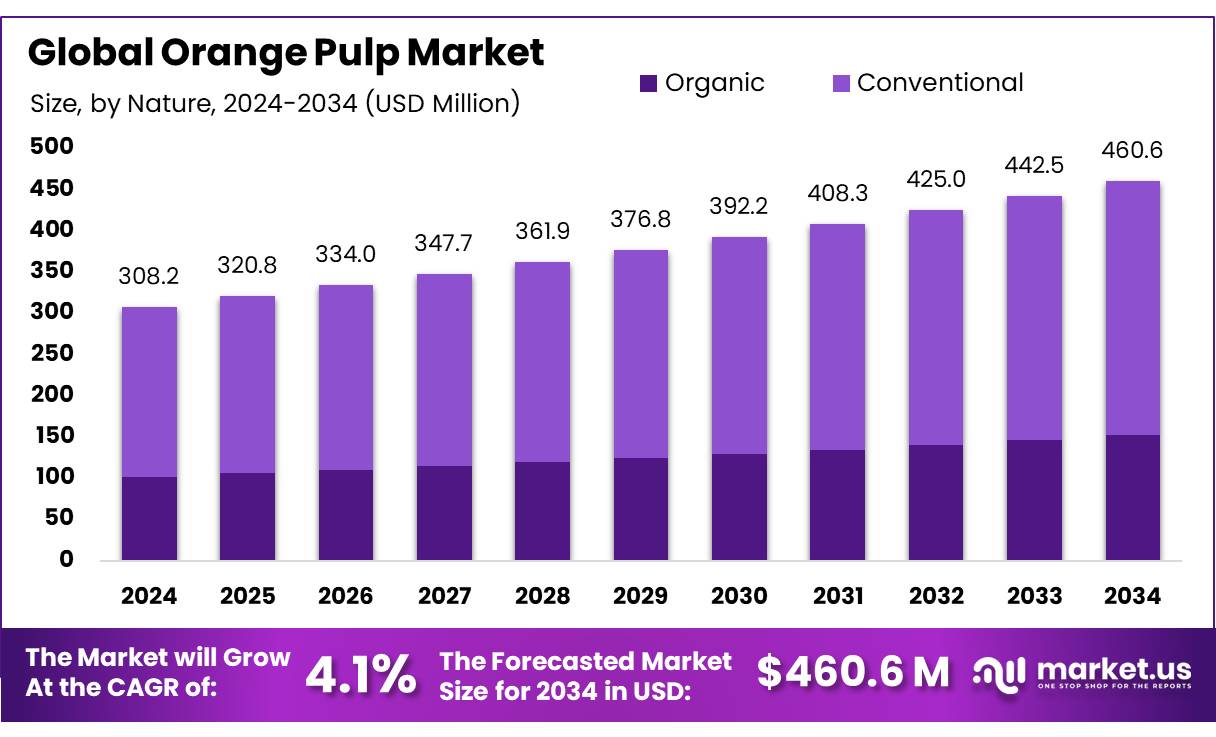
The Global Orange Pulp Market size is expected to be worth around USD 460.6 Million by 2034, from USD 308.2 Million in 2024, growing at a CAGR of 4.1% during the forecast period from 2025 to 2034.
The global orange pulp market is a vital segment within the broader fruit processing industry, driven by the increasing demand for natural and healthy food products. Orange pulp, a byproduct of orange juice production, is widely used in various applications, including food and beverages, dietary supplements, and animal feed. The market has witnessed steady growth in recent years, supported by rising consumer awareness of the nutritional benefits of orange pulp, which is rich in fiber, vitamins, and antioxidants.
The orange pulp is characterized by a well-established supply chain, with key producing regions including North America, Europe, and Asia-Pacific. Brazil, the United States, and Mexico are among the largest producers of oranges globally, collectively accounting for over 50% of the world’s orange production.
Several factors are driving the growth of the global orange pulp market. The rising demand for clean-label and natural food products is a primary driver, as consumers increasingly seek healthier alternatives to synthetic additives.
The growing popularity of functional foods and beverages that incorporate orange pulp for its nutritional benefits is fueling market expansion. The animal feed industry is also contributing to demand, as orange pulp is used as a cost-effective and nutrient-rich feed ingredient. Furthermore, technological advancements in processing and preservation techniques are enhancing the shelf life and quality of orange pulp, making it more accessible to a wider range of industries.
Key Takeaways
- The Orange Pulp Market is anticipated to grow from USD 308.2 million in 2024 to USD 460.6 million by 2034, at a CAGR of 4.1%.
- Conventional orange pulp dominated the market with a 67.3% share in 2024 due to its availability and cost-effectiveness.
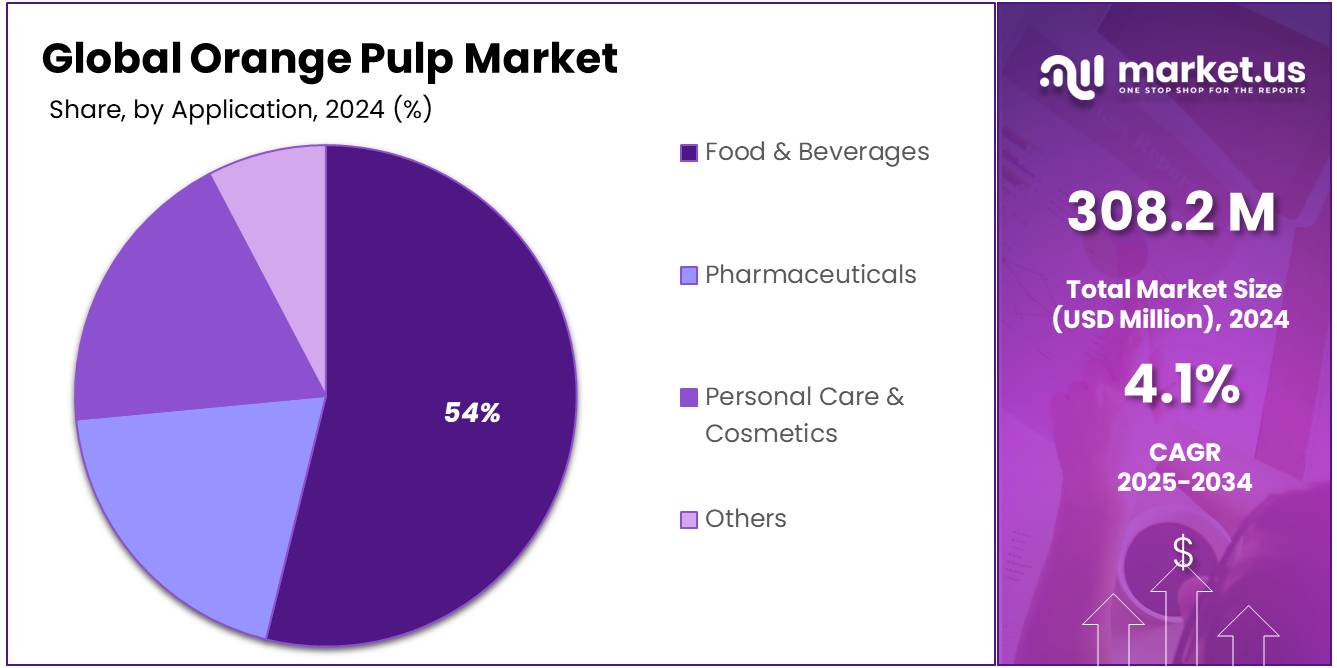
- Food and Beverages continue to be the largest application sector, capturing 54.4% market share owing to the consumer preference for natural and nutrient-rich ingredients.
- The B2B distribution channel held a dominant position with a 45.3% market share, driven by bulk purchasing and long-term supply agreements.
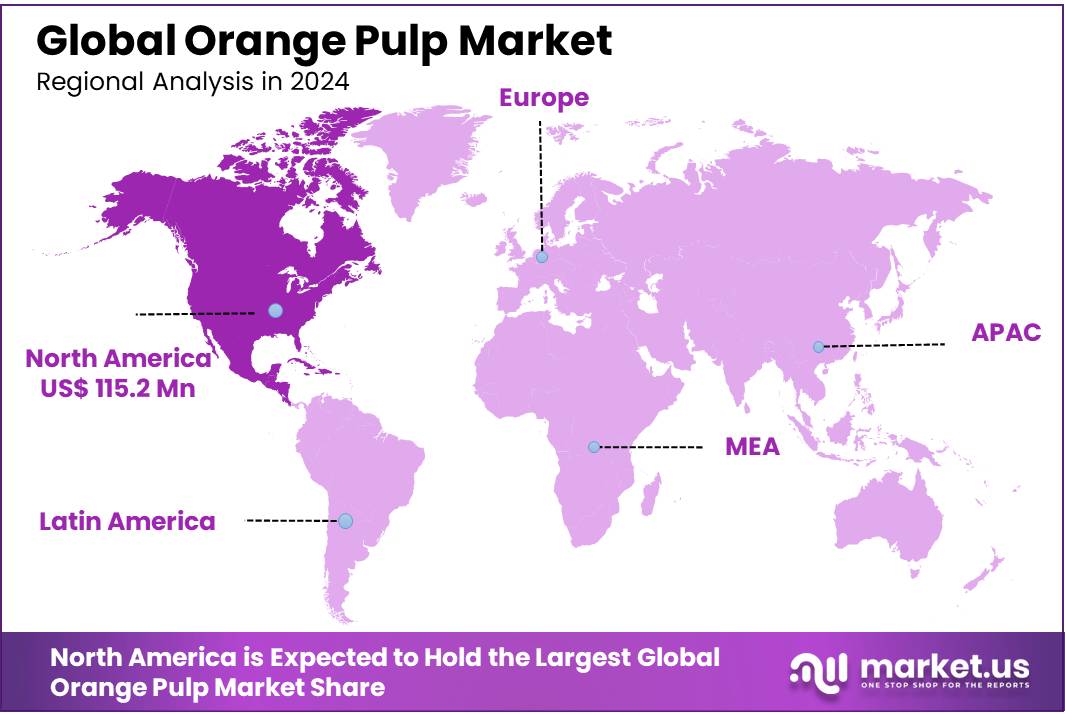
- North America’s37.4% share is due to processed fruit product consumption and infrastructure.
By Nature
In 2024, the conventional orange pulp segment held a dominant market position, capturing more than a 67.3% share of the global orange pulp market. This significant market share is attributed to the widespread availability and cost-effectiveness of conventionally grown oranges, which remain the primary source of orange pulp production.
Conventional orange pulp continues to be the preferred choice for many manufacturers due to its established supply chains and lower production costs compared to organic alternatives. The conventional orange pulp segment benefits from its extensive use across various industries, including food and beverages, animal feed, and dietary supplements.
In the food and beverage sector, conventional orange pulp is widely used in products such as juices, smoothies, and baked goods, owing to its affordability and consistent quality. Additionally, the animal feed industry relies heavily on conventional orange pulp as a cost-effective and nutrient-rich ingredient, further driving demand.
By Application
In 2024, the Food & Beverages segment held a dominant market position in the global orange pulp market, capturing more than a 54.4% share. This segment’s leadership is driven by the widespread use of orange pulp as a key ingredient in a variety of food and beverage products, including juices, smoothies, yogurts, desserts, and baked goods.
The Food & Beverages segment benefits from the increasing demand for clean-label and health-focused products, as consumers seek transparency and quality in their food choices. Orange pulp, being a natural byproduct of orange juice production, aligns perfectly with this trend.
In 2024, the segment’s growth was also supported by the expansion of the beverage industry in emerging markets, where urbanization and rising disposable incomes are driving higher consumption of packaged and processed foods. The versatility of orange pulp in both liquid and solid forms has made it a staple ingredient for manufacturers, enabling its use in a wide range of applications.
By Distribution Channel
In 2024, the B2Bdistribution channel held a dominant market position in the global orange pulp market, capturing more than a 45.3% share. This segment’s leadership is primarily driven by the high demand for orange pulp from large-scale manufacturers in the food and beverage, animal feed, and nutraceutical industries. B2B transactions are the backbone of the orange pulp market, as bulk purchasing and long-term supply agreements are common practices among industrial buyers.
The B2B segment’s growth in 2024 was also supported by the expansion of food processing and manufacturing activities in emerging markets, where industrial buyers rely heavily on bulk procurement to meet production requirements. The segment’s efficiency in logistics and supply chain management has made it a preferred choice for businesses seeking cost-effective and reliable sourcing solutions.
Key Market Segments
By Nature
- Conventional
- Organic
By Application
- Food & Beverages
- Pharmaceuticals
- Personal Care & Cosmetics
- Others
By Distribution Channel
- B2B
- B2C
- Store-based retailers
- Hypermarkets/Supermarkets
- Convenience Stores
- Wholesalers
- Specialty Stores
- Online Retailers
Drivers
Rising Demand for Functional Foods and Beverages
One of the major driving factors for the growth of the global Orange Pulp Market is the increasing demand for functional foods and beverages. Consumers are becoming more health-conscious, seeking products that offer additional nutritional benefits beyond basic sustenance. Orange pulp, rich in dietary fiber, vitamins, and antioxidants, aligns perfectly with this trend.
According to the International Food Information Council (IFIC), 77% of consumers in 2023 reported actively seeking out foods and beverages that improve their health and well-being. This shift in consumer behavior has led to a surge in the incorporation of orange pulp into functional products such as fortified juices, smoothies, and health bars.
The food and beverage industry has responded to this demand by innovating new product lines that highlight the nutritional benefits of orange pulp. For instance, leading juice manufacturers like Tropicana and Minute Maid have expanded their product portfolios to include fiber-enriched and vitamin-packed beverages, prominently featuring orange pulp as a key ingredient.
Restraints
Fluctuating Orange Yields Due to Climate Change
One of the major restraints for the global orange pulp market is the fluctuating yields of oranges caused by climate change. Orange cultivation is highly sensitive to weather conditions, and unpredictable climate patterns, such as droughts, floods, and unseasonal frosts, have significantly impacted orange production in recent years.
According to the Food and Agriculture Organization (FAO), global orange production declined by approximately 4.5% in 2022 due to adverse weather conditions in key producing regions like Brazil, the United States, and Spain. This decline directly affects the availability of raw materials for orange pulp production, leading to supply chain disruptions and increased prices.
Opportunity
Growing Demand for Plant-Based and Vegan Products
One of the major opportunities for the global orange pulp market is the rapidly growing demand for plant-based and vegan products. As consumers increasingly shift toward plant-based diets for health, environmental, and ethical reasons, the demand for natural and sustainable ingredients like orange pulp has surged.
According to the Plant-Based Foods Association (PBFA), the U.S. plant-based food market grew by 27%, reaching a value of USD 8.1 billion. Orange pulp, with its natural fiber content and versatility, is becoming a popular ingredient in vegan food products such as dairy-free yogurts, plant-based beverages, and meat alternatives.
Government initiatives promoting sustainable and plant-based diets are further boosting this opportunity. The European Union’s Farm to Fork Strategy, part of the European Green Deal, aims to make food systems more sustainable and encourages the consumption of plant-based foods. Similarly, the U.S. Department of Agriculture (USDA) has included plant-based options in its dietary guidelines, emphasizing the importance of fruits and vegetables in a balanced diet.
Trends
Rising Popularity of Clean-Label and Natural Ingredients
One of the major trends shaping the global orange pulp market is the increasing consumer preference for clean labels and natural ingredients. Consumers today are more informed and cautious about what they consume, seeking products with transparent and minimal ingredient lists. Orange pulp, being a natural byproduct of orange juice production, fits perfectly into this trend due to its inherent nutritional benefits and lack of artificial additives.
According to a 2023 survey by the International Food Information Council (IFIC), 63% of consumers stated that they actively look for products with recognizable and natural ingredients, highlighting the growing demand for clean-label foods.
Regional Analysis
In 2024, North America held a dominant position in the global orange pulp market, accounting for a significant 37.4% share, with a market value of USD 115.2 million. This region’s leadership is driven by the high consumption of processed fruit products, particularly in the United States, where orange pulp is widely used in the food and beverage industry.
The U.S. is the largest consumer of orange pulp in North America, supported by the strong presence of leading juice manufacturers like Tropicana and Minute Maid, which incorporate orange pulp into their products to meet consumer demand for natural and nutrient-rich ingredients. The region’s well-established food processing infrastructure and advanced agricultural practices further contribute to its market dominance.
The demand for orange pulp in North America is also fueled by the growing popularity of functional foods and beverages, as consumers increasingly seek products that offer health benefits. According to the International Food Information Council (IFIC), 65% of U.S. consumers in 2023 reported prioritizing foods with added nutritional value, driving the use of orange pulp in fortified juices, smoothies, and snacks.
North America’s dominance is further reinforced by its robust supply chain and high per capita consumption of orange-based products. The region’s focus on clean-label and natural ingredients aligns perfectly with the inherent qualities of orange pulp, making it a preferred choice for manufacturers. With its strong market position and ongoing demand for healthy, natural food products, North America is expected to maintain its leadership in the global orange pulp market in the coming years.
Key Regions and Countries
- North America
- US
- Canada
- Europe
- Germany
- France
- The UK
- Spain
- Italy
- Rest of Europe
- Asia Pacific
- China
- Japan
- South Korea
- India
- Australia
- Rest of APAC
- Latin America
- Brazil
- Mexico
- Rest of Latin America
- Middle East & Africa
- GCC
- South Africa
- Rest of MEA
Key Players Analysis
- Brazil Fresh Co is not widely documented in accessible records. Likely based in Brazil, it may specialize in fresh produce, exports, or agro commodities, capitalizing on Brazil’s agricultural strengths like fruits, coffee, or soybeans. Without detailed data, its exact scope—whether it focuses on domestic supply or international markets—remains speculative. Additional information would clarify its role in the competitive Brazilian agro-industry landscape.
- Capricorn Food Products India, Ltd. Founded in 1998 in Chennai, Capricorn Food Products India Ltd is a leading export-oriented company producing tropical fruit pulps, purees, concentrates, and frozen vegetables. Serving North America, Europe, Asia-Pacific, Africa, and the Middle East, it emphasizes quality, hygiene, and innovation.
- Cargill Inc., founded in 1865 in Minnesota, is a global leader in food, agriculture, and industrial products. With USD 165 billion in 2022 revenue, this privately held company trades grains, livestock, and palm oil and produces food ingredients. Operating in 66 countries with 160,000 employees, it supplies 25% of U.S. grain exports and 22% of its meat market, blending tradition with innovation to sustainably nourish the world.
Top Key Players in the Market
- Allanasons Pvt Ltd
- BC Fruits
- Brazil Fresh Co
- Capricorn Food Products India, Ltd
- Cargill Inc.
- Fábrica de Mermeladas
- Jadli Foods (India) Pvt. Ltd
- Mor Mukat Marketing Pvt. Ltd
- Mysore Fruits Products Ltd
- Neelraj Agro Foods
- Pasco Foods
- Prime Enterprises
- Shimla Hills Offerings Pvt. Ltd
- SUN IMPEX INTERNATIONAL FOODS LLC
- Sunrise Naturals Pvt. Ltd
- YESRAJ AGRO EXPORTS PVT. LTD
Recent Developments
- In 2024, BC Fruits has been a significant player in the company. It has shown steady growth, with its orange pulp production reaching approximately 12,500 metric tons this year, up from 11,200 metric tons. This 11.6% year-on-year increase reflects its expanding market share and efficient supply chain management.
- Cargill Inc.’s work in the orange pulp sector it’s pretty cool to see how this giant plays a role in something as simple as your morning OJ. Based in Minnesota since 1865, Cargill is a massive name in food and agriculture, and while they’re not shouting about orange pulp specifically, their fruit-processing game is strong.









