


Report Overview
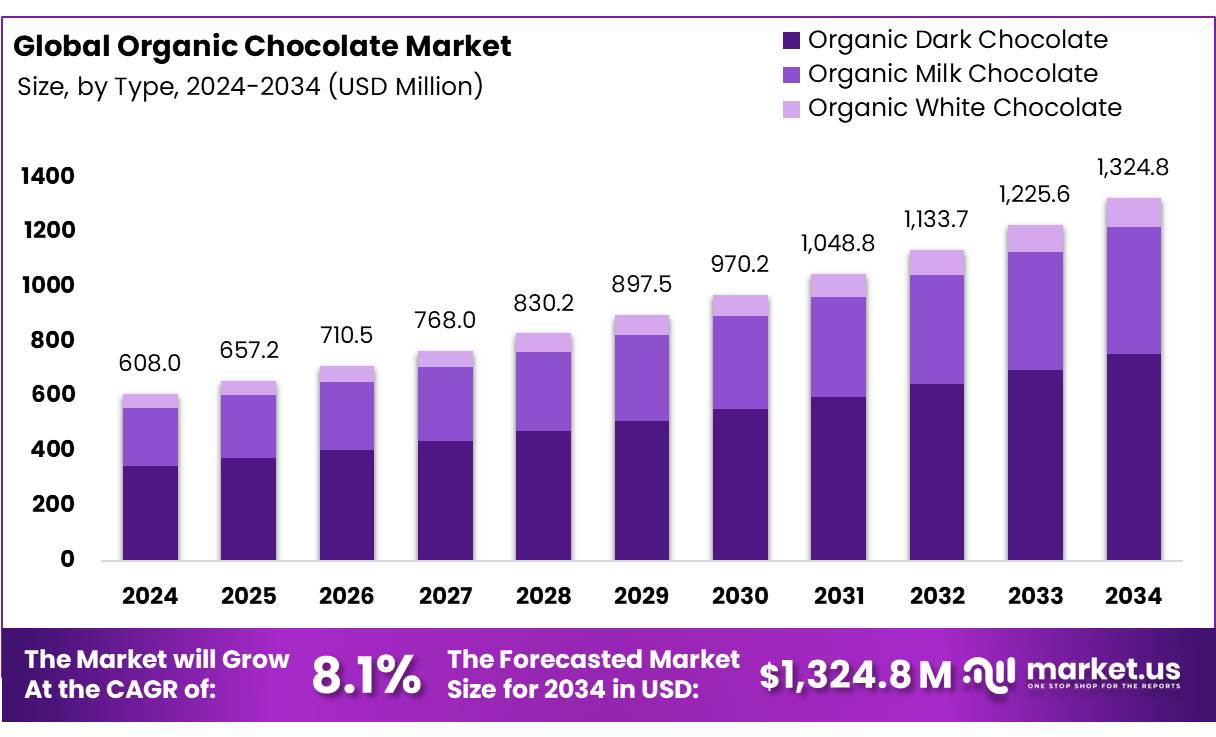
The Global Organic Chocolate Market size is expected to be worth around USD 1324.8 Million by 2034, from USD 608.0 Million in 2024, growing at a CAGR of 8.1% during the forecast period from 2025 to 2034.
Organic Chocolate Market has witnessed significant growth over the past decade, driven by increasing consumer awareness regarding health, sustainability, and ethical consumption. Organic chocolate, produced from cocoa beans cultivated without synthetic pesticides, fertilizers, or genetically modified organisms (GMOs), aligns with the rising demand for clean-label and environmentally friendly products.
Organic chocolate is chocolate that is grown and produced using farming methods, production processes, and ingredients that comply with USDA organic standards. To understand what organic chocolate is, we must look at how and where cacao beans are grown and how chocolate is made.
All of the ingredients (cocoa beans, sugar, milk, etc.) must be grown or produced without the use of pesticides, herbicides, synthetic fertilizers, or genetically modified organisms (GMOs). When it comes to making organic chocolate, the recipe cannot include artificial ingredients or preservatives. This means organic chocolate is free of artificial flavors, sweeteners, colors, stabilizers, and other synthetic ingredients. Organic chocolate is the best choice for people who want a treat that is made with clean, simple ingredients and is better for the environment.
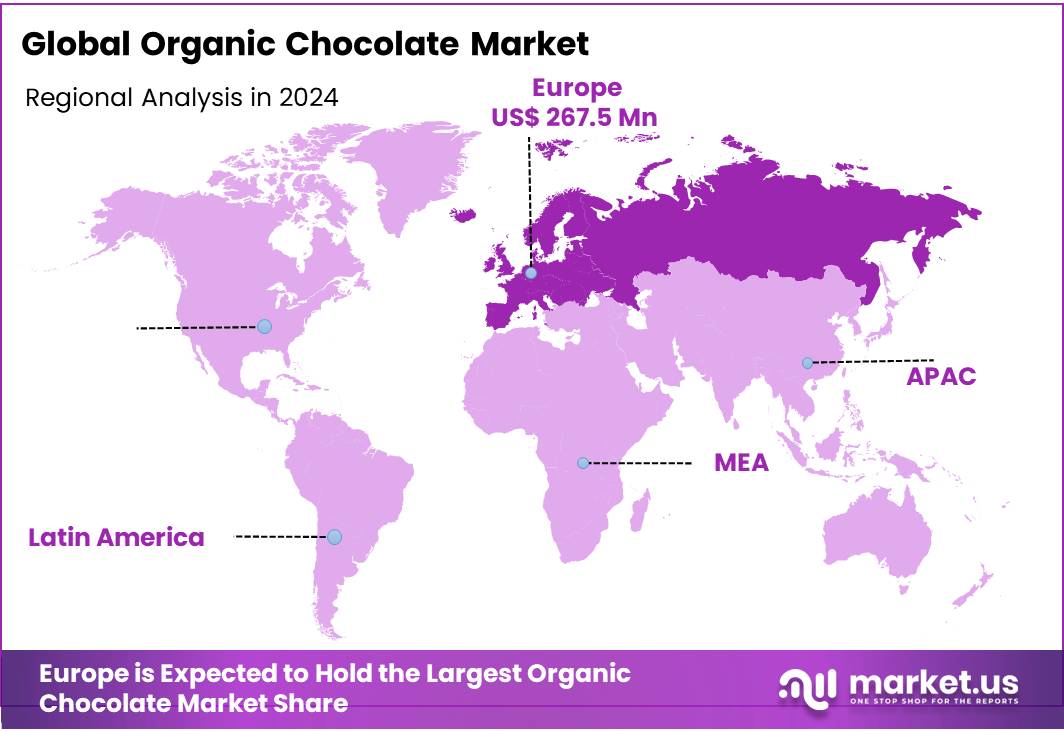
The organic chocolate market is characterized by a fragmented competitive landscape with a mix of established players and emerging artisanal brands. Europe dominates the market, accounting for 44% of global revenue, driven by stringent food regulations, high disposable incomes, and strong consumer awareness about organic products. Several factors are driving the growth of the global organic chocolate market.
Key Takeaways
- The global Organic Chocolate Market is projected to grow from USD 608.0 million in 2024 to approximately USD 1324.8 million by 2034, reflecting a compound annual growth rate (CAGR) of 8.1%.
- Organic Dark Chocolate dominated the market, capturing over 57.5% of the market share. This is due to its perception as a healthier indulgence with benefits like higher cocoa content and antioxidant properties.
- Standard packaging accounted for more than 78.2% of the market share in 2024 due to its cost-effectiveness and widespread availability.
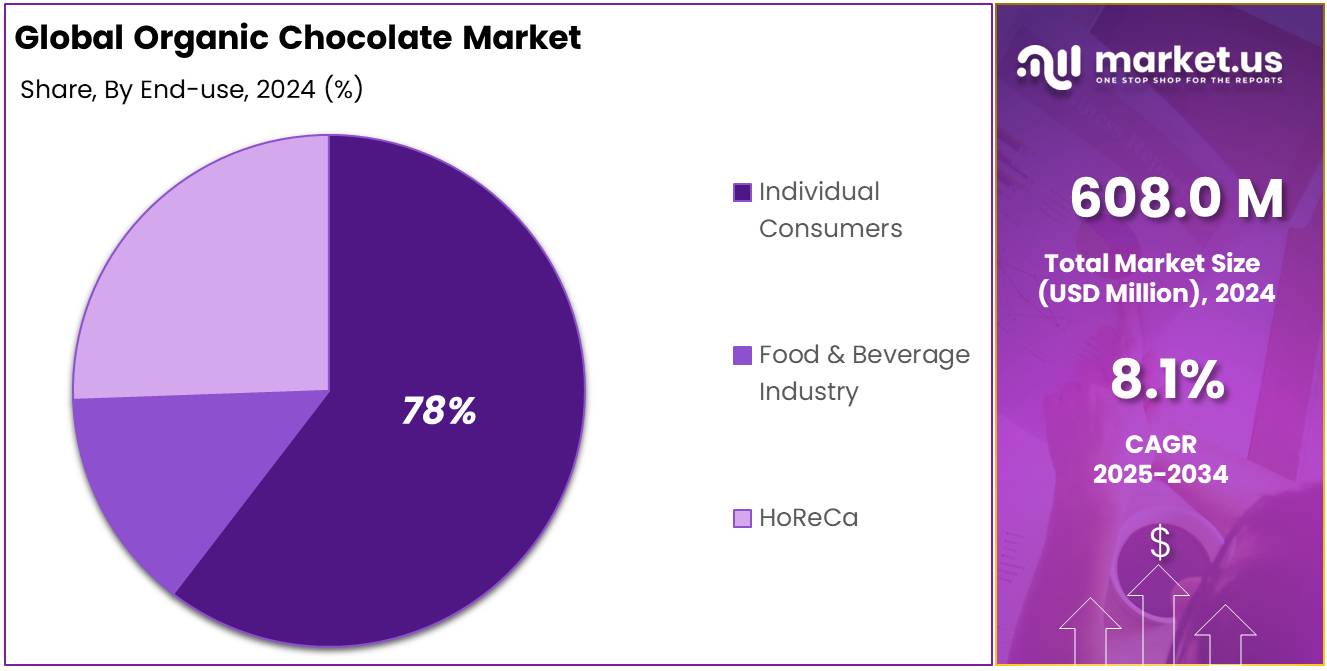
- Individual consumers dominated the market with a 78.9% share in 2024, driven by the demand for healthier food options.
- Supermarkets and hypermarkets are the leading distribution channels, holding a 42.7% share in 2024, due to accessibility and convenience.
- Europe is the largest market, contributing 44.8% of the global market share, attributed to stringent food regulations and high consumer awareness.
By Type
In 2024, organic dark chocolate held a dominant market position, capturing more than a 57.5% share of the global organic chocolate market. This segment’s strong performance is attributed to its widespread popularity among health-conscious consumers, who perceive dark chocolate as a healthier indulgence due to its higher cocoa content and lower sugar levels.
The growing awareness of the antioxidant properties of dark chocolate, particularly its potential benefits for heart health and cognitive function, has further fueled its demand. The organic dark chocolate segment is expected to maintain its leadership in 2025, driven by continuous product innovation and the introduction of new flavors and functional ingredients.
For instance, brands are experimenting with inclusions such as nuts, fruits, and superfoods to cater to evolving consumer tastes. The segment’s growth is also supported by the rising trend of gifting premium organic dark chocolates during festive occasions and corporate events.
By Packaging Type
In 2024, standard packaging chocolate held a dominant market position, capturing more than a 78.2% share of the global organic chocolate market. This segment’s strong performance is primarily due to its cost-effectiveness, widespread availability, and familiarity among consumers.
Standard packaging, which includes traditional formats like bars, blocks, and boxes, remains the preferred choice for both manufacturers and buyers due to its practicality and ease of distribution. It caters to a broad audience, including everyday consumers and bulk purchasers, making it a staple in the organic chocolate industry.
By End-use
In 2024, individual consumers held a dominant market position, capturing more than a 78.9% share of the global organic chocolate market. This segment’s strong performance is driven by the increasing preference for organic and healthier food options among everyday buyers.
Individual consumers are actively seeking organic chocolate as a guilt-free indulgence, influenced by a growing awareness of its health benefits, such as higher antioxidant content and lower sugar levels compared to conventional chocolate.
By Distribution Channel
In 2024, supermarkets and hypermarkets held a dominant market position, capturing more than a 42.7% share of the global organic chocolate market. This segment’s strong performance is largely due to the widespread accessibility and convenience these retail formats offer to consumers. Supermarkets and hypermarkets provide a one-stop shopping experience, allowing buyers to explore a wide variety of organic chocolate brands and products under one roof.
This is particularly appealing to consumers who value the ability to compare prices, read labels, and make informed purchasing decisions. The trust associated with established retail chains also plays a significant role in driving sales through this channel.
Key Market Segments
By Type
- Organic Dark Chocolate
- Organic Milk Chocolate
- Organic White Chocolate
By Packaging Type
- Standard Packaging
- Gift Packaging
By End-use
- Individual Consumers
- Food & Beverage Industry
- HoReCa
By Distribution Channel
- Supermarkets and Hypermarkets
- Health Food Stores
- Convenience Stores
- Online Retailers
- Others
Drivers
Rising Health Consciousness and Demand for Clean-Label Products
One of the most significant driving factors for the growth of the global organic chocolate market is the increasing health consciousness among consumers worldwide. People are becoming more aware of the impact of their dietary choices on their overall well-being, leading to a shift toward cleaner, healthier, and more transparent food options.
Organic chocolate, free from synthetic pesticides, artificial additives, and GMOs, aligns perfectly with this trend. According to the Organic Trade Association (OTA), the organic food market in the United States alone reached $63 billion in 2022, with organic confectionery, including chocolate, being a key contributor to this growth.
The World Health Organization (WHO) has highlighted the global rise in lifestyle-related diseases such as obesity and diabetes, with over 1.9 billion adults worldwide being overweight and 422 million suffering from diabetes as of 2023. This has prompted consumers to seek healthier alternatives to traditional sugary snacks, including conventional chocolate.
Restraints
High Production Costs and Premium Pricing
One of the major restraints for the global organic chocolate market is the high production costs associated with organic cocoa farming, which ultimately leads to premium pricing for the end product. Organic cocoa cultivation requires adherence to strict guidelines, such as avoiding synthetic pesticides and fertilizers, which often results in lower yields compared to conventional farming.
According to the International Cocoa Organization (ICCO), organic cocoa production accounts for less than 1% of the global cocoa supply, primarily due to the labor-intensive and time-consuming nature of organic farming practices.
The higher costs of organic certification, sustainable farming methods, and fair trade practices further add to the overall expense. As a result, organic chocolate is often priced 20-30% higher than conventional chocolate, making it less accessible to price-sensitive consumers, particularly in developing regions.
Opportunity
Increasing Consumer Preference for Sustainable and Ethical Products
A major growth factor for the global organic chocolate market is the rising consumer preference for sustainable and ethically produced goods. Today’s consumers are not just focused on the quality and health benefits of their food but also on the environmental and social impact of their purchases.
The environmental benefits of organic cocoa farming, such as reduced chemical use, improved soil health, and biodiversity conservation, are attracting eco-conscious consumers. For instance, organic farming practices can reduce carbon emissions by up to 20-30% compared to conventional methods, as highlighted by the Food and Agriculture Organization (FAO).
Trends
Rising Popularity of Functional and Fortified Organic Chocolate
An emerging factor shaping the global organic chocolate market is the growing demand for functional and fortified chocolate products. Consumers are increasingly seeking indulgent treats that not only satisfy their taste buds but also offer additional health benefits. This trend has led to the innovation of organic chocolates infused with functional ingredients like superfoods, probiotics, adaptogens, and vitamins.
According to the International Food Information Council (IFIC), 60% of consumers in 2022 reported looking for foods that provide health benefits beyond basic nutrition, creating a significant opportunity for functional organic chocolate.
Similarly, probiotic-infused organic chocolate is becoming popular for its potential gut health benefits. The global functional food market, which includes such products, was valued at $275 billion in 2022, as per the International Institute of Food Science and Technology (IIFST), and is expected to grow further, with organic chocolate playing a key role.
Regional Analysis
Europe: The Dominant Force in the Global Organic Chocolate Market
Europe stands as the leading region in the global organic chocolate market, accounting for 44.8% of the market share, with a market value of approximately USD 267.5 million in 2023. This dominance is driven by the region’s strong consumer awareness regarding health, sustainability, and ethical consumption.
European consumers are increasingly prioritizing organic and clean-label products, with chocolate being no exception. Countries like Germany, the United Kingdom, and Switzerland are at the forefront of this trend, supported by robust organic food regulations and high disposable incomes.
The European Union’s stringent organic certification standards, such as the EU Organic Logo, have played a pivotal role in building consumer trust and driving demand for organic chocolate. Additionally, the region’s focus on sustainability aligns with the ethical sourcing practices of organic cocoa, further boosting market growth.
According to the European Organic Certification Council (EOCC), the organic food and beverage market in Europe grew by 8% annually between 2020 and 2023, with organic chocolate being a significant contributor.
Key Regions and Countries
- North America
- US
- Canada
- Europe
- Germany
- France
- The UK
- Spain
- Italy
- Rest of Europe
- Asia Pacific
- China
- Japan
- South Korea
- India
- Australia
- Rest of APAC
- Latin America
- Brazil
- Mexico
- Rest of Latin America
- Middle East & Africa
- GCC
- South Africa
- Rest of MEA
Key Players Analysis
- Newman’s Own is a well-known brand offering a variety of food products, including salad dressings, sauces, and snacks. The company is unique in donating all profits to charity and supporting numerous causes worldwide. Their commitment to quality ingredients and philanthropy has made them a trusted name in the industry.
- NibMor specializes in organic, fair-trade chocolate bars and snacks. Their products are crafted with simple, clean ingredients, free from artificial additives. NibMor focuses on sustainability and ethical sourcing, appealing to health-conscious consumers seeking indulgent yet wholesome treats.
- Mason and Company is a UK-based chocolate maker known for its bean-to-bar approach. They source high-quality cacao beans directly from farmers, ensuring ethical practices. Their artisanal chocolates are crafted in small batches, offering unique flavors and a commitment to sustainability and transparency.
Top Key Players in the Market
- Newman’s Own
- NibMor
- Mason and Company
- Giddy Yoyo
- The Raw Chocolate Company
- Endangered Species Chocolate
- Green & Black’s (Owned by Mondelez International)
- The Grenada Chocolate Company
- Rococo Chocolates
- Chocolat Bernrain AG
- Taza Chocolate
- Lake Champlain Chocolates
- Artisan Confections Company
- Alter Eco
- Hocolat Bernrain AG/ Chocolat Stella SA
- Kicking Horse Chocolate
- Luigi Lavazza
- Endangered Species Chocolate
Recent Developments
- In 2024, Newman’s Own announced a significant brand refresh in 2023, including updated packaging and new product lines across its portfolio, which includes organic chocolate products. This refresh aimed to modernize its appeal while maintaining its commitment to organic and sustainable ingredients.
- In 2024, NibMor appointed Prabha Cheemalapati as CEO, signaling a focus on scaling its organic dark chocolate offerings. Cheemalapati’s background in consumer goods aimed to enhance NibMor’s market presence in the organic and “better-for-you” chocolate segment.
- In 2024, Mason & Co., an Indian craft chocolate maker, expanded its organic chocolate line with new single-origin bars in 2022-2023, emphasizing bean-to-bar production from organic cocoa farms in South India. Their focus on transparency and local sourcing gained attention in sustainability circles.









