


Report Overview
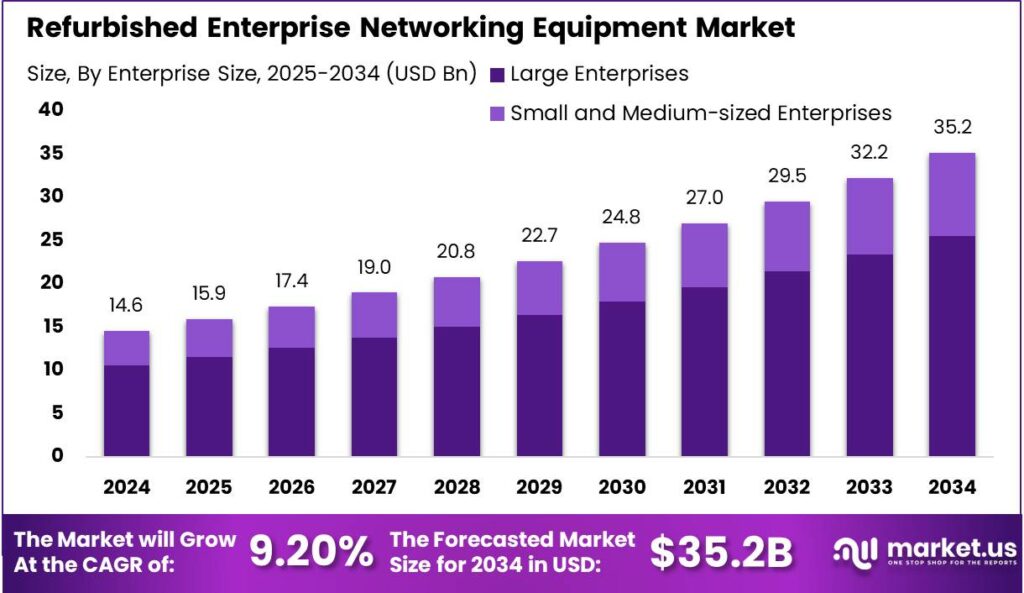
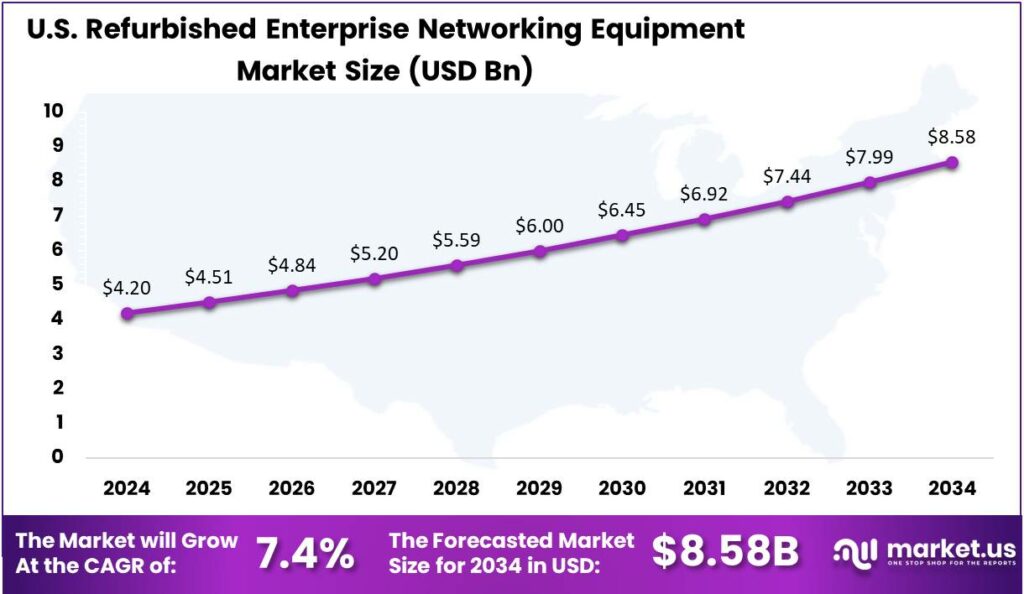
The Refurbished Enterprise Networking Equipment Market size is expected to be worth around USD 35.2 Bn By 2034, from USD 14.6 Bn in 2024, growing at a CAGR of 9.2% during the forecast period. In 2024, North America dominated the refurbished enterprise networking equipment market with a 36.7% share, generating around USD 5.3 bn in revenue. The U.S. market was valued at USD 4.2 bn and is projected to grow at a CAGR of 7.4%.
Refurbished enterprise networking equipment refers to hardware that was previously used and has been restored to a fully operational state. This includes routers, switches, servers, and other network infrastructure components essential for enterprise operations. These devices are thoroughly tested, repaired if necessary, and then sold at a lower cost compared to new equipment.
The market for refurbished enterprise networking equipment is expanding as companies look for cost-effective solutions to enhance their technological infrastructure without compromising on quality or performance. This market segment offers a range of products from top brands that have been restored to their original specifications. This appeals to both small businesses and large enterprises looking to optimize their IT spending.
The refurbished market primarily aims to provide high-quality, reliable networking solutions to businesses at a fraction of the cost of new equipment. This not only helps organizations manage their budgets more effectively but also extends the lifecycle of technology products, reducing environmental impact.
One of the primary drivers of the refurbished enterprise networking equipment market is the significant cost savings it offers businesses. Companies can save up to 50-60% on their network infrastructure costs by opting for refurbished models. Another compelling factor is the eco-friendly nature of purchasing refurbished, which aligns with the growing global emphasis on sustainability.
According to latest survey, The refurbished audio devices market is set for strong growth, projected to reach USD 72.7 billion by 2034, up from USD 26.8 billion in 2024, expanding at a CAGR of 10.50% over the forecast period (2025-2034). This growth is driven by rising consumer demand for affordable, high-quality audio products, increasing environmental awareness, and the expansion of online retail platforms offering certified refurbished options.
In 2024, the Asia-Pacific region led the market, commanding over 35% market share and generating USD 9.3 billion in revenue. China played a significant role in this dominance, with its refurbished audio market valued at USD 3.56 billion, growing steadily at a CAGR of 8.2%.
The demand for refurbished equipment is particularly high among small to medium-sized enterprises (SMEs) and in developing regions where budget constraints are significant. Additionally, there is a growing demand for legacy and end-of-life products that are no longer manufactured but are still needed to support existing infrastructures.
Key Takeaways
- The Global Refurbished Enterprise Networking Equipment Market is expected to be worth around USD 35.2 Billion by 2034, growing from USD 14.6 Billion in 2024, reflecting a compound annual growth rate (CAGR) of 9.20% during the forecast period from 2025 to 2034.
- In 2024, the routers segment held a dominant market position within the refurbished enterprise networking equipment market, capturing more than 30.7% of the market share.
- The Large Enterprises segment captured a dominant market position in 2024, holding over 72.7% of the market share in the refurbished enterprise networking equipment sector.
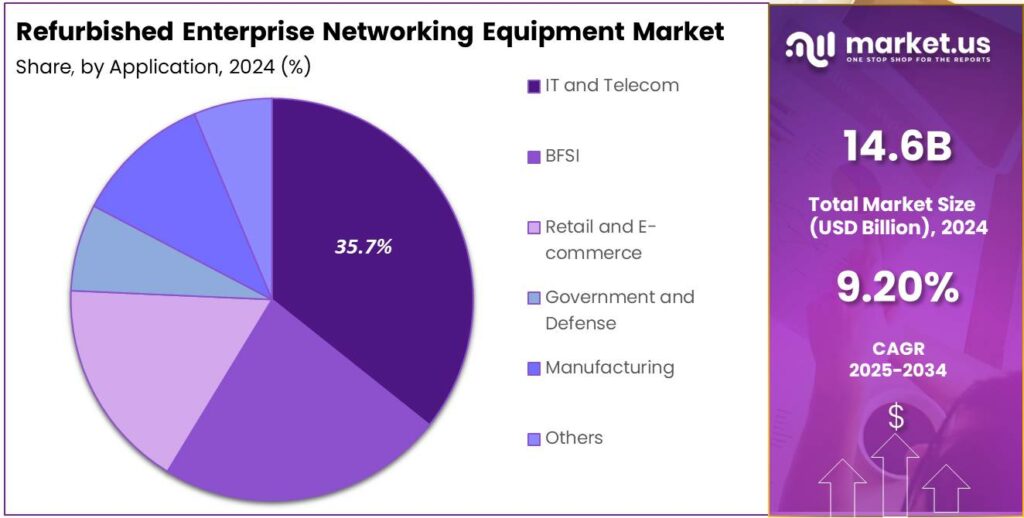
- In 2024, the IT & Telecom segment led the market, accounting for over 35.7% of the market share in the refurbished enterprise networking equipment industry.
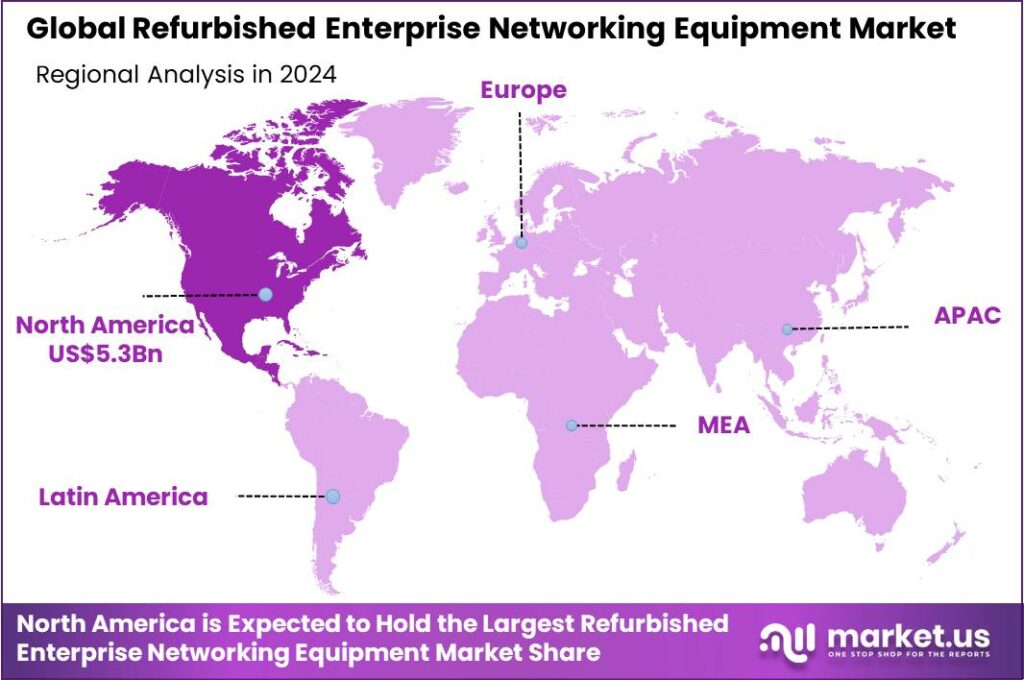
- In 2024, North America held a dominant market position in the refurbished enterprise networking equipment sector, with a share of more than 36.7%, generating revenues of approximately USD 5.3 billion.
- The market for refurbished enterprise networking equipment in the United States was valued at USD 4.2 billion in 2024 and is projected to expand at a CAGR of 7.4%.
U.S. Market Size
In 2024, the market for refurbished enterprise networking equipment in the United States was estimated to be valued at USD 4.2 billion. This market is projected to expand at a compound annual growth rate (CAGR) of 7.4%.
The growth of the refurbished enterprise networking equipment market is driven by cost-effectiveness and sustainability. Refurbished equipment offers a more affordable option, appealing to small and medium-sized enterprises looking to reduce capital expenditures. Additionally, the corporate sector’s focus on sustainability promotes the adoption of refurbished gear, as it helps reduce e-waste.
Advancements in refurbishing processes have improved the reliability and performance of used networking equipment, increasing consumer confidence. The presence of vendors offering certified and warrantied products further assures businesses they won’t compromise on quality or service. These factors create a favorable environment for the growth of the refurbished enterprise networking equipment market in the United States.
In 2024, North America held a dominant market position in the refurbished enterprise networking equipment sector, capturing more than a 36.7% share, with revenues amounting to approximately USD 5.3 billion.
North America’s well-established technological infrastructure and early adoption of IT have fueled the growth of the refurbished networking market. Organizations in the region are drawn to the significant cost savings offered by refurbished equipment, especially in the current economy, where reducing operational expenses while staying competitive is a priority.
North America, home to major tech firms and numerous SMEs, is increasingly adopting refurbished equipment to optimize network infrastructure investments. Strict regulations on electronic waste further encourage the use of refurbished gear, supporting sustainability goals by reducing environmental impact.
North America’s robust regulatory framework ensures the quality and reliability of refurbished products, boosting buyer confidence. Strong customer service, vendor credibility, and significant R&D investment by refurbishing companies help meet the operational and technological standards expected by end users, solidifying the region’s leadership in the global market.
Analysts’ Viewpoint
The market offers numerous investment opportunities, particularly in the areas of logistics and refurbishing services. As the demand for refurbished equipment grows, there is a need for sophisticated refurbishing centers that can ensure the quality and reliability of the hardware. Furthermore, investment in technologies that enhance the refurbishing process or expand the range of refurbishable products could yield significant returns.
Technological advancements are crucial in the refurbishing process, improving the efficiency and outcome of refurbished products. Innovations in diagnostic software and hardware testing ensure that refurbished equipment meets stringent quality standards. Moreover, advancements in environmental technology help in better recycling and reusing old equipment, reducing the overall environmental impact.
Artificial intelligence (AI) impacts the refurbished networking equipment market by optimizing inventory management and enhancing predictive maintenance. AI technologies can analyze vast amounts of data to predict equipment failures before they occur, ensuring timely refurbishments. AI also helps in determining the resale value of used equipment more accurately, enhancing the economic efficiency of the refurbishing process.
Type Analysis
In 2024, the routers segment held a dominant market position within the refurbished enterprise networking equipment market, capturing more than a 30.7% share. This leadership is primarily attributed to the critical role routers play in directing traffic within a network.
They are essential for businesses of all sizes, as they facilitate the flow of data across networks, ensuring connectivity between different networked devices. The robust demand for routers is also driven by their ability to support a wide range of networking standards and protocols, making them versatile and indispensable in modern IT environments.
The predominance of the routers segment can also be linked to the continuous advancements in networking technology, such as the integration of IoT (Internet of Things) devices. As companies increasingly adopt IoT solutions, the need for robust networking infrastructure to manage higher data traffic efficiently has grown, bolstering the demand for high-capacity routers.
The demand for refurbished routers has surged due to the growing need for cybersecurity. Routers with advanced security features to combat cyber threats are especially sought after, prompting businesses to invest in affordable refurbished options that offer robust security without the high cost of new equipment.
Enterprise Size Analysis
In 2024, the Large Enterprises segment held a dominant market position in the refurbished enterprise networking equipment market, capturing more than a 72.7% share. This segment’s leadership can be attributed to several compelling factors that reflect the unique needs and capacities of large organizations.
Large enterprises with extensive network infrastructures often face high investment costs for networking equipment. Refurbished equipment provides a cost-effective solution, enabling these organizations to maintain and upgrade their networks without the financial strain of buying new gear. This is especially important for enterprises aiming to expand or update their systems within a controlled budget.
Large enterprises, being risk-averse, favor solutions that ensure continuity and minimal disruption. The matured refurbished equipment market now offers enterprise-grade quality, warranties, and reliability on par with new products, making it an attractive option for organizations to benefit from cost savings without sacrificing performance or reliability.
Enterprises adopt refurbished networking equipment to support corporate sustainability goals. By choosing refurbished products, they reduce environmental impact, align with global sustainability practices, and meet CSR mandates. This helps manage e-waste, enhances brand reputation, and ensures compliance with environmental regulations.
Application Analysis
In 2024, the IT & Telecom segment held a dominant market position within the refurbished enterprise networking equipment market, capturing more than a 35.7% share. This prominence can be attributed to the increasing demand for cost-effective networking solutions amidst rapidly evolving IT infrastructure requirements.
The demand for refurbished networking equipment in IT & Telecom is driven by the need to upgrade and expand infrastructure to support growing data traffic and technologies like 5G, IoT, and cloud computing. Refurbished equipment provides high-performance hardware at a lower cost, enabling companies to build strong telecom infrastructure within budget.
The sustainability benefits of refurbished equipment are increasingly appealing to IT & Telecom companies aiming to reduce their environmental impact. By extending the lifecycle of devices and reducing e-waste, adopting refurbished networking gear supports corporate sustainability goals, aligns with global standards, and enhances the company’s image within the sector.
Robust regulatory and compliance standards in the IT & Telecom industry help drive the growth of the refurbished market. Providers that meet strict quality and performance benchmarks can attract telecom operators, ensuring refurbished equipment remains a trusted and reliable alternative to new products.
Key Market Segments
By Type
- Routers
- Modems
- Network Hubs
- Network Gateways
- Network Switches
- VoIP Phones
- Others
By Enterprise Size
- Large Enterprises
- Small and Medium-sized Enterprises
By Application
- IT and Telecom
- BFSI
- Retail and E-commerce
- Government and Defense
- Manufacturing
- Others
Key Regions and Countries
- North America
- US
- Canada
- Europe
- Germany
- France
- The UK
- Spain
- Italy
- Rest of Europe
- Asia Pacific
- China
- Japan
- South Korea
- India
- Australia
- Singapore
- Rest of Asia Pacific
- Latin America
- Brazil
- Mexico
- Rest of Latin America
- Middle East & Africa
- South Africa
- Saudi Arabia
- UAE
- Rest of MEA
Driver
Cost-Effectiveness
The primary driver for the adoption of refurbished enterprise networking equipment is its cost-effectiveness. Organizations can acquire high-quality networking hardware at a fraction of the cost of new equipment, leading to significant budget savings. This financial advantage enables businesses to allocate resources to other critical areas, such as cybersecurity or software development.
For small and medium-sized enterprises (SMEs), in particular, refurbished equipment offers an affordable alternative to new hardware, allowing them to enhance their IT infrastructure without incurring substantial expenses. The cost savings associated with refurbished equipment do not come at the expense of performance or reliability, as reputable refurbishers implement rigorous testing and quality assurance processes to ensure the equipment meets industry standards.
Restraint
Perception of Inferior Quality
Another restraint is the prevailing perception that refurbished equipment is of inferior quality compared to new products. Despite advancements in refurbishment processes and stringent testing protocols, some organizations remain skeptical about the durability and performance of refurbished networking hardware.
This skepticism can lead to a preference for new equipment, even when refurbished options offer comparable functionality at a lower cost. Furthermore, inconsistent data compliance practices can pose security risks, as improperly sanitized equipment may contain residual data from previous users. Overcoming this perception requires continuous education and transparency from refurbishers regarding their refurbishment processes and quality assurance measures.
Opportunity
Environmental Sustainability
The growing emphasis on environmental sustainability presents a significant opportunity for the refurbished networking equipment market. By opting for refurbished hardware, organizations contribute to the reduction of electronic waste (e-waste), which is one of the fastest-growing waste streams globally.
Incorporating refurbished equipment into IT strategies also offers cost-saving benefits, as refurbished devices are typically more affordable than new ones. This can free up budget for other critical initiatives while maintaining high-quality performance and reducing electronic waste. By adopting this approach, businesses can strike a balance between financial efficiency, environmental responsibility, and social impact.
Challenge
Technological Obsolescence
A notable challenge in the refurbished networking equipment market is technological obsolescence. As technology advances rapidly, older networking equipment may lack compatibility with new software or fail to support emerging networking standards. This incompatibility can limit the functionality of refurbished equipment, making it less appealing to organizations seeking to implement the latest technologies.
To address this challenge, refurbishers must focus on updating and certifying equipment to ensure it meets current technological requirements. Additionally, providing comprehensive support and warranties can alleviate concerns related to obsolescence, encouraging more organizations to consider refurbished options.
Emerging Trends
A growing trend is the widespread acceptance of refurbished networking hardware by businesses of all sizes. Companies are realizing that refurbished equipment offers performance similar to new devices, often at a much lower cost. This shift is fueled by improvements in refurbishment processes, which include rigorous testing and quality assurance to ensure reliability and efficiency.
Another driving factor is the growing emphasis on sustainability and corporate social responsibility. By opting for refurbished equipment, businesses contribute to reducing electronic waste and minimizing their environmental footprint. This aligns with global efforts to promote circular economy practices, where the reuse and repurposing of IT hardware play a crucial role.
Supply chain disruptions, such as semiconductor shortages, have also led organizations to consider refurbished options. These alternatives provide immediate availability, allowing companies to maintain and upgrade their network infrastructure without experiencing delays associated with new equipment procurement.
Business Benefits
The adoption of refurbished networking equipment offers several business advantages. Foremost among these is cost savings. Refurbished hardware can be acquired at a fraction of the price of new equipment, enabling organizations to allocate resources more efficiently and invest in other critical areas.
The quality of refurbished equipment has improved significantly. Reputable vendors implement stringent refurbishment processes, including comprehensive testing and certification, ensuring that the equipment meets industry standards. This reliability allows businesses to integrate refurbished hardware into their operations with confidence.
The immediate availability of refurbished equipment addresses challenges posed by supply chain constraints. Organizations can quickly deploy necessary hardware to support their networking needs, maintaining operational continuity and avoiding potential disruptions.
Key Player Analysis
Cisco, a leader in networking technologies, remains a dominant force in the refurbished enterprise networking equipment market. Cisco’s refurbished products offer businesses a reliable, cost-effective alternative with high-quality networking solutions. These include routers, switches, and wireless access points, all backed by guaranteed performance and extended support.
Dell Technologies stands out in the refurbished networking equipment market by offering a broad selection of enterprise-grade equipment, including routers, switches, and other networking components. Known for its high-quality refurbishing processes, Dell ensures that its products undergo rigorous testing and quality control to meet the needs of businesses looking for reliable, cost-efficient solutions.
Hewlett Packard Enterprise (HPE) is another key player in the refurbished enterprise networking market. Known for its innovative networking solutions and strong global presence, HPE offers a variety of refurbished networking equipment that meets the high standards of enterprise businesses.
Top Key Players in the Market
- Cisco Systems Inc.
- Dell Technologies Inc.
- Hewlett Packard Enterprise (HPE)
- IBM Corporation
- Juniper Networks Inc.
- Arista Networks Inc.
- Fortinet Inc.
- NETGEAR Inc.
- Ubiquiti Inc.
- Extreme Networks Inc.
- Brocade Communications Systems Inc.
- Alcatel-Lucent Enterprise
- Others
Top Opportunities Awaiting for Players
The refurbished enterprise networking equipment market is poised for substantial growth and presents several opportunities for industry players.
- AI-Driven Network Management: The integration of artificial intelligence in network management is a significant trend, enhancing operational efficiencies through automation and predictive analytics. AI can drastically reduce network troubleshooting times, offering considerable savings in time and costs.
- 5G Technology Adoption: With the rapid expansion of 5G networks, there is a growing demand for networking equipment that can support enhanced connectivity and performance. This segment is projected to experience the highest growth rate, opening new avenues for refurbished equipment vendors to supply gear that meets the advanced requirements of 5G.
- Cybersecurity Solutions: Increasing cybersecurity threats are driving the need for robust network security solutions. Refurbished networking equipment that integrates advanced security features can address this rising demand, providing cost-effective options for enterprises looking to fortify their network defenses.
- Cloud Integration and SD-WAN: As more businesses move to cloud-based operations, the demand for networking solutions that can seamlessly integrate with cloud services and support software-defined wide area networks (SD-WAN) is increasing. Offering refurbished equipment that supports these technologies can attract a broader customer base, particularly among small to medium-sized enterprises.
- Sustainable IT Solutions: There is an increasing focus on sustainability within the IT industry, with companies looking to reduce their environmental footprint. Refurbished networking equipment serves this need by offering a more sustainable alternative to new hardware, aligning with corporate social responsibility goals and potentially qualifying for green certifications and incentives.
Recent Developments
- In October 2023, HP Inc. has launched a refurbished laptop program in India, offering affordable, certified pre-owned devices for both consumers and businesses. The laptops come with after-sales support from HP-certified partners. The initiative, currently available in India, will expand to other markets in 2024.
- In December 2024, Orange and La Poste have teamed up to extend the lifespan of network equipment from the Paris 2024 Games, reducing environmental impact. This initiative aligns with their CSR goals and contributes to the Games’ legacy by repurposing equipment for future use.









