


Report Overview
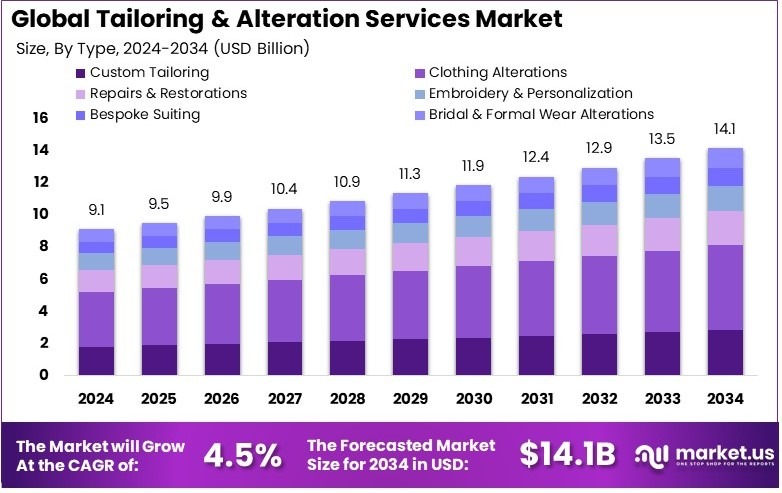
The Global Tailoring and Alteration Services Market size is expected to be worth around USD 14.1 Billion by 2034, from USD 9.1 Billion in 2024, growing at a CAGR of 4.5% during the forecast period from 2025 to 2034.
Tailoring and alteration services involve the custom fitting and modifying of garments to suit individual size and style preferences. These services ensure clothing fits properly and meets the personal taste of the customer. This market encompasses independent tailors, alteration shops, and retail stores offering these specialized services to enhance garment fit and appearance.
Tailoring and alteration services are integral to the fashion and textile industry, significantly impacting economic health and employment. In 2023, the UK fashion sector’s contribution of £62 billion to GDP and the support of 1.3 million jobs highlight the critical role that tailoring services play in the economy. These services not only enhance garment longevity and fit but also support sustainability in fashion, reinforcing the sector’s value chain from design to retail.
Moreover, the tailoring and alteration market is witnessing strategic growth through partnerships and acquisitions, indicating a robust response to changing consumer preferences. In June 2024, Marks & Spencer’s collaboration with SOJO to initiate ‘M&S Fixed by SOJO’ marked a significant step towards integrating sustainability within retail practices, catering to a growing consumer base focused on environmental impact.
Additionally, Frasers Group Plc’s acquisition of Gieves & Hawkes in November 2022 further demonstrates the market’s dynamism. This move not only expanded Fraser’s luxury apparel offerings but also solidified its stance in the competitive tailoring market, showcasing a clear strategy to enhance its brand portfolio and market reach.
These strategic decisions are indicative of a market that is not only competitive but also keenly attuned to the evolving demands for quality and sustainable fashion solutions. The tailoring and alteration services sector is thus poised for continued growth and innovation, driven by consumer trends towards sustainability and personalized fashion. This evolution is expected to further stimulate local economies by creating more skilled jobs and promoting small businesses within the community, contributing significantly to local and national economic resilience.
Key Takeaways
- The Tailoring and Alteration Services Market was valued at USD 9.1 billion in 2024 and is expected to reach USD 14.1 billion by 2034, with a CAGR of 4.5%.
- In 2024, Clothing Alterations dominated the service type segment with 37.6%, due to high demand for custom-fit apparel.
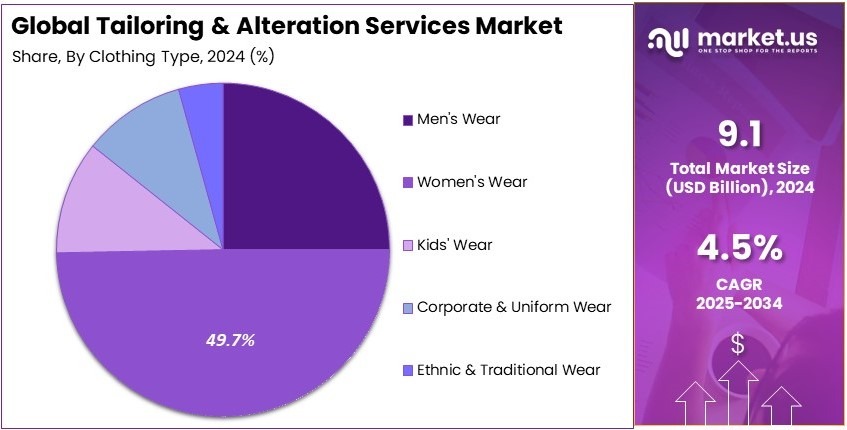
- In 2024, Women’s Wear led the clothing type segment with 49.7%, driven by frequent alterations and fashion customization.
- In 2024, Walk-In Services accounted for 58.3%, as customers prefer in-person fittings and quick adjustments.
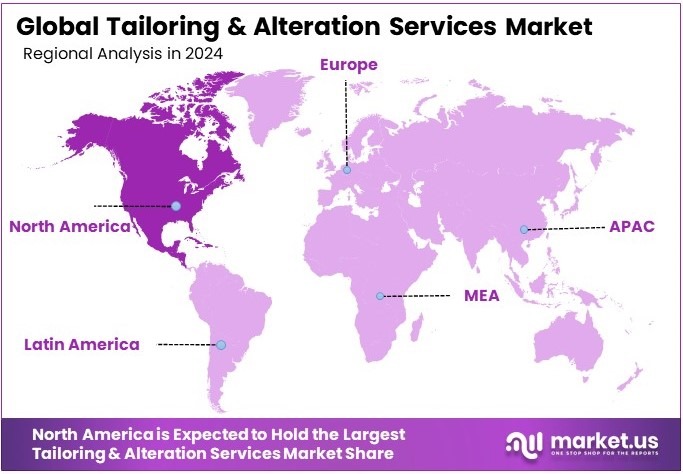
- In 2024, North America dominated the market, supported by a strong fashion industry and high demand for personalized apparel services.
Type of Service Analysis
Clothing Alterations dominate with 37.6% due to their essential role in wardrobe maintenance and adaptation.
In the Tailoring and Alteration Services Market, Clothing Alterations emerge as the dominant sub-segment. This predominance is driven by the constant need for adjustments in everyday clothing, which makes this service essential for maintaining and adapting existing wardrobes to changing body sizes and styles. This service’s accessibility and widespread demand underpin its substantial market share.
Custom Tailoring provides tailored clothes that fit individual body shapes and personal styles, which is especially popular for business attire and special occasions. Repairs & Restorations are crucial for extending the life of garments and reducing waste, reflecting growing consumer awareness of sustainability in fashion. Embroidery & Personalization services allow customers to customize their garments, which is increasingly popular in personalizing gifts and corporate branding.
Bespoke Suiting represents a premium niche, catering to clients looking for the highest quality and fit, often for luxury and business wear. Bridal & Formal Wear Alterations are vital for preparing for significant events, requiring high precision and expertise to ensure perfect fit and comfort.
Clothing Type Analysis
Women’s Wear dominates with 49.7% due to its diversity and frequent fashion changes.
The market is also segmented by Clothing Type, with Women’s Wear taking the lead. This segment benefits from the extensive range of styles and frequent updates in women’s fashion, which often necessitate alterations. The diversity in women’s apparel, from casual to formal wear, supports the sustained demand for tailoring services.
Men’s Wear follows, with services often concentrated on business suits and occasion wear. Kids’ Wear sees regular demand due to the need for resizing clothes as children grow. Corporate & Uniform Wear is essential for businesses requiring a consistent and professional appearance. Ethnic & Traditional Wear often requires specific tailoring skills to preserve cultural designs and fit, which is crucial for many communities.
Mode of Service Analysis
Walk-In Services dominate with 58.3% due to their convenience and immediate service.
Regarding the Mode of Service, Walk-In Services hold the majority share. This format’s popularity is based on the convenience of immediate access and the advantage of personalized, face-to-face service, which is particularly important for detailed fittings and complex alterations.
Home/On-Demand Services are growing, offering the convenience of tailoring at the client’s location, suited for busy individuals or those who prefer the comfort of their own home. Online Tailoring & Alteration Services are expanding, especially for straightforward tasks like standard repairs or when pre-defined sizing is applicable, offering customers a hassle-free option without needing to visit a store.
Key Market Segments
By Type of Service
- Custom Tailoring
- Clothing Alterations
- Repairs & Restorations
- Embroidery & Personalization
- Bespoke Suiting
- Bridal & Formal Wear Alterations
By Clothing Type
- Men’s Wear
- Women’s Wear
- Kids’ Wear
- Corporate & Uniform Wear
- Ethnic & Traditional Wear
By Mode of Service
- Walk-In Services
- Home/On-Demand Services
- Online Tailoring & Alteration Services
Driving Factors
Custom Demand Drives Market Growth
Demand for custom‐fitted and individually tailored apparel has grown steadily in recent years, as consumers seek garments that match their unique style and body shape. Increasing popularity.
Consumers also show a strong emphasis on sustainable and eco‐friendly fashion practices. They prefer tailoring services that use ethical materials and environmentally sound methods. This shift toward sustainability is influencing providers to adopt green practices, attracting eco‐conscious buyers widely across global markets.
Digital platforms have transformed the tailoring industry by facilitating seamless engagement between clients and service providers. Online booking and virtual consultations allow customers to schedule fittings and share measurements easily. This digital expansion has broadened market access and improved customer convenience. Technology now plays a key role in service innovation.
Additionally, a rising trend toward personalized and bespoke alteration services further drives market growth. Consumers demand garments that are crafted to fit their specific needs. Tailoring experts now focus on customization and precision. The blend of modern technology with traditional craftsmanship creates a competitive advantage that appeals to discerning customers.
Restraining Factors
Skilled Labor and Cost Constraints Restraints Market Growth
One major restraint in the tailoring and alteration services market is the dependence on highly skilled artisans. These craftsmen require years of training and experience, which limits the available workforce. The scarcity of skilled talent can lead to delays and inconsistent quality. Companies face challenges in meeting rising consumer expectations.
Fast fashion trends restrain the market by causing fluctuating demand for custom services. Mass‐produced garments appeal due to low cost and quick turnaround. This trend diverts interest away from bespoke offerings. Consequently, tailoring businesses struggle to maintain a steady customer base and face reduced order volumes in the current market.
Elevated production and operational costs present further challenges. Precision tailoring demands specialized equipment and skilled labor, which drive expenses higher. These increased costs limit the ability of small businesses to invest in quality improvements. Manufacturers and service providers must balance cost efficiency with high standards in order to remain competitive.
Complex regulatory and compliance requirements add to the restraints in this market. Strict industry standards and government policies require significant time and resources for adherence. These regulatory challenges slow down innovation and increase overall costs. Providers must navigate a maze of rules that hinder adaptation and limit market expansion opportunities.
Growth Opportunities
Digital Advancements Provide Opportunities
Technological integration offers new opportunities in tailoring and alteration services. Digital measurement tools and 3D body scanning technologies have revolutionized the industry. These advanced systems provide accurate measurements and enhance customization. The adoption of such tools improves service precision and reduces fitting errors for a better customer experience, remarkably efficient.
Opportunities also arise from strategic expansion into high‐end luxury and designer tailoring segments. Providers are targeting affluent customers who demand exclusive, custom‐made garments. Entering this niche market offers higher margins and brand prestige. This focus on luxury helps differentiate services and creates a competitive edge in a crowded marketplace globally.
Diversification into eco‐friendly and sustainable alteration service offerings further enhances growth prospects. Companies now emphasize using recycled materials and energy‐efficient practices. This commitment to sustainability attracts environmentally conscious consumers. Expanding the range of green services not only meets market demand but also strengthens brand reputation and fosters loyalty among clients.
Leveraging e‐commerce platforms opens broader geographic market reach and increases customer engagement. Online stores and digital marketing allow service providers to connect with clients worldwide. This digital shift breaks traditional boundaries and offers scalable growth opportunities. Expanding online presence strengthens sales channels and supports rapid market expansion across diverse regions.
Emerging Trends
Mobile Trends Are Latest Trending Factor
A surge in on‐demand tailoring services is evident through mobile booking applications. Consumers now use smartphones to schedule appointments and manage orders conveniently. This trend reflects the increasing reliance on digital tools to access personalized services. Mobile apps offer fast, efficient, and user‐friendly interfaces that drive market engagement, globally today.
Adoption of innovative 3D scanning technologies enhances measurement accuracy and service quality. These tools capture precise body dimensions and facilitate better garment fitting. The integration of advanced scanning techniques improves efficiency and reduces errors.
Consumers appreciate the precision offered by these digital solutions, which elevate the overall tailoring experience, remarkably.
Social media‐driven trends are reshaping consumer preferences for tailored fashion. Online platforms highlight unique designs and custom‐fit styles through vibrant visuals and influencer endorsements.
There is a rising demand for personalized and custom fashion design experiences. Consumers seek unique, made‐to‐measure garments that reflect their individual style. This trend drives tailors to offer creative and flexible services. The personalized approach not only meets customer expectations but also sets new standards for bespoke fashion design, remarkably.
Regional Analysis
North America Dominates with Major Market Share in the Tailoring and Alteration Services Market
North America leads the Tailoring and Alteration Services Market with a major share. This substantial market presence is primarily driven by the region’s fashion consciousness and significant consumer spending on apparel, which necessitates tailored and customized clothing solutions.
The region benefits from a robust retail infrastructure and a large number of skilled tailors, which are crucial for providing high-quality and diverse alteration services. Additionally, the trend towards personalization and custom-fit clothing in fashion hubs like New York and Los Angeles significantly contributes to the market’s growth.
Looking forward, North America’s influence in the global Tailoring and Alteration Services Market is expected to persist as consumer demand for bespoke clothing and precise garment fittings continues to rise. The growth of online tailoring services and technological advancements in fitting processes are likely to further enhance the region’s market dominance.
Regional Mentions:
- Europe: Europe maintains a strong market presence in tailoring and alterations, driven by its rich history in fashion and luxury clothing. The demand for bespoke tailoring is particularly high in fashion capitals such as Paris and Milan.
- Asia Pacific: Asia Pacific is experiencing significant growth in the Tailoring and Alteration Services Market, supported by its large textile industry and rising middle-class population with increasing disposable income.
- Middle East & Africa: The Middle East and Africa are gradually expanding their market share, with a growing interest in luxury and designer wear that requires professional tailoring services to ensure a perfect fit.
- Latin America: Latin America is developing its market for tailoring and alterations as local fashion industries grow and the demand for custom-fit clothing increases among its fashion-conscious populations.
Key Regions and Countries Covered in the Report
- North America
- US
- Canada
- Europe
- Germany
- France
- The UK
- Spain
- Italy
- Rest of Europe
- Asia Pacific
- China
- Japan
- South Korea
- India
- Australia
- Rest of APAC
- Latin America
- Brazil
- Mexico
- Rest of Latin America
- Middle East & Africa
- South Africa
- Saudi Arabia
- UAE
- Rest of MEA
Competitive Landscape
In the Tailoring and Alteration Services Market, Men’s Wearhouse, Jos. A. Bank, Nordstrom, and Indochino are pivotal. These companies dominate the market through comprehensive services that range from basic alterations to custom tailoring, serving a broad demographic.
Men’s Wearhouse is known for its wide accessibility and reliable service, offering everything from suit tailoring to casual wear adjustments. This brand has become synonymous with convenient and quality service across the United States.
Jos. A. Bank also specializes in high-quality men’s tailoring, with a particular focus on business attire. Their reputation for crafting well-fitted suits has made them a preferred choice for professionals looking for custom wardrobe enhancements.
Nordstrom provides a luxury retail experience that includes high-end tailoring services. This department store is noted for its superior customer service and the ability to tailor both men’s and women’s clothing, making it unique among its competitors.
Indochino has revolutionized the tailoring industry with its made-to-measure approach that is accessible both online and via brick-and-mortar stores. This innovation allows customers to design custom suits at ready-to-wear prices, offering a personalized experience without the traditional cost.
These top companies in the Tailoring and Alteration Services Market have established significant trust with consumers, blending traditional tailoring skills with modern conveniences to meet the evolving needs of today’s fashion consumers. Their continued innovation and commitment to quality are key drivers in their enduring market presence.
Major Companies in the Market
- Men’s Wearhouse
- Jos. A. Bank
- Nordstrom
- Indochino
- Stitch It
- The Alteration Shop
- Alterations Express
- Zara
- H&M
- Levi’s Tailor Shop
- The Tailory New York
- Reweaving of Richmond
- Sew Elegant
Recent Developments
- Marks & Spencer and Sojo: On June 2024, Marks & Spencer partnered with Sojo, a UK-based provider of clothing repair and tailoring services, to launch the M&S Fixed by SOJO clothing repair service. The service offers zip replacements and invisible knitwear repairs with items returned within seven to ten days.
- Sojo: Sojo, a London-based sustainable fashion and tech platform, secured $2.4 million in a pre-seed funding round led by CapitalT. The funding will be used to expand its services nationwide and develop its B2B proposition.









