


Report Overview
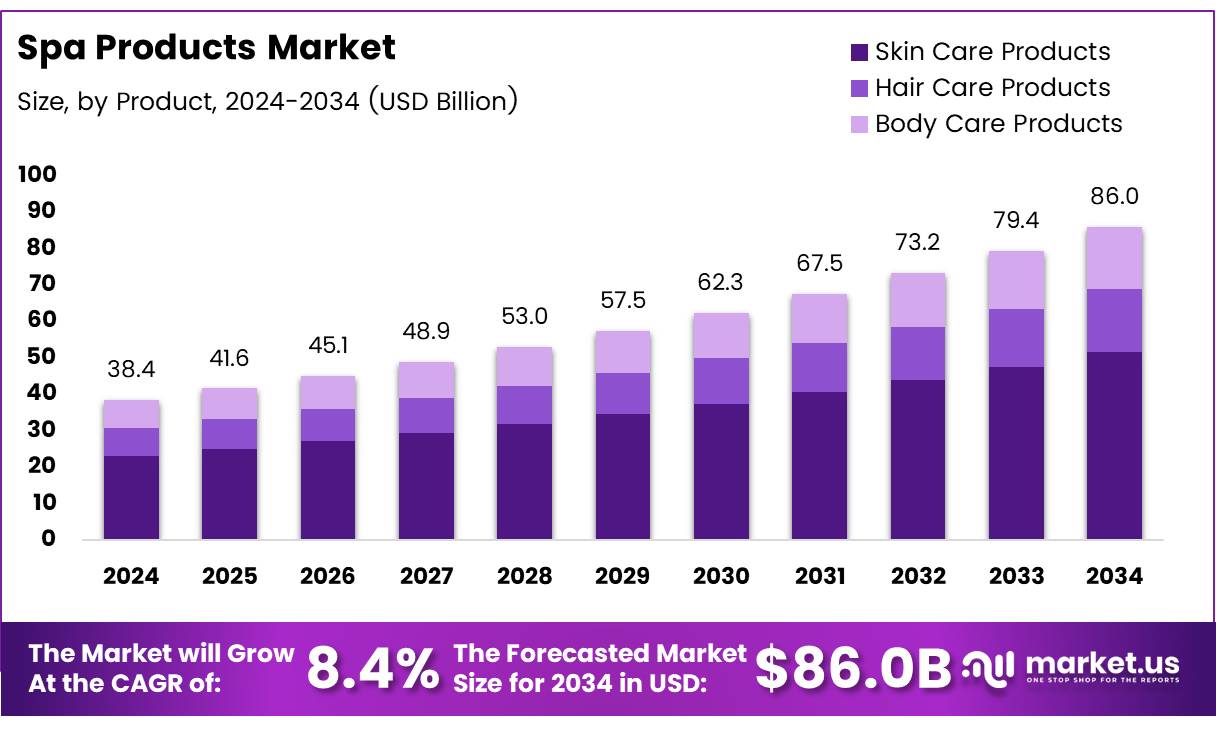
The Global Spa Products Market size is expected to be worth around USD 86.0 Billion by 2034, from USD 38.4 Billion in 2024, growing at a CAGR of 8.4% during the forecast period from 2025 to 2034.
The spa products market encapsulates a diverse range of goods and services designed to enhance the wellness experience. These products include skincare items, therapeutic devices, essential oils, and a variety of health and wellness supplements that are integral to the spa industry.
According to the Global Wellness Institute, the spa industry has experienced significant growth, with the number of spas reaching 191,348 globally in 2023, generating revenues of $137 billion. This robust expansion is indicative of an increasing consumer prioritization of wellness and self-care, aligning with the rising trend where 78% of consumers actively engage in self-care, as noted by Beauty Matter.
spa products are at the forefront of the wellness movement, benefiting from a consumer base that is increasingly health-conscious and willing to invest in self-care. The integration of advanced skincare technologies and the introduction of organic and sustainable products are key trends driving market growth. As consumers become more aware of ingredients and their benefits, there is a growing demand for products that are not only effective but also ethically sourced and environmentally friendly.
The spa market’s growth is further supported by a notable increase in spa visits, which rose by 3.1% to 187 million, according to Experience ISPA. The slight increase in spa locations, up by 0.6% to 21,980, although modest, is a positive indicator of steady market expansion.
Importantly, revenue per visit has also seen an uplift, growing by 2.6% to an average of $120.30, demonstrating an increased willingness among consumers to spend on spa services. The employment in the spa industry has also grown, with a 1.6% increase to 376,200 as of January 2025, reflecting broader economic impacts and the creation of new job opportunities within the sector.
Government policies and investment in health and wellness also play a crucial role in shaping the spa products market. Regulations ensuring the quality and safety of spa products boost consumer confidence and help maintain high industry standards.
Additionally, governmental initiatives to promote tourism, including wellness tourism, can significantly enhance market growth by attracting international visitors to renowned spa destinations. These elements combined create a fertile environment for the continued growth and expansion of the spa products market, providing ample opportunities for investors and businesses within the sector.
Key Takeaways
- The Global Spa Products Market is projected to grow from USD 38.4 Billion in 2024 to USD 86.0 Billion by 2034, at a CAGR of 8.4%.
- Skin Care Products dominated the Product Analysis segment in 2024 with a 48.8% market share, driven by demand for natural and organic products.
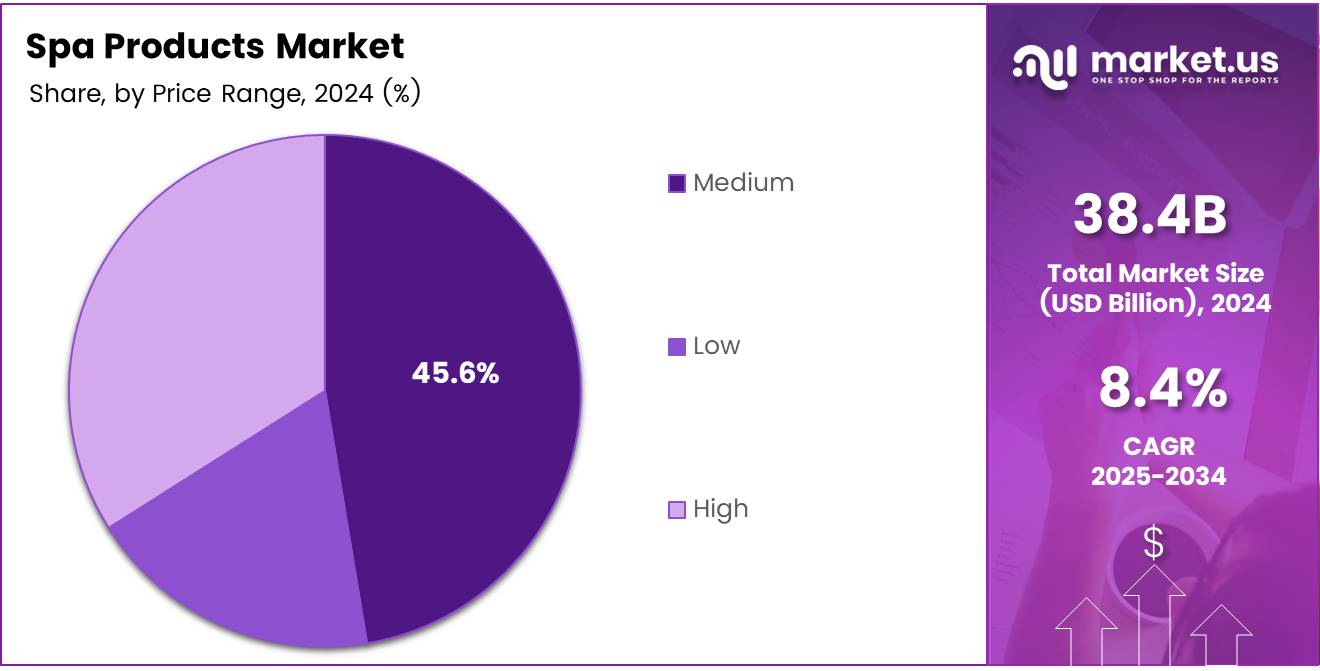
- The Medium price range segment led the market in 2024, capturing a 45.6% share due to its balance of affordability and quality.
- Offline distribution channels were predominant in 2024, holding a 58.3% share, highlighting a preference for traditional shopping experiences.
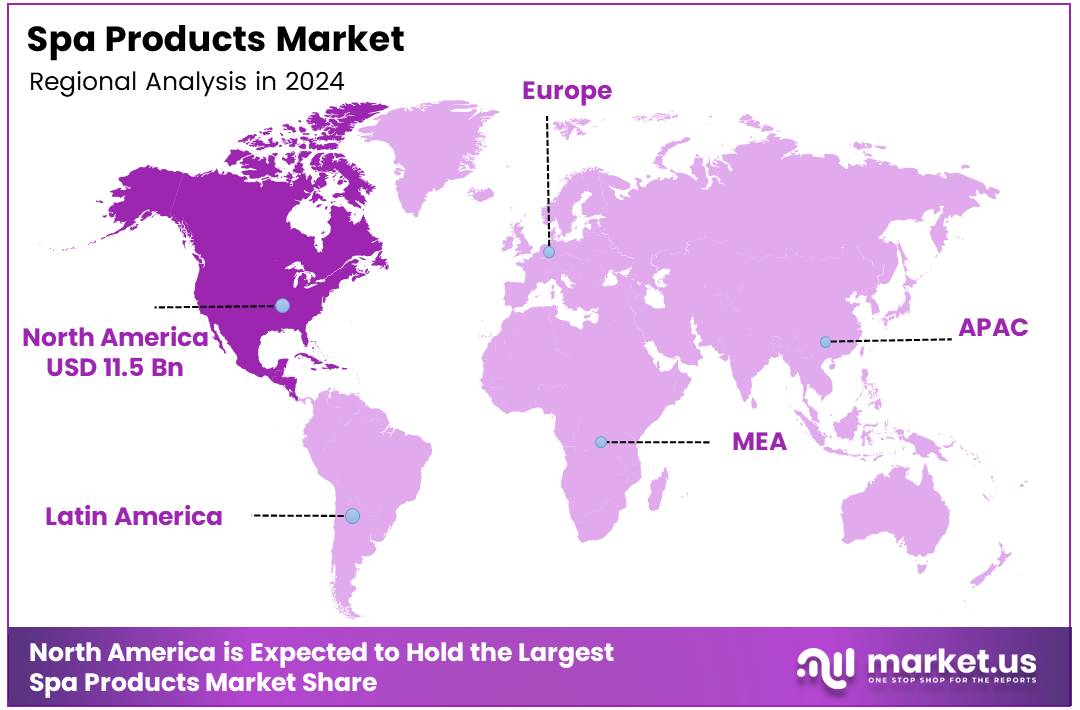
- North America led the spa products market in 2024 with a 30.7% share, fueled by high consumer spending and a strong wellness culture.
Product Analysis
Skin Care Products Lead Spa Market with 48.8% Market Share
In 2024, Skin Care Products held a dominant market position in the By Product Analysis segment of the Spa Products Market, commanding a substantial 48.8% share. This segment’s robust performance is primarily driven by increasing consumer awareness regarding skin health and the rising demand for natural and organic products. As wellness and self-care trends continue to influence consumer behaviors, skin care remains at the forefront of spa product purchases.
Following skin care, Hair Care Products also captured a significant portion of the market. Enhanced by innovations in formulation and the growing popularity of scalp treatments and hair rejuvenation therapies, these products are not just supplementary but essential to the holistic spa experience, appealing to a broad consumer base seeking comprehensive wellness solutions.
Body Care Products, while holding a smaller share compared to skin and hair care, are steadily gaining traction. This rise is fueled by a growing interest in full-body treatments and the therapeutic benefits of body scrubs, moisturizers, and oils, which are increasingly viewed as vital components of relaxation and detoxification in spa settings.
Together, these segments illustrate a dynamic and expanding market, driven by consumer preferences shifting towards integrated health, beauty, and wellness regimes.
Price Range Analysis
Medium Price Range Leads Spa Products Market with 45.6% Share in 2024
In 2024, the Medium price range segment commanded a dominant position in the spa products market, holding a 45.6% share. This segment’s success is attributed to its balance of affordability and quality, appealing to a broad consumer base seeking value for money.
Products in this range offer a blend of durability, innovative features, and cost-efficiency, which are highly valued by price-conscious consumers who do not wish to compromise on product efficacy.
Conversely, the Low price range segment, while attractive due to its minimal cost, accounted for a smaller market share. These products typically target budget-restricted consumers but often fall short on advanced features and longevity. This segment’s appeal is confined to price-sensitive consumers and regions with lower disposable incomes.
The High price range segment, though it represents premium quality and cutting-edge technology, also held a smaller share compared to the Medium range. The high cost of these products limits their market to affluent consumers and luxury establishments, which narrows their market reach but allows for substantial profit margins due to high per-unit prices.
Overall, the Medium price range’s robust market share underscores its pivotal role in balancing consumer expectations and affordability, driving its dominance in the spa products market in 2024.
Distribution Channel Analysis
Offline Channels Lead with 58.3% in Spa Products Distribution, Emphasizing Traditional Consumer Preferences
In 2024, the Spa Products Market witnessed Offline channels holding a dominant market position in the By Distribution Channel Analysis segment, capturing a substantial 58.3% market share. This dominance underscores a continued consumer preference for traditional shopping experiences, where tactile product evaluation and immediate purchasing options are highly valued.
The offline distribution channel benefits from established consumer trust and the immediate gratification that physical stores offer, factors that are particularly influential in the personal care and wellness sectors.
Conversely, the Online segment, while growing, accounted for a smaller portion of the market. This channel’s expansion is driven by the increasing penetration of e-commerce and digital literacy among consumers. Online platforms offer convenience and often broader product selections, including international brands not available in local stores.
Additionally, the rise of digital marketing strategies and influencer endorsements has further propelled the online sales of spa products. However, the tactile nature of product selection in the spa industry, such as scents and textures, continues to give offline channels an edge, reflecting a slower yet steadily increasing shift towards online shopping as technology and consumer behavior evolve.
Key Market Segments
By Product
- Skin Care Products
- Hair Care Products
- Body Care Products
By Price Range
- Medium
- Low
- High
By Distribution Channel
- Offline
- Online
Drivers
Wellness Tourism Boosts Spa Products Demand
The spa products market is buoyed by a rising interest in wellness tourism, where consumers seek comprehensive well-being experiences, propelling the demand for spa-related products. This surge is supported by an increase in health awareness; individuals are more invested in products that aid in relaxation and enhance health.
As disposable incomes grow, consumers are also spending more on luxury wellness offerings, including specialized spa treatments. Additionally, the growing popularity of organic and natural products is significantly influencing market trends. More consumers now prefer these safer, chemical-free alternatives, aligning with a broader shift towards sustainable and health-conscious choices in personal care.
Restraints
High Cost of Spa Treatments Deters Budget-Conscious Consumers
The premium pricing of spa treatments and products acts as a significant barrier for budget-conscious consumers. This high cost can deter potential customers who might otherwise regularly engage with these services.
Additionally, the market for spa products faces strong competition from the growing availability of at-home wellness products. These alternatives, which offer affordability and convenience, allow individuals to enjoy spa-like experiences from the comfort of their homes.
As a result, many are choosing these DIY solutions over visiting professional spas, impacting the growth potential of the spa market. The trend highlights the need for spas to rethink pricing strategies or enhance the perceived value of their services to better meet consumer expectations and market demands.
Growth Factors
Emerging Markets Offer Lucrative Opportunities for Spa Products
The spa products market is ripe for expansion, especially in emerging markets where wellness awareness and spending are on the rise.
This presents a lucrative opportunity as economic growth is ushering in a burgeoning middle class eager to invest in lifestyle enhancements like spa and wellness products. Additionally, extending product lines to include offerings specifically designed for men can open up a new, relatively untapped demographic segment.
Integrating technology such as AI and VR can also attract a tech-savvy clientele, adding a modern twist to traditional spa experiences. Furthermore, forming partnerships with the hospitality industry can broaden market reach by providing exclusive spa products and treatments in hotels and resorts. These strategic avenues can significantly boost market penetration, enhance customer engagement, and increase profitability in the spa products industry.
Emerging Trends
Personalized Spa Experiences Propel Market Expansion
The spa products market is witnessing a notable shift towards customization and personalization, catering to individual preferences and skin types. This trend is driven by consumers’ increasing demand for spa products and experiences that are specifically tailored to their personal health and beauty needs.
In addition to this, there is a growing integration of holistic health practices, such as yoga and meditation, which are being combined with traditional spa treatments to enhance mental and physical well-being. The market is also adapting to the convenience needs of consumers through the rise of mobile and home spa services, allowing the luxury of spa treatments in the comfort of one’s home.
Furthermore, the incorporation of CBD and hemp-based products is gaining traction, with these ingredients being celebrated for their therapeutic benefits, thereby enriching the spa experience and broadening the market’s appeal. This blend of personalization, holistic health, convenient service models, and innovative product ingredients is setting a dynamic pace for market growth in the spa industry.
Regional Analysis
North America Leads Spa Products Market with 30.7% Share, Generating $11.5 Billion Due to High Consumer Spending and Wellness Culture
North America remains a dominant force in the spa products industry, commanding a 30.7% market share and generating revenues of USD 11.5 billion. The region benefits from high consumer spending power and a robust wellness culture, with the United States leading in both spa facilities and product innovation. Consumer preferences for organic and natural products are driving the introduction of new offerings and the expansion of existing product lines.
Regional Mentions:
Europe follows closely, characterized by a rich history of spa culture, particularly in countries like Germany, France, and Italy. The market here is driven by a strong inclination towards luxury spa and wellness products, which are often integrated with traditional therapeutic practices. The region’s stringent regulations on product quality and eco-friendliness also push companies to develop superior and sustainable products.
In the Asia Pacific, rapid market expansion is fueled by increasing disposable incomes and growing awareness of personal well-being. Countries like Japan, South Korea, and China are seeing a surge in both local and international brands, with products tailored to local preferences and herbal traditions. The region is expected to witness the highest growth rate, driven by its large population and expanding middle class.
The Middle East & Africa region presents a growing frontier for the spa products market, with luxury resorts and hotels driving demand in the Gulf Cooperation Council (GCC) countries. The market is characterized by high demand for exclusive and high-end spa products that align with the opulent lifestyles of the region’s affluent consumers.
Latin America shows promising growth potential, with countries like Brazil and Argentina slowly embracing spa culture. The market is still in its nascent stages compared to other regions but is expected to grow due to increasing urbanization and the influence of global wellness trends.
Key Regions and Countries
- North America
- US
- Canada
- Europe
- Germany
- France
- The UK
- Spain
- Italy
- Rest of Europe
- Asia Pacific
- China
- Japan
- South Korea
- India
- Australia
- Rest of APAC
- Latin America
- Brazil
- Mexico
- Rest of Latin America
- Middle East & Africa
- South Africa
- Saudi Arabia
- UAE
- Rest of MEA
Key Players Analysis
In the evolving landscape of the global spa products market in 2024, several key companies are poised to shape industry dynamics through innovative offerings and strategic market positioning. Clarins, known for its plant-based luxury skincare, continues to lead with its strong commitment to sustainability, appealing to eco-conscious consumers. Caudalie leverages its niche in utilizing vine and grape extracts, capitalizing on the trend towards natural and organic ingredients.
Lush’s dedication to handmade and ethically sourced products makes it a standout for ethical consumers, while Harvia’s expertise in high-quality spa facilities, particularly saunas, meets the growing demand for home wellness solutions. Dermalogica’s focus on professional-grade skincare keeps it at the forefront of the aesthetic and spa treatment industry.
Bliss and Elemis are both expanding their presence by integrating technology with traditional spa care, offering personalized experiences through innovative skincare tools and diagnostics. Dr. Barbara Sturm rides the wave of science-backed skincare, catering to a high-end market with her molecular cosmetics.
Emerging players like Beau Domaine are carving out niches with localized, bespoke experiences, challenging larger players by offering unique, culturally inspired spa products. Aveda and ESPA continue to excel in integrating holistic wellness into their product lines, emphasizing body and mind connection, which is increasingly popular.
La Mer remains a leader in premium skincare, and its continued investment in marine science for skincare innovation secures its high market placement. Kiehl’s maintains strong customer loyalty through its heritage-rich, efficacious formulations. Molton Brown and Omorovicza are expanding their global reach by blending local traditions with luxury, appealing to international tourists and locals alike.
Top Key Players in the Market
- Clarins
- Caudalie
- Lush
- Harvia
- Dermalogica
- Bliss
- Elemis
- Dr. Barbara Sturm
- Beau Domaine
- Aveda
- ESPA
- La Mer
- Kiehl’s
- Molton Brown
- Omorovicza
- Others
Recent Developments
- In January 2025, Ras Luxury Skincare successfully secured US$5 million in Series A funding, with the investment round led by Unilever Ventures. This funding aims to enhance their product offerings and expand their market presence.
- In November 2023, RepeatMD raised $50 million in Series A funding by focusing on automating revenue generation in the aesthetics and wellness industry. The significant investment underscores the growing importance of technology in enhancing business efficiency in this sector.
- In September 2024, VIO Med Spa announced that they had received a majority investment from Freeman Spogli. This strategic move is designed to fuel expansion and further establish VIO Med Spa’s presence in the competitive wellness market.









