Report Overview
The Global Anaerobic Digestion Market size is expected to be worth around USD 42.5 Bn by 2034, from USD 14.7 Bn in 2024, growing at a CAGR of 11.20% during the forecast period from 2025 to 2034.
Anaerobic digestion is a biological process in which microorganisms break down organic materials in the absence of oxygen, producing biogas (mainly methane and carbon dioxide) and digestate. This process is increasingly being utilized in controlled environments such as digesters for waste management and renewable energy generation.
Anaerobic digestion can be applied to a variety of organic feedstock, including agricultural residues, animal manure, food waste, and municipal wastewater. The biogas can be used for electricity generation, heating, and as a transportation fuel, while the digestate can be used as a nutrient-rich fertilizer, promoting sustainable agricultural practices. AD helps reduce waste, lower greenhouse gas emissions, and provide renewable energy, contributing to a circular economy and a cleaner environment.
- In the US, livestock farms are often quite large: nearly 44% of dairy cows are found on farms with herds of at least 1,000 cows. Similarly, about 90% of hog and pig farms have herd sizes exceeding 2,000 animals. Integrating anaerobic digestion (AD) into these large-scale operations can be economically viable and is crucial from an environmental perspective.
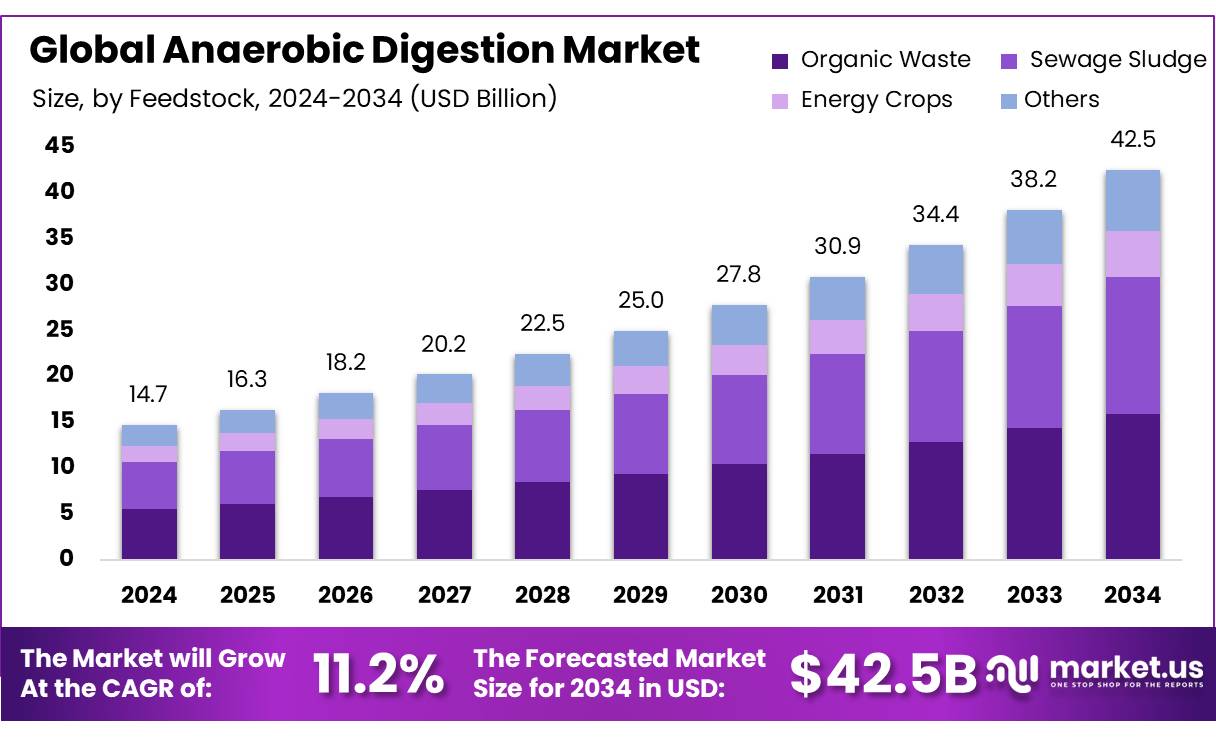
The global anaerobic digestion market is experiencing robust growth driven by the increasing demand for renewable energy and sustainable waste management solutions. Governments worldwide, especially in regions like North America and Europe, are supporting anaerobic digestion technologies through incentives, subsidies, and favorable regulations, encouraging further market expansion. The agricultural sector, which generates large amounts of organic waste, is one of the largest adopters of anaerobic digestion systems, using them to convert manure and crop residues into biogas and valuable fertilizers.
In addition, municipalities and industries are incorporating anaerobic digestion into their waste management systems to reduce landfill use and generate renewable energy. The market’s growth is also fueled by advancements in biogas production technologies and the rising adoption of renewable natural gas (RNG) and bio-CNG, which are driving the demand for efficient anaerobic digestion systems across various sectors.
Key Takeaways
- The global anaerobic digestion market was valued at USD 14.7 billion in 2024.
- The global anaerobic digestion market is projected to grow at a CAGR of 11.20% and is estimated to reach USD 42.5 billion by 2034.
- Among feedstock, organic waste accounted for the largest market share of 37.5%.
- Among product types, Upflow Anaerobic Sludge Blanket (UASB) accounted for the majority of the market share at 43.3%.
- By process, Wet AD accounted for the largest market share of 65.3%.
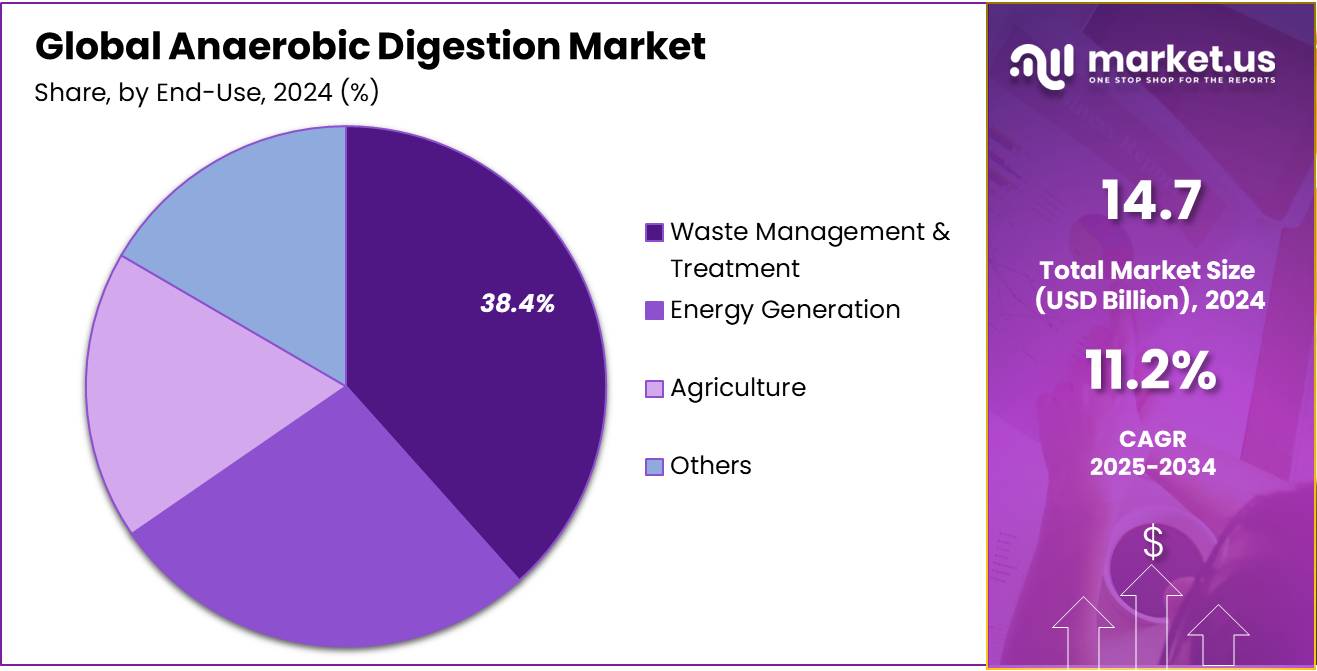
- By end use, waste management and treatment accounted for the majority of the market share at 38.4%.
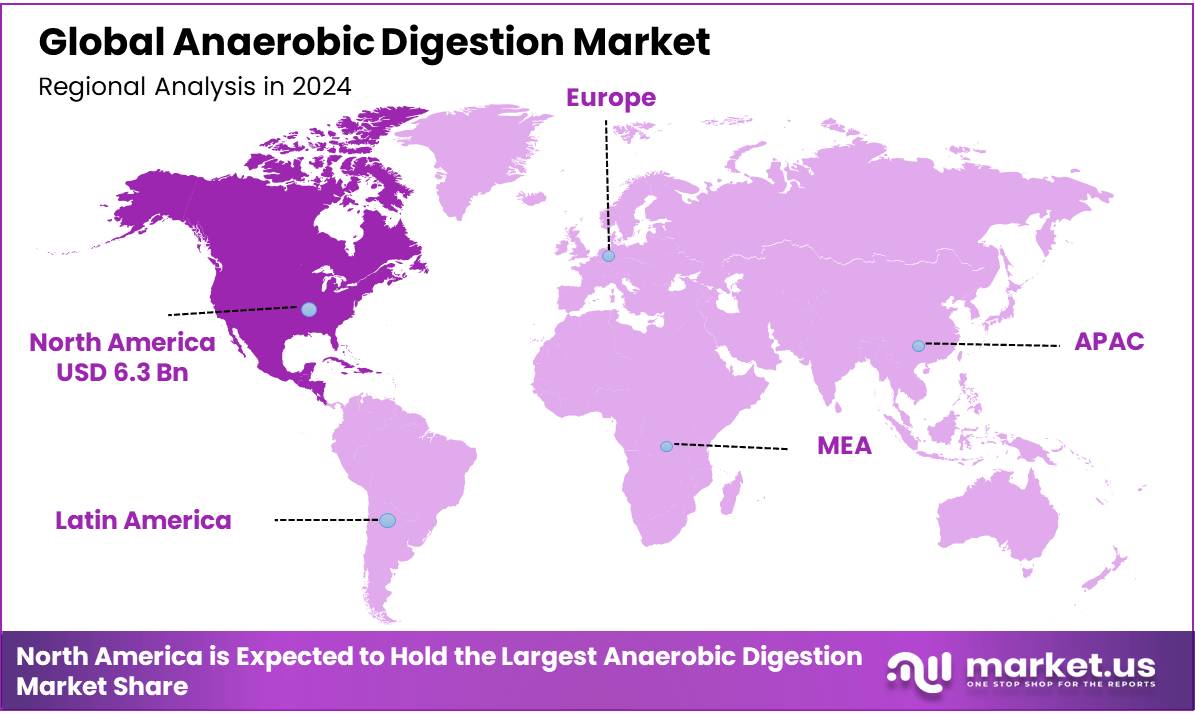
- North America is estimated as the largest market for anaerobic digestion with a share of 43.7% of the market share.
Feedstock Analysis
The anaerobic digestion market is segmented based on feedstock into organic waste, sewage sludge, energy crops, and others. In 2024, the Organic Waste segment held a significant revenue share of 37.5%. Due to the increasing importance of sustainable waste management practices. Organic waste, including food scraps, agricultural residues, and yard trimmings, is increasingly available, making it an ideal feedstock for Anaerobic Digestion systems.
The growing awareness about sustainability and the reduction of waste transmitted to landfills has contributed to the rise in organic waste utilization. Furthermore, governments and industries are increasingly focusing on diverting organic waste from landfills to reduce greenhouse gas emissions and promote circular economy principles, driving demand for Anaerobic Digestion technologies.
Additionally, the environmental benefits of organic waste offer economic advantages for anaerobic digestion. Using organic waste as feedstock helps reduce waste disposal costs for municipalities, industries, and farms while producing renewable biogas that can be used for energy generation. The digestate produced as a by-product can be used as a nutrient-rich fertilizer, further supporting sustainable agricultural practices. This combination of cost savings, environmental benefits, and renewable energy production has made the Organic Waste segment a major contributor to the growth of the global anaerobic digestion market.
Product Type Analysis
Based on product type, the market is further divided into Up-flow Anaerobic Sludge Blanket (UASB), Internal Circulation Reactor (IC Reactor), and Expanded Granular Sludge Bed Digestion (EGSB). The predominance of the Up-flow Anaerobic Sludge Blanket (UASB), commanding a substantial 43.3% market share in 2024. due to its efficiency and cost-effectiveness in treating high-strength wastewater.
UASB systems are widely adopted because of their ability to handle large volumes of organic waste while requiring relatively lower energy inputs. This technology offers the upward flow of wastewater through a sludge blanket, allowing microorganisms to break down organic materials effectively. The efficiency of UASB systems in treating wastewater from various industries, including food processing, dairy, and municipal wastewater treatment, contributes significantly to its market leadership.
Moreover, UASB reactors are preferred for their relatively low capital and operational costs compared to other digestion technologies. They also have a smaller footprint, making them suitable for facilities with limited space. The widespread adoption of UASB in industries focused on wastewater management and renewable energy production has increased its growth, providing both environmental and economic benefits. These factors, including cost-effectiveness, scalability, and efficiency in organic waste treatment, have helped UASB maintain its strong position in the global anaerobic digestion market.
Process Analysis
Based on the process, the market is further divided into Wet AD and Dry AD. The predominance of the Wet AD, commanding a substantial 65.3% market share in 2024. Due to its efficiency in handling a wide variety of organic waste, particularly liquid feedstocks such as sewage sludge and food waste. Wet AD involves the digestion of organic materials in a liquid slurry, which allows for better contact between the microorganisms and the feedstock, leading to higher biogas production. This process is highly effective in municipal wastewater treatment plants and large-scale organic waste processing, where liquid waste is abundant.
Additionally, Wet AD is favored for its established technology and the ability to easily scale up for large operations, making it a go-to solution for both industrial and municipal waste management. Its flexibility in handling different feedstocks, combined with the ability to produce renewable energy in the form of biogas, contributes to its widespread adoption. The increased demand for sustainable waste management solutions and renewable energy has further solidified Wet AD’s position in the market, making it the preferred choice for many large-scale anaerobic digestion systems.
End-Use Analysis
Based on end-use, the market is further divided into waste management and treatment, energy generation, agriculture, and others. The predominance of waste management and treatment commanded a substantial 38.4 % market share in 2024. due to the growing need for effective waste disposal solutions and the increasing emphasis on reducing landfill use and environmental pollution.
Anaerobic digestion offers a sustainable approach to waste management by converting organic waste, such as food scraps, agricultural residues, and sewage sludge, into valuable by-products like biogas and digestate. This process not only helps in waste reduction but also mitigates harmful greenhouse gas emissions, particularly methane, which is a potent contributor to climate change.
- In 2015, the US Environmental Protection Agency and Department of Agriculture announced a 50% food waste reduction goal by 2030.
Additionally, the rise in environmental regulations and the global push for waste-to-energy solutions have further bolstered the adoption of anaerobic digestion systems in the waste management sector. With municipalities and industries seeking to comply with stringent waste disposal regulations and reduce their carbon footprint, AD technologies have become an essential tool for achieving sustainable waste treatment. The ability to generate renewable energy from organic waste while also producing nutrient-rich digestate for agricultural use makes AD a highly attractive solution for waste management and treatment applications.
Key Market Segments
By Feedstock
- Organic Waste
- Sewage Sludge
- Energy Crops
- Others
By Product Type
- Upflow Anaerobic Sludge Blanket (UASB)
- Internal Circulation Reactor (IC Reactor)
- Expanded Granular Sludge Bed Digestion (EGSB)
By Process
- Wet AD
- Dry AD
By End-Use
- Waste Management and Treatment
- Energy Generation
- Agriculture
- Others
Drivers
Growing Bio-CNG Demand
The growing demand for Bio-CNG (Compressed Natural Gas) and CBG (Compressed Biogas) is significantly fueling the expansion of the global anaerobic digestion market. As a sustainable, low-carbon alternative to fossil fuels, Bio-CNG is derived from the anaerobic digestion of organic waste, including agricultural residues, food waste, and animal by-products. With a global shift towards cleaner energy solutions to combat climate change, Bio-CNG provides a dual benefit offering a renewable energy source while simultaneously addressing waste management issues. This growing adoption of Bio-CNG as a viable energy source is significantly boosting the demand for anaerobic digestion technologies, making them a key component of the global transition to clean energy.
- The Indian government aims to increase the blending of CBG in CNG and PNG from 1% in FY2025-26 to 5% by FY2028-29.
- Bio-CNG could replace up to two-thirds of India’s natural gas imports, which are currently around 429 billion cubic feet.
Furthermore, growing concerns over fossil fuel price volatility and energy security are key drivers of the anaerobic digestion market’s growth. Governments and private sectors in various countries are increasingly promoting Bio-CNG as a sustainable alternative to reduce reliance on imported fuels, making it an economically attractive option for both producers and consumers. This shift towards Bio-CNG has led to a surge in demand for anaerobic digesters and related infrastructure, spurring significant investments and technological advancements in the sector. As nations prioritize energy security and cleaner alternatives, the adoption of anaerobic digestion technologies continues to grow, contributing to the market’s expansion.
- For instance, recently Indian government’s Ministry of Petroleum and Natural Gas implemented the Sustainable Alternative Towards Affordable Transportation (SATAT) initiative, which aims to establish 5000 BioCNG plants and produce 15 MMT of BioCNG by 2023-24, encouraging entrepreneurs to supply BioCNG to Oil Marketing Companies (OMCs) for use as automotive fuel.
Additionally, the environmental benefits of Bio-CNG are a major factor contributing to the growth of the anaerobic digestion market. By significantly reducing greenhouse gas emissions, capturing methane from landfills, and cutting CO2 emissions, Bio-CNG plays a crucial role in mitigating climate change. Its ability to lower carbon dioxide emissions by up to 78% compared to conventional fuels, especially in vehicles, positions it as a key player in the clean energy transition.
Moreover, Bio-CNG’s high calorific value and efficient fuel properties make it a versatile alternative for various applications, from industrial use to transportation. These advantages are driving increased adoption of anaerobic digestion technologies, further propelling the market’s growth as governments and industries seek sustainable, low-carbon solutions.
- For instance, Evonik company is working to reduce greenhouse gas emissions in heavy-duty transport by promoting the use of bio-LNG and bio-CNG. The initiative combines logistics procurement and product development efforts to transition freight transport to alternative fuels and enhance biogas upgrading capabilities.
Restraints
High Initial Investment Cost
The Limited feedstock availability is another significant factor restraining the growth of the anaerobic Digestion (AD) market. Anaerobic Digestion systems require a consistent and reliable supply of organic waste materials, such as agricultural residues, food waste, or manure, to produce biogas. However, some regions, face challenges in securing insufficient feedstock supply of raw materials, which can limit the capacity of AD facilities. This is particularly challenging in areas where agricultural activities are limited, or the collection of waste is inefficient, making it difficult for AD plants to operate at full capacity.
Additionally, competition for feedstock from other industries, such as composting or animal feed production, may further constrain the availability of organic materials for biogas production. This issue becomes more pronounced in densely populated urban areas or regions with limited agricultural infrastructure, where organic waste may be diverted to landfills or incineration instead of being utilized in AD systems. The lack of reliable and abundant feedstock can lead to operational inefficiencies, reduced profitability, and a slower return on investment for AD facility operators, ultimately facing challenges in the adoption of anaerobic digestion technologies.
Opportunities
Technological advancements
Technological advancements in anaerobic digestion (AD), especially in feedstock pretreatment and reactor design, are providing a significant opportunity for the growth of the global anaerobic digestion market. Innovations like ultrasound, microbial enzymes, and thermal wet oxidation have optimized the digestion process by enhancing substrate breakdown and biogas production while reducing retention time. These improvements allow for the development of smaller, more efficient digesters, expanding AD’s applicability across diverse industries.
- Anaerobic digestion is a significant source of renewable energy. For example, in Europe, biogas digesters generated 10.5 GW of electricity in 2019, with Germany leading the way with over 10,971 digesters.
- Anaerobic digestion contributes to a circular economy by converting waste into biofertilizers and energy. In Russia’s Sverdlovsk region, a sewage treatment plant generates 20.8 million kWh of electricity and 24.78 million kWh of heat annually, reducing CO2 emissions by 119,649 tones.
Moreover, the optimization of organic loading rates (OLR) through advanced reactor configurations, such as anaerobic sequencing batch reactors (ASBR) and up-flow anaerobic sludge blanket (UASB) reactors, contributes to the efficiency and sustainability of AD processes. The integration of two-stage digestion systems further enhances stability and performance, which is crucial for scaling up AD operations and increasing market adoption.
Additionally, pretreatment technologies, and advanced digestion methods like thermophilic anaerobic digestion (TAD) and temperature-phased digestion (TPAD) provide substantial benefits, such as higher biogas yields, better pathogen reduction, and reduced biosolid volumes. These technologies enhance the overall efficiency of AD systems, making them more attractive for both energy production and waste management. The adoption of advanced monitoring systems, including multivariate sensors, also improves process stability by allowing real-time control of key parameters, preventing disruptions.
Trend
Adoption Ai-Based Waste Sorting
AI-based waste sorting technologies are increasingly being integrated into anaerobic digestion processes to optimize waste management and biogas production. Machine learning algorithms and AI-powered robots can efficiently classify and separate organic waste from non-organic materials, ensuring that only suitable feedstock enters anaerobic digesters. These systems enhance the efficiency of the digestion process by monitoring parameters such as feedstock composition, temperature, and pH levels in real time, optimizing conditions for higher biogas yield.
Additionally, AI’s predictive capabilities help detect potential issues and reduce downtime, making operations more cost-effective and reliable. Furthermore, AI contributes to the broader waste-to-energy sector by improving the integration of anaerobic digestion with renewable energy generation. AI technologies optimize the conversion of organic waste into biogas, ensuring higher energy recovery and reducing reliance on fossil fuels.
By monitoring waste input and environmental conditions, AI systems maximize the efficiency of biogas production and utilization, contributing to sustainable energy goals. As these AI-driven innovations continue to evolve, they hold the potential to transform the anaerobic digestion market, fostering more sustainable and cost-effective waste management practices globally.
Rising Adoption of Anaerobic Co-Digestion
The rise of anaerobic co-digestion trends is significantly driving the growth of the global anaerobic digestion market by improving the efficiency and scalability of waste-to-energy systems. By combining multiple feedstocks, such as agricultural waste, food scraps, and wastewater, co-digestion optimizes biogas production, leading to higher methane yields and more stable digestion processes. This increases the overall efficiency of anaerobic digestion plants, making them more economically viable and attractive to investors and governments seeking sustainable waste management solutions. The ability to process a wider variety of organic waste streams further expands the market potential, as it offers a more flexible and cost-effective solution for industries and municipalities globally.
Additionally, co-digestion enhances the quality of the byproduct, digestate, which is rich in nutrients and can be used as a high-quality fertilizer. This added value for agricultural applications boosts the demand for anaerobic digestion technologies, creating a circular economy by recycling waste into valuable resources. As the need for renewable energy sources, waste reduction, and sustainable agriculture grows, the positive environmental and economic impacts of co-digestion further fuel market expansion. The government’s increasing focus on reducing greenhouse gas emissions and promoting clean energy solutions ensures that anaerobic co-digestion plays a pivotal role in accelerating the adoption of anaerobic digestion technologies worldwide.
Geopolitical Impact Analysis
Geopolitical Tensions, Energy Security, And Government Policies Are Boosting Global Anaerobic Digestion Market Growth.
Geopolitical tensions, such as conflicts, trade wars, and disruptions in global energy supplies, have underscored the importance of energy security for nations worldwide. Countries that rely heavily on imported fossil fuels are increasingly looking for alternative, local, and renewable energy solutions. Anaerobic digestion presents an effective way to achieve energy independence by generating biogas from local organic waste sources like agricultural residues, food waste, and sewage. As global tensions rise, the adoption of anaerobic digestion technologies is seen as a crucial strategy to reduce dependence on foreign energy imports. By embracing anaerobic digestion, nations can diversify their energy mix, reduce vulnerabilities related to energy supply disruptions, and position themselves for greater energy security.
Governments are playing a significant role in accelerating the growth of the anaerobic digestion market through a variety of incentives, subsidies, and regulations. In regions such as the European Union (EU), biogas is being promoted as part of broader renewable energy goals, supported by policies such as the Renewable Energy Directive (RED), which encourages countries to reduce emissions and increase renewable energy adoption. Similarly, in countries like China, national policies are designed to boost biogas production as part of efforts to combat air pollution and improve energy access in rural areas. However, shifts in political leadership and international relations can directly affect the stability of these policies, influencing the availability of funding, incentives, and regulatory frameworks that support AD technology development.
Regional Analysis
North America Held the Largest Share of the Global Anaerobic Digestion Market
In 2024, North America dominated the global anaerobic digestion market, accounting for 43.7% of the total market share, driven by increasing demand for renewable energy, waste management solutions, and sustainability efforts. This growth is particularly evident in the agricultural, municipal, and industrial sectors, where anaerobic digestion is being leveraged to convert organic waste into valuable biogas. Anaerobic digesters are crucial in producing bio-compressed natural gas (BioCNG), renewable natural gas (RNG), and organic fertilizers, which are helping to reduce reliance on fossil fuels and mitigate greenhouse gas emissions.
- The American Biogas Council (ABC) reports that the United States has more than 2,200 digesters, with a combined installed capacity of 977 megawatts. These digesters are distributed across various sectors: 1,269 are located at wastewater recovery facilities, 636 are used to capture landfill gas, 259 process dairy or swine manure, 39 exclusively handle food waste, and the remainder manage industrial waste.
- There are over 2,200 digesters in the U.S., with an installed capacity of 977 MW. This infrastructure supports the production of biogas for various applications.
- The United States is among the largest producers of biogas as a vehicle fuel, alongside countries like Germany and Sweden.
Furthermore, rise in government incentives and policies in the region supporting renewable energy technologies, such as the Renewable Energy Production Tax Credit (PTC) and bioenergy programs under the U.S. Farm Bill, are driving the expansion of anaerobic digestion technologies. These policies, along with growing environmental concerns and the need for sustainable waste management, are accelerating investments in anaerobic digestion infrastructure.
Additionally, municipalities are increasingly integrating biogas production into waste management strategies, offering another avenue for market growth. In addition to agriculture, the municipal sector is a significant player in the North American anaerobic digestion market. Several cities are turning to anaerobic digestion to address waste disposal challenges, reduce landfill use, and generate renewable energy.
Biogas can be used for electricity generation, heating, or as a transportation fuel, helping cities achieve their sustainability targets. With the continued adoption of bio-CNG refueling stations and RNG injection into natural gas pipelines, the market for anaerobic digestion in North America is projected to expand rapidly in the coming years. As regulatory pressures to reduce greenhouse gas emissions increase, anaerobic digestion technologies are seen as essential tools in meeting environmental goals, driving further growth in the market.
Key Regions and Countries
- North America
- The US
- Canada
- Europe
- Germany
- France
- The UK
- Spain
- Italy
- Russia & CIS
- Rest of Europe
- APAC
- China
- Japan
- South Korea
- India
- ASEAN
- Rest of APAC
- Latin America
- Brazil
- Mexico
- Rest of Latin America
- Middle East & Africa
- GCC
- South Africa
- Rest of MEA
Key Players Analysis
Key players dominate the anaerobic digestion market through innovation, partnerships, and strategic solutions.
Key players in the anaerobic digestion market maintain their dominance through continuous innovation, strategic partnerships, and geographic expansion. They focus on improving AD system efficiency and scalability by integrating advanced technologies, such as automated monitoring and data analytics, to optimize biogas production.
Furthermore, these players benefit from strong government support, including subsidies and incentives for renewable energy projects, which enhance their market position. Collaboration with agricultural, industrial, and municipal sectors also enables them to diversify their customer base and feedstock sources. Additionally, their ability to offer comprehensive solutions, including installation, maintenance, and after-sales services, strengthens their competitive edge. Finally, investment in sustainable practices and product development helps them align with global environmental goals, attracting further market opportunities.
The following are some of the major players in the industry
- Adnams plc
- Clarke Energy
- WELTEC BIOPOWER GMBH
- Schneider Electric
- EnviTec Biogas AG
- Northern Biogas
- Bioenergy Devco
- AAT Abwasser- und Abfalltechnik GmbH
- Viessmann Climate Solutions SE
- Agrinz Technologies GmbH
- PlanET Biogastechnik GmbH
- Agraferm GmbH
- Scandinavian Biogas Fuels International AB
- BDI-BioEnergy International GmbH
- Gasum Oy
- Nature Energy
- ENGIE Group
- AB HOLDING SPA
- Capstone Green Energy Corporation
- Compact Membrane System
- Others
Recent Development
- In March 2024 – Vanguard Renewables, a leader in anaerobic digestion (AD) systems, expanded from two facilities in 2014 to 32 sites across the U.S., focusing on converting food waste and dairy manure into renewable natural gas (RNG). The company aims to have over 100 completed projects by 2028, supporting sustainability and decarbonization efforts.
- In April 2024 – Divert is expanding its anaerobic digestion network with a new facility in North Carolina, part of its goal to process 5% of all U.S. food waste by 2031. This follows previous projects in California and Washington, fueled by partnerships with Enbridge and Ara Partners, and is aimed at increasing the company’s reach to 80% of the U.S. population within 100 miles of its facilities.