


Report Overview
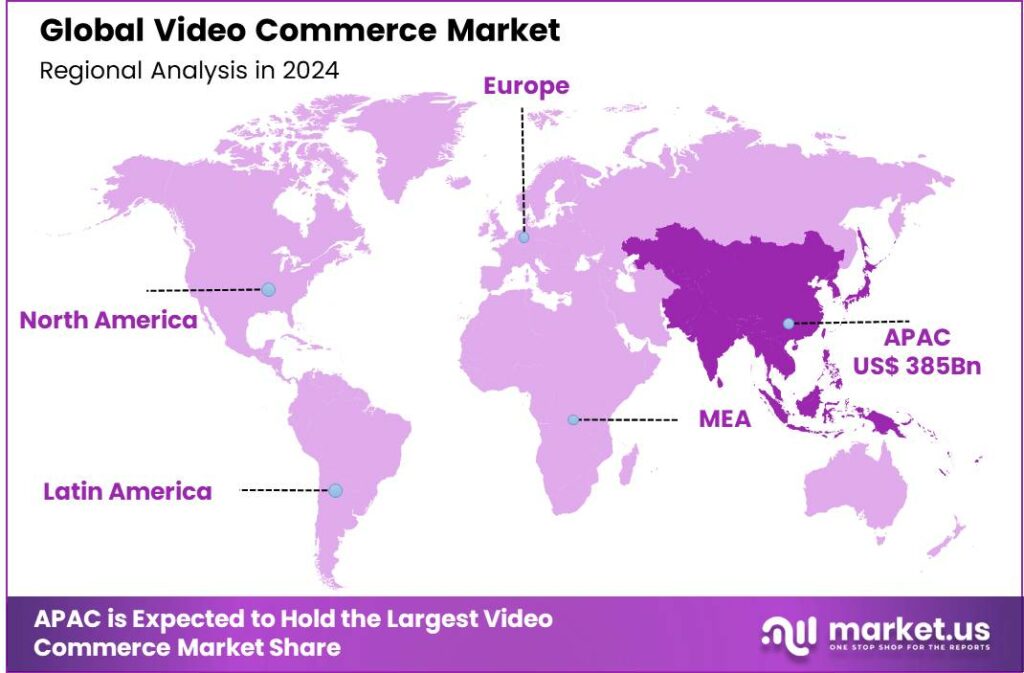
The Global Video Commerce Market size is expected to be worth around USD 14,401.8 Billion By 2034, from USD 917.4 Billion in 2024, growing at a CAGR of 31.70% during the forecast period from 2025 to 2034. In 2024, Asia-Pacific led the global video commerce sector with over 42% market share and revenues of around USD 385 billion. China’s market was valued at approximately USD 154.1 billion, with a projected CAGR of 26.4%.
Video Commerce, or V-commerce, involves the integration of video content into the marketing strategies and platforms of e-commerce businesses. This approach leverages video to showcase products, demonstrate their use, and deliver detailed reviews, aiming to enhance the consumer shopping experience and boost sales
The primary aim of video commerce is to enhance customer engagement, provide valuable product insights, and ultimately drive sales through a more interactive and informative online shopping environment. This method is gaining popularity across platforms like social media, e-commerce sites, and apps, where dynamic video content influences consumer behavior more effectively than static images and descriptions.
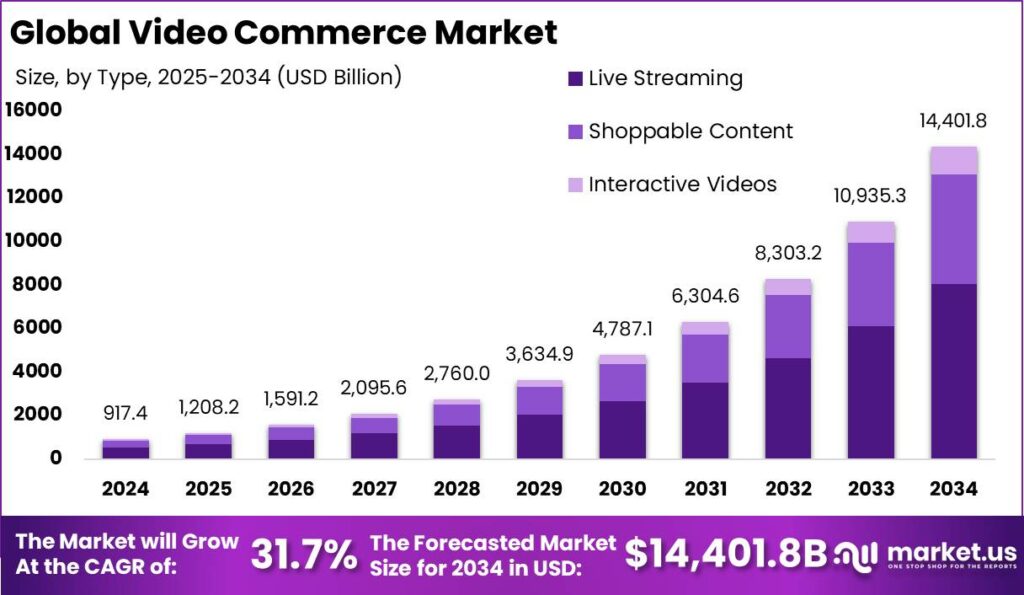
The video commerce market is rapidly expanding as more retailers and brands recognize the effectiveness of video content in attracting and retaining customers. This market comprises various components including platforms that host and stream videos, tools for creating and editing video content, and services that analyze video performance to optimize marketing strategies.
The growth of the video commerce market is driven by key factors such as the growing availability of the internet and mobile devices, which make video content more accessible to a larger audience. The increasing consumer preference for video over text contributes significantly, as videos offer a more engaging and clearer way to understand products.
Current trends in the video commerce sector include the rise of live video shopping, which allows consumers to interact and purchase products during live broadcasts, adding a dynamic and immediate element to online shopping. Personalized video content is also gaining traction, fueled by advanced data analytics and machine learning technologies that tailor content to individual user preferences.
As reported by Storyly, the average internet user in 2024 watches approximately 84 minutes of online video daily, a stark increase from 15 minutes a decade ago. This surge underscores the growing preference for video content, providing a fertile ground for video commerce strategies.
The integration of video into digital marketing is now essential, with data from Demandsage revealing that 91% of marketers have adopted video in their strategies, and 90% affirming that video marketing yields a positive return on investment (ROI). This trend is further evidenced by the substantial 82.5% of global internet traffic accounted for by video streaming, highlighting its dominance in digital content consumption.
The Future of Commerce indicates that the live commerce sector in the U.S. is projected to reach approximately $55 billion by 2026. This model has already demonstrated remarkable success in China, where 19.2% of all e-commerce sales in 2023 were driven by live commerce events, achieving a penetration rate of 42.7% among Chinese shoppers.
For stakeholders and new entrants, the video commerce market offers strategic opportunities to capitalize on emerging technologies and consumer trends. Developing innovative video technology that boosts user engagement can provide significant competitive advantages. Forming partnerships with social media platforms can also be a strategic move, as it allows businesses to leverage built-in audiences and established infrastructures for content delivery.
Key Takeaways
- The Global Video Commerce Market size is projected to reach USD 14,401.8 Billion by 2034, increasing from USD 917.4 Billion in 2024, with a CAGR of 31.70% during the forecast period from 2025 to 2034.
- In 2024, the Live Streaming segment dominated the video commerce market, holding more than 56% of the market share.
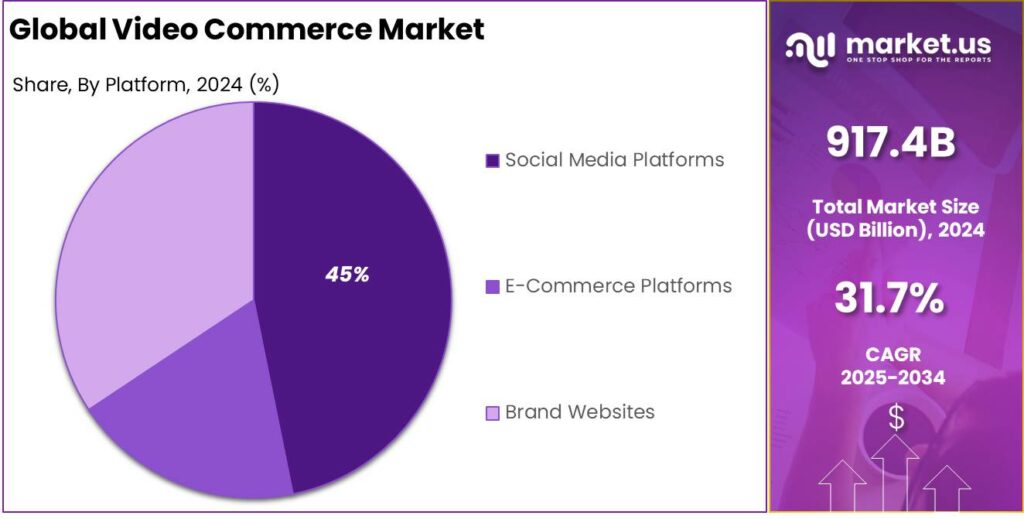
- In 2024, the Social Media Platforms segment captured a dominant share of more than 45% in the video commerce market.
- The Fashion and Apparel segment held the largest share in the video commerce market in 2024, accounting for more than 28% of the market.
- In 2024, Asia-Pacific led the global video commerce sector, holding over 42% of the market share, with revenues approximately reaching USD 385 billion.
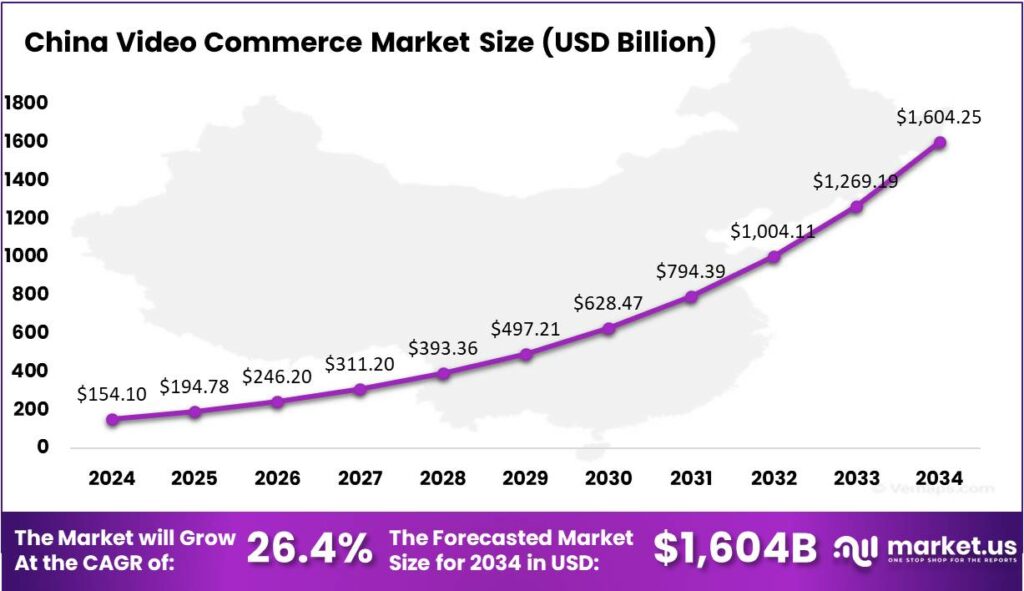
- The video commerce market in China was valued at approximately $154.1 billion in 2024, with a projected CAGR of 26.4%.
Analysts’ Viewpoint
Demand for video commerce solutions is surging across various sectors, particularly in retail, beauty, and electronics, where visual demonstration of products significantly influences consumer behavior. The ability to see products in action, along with the ease of accessing video content on various devices, fuels this demand.
From an investment perspective, the video commerce sector is ripe with opportunities, thanks to ongoing technological advancements and a favorable regulatory environment that supports digital marketing innovations.
Stakeholders are advised to focus on emerging technologies such as artificial intelligence for personalized video content and augmented reality for immersive shopping experiences. These advancements, combined with a steady regulatory framework, create a fertile ground for growth and innovation in the video commerce space.
Impact of AI
Artificial Intelligence (AI) is significantly impacting the realm of video commerce, fundamentally reshaping how businesses interact with consumers and enhancing the overall shopping experience.
- Personalization and Interactive Shopping: One of the standout features of AI in video commerce is the enhancement of personalized shopping experiences. AI technologies, such as machine learning and data analysis, enable the creation of tailored content that addresses the individual preferences and needs of consumers.
- Enhanced Customer Engagement through AI-Driven Content: AI has also revolutionized content creation in video marketing, with platforms like DeepBrain AI and Pictory facilitating the rapid production of marketing videos. These tools help in generating natural-sounding voiceovers and engaging video content that resonates with targeted audiences, thus increasing viewer engagement and satisfaction.
- Dynamic and Real-Time Solutions: Dynamic pricing strategies powered by AI are another critical area of innovation. By analyzing real-time data, AI algorithms enable businesses to adjust prices based on various factors like market demand and competitor pricing.
- Expansion of Social Commerce: The integration of e-commerce into social media platforms has expanded through AI, facilitating seamless purchase processes directly within video content. This integration allows for a smoother transition from viewing to purchasing, encapsulating the convenience that modern consumers crave.
China Video Commerce Market
The China Video Commerce Size was calculated at USD 154.1 Billion in 2024 and is predicted to increase from USD 194.78 Billion in 2025 to approximately USD 1,604.25 Billion by 2034, projected at a CAGR of 26.4% from 2025 to 2034.
China’s video commerce sector has grown significantly due to factors like widespread smartphone adoption, better internet infrastructure, and the rise of social media platforms where influencers promote products through live streams and interactive content. This blend of entertainment and engagement appeals to a younger, tech-savvy audience, enhancing the shopping experience.
Moreover, the integration of advanced technologies like augmented reality (AR) and virtual reality (VR) into these platforms is likely to boost market growth further. These technologies improve user interaction by allowing consumers to virtually try products before purchasing, reducing the uncertainty of online shopping.
In 2024, Asia-Pacific held a dominant market position in the global video commerce sector, capturing more than a 42% share, with revenues reaching approximately USD 385 billion. This substantial market share can be attributed to several pivotal factors that uniquely position Asia-Pacific as a leader in this innovative commerce sector.
The region’s vast and rapidly growing internet user base offers a fertile ground for the digital shopping landscape. Countries such as China, India, and Southeast Asia have seen explosive growth in mobile connectivity and internet penetration. This demographic shift has led to an increase in digital literacy and a more profound acceptance of e-commerce platforms, particularly those offering video-based selling formats.
Asia-Pacific’s technological infrastructure is key to the growth of video commerce, with the region leading in high-speed internet and 5G deployment. These advancements enable seamless high-quality video streaming, allowing retailers offer interactive shopping experiences through live streams, VR try-ons, and AI-driven personalized shopping assistants.
The regions mobile-first culture and tech-savvy consumers make it a hub for video commerce innovation. The region’s competitive mix of local startups and global giants fosters continuous advancements and creative strategies to attract and retain consumers. This dynamic environment is set to keep the market at the forefront, driven by tech adoption and innovative practices.
Type Analysis
In 2024, the Live Streaming segment held a dominant position within the video commerce market, capturing more than a 56% share. This segment benefits from the direct engagement it offers between sellers and buyers, mirroring an in-store experience but through digital channels.
Factors Contributing to the Dominance of Live Streaming Several factors contribute to the leading position of the Live Streaming segment in the video commerce market. The rise of social media platforms that facilitate live streaming, such as Facebook, Instagram, and TikTok, has broadened the reach and acceptance of this format.
Consumer Behavior and Live Streaming Consumer behavior has also played a pivotal role in the prominence of live streaming. Modern consumers, particularly millennials and Gen Z, prefer engaging, real-time content that offers an authentic experience. Live streaming meets these expectations by delivering unedited and interactive content, which is often perceived as more genuine compared to pre-recorded videos.
Technological advancements, including improved mobile tech, faster internet, and better streaming technologies, are driving growth in the live streaming segment. As these technologies evolve, live streaming is expected to become more immersive and interactive, with VR and AR enhancing the virtual shopping experience.
Platform Analysis
In 2024, the Social Media Platforms segment held a dominant position in the video commerce market, capturing more than a 45% share. This segment’s leadership can be attributed to several key factors that uniquely position social media as a prime channel for video commerce.
Social media platforms attract users by enabling direct interactions between brands and consumers through features like comments, likes, and shares. This interaction increases customer engagement and encourages impulse purchases via video content. Additionally, platforms have integrated advanced features such as “shop now” buttons and video links, directly linking users to purchasing options and boosting sales.
Furthermore, the integration of targeted advertising technologies on social media platforms enables brands to deliver personalized video content to users based on their browsing and purchase history. This tailored approach significantly increases the effectiveness of marketing campaigns and promotes higher conversion rates from video views to sales.
Social media influencers are key to the success of the Social Media Platforms segment. By showcasing products in an authentic and relatable way, influencers leverage their trust and authority to drive purchases. This trend aligns with the growing demand for authenticity and the shift towards personalized, direct marketing.
End-User Industry Analysis
In 2024, the Fashion and Apparel segment held a dominant market position in the video commerce sector, capturing more than a 28% share. This leadership is primarily due to the visual and dynamic nature of fashion retailing, which aligns perfectly with the video commerce format.
Fashion and apparel products benefit significantly from video commerce, as it allows consumers to see clothing in motion and understand its fit and style on various body types—something traditional e-commerce can’t fully provide. By offering live interactions and real-time fashion shows, video commerce bridges this gap, boosting consumer confidence and encouraging purchases.
Fashion influencers and designers play a key role in driving sales on video commerce platforms. With large social media followings, they showcase trends through video content, offering endorsements and styling tips that build trust and create a compelling shopping experience, attracting and retaining customers.
Moreover, the immediacy and urgency that live video commerce adds to fashion shopping stimulate quick purchasing actions among consumers. Flash sales, limited-time offers, and exclusive releases are strategically integrated into video streams, creating a sense of scarcity and prompting immediate purchases.
Key Market Segments
By Type
- Live Streaming
- Shoppable Content
- Interactive Videos
By Platform
- Social Media Platforms
- E-Commerce Platforms
- Brand Websites
By End-User Industry
- Fashion and Apparel
- Beauty and Personal Care
- Electronics and Gadgets
- Home and Furniture
- Food and Beverage
- Others (Automotive, Healthcare, etc.)
Key Regions and Countries
- North America
- US
- Canada
- Europe
- Germany
- France
- The UK
- Spain
- Italy
- Rest of Europe
- Asia Pacific
- China
- Japan
- South Korea
- India
- Australia
- Singapore
- Rest of Asia Pacific
- Latin America
- Brazil
- Mexico
- Rest of Latin America
- Middle East & Africa
- South Africa
- Saudi Arabia
- UAE
- Rest of MEA
Driver
Integration of Video Content in E-commerce Platforms
The integration of video content into e-commerce platforms has emerged as a pivotal driver in the evolution of online retail. This strategy enhances consumer engagement by providing dynamic and interactive experiences that static images and text descriptions often fail to deliver.
Shoppable videos, live product demonstrations, and user-generated content allow consumers to visualize products in real-world scenarios, thereby reducing uncertainties associated with online purchases. This surge underscores the growing consumer preference for video content, which e-commerce platforms are leveraging to drive sales. By seamlessly integrating video content, retailers can provide richer product narratives, foster trust, and ultimately enhance conversion rates.
Restraint
High Implementation Costs
Despite its benefits, the adoption of video commerce is often hindered by substantial implementation costs. Developing high-quality video content requires investment in professional equipment, skilled personnel, and post-production processes. Additionally, integrating video functionalities into existing e-commerce platforms necessitates technological upgrades, which can be both complex and costly.
Implementing a video processing platform can be costly, with expenses such as licensing fees, hardware infrastructure, software customization, and ongoing maintenance. These financial hurdles pose significant challenges for small to medium-sized enterprises (SMEs), restricting their ability to compete with larger companies that have bigger marketing budgets.
Opportunity
Expansion of Social Media Platforms into E-commerce
The convergence of social media and e-commerce presents a significant opportunity for the growth of video commerce. Platforms such as TikTok and Instagram have integrated shopping features, enabling users to purchase products directly through video content. This fusion allows brands to capitalize on the vast user bases of these platforms and engage consumers through targeted video advertisements and influencer collaborations.
Notably, TikTok Shop has emerged as a major player, selling a beauty product every two seconds, highlighting the platform’s potential in driving e-commerce sales. By leveraging the interactive nature of social media videos, brands can create immersive shopping experiences that resonate with consumers, thereby driving sales and fostering brand loyalty.
Challenge
Consumer Resistance to Video Commerce
While video commerce offers numerous advantages, it also faces challenges related to consumer resistance. Some consumers may find video advertisements intrusive or may be reluctant to engage with video content due to data consumption concerns or personal preferences for traditional shopping methods.
This resistance can hinder the effectiveness of video commerce strategies and limit their adoption. To overcome this challenge, brands need to focus on creating high-quality, relevant, and non-intrusive video content that adds value to the consumer experience rather than detracting from it.
Not all consumers have access to high-speed internet or the latest devices that can stream video content smoothly. This can create a barrier for those in areas with poor connectivity or those using older technology, potentially limiting the reach of video commerce to a specific demographic.
Emerging Trends
Video commerce has evolved significantly, integrating advanced technologies and adapting to changing consumer behaviors. A notable trend is the rise of shoppable videos, which allow viewers to purchase products directly within the video content. This seamless integration of entertainment and shopping enhances user engagement and simplifies the purchasing process.
The adoption of artificial intelligence (AI) in video commerce is another significant development. AI-driven personalization tailors video content to individual preferences, enhancing user experience and increasing the likelihood of conversion. AI video editing tools help businesses create high-quality videos quickly and efficiently.
Short-form videos, popular on various platforms , are effective for quick brand exposure due to their engaging, shareable nature. With attention spans shrinking, these videos capture interest rapidly. Live streaming, another key trend, enhances video commerce by enabling real-time brand-consumer interaction, boosting engagement and conversions through authenticity and immediacy.
Business Benefits
- Enhanced Customer Engagement: Videos naturally capture attention and keep viewers engaged longer than text or images. When customers watch a video, they are more likely to stay on your site, explore more products, and interact with your content.
- Improved Product Visualization: Integrating video content allows customers to see products in action, providing a more comprehensive understanding of their features, functionalities, and real-life applications of your products and services.
- Email Marketing Effectiveness: Including videos in email campaigns can enhance click-through rates by up to 300%, making them a powerful tool for driving traffic and conversions according to WebFX article.
- Enhanced Customer Experience: Video commerce improves the customer’s journey. With video commerce, most of the buyer’s questions about the product are answered.
- Building Trust with Audiences: Trust is at the heart of any successful brand-customer relationship, and video commerce offers an authentic means to help you build it. Videos showcase your products authentically, helping customers see their true value and use.
Key Player Analysis
Alibaba Group, a global e-commerce giant, has made significant strides in video commerce through its platform, Taobao Live. By leveraging live streaming and video content, Alibaba enables merchants to engage with consumers in real time, offering personalized shopping experiences. Taobao Live is one of the most successful video commerce platforms, especially in China, with influencers and brands hosting live sales events.
Shopify Inc. has revolutionized the e-commerce world by offering businesses the tools to create their own online stores. In the video commerce space, Shopify’s approach focuses on enabling merchants to integrate live streaming features into their online stores. With its seamless integration with platforms like YouTube and Instagram, Shopify allows sellers to connect with customers through engaging video content.
Amazon.com, Inc., one of the largest e-commerce platforms in the world, has embraced video commerce through Amazon Live. Amazon Live allows brands and influencers to host live streams, showcasing products and interacting with customers to drive real-time purchases. With its large customer base, advanced technology, and efficient logistics, Amazon offers a seamless shopping experience.
Top Key Players in the Market
- Alibaba Group
- Shopify Inc.
- Amazon.com, Inc.
- YouTube
- Wayfair Inc.
- Meta
- TikTok
- Bambuser
- Channelize.io
- Firework
- LiSA
- BuyWith
- ShopShops
- LiveScale
- TalkShopLive
- Other Key Players
Top Opportunities Awaiting for Players
The video commerce market is evolving rapidly, presenting numerous opportunities for businesses to capitalize on.
- Leveraging Short-Form Video Content: The enduring popularity of short videos, as seen on platforms like TikTok and Instagram Reels, continues to offer lucrative opportunities. These formats are highly engaging and can significantly increase visibility and conversions. Businesses are encouraged to harness these platforms for product demonstrations and engaging content that drives direct sales.
- Incorporating AI and Advanced Analytics: Artificial intelligence (AI) is set to revolutionize video commerce by enhancing personalization and streamlining content creation. AI-driven analytics can also provide deeper insights into consumer behavior, enabling businesses to tailor their marketing strategies more effectively. This integration can lead to more dynamic and responsive video commerce experiences.
- Expanding into Social Commerce: Utilizing social media platforms to facilitate e-commerce transactions continues to be a significant trend. By integrating shopping features directly into social media platforms, businesses can tap into a large audience base, making the purchasing process seamless and accessible directly from these platforms.
- Adopting Omnichannel Strategies: Creating a seamless customer experience across multiple platforms and devices is crucial. Businesses should strive to integrate their video commerce strategies with physical and online channels to provide a unified shopping experience. This approach not only enhances customer satisfaction but also boosts loyalty and retention rates.
- Exploring Emerging Markets and Technologies: As the global landscape of e-commerce grows, venturing into new markets like South Africa, where e-commerce is booming, presents a valuable growth opportunity. Emerging technologies like virtual reality (VR) and augmented reality (AR) are transforming shopping experiences, allowing businesses to innovate and stand out from competitors.
Recent Developments
- In March 2023, Flipkart introduced ‘Flippi,’ an AI-powered shopping assistant, and ‘Vibes,’ integrating video content with online shopping to simulate a ‘window-shopping’ experience. These initiatives aim to enhance user engagement and decision-making.
- In October 2024, Connatix and JW Player merged to create a comprehensive video technology and monetization platform for broadcasters, publishers, and advertisers. This merger combined Connatix’s advertising and content technology with JW Player’s streaming capabilities.
- In December 2024, Firework launched a beta version of a generative AI tool for live shopping, in partnership with The Fresh Market. This tool enhances customer engagement by providing personalized, real-time interactivity during live shopping events.









