


Report Overview
The Global Shampoo Bar Market size is expected to be worth around USD 19.7 Billion by 2034, from USD 11.4 Billion in 2024, growing at a CAGR of 5.6% during the forecast period from 2025 to 2034.
A shampoo bar is a solid, compact bar formulated to cleanse the hair, much like liquid shampoo but without the plastic packaging. It is environmentally friendly, often made with natural ingredients, and designed to be cost-effective and travel-friendly. Shampoo bars are recognized for their low waste and natural composition.
The shampoo bar market involves the development, production, and marketing of solid shampoo products. It caters to eco-conscious consumers looking for sustainable personal care options. The market is driven by trends in sustainability, consumer awareness of environmental issues, and the appeal of chemical-free hair care products.
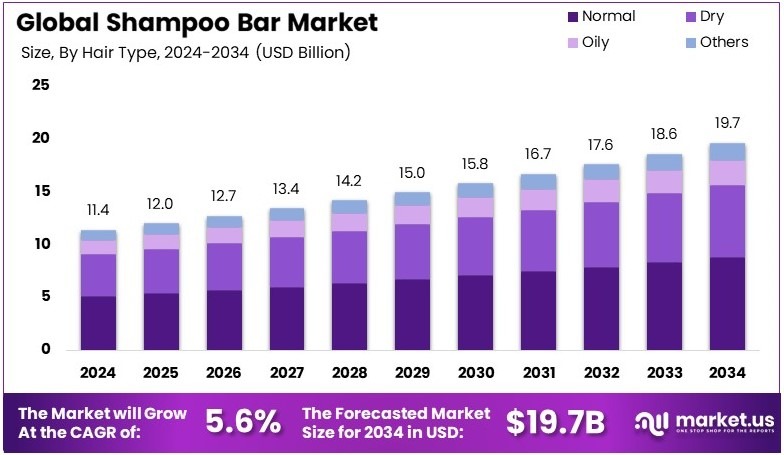
The shampoo bar market is experiencing significant growth, primarily driven by a rising awareness of environmental sustainability among consumers. According to a recent YouGov survey, about 27% of Americans, categorized as ‘Planet Protectors’, are increasingly inclined to purchase sustainable products, including shampoo bars. This consumer segment is willing to invest more in products that promise to minimize environmental impact, aligning with broader eco-conscious trends.
The interest in sustainable products is particularly pronounced among younger consumers. A study featured by The Times reveals that nearly half of Gen-Z travelers are concerned about the environmental impact of their vacations, compared to less than a third of those over 60. This generational shift is crucial for market trends, as younger consumers are more likely to seek out and use eco-friendly products like shampoo bars in their daily routines.
Furthermore, the demand for clean and safe organic personal care products is accelerating market growth. The Environmental Working Group (EWG) reported that 75% of Americans believe toxic chemicals in personal care products pose a severe threat to health. This concern is even greater among women under 50, where it rises to 84%. These statistics highlight a significant market opportunity for shampoo bars, which are often marketed as safer and more natural alternatives to traditional liquid shampoos.
In addition to health concerns, shopping preferences also play a role in shaping the market. EWG’s findings suggest that 71% of household purchasers prefer to buy personal care products in physical stores rather than online. This preference supports retail strategies that can leverage in-store experiences to educate consumers and promote the benefits of shampoo bars, thereby driving sales.
The competitive landscape of the shampoo bar market is becoming more intense as more companies enter the space with innovative offerings. However, the growing consumer demand for products that align with sustainable and health-conscious lifestyles continues to drive market expansion. Companies that can effectively communicate the environmental and health benefits of their products are likely to capture and retain a significant share of this burgeoning market.
Key Takeaways
- Shampoo Bar Market was valued at USD 11.4 Billion in 2024 and is projected to reach USD 19.7 Billion by 2034, growing at a 5.6% CAGR.
- In 2024, Normal Hair Shampoo Bars led the hair type segment with 44.7%, driven by their suitability for a broad consumer base.
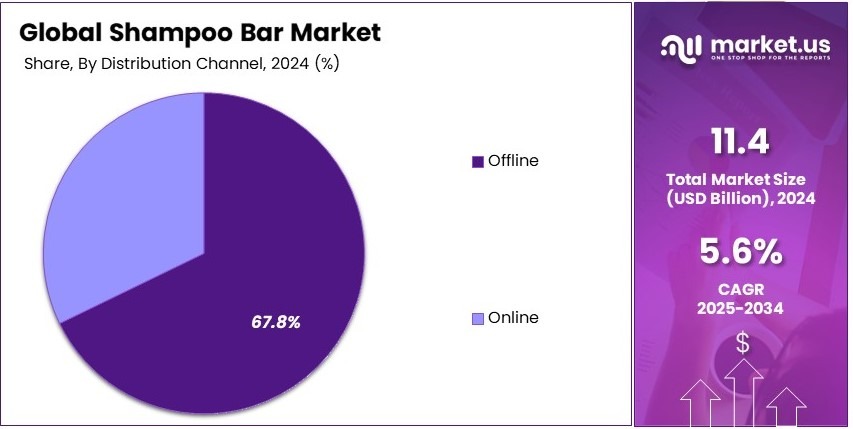
- In 2024, Offline Distribution Channels accounted for 67.8%, reflecting strong consumer preference for in-store purchases.
- In 2024, Conventional Shampoo Bars dominated the ingredients segment with 53.6%, due to their affordability and widespread availability.
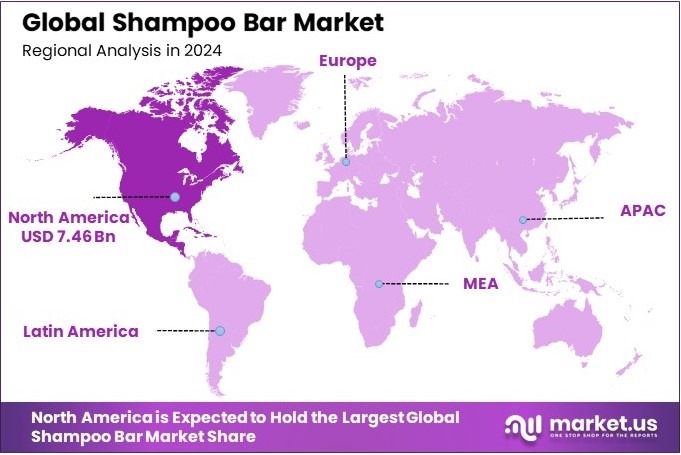
- In 2024, North America held the largest market share at 65.4%, valued at USD 7.46 Billion, supported by rising consumer awareness and sustainability trends.
Hair Type Analysis
Normal hair dominates with 44.7% due to its broad consumer base and general product applicability.
In the shampoo bar market, hair type segmentation includes Normal, Dry, Oily, and Others. Normal hair holds the largest share at 44.7% in 2024, primarily due to the universal nature of products formulated for normal hair, which are suitable for a wide range of consumers. This sub-segment benefits from the least specialized needs, allowing for mass appeal and easier marketing.
Dry hair requires specific formulations to add moisture and prevent scalp issues. Products for this sub-segment are crucial for addressing specific consumer problems, contributing to the diversity and depth of the market.
Oily hair shampoo bars are formulated to reduce excess sebum without stripping hair of natural oils, meeting the needs of a significant consumer group with specific hair care challenges.
The Others category includes specialized products for hair types such as curly, color-treated, or thinning hair, expanding the market’s reach and catering to niche preferences.
Distribution Channel Analysis
Offline channels dominate with 67.8% due to strong consumer preference for physical product evaluation.
Shampoo bars are primarily sold through Online and Offline distribution channels. Offline sales lead with a 67.8% market share in 2024. This dominance is driven by consumer preference for physically assessing product quality, scent, and texture, which are important purchasing factors for personal care items. Traditional retail outlets, such as supermarkets and beauty stores, provide immediate product access and the advantage of personal assistance.
Online channels, though not dominant, are growing rapidly due to the convenience of home shopping and the increasing shift towards e-commerce. They play a critical role in expanding market reach and are essential for tapping into the tech-savvy consumer segment.
Ingredients Analysis
Conventional ingredients dominate with 53.6% due to established manufacturing processes and cost-effectiveness.
In terms of ingredients, the shampoo bar market includes Natural, Organic, and Conventional categories. Conventional ingredients hold the majority share at 53.6% in 2024. This dominance is attributed to their widespread availability and lower cost compared to organic or natural alternatives. Conventional shampoo bars often feature robust formulations that are both effective in performance and attractive in price, making them accessible to a broad consumer base.
Natural ingredients are increasingly popular due to rising consumer awareness about health and environmental impacts. These products cater to an eco-conscious demographic looking for sustainable and chemical-free options.
Organic shampoo bars, certified to be free of synthetic additives, represent a premium segment driven by consumers willing to invest in high-quality, environmentally friendly products. Although smaller in market share, this segment is growing due to increasing environmental concerns and health consciousness.
Key Market Segments
By Hair Type
- Normal
- Dry
- Oily
- Others
By Distribution Channel
- Online
- Offline
By Ingredients
- Natural
- Organic
- Conventional
Driving Factors
Eco-Conscious Choices and Natural Trends Drive Market Growth
The growing demand for zero-waste personal care products is significantly boosting the shampoo bar market. As more consumers aim to reduce plastic waste, solid shampoo bars offer an eco-friendly alternative to bottled shampoos. These bars often come with minimal or recyclable packaging, making them attractive to environmentally aware buyers.
In parallel, rising interest in vegan and cruelty-free products is shaping consumer behavior. Shampoo bars made without animal testing or animal-derived ingredients are gaining traction among ethical shoppers. Additionally, the broader shift toward natural and organic cosmetics is creating space for shampoo bars made with plant-based oils, herbs, and essential oils.
Environmental awareness has become a powerful influence, especially among younger consumers. With growing concern over ocean pollution and landfill waste, shampoo bars are seen as part of a sustainable lifestyle. For example, in cities like San Francisco and Berlin, zero-waste shops are now mainstream and feature a wide variety of these products.
Restraining Factors
Performance and Pricing Gaps Restrain Market Growth
Despite growing interest, several factors continue to limit widespread adoption of shampoo bars. One key issue is performance. Compared to traditional liquid shampoos, many bars produce less foam and lather. This can affect user satisfaction, especially among first-time users who expect the same cleansing experience.
Another challenge is the shorter shelf life of shampoo bars. Since many of these products are made with natural, preservative-free ingredients, they tend to expire sooner than conventional options. This limits their appeal in regions where long-term storage is a concern.
Consistency across brands is also a problem. Because shampoo bars are often handcrafted or vary by formula, users may get different results from different brands. This makes it difficult for customers to stick to one product or develop brand loyalty.
Finally, the higher upfront cost can deter budget-conscious shoppers. Although shampoo bars often last longer, their initial price may appear less affordable. For this reason, mass adoption remains uneven, especially in cost-sensitive markets. These barriers suggest that improving performance, standardizing quality, and addressing price perception are key steps toward broader acceptance.
Growth Opportunities
Specialized Formulas and Green Packaging Provide Opportunities
The development of hair-type specific formulations is opening new growth opportunities in the shampoo bar market. Brands are now crafting bars tailored for curly, oily, dry, or color-treated hair, offering better results and higher satisfaction. This customization makes the product more appealing to a wider audience, including salon clients and beauty-conscious users.
Premium salons and spas also present a valuable sales channel. Shampoo bars made with luxurious ingredients or custom scents can serve as upscale alternatives to traditional products. In cities like London and Tokyo, eco-luxury salons are beginning to feature solid shampoo offerings on their shelves.
Co-branding with eco-conscious lifestyle brands is another strategy. When shampoo bar makers collaborate with sustainable fashion or wellness companies, they tap into aligned customer bases and enhance brand credibility.
Lastly, there is room for growth in sustainable packaging innovation. Biodegradable wrappers, reusable tins, and refill models can improve customer experience and reinforce eco-friendly messaging. Together, these trends highlight a path for brands to scale, differentiate, and lead in the growing segment of conscious consumers.
Emerging Trends
Plastic-Free Appeal and Travel Use Are Latest Trending Factor
One of the strongest trends in the shampoo bar market is the rise of waterless beauty products. Shampoo bars fit perfectly into this category, offering convenience while reducing water waste. As climate awareness grows, products that minimize water use are gaining popularity, especially in regions facing water scarcity.
Another trending factor is the growing appeal of travel-friendly beauty solutions. Because they are solid and compact, shampoo bars are ideal for travelers who want to avoid liquid restrictions on flights or save space in luggage. Backpackers and digital nomads, in particular, are driving this demand.
Plastic-free retail displays are also becoming more common. Stores are showcasing unpackaged shampoo bars or displaying them in bulk bins, encouraging shoppers to buy only what they need. This not only supports sustainability goals but also builds brand trust.
Additionally, the rise of DIY and artisan shampoo bar communities is creating niche buzz. Small businesses and individual creators on platforms like Etsy are producing unique, handcrafted bars with natural ingredients. These grassroots trends reflect growing consumer interest in small-batch, personalized, and eco-friendly haircare, pushing the market in fresh and creative directions.
Regional Analysis
North America Dominates with 65.4% Market Share
North America leads the Shampoo Bar Market with a commanding 65.4% share, amounting to USD 7.46 billion. This region’s dominance is driven by strong consumer interest in sustainable and eco-friendly products.
Key factors include high environmental awareness among consumers, robust e-commerce platforms, and extensive market penetration by brands offering natural and organic personal care products. The region’s affluent consumer base is willing to pay a premium for products that promise sustainability and health benefits, which boosts sales of shampoo bars.
The market dynamics are further influenced by North America’s trend towards zero-waste lifestyles, with many consumers actively seeking out alternatives to traditional liquid shampoos that often come in plastic packaging. Additionally, innovative product formulations and scents tailored to North American preferences enhance market growth.
Regional Mentions:
- Europe: Europe holds a significant market share in the Shampoo Bar Market, driven by strong consumer preferences for sustainable and natural products. The region’s stringent environmental regulations support the growth of eco-friendly personal care products.
- Asia Pacific: Asia Pacific is witnessing rapid growth in the Shampoo Bar Market due to increasing environmental awareness and the influence of Western lifestyle trends. Urban consumers in this region are rapidly adopting natural and organic personal care products.
- Middle East & Africa: The Middle East and Africa are slowly adopting shampoo bars, influenced by global sustainability trends and increasing awareness of plastic waste issues. The market growth in this region is modest but shows potential for expansion.
- Latin America: Latin America’s Shampoo Bar Market is growing, supported by increasing consumer awareness about environmental issues and the global trend towards natural personal care products. This region is exploring more sustainable consumer goods options, driving gradual market growth.
Key Regions and Countries Covered in the Report
- North America
- US
- Canada
- Europe
- Germany
- France
- The UK
- Spain
- Italy
- Rest of Europe
- Asia Pacific
- China
- Japan
- South Korea
- India
- Australia
- Rest of APAC
- Latin America
- Brazil
- Mexico
- Rest of Latin America
- Middle East & Africa
- South Africa
- Saudi Arabia
- UAE
- Rest of MEA
Competitive Landscape
In the increasingly popular shampoo bar market, Lush, L’Oréal S.A., Procter & Gamble, and Ethique Limited are the dominant players, each bringing unique strengths to the sector and driving its growth through innovative and sustainable products.
Lush has pioneered the shampoo bar concept, gaining a loyal following with its eco-friendly and ethical approach. Their bars are known for rich lathering capabilities and scents derived from natural ingredients, setting the standard in the market for environmental sustainability and product quality.
L’Oréal S.A. brings its extensive research capabilities and beauty industry expertise to the shampoo bar segment, offering high-quality, professionally developed products that cater to a variety of hair types and needs. Their commitment to sustainability is evident in their solid shampoo products, which aim to reduce plastic waste and water usage.
Procter & Gamble entered the shampoo bar market with a focus on integrating its vast consumer insights and technological expertise to produce innovative hair care solutions. Their bars are designed to meet the convenience and performance expectations of modern consumers while addressing environmental concerns.
Ethique Limited stands out for its commitment to zero-waste products and has made significant strides in the market with its biodegradable packaging and highly concentrated bar formulas. Ethique’s products appeal to environmentally conscious consumers looking for effective, sustainable beauty options.
These leading companies not only contribute to the market through their innovative products but also influence broader consumer habits towards sustainability and environmental responsibility. Their efforts in product development, coupled with strong marketing strategies, have helped popularize shampoo bars as viable alternatives to traditional liquid shampoos, paving the way for continued growth in this sector.
Major Companies in the Market
- Lush
- L’Oréal S.A.
- Procter & Gamble
- Ethique Limited
- L’OCCITANE INTERNATIONAL SA
- grüum
- HiBAR
- Davines S.p.A.
- J.R.LIGGETT LTD.
- DeBelle Lifestyle Pvt. Ltd.
Recent Developments
- Sodalis Group: In October 2024, Sodalis Group, a European-based beauty and personal care platform, acquired HRB Brands, a company known for its hair care and skin cleansing products, including shampoo bars. This acquisition aims to expand Sodalis Group’s presence in the North American market.
- Gemspring Capital: In July 2023, Gemspring Capital Management, LLC acquired Bradford Soap International, Inc., a leading developer and manufacturer of beauty and personal care products, including shampoo bars.









