


Report Overview
The Global Veterinary Surgical Instruments Market size is expected to be worth around US$ 2804.4 Million by 2034, from US$ 1334.1 Million in 2024, growing at a CAGR of 6.7% during the forecast period from 2025 to 2034. North America held a dominant market position, capturing more than a 35.3% share and holds US$ 470.9 Million market value for the year.
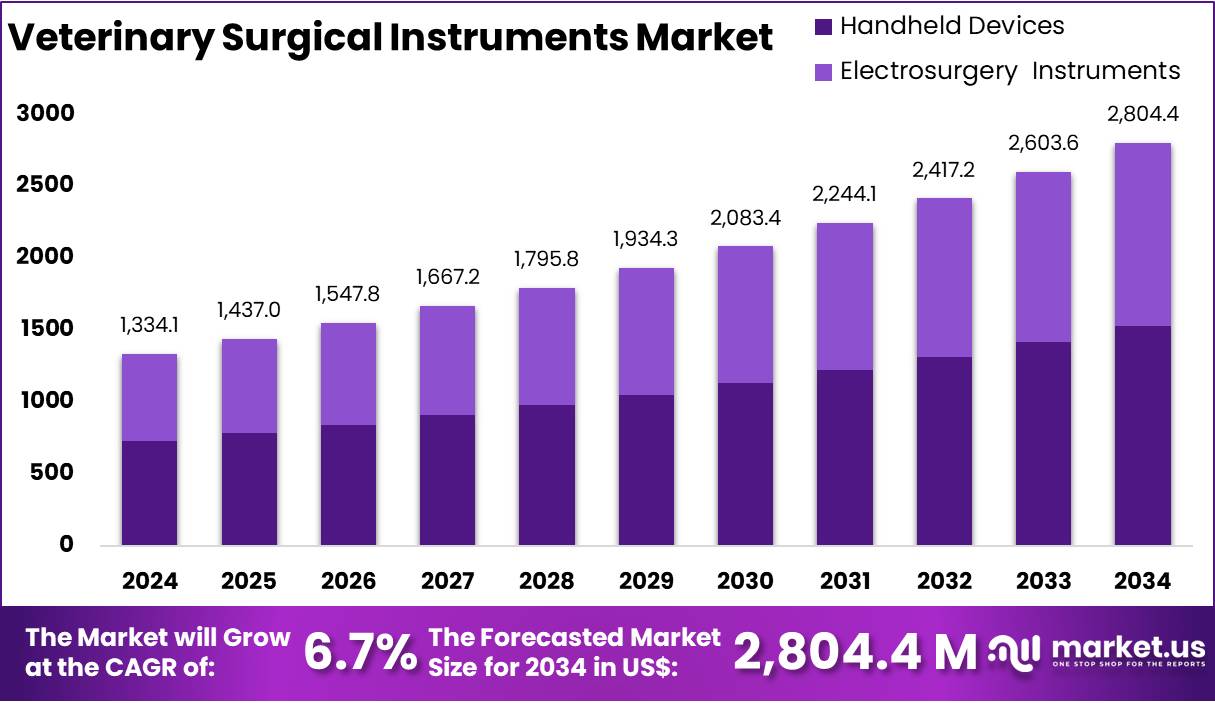
The increasing frequency of pet surgeries in developing countries is anticipated to drive significant market growth during the forecast period. Common animal surgeries such as dental procedures, spaying or neutering, hip dysplasia, cataract surgeries, and wound repairs are contributing to the rising demand for veterinary surgical instruments.
Additionally, the expansion of veterinary surgical centers is playing a crucial role in this growth. For example, in July 2024, the VSSOC Surgery Center unveiled a 10,000 square-foot facility in the U.S., designed to provide cutting-edge surgical care. The center offers a wide range of procedures, including cardiothoracic, orthopedic, and oncology surgeries. It is equipped with advanced facilities such as five surgical suites, a 128-slice CT scanner, and dedicated recovery areas for cats and dogs. The rise in specialized surgical centers, coupled with increasing pet ownership and the demand for advanced procedures, will continue to fuel the growth of the veterinary surgical instruments market in the coming years.
The growing number of veterinary practitioners and technological advancements in veterinary surgical instruments are key drivers of market growth. As of December 2023, the American Veterinary Medical Association (AVMA) reported that there were 127,131 veterinary practitioners in the U.S., up from 124,069 in 2022. This increase reflects a rise in the number of veterinary professionals, contributing to a greater demand for surgical instruments as more practitioners offer advanced care. Additionally, the expansion of veterinary hospitals and clinics further supports market growth, as these facilities require high-quality surgical tools to perform complex procedures.
The trend of pet humanization, where pets are increasingly considered family members, coupled with rising expenditures on pet healthcare, has led to a significant increase in pet spending. Pet owners are now more inclined to invest in surgeries that improve their pets’ health and quality of life. This shift has resulted in a surge in demand for advanced veterinary surgical instruments, as owners seek the best possible care for their pets.
A significant factor fueling this trend is the growing adoption of pet insurance, such as MetLife Pet Insurance, which alleviates the financial burden associated with veterinary procedures. Pet insurance policies often cover a wide range of surgeries, including orthopedic treatments for conditions like hip and elbow dysplasia, fractures, ligament injuries, patella luxation, and osteoarthritis, provided the conditions are not pre-existing or excluded by the policy terms. This financial safety net encourages pet owners to opt for necessary surgical interventions, further driving demand for sophisticated veterinary surgical instruments.









