


Report Overview
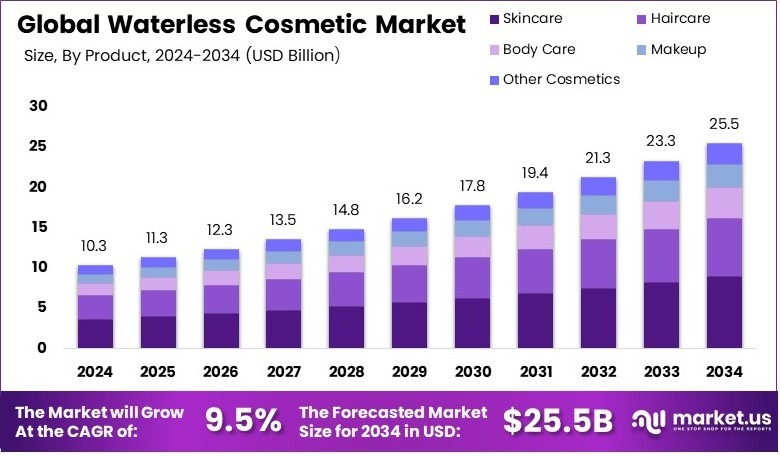
The Global Waterless Cosmetic Market size is expected to be worth around USD 25.5 Billion by 2034, from USD 10.3 Billion in 2024, growing at a CAGR of 9.5% during the forecast period from 2025 to 2034.
Waterless cosmetics are personal‑care products formulated without added water, relying on concentrated oils, butters, waxes, or powders. Removing water increases ingredient potency, reduces preservatives, and shrinks packaging. Formats include solid shampoos, balms, sticks, and tablets. The concept appeals to eco‑conscious consumers seeking sustainable, travel‑friendly beauty solutions and lower transport emissions.
The waterless cosmetics market encompasses brands developing and distributing anhydrous beauty products across skincare, haircare, and toiletries. Market expansion is propelled by sustainability regulations, plastic reduction goals, and rising shipping costs.
Waterless cosmetics are gaining popularity as consumers look for sustainable solutions. These products eliminate water, focusing on concentrated formulas. As water scarcity becomes a global issue, brands are innovating. In the United States, industrial water use reaches over 18.2 billion gallons daily. Consequently, water-efficient cosmetics are seen as eco-friendly and responsible choices.
The market for waterless cosmetics is expanding steadily. Growing awareness of environmental issues is a key factor. Consumers are actively seeking products that minimize water usage. In addition, brands are investing in solid, powder, and oil-based formats. This reduces water content and prolongs product life. As a result, interest in these products is rising.
According to a 2023 CleanHub survey, 63% of consumers prioritize clean beauty when choosing cosmetics. This trend aligns with the shift toward safer, non-toxic ingredients. Waterless formulas often need fewer preservatives, appealing to health-conscious buyers. Consequently, brands that emphasize safety and sustainability are well-positioned for growth.
The waterless cosmetics market remains unsaturated. Although more brands are entering, the niche still offers room for growth. In particular, companies that innovate with water-free technologies can gain a competitive edge. As awareness spreads, the potential for market penetration increases. Early movers can capture loyal customers by promoting eco-friendly values.
Competition in the waterless cosmetics market is growing but manageable. Established brands are introducing water-efficient products, while smaller companies focus on niche formulations. For example, some brands highlight the reduced environmental impact of solid shampoo bars. As consumers become more selective, product transparency will be crucial. Consequently, brands that clearly communicate benefits will stand out.
The shift towards waterless cosmetics has a global impact. Consumers worldwide are becoming eco-conscious. Industrial activities and energy production together account for about 19% of freshwater withdrawals globally. Therefore, reducing water in cosmetics production aligns with sustainable practices. As more consumers value environmental responsibility, demand for waterless options will likely increase.
Key Takeaways
- The Waterless Cosmetic Market was valued at USD 10.3 billion in 2024 and is expected to reach USD 25.5 billion by 2034, with a CAGR of 9.5%.
- In 2024, Skincare dominates the product type segment with 43.7%, owing to rising preference for sustainable and concentrated formulations.
- In 2024, Creams & Lotions lead the formulation segment with 38.4%, due to ease of application and moisturization benefits.
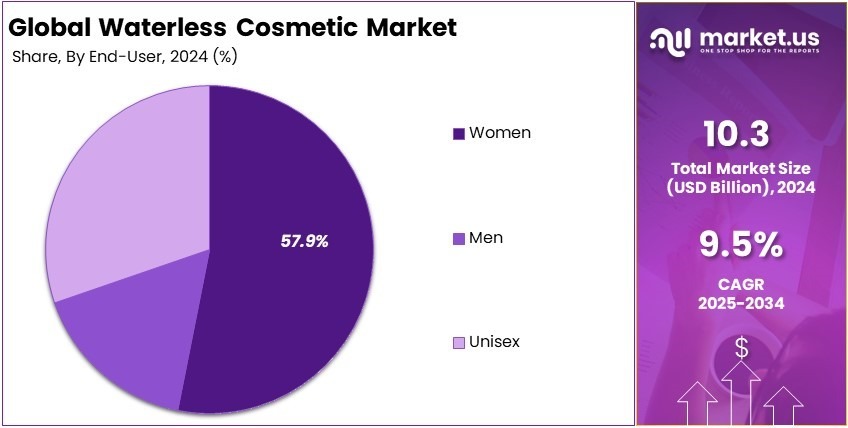
- In 2024, Women represent the largest end-user group with 57.9%, driven by higher spending on eco-friendly personal care products.
- In 2024, Online Retail holds the largest share at 68.1%, fueled by eco-conscious branding and direct-to-consumer strategies.
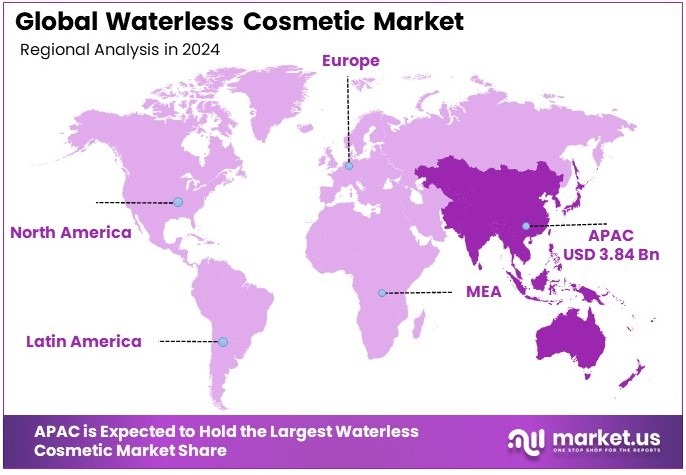
- In 2024, Asia Pacific dominates with 37.3% + USD 3.84 billion, supported by sustainability awareness and innovation in clean beauty.
Product Type Analysis
Skincare sub-segment dominates with 43.7% due to its effectiveness and eco-conscious appeal.
In the Waterless Cosmetic Market, the skincare segment emerges as the most dominant, holding a 43.7% market share. This prominence is driven by the increasing consumer demand for sustainable and water-conserving beauty products.
Skincare items such as moisturizers, serums, and conditioners that do not require water in their formulation are not only seen as innovative but also align with the growing eco-friendly initiatives that appeal to environmentally conscious consumers.
Haircare and body care are other significant sub-segments, contributing 22.3% and 18.5% respectively to the market. Haircare products like dry shampoos and waterless conditioners are gaining popularity for their convenience and sustainability.
Body care items, including waterless soaps and cleansers, support hygiene without compromising on environmental values. Makeup and other cosmetics, although smaller in share at 9.8% and 5.7% respectively, are exploring waterless options which cater to niche but growing segments interested in full-spectrum sustainability.
Formulation Analysis
Creams & Lotions sub-segment dominates with 38.4% due to their versatility and deep moisturizing properties.
Waterless creams and lotions lead the formulations segment of the Waterless Cosmetic Market with a 38.4% share, favored for their rich texture and potent effectiveness in delivering hydration and nutrients without water content. These products are particularly popular as they offer a convenient and potent application experience, which is essential for consumers seeking efficient skincare routines that do not compromise on results.
Balms and butters, holding a 24.6% share, are appreciated for their intensive care, especially in treating dry and chapped skin. Powders, including dry shampoos and body powders, make up 18.3% of the market, valued for their ease of use and mess-free application.
Masks and scrubs account for 13.2%, offering targeted treatment options for deep cleansing and exfoliation. Other waterless formulations cover the remaining 5.5%, including innovative products like waterless sunscreens and perfumes, expanding consumer choices in the segment.
End-User Analysis
Women sub-segment dominates with 57.9% due to targeted marketing and widespread product availability.
Women are the primary consumers in the Waterless Cosmetic Market, holding a dominant share of 57.9%. This segment’s growth is largely fueled by extensive product ranges specifically targeted towards women, coupled with aggressive marketing strategies that highlight the benefits of waterless products in beauty regimens. The availability of a wide array of products designed to meet the specific skincare, haircare, and makeup needs of women significantly contributes to this dominance.
Men’s products are increasingly entering the market, currently making up 24.7% of the share, with offerings like waterless beard grooming products and shampoos. The unisex segment, accounting for 17.4%, is also expanding as brands develop gender-neutral products that emphasize functionality and sustainable appeal across demographics.
Distribution Channel Analysis
Online Retail sub-segment dominates with 68.1% due to consumer preference for online shopping and a wider selection of products.
Online retail is the most influential distribution channel in the Waterless Cosmetic Market, holding a 68.1% share. This channel’s dominance is reinforced by the shift in consumer shopping behaviors towards online platforms, where they can easily access a vast range of products. The convenience of home delivery, coupled with the ability to compare prices and read reviews, makes online retail a preferred choice for purchasing waterless cosmetics.
Offline retail, though less predominant with a 31.9% share, remains vital, especially in offering tangible shopping experiences where consumers can physically evaluate products before purchase. These outlets are crucial for reaching consumers who are not yet fully comfortable with online purchases or who value the in-store experience.
Key Market Segments
By Product Type
- Skincare
- Haircare
- Body Care
- Makeup
- Other Cosmetics
By Formulation
- Creams & Lotions
- Balms & Butters
- Powders
- Masks & Scrubs
- Other Waterless Formulations
By End-User
- Women
- Men
- Unisex
By Distribution Channel
- Online Retail
- Offline Retail
Driving Factors
Eco-Conscious Consumers Drive Market Growth
Environmental sustainability is a major driver in the waterless cosmetics market. Growing awareness of water scarcity and climate concerns has led consumers around the world to actively seek beauty products that conserve resources. Many conventional cosmetics (like liquid shampoos or lotions) contain mostly water, so switching to waterless formats is a way to conserve a precious resource.
As a result, solid and powder products that require no added water in manufacturing or use are gaining traction among eco-conscious buyers worldwide. These products also typically use minimal or plastic-free packaging, aligning with zero-waste lifestyles. For example, a solid shampoo bar can be sold in a simple paper box instead of a bulky plastic bottle.
Furthermore, their compact, concentrated nature makes them travel-friendly. Travelers appreciate that solid toiletries bypass airline liquid restrictions and won’t leak in luggage. Lighter weight also means lower shipping costs and carbon emissions for brands.
Consumers also appreciate that waterless formulas need fewer preservatives (since there’s no water for bacteria to grow), aligning with the “clean beauty” preference for gentle, minimal ingredients. Together, these factors are spurring rapid growth in the waterless beauty segment as shoppers increasingly favor sustainable, convenient alternatives to traditional water-based cosmetics.
Restraining Factors
Format and Perception Issues Restrain Market Growth
Despite its promise, the waterless cosmetics market faces challenges that slow its wider adoption, especially among mainstream consumers. One major issue is that many consumers remain hesitant. Long-standing habits and expectations make some shoppers resistant to replacing their familiar liquids with bars or powders. Using a solid bar or powder cleanser can feel awkward at first, and these products often produce less foam than traditional ones.
This reduced lather can make some people feel the product isn’t cleaning as effectively, since many equate bubbles with cleanliness. Another factor is price perception. Waterless products typically carry a higher upfront price, and although one concentrated bar can last as long as several bottles of liquid, some shoppers still perceive it as less economical.
There are also formulation and usability challenges. Without water as a base, it can be difficult for products to achieve the same spreadability or quick absorption as regular lotions. For instance, a solid lotion may feel waxy and require extra rubbing to absorb fully.
Growth Opportunities
Innovative Formats and New Segments Provide Opportunities
Industry players identify several growth opportunities for waterless cosmetics. One promising avenue is innovation in water-activated products. Brands are developing cleansers and face masks in powder form that remain dry until the user adds water, ensuring a fresh mix each time and reducing the need for preservatives.
There is also room for expansion in the hospitality and travel industries. Hotels, spas, and airlines are beginning to offer solid toiletries (like shampoo bars or soap sheets) to cut down on single-use plastic waste in guest amenities. Some eco-friendly hotels offer guests waterless personal care kits as part of their sustainability initiatives.
Additionally, partnering with zero-waste retailers and offering refill stations can broaden reach among sustainability-minded shoppers. Finally, men’s grooming and baby care are two segments where water-free options could gain traction – for example, a solid shaving bar or a mild baby shampoo bar.
Emerging Trends
Solid Formats Are Latest Trending Factor
Current trends in the waterless beauty market emphasize solid formats and low-waste innovation. Solid skincare items like serum sticks and balm cleansers are gaining popularity as convenient, spill-proof replacements for traditional liquids, ideal for travel or on-the-go use.
Similarly, shampoo and conditioner bars have seen a surge in use, especially among consumers aiming to eliminate plastic bottles from their routines. Powdered cleansers and makeup removers are also in vogue, offering a DIY twist on cleansing while cutting out the need for preservatives.
Another notable trend is the preference for minimalist, multi-use products. Many shoppers gravitate toward one product that can serve multiple purposes – for example, one solid soap bar might function as both a body wash and shampoo – aligning with a “less is more” philosophy. These trends underscore a movement toward simplicity and sustainability, showing how consumer preferences are shaping innovation in waterless cosmetics.
Regional Analysis
Asia Pacific Dominates with 37.3% Market Share
Asia Pacific leads the Waterless Cosmetic Market with a 37.3% share, amounting to USD 3.84 billion. This prominent market position is driven by innovative product developments and a surge in environmental awareness among consumers.
The region’s rapid urbanization combined with increasing water scarcity issues has propelled the demand for waterless cosmetics, which require less water in production and use. Additionally, Asia Pacific benefits from strong local brands that understand and cater to regional consumer preferences, particularly in countries like South Korea and Japan, known for their pioneering beauty products.
The future influence of Asia Pacific on the global Waterless Cosmetic Market is projected to expand further. Continued innovations in skincare and beauty, coupled with rising consumer affluence and a deeper understanding of sustainable products, are expected to drive greater adoption. This growth is likely to be supported by ongoing efforts to promote environmental sustainability in the region’s beauty industry.
Regional Mentions:
- North America: North America holds a significant share in the Waterless Cosmetic Market, backed by a strong trend towards sustainability and innovation in beauty products. The market is driven by consumer preference for eco-friendly and water-conserving products, supported by robust marketing and widespread availability.
- Europe: Europe is a key player in the Waterless Cosmetic Market, with a focus on eco-friendly and ethical beauty solutions. The region’s stringent regulations on cosmetic products and a strong consumer shift towards sustainable living contribute to its steady market growth.
- Middle East & Africa: The Middle East and Africa are experiencing gradual growth in the Waterless Cosmetic Market. The region’s interest in sustainable and innovative beauty products is rising, driven by urbanization and an increasing awareness of water conservation needs.
- Latin America: Latin America is progressively engaging with the Waterless Cosmetic Market, driven by increasing consumer awareness of environmental issues and the rise of local brands that introduce innovative and sustainable beauty solutions, catering to the region’s unique climate and cultural preferences.
Key Regions and Countries Covered in the Report
- North America
- US
- Canada
- Europe
- Germany
- France
- The UK
- Spain
- Italy
- Rest of Europe
- Asia Pacific
- China
- Japan
- South Korea
- India
- Australia
- Rest of APAC
- Latin America
- Brazil
- Mexico
- Rest of Latin America
- Middle East & Africa
- South Africa
- Saudi Arabia
- UAE
- Rest of MEA
Competitive Landscape
The Waterless Cosmetic Market, while a niche, is growing rapidly with sustainability as a key driver. Leading this innovative market are L’Oréal S.A., The Procter & Gamble Company, Unilever PLC, and Kao Corporation.
L’Oréal S.A. has made significant inroads with its commitment to environmental sustainability, developing waterless shampoos and conditioners that appeal to eco-conscious consumers. Their strong global brand and extensive research capabilities enable them to lead in innovation within this market.
The Procter & Gamble Company integrates its extensive experience in consumer goods into the waterless cosmetics sector by offering products that conserve water and meet consumer needs for convenience and environmental responsibility, maintaining their reputation as market leaders.
Unilever PLC emphasizes both sustainability and consumer health, with waterless products that cater to a global market increasingly concerned with water conservation and the environmental impact of their consumption choices.
Kao Corporation focuses on precision and efficacy in their waterless cosmetic products, which are designed to deliver maximum benefits with minimal environmental impact. Their commitment to sustainability and innovative product formats like solid beauty products have helped them carve out a significant presence in the market.
These companies not only lead through market share but also by influencing consumer habits and expectations towards sustainable beauty practices. Their efforts in innovation and marketing set the pace for growth in the Waterless Cosmetic Market, making them pivotal in shaping its future direction.
Major Companies in the Market
- Shiseido Company, Limited
- Procter & Gamble Co.
- BASF SE
- Ashland Global Holdings Inc.
- L’Oréal S.A.
- Clariant AG
- Croda International Plc
- Givaudan SA
- Symrise AG
- DSM Nutritional Products AG
Recent Developments
- Olive Tree People: On April 2025, waterless beauty brand Olive Tree People highlighted its commitment to sustainability and water conservation by offering a range of solid and concentrated beauty products. The brand emphasizes reducing water usage in formulations and minimizing packaging waste.
- Waterless Beauty Trend: On April 2025, a press release underscored waterless beauty as the “next big thing” in clean beauty for Earth Month. It pointed to growing consumer awareness of water scarcity, the reduced packaging needs of concentrated formulations, and the smaller carbon footprint associated with waterless products.









