


Report Overview
The Global Men Skin Care Products Market size is expected to be worth around USD 28.9 Billion by 2034, from USD 17.6 Billion in 2024, growing at a CAGR of 5.1% during the forecast period from 2025 to 2034.
Men skin care products are formulations designed to address male dermatological needs, considering thicker skin, facial hair, and sebum levels. Lines include cleansers, moisturizers, serums, eye creams, sunscreens, and post‑shave balms. Fragrances and packaging are tailored to masculine preferences. Products aim to hydrate, protect, strengthen, and calm everyday skin.
The men skin care products market covers companies producing and marketing grooming formulations for male consumers. Expansion is supported by shifting cultural attitudes, rising disposable income, and digital marketing.
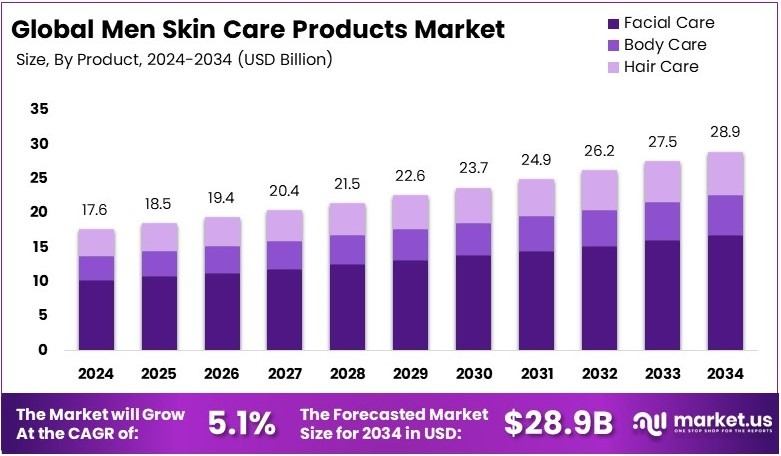
Men’s skincare products are becoming more popular. More men now value self-care and grooming. High-profile endorsements play a key role. For example, Timothée Chalamet represents Chanel’s men’s fragrance Bleu. This shift reflects a broader acceptance of skincare routines among men. Consequently, brands that focus on men’s skincare can see growth.
The men’s skincare market is expanding rapidly. The focus on holistic self-care is a major driver. According to Operation In Touch, men who practice self-care feel 2.2x more balanced and 1.6x more satisfied. Consequently, grooming routines are becoming essential. Brands that offer tailored solutions can capitalize on this trend.
Subscription boxes are gaining traction. They offer convenience and variety. According to the Zuora Subscription Economy Index, subscription box businesses grew 4.6 times faster than the S&P 500 in the past decade. This trend shows strong potential in men’s grooming. Consequently, brands can benefit by offering curated skincare subscriptions.
The market is not yet saturated. More men are open to skincare routines, but not all brands cater specifically to them. As awareness grows, new brands can enter successfully. Established companies are expanding their men’s lines. Consequently, there is room for innovation and niche targeting. Early entrants can build strong customer loyalty.
Competition is increasing but manageable. Established brands dominate, yet smaller companies are gaining ground. Celebrity endorsements help larger brands stay relevant. Smaller players focus on unique formulations. For instance, grooming kits with natural ingredients attract eco-conscious men. Consequently, the market remains dynamic and competitive.
The global impact is noticeable. Men worldwide are embracing skincare as part of self-care. Grooming influencers and campaigns shape perceptions. Brands that address diverse grooming needs gain wider appeal. Additionally, social acceptance of men’s grooming routines is increasing. Consequently, the market outlook remains positive.
Key Takeaways
- The Men Skin Care Products Market was valued at USD 17.6 billion in 2024 and is expected to reach USD 28.9 billion by 2034, with a CAGR of 5.1%.
- In 2024, Facial Care leads the product type segment with 58.2%, as men increasingly invest in grooming and facial hygiene.
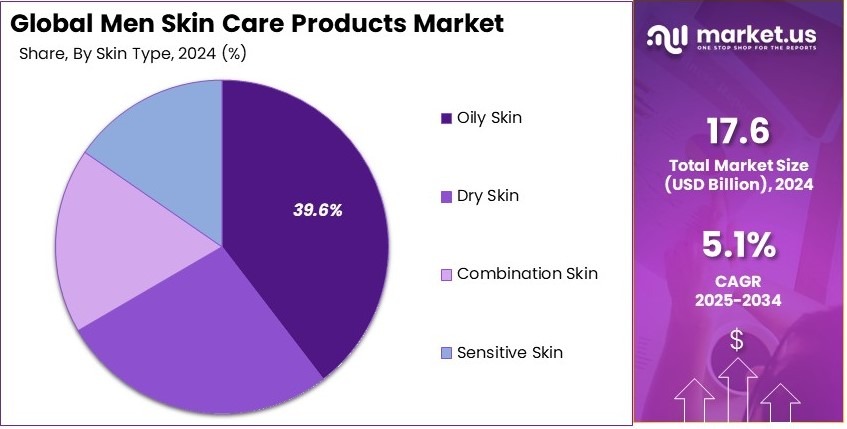
- In 2024, Oily Skin dominates the skin type category with 39.6%, driven by product development for sebum control and acne prevention.
- In 2024, Organic products account for 64.3%, reflecting consumer shift toward natural, chemical-free formulations.
- In 2024, Online Retail represents 52.4%, backed by digital accessibility, convenience, and male-targeted marketing campaigns.
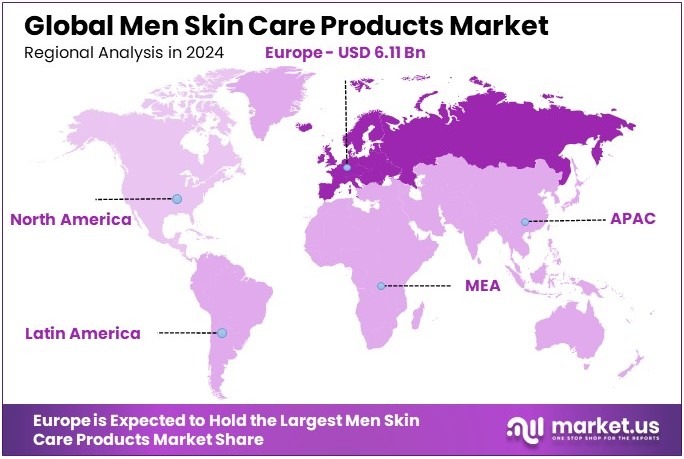
- In 2024, Europe holds the leading share at 34.7% and is valued at USD 6.11 billion, due to a well-established grooming culture and rising product variety.
Product Type Analysis
Facial Care sub-segment dominates with 58.2% due to its targeted solutions and frequent use.
In the Men’s Skin Care Products Market, the Facial Care segment holds the majority with a 58.2% share, showcasing its paramount importance. This segment’s success is largely due to the growing awareness among men about skin health and the increasing acceptance of facial grooming routines.
Products such as face washes, moisturizers, and serums are designed to meet the specific needs of men’s skin, which tends to be oilier and thicker than women’s. The frequent usage of these products as part of daily hygiene routines significantly contributes to their dominant market share.
Body care and hair care are also essential parts of the market, holding shares of 24.1% and 17.7%, respectively. Body care products focus on hydration and skin protection, often featuring formulations suitable for the rougher skin texture of men. Hair care products are designed to address issues like hair thinning and scalp health, which are common concerns among male consumers.
Skin Type Analysis
Oily Skin sub-segment dominates with 39.6% due to the higher prevalence and specific product demand.
Oily skin is the most catered-for type in the Men’s Skin Care Products Market, constituting a 39.6% share. This dominance is because oily skin is more common among men due to higher sebum production, driving demand for products that control oiliness and prevent acne. Products tailored for oily skin often include ingredients like salicylic acid and charcoal, which help in managing shine and maintaining clear pores.
Dry skin and combination skin types hold market shares of 30.2% and 20.1%, respectively, with products aimed at providing deep moisturization and balancing hydration levels. Sensitive skin, making up 10.1%, has a range of products specifically formulated to avoid irritation and allergic reactions, essential for those with reactive skin conditions.
Product Formulation Analysis
Organic sub-segment dominates with 64.3% due to the rising preference for natural ingredients and eco-friendly products.
The Organic segment leads the Product Formulation category in the Men’s Skin Care Products Market with a 64.3% share, reflecting the growing trend towards natural and sustainable products. This shift is driven by increased consumer awareness about the benefits of organic ingredients and the environmental impact of conventional skin care products. Organic formulations are perceived as safer and more beneficial for skin health, leading to higher consumer trust and preference.
Non-organic products, although they have a significant presence, are increasingly being scrutinized for their chemical content and environmental footprint, holding a 35.7% market share.
Distribution Channel Analysis
Online Retail sub-segment dominates with 52.4% due to convenience and a broader range of options.
Online retail is the leading distribution channel in the Men’s Skin Care Products Market, holding a 52.4% share. The popularity of this channel stems from its convenience, the ability to easily compare products and prices, and the wider availability of international brands. The growth of e-commerce platforms and targeted digital marketing strategies have made it easier for consumers to find products that specifically meet their skin care needs.
Offline retail, including specialty stores and pharmacies/drugstores, holds a combined share of 47.6%. Specialty stores offer expert advice and tailored product recommendations, while pharmacies provide trust and credibility, especially for consumers seeking dermatologically approved skin care products.
Key Market Segments
By Product Type
- Facial Care
- Body Care
- Hair Care
By Skin Type
- Oily Skin
- Dry Skin
- Combination Skin
- Sensitive Skin
By Product Formulation
- Organic
- Non-organic
By Distribution Channel
- Online Retail
- Offline Retail
- Specialty Stores
- Pharmacies/Drugstores
Driving Factors
Self-Care and New Product Lines Drive Market Growth
Men’s skincare is rapidly on the rise, driven by shifts in attitudes and targeted product development. A growing number of men – especially younger men in urban areas – are embracing self-care and see skin maintenance as part of a healthy lifestyle. This cultural shift towards inclusive grooming and an evolving view of masculinity that accepts skincare as normal has been a key driver behind market expansion.
In response, brands have greatly expanded men-specific product lines beyond basic shaving needs. Men can now find dedicated cleansers, moisturizers, sunscreens, and even face masks or serums formulated for male skin concerns.
The influence of social media and celebrity endorsements also propels growth. Popular male grooming influencers on YouTube and Instagram share skincare routines with millions of followers, sparking interest. Even celebrities are entering the space: some have launched their own skincare lines (for example, musician Pharrell Williams) or become brand ambassadors, normalizing men’s skincare.
Additionally, companies are catering to diverse needs by developing products for different male skin types and tones – for example, oil-control moisturizers for acne-prone skin and gentle creams for dry or sensitive skin. Together, these factors are turning men’s skincare from a niche into a mainstream segment.
Restraining Factors
Stereotypes and Low Engagement Restrain Market Growth
Despite positive momentum, several factors restrain the men’s skincare market. Traditional gender stereotypes remain a significant barrier. In some circles, skincare is still perceived as a feminine pursuit, making certain men hesitant to adopt a routine beyond basic grooming. For example, older generations may feel that “soap and water is enough,” viewing moisturizers or masks as unmanly. Such attitudes limit the addressable market.
Additionally, men’s skincare often gets very limited shelf space in stores – a small section among shaving supplies versus entire aisles for women’s products. This low visibility leads to less awareness and trial among male shoppers. Furthermore, many men exhibit lower brand loyalty in this category. They often just buy whatever is convenient, sticking to no-frills options, which makes it hard for companies to build a loyal customer base.
Finally, some men still view an extended skincare routine as non-essential. They focus only on basics like soap, shaving cream, and deodorant, considering additional serums or creams excessive. Together, these restraining factors slow the pace at which this segment can grow.
Growth Opportunities
Personalization and Niches Provide Opportunities
There are several growth opportunities for the men’s skincare market. One major opportunity lies in personalization through technology. Some companies are using AI-driven skin analysis apps and online quizzes to recommend customized product regimens for men. By tailoring recommendations to an individual’s skin type and concerns (like razor bumps or oiliness), skincare feels more relevant and effective for male consumers.
Another promising avenue is the rise of subscription services and direct-to-consumer (D2C) models specifically aimed at men. Monthly grooming subscription boxes and online skincare brands offer convenient auto-replenishment plans for men’s personal care products. This approach makes it easy for men to discover new products and stick with a routine delivered to their doorstep.
Additionally, brands are also formulating products for bearded skin (like conditioning beard oils) and post-shave care (soothing balms) to prevent irritation and ingrown hairs. Similarly, catering to active men with sports-specific skincare (for example, sweat-resistant sun protection or anti-chafing moisturizers) can attract athletes and outdoor enthusiasts, helping them keep their skin healthy even during intense activities.
Emerging Trends
Multi-Function and Low-Fuss Products Are Latest Trending Factor
Trends in the men’s skincare market increasingly emphasize simplicity, efficiency, and targeted skincare results. Many male consumers are gravitating toward multipurpose products that streamline their routine. For instance, a single lotion might serve as aftershave, moisturizer, and sunscreen. This “low-fuss” approach is very appealing to men who want to save time and avoid juggling many products.
There is also a growing inclination toward minimalistic branding and formulation. Skincare with simple, matte packaging and neutral (or no) fragrance is gaining traction, aligning with a no-frills masculine aesthetic and avoiding strong scents that might be off-putting.
Additionally, anti-aging has become a focus in the male market. More men are trying under-eye creams to reduce dark circles and anti-aging serums to maintain a youthful appearance. Texture is also a key consideration in trending products. Men often favor lightweight, non-greasy, matte-finish creams and sunscreens that absorb quickly and do not leave any shine. This allows men to hydrate and protect their skin without a glossy look or sticky feel.
Regional Analysis
Europe Dominates with 34.7% Market Share
Europe leads the Men Skin Care Products Market with a 34.7% share, translating to USD 6.11 billion. This substantial market presence is driven by a high consumer awareness about personal grooming and skin health, coupled with a mature beauty and personal care industry.
The region is characterized by a strong preference for premium skincare products and a robust regulatory environment that ensures high product quality and safety. Additionally, Europe’s market is bolstered by extensive research and development activities that focus on innovative, eco-friendly skincare solutions.
Looking ahead, Europe’s influence in the global Men Skin Care Products Market is poised to remain strong. The growing trend towards organic and natural products, along with increasing investments in men’s personal grooming, are likely to drive continued growth in this market sector.
Regional Mentions:
- North America: North America holds a significant portion of the Men Skin Care Products Market, supported by a culture that increasingly endorses male grooming and the widespread availability of a variety of skincare products tailored for men.
- Asia Pacific: The Asia Pacific region is rapidly increasing its share in the Men Skin Care Products Market, driven by changing beauty standards and an increasing acceptance of skincare routines among men, particularly in countries like South Korea and Japan.
- Middle East & Africa: The Middle East and Africa are gradually expanding their presence in the Men Skin Care Products Market. This growth is fueled by increasing disposable income and the growing influence of Western beauty standards.
- Latin America: Latin America is experiencing growth in the Men Skin Care Products Market, with a focus on natural and sustainable products. Increasing awareness and cultural shifts towards male grooming are key drivers in this region.
Key Regions and Countries Covered in the Report
- North America
- US
- Canada
- Europe
- Germany
- France
- The UK
- Spain
- Italy
- Rest of Europe
- Asia Pacific
- China
- Japan
- South Korea
- India
- Australia
- Rest of APAC
- Latin America
- Brazil
- Mexico
- Rest of Latin America
- Middle East & Africa
- South Africa
- Saudi Arabia
- UAE
- Rest of MEA
Competitive Landscape
The Men Skin Care Products Market is highly competitive, shaped by the presence of both global giants and niche players. Increasing awareness of personal grooming among men has been a significant factor driving market growth. Key players in the industry focus on product innovation and building brand loyalty to maintain their market positions.
Among the top players, L’Oréal S.A. stands out as a dominant force in the men’s skincare market. The company has established a strong presence with its wide range of products, specifically designed to address various skin concerns. The brand L’Oréal Men Expert is particularly popular, known for its innovative ingredients and visually appealing packaging. Strategic marketing campaigns help maintain brand visibility, making L’Oréal a leader in this sector.
Procter & Gamble Co. also holds a significant market share due to its diversified product portfolio, including renowned brands such as Gillette and Old Spice. P&G’s focus on mass-market appeal allows it to offer affordable yet high-quality products. The company’s vast distribution network ensures that its skincare products are widely accessible, contributing to its robust market position.
Unilever PLC is another key player, with its Dove Men+Care brand making a considerable impact. Unilever emphasizes skincare solutions that address moisturizing and sensitive skin needs, catering to the growing demand for gentle formulations. The company’s commitment to sustainable practices and ingredient transparency has gained traction among eco-conscious consumers. Marketing strategies that focus on masculinity and confidence have proven effective in attracting a modern male audience.
Beiersdorf AG, the parent company of Nivea Men, also plays a crucial role in the market. Its global presence is strengthened by a focus on skincare essentials, including moisturizers and shaving products. Nivea Men is recognized for its consistent quality and affordable pricing, which have earned it a loyal customer base. The brand’s heritage and trusted formulations position Beiersdorf as a reliable choice for men’s skincare.
The competition among these leading companies fosters continuous innovation and product diversification. Marketing strategies often include celebrity endorsements and active social media engagement. As consumer preferences increasingly favor natural ingredients and sustainable practices, key players are adapting by expanding product lines and targeting new, emerging markets.
Major Companies in the Market
- L’Oréal S.A.
- The Procter & Gamble Company
- Unilever PLC
- Kao Corporation
- Lush Fresh Handmade Cosmetics
- The Body Shop International Limited
- Ethique Beauty
- Drybar LLC
- Carter + Jane
- Nohbo Inc.
Recent Developments
- NIVEA MEN: On February 2025, NIVEA MEN launched its Age Defense line to target signs of aging in men’s skin. The product line incorporates Thiamidol™ and Hyaluronic Acid to address dark spots, fine lines, and wrinkles, offering 24-hour hydration and availability at major retailers.
- Otsuka Pharmaceutical (UL·OS Taiwan Debut): On July 2024, Otsuka Pharmaceutical Co., Ltd., in collaboration with Taiwan Otsuka Pharmaceutical, introduced the men’s skincare brand “UL·OS” in Taiwan. Developed as cosmedics, UL·OS addresses specific skincare needs of Taiwanese men, considering local climate and preferences for Japanese-made cosmetics.









