


Report Overview
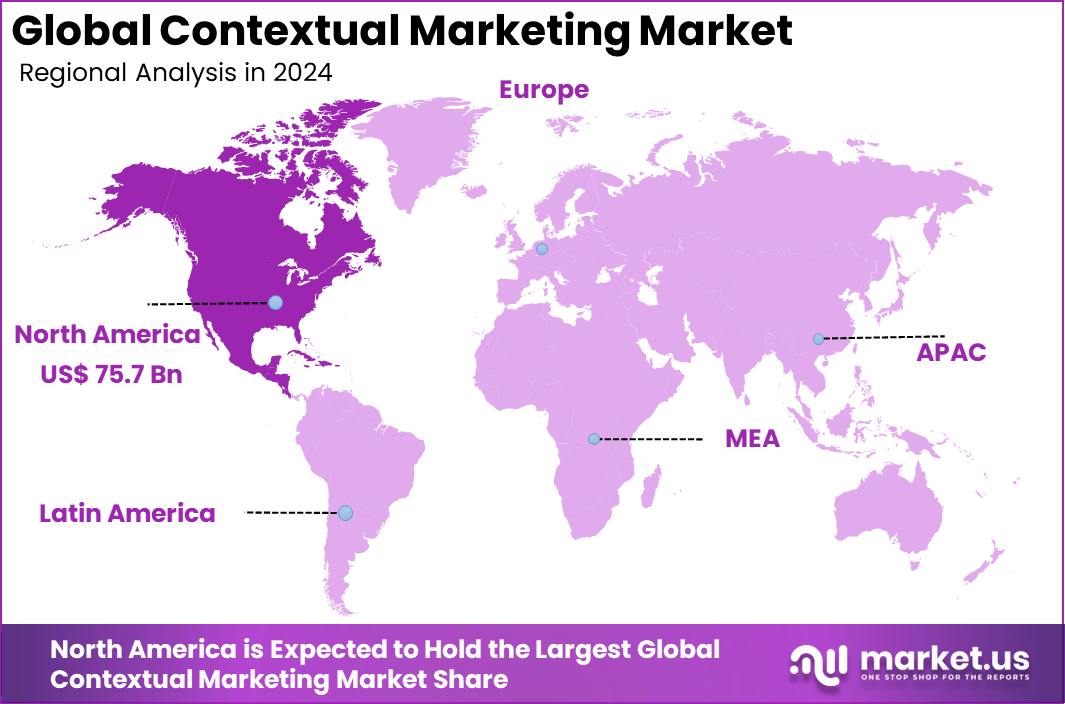
The Global Contextual Marketing Market size is expected to be worth around USD 748.5 Billion By 2034, from USD 198.4 billion in 2024, growing at a CAGR of 14.2% during the forecast period from 2025 to 2034. In 2024, North America held a dominant market position, capturing more than a 38.2% share, holding USD 75.7 Billion revenue.
Contextual marketing is an advanced strategy that leverages real-time data to display ads or content that are directly relevant to the user’s current environment or state. This marketing approach focuses on delivering targeted messages based on user engagement specifics, such as the content being consumed or the user’s location and activity.
The technique aims to offer a seamless and relevant experience by aligning marketing messages with the user’s immediate context without the reliance on personal data or historical behavior. The market for contextual marketing is expanding due to its ability to offer highly targeted advertising without the need for third-party cookies.
This strategy is increasingly important as privacy concerns become more prevalent and regulations like GDPR and CCPA push marketers towards more privacy-friendly practices. The growth of programmatic advertising technologies that facilitate the automatic placement of ads based on content relevance further supports this trend.
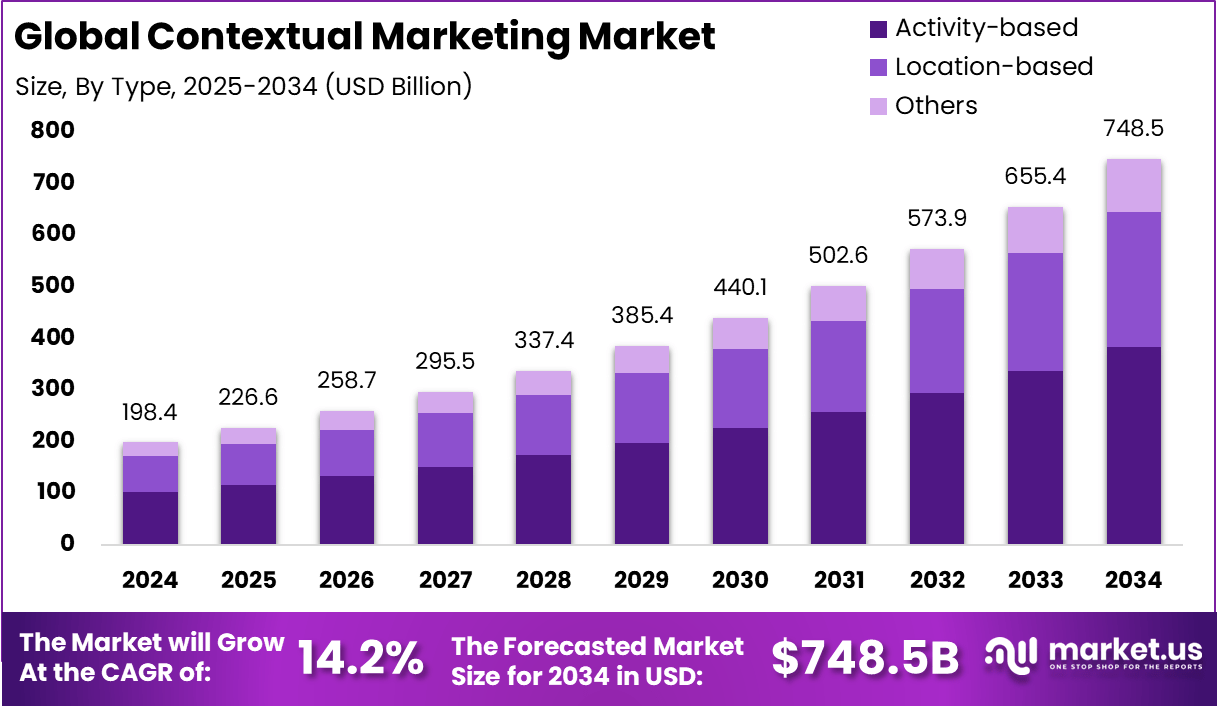
The demand for contextual marketing is primarily driven by the need for greater personalization and relevance in advertising. As consumers become more selective and sensitive to privacy, contextual marketing offers a more strategic way to present advertisements without overt data privacy intrusions, aligning promotional content with user activity and environmental cues.
Current trends in the contextual marketing landscape include the integration of AI with marketing strategies to enhance the accuracy and timeliness of ads, the adoption of privacy-first marketing technologies, and the increasing use of immersive technologies like AR and VR to create novel consumer experiences.
According to a report by Epsilon, 69% of advertisers believe that the elimination of third-party cookies will have a greater impact on digital advertising than even major privacy regulations like GDPR and CCPA. This shift in industry perception is reshaping advertising strategies globally, with contextual advertising emerging as a leading alternative.
Data from Silverpush further reinforces this transition. As of 2024, 74% of marketers are actively using contextual data to optimize their advertising strategies in the absence of device IDs and third-party cookies. From the consumer’s perspective, 79% report feeling more comfortable with contextual ads compared to behavioral ones, while nearly 80% express a preference for advertisements that do not collect personal data.
Spending behavior is also shifting accordingly. 42% of brands plan to increase their investments in contextual advertising over the next year, reflecting growing confidence in its effectiveness. Performance metrics validate this confidence – contextual ads are 50% more likely to be clicked than their non-contextual counterparts, and they yield a 30% higher conversion rate.
Key Takeaways
- The Global Contextual Marketing Market is expected to witness remarkable growth, rising from USD 198.4 billion in 2024 to approximately USD 748.5 billion by 2034, expanding at a CAGR of 14.2%.
- North America led the global market in 2024, securing more than 38.2% share with USD 75.7 billion in revenue.
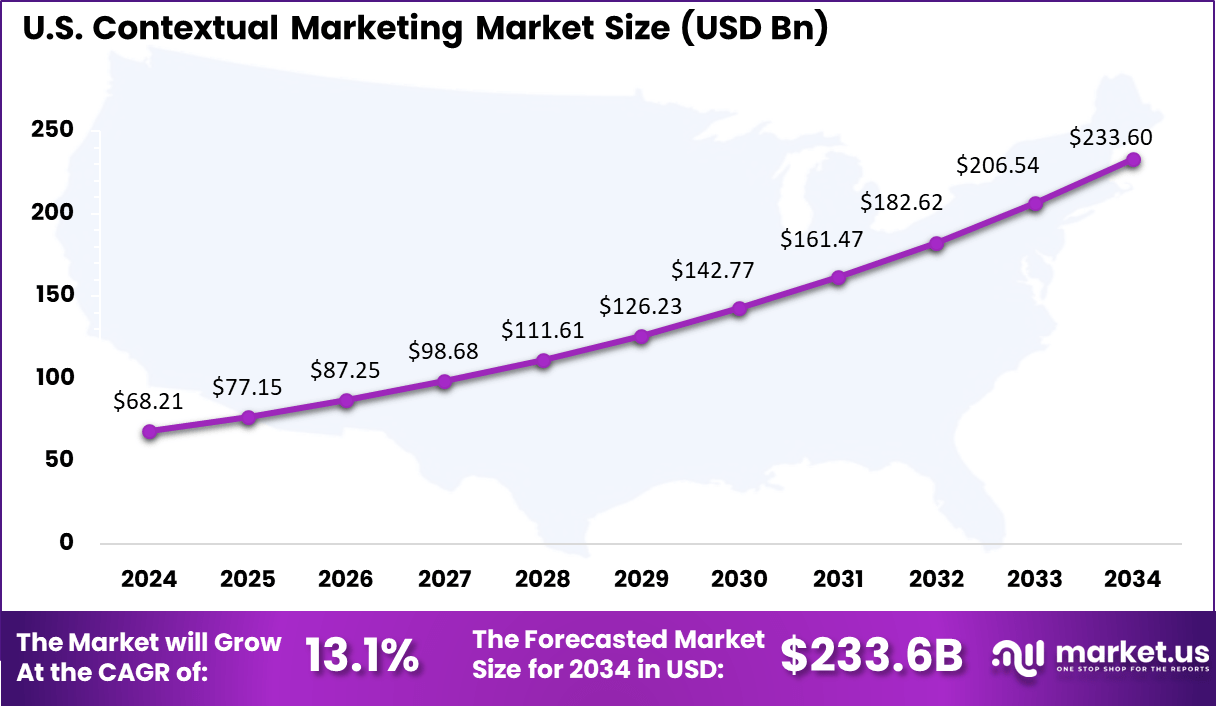
- Within the region, the U.S. market alone was valued at USD 68.21 billion in 2024, and is projected to grow from USD 77.15 billion in 2025 to USD 233.60 billion by 2034, marking a CAGR of 13.1%.
- The Activity-based segment held the dominant position in 2024, capturing more than 51.3% of the market.
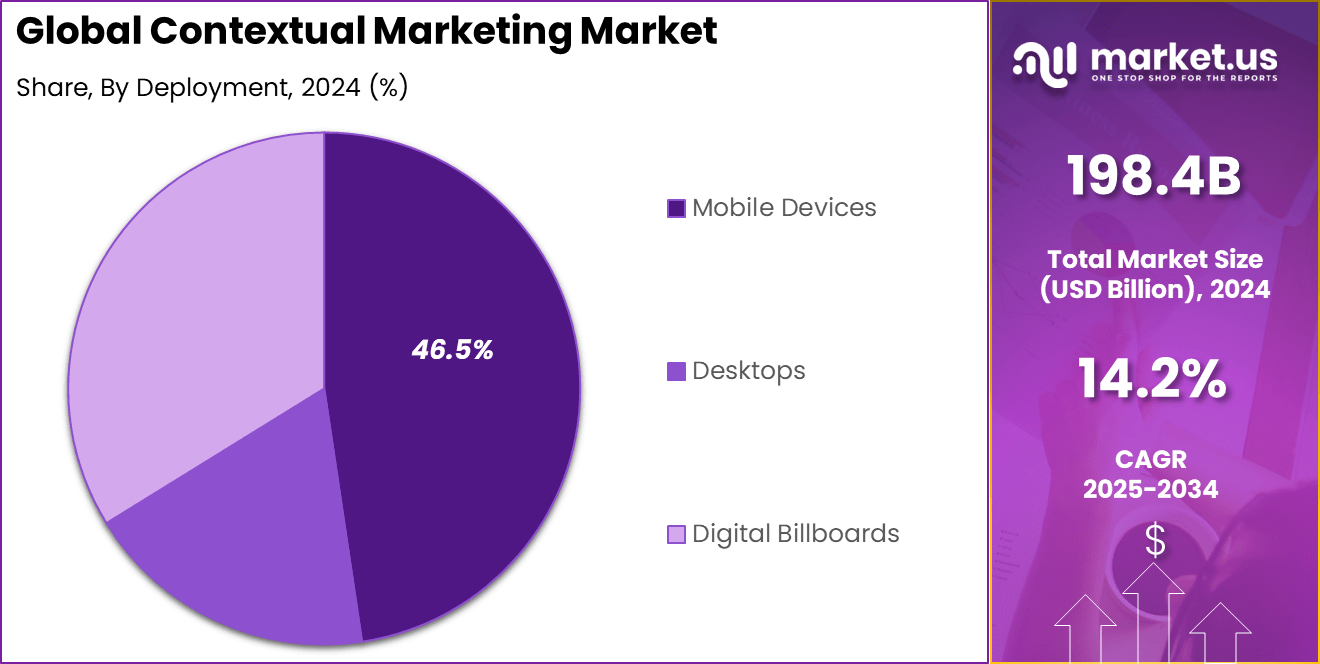
- From a device perspective, Mobile Devices led the contextual delivery landscape, accounting for over 46.5% of the market in 2024.
- In terms of industry verticals, Retail & Consumer Goods held a strong lead with 23.7% market share in 2024.
US Tariff Impact Analysis
The recent imposition of U.S. tariffs, particularly the steep 125% levy on Chinese imports, has significantly impacted the contextual marketing industry. This analysis delineates the economic, business, and geographical ramifications of these tariffs.
Economic Impact
The tariffs have introduced substantial economic challenges.
- Reduced GDP Growth: Analysts estimate a potential contraction in U.S. GDP by 0.7% to 1.5%, equating to a loss of $250 to $500 billion, should the tariffs remain in effect for a full year.
- Increased Consumer Prices: The average price level has risen by 2.3%, leading to an estimated annual loss of $3,800 per household .
- Inflationary Pressures: Core inflation is projected to reach 3.9% in 2025, diminishing consumer purchasing power.
Business Impact
The business landscape has been notably altered:.
- Advertising Budget Reductions: A survey by the Interactive Advertising Bureau revealed that 94% of advertisers are concerned about tariffs, with 45% planning to reduce ad spending.
- Shift in Marketing Strategies: Companies are reallocating budgets towards performance-based channels, such as search and retail media, which offer more measurable returns.
- Operational Cost Increases: Tariffs have led to higher costs for imported goods, compelling businesses to either absorb these costs or pass them on to consumers, affecting profitability .
Geographical Impact
The geographical repercussions are multifaceted:
- Global Supply Chain Disruptions: Tariffs have disrupted international supply chains, particularly affecting countries like China, which faces a 125% tariff on exports to the U.S. .
- Regional Economic Strain: Countries heavily reliant on exports to the U.S., such as Vietnam and Bangladesh, are experiencing economic downturns due to decreased demand .
- Market Realignment: Businesses are exploring alternative markets and supply sources to mitigate the impact of tariffs, leading to a realignment of global trade relationships .
Analysts’ Viewpoint
Advancements in AI and machine learning are pivotal in contextual marketing, allowing for real-time analysis of web content to place relevant ads more effectively. These technologies enable deeper understanding of content and user intent, leading to more effective ad placements.
Investors are particularly interested in startups that develop innovative contextual ad technologies, which promise higher ROI through improved ad performance and user engagement. The business benefits of contextual marketing include higher engagement rates, improved customer satisfaction, and increased sales conversions.
Contextual ads are seen as less intrusive and more useful by consumers, leading to better brand perception and loyalty. From a regulatory standpoint, this marketing approach is advantageous as it aligns well with global data privacy standards, reducing legal risks associated with user data usage.
The major factors influencing the effectiveness of contextual marketing include the accuracy of context analysis, the relevance of the ads displayed, and the continuous evolution of internet privacy laws. As these factors vary widely across different markets and industries, companies using contextual marketing need to stay agile and responsive to changes in technology and regulations to maintain their competitive edge.
US Market Growth
The US Contextual Marketing Market is valued at approximately USD 68.21 Billion in 2024 and is predicted to increase from USD 77.15 Billion in 2025 to approximately USD 233.60 Billion by 2034, projected at a CAGR of 13.1% from 2025 to 2034.
The leadership of the United States in the contextual marketing market can be attributed to several key factors that align with both technological advancements and regulatory changes. Firstly, the U.S. market benefits from the presence of major technological firms like Google, Apple, and Amazon, which not only drive innovations in AI and data analytics but also adapt quickly to privacy regulations that shape marketing strategies.
Secondly, the U.S. has been at the forefront of implementing strict privacy laws such as the General Data Protection Regulation (GDPR) and the California Consumer Privacy Act (CCPA), which have significantly influenced the shift from traditional behavioral advertising to contextual marketing. This shift is crucial as it aligns with consumer preferences for privacy, making contextual marketing more relevant and accepted.
In 2024, North America held a dominant market position in the contextual marketing landscape, capturing more than a 38.2% share, with revenues amounting to USD 75.7 Billion. This region’s leadership is primarily due to its advanced technological infrastructure and the presence of major tech companies that are pioneers in AI and big data analytics, key components of effective contextual marketing.
Additionally, the stringent privacy regulations such as GDPR and CCPA have fostered a conducive environment for the adoption of contextual marketing over more invasive traditional methods. These factors, coupled with high digital consumption rates and a robust digital advertising ecosystem, enable North American marketers to deliver highly targeted and effective advertising without compromising user privacy.
Type Analysis
In 2024, the Activity-based segment held a dominant market position, capturing more than a 51.3% share of the Contextual Marketing market. This segment’s leadership can be attributed to several key factors.
Primarily, the growing demand for personalized marketing solutions has significantly driven this segment. As businesses increasingly seek to engage customers with highly relevant and timely content, activity-based contextual marketing provides a mechanism to deliver such personalized experiences based on real-time user activities and behaviors.
Furthermore, advancements in data analytics and machine learning have bolstered the effectiveness of activity-based strategies. These technologies enable marketers to process vast amounts of data regarding user actions, such as clicks, browsing history, and purchase patterns, to trigger targeted marketing messages precisely when the customer is most receptive.
Moreover, the integration of IoT devices has expanded the applicability of activity-based contextual marketing. With more devices connected to the internet, marketers can access a broader range of data points to craft even more contextually relevant marketing campaigns. This integration has proven particularly effective in sectors such as retail and e-commerce, where the immediacy and relevance of marketing communications can directly influence buying decisions.
Deployment Analysis
In 2024, the Mobile Devices segment held a dominant market position, capturing more than a 46.5% share of the Contextual Marketing market. This segment’s preeminence is driven by several pivotal factors. The pervasive use of mobile devices, such as smartphones and tablets, has created a fertile ground for marketers to deliver timely and location-specific advertisements directly to consumers’ hands.
Mobile devices are integral to daily activities, making them an ideal medium for personalized marketing efforts that reach consumers on-the-go. Technological advancements in mobile computing power, connectivity, and data analytics have significantly enhanced the effectiveness of contextual marketing strategies deployed on mobile devices.
Marketers can leverage real-time data to deliver personalized content that aligns with the individual consumer’s current context, such as their location, the time of day, or recent browsing behavior. This capability enables highly targeted marketing that is more likely to resonate with the consumer and drive engagement.
Furthermore, the integration of mobile apps with various sensors and trackers, such as GPS and accelerometers, provides marketers with detailed insights into user behavior and preferences. This data richness allows for the development of highly customized marketing messages that are contextually relevant and timely.
Industry Vertical Analysis
In 2024, the Retail & Consumer Goods segment held a dominant market position in the Contextual Marketing market, capturing more than a 23.7% share. This leadership is underpinned by several factors that highlight the segment’s unique capacity to leverage contextual marketing tools effectively.
Retailers and consumer goods companies utilize contextual marketing to create highly personalized shopping experiences that drive engagement and sales. One of the primary drivers for this segment’s success is the integration of advanced analytics and AI technologies.
These tools analyze customer data in real-time, enabling marketers to deliver personalized content and offers that align with individual consumer behaviors and preferences. This approach is particularly effective in retail, where purchase decisions can be influenced by timely and relevant promotions.
Moreover, the retail industry’s rapid adoption of omnichannel strategies enhances the effectiveness of contextual marketing. By integrating user experiences across both digital and physical platforms – such as mobile apps, online stores, and brick-and-mortar locations – retailers create a seamless consumer journey.
Key Market Segments
By Type
- Activity-based
- Location-based
- Others
By Deployment
- Mobile Devices
- Desktops
- Digital Billboards
By Industry Vertical
- Retail & Consumer Goods
- Media & Entertainment
- IT & Telecommunication
- Automotive & Transportation
- Banking, Financial Services, & Insurance (BFSI)
- Healthcare
- Government
- Others
Driver
Personalized and Real-time Interaction
A significant driver of contextual marketing in 2025 is the integration of advanced AI and machine learning technologies, which enable marketers to offer highly personalized and real-time interactions. These technologies are leveraged to analyze vast amounts of data, allowing brands to deliver targeted advertising that aligns closely with the user’s current context and needs. This not only enhances the relevancy of ads but also boosts user engagement and conversion rates.
Restraint
Privacy Concerns and Data Regulation
The primary restraint facing contextual marketing is the growing concern over privacy and data protection. As regulatory bodies impose stricter guidelines on data usage and consumer privacy, marketers must navigate these limitations while still attempting to offer personalized experiences. This has led to a shift away from traditional cookie-based tracking methods to more privacy-compliant strategies, complicating targeted advertising efforts.
Opportunity
Expansion into New Digital Platforms
Contextual marketing stands to gain from the continuous expansion of digital ecosystems and platforms, especially with the proliferation of mobile and social media usage. Marketers have opportunities to engage with consumers through increasingly popular formats such as short-form video and interactive content. The rise of these new platforms allows for more dynamic and context-sensitive marketing strategies.
Challenge
Achieving Scalability and Accuracy
One of the main challenges in contextual marketing is balancing scalability with accuracy. The ability to deliver highly personalized content at scale without compromising on privacy is a significant hurdle. Marketers must refine their use of AI to interpret context accurately without overstepping privacy boundaries, requiring continuous innovation and adaptation to emerging technologies and consumer expectations.
Growth Factors
Increasing Mobile and Social Media Engagement The rapid growth in mobile usage and social media continues to drive contextual marketing by providing marketers with rich data on user behavior and preferences. This trend is complemented by advancements in AI that enhance the precision of contextual ads, making them more effective and engaging for users.
Emerging Trends
AI-Driven Contextual Insights Emerging trends in contextual marketing include the use of AI to develop deeper contextual insights that go beyond simple location or device-based targeting. These insights allow marketers to anticipate user needs and deliver content that resonates on a more personal level. Innovations such as real-time content recognition and semantic analysis are pushing the boundaries of how context can be understood and utilized.
Business Benefits
Enhanced User Engagement and Loyalty Businesses implementing contextual marketing strategies are seeing significant benefits in terms of user engagement and loyalty. By aligning marketing messages closely with the user’s current context and preferences, brands can create more meaningful interactions that lead to higher conversion rates and customer retention. Moreover, the use of non-invasive advertising methods enhances brand perception and trust among consumers.
Key Player Analysis
Amazon.com Inc. has been proactive, utilizing its vast data analytics capabilities to refine and personalize advertising solutions, leading to heightened engagement and conversion rates. The company’s continuous innovation in AI-driven advertising platforms exemplifies its strategy to stay at the forefront of contextual advertising.
Google LLC, another major player, is expanding its reach in contextual advertising by continuously improving its advertising algorithms and targeting mechanisms. These enhancements are designed to offer more precise ad placements, improving user experience and ad effectiveness.
Microsoft Corporation has focused on integrating advanced AI tools into its advertising solutions, allowing for better targeting and real-time ad customization. This approach not only improves user engagement but also empowers advertisers with more efficient campaign management tools
Top Key Players in the Market
- Yahoo
- Amobee Inc.
- Amazon.com Inc.
- Media.net
- Google LLC
- Facebook Inc.
- Act-On Software Inc.
- Adobe Systems
- Millennial Media LLC
- Twitter, Inc.
- Other Major Players
Recent Developments
- In March 2025, Adobe announced new offerings in collaboration with Amazon Web Services (AWS) and Amazon Ads. These solutions aim to enhance marketers’ capabilities in delivering personalized customer experiences at scale by integrating Adobe’s creative tools with AWS’s cloud infrastructure and Amazon’s advertising services.
- In January 2025, The Interactive Advertising Bureau (IAB) hosted its Annual Leadership Meeting, focusing on the evolving landscape of digital advertising, including discussions on AI’s role in marketing and the importance of responsible media practices.
- In November 2024, Bitmovin introduced an innovative AI Contextual Advertising solution, which integrates playback and encoding technologies. This tool utilizes machine learning to analyze each scene of a video to identify relevant characteristics and viewer engagement levels. By doing so, it enables the optimization of ad placements, ensuring that they are highly relevant to the video content being viewed.
- In March 2024, Adobe and Microsoft entered into a strategic partnership aimed at enhancing Microsoft 365 applications with new generative AI capabilities, specifically designed for marketers. This collaboration leverages Adobe’s extensive experience in digital marketing solutions and AI technology alongside Microsoft’s comprehensive suite of productivity tools and robust cloud infrastructure.









