


Report Overview
The Global Massage Oil Market size is expected to be worth around USD 7.8 Billion by 2034, from USD 3.8 Billion in 2024, growing at a CAGR of 7.4% during the forecast period from 2025 to 2034.
Massage oil is a specialized oil blend used in massage therapy to facilitate smooth movement of the hands during massages while providing various skin benefits. These oils often include natural plant-based ingredients such as almond oil, coconut oil, and essential oils, which help moisturize, relax muscles, and enhance the therapeutic effect of massage.
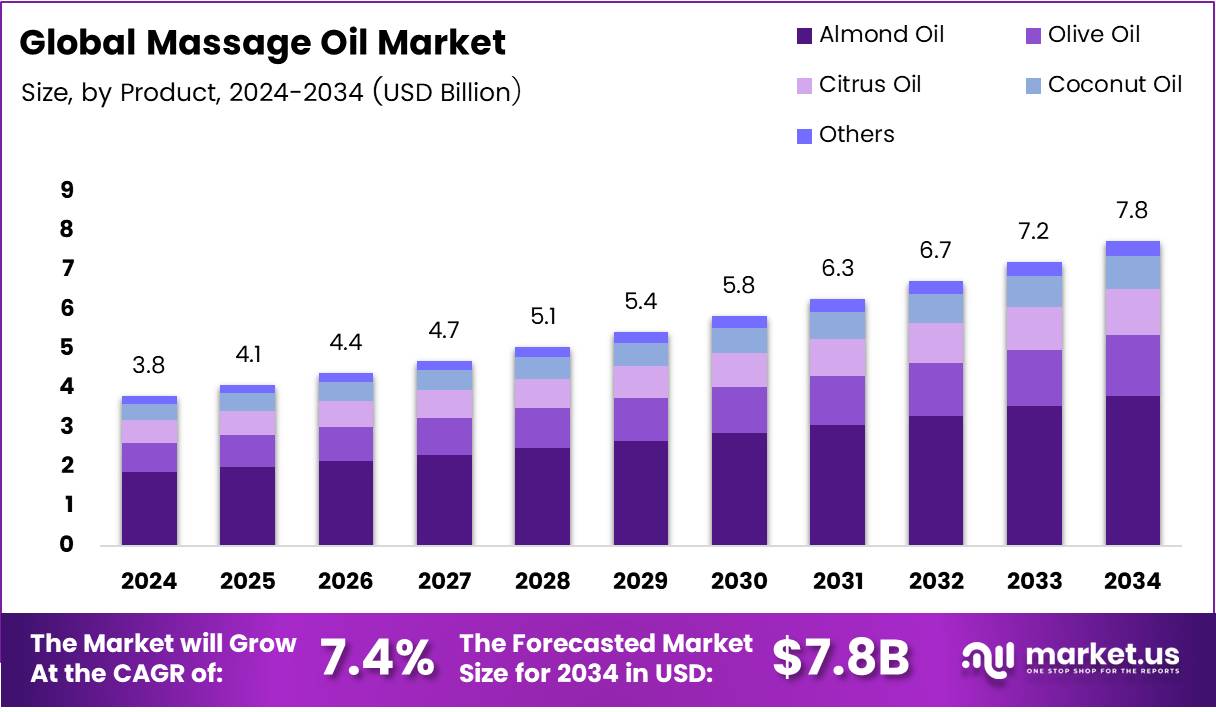
The growing interest in wellness and holistic health has significantly contributed to the popularity of massage oils, both for professional therapy sessions and at-home use. In addition to their relaxation benefits, massage oils are believed to improve skin tone, reduce stress, and alleviate muscle tension. The increase in wellness trends and consumer awareness about natural products is expected to continue driving the demand for massage oils.
The global massage oil market is witnessing significant growth, driven by factors such as the increasing popularity of massage therapy, rising disposable income, and a growing focus on self-care and wellness. According to a report from PMC, a random effects meta-analysis revealed that infants who received massages with emollient oils had a 21% reduced risk of infection.
This highlights the benefits of massage oils in both therapeutic and preventative care. The market is further supported by the fact that 11.1% of adult Americans received massage therapy in the past year, as noted by ScienceDirect, showing a clear upward trend in the demand for massage services.
Additionally, the increasing use of digital platforms for booking services is evident, with 43.38% of massage therapy appointments being booked online, according to Mangomint. This digital shift is expected to fuel market growth as more consumers embrace the convenience of online bookings.
In terms of growth opportunities, there is a rising consumer preference for organic and natural massage oils, which is driving innovation in the product offerings. Additionally, the government’s role in promoting wellness initiatives and healthcare investments, particularly in countries focusing on alternative therapies, will positively influence the market.
For example, government regulations in the U.S. regarding the safety and quality of massage products have prompted companies to adopt stricter manufacturing standards. As the market evolves, the increasing awareness of stress reduction benefits, such as the 40% reduction in cortisol levels from a single session of massage therapy (as per Renaissance College), presents new opportunities for growth.
Companies in the massage oil market are well-positioned to benefit from these trends by focusing on high-quality, therapeutic products, and by leveraging digital tools for enhanced customer engagement and service delivery.
The massage oil market is on an upward trajectory, with significant growth potential and increasing consumer interest in health and wellness. With continuous innovations, supportive regulations, and consumer-focused trends, businesses can capitalize on this market segment’s potential, leading to more lucrative opportunities for stakeholders in the wellness and personal care industries.
Key Takeaways
- Global Massage Oil Market Size expected to reach USD 7.8 Billion by 2034, growing at a CAGR of 7.4% from 2025 to 2034.
- Almond oil was the leading product in 2024, capturing 36.2% market share due to its moisturizing and soothing properties.
- Adult segment dominated the market in 2024, driven by increased wellness and self-care interest, including spa treatments and at-home use.
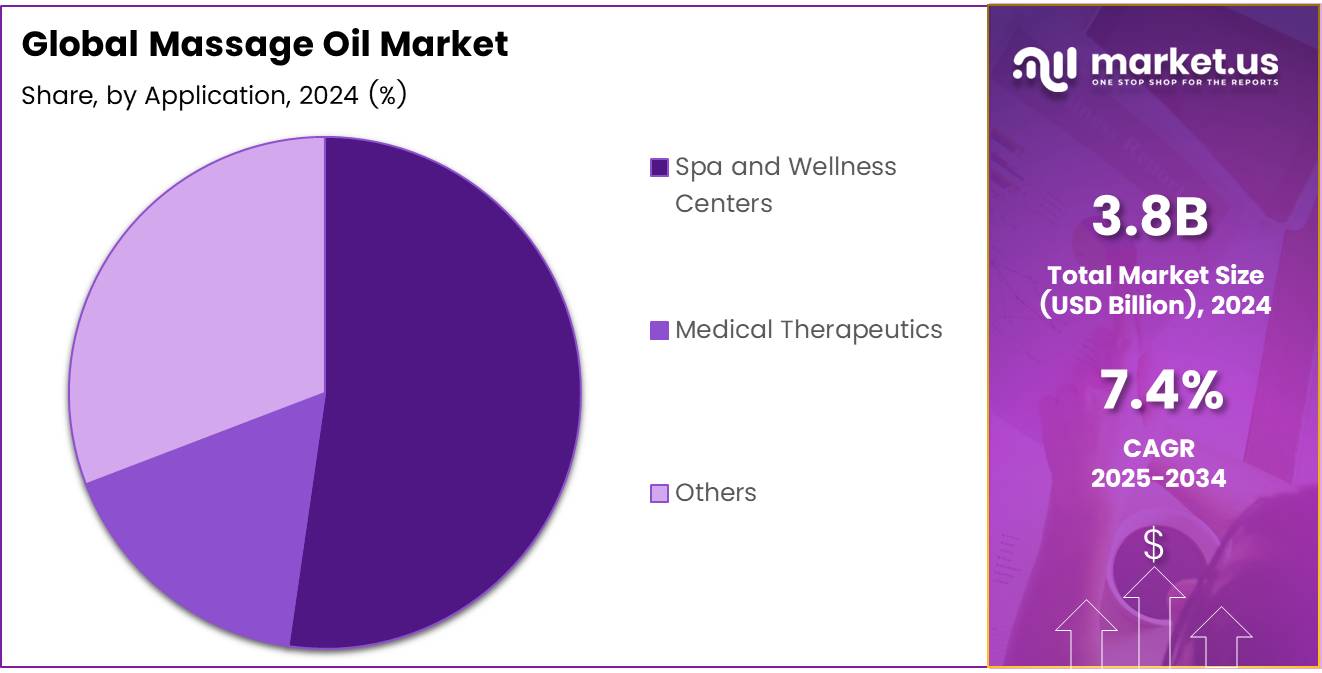
- Spa and wellness centers played a major role in 2024, holding a dominant position in the market with high demand for relaxation treatments.
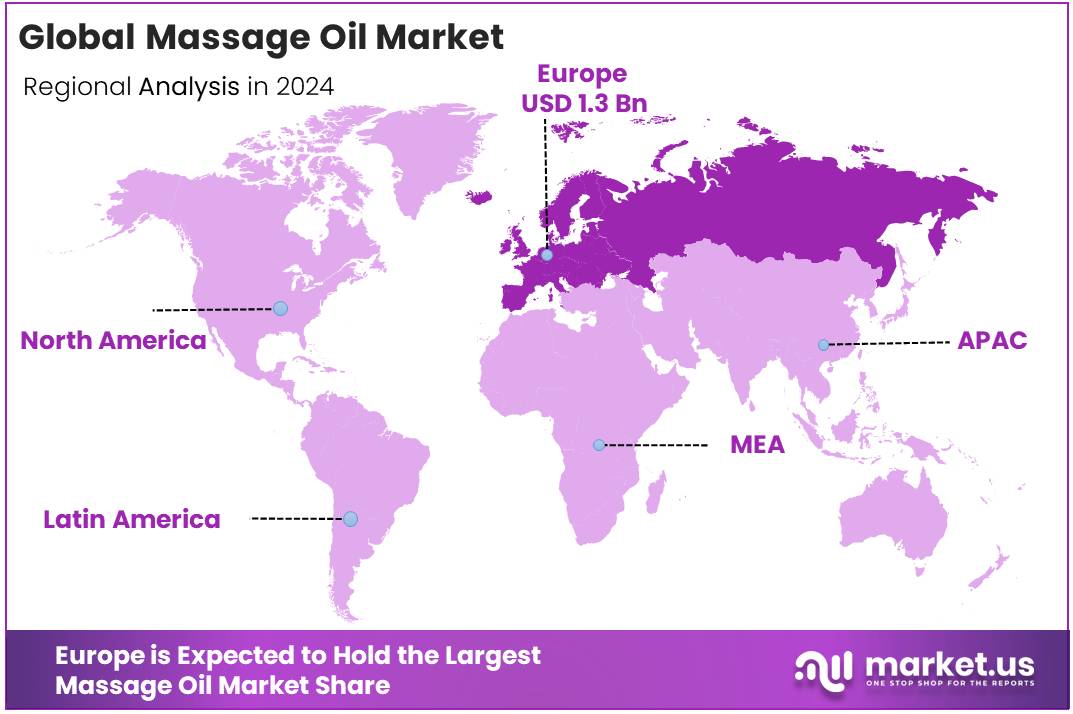
- Europe led the global market with a 35.1% market share, valued at USD 1.3 billion, due to strong healthcare infrastructure and high disposable incomes.
Product Analysis
In 2024, Almond Oil held a dominant market position in By Product Analysis segment of Massage Oil Market, with a 36.2% share
In 2024, almond oil emerged as the leading product in the By Product Analysis segment of the massage oil market, capturing a significant share of 36.2%. Almond oil is highly sought after due to its natural benefits, including its ability to moisturize and soothe the skin, making it a preferred choice in the massage oil industry.
Olive oil, another major player, continues to maintain a steady presence in the market, offering a blend of hydration and anti-inflammatory properties. While its share is not as dominant as almond oil, it remains a popular choice among consumers for its versatility and rich composition.
Citrus oil, with its refreshing and uplifting aroma, holds a niche position in the market. Though its market share is smaller compared to almond and olive oils, it appeals to consumers seeking an invigorating massage experience.
Coconut oil, well-known for its moisturizing properties, continues to gain traction. It is especially favored for its ability to hydrate and nourish the skin, securing its place in the massage oil market. Other oils, including argan and jojoba oil, also contribute to the overall market, but their share remains limited compared to the leading oils like almond and olive oil.
End Use Analysis
In 2024, Adult held a dominant market position in By End Use Analysis segment of Massage Oil Market, with a significant share
In 2024, the adult segment dominated the massage oil market under the By End Use Analysis category. The demand for massage oils within this segment has surged due to increasing interest in wellness and self-care routines, contributing significantly to the market’s growth. The adult population primarily drives this demand through spa treatments, at-home use, and wellness practices.
The baby segment, while smaller, continues to hold importance in the market. Massage oils for babies are typically formulated with gentle ingredients, making them suitable for sensitive skin. This niche market is growing steadily, with parents increasingly turning to natural, organic oils for their babies’ massage routines.
Overall, the adult segment’s robust demand highlights the increasing adoption of massage oils as part of regular self-care, with both therapeutic and relaxation benefits driving the trend.
Application Analysis
In 2024, Spa and Wellness Centers held a dominant market position in By Application Analysis segment of Massage Oil Market, with a significant share
In 2024, spa and wellness centers played a crucial role in the massage oil market, commanding a dominant position in the By Application Analysis segment. The demand for massage oils in these centers remains strong due to the rising number of wellness-focused services and consumers seeking relaxation treatments. These centers offer a range of services that integrate essential oils for enhanced therapeutic experiences.
Medical therapeutics also represent a growing portion of the massage oil market, as more people turn to alternative therapies for pain relief, stress reduction, and muscle relaxation. The use of specific oils, such as peppermint and eucalyptus, in medical treatments has driven an increase in this application segment.
The Others category, which includes home use, retail sales, and small-scale therapeutic settings, continues to contribute to market growth, though it does not yet match the prominence of spa and wellness centers. The increasing preference for natural remedies and at-home wellness practices supports this category’s development.
Key Market Segments
By Product
- Almond Oil
- Olive Oil
- Citrus Oil
- Coconut Oil
- Others
By End Use
- Adult
- Baby
By Application
- Spa and Wellness Centers
- Medical Therapeutics
- Others
Drivers
Rising Health & Wellness Awareness Boosts Massage Oil Market Demand
The massage oil market is experiencing growth due to increased consumer awareness about the benefits of massages. People are becoming more conscious of how massage therapy can help with stress relief, muscle recovery, and overall well-being.
As health and wellness trends continue to rise, individuals are actively seeking ways to improve their physical and mental health. This awareness is driving the demand for high-quality massage oils that offer therapeutic properties.
Additionally, the growth in the spa and wellness industry, with an increasing number of wellness centers, spas, and massage therapy clinics worldwide, contributes to the expanding demand for massage oils.
Consumers are willing to invest in these oils as part of their self-care routines, making it a significant market driver. Furthermore, rising disposable income in many regions is enabling individuals to spend more on personal care products, including massage oils. This trend further supports the market’s growth as consumers prioritize health and wellness in their daily lives.
Restraints
High Cost of Premium and Organic Oils Limits Market Growth
Despite the growing popularity of massage oils, the market faces certain challenges. One significant restraint is the high cost of premium and organic oils. These high-quality oils, such as those made from rare or exotic ingredients, tend to be expensive, which can limit their adoption in price-sensitive markets. Consumers in lower-income regions or those with limited budgets may find it difficult to afford these products.
Additionally, strict regulations and quality standard compliance pose a challenge for new entrants. Product labeling and safety standards must be met, which can increase costs and create barriers for new companies to enter the market. These regulatory requirements can slow down product development and innovation, further limiting market growth.
Growth Factors
Expansion into Emerging Markets Offers New Growth Opportunities
There are significant growth opportunities in the massage oil market, especially in emerging markets. Regions like Asia-Pacific, Latin America, and Africa are seeing rapid urbanization, increasing disposable income, and a rising focus on wellness. These trends present untapped potential for massage oil brands looking to expand their reach.
Additionally, product innovation plays a crucial role in capturing niche audiences. Offering massage oils with added functional benefits, such as anti-aging properties, aromatherapy, or CBD-infused formulas, can attract a broader consumer base.
Furthermore, the rise of e-commerce and direct-to-consumer channels has opened up new opportunities for brands to connect with consumers. Online shopping offers personalized marketing and a broader reach, helping companies expand their market presence and increase sales globally.
Emerging Trends
Rise of Aromatherapy-Infused Massage Oils Drives Market Trends
The massage oil market is also influenced by emerging trends that cater to changing consumer preferences. One prominent trend is the rise of aromatherapy-infused oils, which combine the benefits of essential oils like lavender and eucalyptus with the therapeutic effects of massage. These oils not only offer physical benefits but also provide emotional well-being, making them highly popular among consumers.
Additionally, there is growing consumer demand for eco-friendly and sustainable packaging. Many consumers now favor brands that prioritize biodegradable, recyclable, or refillable packaging, as sustainability becomes more important in purchasing decisions. The clean beauty movement is another significant trend affecting the market.
Consumers are increasingly seeking products that are toxin-free, cruelty-free, and transparent about ingredient sourcing. Massage oils that align with these clean beauty standards are seeing higher demand, as people prioritize ethical and natural products for their self-care routines.
Regional Analysis
Europe Dominates the Global Massage Oil Market with 35.1% Share, Valued at USD 1.3 Billion
The global massage oil market is experiencing significant growth across multiple regions, with Europe emerging as the dominant player, holding a market share of 35.1%, valued at USD 1.3 billion. The region’s robust healthcare infrastructure, high disposable incomes, and increasing consumer interest in wellness and personal care have contributed to this growth.
Additionally, the rising popularity of spa services, wellness tourism, and the increasing consumer demand for natural and organic products have fueled the market in Europe. The growing trend of stress relief, muscle recovery, and aromatherapy has further supported the region’s dominance.
Regional Mentions:
North America follows as a key market, with a notable share due to the increasing awareness of holistic health practices and the growing trend of self-care. In the U.S., massage oils are widely used for therapeutic and relaxation purposes, particularly in fitness and wellness centers. The demand is also driven by the increasing number of massage therapy practitioners, with a shift toward organic and eco-friendly massage oils. The market in North America is expected to grow steadily, with consumers becoming more inclined towards products free from harmful chemicals.
Asia Pacific is witnessing a rapid expansion in the massage oil market, driven by increasing disposable income, a growing middle class, and an enhanced focus on personal wellness. Traditional healing practices, such as Ayurveda and Chinese medicine, have long utilized massage oils, further increasing their cultural significance in the region. The rise of wellness tourism in countries like Thailand, India, and Indonesia has also contributed to the demand for high-quality massage oils.
In the Middle East & Africa, the market is experiencing steady growth, primarily due to the increasing awareness of wellness and self-care practices. In Latin America, the market is relatively smaller but is steadily growing, driven by the rising popularity of relaxation and therapeutic massages. However, Europe’s leading position, with a market value of USD 1.3 billion, remains unchallenged for the time being.
Key Regions and Countries
- North America
- US
- Canada
- Europe
- Germany
- France
- The UK
- Spain
- Italy
- Rest of Europe
- Asia Pacific
- China
- Japan
- South Korea
- India
- Australia
- Rest of APAC
- Latin America
- Brazil
- Mexico
- Rest of Latin America
- Middle East & Africa
- South Africa
- Saudi Arabia
- UAE
- Rest of MEA
Key Players Analysis
In 2024, the global massage oil market is being influenced by several prominent players that shape industry dynamics through product innovation, strategic partnerships, and expanding their geographic footprints. Bath & Body Works, Inc., with its strong retail presence and a diverse range of aromatic massage oils, continues to dominate the market. Known for its extensive consumer base, Bath & Body Works has been capitalizing on its brand loyalty and high-quality offerings that cater to a wide range of skincare and wellness needs.
MAPLE HOLISTICS, recognized for its natural, high-quality formulations, has carved a niche in the massage oil market by offering essential oils that emphasize holistic wellness. This company’s focus on organic ingredients aligns with growing consumer demand for eco-friendly and sustainable products. Similarly, Mountain Rose Herbs is capturing the organic market segment, leveraging its reputation for premium, ethically sourced oils that appeal to eco-conscious consumers.
Performance Health, a key player in the professional wellness segment, offers specialized massage oils tailored for therapeutic use. Through brands like Biotone, it has established itself as a go-to provider in the professional massage and spa industry. The demand for professional-grade products continues to rise, particularly among massage therapists and wellness centers.
Meanwhile, Edens Garden and dōTERRA remain influential with their vast range of essential oils, positioning themselves as leaders in the aromatherapy space. Their extensive product lines resonate with both individual consumers and professional users alike. On the other hand, NOW Foods, with its commitment to high-quality essential oils at competitive prices, continues to attract mass-market customers.
Companies like The Body Shop and L’OCCITANE, known for their strong commitment to sustainability and ethical sourcing, maintain competitive advantages through their global retail networks and eco-friendly product offerings. Finally, Weleda is strengthening its presence in the organic and natural segment with a focus on traditional herbal ingredients, resonating with consumers seeking natural alternatives. Overall, these companies reflect the growing trend of wellness-driven products, with a focus on quality, sustainability, and consumer well-being.
Top Key Players in the Market
- Bath & Body Works, Inc.
- MAPLE HOLISTICS
- Mountain Rose Herbs
- Performance Health
- Edens Garden
- Biotone Professional Massage & Spa Products
- Young Living Essential Oils, LC
- The Body Shop International Limited
- dōTERRA
- Aura Cacia
- NOW Foods
- L’OCCITANE INTERNATIONAL SA
- Weleda
Recent Developments
- In January 2025, the American Massage Therapy Association (AMTA) announced a $2.5 million commitment to the Massage Therapy Foundation (MTF) to fund crucial research aimed at advancing the understanding of massage therapy’s benefits for health and wellness.
- In March 2025, AI-powered massage startup Aescape secured $83 million in funding, positioning itself to revolutionize the fitness and wellness industry with its high-tech, automated massage solutions tailored to enhance recovery and relaxation.
- In September 2024, PCRK Group expanded its influence in the wellness industry by acquiring 36 additional Massage Envy locations, solidifying its position as the largest franchisee in the Massage Envy network and boosting its national presence.









