


Report Overview
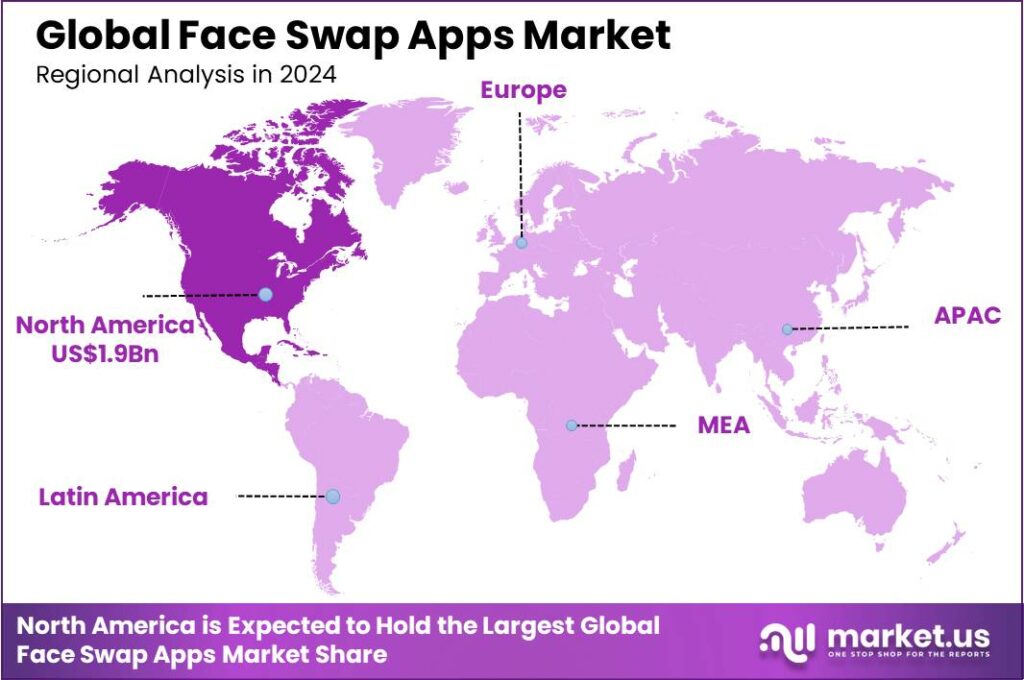
The Global Face Swap Apps Market size is expected to be worth around USD 17.8 Billion By 2034, from USD 5.15 Billion in 2024, growing at a CAGR of 13.20% during the forecast period from 2025 to 2034. North America held the largest share of the market in 2024, with more than 38%, generating USD 1.9 billion in revenue.
Face swap apps are mobile or web-based tools that allow users to swap faces in photos or videos using advanced image processing and AI. These apps detect facial features through machine learning, enabling users to exchange faces with others or preloaded characters. The resulting content is often shared on social media for entertainment purposes.
While the face swap app market remains highly competitive, Reface has emerged as a leading player in the face swap app market, widely recognized for its easy-to-use interface and high-quality AI-generated outputs. Other notable apps such as YouCam Perfect, Face Swap Live, and FaceTool also hold strong positions, each offering distinctive features that appeal to different user needs and use cases.
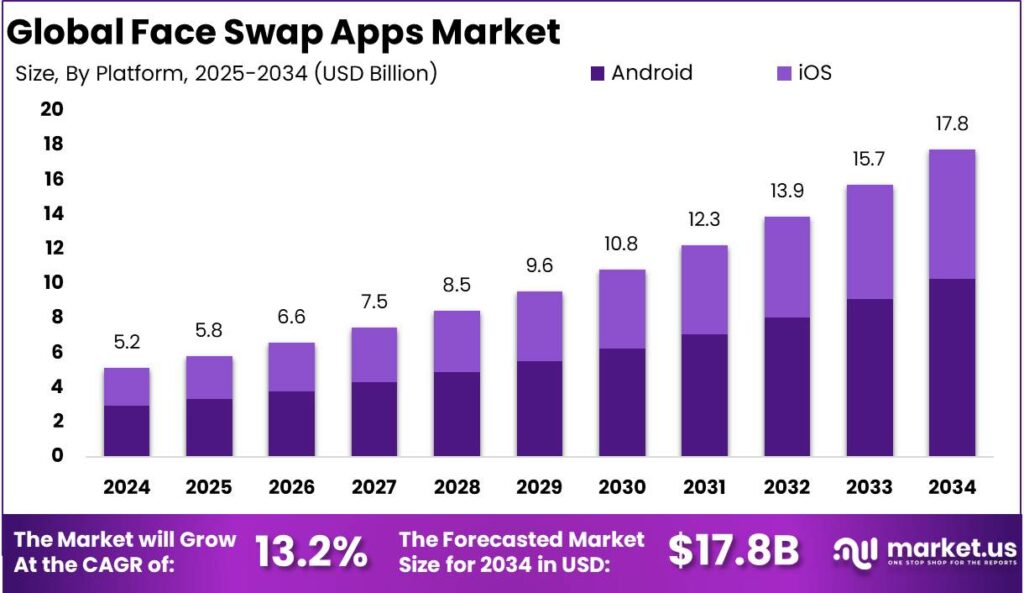
Major factors driving the growth of the face swap app market include the increasing demand for engaging photo and video content on social media, coupled with advancements in artificial intelligence (AI) and machine learning (ML). These technologies have improved the accuracy and realism of face-swapping features, making them more appealing to users.
The growing availability of smartphones with high-quality cameras and the demand for personalized, playful content drive the popularity of face swap apps. As these apps introduce advanced features like live face swapping for video calls and augmented reality effects, they attract a wider audience, further fueling market growth.
The demand for face swap apps is driven by the entertainment sector, as users look for creative ways to engage with content and personalize their social media interactions. Viral face-swapped images and videos boost user engagement and sharing, while integration into social media platforms enhances the user experience, keeping them fresh and appealing.
Recent innovations in face swap technology, including AI-powered facial recognition and machine learning models, have improved accuracy and realism. These advancements allow for better adaptation to diverse facial features and lighting conditions, enhancing the inclusivity and functionality of face swap apps across various demographics and environments.
Key Takeaways
- The Global Face Swap Apps Market is projected to reach a value of USD 17.8 Billion by 2034, up from USD 5.15 Billion in 2024, representing a CAGR of 13.20% during the forecast period from 2025 to 2034.
- In 2024, the Android segment held a dominant market share, accounting for more than 58% of the face swap apps market.
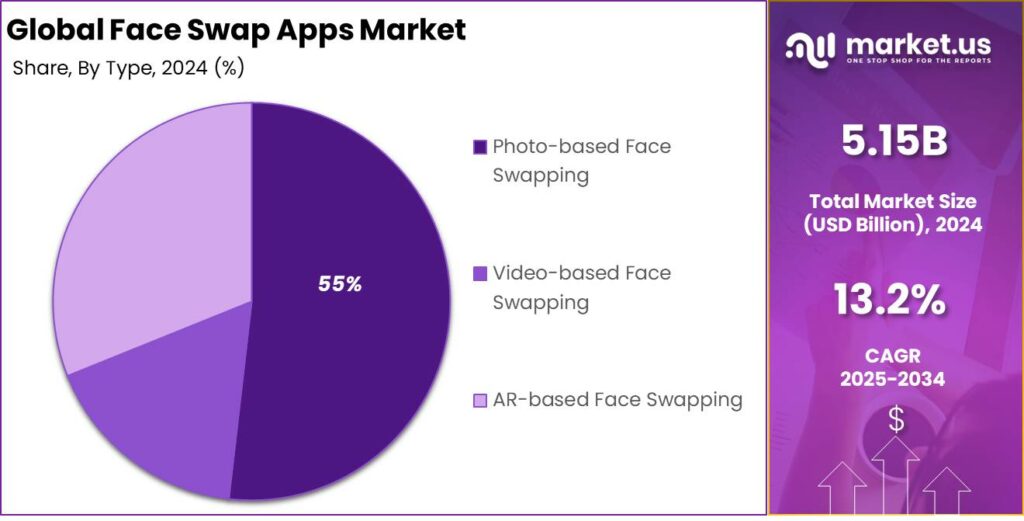
- The Photo-based Face Swapping segment also dominated the market in 2024, capturing more than 55% of the total share.
- North America held the largest share of the market in 2024, with more than 38%, generating USD 1.9 billion in revenue.
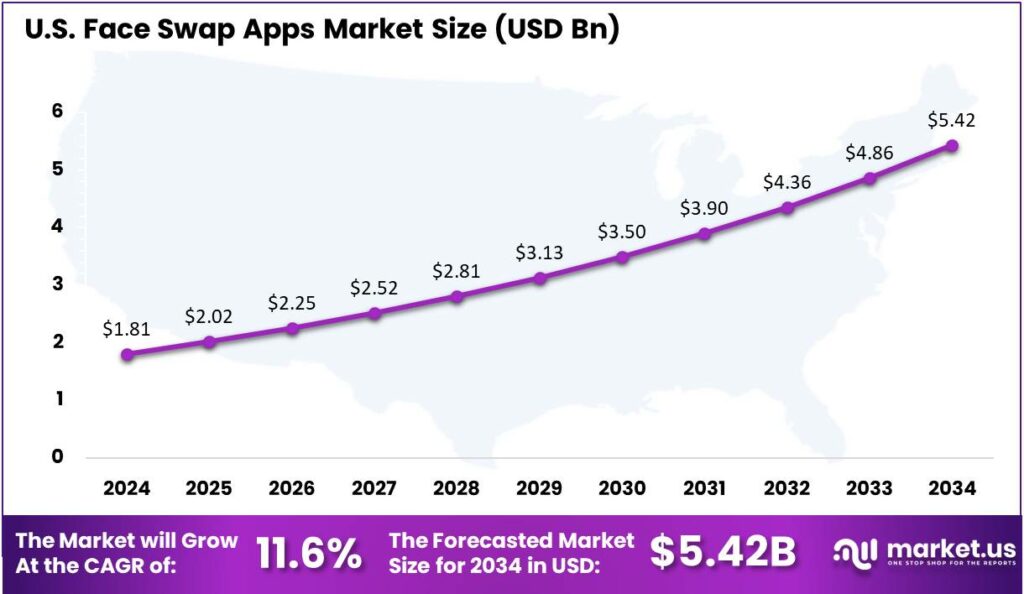
- In the United States, the face swap apps market was valued at USD 1.81 billion in 2024 and is expected to continue growing at a strong pace, with a CAGR of 11.6%.
Analyst’s Viewpoint
The increasing integration of virtual and augmented reality (VR/AR) technologies offers substantial investment opportunities in the Face Swap Apps sector. These technologies enhance user engagement by providing immersive experiences, thereby expanding the market base, particularly among younger demographics who are keen on adopting novel technologies.
The market is seeing a surge in technological advancements, with innovations like real-time face swapping and advanced editing tools setting new standards for user experiences. These improvements are enhancing user satisfaction and expanding the use of face swap technology in entertainment, social media, and professional fields.
Regulatory concerns, especially around data privacy and ethical AI use, are gaining attention. Governments globally are introducing stricter guidelines, which may affect the growth of the Face Swap Apps market. Companies must carefully navigate these regulations, balancing innovation with compliance to mitigate legal and reputational risks.
Impact Of AI
- Enhanced Realism and Accuracy: Modern AI technologies, particularly deep learning models like generative adversarial networks (GANs), have dramatically improved the realism of face swaps. These models can seamlessly match skin tones, facial expressions, and lighting, making image swaps nearly indistinguishable from reality.
- Diverse Applications Across Industries: AI-powered face swap technology is not only a tool for creating amusing social media content but also plays a role in industries like film production, marketing, and even education.
- Accessibility and User-Friendly Tools: AI has simplified the face-swapping process, making these tools accessible to a broader audience. With interfaces designed for ease of use, more people can create custom content without needing technical skills. This democratization is largely due to AI’s ability to streamline complex processes and provide intuitive user experiences.
- Ethical and Privacy Concerns: As the technology becomes more widespread and capable, it raises significant ethical questions, particularly around consent and privacy. Misuse of face swap technology can lead to misinformation and identity theft.
- Evolution of Digital Interactions and Creativity: AI face swap technology is increasingly integrated into digital interactions, enhancing how we engage with media. This technology enables real-time face swapping during video calls or live broadcasts, adding fun and creativity while letting users explore various scenarios and appearances easily.
U.S. Face Swap Apps Market
In 2024, the market for Face Swap Apps in the United States was estimated to have a value of USD 1.81billion. This sector is experiencing a robust growth trajectory, projected to expand at a compound annual growth rate (CAGR) of 11.6%. This rapid growth highlights face swap technology’s rising popularity, fueled by its wide use in entertainment, social media, and content creation.
The burgeoning demand for these applications can be attributed to the continuous advancements in artificial intelligence and machine learning technologies. These technologies enhance the functionality and user experience of face swap apps, making them more realistic and accessible on various digital platforms. Consumers use these apps for fun and social media content, driving market growth.
The market is expected to continue its growth, driven by technological advancements and the widespread adoption of face swap features on social media. As the technology evolves, new use cases will emerge, expanding the reach and appeal of face swap apps, fueling further market growth and attracting increased user engagement and investment.
In 2024, North America held a dominant market position in the Face Swap Apps market, capturing more than a 38% share with revenues amounting to USD 1.9 billion. This region’s leadership in the market can primarily be attributed to its high adoption rate of new technologies and the pervasive use of smartphones and digital media among consumers.
North America, especially the United States, boasts a highly engaged social media user base that readily adopts innovative digital solutions for entertainment and communication, which significantly drives the demand for face swap applications.
Furthermore, the presence of key industry players and developers in North America contributes to its leading position. These companies continuously innovate and improve their offerings, often integrating advanced AI capabilities that enhance the user experience and functionality of face swap apps. This innovation attracts a tech-savvy demographic looking for new ways to interact online and share content creatively.
North America’s strong digital infrastructure, high-speed internet, and widespread digital literacy foster the growth of app-based services like face swap applications. With ongoing technological advancements and the rise of augmented reality, the region is expected to maintain its market dominance and drive further user engagement in the coming years.
Platform Analysis
In 2024, the Android segment held a dominant market position, capturing more than a 58% share in the face swap apps market. This predominance can be attributed to several key factors.
The open-source nature of the Android platform allows developers greater flexibility and ease in app development and distribution, leading to a higher number of face swap applications available on Android compared to iOS. Android devices cover a wide range of price points, making them accessible to a broader audience worldwide, especially in emerging markets where cost-effectiveness is crucial.
Furthermore, Android’s larger global market share compared to iOS expands the potential user base for face swap apps, thereby increasing the segment’s dominance. Android users often benefit from the platform’s compatibility with a variety of hardware, which allows developers to innovate more freely with features and functionalities that enhance the face swapping experience.
Google Play Store’s relatively lenient publishing policies compared to Apple’s App Store facilitate quicker and broader distribution of new and updated applications, including those for face swapping. This ease of access attracts more developers to create and maintain their apps on Android, continually driving the segment’s growth and market leadership.
Type Analysis
In 2024, the Photo-based Face Swapping segment held a dominant market position, capturing more than a 55% share. This leading position can be attributed to the simplicity and accessibility of photo-based swapping tools.
Users can quickly and effortlessly swap faces in static images, making it a popular choice for casual users who enjoy creating humorous or altered photos for social media. Additionally, photo-based face swapping requires less processing power compared to video or AR-based alternatives, allowing it to be more widely accessible on a range of devices, including those with lower specifications.
The popularity of photo-based face swapping is further bolstered by the vast array of apps available that cater to this demand. These apps often integrate seamlessly with social media platforms, allowing for instant sharing and thus increasing their attractiveness to users who engage in social networking. The ease of use and integration with popular platforms help maintain its high adoption rate.
Moreover, photo-based face swapping technologies have benefited from advancements in AI and machine learning, which have significantly improved the quality and realism of swaps. This has made the technology appealing not only to individuals but also to professional sectors such as advertising and branding, where high-quality images are paramount.
Key Market Segments
By Platform
- iOS
- Android
By Type
- Photo-based Face Swapping
- Video-based Face Swapping
- AR-based Face Swapping
Key Regions and Countries
- North America
- US
- Canada
- Europe
- Germany
- France
- The UK
- Spain
- Italy
- Rest of Europe
- Asia Pacific
- China
- Japan
- South Korea
- India
- Australia
- Singapore
- Rest of Asia Pacific
- Latin America
- Brazil
- Mexico
- Rest of Latin America
- Middle East & Africa
- South Africa
- Saudi Arabia
- UAE
- Rest of MEA
Driver
Social Media Engagement and Viral Content Creation
The widespread adoption of face swap applications is primarily driven by their ability to enhance user engagement on social media platforms. These apps enable users to create entertaining and shareable content, such as swapping faces with celebrities or inserting themselves into popular movie scenes.
This functionality has sparked viral trends, with users worldwide joining challenges and sharing their creations, boosting app visibility and appeal. Its ease of use and novelty make it especially popular among younger users on platforms like Instagram, TikTok, and Snapchat.
As users look for new ways to express themselves and connect online, face swap apps offer a unique tool that fits with the evolving nature of digital communication. This trend highlights the increasing intersection of technology and social interaction, showcasing how these apps shape modern digital culture.
Restraint
Privacy and Data Security Concerns
Despite their popularity, face swap apps raise serious privacy and data security concerns. Many require access to users’ personal photos and even real-time camera feeds, leading to the collection of sensitive biometric data. This often occurs without explicit consent or clear transparency about how the data will be used.
There is growing concern over the misuse of data from face swap apps, including unauthorized sharing, identity theft, and the creation of deepfakes. Reports have shown instances where users’ images were used beyond their intended purpose, raising ethical questions about data handling practices. The absence of strong regulatory frameworks for biometric data worsens these concerns, potentially deterring privacy-conscious users from using face swap technologies.
Opportunity
Personalized Marketing and Advertising
Face swap technology presents a significant opportunity in the realm of personalized marketing and advertising. Brands can leverage this technology to create customized content that resonates with individual consumers, enhancing engagement and conversion rates.
For example, companies can create interactive ads where consumers insert their faces into promotions, offering a personalized experience. This approach strengthens brand connections and encourages content sharing on social media, boosting reach and impact.
Moreover, the ability to create personalized content at scale offers a cost-effective solution for marketers seeking targeted campaigns. As consumer expectations shift toward more individualized experiences, integrating face swap technology into marketing strategies can provide a competitive advantage in capturing and retaining customer attention.
Challenge
Ethical Implications and Misuse Potential
The advancement of face swap technology also brings forth ethical challenges, particularly concerning its potential misuse. The ability to create highly realistic altered images and videos can be misused to generate harmful content like deepfakes, leading to misinformation, harassment, and defamation. This not only threatens privacy and reputations but also erodes trust in digital media.
The spread of deceptive content can influence public opinion and undermine trust in genuine communication. To tackle these issues, it’s crucial to develop effective detection tools, establish clear ethical guidelines, and implement regulatory measures. Additionally, raising public awareness and educating people on the responsible use of face swap technology is key to reducing its negative effects.
Emerging Trends
Modern applications enable real-time face swapping, allowing users to effortlessly integrate their faces into videos, GIFs, and live streams. This transition from static images to dynamic content boosts user interaction and creativity. AI-powered features, like 3D face mapping and motion tracking, ensure high-quality, realistic face swaps, driving the trend of immersive digital experiences.
The entertainment industry has embraced face swap technology, with content creators and filmmakers using it to explore new visual effects and storytelling techniques. This technology has also fueled the rise of virtual influencers and AI-generated personas, enabling the creation of digital characters that engage and resonate with audiences.
The rise of face swap apps has raised privacy and ethical concerns, particularly with the unauthorized use of faces in deepfake content. This has underscored the need for regulations and ethical guidelines. Despite these challenges, the technology continues to evolve, presenting new opportunities for user engagement and content creation.
Business Benefits
Face swap technology benefits businesses by enhancing marketing and customer engagement. It enables personalized experiences, like virtual try-ons for beauty products, boosting satisfaction and sales. In advertising, face swap features allow brands to create dynamic, customized content with users’ faces, improving brand recall and loyalty.
Face swap technology streamlines content creation by automating video and image production, cutting costs and saving time. It enables faster marketing rollouts and adaptability to trends. Interactive campaigns, where users add their faces to branded content, boost engagement, drive sharing, and enhance brand visibility and community connection.
Businesses must carefully navigate the ethical challenges of face swap technology. Ensuring user consent and protecting personal data are key to building trust and staying compliant with regulations. Clear policies and responsible use are essential for the technology’s sustainable integration into business practices.
Key Player Analysis
Several key players have emerged in Face Swap Apps Market, each offering unique features that appeal to a wide range of users.
Snap Inc., the parent company behind Snapchat, is a dominant force in the face swap app market. The app also has a strong community of young users, which helps drive engagement. With its commitment to constantly evolving AR tools, Snap Inc. remains a leader in face-swapping technology, frequently introducing new features to keep users engaged.
Instagram, owned by Meta Platforms, Inc., is another key player in the face swap app landscape. While Instagram initially focused on photo sharing, its integration of AR filters has allowed it to become a major contender in this space. Instagram’s face-swapping and filter features make it a fun, creative platform for users. Backed by Meta’s AI and a huge user base, it stands out for easy content sharing and wide reach.
FaceApp is a standalone app that has quickly gained attention due to its advanced AI technology and wide range of face-altering features. The app allows users to swap faces, change their age, or even modify gender in photos with impressive accuracy. FaceApp’s ability to create lifelike transformations makes it a unique player in the market, attracting users who seek more than just novelty but also high-quality photo manipulation tools.
Top Key Players in the Market
- Snap Inc.
- Instagram (Meta Platforms, Inc.)
- FaceApp
- Reface
- Banuba
- Zao (Momo Inc.)
- DeepFaceLab
- YouCam Makeup (Perfect Corp.)
- Wombo AI
- Prisma Labs
- Faceswapper
- Other Key Players
Top Opportunities for Players
The Face Swap Apps market is burgeoning with several opportunities that can significantly benefit market players and industries.
- Integration with Social Media Platforms: Many face swap apps are enhancing their visibility and user base by integrating with popular social media platforms. This partnership not only extends the app’s functionality but also boosts user engagement by making it easier to share and enjoy content directly within social media feeds.
- Advanced AI and AR Capabilities: The application of advanced AI and augmented reality (AR) technologies is evolving rapidly. These technologies enable more sophisticated and realistic face swaps, which can attract a tech-savvy audience looking for high-quality and interactive experiences.
- Marketing and Brand Partnerships: There is a growing opportunity for face swap apps to collaborate with brands, using AR features for unique marketing campaigns. These partnerships can be monetized and lead to creative campaigns that enhance user engagement and brand visibility.
- Immersive and Interactive Content Creation: With the rising interest in VR and AR, face swap apps that offer immersive and interactive experiences, such as the ability to insert oneself into video games or movie scenes, can attract a broader audience. This not only enhances the entertainment value but also opens up new content creation possibilities for users.
- Privacy-Focused Solutions: Given the growing concern over digital privacy, developing apps that prioritize user privacy can capture a significant market segment. Apps that process data locally, without storing information on servers, or those that clearly comply with strict data protection regulations, can build trust and attract privacy-conscious users.
Recent Developments
- In December 2024, Perfect Corp. acquired Wannaby Inc., a fashion tech innovator, to enhance its virtual try-on capabilities across luxury fashion items like shoes and bags.
- In late 2024, DeepFaceLab, a leading open-source deepfake creation tool, continued to enhance its software, focusing on improving native resolution capabilities and providing comprehensive tutorials to assist users in mastering the platform.









