


Report Overview
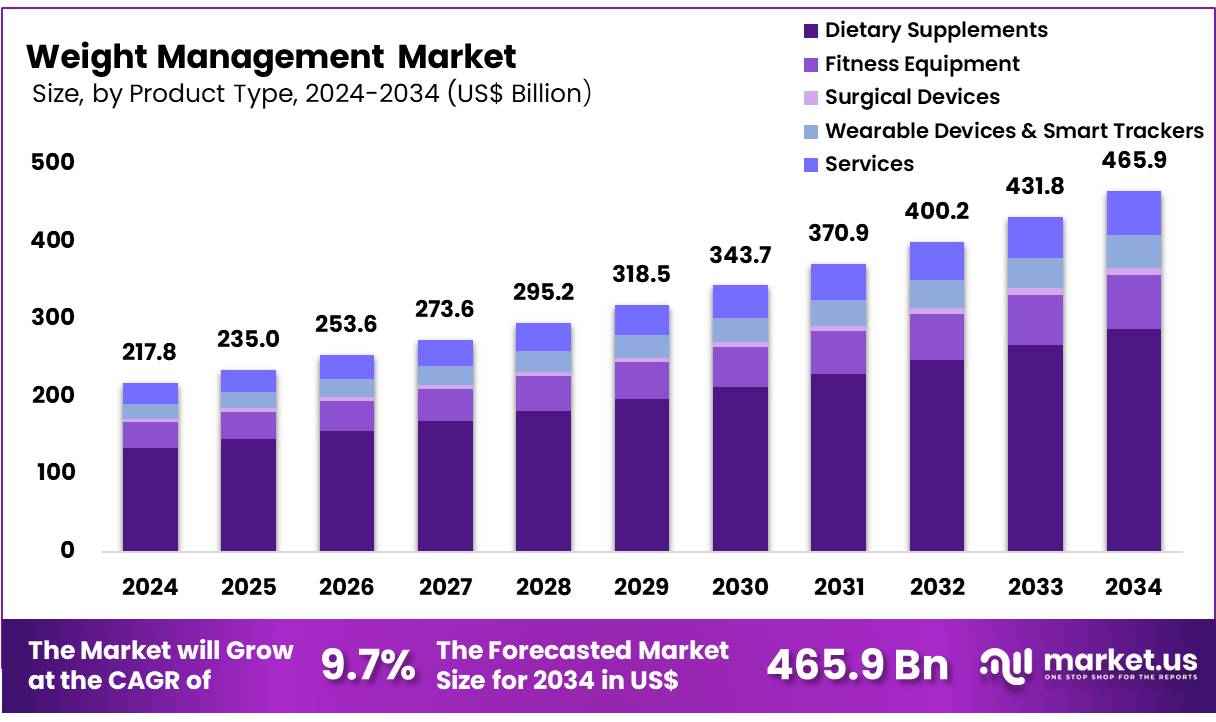
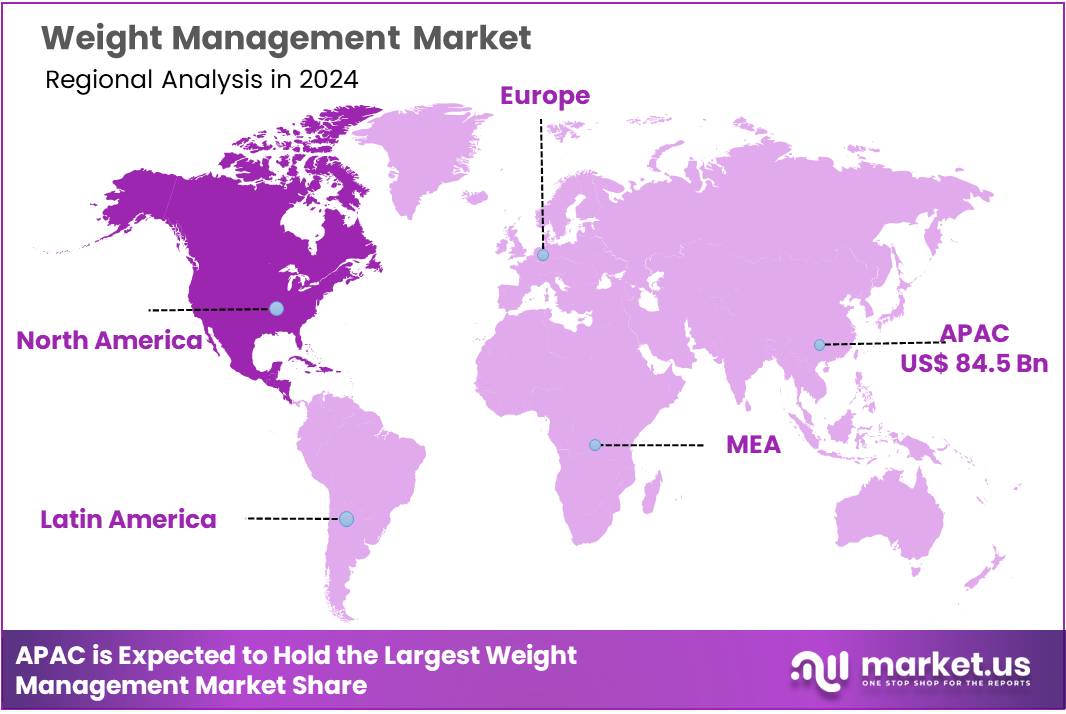
Global Weight Management Market size is expected to be worth around US$ 465.9 Billion by 2034 from US$ 217.8 Billion in 2024, growing at a CAGR of 9.7% during the forecast period from 2025 to 2034. In 2024, North America led the market, achieving over 38.8% share with a revenue of US$ 84.5 Billion.
The weight management Market is experiencing notable growth, driven by the escalating global prevalence of chronic health conditions such as diabetes, cardiovascular disease, and cancer. These issues are particularly prominent in developed economies such as North America and Western Europe, where lifestyle changes, increased consumption of processed foods, sedentary behaviors, and high disposable income have significantly contributed to the rise in metabolic disorders. Consequently, the demand for weight loss and weight management products has seen a substantial increase.
Emerging economies, particularly in the Asia-Pacific region, are also contributing to market expansion. In countries like China and India, improved standards of living and increased fitness awareness have led to a growing interest in dietary control and health maintenance. This shift is creating favorable opportunities for businesses offering weight management solutions, including meal replacements, supplements, and fitness services.
Obesity continues to be a major concern globally, not only among adults but also in children. Obese individuals are at greater risk of developing chronic conditions such as hypertension, diabetes, and orthopedic problems. Alarmingly, the global incidence of childhood obesity is rising. According to Narayana Health, India alone has reported approximately 14.4 million cases of childhood obesity, ranking second globally.
This trend is attributed to poor dietary habits, insufficient physical activity, and increased screen time, including prolonged hours in front of televisions and digital devices. While hormonal disorders are sometimes cited as a cause, they account for only a small proportion of childhood obesity cases.
Childhood obesity is a critical public health challenge, especially in both high-income and low- to middle-income countries. Children who are obese are more likely to remain obese into adulthood and face elevated risks of chronic diseases later in life. Thus, early intervention and preventive strategies are vital.
The COVID-19 pandemic briefly disrupted the weight management industry. Lockdowns and restrictions led to temporary closures of gyms, sports centers, and wellness facilities. Simultaneously, consumers prioritized essential goods over wellness products, causing a dip in sales. However, the pandemic also accelerated digital engagement, including the adoption of virtual fitness programs and online health product purchases. As a result, online channels emerged as key growth enablers in the post-pandemic landscape.
Key Takeaways
- Market Size: Weight Management Market size is expected to be worth around US$ 465.9 Billion by 2034 from US$ 217.8 Billion in 2024.
- Market Growth: The market growing at a CAGR of 9.7% during the forecast period from 2025 to 2034.
- Product Type Analysis: Dietary supplements dominate the market, accounting for approximately 61.7% of the total share
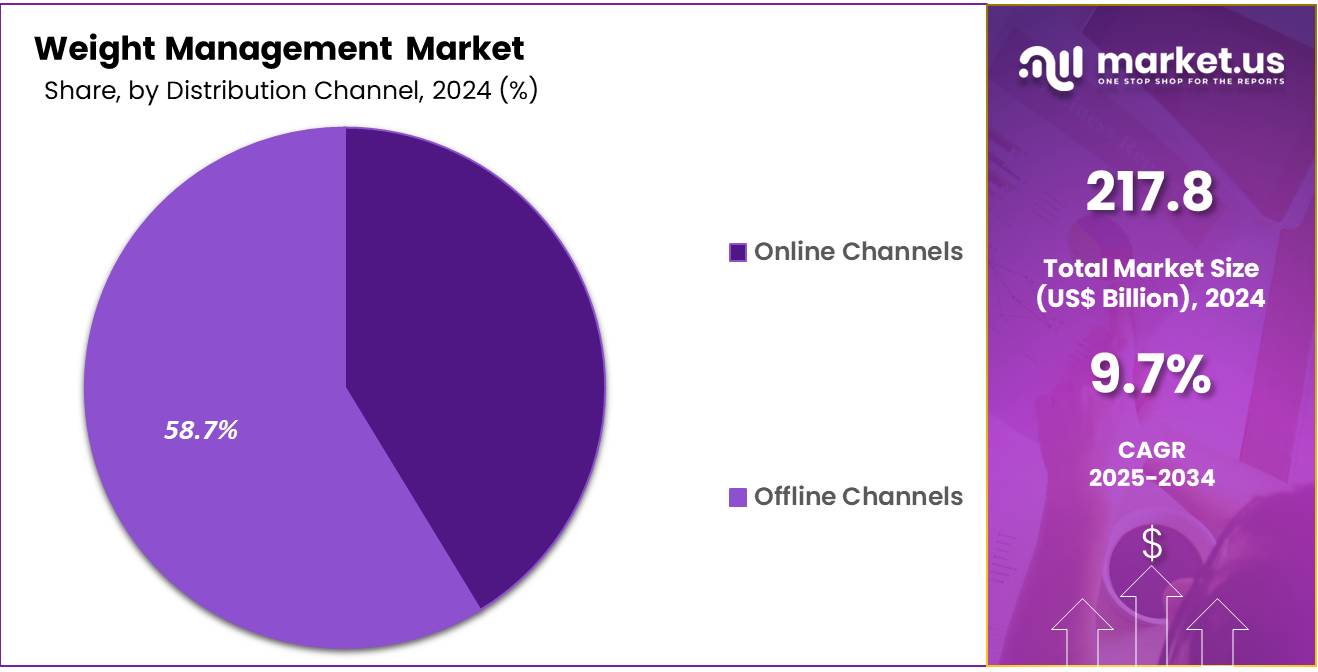
- Application Analysis: Offline channels currently dominate the market, accounting for approximately 57.3% of the total market share.
- Regional Analysis: In 2024, the Asia Pacific region is projected to dominate the global weight management market, capturing approximately 38.8% of the total market share.
Product Type Analysis
The weight management market is segmented into dietary supplements, fitness equipment, surgical devices, wearable devices and smart trackers, and weight management services. Among these, dietary supplements dominate the market, accounting for approximately 61.7% of the total share. This segment includes appetite suppressants, fat burners, meal replacements, and herbal supplements, which are widely adopted due to their ease of use, accessibility, and perceived efficacy in supporting weight loss and metabolic health.
Fitness equipment such as treadmills, elliptical trainers, and strength machines represent a substantial segment, particularly in urban settings with growing gym memberships and home fitness adoption. Surgical devices cater to individuals requiring clinical intervention, including bariatric surgery tools, with demand growing among patients with severe obesity.
Meanwhile, wearable devices and smart trackers are witnessing rapid growth, as consumers increasingly monitor their physical activity and calorie intake. Finally, weight management services, including personalized diet plans and virtual coaching, are expanding with the rise of digital health platforms and tele-nutrition services.
Distribution Channel Analysis
The weight management market is segmented by distribution channels into offline and online platforms. Offline channels currently dominate the market, accounting for approximately 57.3% of the total market share. This segment includes pharmacies, specialty stores, supermarkets, fitness centers, and clinics.
The dominance of offline channels is primarily attributed to consumer preference for in-person consultation, immediate product availability, and professional guidance, especially for supplements and medical devices. Brick-and-mortar stores continue to build trust through physical presence and personalized service, which is particularly important for health and wellness products.
In contrast, online channels are witnessing rapid expansion due to growing digital literacy, convenience, and the increasing influence of e-commerce platforms. Consumers are increasingly purchasing dietary supplements, fitness equipment, and wellness services through mobile apps and websites. Online platforms also offer competitive pricing, access to global brands, and the ability to compare product reviews. The surge in health awareness post-COVID-19 has further accelerated the adoption of online health and fitness solutions.
Key Market Segments
By Product Type
- Dietary Supplements
- Fitness Equipment
- Surgical Devices
- Wearable Devices & Smart Trackers Services
By Distribution Channel
- Online Channels
- Offline Channels
Driver
Rising Prevalence of Obesity and Chronic Diseases
One of the primary drivers of the weight management market is the global rise in obesity and associated chronic conditions such as diabetes, cardiovascular diseases, and orthopedic disorders. Unhealthy diets, physical inactivity, and urban lifestyles have significantly contributed to weight gain across all age groups. According to the World Health Organization (WHO), global obesity has nearly tripled since 1975.
In developing nations, rapid urbanization and increased consumption of high-calorie processed foods have accelerated this trend. Obese individuals are more likely to suffer from long-term health complications, which increases demand for dietary supplements, fitness services, and therapeutic weight loss solutions. This growing health burden is propelling both preventive and therapeutic weight management solutions in global markets.
Trend
Increasing Adoption of Digital Health and Smart Technologies
A key trend shaping the weight management market is the rapid adoption of digital health solutions and wearable technologies. Consumers are increasingly turning to mobile applications, smartwatches, and fitness trackers to monitor daily physical activity, calorie intake, and sleep patterns. These technologies promote self-monitoring and provide real-time feedback, which improves adherence to weight management programs.
Furthermore, virtual fitness coaching, AI-driven diet planners, and tele-nutrition services have become mainstream, particularly after the COVID-19 pandemic. This shift toward personalized, tech-driven solutions reflects consumer demand for convenience and data-driven insights. The digitalization of weight management is enabling wider outreach, especially among tech-savvy younger populations, thereby supporting market expansion.
Restraint
High Cost of Advanced Weight Management Solutions
Despite increasing awareness and demand, the high cost of advanced weight management products and services remains a significant barrier. Surgical interventions such as bariatric surgery, high-end fitness equipment, and medically supervised weight loss programs are often unaffordable for a large segment of the population, particularly in low- and middle-income countries.
Additionally, long-term use of premium dietary supplements or subscription-based fitness platforms can pose a financial burden. This cost sensitivity limits access to effective weight management tools and may result in low adoption rates, especially in rural and economically disadvantaged areas. Addressing affordability and improving insurance coverage remain essential to ensure equitable access to these health solutions.
Opportunity
Growth Potential in Emerging Markets
Emerging markets in Asia Pacific, Latin America, and the Middle East offer significant growth opportunities for the weight management industry. These regions are experiencing rapid urbanization, rising disposable incomes, and an increasing prevalence of obesity and lifestyle-related illnesses. Countries like India and China are witnessing growing consumer awareness regarding fitness, wellness, and preventive healthcare.
Additionally, governments are launching public health campaigns and school-based nutrition programs to curb obesity rates. Local players are also expanding their offerings through affordable, regionally adapted solutions. The surge in online retail and mobile health applications further supports product accessibility. These favorable conditions position emerging economies as high-potential areas for future investment and innovation in the weight management sector.
Regional Analysis
In 2024, the Asia Pacific region is projected to dominate the global weight management market, capturing approximately 38.8% of the total market share. This growth is driven by a rising prevalence of obesity and lifestyle-related disorders across densely populated countries such as China, India, Japan, and South Korea. Rapid urbanization, sedentary lifestyles, and changing dietary habits have significantly increased the demand for weight control solutions.
Additionally, increasing health awareness, higher disposable incomes, and a growing fitness-conscious population are contributing to the adoption of dietary supplements, fitness equipment, and smart health-tracking devices. Governments and healthcare organizations in the region are also launching public health initiatives to combat obesity and promote preventive care.
The presence of local and international players, along with expanding e-commerce platforms, is further enhancing product accessibility. As a result, the Asia Pacific region continues to present lucrative opportunities for companies operating in the weight management sector.
Key Regions and Countries
North America
- US
- Canada
Europe
- Germany
- France
- The UK
- Spain
- Italy
- Russia
- Netherland
- Rest of Europe
Asia Pacific
- China
- Japan
- South Korea
- India
- Australia
- New Zealand
- Singapore
- Thailand
- Vietnam
- Rest of APAC
Latin America
- Brazil
- Mexico
- Rest of Latin America
Middle East & Africa
- South Africa
- Saudi Arabia
- UAE
- Rest of MEA
Key Players Analysis
The Asia Pacific weight management market is supported by a diverse mix of regional and international players offering products across dietary supplements, fitness equipment, digital health tools, and wellness services. These companies are focusing on expanding their product portfolios to cater to rising consumer demand for personalized and culturally adapted solutions.
Strategic partnerships, local manufacturing, and distribution network expansion are key growth strategies. Many players are also leveraging e-commerce platforms and mobile applications to improve product accessibility. Increased investment in marketing, clinical research, and consumer education is helping establish strong brand recognition and drive competitive advantage in this dynamic market.
Market Key Players
- Herbalife Nutrition Ltd.
- WW International, Inc. (Weight Watchers)
- Nutrisystem, Inc.
- Atkins Nutritionals, Inc.
- Noom, Inc.
- HealthifyMe
- Jenny Craig, Inc.
- Glanbia PLC
- Nestlé Health Science
- Abbott Laboratories
- The Kellogg Company
- Medifast, Inc.
- Technogym S.p.A.
- Johnson Health Tech Co., Ltd.
- Brunswick Corporation
- Apollo Endosurgery, Inc.
- Eli Lilly and Company
- Novo Nordisk
- Roche Holding AG
- GNC Holdings, Inc.
- Others
Recent Developments
- Herbalife Nutrition Ltd.: In March 2025, Herbalife Nutrition Ltd. announced the acquisition of assets from Pro2col Health, Pruvit Ventures, and Link BioSciences. This strategic move aims to expand Herbalife’s health and wellness offerings by incorporating Pruvit’s patented ketone supplements and Pro2col’s AI-driven nutrition platform. The acquisition is expected to enhance Herbalife’s product portfolio and provide personalized health solutions to its customers.
- HealthifyMe: In October 2024, HealthifyMe secured $20 million in funding to drive its expansion into the U.S. market. The investment, led by Khosla Ventures and LeapFrog Investments, will support the enhancement of HealthifyMe’s AI capabilities and the introduction of its health and wellness platform to a broader audience.
- Atkins Nutritionals, Inc.: In September 2024, Atkins Nutritionals, Inc. unveiled “Atkins Strong,” a new line of high-protein shakes designed to support individuals on their weight wellness journey. These products cater to those using GLP-1 medications or seeking to increase their protein intake, aligning with Atkins’ commitment to low-carb, high-protein nutrition.









