


Report Overview
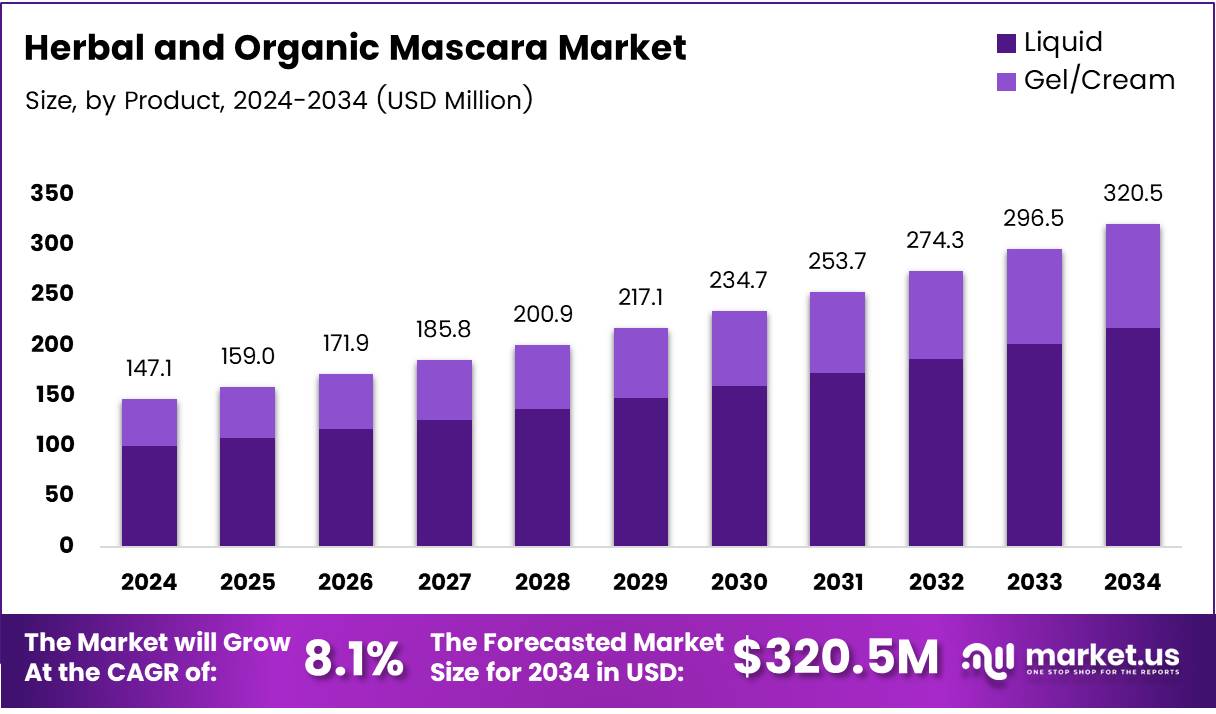
The Global Herbal and Organic Mascara Market size is expected to be worth around USD 320.5 Million by 2034, from USD 147.1 Million in 2024, growing at a CAGR of 8.1% during the forecast period from 2025 to 2034.
The Herbal and Organic Mascara Market is an emerging segment within the broader beauty and cosmetics industry, driven by the growing consumer preference for natural and sustainable products. Increasing awareness about harmful chemicals in traditional mascaras has led to a surge in demand for organic alternatives. According to Poweredx Beauty Buddy, 77% of beauty enthusiasts use mascara daily, highlighting the widespread popularity and opportunity for growth in this category.
The market for herbal and organic mascaras is expected to witness significant growth as consumers increasingly shift towards clean beauty. The demand for products with natural ingredients, free from synthetic chemicals, aligns with the global trend of health-conscious and eco-friendly consumer behaviors.
According to Poweredx Beauty Buddy, 39% of respondents wear mascara to define their eyes, while 24% seek it to make their eyes appear larger. This growing awareness presents both challenges and opportunities for brands to innovate and meet evolving consumer expectations.
Governments worldwide are supporting the growth of natural beauty products through favorable regulations and policies. Increased investment in organic farming and sustainable production processes is encouraging beauty brands to adopt eco-friendly practices.
With these developments, the herbal and organic mascara market stands to benefit from both government incentives and increased consumer demand for environmentally conscious products. As 42% of consumers prefer mascaras for their long-lasting wear and resistance to water, sweat, and tears, brands can position their products as effective and durable, while adhering to these emerging trends.
The herbal and organic mascara market is also seeing a wave of innovations as brands cater to niche segments, offering specialized formulations that cater to sensitive eyes or specific skincare concerns. The market potential is further bolstered by the increasing number of online platforms and direct-to-consumer channels that allow easy access to these organic products. With a growing number of players investing in R&D to develop safe, effective, and eco-friendly mascaras, there is ample room for brands to establish a strong presence and create loyal customer bases.
As the market for herbal and organic mascaras expands, brands will need to focus on product differentiation, sustainability, and adhering to government regulations. The trend toward organic beauty products will continue to shape the landscape, creating both challenges and lucrative opportunities for companies looking to meet the demand of health-conscious, environmentally aware consumers.
Key Takeaways
- Global Herbal and Organic Mascara Market size is projected to reach USD 320.5 Million by 2034, up from USD 147.1 Million in 2024.
- The market is expected to grow at a CAGR of 8.1% from 2025 to 2034.
- Liquid product segment led the market in 2024, holding a dominant 72.6% share, due to its ease of application and consumer preference.
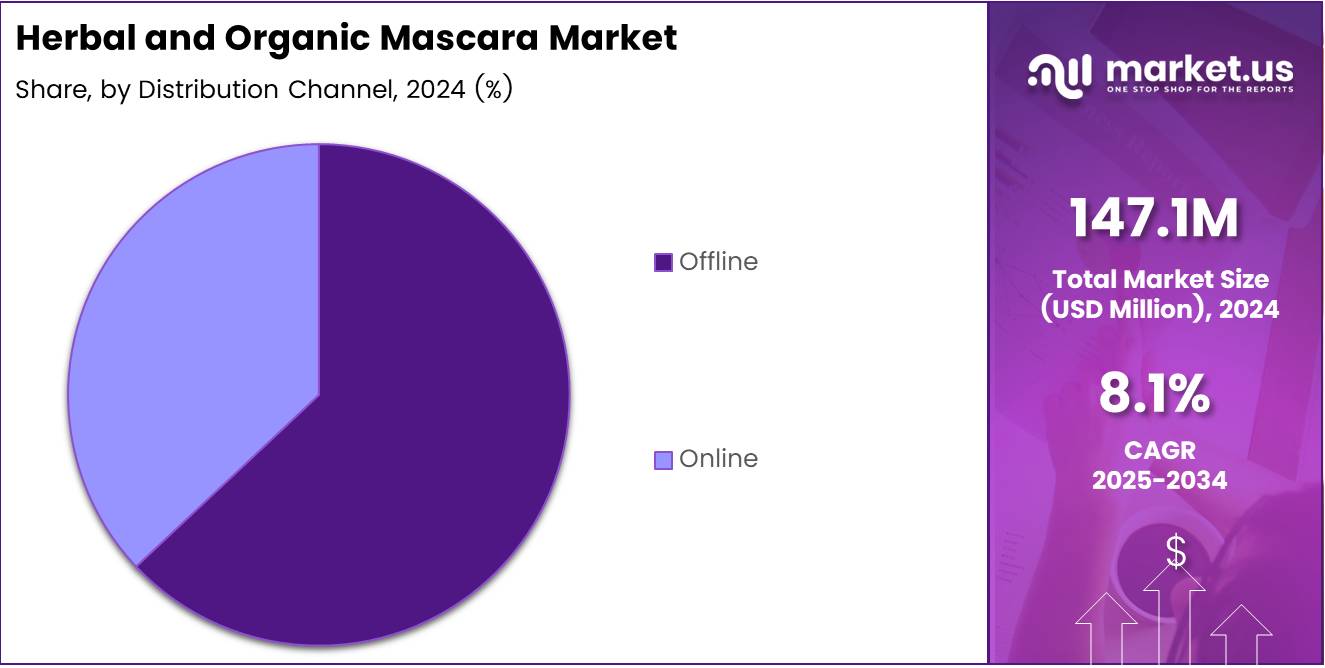
- Offline retail channels dominated sales in 2024, driven by traditional shopping habits and in-store product experience.
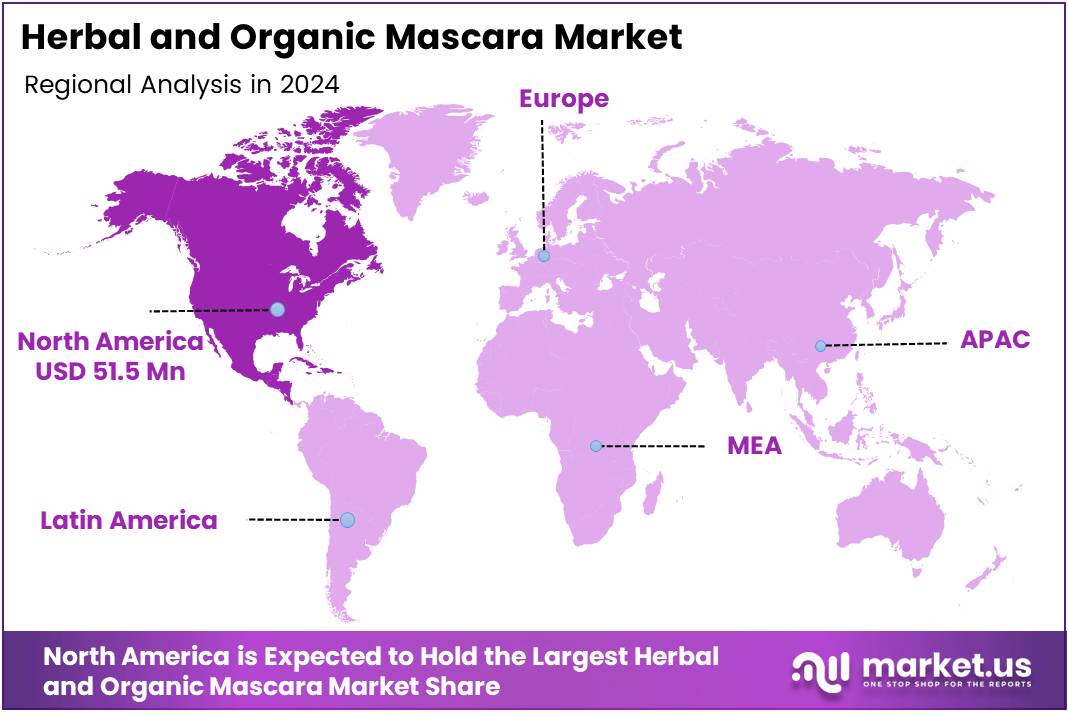
- North America was the leading region in 2024, with 35.2% of the global share (approx. USD 51.5 Million), fueled by high disposable income, demand for clean beauty, and strong retail networks.
Product Analysis
In 2024, Liquid held a dominant market position in By Product Analysis segment of Herbal and Organic Mascara Market, with a 72.6% share.
The liquid product segment led the Herbal and Organic Mascara Market in 2024, accounting for a significant share of the market at 72.6%. This dominance is attributed to the ease of application, smooth consistency, and wide consumer preference for liquid formulations. Liquid mascaras offer excellent coverage and are versatile for both volume and lengthening effects, which are popular among users.
On the other hand, the gel/cream segment, while growing, held a smaller market share. These mascaras are favored by those who seek a more natural finish, offering a unique texture that can be more buildable. However, the creamy consistency may not have the same widespread appeal or convenience as liquid formulations, limiting its growth in comparison to liquids.
Consumers continue to prefer liquid mascaras due to their ease of use and performance, which helps explain its strong market presence. As a result, the liquid product segment will likely maintain its leadership in the near future, while gel and cream variants are expected to grow as niche products catering to specific consumer preferences.
Distribution Channel Analysis
In 2024, Offline held a dominant market position in By Distribution Channel Analysis segment of Herbal and Organic Mascara Market.
Offline retail channels dominated the Herbal and Organic Mascara Market in 2024, driven by the traditional consumer preference for in-store shopping. Offline stores, including beauty retailers, drugstores, and department stores, provided consumers with the opportunity to test and experience products firsthand, which has long been a key factor in driving sales.
Offline distribution channels accounted for the majority of sales due to the tactile experience they offer, where consumers can verify the product’s quality and choose based on immediate needs. Additionally, the presence of beauty consultants and the ability to make informed purchasing decisions further cemented the offline channel’s dominance.
However, the online distribution channel is steadily growing as more consumers prefer the convenience of shopping from home. The rise of e-commerce platforms and social media-driven trends is expanding online sales, though it has not yet surpassed offline in volume. Despite this, online retail channels are expected to experience consistent growth as they cater to a growing demand for home delivery and digital-first shopping experiences.
Key Market Segments
By Product
- Liquid
- Gel/Cream
By Distribution Channel
- Offline
- Online
Drivers
Rising Consumer Awareness about Clean Beauty Drives Market Growth
The increasing consumer awareness of the potential harms of synthetic chemicals in beauty products is significantly influencing the growth of the herbal and organic mascara market. As people become more conscious of the ingredients in their cosmetics, many are opting for alternatives that are free from harmful chemicals like parabens, sulfates, and phthalates.
Organic mascaras, made from plant-based ingredients, align with this growing preference for clean beauty. Consumers now view organic and herbal products as safer and more beneficial for their skin and overall health, fueling demand.
Furthermore, the shift towards clean beauty is not limited to personal health concerns. Environmental sustainability is also a key factor driving the trend. Many consumers prefer products that are biodegradable and come from ethically sourced materials. This growing preference for cleaner, greener products is expected to continue influencing the market, pushing more brands to invest in organic formulations.
Restraints
Higher Cost Compared to Conventional Mascara Limits Accessibility
One of the main restraints for the herbal and organic mascara market is its higher price compared to traditional mascaras. Organic ingredients used in these products are often more expensive to source and process, which contributes to the higher retail cost. This price difference can be a barrier for consumers who are used to more affordable, mass-produced beauty products. For many, the additional cost may not seem justified, especially if they don’t see a significant difference in the product’s performance.
In addition, the premium price may limit the appeal of organic mascaras to a smaller, more niche consumer base. Budget-conscious buyers or those new to the clean beauty movement might hesitate to make the switch. Therefore, while there is a growing segment of consumers willing to pay more for organic products, the overall market for herbal mascaras could be hindered by this cost barrier.
Growth Factors
Product Innovation with Ayurvedic and Traditional Botanicals Creates New Opportunities
A key growth opportunity for the herbal and organic mascara market lies in the innovation of products using Ayurvedic and traditional botanical ingredients. Many consumers are increasingly seeking beauty products that incorporate natural, culturally specific ingredients that have been used for centuries in skincare and beauty routines. By incorporating traditional herbs and botanicals, brands can create unique formulations that appeal to consumers looking for authentic, natural alternatives to mainstream cosmetics.
This innovation not only helps brands stand out in a competitive market but also provides an opportunity to cater to culturally specific consumer bases. For instance, Ayurvedic ingredients or indigenous plant extracts can resonate deeply with consumers from certain regions, helping brands establish a loyal customer following. Additionally, this market differentiation creates a valuable opportunity for brands to increase consumer interest and create a more personalized, targeted product offering.
Emerging Trends
Rise of Transparent Labeling and Ingredient Traceability Sets New Trends
One of the biggest trends shaping the herbal and organic mascara market is the demand for transparent labeling and ingredient traceability. Today’s consumers are more informed than ever and want to know exactly what is in the products they buy. This has led to an increased focus on clear, honest labeling and the traceability of ingredients from source to shelf. Brands that prioritize transparency are gaining a competitive edge, as consumers trust them more for being open about their formulations.
In addition, the influence of beauty influencers on social media platforms like Instagram and TikTok has made ingredient transparency even more important. Influencers regularly highlight clean beauty products that have clear, ethical ingredient lists.
As more consumers become educated about ingredient safety and sourcing, brands that offer transparency will likely see increased sales and customer loyalty. This trend is not only shaping consumer preferences but also pushing the entire beauty industry toward greater accountability.
Regional Analysis
North America Leads the Herbal & Organic Mascara Market with 35.2% Share, Valued at USD 51.5 Million
North America stands as the dominant region in the herbal and organic mascara market, accounting for 35.2% of the global share, equating to approximately USD 51.5 million. This leadership is attributed to a combination of high disposable incomes, a strong inclination towards clean beauty products, and a well-established retail infrastructure. The United States, in particular, showcases a robust demand for products free from synthetic chemicals, driven by increasing consumer awareness and preference for natural ingredients.
Regional Mentions:
Europe maintains a significant presence in the herbal and organic mascara market, bolstered by stringent cosmetic regulations and a consumer base that prioritizes sustainability. Countries like Germany, France, and the United Kingdom are at the forefront, with consumers increasingly seeking products that align with ethical and environmental standards. This trend is further supported by the region’s emphasis on quality and safety in cosmetic products.
The Asia Pacific region is experiencing rapid growth in the herbal and organic mascara market, driven by rising disposable incomes, urbanization, and a growing awareness of the benefits of organic products. Nations such as China, Japan, and India are witnessing a surge in demand for natural cosmetics, influenced by changing lifestyles and an expanding middle class. This region is poised to continue its upward trajectory as consumers become more eco-conscious.
In Latin America, the herbal and organic mascara market is gradually gaining traction, influenced by a shift towards natural beauty products and increasing consumer awareness. While the market share remains modest, countries like Brazil and Mexico are beginning to embrace organic cosmetics, driven by a younger demographic and a growing interest in sustainable beauty practices.
The Middle East and Africa region presents a developing market for herbal and organic mascaras, with growth opportunities emerging due to changing beauty standards and a rising demand for natural ingredients. However, the market is still in its nascent stages, with challenges such as limited awareness and higher product costs hindering widespread adoption. Despite these obstacles, the region holds potential for future growth as consumer preferences evolve towards more sustainable and health-conscious beauty choices.
Key Regions and Countries
- North America
- US
- Canada
- Europe
- Germany
- France
- The UK
- Spain
- Italy
- Rest of Europe
- Asia Pacific
- China
- Japan
- South Korea
- India
- Australia
- Rest of APAC
- Latin America
- Brazil
- Mexico
- Rest of Latin America
- Middle East & Africa
- South Africa
- Saudi Arabia
- UAE
- Rest of MEA
Key Players Analysis
The global herbal and organic mascara market in 2024 is witnessing significant growth, driven by increasing consumer demand for clean, plant-based beauty products. Key players in this market are leveraging natural formulations and ethical practices to cater to this trend.
Skin2Spirit and Endlessly Beautiful have carved out strong positions by focusing on natural ingredients and cruelty-free formulations. Their commitment to clean beauty resonates with consumers seeking gentle, non-toxic alternatives.
JOSIE MARAN COSMETICS continues to lead with its argan oil-infused products, emphasizing sustainability and ethical sourcing. The brand’s eco-conscious approach aligns well with modern beauty preferences.
RMS Beauty remains a strong contender by offering high-performance mascaras made from certified organic ingredients. Its products appeal to consumers prioritizing both effectiveness and ingredient purity.
Lotus Herbals Limited, a prominent name in the Indian market, uses Ayurvedic principles to develop herbal mascaras. Its wide distribution and natural formulations position it well among holistic beauty seekers.
EVXO Cosmetics stands out for its vegan and gluten-free mascaras, meeting the needs of ethically and health-conscious consumers. Their clean ingredient philosophy supports growth in a niche yet expanding segment.
Ulta Beauty, Inc., though primarily a retailer, plays a crucial role by offering a variety of herbal and organic mascaras, giving smaller clean beauty brands a significant platform.
Top Key Players in the Market
- Skin2Spirit
- JOSIE MARAN COSMETICS
- Endlessly Beautiful
- RMS Beauty
- Lotus Herbals Limited
- EVXO Cosmetics
- Ulta Beauty, Inc.
- Au Naturale, Llc
- Ecco Bella
- Odylique
Recent Developments
- In January 2025, Albéa Group acquired Conanec Industrie, a move aimed at strengthening its position in cosmetic packaging manufacturing. The acquisition enhances Albéa’s capabilities in high-quality metal and plastic packaging solutions.
- In April 2024, Cipla announced the acquisition of Ivia Beaute’s cosmetics, personal care distribution, and marketing business for ₹130 crore. This strategic move marks Cipla’s entry into the consumer wellness and beauty segment.
- In December 2024, L’Oréal Groupe acquired the Korean skincare brand Dr.G, expanding its footprint in the fast-growing Asian beauty market. The deal supports L’Oréal’s strategy to invest in high-potential dermocosmetic and skincare brands.









