


Report Overview
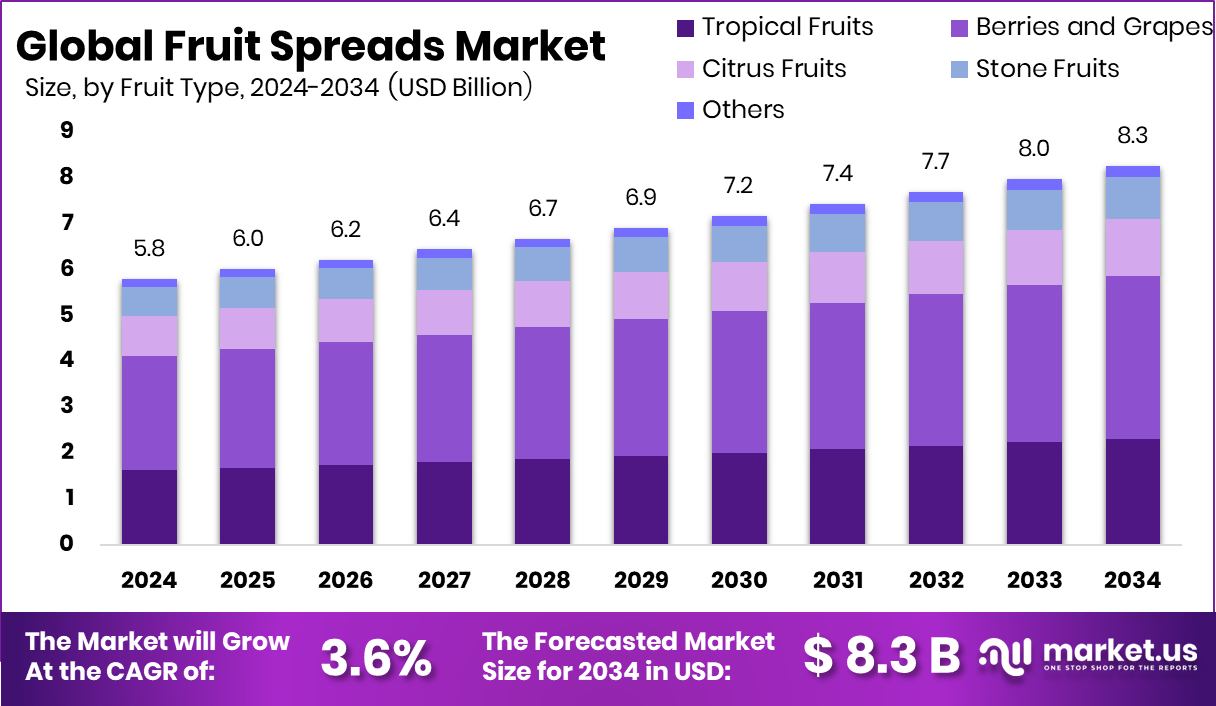
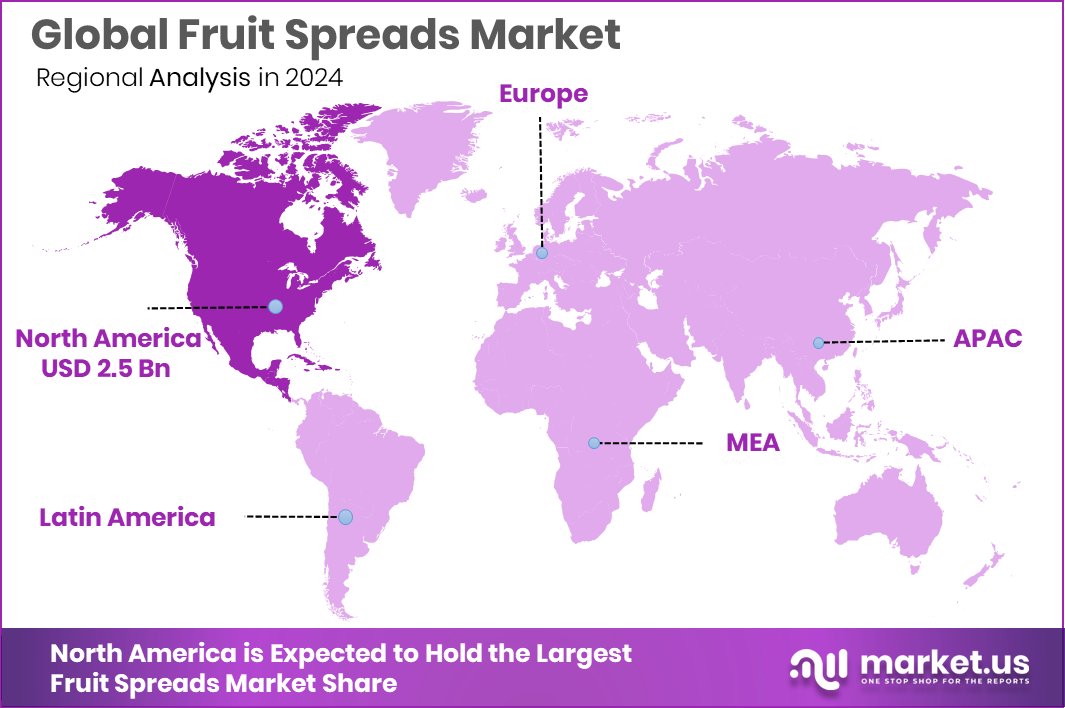
Global Fruit Spreads Market is expected to be worth around USD 8.3 billion by 2034, up from USD 5.8 billion in 2024, and grow at a CAGR of 3.6% from 2025 to 2034. North America’s fruit spreads market is valued at USD 2.5 billion in 2024.
Fruit spreads are soft, smooth, and sweet preserves made primarily from fruit pulp or purée, often combined with sweeteners and natural pectin. Unlike traditional jams, fruit spreads typically contain little to no added sugar and are marketed as a healthier alternative.
They retain the natural flavor and color of fruits, making them a popular choice for breakfast items, desserts, and bakery applications. Common varieties include strawberry, raspberry, apricot, and blueberry spreads, available in glass jars, squeeze bottles, and single-serve packs.
The fruit spreads market represents the global trade and consumption of processed fruit-based products intended for spreading on bread, pastries, and other foods. It includes a wide range of natural, organic, sugar-free, and flavored spreads catering to both households and foodservice sectors. The market has grown steadily over the years due to changing dietary preferences, rising disposable incomes, and increasing interest in plant-based, clean-label food options.
Despite this vast production, the processing level for fruits remains relatively low, at approximately 4.5%. Recognizing this gap, the Ministry of Food Processing Industries (MoFPI) has set ambitious targets to enhance the processing levels of fruits and vegetables from the current 2% to 35% by 2025.
The export potential for fruit spreads is also noteworthy. In the financial year 2023/24, India’s fruit and vegetable exports witnessed a 14% increase, reaching US$3.7 billion. This surge indicates a growing international demand for processed fruit products, including spreads. The government’s focus on diversifying food exports and identifying products with high export potential further augments opportunities in this sector.
Key Takeaways
- Global Fruit Spreads Market is expected to be worth around USD 8.3 billion by 2034, up from USD 5.8 billion in 2024, and grow at a CAGR of 3.6% from 2025 to 2034.
- Berries and grapes held a 43.3% share in the Fruit Spreads Market, leading consumer flavor preference.
- Jams led the Fruit Spreads Market in 2024, securing a dominant 47.4% market share globally.
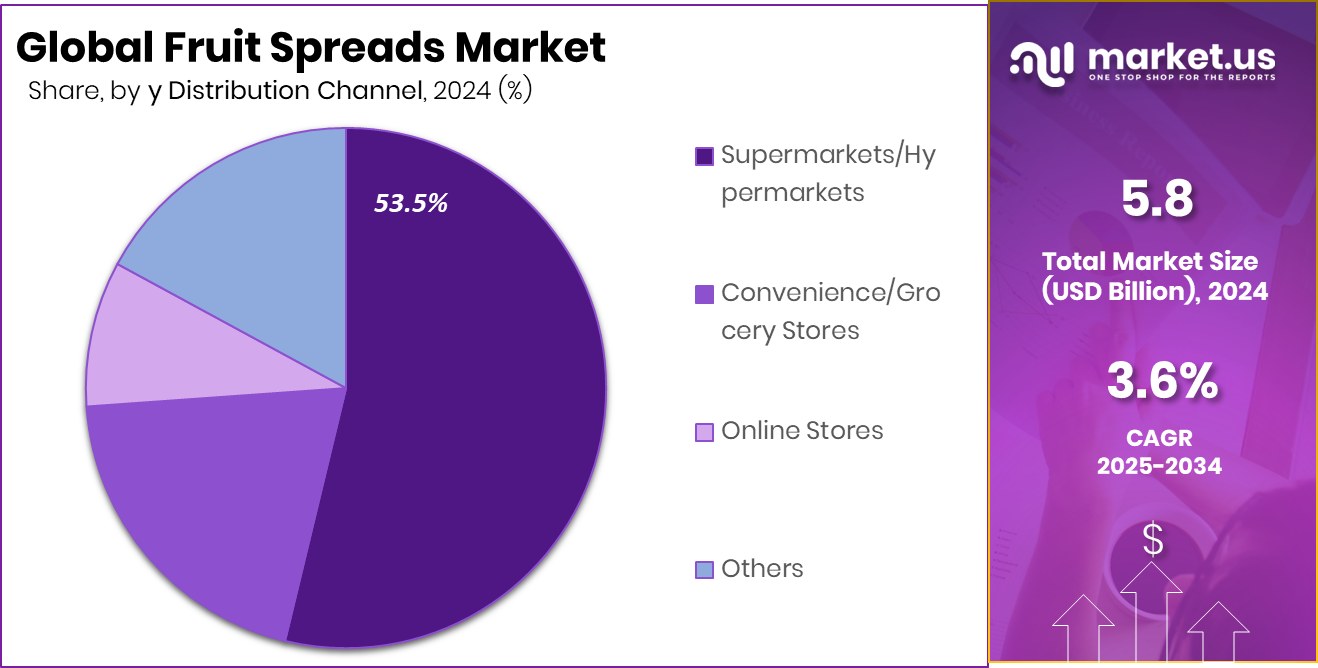
- Supermarkets and hypermarkets contributed 53.5% to the Fruit Spreads Market via strong retail presence and visibility.
- North America dominates the global fruit spreads market with a 44.1% share.
By Fruit Type Analysis
Berries and grapes dominate the Fruit Spreads Market with a 43.3% share globally.
In 2024, Berries and Grapes held a dominant market position in the By Fruit Type segment of the Fruit Spreads Market, boasting a significant 43.3% share. This substantial market presence underscores the widespread consumer preference for these fruit types, which are prized for their vibrant flavors and health benefits, including high antioxidant content.
This segment’s strength is primarily driven by increasing consumer awareness regarding the nutritional advantages of berries and grapes, coupled with their versatile use in various culinary applications.
The dominance of berries and grapes in the fruit spreads market also reflects changing consumer eating habits, where there is a growing inclination towards wholesome and natural ingredients in daily diets. As a result, manufacturers have focused on expanding their product lines to include a variety of berry and grape-based spreads that cater to this demand.
The segment’s robust performance is further bolstered by innovations in packaging and marketing strategies that emphasize the natural and pure qualities of these fruits, appealing to health-conscious consumers looking for premium products in their food choices.
By Type Analysis
Jams hold the largest share at 47.4% in the Fruit Spreads Market.
In 2024, Jams held a dominant market position in the By Type segment of the Fruit Spreads Market, with a 47.4% share. This impressive market share highlights the enduring popularity of jams as a staple in many households. Jams have been a traditional favorite due to their versatility and the wide variety of flavors available, ranging from classic strawberry to exotic fig.
The strong performance of jams in the market can also be attributed to their widespread application in both domestic and commercial settings. From breakfast spreads to dessert toppings, jams serve multiple culinary purposes, reinforcing their necessity in everyday cuisine. Additionally, the shift towards artisanal and gourmet variants has helped maintain consumer interest and willingness to experiment with new flavors.
Manufacturers have capitalized on this trend by introducing organic and reduced-sugar options, responding to the growing consumer demand for healthier food products. The strategic focus on adapting to consumer preferences for health without compromising on taste has been key to sustaining the high market share of jams within the fruit spreads industry.
By Distribution Channel Analysis
Supermarkets and hypermarkets account for 53.5% of global fruit spreads sales.
In 2024, Supermarkets/Hypermarkets held a dominant market position in the By Distribution Channel segment of the Fruit Spreads Market, with a 53.5% share. This predominant role underscores the importance of these retail formats in the consumer goods distribution chain. Supermarkets and hypermarkets are preferred by consumers for their convenience, variety, and the ability to compare products directly before purchasing.
The substantial market share held by supermarkets and hypermarkets is also reflective of their ability to stock a diverse array of fruit spread brands and types, from premium to budget-friendly options, catering to a broad spectrum of consumer preferences. Additionally, these venues often feature promotional activities and discounts, which attract more customers and encourage bulk purchases.
Moreover, the physical presence of these stores allows for immediate consumer gratification—a crucial factor in maintaining customer loyalty and repeat purchases. The strategic placement of fruit spreads in store layouts, often near complementary products like bread and other breakfast items, enhances product visibility and boosts sales, further cementing the stronghold of supermarkets and hypermarkets in the fruit spreads market.
Key Market Segments
By Fruit Type
- Tropical Fruits
- Banana
- Mango
- Pineapple
- Others
- Berries and Grapes
- Strawberry
- Blueberry
- Raspberry
- Cranberry
- Grapes
- Blackcurrant
- Others
- Citrus Fruits
- Orange
- Lime and Lemon
- Others
- Stone Fruits
- Cherry
- Prune
- Peach
- Others
- Others
By Type
- Jams
- Jellies
- Marmalades
- Others
By Distribution Channel
- Supermarkets/Hypermarkets
- Convenience/Grocery Stores
- Online Stores
- Others
Driving Factors
Health-Conscious Eating Habits Drive Fruit Spreads Growth
One big reason the fruit spreads market is growing fast is the rising focus on healthy eating. People today are more aware of what they eat and want foods with fewer artificial ingredients and more natural content. Fruit spreads made with real fruits, less sugar, and no preservatives are becoming popular with health-conscious buyers.
These products also offer vitamins, fiber, and antioxidants, making them a better option than sugary spreads. Consumers looking to replace high-calorie breakfast toppings or snacks are switching to fruit spreads. This trend is especially strong among young adults, fitness enthusiasts, and families with kids.
Restraining Factors
High Sugar Content Limits Health-Conscious Consumer Appeal
One major challenge for the fruit spreads market is the high sugar content in many products. While fruit spreads are tasty and popular, a lot of them still have added sugars or artificial sweeteners.
This creates concern among health-conscious buyers who are trying to avoid excessive sugar intake. Consumers reading food labels closely may skip these products and choose sugar-free or low-calorie alternatives instead.
This limits the market growth, especially in countries where health awareness is high. Even natural sugar from fruits can be a problem for people managing conditions like diabetes. Unless brands reformulate their products to reduce sugar, they risk losing a portion of their target audience to healthier options.
Growth Opportunity
Expanding Online Sales Channels Boost Market Growth
A significant opportunity for the fruit spreads market lies in the rapid expansion of online sales channels. With the increasing use of the internet and smartphones, more consumers are shopping for groceries online, including fruit spreads. E-commerce platforms offer convenience, a wide variety of choices, and the ability to compare products easily, making them attractive to busy consumers.
Additionally, online retailers can reach customers in remote areas where traditional stores may not be accessible. This shift towards online shopping allows fruit spread manufacturers to tap into new markets and demographics. By investing in digital marketing and optimizing their online presence, companies can increase brand visibility and drive sales.
Furthermore, online platforms provide valuable consumer data, enabling businesses to tailor their offerings to meet customer preferences. As e-commerce continues to grow, leveraging these channels presents a promising avenue for expanding the fruit spreads market.
Latest Trends
Innovative Flavors and Health Focus Shape Market
A leading trend in the fruit spreads market is the introduction of innovative flavors combined with a focus on health-conscious ingredients. Consumers are increasingly seeking spreads that not only offer unique taste experiences but also align with their health and wellness goals.
Manufacturers are responding by developing products that incorporate exotic fruits, superfoods, and natural sweeteners, catering to the demand for both novelty and nutrition. For instance, the rise in sugar-free and low-sugar fruit spreads reflects a broader shift towards healthier eating habits.
Additionally, the use of clean-label ingredients and the elimination of artificial additives are becoming standard practices in product development. This trend is further supported by the growing popularity of functional foods that provide added health benefits, such as improved digestion or enhanced immunity.
Regional Analysis
North America’s fruit spreads market holds a 44.1% share, valued at USD 2.5 billion.
In 2024, North America emerged as the dominant region in the global Fruit Spreads Market, commanding a 44.1% share with a market value of USD 2.5 billion. This dominance is primarily driven by widespread consumer preference for natural, convenient, and health-focused food products.
The region’s robust retail infrastructure, including supermarkets and online platforms, supports consistent product availability and visibility. In Europe, the market is mature, with stable demand backed by traditional consumption habits and a growing shift towards organic and low-sugar spreads.
Asia Pacific continues to show steady expansion due to rising urbanization and increasing disposable income, especially in countries like China, Japan, and India. Latin America presents emerging potential as consumer awareness of health and wellness grows across urban centers.
Meanwhile, the Middle East & Africa region is witnessing a gradual uptake, mainly led by urban markets and a rising inclination toward Western dietary patterns. However, these regions still trail behind the more established markets in terms of volume and value.
Key Regions and Countries
- North America
- US
- Canada
- Europe
- Germany
- France
- The UK
- Spain
- Italy
- Rest of Europe
- Asia Pacific
- China
- Japan
- South Korea
- India
- Australia
- Rest of APAC
- Latin America
- Brazil
- Mexico
- Rest of Latin America
- Middle East & Africa
- GCC
- South Africa
- Rest of MEA
Key Players Analysis
In 2024, the global Fruit Spreads Market saw notable positioning and performance from companies like B&G Foods Inc., Bionaturae LLC, and Cascadian Farm, Inc., each catering to unique consumer demands across the value chain.
B&G Foods Inc. remained a significant player due to its broad product range and established presence on retail shelves across North America. The company’s focus on branded fruit-based spreads with familiar tastes helped maintain consumer loyalty, especially in traditional jam and jelly categories. Its continued investment in shelf-stable, easy-to-use packaging formats also supported accessibility and convenience in domestic households.
Bionaturae LLC, on the other hand, strengthened its niche in the organic and health-conscious segment. Its emphasis on certified organic fruit spreads free from artificial sweeteners or preservatives appealed to a growing segment of consumers seeking clean-label, authentically sourced products. Bionaturae’s strong presence in specialty stores and health-focused retail channels positioned it well among premium buyers, especially across urban U.S. and select European markets.
Cascadian Farm, Inc. leveraged its reputation as a trusted organic food brand under the umbrella of natural farming practices. In 2024, the company emphasized sustainability and traceability, aligning with consumer demand for eco-conscious production. Its fruit spread portfolio, made with certified organic ingredients, gained traction among young families and environmentally aware consumers.
Top Key Players in the Market
- B&G Foods Inc.
- Bionaturae LLC
- Cascadian Farm, Inc.
- Clearspring Ltd.
- Crofters Food Ltd.
- Hero AG
- Polaner Inc.
- Really Good Stuff Inc.
- Rigoni di Asiago USA LLC
- Santa Cruz Natural Incorporated
- The J.M. Smucker Company
- Tropical Preserving
- Walden Farms, Inc.
Recent Developments
- In January 2025, Rigoni di Asiago introduced a new line of fruit spreads under the Natù brand. These spreads are made with 95% fruit and contain no added sugar. The initial flavors include Cherry and Peach. Additionally, the company unveiled compostable single-portion packaging for its fruit spreads, catering to the food service sector and environmentally conscious consumers.
- In September 2024, Hero Group acquired Deliciously Ella, a fast-growing UK-based plant-based food brand. This strategic move allows Hero to expand into the UK snacking market, aligning with its mission to offer natural and healthy food options. Deliciously Ella’s founders, Ella and Matthew Mills, continue to lead the brand under Hero’s ownership.









