


Report Overview
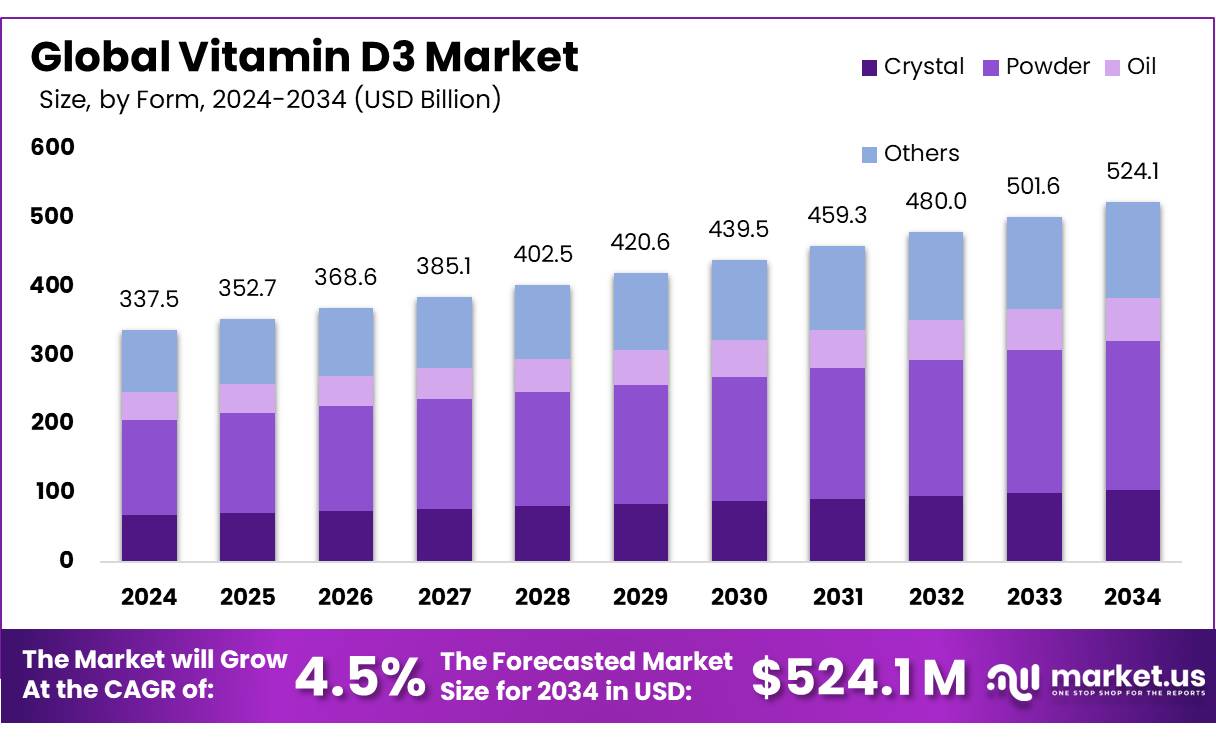
The Global Vitamin D3 Market size is expected to be worth around USD 524.1 Million by 2034, from USD 337.5 Million in 2024, growing at a CAGR of 4.5% during the forecast period from 2025 to 2034.
Vitamin D3 is also known as cholecalciferol, which was developed by the U.S. Food and Drug Administration for treating Vitamin D deficiency. It works by converting provitamin to vitamin after the intake of this medication. It helps in maintaining the blood calcium, phosphorus levels and improves bone density, thereby maintaining strong bone health. It belongs to the group of Supplements and is used to treat and prevent vitamin D deficiency.
Fortified foods provide most of the vitamin D in American diets. Almost all of the U.S. milk supply is voluntarily fortified with about 3 mcg/cup (120 IU), usually in the form of vitamin D3. In Canada, milk must be fortified with 0.88–1.0 mcg/100 mL (35–40 IU), and the required amount for margarine is at least 13.25 mcg/100 g (530 IU). The United States mandates the fortification of infant formula with 1–2.5 mcg/100 kcal (40–100 IU) vitamin D; 1–2 mcg/100 kcal (40–80 IU) is the required amount in Canada.
Most people in the world meet at least some of their vitamin D needs through exposure to sunlight. Type B UV (UVB) radiation with a wavelength of approximately 290–320 nanometers penetrates uncovered skin and converts cutaneous 7-dehydrocholesterol to previtamin D3, which in turn becomes vitamin D3. Season, time of day, length of day, cloud cover, smog, skin melanin content, and sunscreen are among the factors that affect UV radiation exposure and vitamin D synthesis. Older people and people with dark skin are less able to produce vitamin D from sunlight.
The factors that affect UV radiation exposure, individual responsiveness, and uncertainties about the amount of sun exposure needed to maintain adequate vitamin D levels make it difficult to provide guidelines on how much sun exposure is required for sufficient vitamin D synthesis. Some expert bodies and vitamin D researchers suggest that approximately 5–30 minutes of sun exposure, particularly between 10 a.m. and 4 p.m., either daily or at least twice a week, to the face, arms, hands, and legs without sunscreen usually leads to sufficient vitamin D synthesis. Moderate use of commercial tanning beds that emit 2% to 6% UVB radiation is also effective.
Key Takeaways
- The global Vitamin D3 market is projected to reach USD 524.1 million by 2034, growing at a CAGR of 4.5%.
- The powder form of Vitamin D3 dominated with 41.3% market share, driven by its ease of use in foods and supplements.
- Food applications led the market with a 76.4% share, especially in dairy, cereals, and plant-based fortification.
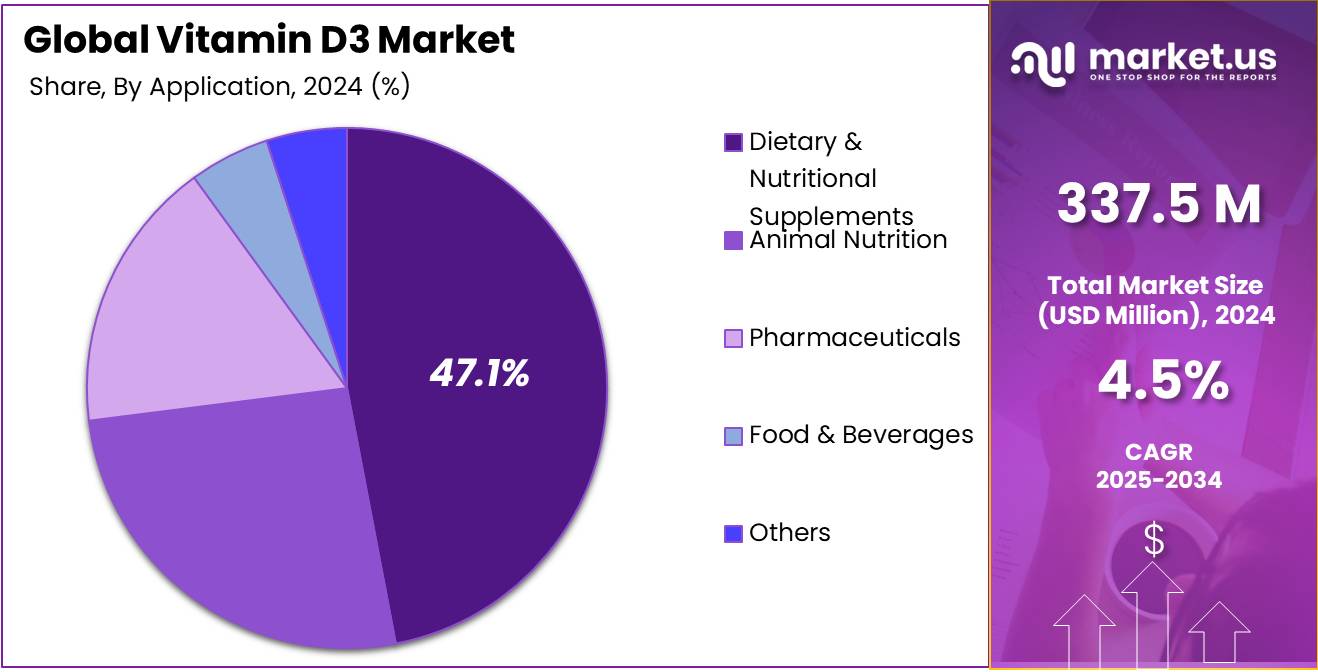
- Dietary and nutritional supplements accounted for 47.1% of total sales due to rising health awareness.
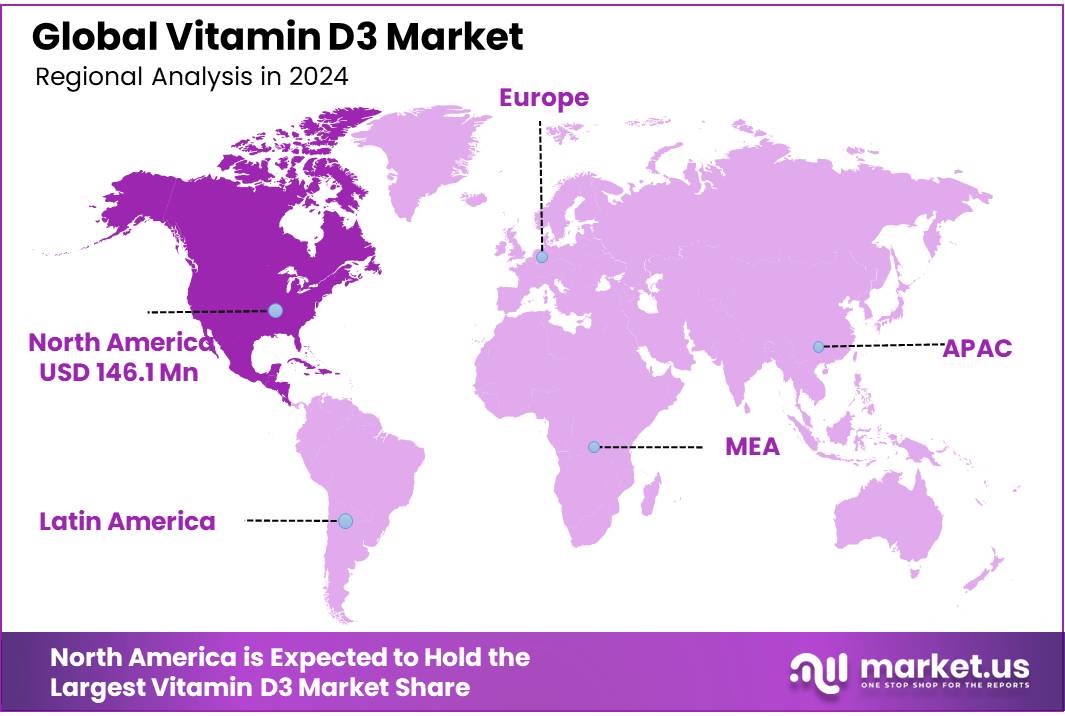
- North America held the largest regional share at 43.3%, worth approximately USD 146.1 million, backed by strong health initiatives.
Analyst Viewpoint
The Vitamin D3 market is buzzing with potential for investors, driven by growing consumer awareness and health trends. With more people realizing the importance of Vitamin D3 for bone health, immunity, and overall wellness, demand is climbing steadily. Fortified foods, and even animal feed-grade Vitamin D3, are especially important in regions like Asia-Pacific, where deficiency rates are high due to limited sun exposure.
Consumers, particularly millennials and Gen Z, are leaning toward sustainable, plant-based, or eco-friendly supplements, creating opportunities for innovative brands. However, risks lurk—price volatility due to raw material shortages (like lanolin) and potential oversaturation in mature markets like North America could squeeze margins. Investors should focus on companies prioritizing sustainable sourcing and transparent labeling to stand out.
Technological advancements are reshaping the Vitamin D3 landscape, offering both opportunities and challenges. Innovations like micro-encapsulation improve bioavailability, making products more effective and appealing to health-conscious consumers. E-commerce and AI-driven marketing are also game-changers, helping brands personalize offerings and reach niche audiences.
By Form
Vitamin D3 Powder Segment Leads Market with Over 41.3% Share in 2024
In 2024, the powder form of Vitamin D3 held a dominant market position, capturing more than 41.3% of the total share. Its popularity comes from easy mixing in food, supplements, and pharmaceuticals, making it a top choice for manufacturers. The segment’s growth is driven by rising demand in nutraceuticals and fortified foods, especially in regions with high vitamin D deficiency.
Compared to liquid and tablet forms, powder offers better stability and longer shelf life, boosting its adoption. With increasing health awareness and demand for dietary supplements, the powder segment is expected to maintain its lead through 2025, supported by innovations in encapsulation and bioavailability enhancement.
By Grade
Food-Grade Vitamin D3 Commands Over 76.4% Market Share in 2024
In 2024, Food held a dominant market position, capturing more than a 76.4% share in the global Vitamin D3 market. The increasing use of Vitamin D3 in food and beverage fortification, especially in dairy products, cereals, and plant-based alternatives, strongly supports its leadership.
Growing consumer awareness about the health benefits of Vitamin D3, such as bone health, immune support, and overall wellness, drove food manufacturers to incorporate higher doses of this nutrient into everyday consumables. Regulatory approvals and health campaigns across countries further boosted its presence in the food sector. The trend is expected to continue, as more food companies aim to meet nutritional guidelines and cater to the rising demand for functional foods enriched with Vitamin D3.
By Application
Dietary Supplements Drive Vitamin D3 Market with 47.1% Share in 2024
In 2024, the dietary and nutritional supplements segment took the lead in the Vitamin D3 market, grabbing over 47.1% of total sales. People are popping more vitamin D pills than ever, thanks to growing health awareness and doctor recommendations. The segment’s popularity comes from its convenience – just a daily capsule or gummy to fight deficiencies.
The rise in health consciousness among consumers, combined with the growing trend of preventive healthcare, significantly boosted the demand for Vitamin D3 supplements. People increasingly turned to capsules, tablets, and gummies to maintain healthy vitamin levels and support immune function, especially after the heightened focus on wellness seen in recent years.
The aging global population and increased recommendations from healthcare providers further strengthened the supplement segment’s growth in 2024. The trend is expected to stay strong, as more individuals prioritize personal health and continue incorporating Vitamin D3 supplements into their daily routines.
Key Market Segments
By Form
- Powder
- Crystal
- Oil
- Others
By Grade
- Food
- Feed
By Application
- Dietary and Nutritional Supplements
- Poultry
- Ruminant
- Others
- Animal Nutrition
- Adults
- Geriatric
- Pregnant Women
- Children
- Pharmaceuticals
- Food and Beverages
- Others
Drivers
Rising Global Deficiency Rates Fuel Vitamin D3 Demand
One of the most important driving factors behind the growth of the global Vitamin D3 market is the widespread deficiency of this nutrient across populations. Despite the ease of Vitamin D3 production in the body through sunlight exposure, modern lifestyles, urbanization, and indoor working conditions have severely reduced natural synthesis.
According to the World Health Organization (WHO), People globally are affected by vitamin D deficiency, making it a silent global health concern. In Europe, countries such as the UK have launched national supplementation recommendations.
Public Health England (PHE) recommends that everyone should consider taking a daily supplement containing 10 micrograms of vitamin D during autumn and winter, particularly vulnerable groups such as children under 5 and the elderly.
Restraints
Overdose Risks and Regulatory Limits Restrain Vitamin D3 Market Growth
One major restraint in the growth of the global Vitamin D3 market is the risk associated with excessive intake, which has led to strict dosage regulations by health authorities. Although Vitamin D3 is vital for bone health and immune function, consuming it in large amounts can lead to toxicity, known as hypervitaminosis D.
The U.S. National Institutes of Health (NIH) has set the tolerable upper intake level (UL) for adults at 4,000 IU (100 micrograms) per day to prevent potential side effects. Exceeding this amount consistently without medical supervision can lead to serious health complications.
This concern becomes even more sensitive in vulnerable groups such as infants, pregnant women, and the elderly, who may have different absorption rates and sensitivities. For example, the recommended dietary allowance (RDA) for infants up to 12 months is just 400 IU/day, and accidental overconsumption in this group can have harmful effects.
Opportunity
Food Fortification Programs Boost Vitamin D3 Market Expansion
One of the biggest growth drivers for the Vitamin D3 market is the increasing adoption of food fortification programs across the world. These programs are often supported by national governments and health organizations as a cost-effective public health strategy to combat widespread micronutrient deficiencies.
Vitamin D3, being one of the most common deficiencies globally, has become a key nutrient targeted for fortification in everyday foods like milk, breakfast cereals, margarine, and plant-based alternatives. In the United States, the Food and Drug Administration (FDA) has approved the fortification of foods like milk, orange juice, and cereals with Vitamin D3.
The World Health Organization (WHO) and the Food and Agriculture Organization (FAO) have also recognized food fortification as one of the top three strategies for addressing global nutritional issues. Countries like India, South Africa, and the UK are increasingly investing in fortification policies to address hidden hunger, especially among rural and low-income populations.
Trends
Plant-Based and Vegan Vitamin D3 Emerges as a New Opportunity
A major emerging factor in the Vitamin D3 market is the rising demand for plant-based and vegan-friendly Vitamin D3 products. Traditionally, Vitamin D3 is sourced from lanolin, which is derived from sheep’s wool, making it unsuitable for strict vegans. However, with the global plant-based food market booming and consumers becoming more conscious about ethical and environmental issues, the need for animal-free Vitamin D3 has grown rapidly.
Government organizations have also started supporting plant-based nutrition as part of sustainable food strategies. The United Nations Food and Agriculture Organization (FAO) promotes plant-based diets as a way to improve nutrition and reduce environmental impact. Their reports indicate that increasing plant-based consumption can help meet the UN’s Sustainable Development Goals (SDGs) for health and sustainability.
This emerging preference is opening up new product development opportunities for supplement makers, food manufacturers, and pharmaceutical companies. Vegan Vitamin D3 supplements are already appearing in gummy formats, fortified beverages, and even infant nutrition products. As consumer expectations for transparency, ethics, and sustainability continue to rise, plant-based Vitamin D3 is set to become a significant growth engine in the market’s next phase.
Regional Analysis
North America Leads the Global Vitamin D3 Market with Strong Health Awareness
In 2024, North America emerged as the dominant region in the global Vitamin D3 market, capturing a significant 43.3% share, which translates to a market value of approximately USD 146.1 million. This strong regional leadership is primarily driven by high consumer awareness about the importance of vitamin supplementation, advanced healthcare infrastructure, and proactive public health policies promoting nutritional well-being.
The United States, in particular, has been a major contributor to the region’s growth, with a substantial percentage of the population either diagnosed with vitamin D deficiency or classified at risk due to lifestyle factors such as indoor working conditions and limited sun exposure.
Government bodies such as the U.S. National Institutes of Health (NIH) and Centers for Disease Control and Prevention (CDC) have issued guidelines and campaigns encouraging daily Vitamin D intake, further fueling market demand. Fortification of staple foods like milk, orange juice, and cereals remains widespread across the U.S. and Canada, making Vitamin D3 more accessible to the general population.
North America is expected to maintain its dominant position, supported by ongoing health initiatives, a strong regulatory framework, and continuous innovation in functional food and supplement categories, creating steady opportunities for manufacturers and stakeholders operating in the Vitamin D3 market.
Key Regions and Countries
- North America
- US
- Canada
- Europe
- Germany
- France
- The UK
- Spain
- Italy
- Rest of Europe
- Asia Pacific
- China
- Japan
- South Korea
- India
- Australia
- Rest of APAC
- Latin America
- Brazil
- Mexico
- Rest of Latin America
- Middle East & Africa
- GCC
- South Africa
- Rest of MEA
Key Players Analysis
- Fermenta Biotech Limited is a prominent player in the Vitamin D3 market, known for its high-purity and sustainable production methods. The company offers Vitamin D3 in multiple grades, such as feed, food, and pharma. Fermenta expanded its global footprint by strengthening supply agreements with leading food and supplement manufacturers.
- DSM is a global leader in the Vitamin D3 market, offering innovative and science-backed nutritional solutions. The company’s Quali-D range, produced from sustainable sources, is widely used in dietary supplements, foods, and pharmaceuticals. DSM places strong emphasis on sustainability, with production facilities powered by 100% renewable energy.
- BASF SE remains a dominant force in the Vitamin D3 industry, providing premium quality Vitamin D3 ingredients mainly for human nutrition, animal feed, and pharmaceuticals. The company’s high manufacturing standards ensure a reliable supply and superior stability of its products. BASF also focuses on precision nutrition and sustainable practices to meet the increasing demand for fortified foods and supplements.
Top Key Players in the Market
- Fermenta Biotech Limited
- DSM
- BASF SE
- Dishman Carbogen Amcis Ltd
- Lycored
- Zhejiang Garden Biopharmaceutical Co. Ltd
- Zhejiang NHU Co. Ltd
- Bio-Tech Pharmacal
- Taizhou Hisound Pharmaceutical Co. Ltd
- Zhejiang Medicine Co. Ltd
- Sichuan Neijiang Huixin Pharmaceutical Co. Ltd
- Divi’s Nutraceuticals
- Kingdomway Nutrition, Inc.
- NewGen Pharma
Recent Developments
- In 2024, FBL has strengthened its global presence by operating a subsidiary in Hamburg, Germany, which produces Vitamin D3 500 feed-grade powder for animal nutrition. This move enhances its capability to serve Western markets effectively.
- In 2024, BASF offers a comprehensive Vitamin D3 portfolio, including beadlets and oil formulations suitable for various applications like dietary supplements and food fortification. Their products are known for high stability and quality.









