


Report Overview
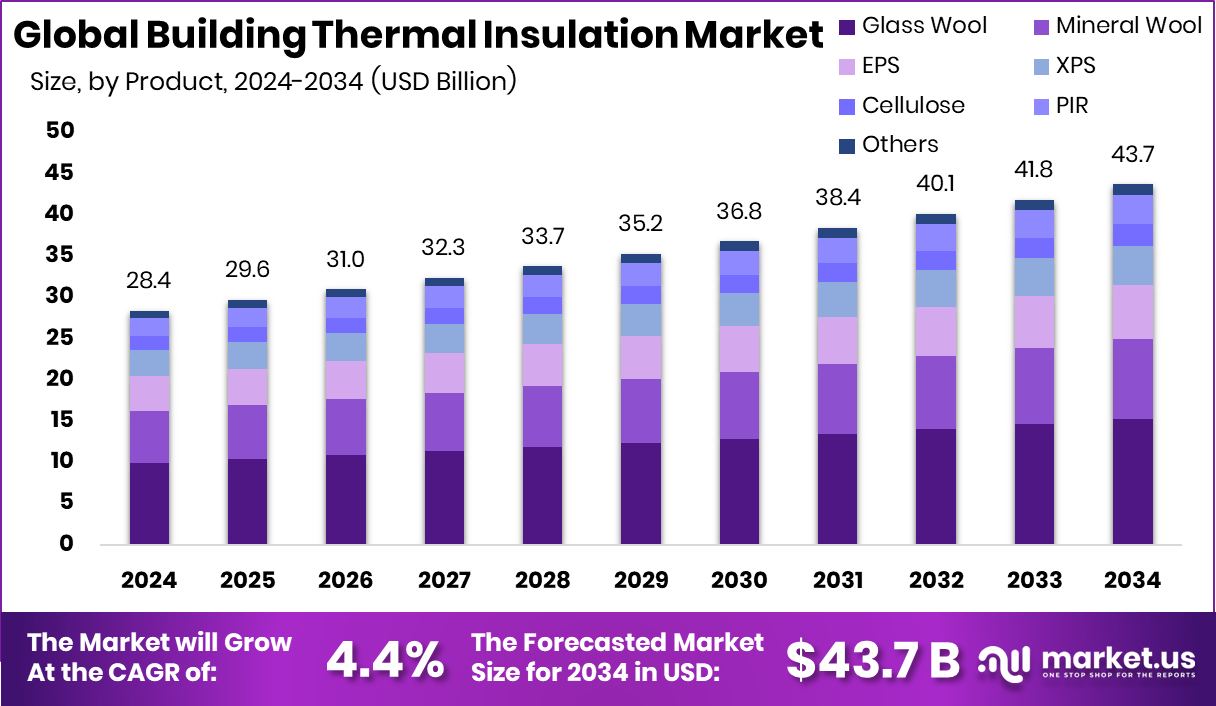
Global Building Thermal Insulation Market is expected to be worth around USD 43.7 billion by 2034, up from USD 28.4 billion in 2024, and grow at a CAGR of 4.4% from 2025 to 2034. Energy efficiency regulations propel building thermal insulation adoption in North America, 46.2% market share.
Building thermal insulation refers to the process of reducing the transfer of heat between the inside and outside of a building. It involves the use of materials like fiberglass, foam, or mineral wool that minimize heat gain or loss, ensuring a stable indoor temperature. This not only enhances energy efficiency but also lowers heating and cooling costs. Proper insulation can significantly improve occupant comfort while reducing the environmental impact by decreasing overall energy consumption.
The building thermal insulation market involves the production and sale of insulation materials that are applied in residential, commercial, and industrial structures. Growing concerns over rising energy costs and stringent regulations aimed at promoting energy efficiency drive market demand. Additionally, increasing awareness about sustainable construction and green building initiatives contributes to market expansion.
The growth of the building thermal insulation market is fueled by rising energy costs, prompting the adoption of energy-efficient solutions. Government incentives and regulations mandating sustainable building practices further drive demand. Additionally, increasing awareness about environmental conservation encourages the use of eco-friendly insulation materials.
Demand for building thermal insulation is primarily driven by the need for energy-efficient infrastructure. Residential buildings account for a substantial share due to the rising emphasis on reducing utility bills. Furthermore, the commercial sector is adopting advanced insulation systems to meet regulatory requirements and achieve green building certifications.
With the rise of green technologies and practices, energy-saving potential by design now ranges from 40% to 50%. Building insulation has gained significant importance, potentially reducing energy consumption by 5% to 8%.
Key Takeaways
- Global Building Thermal Insulation Market is expected to be worth around USD 43.7 billion by 2034, up from USD 28.4 billion in 2024, and grow at a CAGR of 4.4% from 2025 to 2034.
- Glass wool accounted for a 34.8% share in the building thermal insulation market in 2024.
- Roof applications dominated with a 43.5% market share, driven by energy-efficient construction projects.
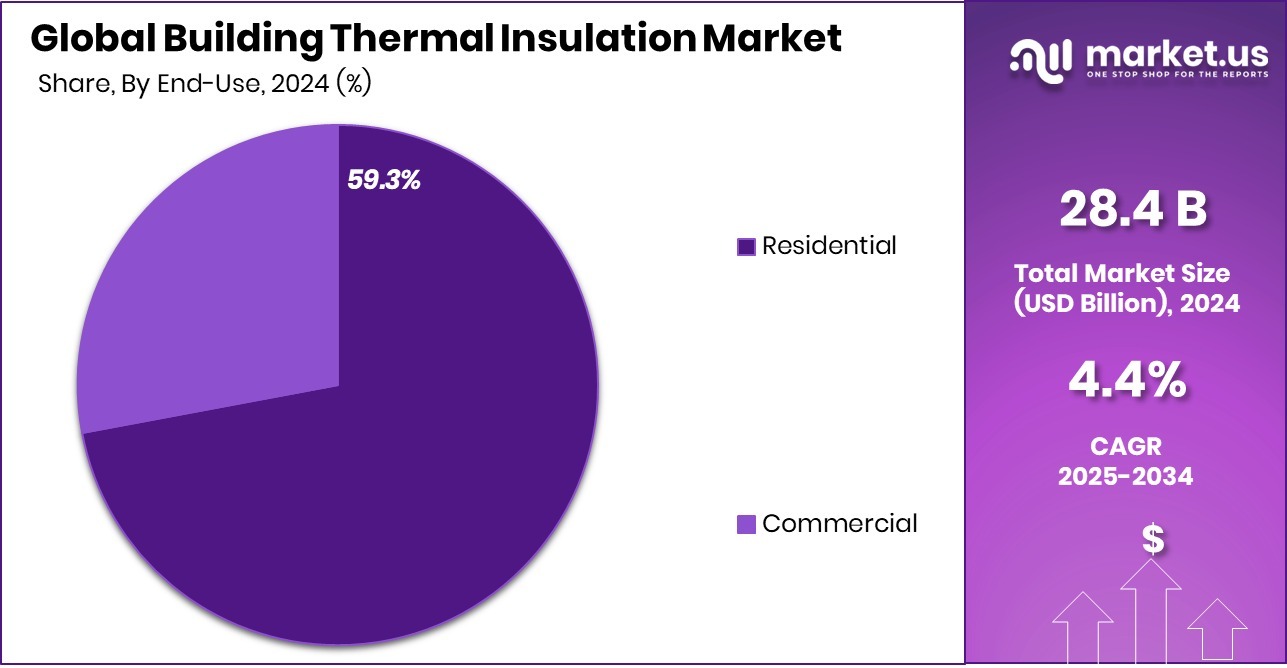
- The residential sector led with a 59.3% share, propelled by rising demand for sustainable insulation solutions.
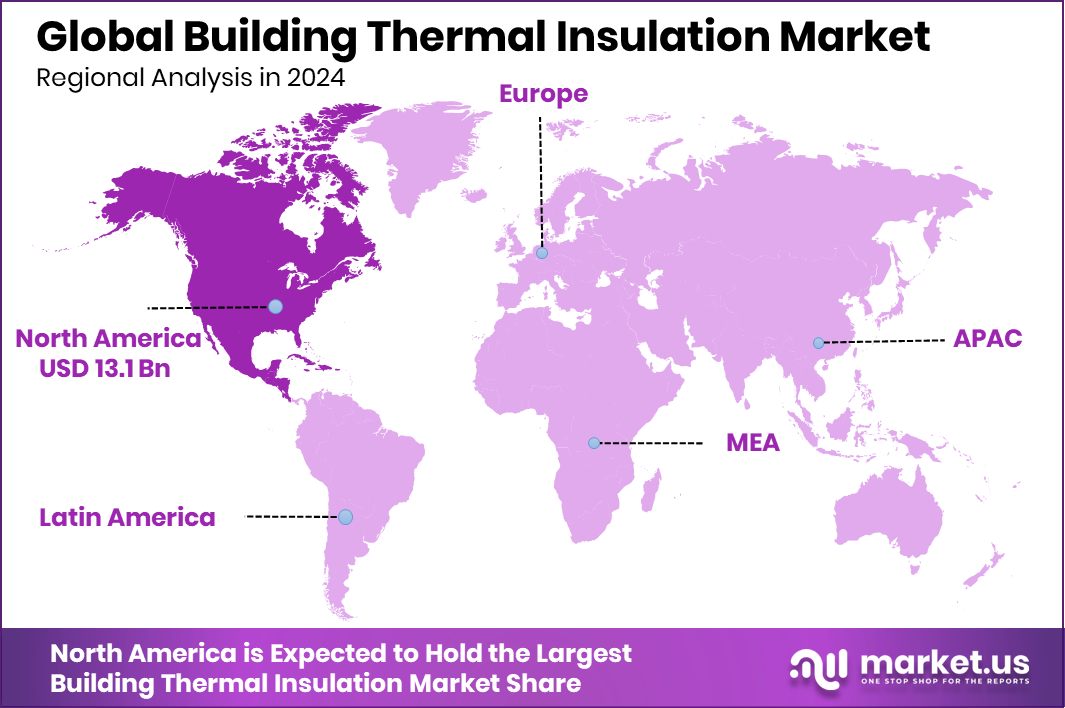
- Increasing construction activities boost building thermal insulation demand in North America, USD 13.1 Bn.
By Product Analysis
Glass wool dominated the market, capturing 34.8% share in 2024.
In 2024, Glass Wool held a dominant market position in the By Product segment of the Building Thermal Insulation Market, with a 34.8% share. This significant share underscores the growing adoption of Glass Wool, driven by its superior thermal insulation properties and cost-effectiveness.
Its lightweight nature and easy installation further contribute to its preference among residential and commercial construction projects. Additionally, the increasing emphasis on energy-efficient buildings has bolstered the demand for Glass Wool, making it a preferred choice for insulation applications.
The material’s ability to reduce energy consumption and provide enhanced acoustic insulation has positioned it as a crucial component in modern construction practices. As construction activities continue to rise globally, Glass Wool is expected to maintain its prominent market share, further reinforcing its market position in the thermal insulation sector.
By Application Analysis
Roof insulation led with a 43.5% share, driven by rising demand.
In 2024, Roof held a dominant market position in the By Application segment of the Building Thermal Insulation Market, with a 43.5% share. The significant share can be attributed to the growing emphasis on enhancing thermal efficiency in residential and commercial buildings.
Roof insulation plays a critical role in minimizing heat transfer, thereby reducing energy consumption and lowering utility costs. Additionally, the increasing adoption of sustainable construction practices has further fueled the demand for roof insulation solutions, particularly in regions experiencing extreme temperatures.
The heightened focus on energy conservation and stringent building codes has led to widespread installation of thermal insulation in roofs, contributing substantially to the segment’s dominance.
With continued construction activities and the rising awareness of energy-efficient building materials, the roof segment is poised to maintain its leading market share in the building thermal insulation industry.
By End-use Analysis
Residential buildings held a dominant 59.3% share in thermal insulation.
In 2024, Residential held a dominant market position in the By End-Use segment of the Building Thermal Insulation Market, with a 59.3% share. This substantial share highlights the growing emphasis on enhancing thermal efficiency in residential constructions, driven by rising energy costs and increased awareness of sustainable building practices.
Homeowners are increasingly investing in thermal insulation to reduce heat loss, lower energy bills, and maintain optimal indoor temperatures. Additionally, the adoption of stringent energy efficiency standards in residential buildings has further propelled the demand for thermal insulation materials. The rising trend of green building initiatives and renovation activities in developed regions also contributed to the segment’s dominance.
As urbanization accelerates and residential construction projects expand globally, the residential segment is expected to maintain its leading position in the building thermal insulation market, supported by continued efforts to improve energy conservation and indoor comfort.
Key Market Segments
By Product
- Glass Wool
- Mineral Wool
- EPS
- XPS
- Cellulose
- PIR
- Others
By Application
- Roof
- Walls
- Floor
By End-use
- Residential
- Commercial
Driving Factors
Energy Efficiency Mandates Drive Insulation Market Growth
Government regulations promoting energy efficiency in buildings are significantly boosting the demand for building thermal insulation. With stricter energy codes and sustainability guidelines, construction projects increasingly adopt insulation solutions to minimize heat transfer and reduce energy consumption.
For instance, regions with extreme temperatures are witnessing a surge in thermal insulation installations to maintain indoor temperatures and lower utility costs. Additionally, retrofitting older buildings with advanced insulation materials has become a priority for property owners aiming to comply with regulatory standards.
As energy conservation becomes a global focus, the building thermal insulation market continues to grow, driven by mandatory efficiency benchmarks and incentives for adopting eco-friendly building materials.
Restraining Factors
High Installation Costs Limit Insulation Market Adoption
Despite the numerous benefits of building thermal insulation, the high installation costs remain a significant barrier to market growth. The expenses associated with advanced insulation materials, such as fiberglass and foam, often deter budget-conscious property owners and developers.
Additionally, the cost of skilled labor for proper installation further escalates the overall expenditure, making it less feasible for small-scale projects and low-income housing.
In developing regions, where construction budgets are already constrained, the adoption of premium insulation materials is often deprioritized in favor of cheaper alternatives. As a result, the high upfront costs of thermal insulation continue to hinder widespread implementation, especially in emerging markets where affordability is a key concern.
Growth Opportunity
Rising Demand for Energy-Efficient Buildings Globally
The global push for energy-efficient buildings is creating significant growth opportunities in the building thermal insulation market. As energy costs rise and environmental concerns intensify, homeowners and builders are increasingly seeking insulation solutions that enhance energy efficiency.
Thermal insulation plays a crucial role in reducing the need for heating and cooling, thereby lowering energy consumption and utility bills. This trend is particularly evident in regions with extreme temperatures, where maintaining indoor comfort is essential. Moreover, governments worldwide are implementing stringent building codes and offering incentives to promote energy-efficient construction practices.
These initiatives are encouraging the adoption of advanced insulation materials in both new constructions and renovation projects. As a result, the demand for building thermal insulation is expected to continue its upward trajectory, driven by the global emphasis on sustainability and energy conservation.
Latest Trends
Eco-Friendly Materials Transforming Insulation Practices
A significant trend in the building thermal insulation market is the growing adoption of eco-friendly materials. Homeowners and builders are increasingly choosing insulation products made from recycled or natural materials. These sustainable options not only help in reducing energy consumption but also minimize environmental impact.
For instance, materials like recycled denim, cellulose, and sheep wool are gaining popularity due to their effective insulation properties and lower carbon footprints. Additionally, the use of plant-based materials such as hemp and flax offers renewable alternatives that are biodegradable and non-toxic.
This shift towards green insulation solutions reflects a broader commitment to sustainability in construction practices, aiming to create healthier living environments and contribute to environmental conservation.
Regional Analysis
North America leads the Building Thermal Insulation Market with 46.2% share, USD 13.1 Bn.
In 2024, North America held a dominant position in the Building Thermal Insulation Market with a substantial 46.2% share, amounting to USD 13.1 billion. The region’s prominence is driven by stringent energy efficiency regulations and rising construction activities in the U.S. and Canada.
The adoption of advanced insulation materials in residential and commercial projects is further fueling market demand. Europe follows closely, benefiting from extensive retrofitting initiatives and stringent building codes aimed at reducing energy consumption.
Meanwhile, Asia Pacific is witnessing rapid growth, propelled by expanding construction sectors in emerging economies such as China and India. The Middle East & Africa and Latin America present significant opportunities due to increasing infrastructure development and urbanization, though they currently account for smaller market shares compared to North America and Europe.
Key Regions and Countries
- North America
- US
- Canada
- Europe
- Germany
- France
- The UK
- Spain
- Italy
- Rest of Europe
- Asia Pacific
- China
- Japan
- South Korea
- India
- Australia
- Rest of APAC
- Latin America
- Brazil
- Mexico
- Rest of Latin America
- Middle East & Africa
- GCC
- South Africa
- Rest of MEA
Key Players Analysis
In 2024, Kingspan Group PLC maintained its influential position in the global Building Thermal Insulation market through strategic product diversification and sustainability-focused initiatives. The company leveraged its advanced insulation technologies, such as Kooltherm and QuadCore, enhancing thermal efficiency in both residential and commercial structures. Additionally, Kingspan’s continued investment in sustainable construction solutions aligned with the global shift toward energy-efficient buildings, further solidifying its market position.
Rockwool A/S capitalized on the growing demand for non-combustible and sustainable insulation materials, particularly in the residential and industrial sectors. Its stone wool insulation products gained prominence for their fire-resistant and soundproofing properties, catering to stringent building codes worldwide. Furthermore, Rockwool’s strategic expansions in North America and Asia-Pacific enabled the company to capture emerging market opportunities, reinforcing its global market presence.
Dow Inc., a leading player in thermal insulation solutions, emphasized innovative product development to address evolving energy efficiency standards. The company’s Styrofoam and XENERGY insulation products continued to be widely adopted, driven by increased construction activities and rising awareness regarding energy conservation. Dow’s focus on integrating low-GWP technologies into its insulation offerings contributed to its competitive edge in environmentally conscious markets, positioning it as a key player in the global thermal insulation sector.
Top Key Players in the Market
- Kingspan Group PLC
- Rockwool A/S
- Dow Inc.
- CNBM Group Co. Ltd.
- Knauf Gips KG
- Saint-Gobain SA
- Johns Manville Corporation
- Aspen Aerogels Inc.
- Owens Corning
- BASF SE
- GAF Materials Corporation
- Huntsman International LLC
- Cellofoam North America, Inc.
- Atlas Roofing Corporation
Recent Developments
- In April 2025, Rockwool introduced Smartrock®, an innovative interior insulation solution for concrete and masonry walls. It combines stone wool insulation with an integrated smart vapor retarder, offering thermal performance, vapor control, and airtightness in one product. Smartrock® is designed for both new constructions and retrofits, aiming to meet energy efficiency goals.
- In May 2024, Dow announced an expansion of its SAS Chemicals GmbH facility. This enhancement aims to bolster the production of organic, hybrid, and silicone sealants used in insulating glass manufacturing, thereby strengthening Dow’s position in the high-performance façade industry.









