


Report Overview
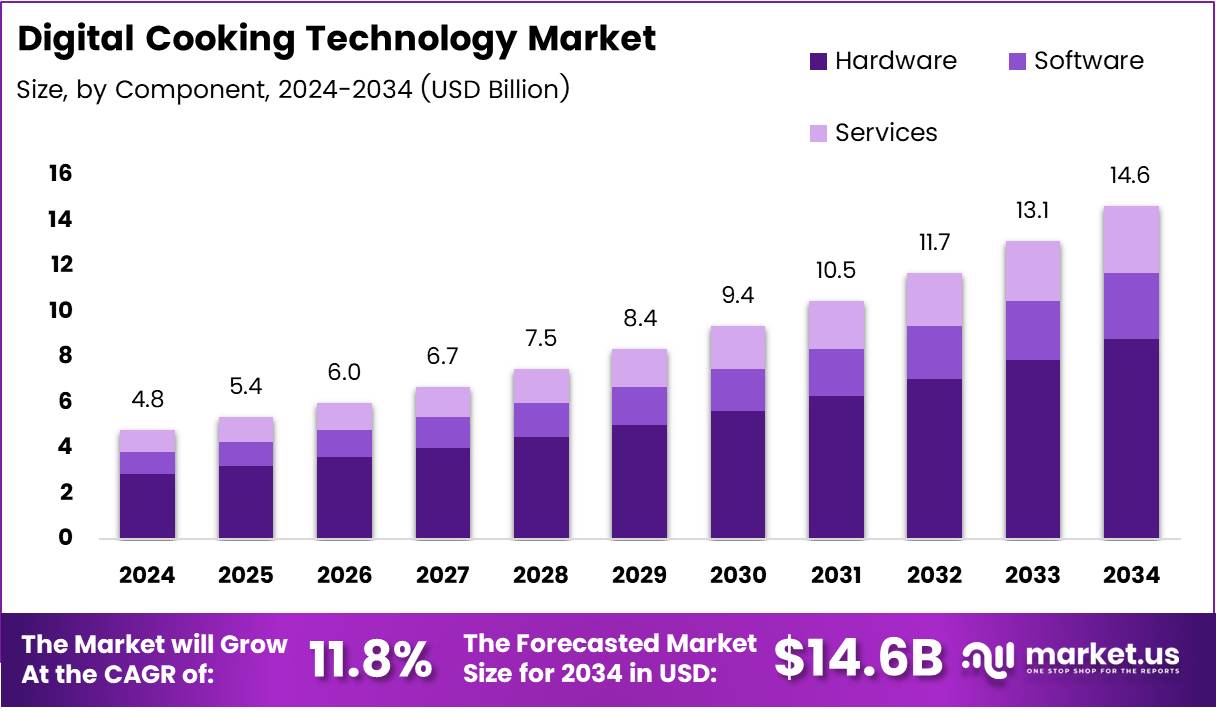
The Global Digital Cooking Technology Market size is expected to be worth around USD 14.6 Billion by 2034, from USD 4.8 Billion in 2024, growing at a CAGR of 11.8% during the forecast period from 2025 to 2034, driven by rising demand for smart, energy-efficient, and automated cooking appliances along with expanding online retail access.
Key Takeaways
- The Global Digital Cooking Technology Market is projected to reach USD 14.6 Billion by 2034, up from USD 4.8 Billion in 2024, with a CAGR of 11.8% from 2025 to 2034.
- In 2024, Hardware dominated the By Component segment with a 64% market share, reflecting its critical role in smart cooking devices.
- Wi-Fi led the By Connectivity Technology segment in 2024, holding a 52% share due to its widespread adoption for real-time control and smart kitchen integration.
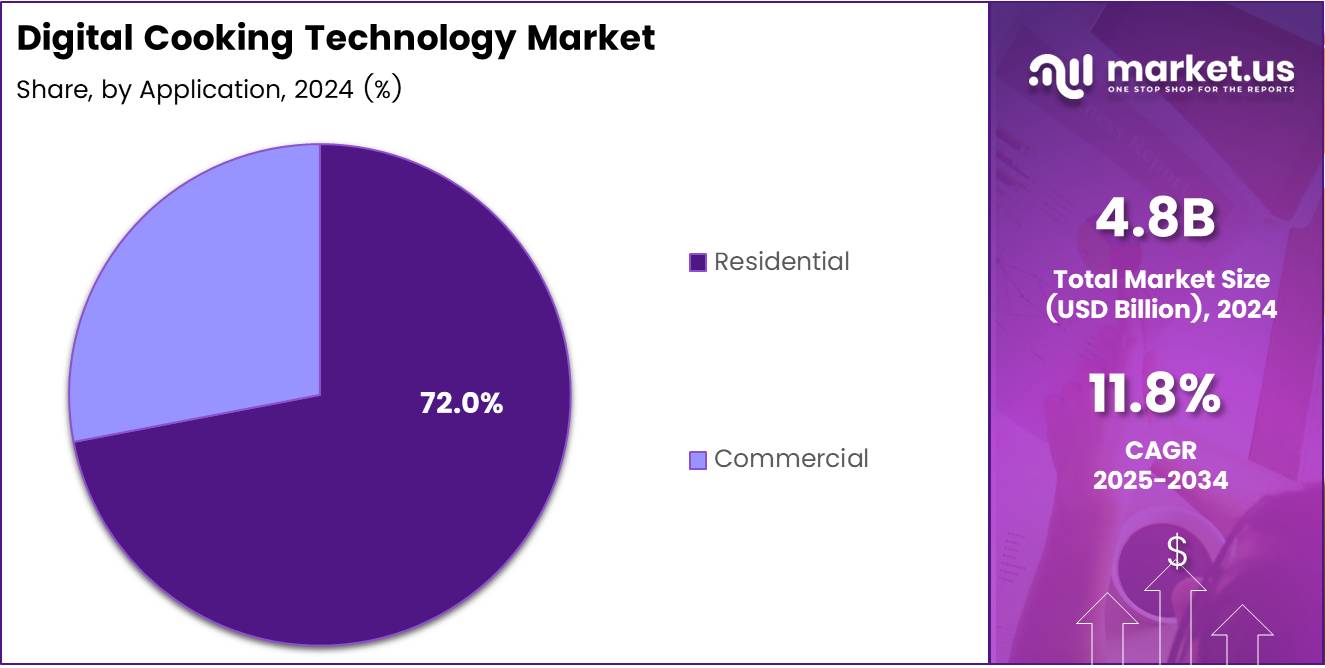
- The Residential sector commanded a 72% share in the By Application segment in 2024, driven by growing smart device use in homes.
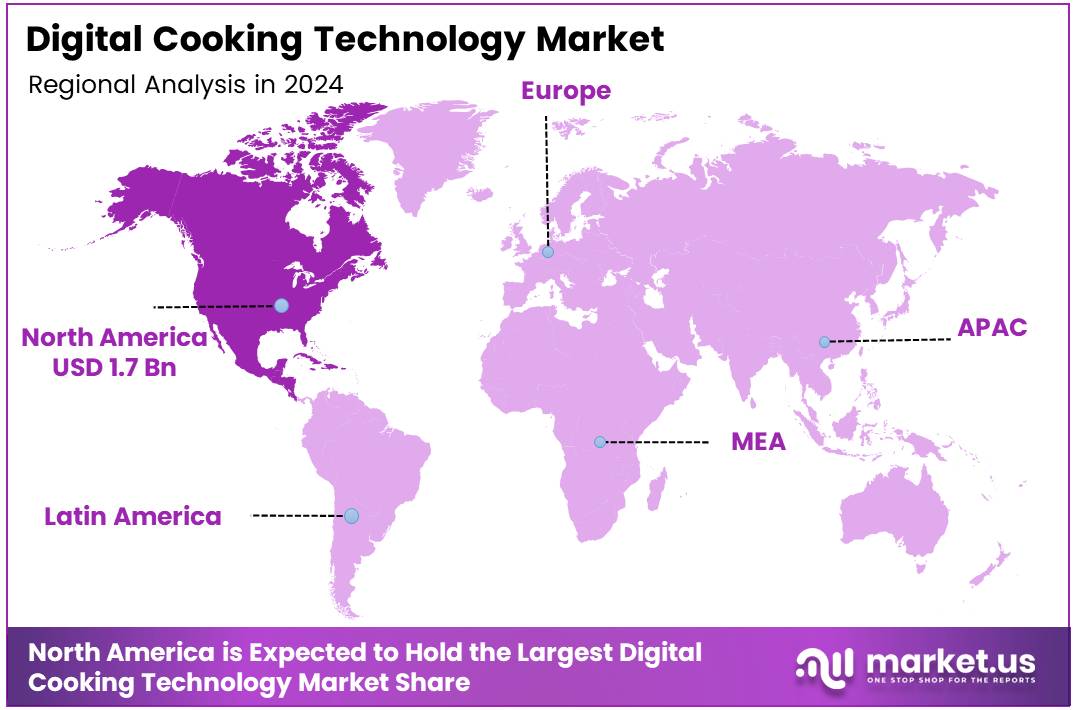
- North America accounted for 36.3% of the market share in 2024, valued at USD 1.7 Billion, fueled by high consumer adoption and robust digital infrastructure.
The Digital Cooking Technology Market refers to the integration of digital tools, smart devices, and automated systems in cooking and food preparation processes. This market encompasses a range of technologies including app-based recipes, smart kitchen appliances, and robotic cooking assistants, all designed to enhance convenience, precision, and personalization in culinary experiences.
Digital cooking technology itself transforms traditional cooking by leveraging connectivity, automation, and real-time data. It allows users to access digital recipes, control appliances remotely, and even receive automated food preparation. This shift caters especially to tech-savvy consumers seeking efficiency and innovation in their cooking routines, thereby driving adoption.
Growth in the digital cooking technology market is propelled by evolving consumer behavior. According to ThinkwithGoogle, 59% of 25- to 34-year-olds actively cook using smartphones or tablets, highlighting the increasing role of mobile devices in culinary activities. This trend underlines the importance of integrating mobile-friendly cooking solutions to engage younger demographics effectively.
Furthermore, consumer openness to automation in dining experiences fuels market potential. As per Escoffier, 29% of adults dining at full-service restaurants would order food prepared by automated systems or robots, while 37% would accept food delivered by such systems. Millennials lead this shift with 45% and 58% willingness respectively, followed closely by Gen Zers. This acceptance signals expanding opportunities for automation in both commercial and home kitchens.
Digital recipe usage also underscores market expansion. ProgressiveGrocer reports that 89% of consumers utilize digital recipes, with 43% increasing their use recently. This surge indicates a growing reliance on digital platforms for culinary guidance, driving demand for smart kitchen technologies that seamlessly integrate with digital recipe databases.
Government investments and regulations supporting smart and sustainable kitchen technologies further stimulate market growth. Initiatives promoting energy-efficient appliances and digital literacy help widen accessibility. Compliance with food safety standards and data privacy laws is increasingly shaping product development in this sector.
Component Analysis
Hardware leads with 64% as it remains essential to core digital cooking operations.
In 2024, Hardware held a dominant market position in the By Component Analysis segment of the Digital Cooking Technology Market, with a 64% share. This significant lead is attributed to the essential role physical components such as smart stoves, sensors, and integrated cooking devices play in delivering real-time, accurate cooking experiences. Hardware remains the backbone of digital cooking solutions, particularly for users demanding reliability and precision.
Software continues to be a critical growth driver, enabling enhanced features through intuitive user interfaces and recipe automation. Its integration with AI and machine learning is pushing personalized cooking to new heights, even though it lags behind hardware in terms of market share.
Services represent the smallest but steadily growing segment. As digital cooking ecosystems expand, demand for installation, maintenance, and subscription-based culinary content is expected to rise. This service component supports a seamless user experience, ensuring optimal functionality and customer retention.
Connectivity Technology Analysis
Wi-Fi dominates with 52% as consumers prioritize seamless, always-connected cooking experiences.
In 2024, Wi-Fi held a dominant market position in the By Connectivity Technology Analysis segment of the Digital Cooking Technology Market, with a 52% share. This dominance is largely driven by the demand for real-time remote control, over-the-air updates, and smart kitchen integration, making Wi-Fi the most practical and widely adopted connectivity solution.
Bluetooth follows as a popular choice for close-range communication, particularly in scenarios where energy efficiency and simple device pairing are preferred. It offers a user-friendly solution, especially for single-device ecosystems.
Zigbee/Z-Wave is gaining traction in smart home networks due to its mesh capabilities and low power usage, though its adoption in digital cooking is still limited by compatibility and cost concerns.
NFC (Near Field Communication) remains niche, primarily used for quick device pairing and user authentication. While not widely adopted, its potential lies in security-centric applications and ease of use in contactless environments.
Application Analysis
Residential segment captures 72% as home users embrace digital cooking innovations.
In 2024, Residential held a dominant market position in the By Application Analysis segment of the Digital Cooking Technology Market, with a 72% share. This overwhelming dominance reflects the growing adoption of smart cooking devices in homes, driven by convenience, energy efficiency, and the integration of IoT in daily life.
Consumers are increasingly investing in digital ovens, smart cooktops, and AI-powered kitchen assistants to simplify meal preparation and promote healthy cooking habits. The demand is particularly strong among tech-savvy households seeking to enhance culinary precision and user experience.
Commercial applications, while trailing, are steadily growing as restaurants and foodservice providers recognize the value of digital tools for consistency, speed, and data-driven operations. However, high upfront costs and longer decision-making cycles in the commercial sector have slowed its relative growth compared to residential adoption.
Key Market Segments
By Component
- Hardware
- Smart Ovens & Microwaves
- Smart Cooktops & Induction Hobs
- Smart Pressure Cookers & Multi-Cookers
- Connected Grills & Smokers
- Smart Thermometers & Probes
- Software
- Cooking Assistant Apps
- Recipe Recommendation Engines (AI-driven)
- Remote Control & Monitoring Platforms
- Services
- Installation & Integration
- Cloud Cooking Data Management
- Maintenance & Technical Support
By Connectivity Technology
- Wi-Fi
- Bluetooth
- Zigbee/Z-Wave
- NFC (Near Field Communication)
By Application
- Residential
- Commercial
Drivers
Increasing Consumer Preference for Smart Kitchen Appliances with Connectivity Features
In recent years, more consumers are looking for smart kitchen appliances that connect to their smartphones or home networks. These devices allow users to control cooking remotely, get notifications, and even access recipes, making cooking more convenient and efficient. This growing interest is a major driver for the digital cooking technology market.
Energy efficiency is another important factor pushing growth. Many households want to reduce their utility bills, so they adopt cooking technologies designed to save energy. These appliances use smarter heating elements and better sensors to cook food precisely, which helps lower overall power consumption and supports environmental goals.
Urban lifestyles have also contributed to the demand for automated and time-saving cooking solutions. Busy city dwellers prefer devices that reduce cooking time and simplify meal preparation. Digital cooking technologies with preset programs and automation make it easier to cook healthy meals quickly, fitting well into fast-paced schedules.
Furthermore, online retail channels have expanded access to these devices. Consumers can easily research, compare, and buy smart cooking products from e-commerce platforms. This wider availability helps boost adoption rates, especially among tech-savvy customers who prefer shopping online.
Restraints
High Initial Investment Cost for Advanced Digital Cooking Equipment
One of the major challenges limiting the growth of digital cooking technology is the high upfront cost of advanced devices. These smart appliances often come with premium prices, making them less affordable for many households, especially in developing regions.
Another restraint is the limited awareness and technical knowledge among older generations. Many senior consumers find it difficult to operate or trust connected kitchen gadgets due to unfamiliarity with new technologies. This reduces the market potential in that demographic.
Compatibility with existing kitchen infrastructure is also a concern. Some digital cooking devices may not easily integrate with older appliances or require kitchen modifications. This can add to the cost and discourage consumers from upgrading their current setups.
Data privacy and security worries are increasingly significant. Connected cooking devices collect user data and connect to the internet, raising concerns about potential hacking or misuse of personal information. This creates hesitation among privacy-conscious users and slows adoption.
Growth Factors
Integration of Artificial Intelligence for Personalized Cooking Experiences
Artificial intelligence (AI) is opening new growth avenues by enabling personalized cooking. AI-powered appliances learn user preferences, adjust recipes automatically, and provide cooking suggestions. This enhances the overall cooking experience and attracts tech-forward consumers.
Sustainability is also becoming a key opportunity. Development of eco-friendly cooking technologies focuses on reducing waste, energy use, and environmental impact. Devices that support greener cooking practices appeal to environmentally conscious buyers.
Emerging markets offer substantial growth potential due to expanding middle-class populations. As disposable incomes rise, consumers in these regions are more likely to invest in digital cooking appliances, helping to drive market expansion globally.
Collaborations between cooking technology companies and food delivery or meal kit services are gaining traction. These partnerships provide integrated solutions where smart devices optimize cooking for delivered meals, enhancing convenience and user satisfaction.
Emerging Trends
Increasing Use of Voice-Controlled and Gesture-Based Cooking Interfaces
Voice control and gesture-based interfaces are transforming how consumers interact with cooking appliances. These intuitive controls allow users to operate devices hands-free, which is especially useful when cooking messy or complex recipes.
The Internet of Things (IoT) integration enables remote monitoring and management of cooking devices. Users can check cooking progress or adjust settings via mobile apps, providing greater flexibility and control.
Multi-functional smart cookers that combine various cooking methods and feature built-in recipe libraries are becoming popular. These versatile devices save kitchen space and time, making them attractive to modern consumers.
Health-conscious cooking is also trending. Digital nutritional analysis tools help users monitor calorie intake and make healthier food choices. This focus on wellness through technology is boosting interest in digital cooking appliances.
Regional Analysis
North America Dominates the Digital Cooking Technology Market with a Market Share of 36.3%, Valued at USD 1.7 Billion
North America holds 36.3% of market share valued USD 1.7 Billion in the digital cooking technology market, driven by high consumer adoption of smart kitchen appliances and strong digital infrastructure. The region’s emphasis on innovation and convenience continues to fuel demand for energy-efficient and automated cooking solutions. Additionally, widespread internet penetration and tech-savvy consumers in the U.S. bolster market growth in this region.
U. S. Digital Cooking Technology Market Overview
The United States is a key driver within the North American digital cooking technology market, propelled by strong consumer demand for smart kitchen appliances and connected cooking solutions. High smartphone penetration and advanced digital infrastructure enable seamless integration of cooking devices with mobile apps. Additionally, U.S. consumers show growing interest in energy-efficient and automated cooking technologies, supported by favorable regulations promoting sustainable appliances. These factors collectively reinforce the country’s leadership position in the market.
Europe Digital Cooking Technology Market Insights
Europe exhibits steady growth in digital cooking technology, supported by rising consumer interest in sustainable and energy-efficient kitchen appliances. Government initiatives promoting energy conservation and smart home technologies further stimulate adoption. Increasing urbanization and higher disposable incomes contribute positively to the market dynamics in this region.
Asia Pacific Digital Cooking Technology Market Trends
Asia Pacific is witnessing rapid expansion in digital cooking technology, fueled by increasing urban population, rising disposable income, and growing preference for modern kitchen solutions. Markets like China, Japan, and India are key contributors, where smartphone penetration and e-commerce growth make digital cooking devices more accessible.
Middle East and Africa Digital Cooking Technology Market Overview
The Middle East and Africa region is gradually embracing digital cooking technologies, driven by rising awareness of energy-efficient appliances and increasing modernization of households. Although the market is nascent, investments in smart home infrastructure and growing urbanization present promising growth potential.
Latin America Digital Cooking Technology Market Dynamics
Latin America shows moderate growth in digital cooking technology adoption due to increasing consumer interest in convenience and time-saving kitchen appliances. However, economic fluctuations and limited awareness in some areas constrain rapid market expansion. Government support for energy efficiency could accelerate future growth.
Key Regions and Countries
North America
- US
- Canada
Europe
- Germany
- France
- The UK
- Spain
- Italy
- Rest of Europe
Asia Pacific
- China
- Japan
- South Korea
- India
- Australia
- Rest of APAC
Latin America
- Brazil
- Mexico
- Rest of Latin America
Middle East & Africa
- GCC
- South Africa
- Rest of MEA
Key Digital Cooking Technology Company Insights
In 2024, the global Digital Cooking Technology Market is witnessing significant advancements driven by automation, AI integration, and smart kitchen ecosystems.
Miso Robotics continues to lead innovation in automated kitchen systems with its robotic solutions tailored for commercial kitchens, helping businesses reduce labor costs and improve operational efficiency. Their AI-powered cooking assistants are increasingly adopted in fast food and quick-service restaurants.
Zume Inc., after pivoting from pizza delivery to sustainable food packaging and kitchen automation, remains influential in shaping eco-conscious cooking solutions. Its focus on robotics and data analytics to optimize food preparation and reduce waste aligns with the growing demand for sustainable kitchen technologies.
Apicbase is gaining traction among restaurants and cloud kitchens with its comprehensive food management platform. By integrating kitchen operations with inventory, procurement, and menu engineering, Apicbase empowers businesses to make data-driven decisions that streamline back-of-house efficiency.
Starship Technologies continues to expand its footprint with autonomous delivery robots, transforming last-mile food delivery. While not a traditional kitchen tech provider, its contribution to the broader digital cooking ecosystem lies in connecting smart kitchens with efficient, contactless delivery solutions—enhancing the overall consumer experience.
These companies exemplify the diverse approaches within the digital cooking technology space, from robotic automation and kitchen management platforms to smart delivery systems. Each plays a crucial role in redefining how food is prepared, managed, and delivered in a connected, data-driven culinary landscape.
Top Key Players in the Market
- Miso Robotics
- Zume Inc.
- Apicbase
- Starship Technologies
- Junne Life (Weber)
- Hestan Smart Cooking
- CHEF iQ
- Drop (Drop Kitchen OS)
- Perfect Company
- Yummly (Whirlpool)
- Innit
- SideChef
- Others
Recent Developments
- In April 2025, Geek raised ₹4 crore in funding to enhance its tech offerings and scale its presence across Indian markets. The startup focuses on innovative consumer electronics and smart home solutions.
- In November 2024, Beyond Appliances secured $2 million in seed funding to transform Indian kitchens with smart, AI-powered cooking appliances. The funds will drive product development and market penetration.
- In March 2025, Grubtech closed a $3.4 million round to expand its cloud kitchen technology platform. The investment will help scale operations and enhance its tech stack for food service providers.









