


Report Overview
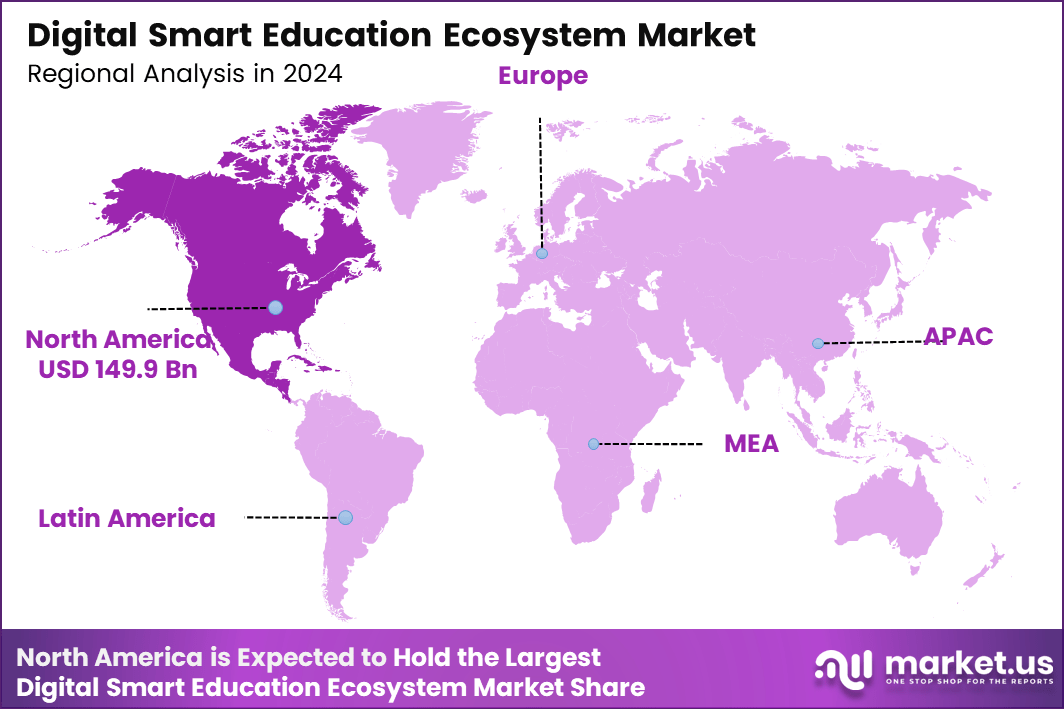
The Global Digital Smart Education Ecosystem Market is projected to grow from USD 420.8 billion in 2024 to USD 4,177.2 billion by 2034, with a forecasted CAGR of 25.80% from 2025 to 2034. Regionally, North America holds the largest market share in 2024 with USD 149.9 billion and is expected to continue dominating the market.
The Digital Smart Education Ecosystem market encompasses the interconnected digital tools, platforms, and services designed to enhance learning experiences through technology. This ecosystem includes software for online learning, intelligent tutoring systems, digital content, learning management systems, and analytics tools. The goal is to create a comprehensive, adaptive environment that supports personalized education and facilitates collaboration among students, teachers, and institutions.
Top driving factors include the increasing adoption of e-learning due to the convenience and accessibility it offers, the growing use of artificial intelligence to personalize learning paths, and the widespread digital transformation in education systems worldwide. The rise in mobile device usage and internet penetration has also supported the expansion of digital smart education solutions, making learning available anytime, anywhere.
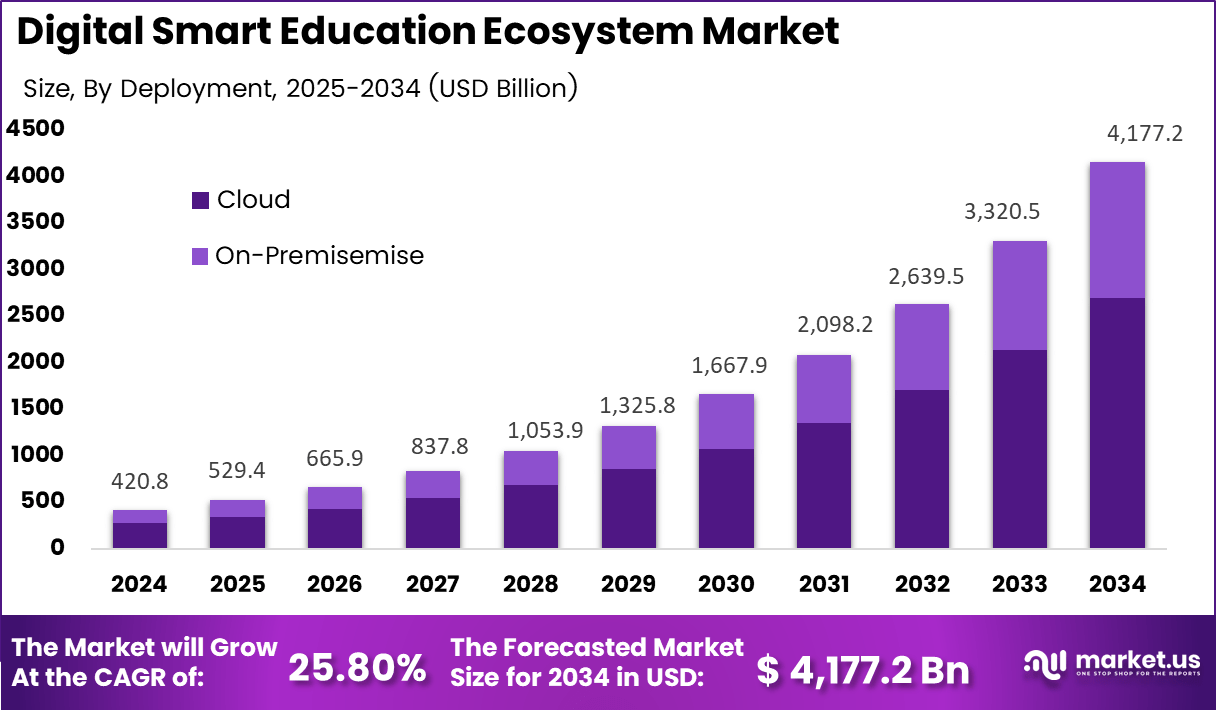
The strong growth across all education levels, from K-12 to higher education and corporate training. Educators and learners are seeking engaging, interactive content and real-time feedback enabled by digital ecosystems. Furthermore, the COVID-19 pandemic accelerated the shift toward online learning, further cementing demand for smart education technologies. Increasing government initiatives and funding for digital education infrastructure also boost market growth.
Technologies driving adoption include AI-based adaptive learning, virtual and augmented reality for immersive experiences, big data analytics for performance tracking, and cloud platforms for scalable delivery. These technologies help tailor teaching to individual learning styles, provide hands-on virtual labs, and offer data-driven insights to improve outcomes. The use of mobile apps enhances engagement and supports continuous learning beyond classroom walls.
Key Takeaways
- The Hardware segment dominated with 52.7%, driven by increased adoption of interactive displays, tablets, and connected classroom devices.
- Cloud deployment accounted for 64.5%, reflecting strong demand for scalable, remote-access learning platforms and data management flexibility.
- Large Organizations led with 70.4%, supported by high investment in digital training infrastructure and enterprise learning solutions.
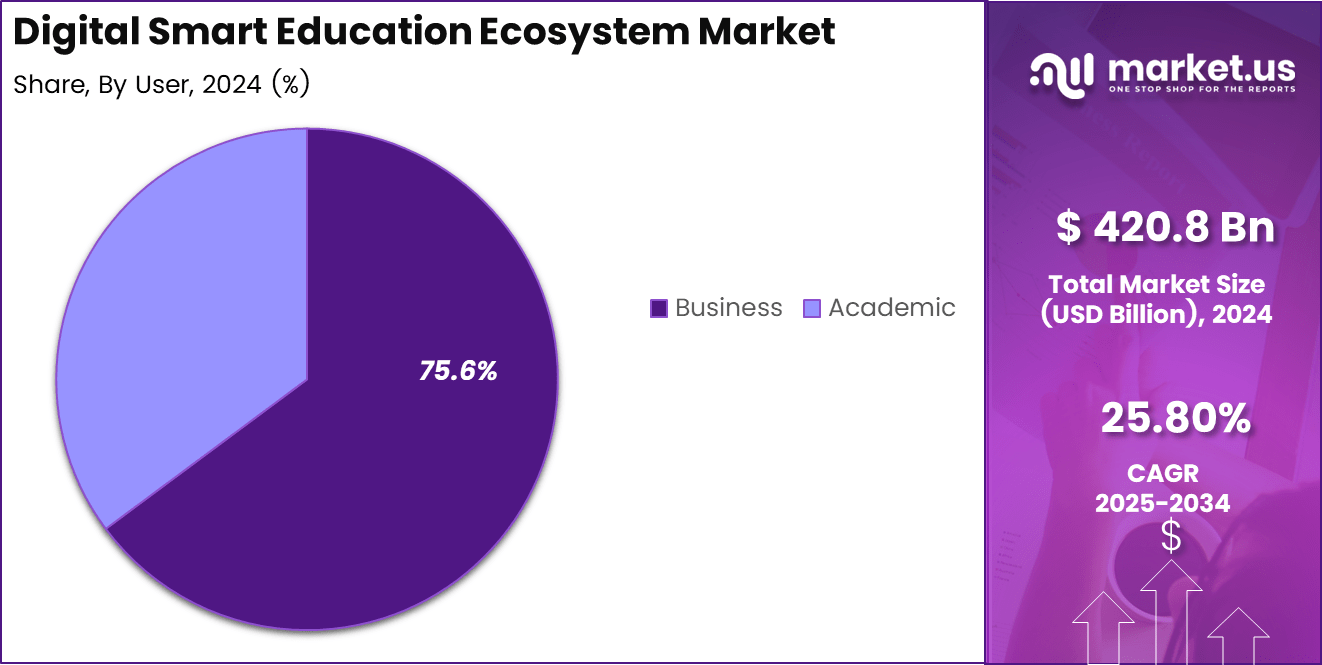
- Business users represented 75.6%, emphasizing the growing focus on workforce upskilling and continuous professional education through smart learning ecosystems.
- North America captured 35.7% of the global market, benefiting from strong EdTech adoption and supportive government digital education initiatives.
- The US market reached USD 120.2 Billion in 2024, expanding at a robust 22.5% CAGR, driven by advanced learning analytics, AI integration, and hybrid education models.
Digital Learning Adoption
Technology and Learning Method Adoption
The integration of intelligent technologies in education continues to accelerate. A 2025 study published in Nature identified e-learning as the most widely adopted method, closely followed by personalized learning approaches.
Other models are also gaining traction, including collaborative learning (19.29%), ubiquitous learning (9.39%), mobile learning (6.73%), and game-based learning (4.95%). This diverse adoption highlights the shift toward flexible, technology-enhanced education models.
Student and Teacher Perspectives
The impact of technology on teaching and learning experiences is clear. Approximately 76% of students report that digital tools make learning more engaging, improving motivation and participation. From an instructional standpoint, 90% of teachers confirm that technology allows them to assess student progress more effectively, reflecting its value in tracking outcomes and tailoring instruction.
Infrastructure and Connectivity (China)
China illustrates how strong digital infrastructure underpins educational technology adoption. The proportion of schools connected to the internet has reached 100%, with average bandwidth levels exceeding 100M.
Campus networks are available in 88.3% of schools, while multimedia networks are present in 100% of classrooms. This nationwide connectivity ensures that students and teachers have equal access to digital resources, supporting large-scale deployment of e-learning and intelligent learning systems.
Analysts Viewpoints
Investment opportunities are significant for companies developing AI engines, virtual reality tools, educational content platforms, and cloud-based LMS providers. Emerging markets with expanding internet access and youthful populations present untapped potential. Collaborations between tech firms and educational institutions drive innovation, while government and private funding focus on digital literacy and infrastructure development.
Business benefits include enhanced accessibility to quality education, personalized learning experiences, better student performance monitoring, and operational efficiency gains in educational institutions. Digital ecosystems enable lifelong learning and workforce upskilling, responding to fast-changing job market demands. For providers, ongoing technology advances create opportunities for diversification and growth.
The regulatory environment varies but often focuses on data privacy, security, and equitable access to technology. Policies promoting digital education inclusion and standards for content quality support market stability. Ensuring compliance with these regulations is critical for market players to maintain trust and expand adoption.
Role of generative AI
Generative AI has become a cornerstone in the digital smart education ecosystem, transforming the way students learn and educators teach. Recent data shows that around 44% of children actively use generative AI, with 54% utilizing it directly for educational activities. This indicates a growing acceptance and reliance on AI tools to provide personalized learning experiences, adapt content to student needs, and offer instant support through AI-driven chatbots and virtual tutors.
As per 2025 enterprise technology adoption studies, 89% of organizations involved in education are pushing ahead with generative AI initiatives. Moreover, 92% of businesses in this sector plan to increase their AI investments over the next few years. This broad adoption is helping institutions reduce administrative burdens, deliver adaptive assessments, and streamline course delivery, leading to improved overall educational outcomes and operational efficiency.
US Market Size
The United States leads with around USD 120.2 billion, growing at a rapid 22.5% CAGR. The country’s focus on AI-enhanced curriculum design, cross-platform integration, and enterprise reskilling programs is driving continuous market expansion. Edtech innovation hubs across major U.S. cities are fueling partnerships among software developers, universities, and corporations to create adaptive learning ecosystems.

North America commands 35.7% of the global market, reflecting strong adoption of smart learning technology across schools, universities, and corporate sectors. The region is recognized for its advanced connectivity infrastructure, widespread use of cloud-based tools, and strong government funding for digital education initiatives. Businesses and higher education institutions in Canada and Mexico are also expanding their participation in cloud-driven learning programs, boosting regional integration.
Emerging Trends
One of the strongest emerging trends in digital smart education is AI-driven personalized learning. AI systems analyze student data in real-time to tailor learning paths, allowing students to learn at their own pace with content that fits their specific strengths or areas needing improvement. This technology is significantly reducing frustration in learning and boosting student confidence.
Another important trend is the integration of immersive technologies like virtual reality and augmented reality. These tools create interactive learning environments where students can participate in virtual labs, historical explorations, or practical workplaces without physical constraints. This shift is making education more practical and engaging, bridging the gap between theory and hands-on experience with growing adoption in schools and universities.
Growth Factors
The growth of digital smart education is driven by several interlinked factors. First, increased access to affordable internet and mobile devices worldwide is expanding education’s reach, especially in emerging economies. With more students online, education technology solutions are rapidly gaining traction.
Second, the adoption of cloud-based platforms enables seamless syncing of classroom and online activities, making hybrid learning models the standard. This flexibility meets the needs of modern learners who benefit from combining in-person guidance with digital resources, broadening education accessibility and boosting engagement.
By Component
Hardware dominates the digital smart education ecosystem with a 52.7% share, driven by the rapid rollout of connected classrooms, smart boards, tablets, and IoT-enabled learning devices. Schools and training centers are prioritizing reliable computing and networking infrastructure to support real-time content delivery and AI-enabled analytics for personalized learning.
The growth of blended learning models has also reinforced the importance of robust hardware systems that integrate seamlessly with cloud-based educational platforms. In recent years, hardware adoption has been strengthened by public and private funding focused on education modernization. Many institutions are upgrading legacy systems with intelligent devices that can track performance and enhance interactivity.
The integration of AR and VR tools is also deepening engagement in STEM education, while the inclusion of sensors and analytics-ready devices supports adaptive learning techniques. Together, these trends highlight how hardware remains the foundation of the smart education ecosystem.
By Deployment
Cloud-based deployment leads with 64.5%, reflecting the industry’s transition toward flexible and scalable digital learning environments. Cloud infrastructures allow schools and enterprises to operate centralized content repositories, easing resource management and remote access.
The scalability of cloud platforms helps institutions quickly expand capacity to serve larger populations without heavy upfront investment. This model also enhances collaboration by supporting real-time sharing across devices and networks. The dominance of cloud systems is reinforced by their ability to integrate with evolving technologies such as generative AI, advanced analytics, and intelligent tutoring systems.
Institutions benefit from data security frameworks built into modern cloud ecosystems, ensuring compliance with privacy standards while enabling cross-platform learning. As education delivery becomes increasingly virtual, cloud-based ecosystems are emerging as the operational backbone for continuous and inclusive learning.
By Organization Size
Large organizations hold a 70.4% market share, reflecting their extensive infrastructure investments and global training networks. Corporate learning divisions and enterprise universities are adopting digital smart ecosystems to streamline employee learning and development.
These organizations leverage advanced analytics and automation tools to design individual learning paths, accelerating workforce upskilling and improving long-term productivity. Their scale allows them to implement secure, unified platforms that link HR systems with performance metrics.
As hybrid work models expand, large organizations favor integrated solutions that deliver consistent learning experiences across regions. Partnerships with edtech providers are enabling custom-built ecosystems for leadership training, compliance education, and specialized technical instruction. The combination of scale and technological maturity keeps this segment at the forefront of digital learning adoption.
By User
Business users account for 75.6% of the market, reflecting rising demand for corporate digital learning solutions. Enterprises are increasingly adopting smart education tools for continuous employee development, onboarding, and certification. These users value data-driven insights that measure progress, skill gaps, and overall training impact, making digital ecosystems vital to workforce transformation strategies.
As organizations pivot towards knowledge-intensive operations, businesses are integrating AI tutors, collaboration hubs, and virtual classrooms into daily training. The growing focus on skill resilience and adaptability is driving investments in lifelong digital learning tools. By offering personalized pathways and performance analytics, these ecosystems are improving employee engagement and retention, strengthening corporate learning as a strategic business capability.
Key Market Segment
By Component
- Hardware
- Interactive White Boards (WBS)
- Interactive Displays
- Interactive Tables
- Student Response Systems
- Others
- Software
- Learning Management System
- Learning Content Management System
- Adaptive Learning Platform
- Assessment Systems
- Others
- Service
- Managed Services
- Professional Services
By Deployment
- Cloud
- OnPreOnPremisemise
By Organization Size
- Small And Medium Organizations
- Large Organization
By User
- Academic
- Business
Key Regions and Countries
- North America
- US
- Canada
- Europe
- Germany
- France
- The UK
- Spain
- Italy
- Rest of Europe
- Asia Pacific
- China
- Japan
- South Korea
- India
- Australia
- Rest of APAC
- Latin America
- Brazil
- Mexico
- Rest of Latin America
- Middle East & Africa
- GCC
- South Africa
- Rest of MEA
Top 5 Use Cases
- Personalized Learning Paths: AI analyzes student data to customize curricula, adjusting difficulty in real-time for better outcomes in K-12 and higher education.
- Remote and Hybrid Classrooms: Cloud platforms enable seamless virtual collaboration, with tools like interactive whiteboards supporting global access and reducing geographical barriers.
- Corporate Upskilling Programs: Businesses use adaptive platforms for employee training, integrating VR simulations to build skills cost-effectively and track progress via analytics.
- Automated Assessment and Feedback: Intelligent systems grade assignments and provide instant insights, freeing teachers for mentoring while identifying learning gaps early.
- Inclusive Accessibility Tools: Digital ecosystems offer multilingual content, screen readers, and adaptive interfaces, ensuring equitable education for diverse learners, including those with disabilities.
Driver Analysis
Integration of Artificial Intelligence in Education
The integration of Artificial Intelligence (AI) into education is revolutionizing the learning experience by offering personalized and adaptive learning paths. AI-powered platforms analyze student performance and tailor content to individual needs, enhancing engagement and retention. For instance, platforms like LEAD School in India utilize AI to provide personalized learning experiences, improving student outcomes across various regions.
This technological advancement not only caters to diverse learning styles but also supports educators by automating administrative tasks, allowing more focus on teaching. The scalability of AI solutions makes them accessible to a broader audience, including underserved communities, thereby promoting inclusive education. As AI continues to evolve, its role in education is expected to expand, further transforming traditional learning environments.
Restraint Analysis
Digital Divide and Infrastructure Challenges
Despite the promising advancements in digital education, significant barriers remain due to the digital divide and inadequate infrastructure. In many regions, particularly rural and low-income areas, limited access to high-speed internet and modern devices hampers the effective implementation of smart education solutions. This disparity leads to unequal learning opportunities, exacerbating existing educational inequalities.
Educational institutions in these areas often struggle with outdated hardware and insufficient technical support, making it challenging to adopt and maintain advanced e-learning platforms. Addressing these infrastructure gaps is crucial for ensuring that all students have equal access to the benefits of digital education. Governments and private sectors must collaborate to invest in upgrading digital infrastructure and providing necessary resources to bridge this divide.
Opportunity Analysis
Expansion of Hybrid and Remote Learning Models
The growing acceptance and necessity of hybrid and remote learning models present a significant opportunity for the digital education ecosystem. These models offer flexibility, allowing students to access education from anywhere, accommodating diverse schedules and learning preferences. Platforms like Coursera and edX have capitalized on this trend, providing a wide range of courses accessible globally.
This shift also opens avenues for lifelong learning and upskilling, essential in today’s rapidly changing job market. Educational institutions and corporations can leverage these models to offer continuous learning opportunities, enhancing workforce adaptability and competitiveness. The scalability of online education makes it a viable solution to reach a broader audience, including those in remote or underserved regions.
Challenge Analysis
Ensuring Data Privacy and Cybersecurity
As educational institutions increasingly adopt digital platforms, ensuring data privacy and cybersecurity has become a paramount concern. The collection and storage of vast amounts of student data expose institutions to potential cyber threats and data breaches. Protecting sensitive information is critical to maintaining trust and compliance with regulations.
Educational entities must implement robust security measures, including encryption, access controls, and regular audits, to safeguard data. Additionally, educating students and staff about best practices in cybersecurity is essential to mitigate risks. As cyber threats continue to evolve, staying ahead with proactive security strategies is vital to protect the integrity of digital education systems.
SWOT Analysis
Strengths
- Increased adoption of AI and automation to personalize learning and improve student outcomes.
- Scalability and accessibility of digital learning platforms, enabling education for underserved regions.
- Flexibility of hybrid and remote learning models, catering to diverse learning preferences.
- Enhanced teacher productivity through the automation of administrative tasks.
Weaknesses
- Dependence on high-speed internet and modern devices, limiting access in rural and low-income areas.
- The digital divide creates unequal learning opportunities, hindering inclusive education.
- Technological challenges in maintaining and upgrading digital infrastructure in educational institutions.
- Resistance to adopting digital education solutions due to traditional learning mindsets.
Opportunities
- Expansion of remote and hybrid learning models, increasing access to education globally.
- Growing demand for lifelong learning and upskilling in the workforce.
- Emerging markets with increasing investments in digital education infrastructure.
- Potential for personalized learning at scale through advancements in AI and machine learning.
Threats
- Concerns over data privacy and cybersecurity, particularly regarding student data.
- Cybersecurity risks as more educational institutions move to online platforms.
- Technological obsolescence and the challenge of maintaining cutting-edge digital infrastructure.
- Regulatory hurdles and potential restrictions on data collection and use in digital learning environments.
Key Player Analysis
The Digital Smart Education Ecosystem Market is led by global technology and learning solution providers such as Adobe Inc., Cisco Systems Inc., Oracle Corp., SAP SE, and Microsoft Corporation. These companies deliver cloud-based platforms, learning management systems, and digital content tools that enable interactive and personalized education experiences.
Education-focused organizations including Anthology Inc., Cornerstone OnDemand Inc., D2L Inc., Ellucian Co., and Promethean World Ltd. specialize in integrated digital learning ecosystems that connect educators, students, and institutions through collaborative and adaptive technologies.
Publishing and content-driven companies such as John Wiley and Sons Inc., Pearson Plc, Scholastic Corp., Skillsoft Corp., MPS Ltd., and Educomp Solutions Ltd., along with technology investors like Thoma Bravo LP and hardware enablers such as Hon Hai Precision Industry Co. Ltd., are expanding their roles in digital learning delivery.
Top Key Player
- Adobe Inc.
- Anthology Inc.
- Apollo Asset Management Inc.
- Cisco Systems Inc.
- Cornerstone OnDemand Inc.
- D2L Inc.
- Educomp Solutions Ltd.
- Ellucian Co.
- Hon Hai Precision Industry Co. Ltd.
- John Wiley and Sons Inc.
- MPS Ltd.
- NetDragon Websoft Holdings Ltd
- NIIT Ltd.
- Oracle Corp.
- Pearson Plc
- Promethean World Ltd.
- SAP SE
- Scholastic Corp.
- Skillsoft Corp.
- Thoma Bravo LP
- Other
Recent Development
- August 2025: Adobe expanded its AI-driven classroom tools by partnering with the California education system to promote AI readiness. The company’s Adobe Express for Education was demonstrated to boost creativity and communication among K-12 students through AI-powered features. Adobe aims to reach 20 million students and 500,000 educators in India by 2027 through its partnership with the Ministry of Education, providing free Adobe Express Premium access and training in creativity and generative AI.
- September 2025: Anthology initiated a strategic transformation to focus on its core Teaching & Learning business while divesting other segments, backed by investors including Oaktree Capital. This move aims to enhance long-term growth in edtech SaaS solutions by recapitalizing the teaching platform on a debt-free basis and streamlining operations. The transaction is expected to complete by early 2026.









