


Report Overview
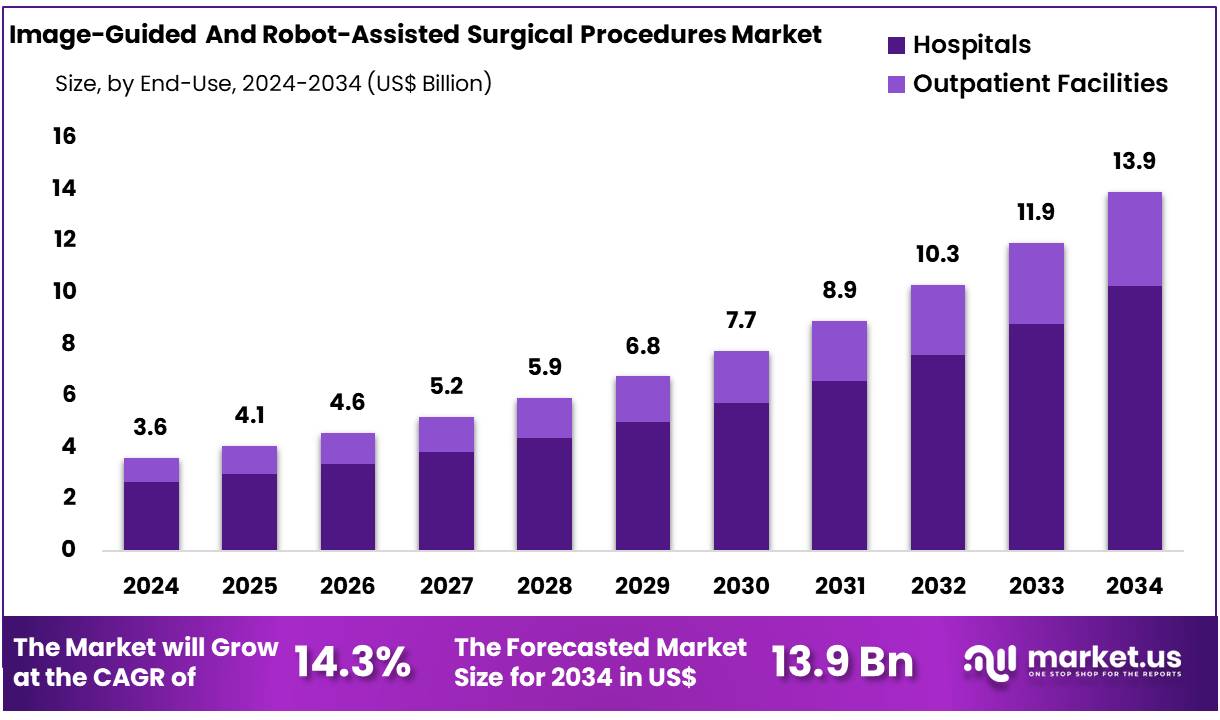
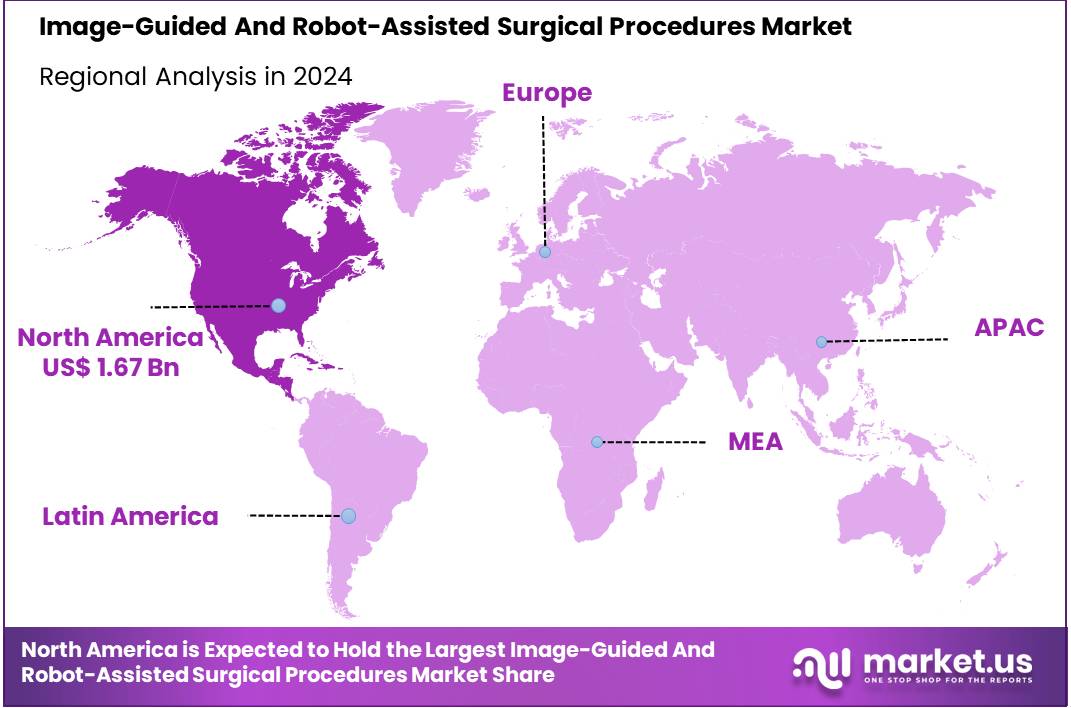
Global Image-Guided And Robot-Assisted Surgical Procedures Market size is expected to be worth around US$ 13.9 Billion by 2034 from US$ 3.6 Billion in 2024, growing at a CAGR of 14.3% during the forecast period from 2025 to 2034. In 2023, North America led the market, achieving over 46.40% share with a revenue of US$ 1.67 Billion.
The Image-Guided and Robot-Assisted Surgical Procedures Market is experiencing significant growth, driven by the increasing prevalence of chronic diseases, particularly cancer. These advanced surgical methods enhance precision, reduce recovery time, and improve patient outcomes. Image-guided technologies enable real-time visualization during procedures, while robotic systems provide unparalleled accuracy and minimally invasive options.
Rising awareness among healthcare providers and patients about these benefits has spurred adoption globally. Moreover, technological advancements and supportive government initiatives are further boosting market expansion. The integration of artificial intelligence and machine learning into these systems is also enhancing their efficiency, promising continued market growth.
- According to WHO, in 2022, there were nearly 20 million new cancer cases and 9.7 million deaths.
- Furthermore, as per ACS Journal in 2024, 2,001,140 new cancer cases and 611,720 cancer deaths were projected to occur in the United States.
The increasing number of complex and critical surgeries, along with a rise in trauma cases, significantly contributes to the growth of the Image-Guided and Robot-Assisted Surgical Procedures Market. These procedures demand precision and efficiency, which advanced technologies effectively provide, enhancing outcomes and minimizing complications.
Image-guided systems enable real-time visualization, ensuring accuracy in intricate surgeries, while robotic assistance offers minimally invasive approaches with reduced recovery time. The growing prevalence of severe injuries and life-threatening conditions requiring advanced surgical intervention has fueled the adoption of these technologies. This trend, combined with ongoing technological innovations, is driving sustained market expansion globally.
The market is further driven by factors, including the rising global demand for advanced healthcare services, innovations and advancements in medical devices and equipment, an aging population, increased healthcare investments, and growing awareness of diseases and the importance of early diagnosis and treatment. Technologically advanced systems help reduce surgical errors and enhance patient outcomes.
Additionally, leading hospitals worldwide are investing heavily in healthcare equipment, further propelling the adoption of image-guided and robot-assisted surgical procedures. These systems offer enhanced visualization and image-guided support, improving surgical precision and outcomes. They enable surgeons to operate with greater accuracy, ensuring patient safety, fewer complications, and better overall results.
Key Takeaways
- The Image-Guided And Robot-Assisted Surgical Procedures market generated a revenue of US$ 3.60 Billion and is predicted to reach US$ 13.90 Billion, with a CAGR of 14.3%.
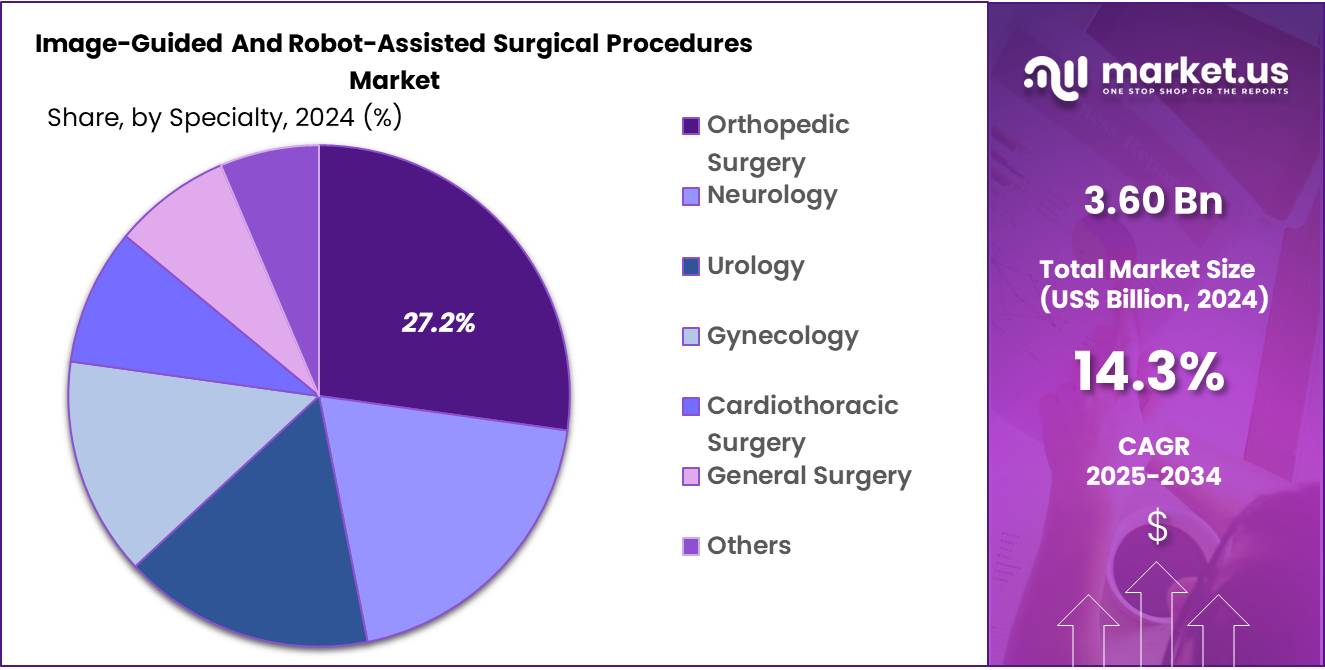
- Based on the Specialty, the Orthopedic Surgery segment generated the most revenue for the market with a market share of 27.2%.
- Based on the End-Use, the Hospitals segment generated the most revenue for the market with a market share of 73.8%.
- Region-wise, North America remained the lead contributor to the market, by claiming the highest market share, amounting to 46.40%.
Specialty Analysis
Based on specialty the market is further segmented into Orthopedic Surgery, Neurology, Urology, Gynecology, Cardiothoracic Surgery, General Surgery and Others. Orthopedic surgery held a dominant position in the specialty segment of the Image-Guided and Robot-Assisted Surgical Procedures Market, capturing 27.2% of the segmental share.
This prominence is attributed to the growing prevalence of orthopedic conditions such as arthritis, fractures, and joint degeneration, driven by aging populations and active lifestyles. The demand for precise and minimally invasive procedures in orthopedic surgery has risen significantly, with image-guided and robotic systems playing a pivotal role in improving surgical accuracy and outcomes.
These advanced technologies enable real-time visualization and precision during complex procedures such as joint replacements, spinal surgeries, and fracture repairs, reducing recovery times and postoperative complications.
Moreover, advancements in robotic-assisted systems and navigation technologies have further enhanced their adoption among surgeons and healthcare facilities. The increasing focus on patient-centric care, coupled with the need for effective solutions for musculoskeletal disorders, continues to drive the dominance of orthopedic surgery in this market segment.
End Use Analysis
Hospitals dominated the market in 2024, accounting for a significant revenue share of 73.8%. This leadership is driven by the high volume of surgical procedures conducted in well-equipped and advanced healthcare facilities. Hospitals benefit from access to cutting-edge surgical infrastructure, increasing demand for image-guided and robot-assisted surgeries.
These technologies are widely utilized in hospitals to offer minimally invasive procedures, providing patients with safer, more efficient, and convenient surgical care. As a result, these advanced techniques have become essential, offering a practice-enhancing, patient-friendly, and cost-effective alternative to traditional open surgeries.
Meanwhile, outpatient facilities are anticipated to grow at a robust CAGR in the coming years. The minimally invasive nature of robotic surgeries allows many procedures to be performed on an outpatient basis, leveraging high-tech devices for image assistance and robotic guidance. These facilities enable surgical teams to perform general or complex procedures, promoting growth and delivering improved patient outcomes.
Market Segmentation
Specialty
- Orthopedic Surgery
- Neurology
- Urology
- Gynecology
- Cardiothoracic Surgery
- General Surgery
- Others
End-use
- Hospitals
- Outpatient Facilities
Drivers
Shift towards Minimally Invasive Procedures
The shift towards minimally invasive procedures is significantly driving the growth of the Image-Guided and Robot-Assisted Surgical Procedures Market. These procedures, known for their smaller incisions, reduced blood loss, and shorter recovery times, have become increasingly preferred by both patients and healthcare providers. According to a study by the National Center for Biotechnology Information (NCBI), minimally invasive surgeries reduce hospital stays by 50% compared to traditional open surgeries.
Robotic-assisted systems, such as the da Vinci Surgical System, have seen widespread adoption, with over 10 million procedures performed globally as of 2023. This technology enhances precision and reduces complications, such as infections, which occur in 20-25% of traditional open surgeries but drop to less than 5% in minimally invasive procedures.
Additionally, the rising prevalence of conditions like cancer and cardiovascular diseases, requiring precise interventions, further boosts demand. These factors collectively position minimally invasive techniques as a cornerstone of market growth.
Restrains
Complex Training Requirements and High Setting Cost
The high costs associated with image-guided and robot-assisted surgical procedures are a significant barrier to market growth, particularly in low-resource settings. The initial investment for robotic surgical systems, such as the da Vinci Surgical System, can exceed $2 million, with additional maintenance and per-procedure costs ranging from $1,500 to $3,000. These expenses make adoption challenging for smaller healthcare facilities and hospitals in developing regions, where budgets are limited.
Moreover, the complexity of operating advanced surgical systems poses another restraint. Surgeons must undergo extensive and costly training to effectively use these technologies, often requiring specialized certification programs. The learning curve for mastering robotic-assisted techniques can delay adoption, especially in facilities with limited access to such training programs.
These challenges underscore the need for cost-effective solutions and comprehensive training initiatives to expand accessibility and drive growth in the Image-Guided and Robot-Assisted Surgical Procedures Market.
Even widely-used Rapid Diagnostic Tests (RDTs) face logistical challenges, as poor supply chains and insufficient distribution networks limit their availability. This is compounded by economic constraints, making even affordable solutions inaccessible to vulnerable populations. Strengthening diagnostic infrastructure in remote areas is essential to ensuring early detection, reducing disease burden, and achieving global malaria control targets.
Opportunities
Portable Robotic Systems is Staging Growth Opportunities
The growing interest in portable robotic systems is transforming the Image-Guided and Robot-Assisted Surgical Procedures Market. These compact and mobile systems offer greater versatility, enabling their use in diverse healthcare settings, including smaller hospitals and outpatient facilities. Portable robotic systems are designed to be easily transported and deployed, reducing space requirements and infrastructure limitations. Their cost-effectiveness compared to traditional large-scale systems makes them appealing to resource-constrained environments.
Additionally, advancements in lightweight materials and wireless connectivity enhance their functionality and ease of use. This trend aligns with the increasing demand for accessible, high-precision surgical solutions across a broader range of applications.
Impact of Macroeconomic / Geopolitical Factors
Macroeconomic and geopolitical factors significantly influence the global Image-Guided and Robot-Assisted Surgical Procedures Market. Economic instability and inflation in some regions increase healthcare costs, limiting investments in advanced surgical systems. According to the World Bank, healthcare expenditure as a percentage of GDP decreased in several low- and middle-income countries during periods of economic downturn, affecting access to these technologies.
Geopolitical tensions also disrupt global supply chains, delaying the manufacturing and distribution of robotic systems and imaging devices. For instance, the ongoing U.S.-China trade disputes have led to increased tariffs on medical equipment, impacting cost structures and market dynamics.
On the positive side, government initiatives in regions like the European Union and the United States to boost healthcare infrastructure, supported by policies such as the EU4Health program with a €5.1 billion budget, are driving adoption. The interplay of these factors shapes market growth, presenting both challenges and opportunities.
Latest Trends
The global Image-Guided and Robot-Assisted Surgical Procedures market is experiencing significant growth, driven by advancements in medical technology, rising demand for minimally invasive surgeries, and increasing prevalence of chronic diseases. Key trends include the integration of artificial intelligence (AI) for improved surgical precision and real-time decision-making, and the adoption of hybrid operating rooms equipped with imaging and robotic systems for enhanced efficiency.
The market is also benefiting from a surge in healthcare investments and favorable reimbursement policies in developed regions. Additionally, increasing awareness among patients and surgeons about the benefits of these procedures, such as reduced recovery times and improved outcomes, is boosting adoption.
Emerging markets are witnessing growth due to expanding healthcare infrastructure and rising medical tourism. However, challenges such as high costs of equipment and the need for skilled professionals may limit adoption in some regions. Partnerships and innovation remain pivotal for sustained market expansion.
Regional Analysis
North America Dominates the Global Image-Guided and Robot-Assisted Surgical Procedures Market
In 2024, North America led the global Image-Guided and Robot-Assisted Surgical Procedures market, capturing a significant revenue share of 46.40%. The widespread adoption of these advanced surgical techniques in the region is attributed to strong technological advancements in healthcare and the presence of a highly developed economy.
The growing frequency of complex surgeries and trauma cases further drives the market’s expansion. Increasing reliance on these procedures is fueled by their precision and effectiveness, making them a preferred choice for healthcare providers. This trend highlights North America’s pivotal role in shaping the global market’s growth trajectory.
Key Regions and Countries
North America
- US
- Canada
Europe
- Germany
- France
- The UK
- Spain
- Italy
- Russia
- Netherland
- Rest of Europe
Asia Pacific
- China
- Japan
- South Korea
- India
- New Zealand
- Singapore
- Thailand
- Vietnam
- Rest of APAC
Latin America
- Brazil
- Mexico
- Rest of Latin America
Middle East & Africa
- South Africa
- Saudi Arabia
- UAE
- Rest of MEA
Key Players Analysis
The image-guided and robot-assisted surgical procedures market is highly competitive, driven by continuous technological advancements and increasing demand for precision-based surgical solutions. Major players like Intuitive Surgical, Medtronic, Stryker, Zimmer Biomet, and Siemens Healthineers dominate the market, leveraging strong R&D capabilities and extensive product portfolios. These companies focus on innovation, strategic collaborations, and acquisitions to maintain a competitive edge.
Startups and emerging players are entering the market with cost-effective and specialized solutions, intensifying competition. Geographic expansions and targeted product launches in high-growth regions like Asia-Pacific further fuel rivalry.
Key competitive strategies include the integration of artificial intelligence (AI) and augmented reality (AR) to enhance surgical precision and efficiency. Companies are also investing in training programs to upskill surgeons and drive adoption. While established players benefit from brand reputation, smaller firms exploit niche markets, creating a dynamic and rapidly evolving competitive landscape.
Top Key Players
- Crouse Health
- TH Medical
- Clair Hospital
- University of Washington
- Atlantic Health System
- HCA Healthcare UK
- Apollo Hospitals Enterprise Ltd.
- Medanta The Medicity
- George Washington University Hospital
- Charité – Universitätsmedizin Berlin
Recent Developments
- In December 2023, Crouse Health introduced the advanced Mako SmartRobotics to their Comprehensive Robotic Surgery Program, bringing Mako robotic technology to orthopedic patients in Central New York. This addition highlights the organization’s commitment to ongoing research and development, ensuring that the community receives improved, more comprehensive healthcare services.
- In February 2024, THINK Surgical, Inc. formed a partnership with Waldemar Link GmbH & Co. KG (LINK) from Germany. Through this collaboration, THINK Surgical will integrate the LinkSymphoKnee System into its ID-HUB, a proprietary database of implant modules designed for use with the TMINI Miniature Robotic System.
- In October 2024, Krishna Institute of Medical Sciences (KIMS) hospitals signed a Memorandum of Understanding with Intuitive to launch 25 robotic surgery programs featuring da Vinci robotic-assisted systems across Maharashtra, Karnataka, Andhra Pradesh, and Telangana. This partnership seeks to expand access to advanced minimally invasive surgery in tier 2 and tier 3 cities.









