


Report Overview
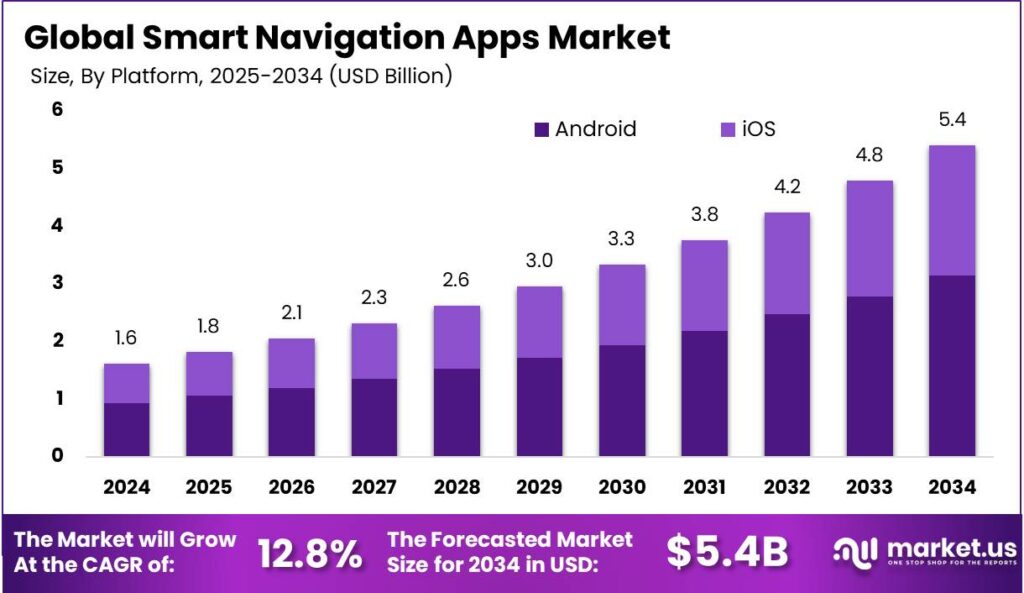
The Global Smart Navigation Apps Market size is expected to be worth around USD 5.4 Billion By 2034, from USD 1.62 Billion in 2024, growing at a CAGR of 12.80% during the forecast period from 2025 to 2034. In 2024, North America led the market with a 32.1% share, generating about USD 0.52 billion. The U.S. market, valued at USD 0.47 billion, is expected to grow at a 10.8% CAGR due to rising demand for digital mobility solutions.
Smart Navigation Apps are mobile applications designed to assist users in determining optimal routes, providing real-time traffic updates, and enhancing overall travel efficiency. These applications leverage technologies such as GPS, artificial intelligence (AI), and machine learning to offer features like turn-by-turn directions, estimated arrival times, and alternative route suggestions.
The smart navigation apps market has experienced significant growth, driven by the increasing demand for real-time, accurate navigation solutions. Several factors are propelling the growth of smart navigation apps. The widespread adoption of smartphones and the increasing reliance on mobile applications for daily activities have heightened the demand for efficient navigation tools.
The demand for smart navigation apps is escalating, particularly in urban areas where traffic congestion is a persistent issue. Commuters and logistics companies alike are seeking reliable navigation tools to minimize travel time and fuel consumption. The tourism sector also benefits, as travelers rely on these apps for exploring new destinations efficiently.
Governments and urban planners are increasingly investing in smart city initiatives that integrate intelligent transport solutions. These initiatives aim to optimize traffic flow, reduce congestion, and enhance overall safety. Electronic maps play a crucial role in these systems by providing real-time traffic updates, route optimization, and alternative navigation options.
Consumers are becoming more conscious of their carbon footprint and are seeking eco-friendly transportation options. Electronic maps can help users identify the most efficient routes, reducing fuel consumption and emissions. This trend aligns with global efforts to promote sustainable transportation solutions, further propelling the market’s growth.
The Navigation Electronic Map market is also witnessing an influx of investment from venture capitalists and private equity firms. High returns in tech attract strong investment, boosting funding for startups and established firms. This capital drives innovation and the development of advanced solutions in a fast-evolving market.
Emerging trends in the smart navigation app market include AI and machine learning for predictive routing and personalized recommendations. Augmented reality is enhancing indoor navigation in places like malls and airports. Additionally, the rise of autonomous vehicles and smart city initiatives is driving new opportunities for these technologies.
Key Takeaways
- The Global Smart Navigation Apps Market size is expected to grow from USD 1.62 Billion in 2024 to approximately USD 5.4 Billion by 2034, at a CAGR of 12.80% during the forecast period from 2025 to 2034.
- In 2024, the Consumer Electronics segment dominated the market, capturing more than 62.8% share of the global Smart Navigation Apps market.
- The Android segment held a leading position in 2024, accounting for over 58.3% share in the global Smart Navigation Apps market.
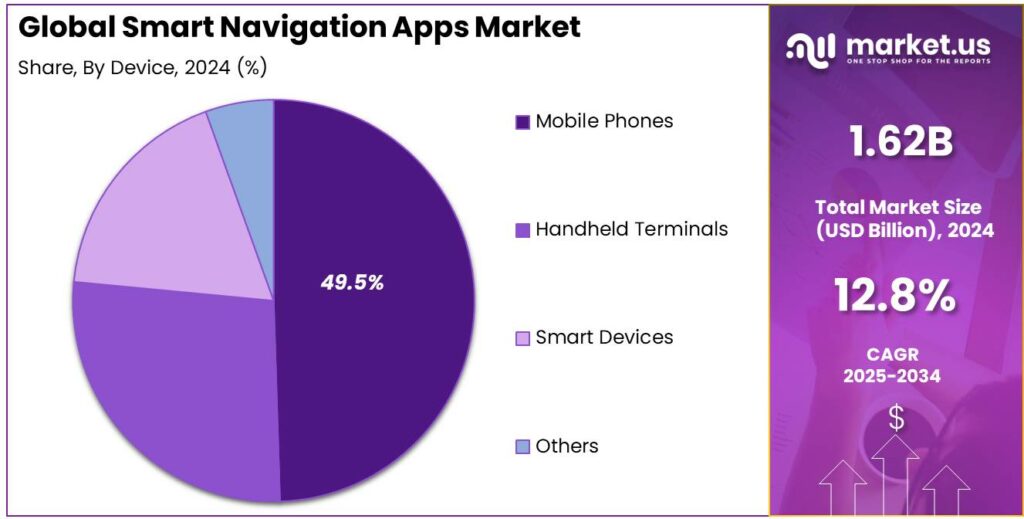
- The Mobile Phones segment led the market in 2024, with more than 49.5% share of the global Smart Navigation Apps market.
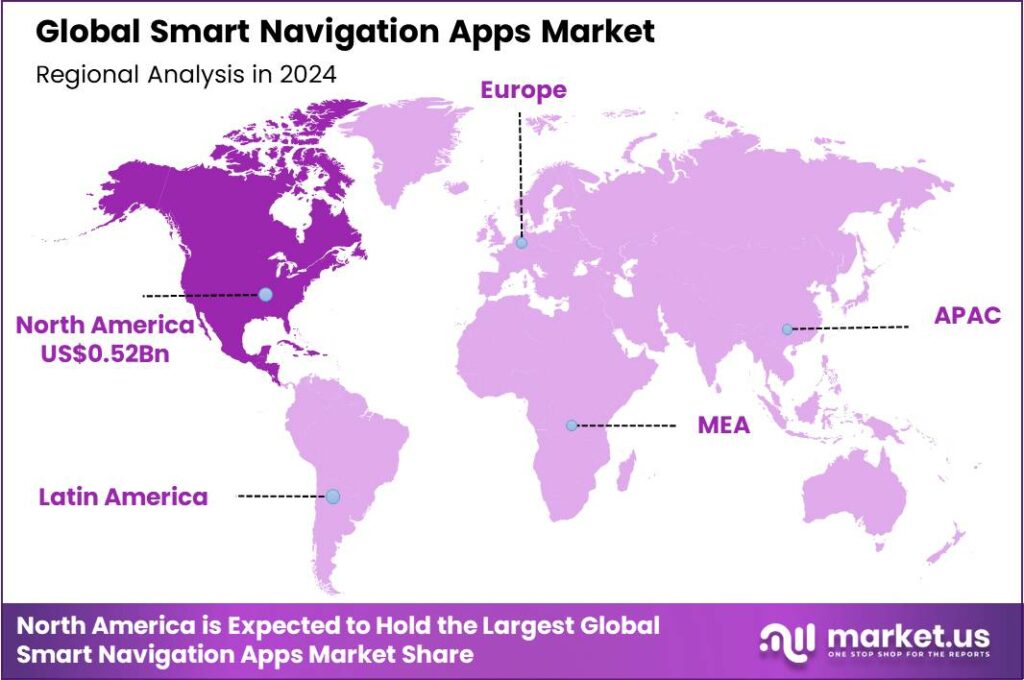
- In 2024, North America held the largest regional market share, capturing over 32.1% of the global market and generating around USD 0.52 billion in revenue.
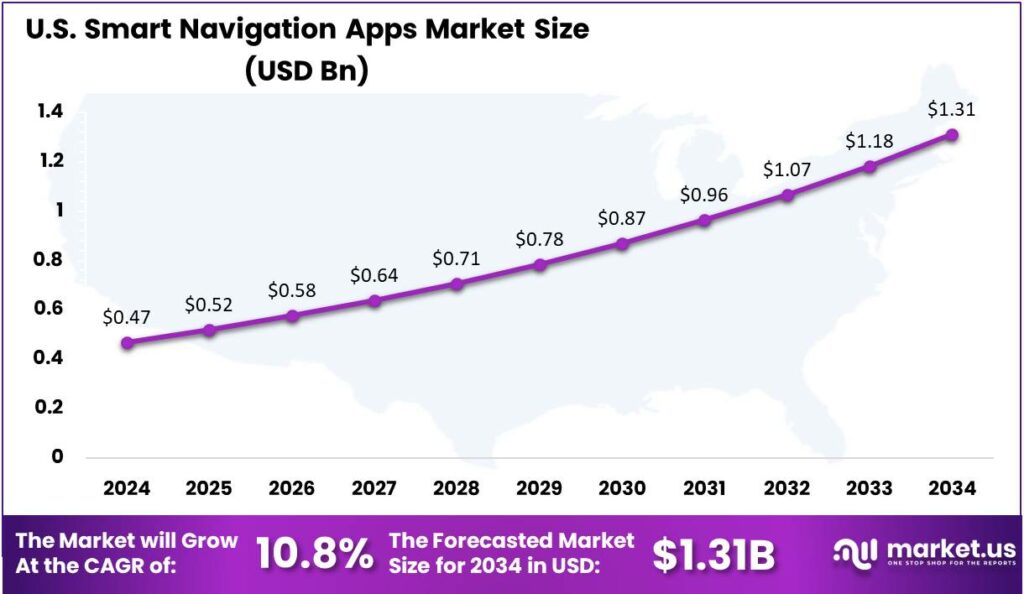
- The U.S. Smart Navigation Apps market was valued at approximately USD 0.47 billion in 2024 and is projected to grow at a CAGR of 10.8%, driven by increasing demand for digital mobility solutions.
Business Benefits
Smart navigation apps significantly improve operational efficiency by optimizing routes and reducing travel time. For instance, delivery services can utilize real-time traffic data to avoid congested areas, ensuring timely deliveries and reducing fuel consumption. This optimization not only cuts operational costs but also enhances customer satisfaction by providing accurate delivery times.
Location-based services enable businesses to deliver personalized experiences by sending targeted promotions and notifications through smart navigation apps, increasing marketing relevance. According to the MoldStud report, integrating geographical data can boost user engagement by up to 50%, driving loyalty through personalized experiences. By leveraging geofencing to target consumers within a set radius, brands can deliver tailored notifications that increase conversion rates by 20%.
Integrating smart navigation apps enables businesses to collect and analyze location data, gaining insights into customer behavior, peak hours, and popular routes for better decision-making. It also helps identify delivery route inefficiencies, driving process improvements and cost savings.
Key Features
- Real-Time Traffic Updates and Dynamic Rerouting: Smart navigation apps leverage live data from satellites, sensors, and user reports to provide up-to-date traffic information. They automatically adjust routes to help users avoid traffic jams, accidents, and road closures.
- Turn-by-Turn and Voice-Guided Navigation: These apps offer precise, step-by-step directions, both visually on the screen and through voice prompts. This allows users to keep their eyes on the road while receiving clear instructions for every turn and lane change.
- Multi-Modal and Customizable Routing: Modern navigation apps support various transportation modes driving, walking and public transport. Users can customize routes to avoid tolls, highways and add multiple stops or waypoints to their journey.
- Offline Functionality: Many top navigation apps allow users to download maps and access directions without an internet connection. This feature is essential for traveling in areas with poor network coverage and helps conserve battery life.
- Community and Safety Features: Crowdsourced alerts let users report hazards, police, and road conditions, while safety features offer speed limit alerts, lane guidance, and app integration for smooth travel.
U.S. Market Influence
In 2024, the U.S. Smart Navigation Apps market was valued at approximately USD 0.47 billion, reflecting growing reliance on digital mobility solutions for both personal and commercial navigation. These applications are increasingly embedded in the daily routines of users, providing real-time traffic updates, turn-by-turn directions, location-based recommendations, and route optimization functionalities.
The market is projected to expand at a compound annual growth rate (CAGR) of 10.8% over the forecast period, driven by the rising demand for intelligent mobility services, integration of AI-based decision-making algorithms, and the growing ecosystem of connected vehicles. Features like voice-assisted navigation, dynamic rerouting, fuel-efficiency optimization, and smart device integration are boosting user engagement.
Sustained growth is fueled by rising investments in smart city infrastructure and collaborations among automotive OEMs, telecoms, and software developers to enhance location intelligence. Regulatory efforts for road safety and traffic management also drive next-gen navigation adoption. Companies focusing on accuracy, seamless UX, and AI-driven insights are poised to lead the U.S. smart navigation market.
In 2024, North America held a dominant position in the global Smart Navigation Apps market, capturing over 32.1% of the total market share and generating approximately USD 0.52 billion in revenue. This leadership is attributed to the region’s advanced technological infrastructure, widespread smartphone adoption and significant investments in connected vehicle technologies.
The United States, in particular, has been at the forefront of adopting smart navigation solutions, driven by the increasing demand for efficient transportation and logistics services. The presence of major technology companies and startups focusing on navigation technologies has fostered innovation and competition, leading to the development of more sophisticated and user-friendly applications.
Moreover, the rise in e-commerce and on-demand services has necessitated the need for precise and reliable navigation tools to ensure timely deliveries and efficient route planning. This has led to increased collaboration between navigation app developers and logistics companies, resulting in customized solutions tailored to specific industry needs.
North America’s leading position in the Smart Navigation Apps market is driven by its strong tech ecosystem, proactive government policies, and ongoing innovation by industry players. Together, these factors have spurred widespread adoption and advancement of smart navigation solutions across the region.
Application Analysis
In 2024, the Consumer Electronics segment held a dominant market position, capturing more than a 62.8% share in the global Smart Navigation Apps market. This dominance can be attributed to the widespread adoption of smartphones and tablets, which have become the primary platforms for using navigation applications.
The integration of GPS modules in almost all mid- to high-end devices has made it easier for consumers to access real-time location data and route optimization features. The convenience of handheld mobility, combined with a growing reliance on digital interfaces for day-to-day commuting and travel, has significantly boosted demand within this segment.
The growing preference for mobile-based solutions has boosted the Consumer Electronics segment in this market. Navigation apps are widely used for driving, walking, biking, and public transit planning. Easy installation, regular updates, and real-time traffic alerts make them essential. Additionally, the freemium model by top developers expands users by offering core services free, increasing global market reach.
The segment’s leadership is driven by rapid advances in AI-based route prediction and voice-assisted navigation, which offer intuitive, hands-free use and personalized recommendations. Features like congestion alerts and integration with calendars and ride-sharing have transformed navigation apps into smart travel companions, especially in consumer electronics.
Platform Analysis
In 2024, the Android segment held a dominant market position, capturing more than a 58.3% share in the global smart navigation apps market. This lead can be attributed to the widespread availability and affordability of Android smartphones across both developed and emerging economies.
With Android devices offering a broad price range, from budget models to premium flagships, the user base remains significantly larger compared to iOS. This wide device accessibility has made Android the preferred platform for navigation app developers targeting mass-market penetration, especially in Asia-Pacific, Latin America, and Africa.
Android’s open-source nature boosts its market strength by allowing flexible integration of advanced location features, offline maps, and regional content. Its greater customization compared to iOS makes it ideal for cost-sensitive markets with varying internet reliability, leading logistics and ride-hailing firms to prioritize Android-first development.
Strategic partnerships with OEMs have boosted Android navigation adoption, with many manufacturers pre-installing apps like Google Maps. Android Auto, Google’s in-car platform, is widely used in new vehicles, enabling smooth integration between smartphones and infotainment systems.
Device Analysis
In 2024, the Mobile Phones segment held a dominant market position, capturing more than a 49.5% share of the global Smart Navigation Apps market. This leadership can be attributed to the widespread use of smartphones across both developed and developing regions.
As mobile phones have become an essential part of everyday life, consumers increasingly rely on them for real-time navigation, traffic updates, and location-based recommendations. Their portability, integration with high-speed mobile internet, and compatibility with advanced GPS functionalities make them the most convenient platform for accessing smart navigation services.
Mobile phones dominate further thanks to advances in hardware and software. Modern smartphones feature powerful processors, multi-satellite support (GPS, GLONASS, Galileo), and high-res displays, boosting navigation accuracy and experience. App stores like Google Play and Apple’s also ensure easy access to navigation apps worldwide, driving market growth.
Another key factor supporting the mobile phone segment’s lead is its cross-industry applicability. From individual users navigating urban routes to gig economy drivers and logistics companies optimizing delivery schedules, mobile phones serve as a cost-effective and scalable navigation tool. Integration with voice assistants, AR overlays, and real-time incident reports further enriches their utility.
Key Market Segments
By Application
- Automotive
- Aviation
- Marine
- Consumer Electronics
- Others
By Platform
- Android
- iOS
By Device
- Handheld Terminals
- Mobile Phones
- Smart Devices
- Others
Key Regions and Countries
- North America
- US
- Canada
- Europe
- Germany
- France
- The UK
- Spain
- Italy
- Rest of Europe
- Asia Pacific
- China
- Japan
- South Korea
- India
- Australia
- Singapore
- Rest of Asia Pacific
- Latin America
- Brazil
- Mexico
- Rest of Latin America
- Middle East & Africa
- South Africa
- Saudi Arabia
- UAE
- Rest of MEA
Driver
Enhanced Real-Time Traffic Management
The widespread adoption of smart navigation applications is primarily driven by their capability to provide real-time traffic management. These applications utilize live data to offer dynamic routing, enabling users to avoid congested areas, accidents and road closures.
By continuously analyzing traffic patterns, they suggest optimal routes, thereby reducing travel time and fuel consumption. This functionality improves individual commutes and helps ease urban traffic congestion. Community-sourced data from platforms like Waze enhances traffic accuracy, enabling better driver decisions. Such features have become indispensable for daily commuters and logistics companies aiming to improve efficiency and punctuality.
Restraint
Overreliance Leading to Reduced Spatial Awareness
A significant restraint associated with the use of smart navigation apps is the potential decline in users spatial awareness and navigational skills. Continuous dependence on turn-by-turn directions can diminish the ability to form cognitive maps of the environment, leading to challenges in orientation without digital assistance.
This overreliance may result in difficulties when technology fails or is unavailable, posing safety risks, especially in unfamiliar or remote areas. Moreover, the diminished engagement with the physical environment can reduce situational awareness, potentially impacting the ability to respond to unexpected changes or hazards on the road. Addressing this issue requires a balanced approach, encouraging users to develop and maintain traditional navigation skills alongside technological tools.
Opportunity
Integration with Multimodal Transportation Systems
An emerging opportunity for smart navigation apps lies in their integration with multimodal transportation systems. By using data from public transit, cycling, and walking, these apps provide comprehensive route planning beyond just cars.
Such integration facilitates seamless transitions between different transportation methods, promoting more sustainable and efficient travel options. For example, a route might combine driving to a park-and-ride, then public transit to the destination. This approach improves convenience and supports urban mobility by reducing congestion and environmental impact. Partnerships between navigation apps and transit agencies are key to unlocking this potential.
Challenge
Ensuring Data Privacy and Security
Ensuring data privacy and security remains a critical challenge for smart navigation applications. These apps collect extensive user data, including location history, travel patterns and personal preferences, raising concerns about unauthorized access and misuse.
The potential for data breaches or exploitation by third parties necessitates robust security measures and transparent data handling policies. Compliance with data protection regulations, such as GDPR, is essential to maintain user trust and avoid legal repercussions.
Moreover, users must be provided with clear information about data collection practices and options to control their privacy settings. Addressing these concerns is vital for the sustainable growth and acceptance of smart navigation technologies.
Emerging Trends
One notable trend is the incorporation of augmented reality (AR) into navigation systems. AR overlays digital information onto the physical world, providing users with real-time, interactive directions and contextual information about their surroundings. This technology is particularly beneficial in complex environments, such as indoor settings, where traditional GPS signals may be unreliable.
Another emerging trend is the development of indoor positioning systems (IPS). Unlike conventional GPS, which struggles with accuracy indoors, IPS utilizes technologies like Bluetooth beacons, Wi-Fi signals, and magnetic field mapping to determine precise locations within buildings. This advancement is crucial for navigating large indoor spaces like airports, shopping malls, and hospitals.
AI is transforming navigation apps by analyzing data to offer personalized routes, predict traffic, and provide real-time updates. It learns from user habits to optimize suggestions. Additionally, voice controls and wearable tech like smartwatches and AR glasses enable hands-free, safer, and more convenient navigation.
Key Player Analysis
The smart navigation apps market is growing rapidly as more people rely on digital maps and navigation tools for daily travel, business logistics, and exploring new places.
Apple Inc. is a major force in the smart navigation market thanks to its Apple Maps app, which is pre-installed on all iPhones and other Apple devices. Apple invests heavily in improving the app with features such as real-time traffic information, 3D city views, and detailed transit directions. Its strong ecosystem gives Apple an edge in providing a seamless navigation experience for millions of users worldwide.
HERE Global B.V. stands out due to its rich history in digital mapping and its focus on business solutions. HERE Maps is widely used by car manufacturers, logistics companies, and mobile app developers. The company’s strength lies in the accuracy of its maps and its ability to offer customizable navigation solutions.
TomTom N.V. is another key player with decades of experience in GPS technology. TomTom combines hardware devices with its smart navigation software, giving it a unique position in the market.TomTom also collaborates with other companies to provide navigation solutions for vehicles, making it a trusted brand in automotive navigation.
Top Key Players in the Market
- Google LLC
- Apple Inc.
- HERE Global B.V.
- TomTom N.V.
- Waze Mobile Ltd.
- Garmin Ltd.
- Sygic a.s.
- Navmii Holdings Ltd.
- MapQuest, Inc.
- Alibaba Group Holding Limited (AutoNavi)
- Telenav, Inc.
- Navinfo Co., Ltd.
- Others
Top Opportunities for Players
- Integration with Connected and Autonomous Vehicles: The increasing adoption of connected and autonomous vehicles is driving the demand for advanced navigation solutions. Smart navigation apps are evolving to provide real-time data, seamless connectivity, and enhanced user experiences within these vehicles.
- Expansion in Smart Mobility Applications: The rise of smart mobility solutions like ride-sharing and carpooling offers great growth potential for navigation apps, which need accurate routing, real-time traffic updates, and efficient navigation to improve user experience and operations. The global smart mobility apps market is experiencing substantial growth, indicating a robust demand for integrated navigation features.
- Advancements in Augmented Reality (AR) Navigation: Augmented reality is transforming navigation by overlaying digital information onto the physical world, providing users with intuitive and immersive guidance. AR navigation is being adopted across various sectors, including automotive and healthcare, to enhance user experience and safety.
- AI-Driven Route Optimization: AI is transforming route planning by analyzing data to find efficient paths, adapting to traffic, predicting delays, and offering alternatives. This drives improved travel and opens new business opportunities in navigation technology.
- Development of Assistive Navigation Technologies: Navigation solutions for visually impaired individuals are gaining attention, with AI-driven systems offering real-time guidance, obstacle detection, and multimodal interactions. These technologies enhance mobility and independence, representing a valuable and socially impactful market.
Recent Developments
- In April 2025, HERE partnered with ECARX to launch a next-generation, in-car navigation system, integrating AI-driven location services for automakers like Lotus and Lynk & Co.
- In April 2025, Navmii has raised a total funding of $4.25 million over two rounds from 110 investors, focusing on app-based GPS-driven navigation solutions.
- In January 2025, Sygic has teamed up with what3words to bring precise location technology to its GPS Navigation app, now available for Premium+ users. This integration tackles the limitations of traditional addresses, especially for pinpointing exact spots like park entrances, events, or hidden access points.









