


Report Overview
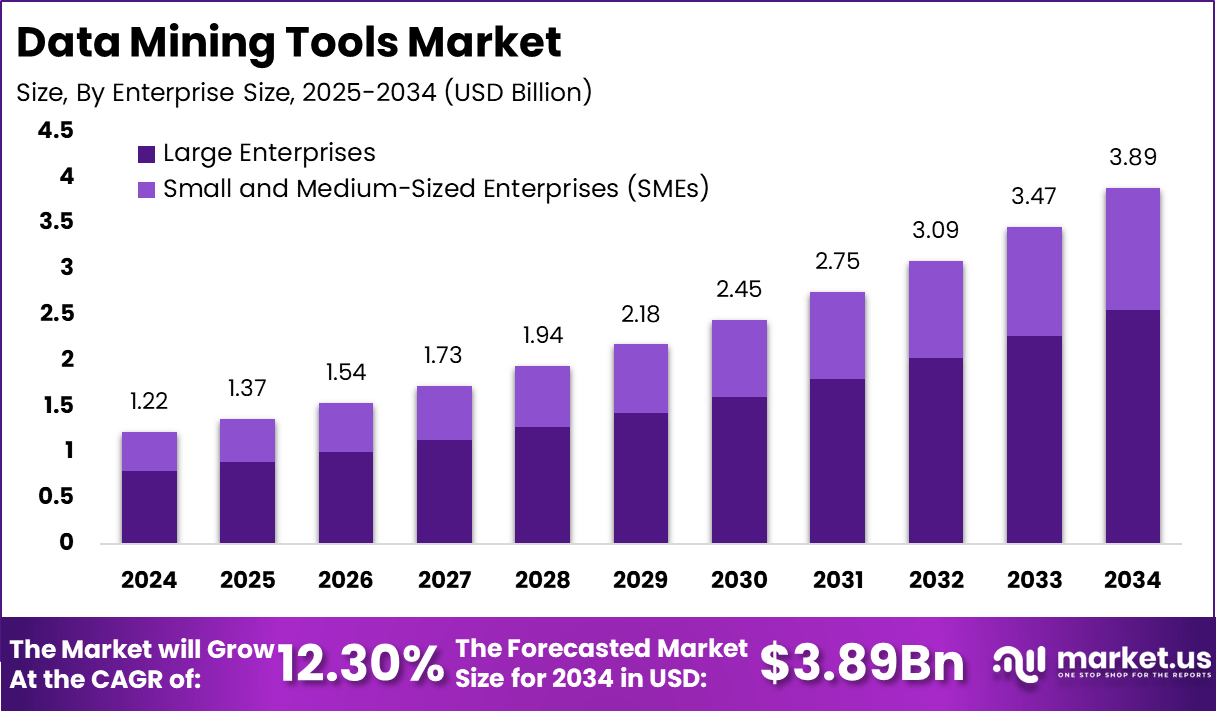
The Data Mining Tools Market is projected to grow from USD 1.22 billion in 2024 to USD 3.89 billion by 2034, expanding at a CAGR of 12.30%. This growth is driven by the increasing demand for data-driven decision-making across various sectors, including retail, healthcare, and finance.
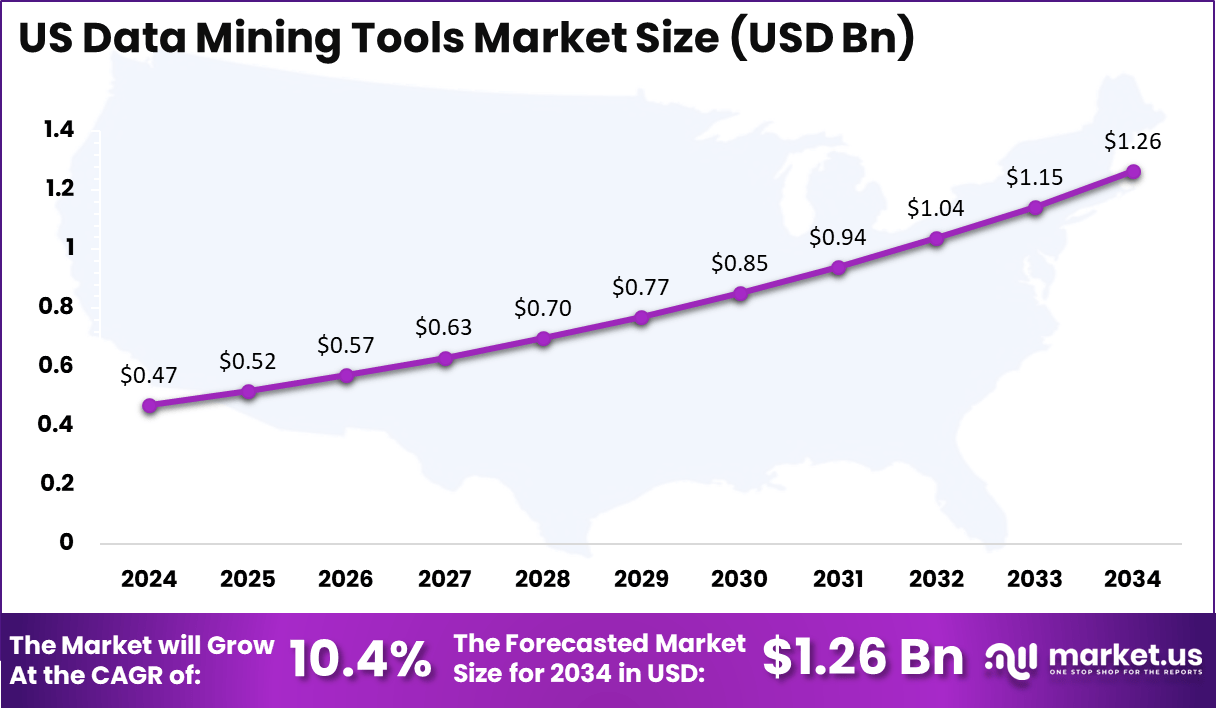
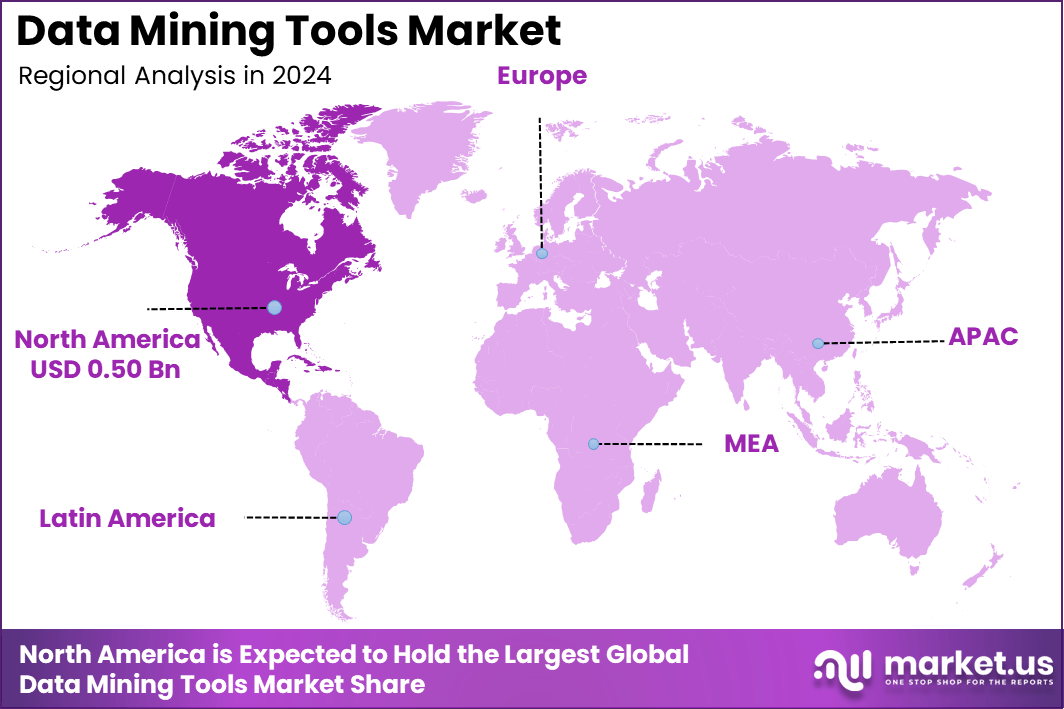
North America holds a significant share of the market, accounting for 41.8%, with a value of USD 0.50 billion in 2024. The United States leads the region, contributing USD 0.47 billion in 2024, with expectations to reach USD 1.26 billion by 2034, growing at a CAGR of 10.4%. The rising adoption of advanced analytics, artificial intelligence, and machine learning technologies is fueling the demand for data mining tools, enabling organizations to derive valuable insights from large volumes of structured and unstructured data.
These tools help businesses optimize operations, enhance customer experiences, and stay competitive by identifying emerging trends and making informed strategic decisions. With the growing importance of big data and business intelligence, the Data Mining Tools Market is positioned for strong growth over the next decade.
Data mining tools are advanced software solutions designed to analyze large datasets, uncover hidden patterns, and extract actionable insights to support decision-making across various industries. These tools utilize algorithms and statistical techniques to identify correlations, trends, and anomalies in structured and unstructured data, allowing businesses to make more informed, data-driven decisions.
The increasing volume of data generated by businesses and consumers has led to a surge in demand for data mining tools, which are now integral to sectors such as finance, retail, healthcare, and manufacturing. These tools help organizations in customer segmentation, fraud detection, predictive analytics, risk management, and market analysis, ultimately driving efficiency and enhancing profitability.
With the advent of artificial intelligence (AI) and machine learning, data mining tools are becoming more sophisticated, offering advanced capabilities like predictive modeling, real-time data analysis, and automated decision-making.
As businesses continue to embrace digital transformation and rely more on big data for strategic insights, the demand for data mining tools is expected to grow substantially. Furthermore, the market for these tools is being fueled by technological advancements, including cloud computing, which enables organizations to access scalable and cost-effective data mining solutions. Overall, data mining tools are poised to play a pivotal role in shaping the future of business intelligence.
Key players like KNIME and Altair have introduced advanced AI-enhanced features in their latest platforms in 2025. For example, Altair’s HyperWorks 2025 suite includes AI-driven simulation capabilities with processing speeds up to 1,000 times faster. KNIME released version 5.5 with new AI agent workflows and connectivity to platforms like Anthropic and IBM WatsonX.ai. RapidMiner remains a top choice due to its user-friendly visual interface and robust machine learning integration.
Mergers and acquisitions are also a significant trend, with companies focused on AI and machine learning-enhanced data mining solutions making key strategic purchases to expand capabilities. The telecom industry has seen notable M&A activities where software providers and data platform vendors enhanced their analytics offerings, underlining the lucrative nature of data mining tools in various sectors.
The global data mining tools market is projected to reach upwards of $3.65 billion by 2034, growing annually by about 12.1%. The future outlook emphasizes the integration of deep learning for automated pattern recognition, real-time data processing, and improved data visualization for non-technical users. Cloud adoption accelerates growth, making these tools scalable and cost-effective.
In summary, the data mining tools market is expanding rapidly, with revenues growing from just over $1 billion in 2023 to projections beyond $3 billion within a decade. Innovations in AI-powered features, major product launches like KNIME 5.5, and active M&A transactions, especially in AI and telecom sectors, illustrate a dynamic trend towards smarter, faster, and increasingly accessible data mining solutions worldwide.
Key Takeaways
- The Data Mining Tools Market is expected to grow from USD 1.22 billion in 2024 to USD 3.89 billion by 2034, with a robust CAGR of 12.30%, driven by the increasing reliance on data-driven decision-making across industries.
- North America dominates the market with a 41.8% share in 2024, valued at approximately USD 0.50 billion, supported by the region’s advanced technological infrastructure and adoption of data analytics solutions.
- The United States contributes significantly, with a market size of USD 0.47 billion in 2024, projected to grow to USD 1.26 billion by 2034, expanding at a CAGR of 10.4%.
- By component, software accounts for 71.3% of the market, reflecting the growing demand for advanced data mining applications that enable organizations to analyze large datasets and extract actionable insights.
- Large enterprises represent 65.7% of the market by enterprise size, as these organizations increasingly adopt data mining tools for enhanced operational efficiency, risk management, and strategic decision-making.
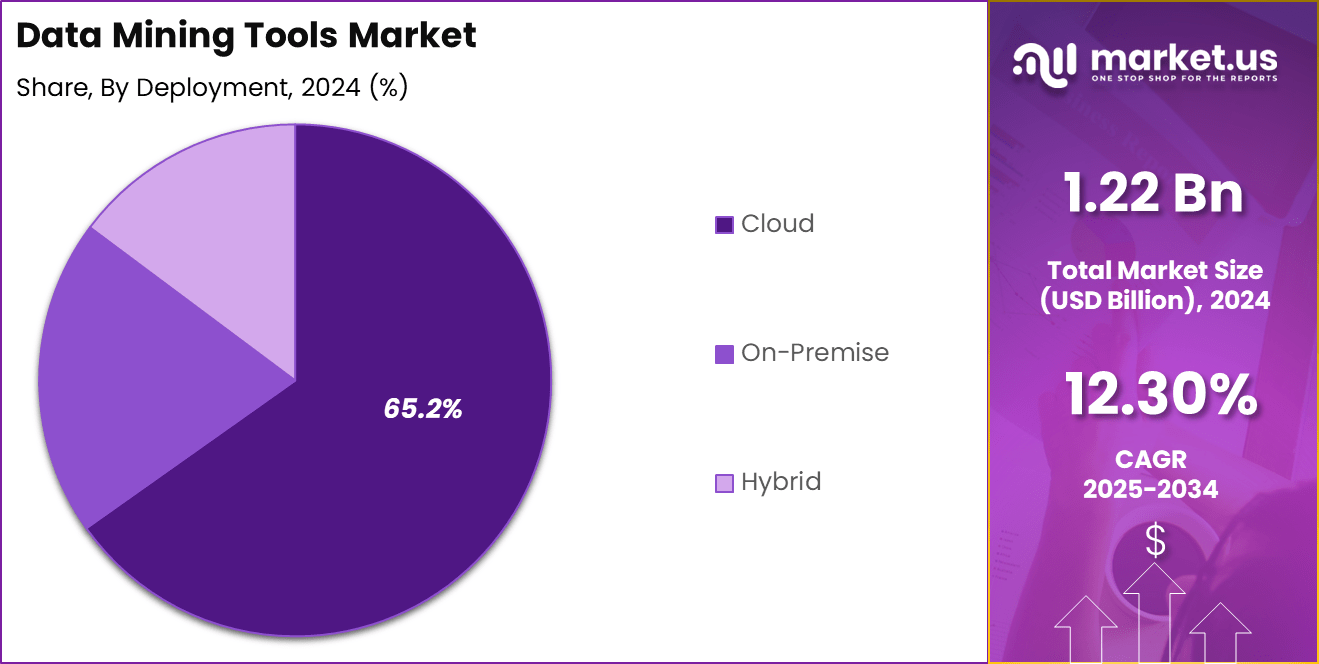
- Cloud-based deployment is the preferred mode, accounting for 65.2% of the market, driven by the flexibility, scalability, and cost-effectiveness offered by cloud solutions.
- The BFSI sector leads in end-user industry share with 25.5%, leveraging data mining tools for customer insights, fraud detection, risk assessment, and compliance management.
Role of AI
Artificial Intelligence (AI) plays a transformative role in the Data Mining Tools market, significantly enhancing the capabilities of traditional data analysis. AI-driven algorithms and machine learning models are crucial for automating the process of identifying patterns, correlations, and anomalies within vast datasets, which would be nearly impossible for humans to detect manually.
By leveraging AI, data mining tools can perform predictive analytics, classify data, and offer recommendations in real-time, helping businesses make more informed decisions faster. Machine learning models continuously improve as they process more data, becoming increasingly accurate in forecasting trends and behaviors.
AI’s role is particularly prominent in the finance, healthcare, and retail sectors, where organizations use data mining tools to gain insights into customer behavior, optimize marketing strategies, detect fraudulent activities, and predict market trends. Natural Language Processing (NLP), a subset of AI, enhances the analysis of unstructured data such as social media feeds, customer reviews, and textual information, enabling deeper insights into consumer sentiments and preferences.
Additionally, AI-powered data mining tools can automate repetitive tasks such as data cleaning, allowing data scientists to focus on more complex analysis. As AI technologies evolve, the data mining tools market is expected to witness even greater advancements in automation, predictive analytics, and data-driven decision-making.
AI Industry Adoption
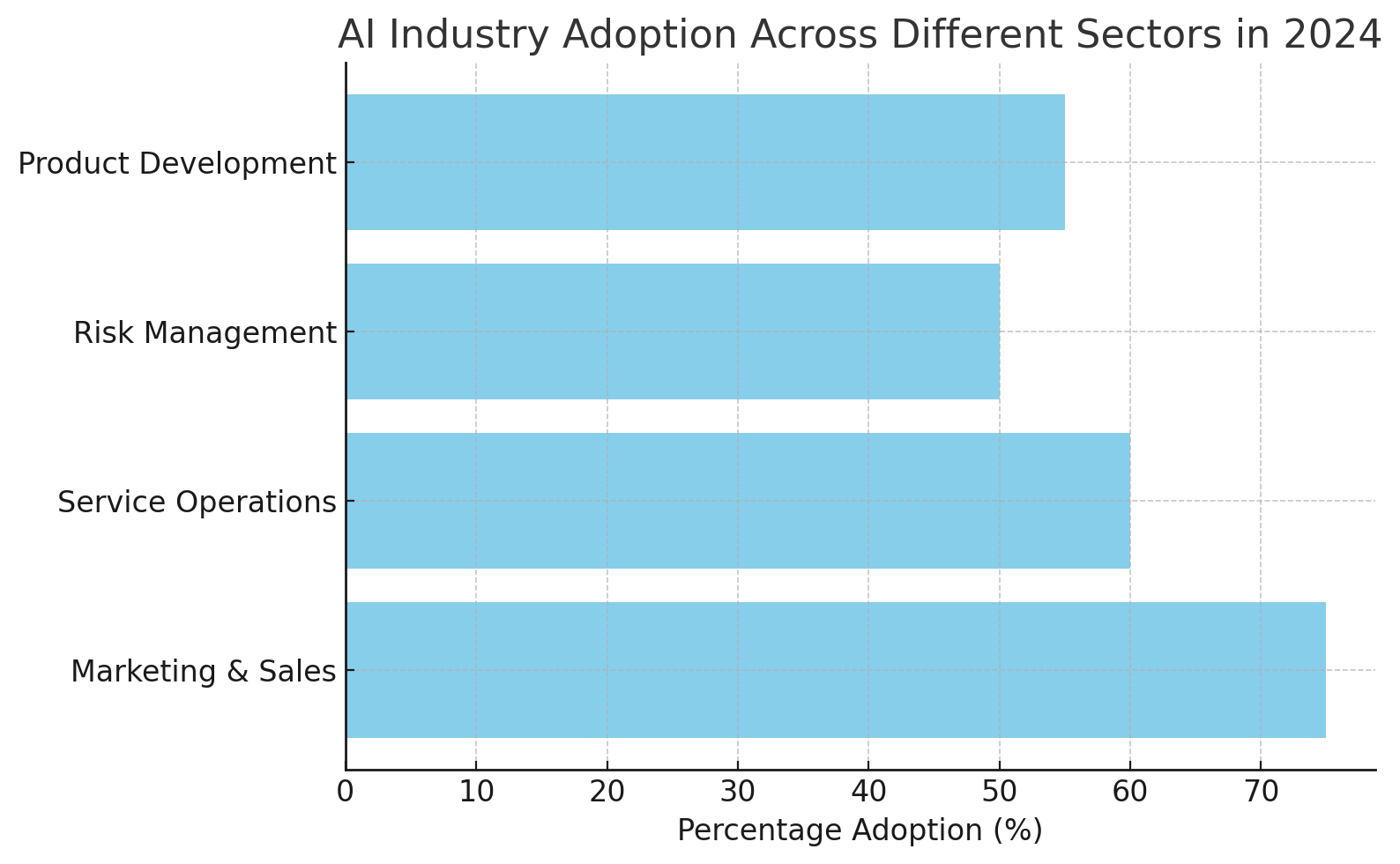
The adoption of Artificial Intelligence (AI) across industries has accelerated significantly, transforming how businesses operate and make decisions. In 2024, around 78% of organizations reported using AI in at least one function, a notable increase from previous years.
Industries such as marketing and sales are heavily leveraging AI, particularly for customer segmentation, personalized marketing, and sales forecasting, with 75% of the expected value from AI concentrated in these areas, along with research and development and customer operations. AI is also revolutionizing service operations by automating customer service tasks through chatbots and virtual assistants, leading to improved efficiency and customer satisfaction.
In finance, AI plays a critical role in fraud detection, credit scoring, and compliance monitoring, strengthening security and regulatory adherence. Furthermore, AI accelerates product and service development by analyzing consumer preferences and market trends, allowing businesses to innovate faster.
Despite its widespread adoption, challenges remain, such as data privacy concerns, integration complexities, and a shortage of skilled professionals. However, AI continues to drive operational efficiency and innovation, positioning itself as a fundamental component of digital transformation across various sectors. As its capabilities expand, AI’s influence is set to deepen in business processes and industry standards.
Analysts’ Viewpoint
Analysts observe a significant transformation in the Data Mining Tools market, driven by the growing need for businesses to derive actionable insights from large volumes of data. This shift is fueled by the increasing complexity and variety of data across industries, pushing organizations to adopt advanced analytics solutions for improved decision-making.
North America remains the dominant region in the market, with widespread adoption of data mining tools, particularly in the United States, where there is a strong technological infrastructure and early adoption of data analytics solutions.
Software components lead the market, as businesses require powerful data mining applications to efficiently analyze and extract value from datasets. The preference for cloud-based deployment continues to rise, driven by the flexibility, scalability, and cost-effectiveness that cloud solutions offer compared to traditional on-premises systems. The BFSI sector remains the largest end-user, leveraging data mining tools for customer insights, fraud detection, and risk management.
Artificial intelligence (AI) and machine learning (ML) are becoming increasingly integrated into data mining tools, enhancing their ability to uncover complex patterns, predict trends, and automate processes. However, challenges such as data privacy concerns, regulatory compliance, and the need for skilled professionals continue to impact market growth. Despite these challenges, the increasing reliance on data-driven decision-making positions the data mining tools market for sustained growth in the coming years.
Emerging trends
Emerging trends in the Data Mining Tools market reflect the industry’s rapid evolution, driven by advancements in technology and the increasing need for organizations to extract actionable insights from vast datasets.
Integration of AI and Machine Learning
Artificial Intelligence (AI) and Machine Learning (ML) are becoming integral to data mining tools, enhancing their ability to uncover complex patterns and make predictions. These technologies enable more accurate forecasting, anomaly detection, and decision-making processes, thereby adding significant value to businesses across various sectors.
Real-Time Data Processing
With the proliferation of Internet of Things (IoT) devices and the demand for immediate insights, real-time data processing has gained prominence. Tools that can analyze streaming data allow organizations to make timely decisions, improving responsiveness and operational efficiency.
Cloud-Based Solutions
The shift towards cloud computing offers scalable, flexible, and cost-effective data storage and processing options. Cloud-based data mining tools facilitate easier access to advanced analytics capabilities, enabling organizations to handle large volumes of data without the constraints of on-premises infrastructure.
Privacy-Preserving Techniques
As data privacy concerns intensify, especially with regulations like GDPR, there is a growing emphasis on privacy-preserving data mining methods. Techniques such as differential privacy and federated learning allow organizations to analyze data while maintaining user confidentiality and compliance with legal standards.
Unstructured Data Analysis
The ability to mine unstructured data, such as text, images, and videos, is becoming increasingly important. Tools that incorporate Natural Language Processing (NLP) and image recognition are enabling organizations to extract valuable insights from diverse data sources, enhancing their analytical capabilities.
US Market Size
The US Data Mining Tools market, valued at USD 0.47 billion in 2024, is expected to grow significantly, reaching USD 1.26 billion by 2034, expanding at a CAGR of 10.4%. This growth is driven by the increasing adoption of advanced data analytics solutions across various industries, including finance, healthcare, and retail, where businesses rely on data mining tools to gain deeper insights and enhance decision-making processes.
The demand for cloud-based data mining solutions and the integration of AI and machine learning technologies are further accelerating market expansion in the US. Additionally, the growing need for real-time data processing and regulatory compliance is pushing financial institutions and other sectors to adopt robust data mining tools for improved operational efficiency and risk management. With a strong technological infrastructure and increasing investment in data-driven innovation, the US is set to remain a key player in the global data mining tools market over the next decade.
Investment and Business Benefit
Enhanced Decision-Making
Data mining tools analyze large datasets to uncover patterns and trends, providing businesses with actionable insights that inform strategic decisions. This leads to more accurate forecasting, better resource allocation, and improved operational efficiency.
Improved Customer Insights
By examining customer behavior and preferences, data mining helps businesses segment their audience effectively. This enables personalized marketing strategies, targeted promotions, and improved customer satisfaction, fostering loyalty and retention.
Fraud Detection and Risk Management
Data mining tools can identify unusual patterns and anomalies in transactions, aiding in the early detection of fraudulent activities. This proactive approach enhances security measures and helps in managing financial risks more effectively.
Operational Efficiency
By streamlining data analysis processes, data mining tools reduce the time and resources required to extract meaningful insights. This leads to cost savings and allows organizations to focus on core business activities.
Competitive Advantage
Organizations that leverage data mining can anticipate market trends, understand customer needs, and adapt swiftly to changes. This agility provides a competitive edge in dynamic markets.
By Component
Software constitutes 71.3% of the Data Mining Tools market, driven by the growing need for advanced applications that enable organizations to harness and extract value from large datasets. Key software components include ETL and Data Preparation tools, which are essential for extracting, transforming, and loading data into analytics systems, ensuring it is clean and structured for analysis.
Data-Mining Workbench platforms offer a comprehensive environment for data scientists to design, execute, and manage data mining tasks, enabling tasks such as pattern recognition, clustering, and anomaly detection. ML and Advanced Analytics Platforms integrate machine learning algorithms and advanced statistical techniques to uncover complex patterns and provide predictive insights, playing a vital role in industries like finance, retail, and healthcare.
Visualization and Reporting tools present data mining results in intuitive formats such as charts, dashboards, and interactive reports, making it easier for decision-makers to interpret and act upon the insights.
Additionally, the Others category includes specialized tools for specific use cases, such as text mining, image recognition, and AI-driven analytics, enhancing the capabilities of traditional data mining. Alongside software, Professional Services and Managed Services are crucial for implementing, customizing, and maintaining these tools, ensuring businesses maximize the value of their data mining investments.
By Enterprise Size
Large enterprises account for 65.7% of the Data Mining Tools market, reflecting their significant investment in advanced analytics and data-driven decision-making processes. These organizations typically handle vast amounts of data across multiple departments, requiring robust and scalable data mining solutions to extract meaningful insights.
Large enterprises often leverage these tools for customer segmentation, predictive analytics, fraud detection, and risk management, aiming to enhance operational efficiency, optimize resources, and stay competitive in the market. The high demand for sophisticated data mining applications in large organizations is also driven by their need to comply with regulatory requirements and manage complex, enterprise-wide data systems.
On the other hand, Small and Medium-Sized Enterprises (SMEs) are increasingly adopting data mining tools, but they represent a smaller share of the market due to limited budgets, less complex data needs, and fewer resources for implementation and maintenance.
However, the growing availability of cost-effective, cloud-based solutions is enabling SMEs to benefit from data mining technologies, helping them make informed decisions and optimize operations without significant upfront investments. Despite this, large enterprises remain the dominant players in the market, leveraging data mining tools for strategic advantage and deeper insights into their business operations.
By Deployment
Cloud-based deployment accounts for 65.2% of the Data Mining Tools market, reflecting the growing preference for cloud solutions due to their scalability, flexibility, and cost-effectiveness. Cloud-based platforms enable organizations to easily store and analyze vast amounts of data without the need for heavy upfront investments in infrastructure.
The ability to scale resources on-demand and access advanced analytics tools remotely is particularly appealing to businesses that require real-time data processing and want to reduce operational complexities. Cloud deployment also allows for seamless integration with other cloud-based applications, making it easier for organizations to manage and analyze data across different systems.
On-premise deployment, though still relevant for certain industries with strict data control requirements, has seen a decline in popularity. It involves installing and maintaining data mining software on local servers, which can be costly and require dedicated IT teams to ensure system performance and security.
The hybrid deployment model is emerging as a middle ground, allowing organizations to combine the flexibility of the cloud with the control of on-premise systems. This model is ideal for businesses that need to store sensitive data on-site while utilizing the cloud for other data processing and analytics tasks. Overall, cloud-based solutions are expected to remain the dominant deployment method, driven by their advantages in terms of cost, scalability, and accessibility.
By End-user Industry
The BFSI (Banking, Financial Services, and Insurance) sector leads the Data Mining Tools market, accounting for 25.5% of the total market share. This industry heavily relies on data mining tools for customer segmentation, fraud detection, risk management, and regulatory compliance.
By analyzing vast amounts of financial data, BFSI organizations can make informed decisions, enhance customer experiences, and improve operational efficiencies. The growing need for predictive analytics to anticipate market trends and customer behavior further drives the adoption of data mining tools in this sector.
Other sectors, such as IT and Telecom, Government and Defence, Manufacturing, Healthcare and Life Sciences, Energy and Utilities, Retail and E-commerce, and Transportation and Logistics cs are also significant users of data mining tools, though they account for a smaller share compared to BFSI.
- IT and Telecom companies leverage data mining to optimize network performance, predict service demands, and enhance customer experience.
- Government and Defence agencies use data mining for surveillance, security, and predictive analysis in areas like cybersecurity.
- Manufacturing uses data mining for predictive maintenance and supply chain optimization.
- Healthcare and Life Sciences rely on these tools for patient data analysis, disease prediction, and drug discovery.
- Energy and Utilities focus on optimizing energy distribution and predicting maintenance schedules.
- Retail and E-commerce companies utilize data mining for personalized marketing, demand forecasting, and inventory management.
- Transportation and Logistics sectors use data mining for route optimization and fleet management.
Key Market Segments
By Component
- Software
- ETL and Data Preparation
- Data-Mining Workbench
- ML and Advanced Analytics Platforms
- Visualisation and Reporting
- Others
- Services
- Professional Services
- Managed Services
By Enterprise Size
- Small and Medium-Sized Enterprises (SMEs)
- Large Enterprises
By Deployment
- Cloud
- On-Premise
- Hybrid
By End-user Industry
- BFSI
- IT and Telecom
- Government and Defence
- Manufacturing
- Healthcare and Life Sciences
- Energy and Utilities
- Retail and E-commerce
- Transportation and Logistics
- Others
Regional Analysis
North America leads the global Data Mining Tools market, holding a substantial share due to its advanced technological infrastructure and early adoption of data analytics solutions. In 2024, the region accounted for approximately 37.1% of the global market, with a revenue of USD 0.50 billion.
This dominance is attributed to the concentration of major technology companies, strong enterprise adoption across sectors like finance, healthcare, and retail, and significant investments in big data and AI technologies.
The U.S., in particular, is expected to experience significant growth, driven by increasing demand for real-time analytics, personalized services, and advancements in cloud computing and machine learning. The region’s emphasis on data compliance and governance further contributes to the growing reliance on structured analytical tools, positioning North America as a key player in the data mining tools market.
Regional Analysis and Coverage
- North America
- US
- Canada
- Europe
- Germany
- France
- The UK
- Spain
- Italy
- Russia
- Netherlands
- Rest of Europe
- Asia Pacific
- China
- Japan
- South Korea
- India
- Australia
- Singapore
- Thailand
- Vietnam
- Rest of Latin America
- Latin America
- Brazil
- Mexico
- Rest of Latin America
- Middle East & Africa
- South Africa
- Saudi Arabia
- UAE
- Rest of MEA
Driving Factors
- Data Explosion: The exponential growth in data volume, variety, and velocity necessitates advanced tools to extract meaningful insights, driving the demand for data mining solutions.
- AI and Machine Learning Integration: The increasing adoption of AI and machine learning enhances the capabilities of data mining tools, enabling more accurate predictions and insights.
- Cloud Computing Adoption: The shift towards cloud-based infrastructures provides scalable and cost-effective platforms for deploying data mining tools, expanding their accessibility.
- Real-Time Analytics Demand: Businesses require real-time analytics to make timely decisions, propelling the need for data mining tools that can process and analyze data instantaneously.
- Competitive Advantage: Organizations leverage data mining to gain insights into customer behavior and market trends, fostering innovation and maintaining a competitive edge.
Restraint Factors
- Data Privacy Concerns: Stringent data protection regulations and consumer privacy concerns can limit the scope of data mining applications.
- High Implementation Costs: The initial investment and maintenance costs of advanced data mining tools can be prohibitive, especially for SMEs.
- Data Quality Issues: Inaccurate, incomplete, or inconsistent data can lead to misleading insights, undermining the effectiveness of data mining efforts.
- Lack of Skilled Personnel: The shortage of professionals with expertise in data mining and analytics hinders the successful implementation and utilization of these tools.
- Integration Challenges: Integrating data mining tools with existing IT systems and data sources can be complex and resource-intensive.
Growth Opportunities
- SME Adoption: Developing cost-effective and user-friendly data mining solutions can encourage adoption among small and medium-sized enterprises.
- Industry-Specific Solutions: Tailoring data mining tools to meet the unique needs of various industries, such as healthcare and finance, can open new market segments.
- Advanced Analytics Features: Incorporating advanced analytics capabilities, like predictive modeling and natural language processing, can enhance the value proposition of data mining tools.
- Partnerships and Collaborations: Forming strategic alliances with cloud service providers and AI companies can expand the reach and capabilities of data mining solutions.
- Regulatory Compliance Tools: Developing features that assist organizations in complying with data protection regulations can increase the adoption of data mining tools.
Challenging Factors
- Data Security Threats: The risk of data breaches and cyberattacks poses significant challenges to the secure use of data mining tools.
- Algorithm Complexity: The complexity of data mining algorithms can make them difficult to implement and interpret, especially for non-technical users.
- Scalability Issues: Handling large volumes of data efficiently requires scalable infrastructure, which can be challenging to maintain.
- Data Silos: Disparate data sources and systems can create silos, hindering the integration and analysis of data across an organization.
- Ethical Considerations: Ensuring that data mining practices adhere to ethical standards and do not result in biased or discriminatory outcomes is a growing concern.
Competitive Analysis
The Data Mining Tools market is highly competitive, with a diverse range of players offering solutions tailored to various business needs. IBM Corporation provides the widely used SPSS Modeler, offering robust predictive analytics capabilities, while Oracle Corporation integrates its data mining solutions with Oracle databases, allowing for advanced data analysis.
Microsoft Corporation offers Azure Machine Learning Studio, a cloud-based platform enabling scalable data mining and machine learning. SAS Institute Inc. is a key player with its SAS Enterprise Miner, offering tools for data mining, predictive modeling, and machine learning. Teradata Corporation specializes in large-scale data environments, providing an analytics platform that integrates data mining and management.
SAP SE integrates data mining tools within its enterprise resource planning systems, helping businesses analyze operational data. Altair Engineering Inc. (RapidMiner) provides an open-source platform for data mining and machine learning, while KNIME AG offers a flexible, modular platform for data analysis and reporting. Google LLC (Kaggle), with its data science competitions platform, facilitates collaboration and the sharing of datasets.
Amazon Web Services Inc. (AWS) offers cloud-based analytics services like Amazon SageMaker, which supports machine learning and data mining. Other notable players include Alteryx Inc., OpenText Corporation, Hitachi Vantara LLC, TIBCO Software Inc., QlikTech International AB, MicroStrategy Incorporated, and Sisense Inc., each contributing specialized solutions for data analysis, visualization, and decision-making.
FICO (Fair Isaac Corporation) and H2O.ai Inc. focus on predictive analytics, while Dataiku SAS and Databricks Inc. offer collaborative platforms for data science and big data processing. Each of these companies adds unique value to the market, addressing the growing demand for data mining tools across industries.
Top Key Players in the Market
- IBM Corporation
- Oracle Corporation
- Microsoft Corporation
- SAS Institute Inc.
- Teradata Corporation
- SAP SE
- Altair Engineering Inc. (RapidMiner)
- KNIME AG
- Google LLC (Kaggle)
- Amazon Web Services Inc.
- Alteryx Inc.
- OpenText Corporation
- Hitachi Vantara LLC
- TIBCO Software Inc.
- QlikTech International AB
- MicroStrategy Incorporated
- Sisense Inc.
- Orange S.A. (Orange Data Mining)
- Togaware Pty Ltd (Rattle GUI)
- FICO (Fair Isaac Corporation)
- H2O.ai Inc.
- Dataiku SAS
- Databricks Inc.
- Others
Major Developments
- March 15, 2025: IBM announced the launch of its new cloud-native AI-driven analytics platform, enabling businesses to streamline their data mining processes and accelerate predictive analytics. This development reinforces IBM’s commitment to enhancing data-driven decision-making in industries like banking and retail.
- June 30, 2025: Google Cloud introduced new features to its BigQuery platform, integrating enhanced machine learning capabilities to improve data mining and analysis. The update includes advanced tools for predictive analytics and real-time data processing, aimed at helping organizations across sectors gain deeper insights from their data.
- August 5, 2025: Microsoft expanded its Azure Synapse Analytics offerings with new data mining capabilities, incorporating real-time analytics and machine learning models. This development is designed to assist businesses in optimizing their operations by providing more accurate, data-driven insights for decision-making.









