


Market Size & Trends
The Global Electric Utility Vehicle Market size is expected to be worth around USD 39.4 Billion by 2034, from USD 20.4 Billion in 2024, growing at a CAGR of 6.8% during the forecast period from 2025 to 2034. This growth is driven by increasing demand for sustainable transportation solutions, advancements in electric vehicle technology, and government incentives promoting eco-friendly alternatives. 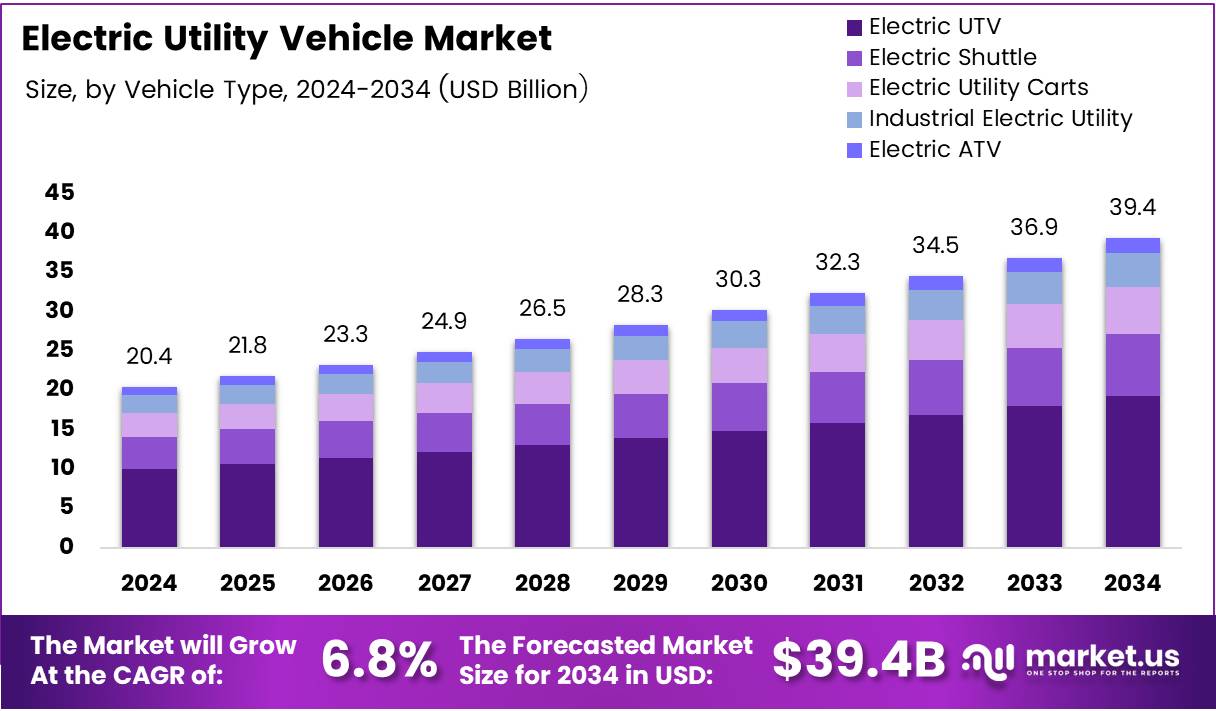
Key Takeaways
- The Global Electric Utility Vehicle Market size is projected to reach USD 39.4 Billion by 2034, growing at a CAGR of 6.8% from 2025 to 2034.
- In 2024, the Electric UTV segment led the market, holding a 34.2% share in the By Vehicle Type Analysis segment.
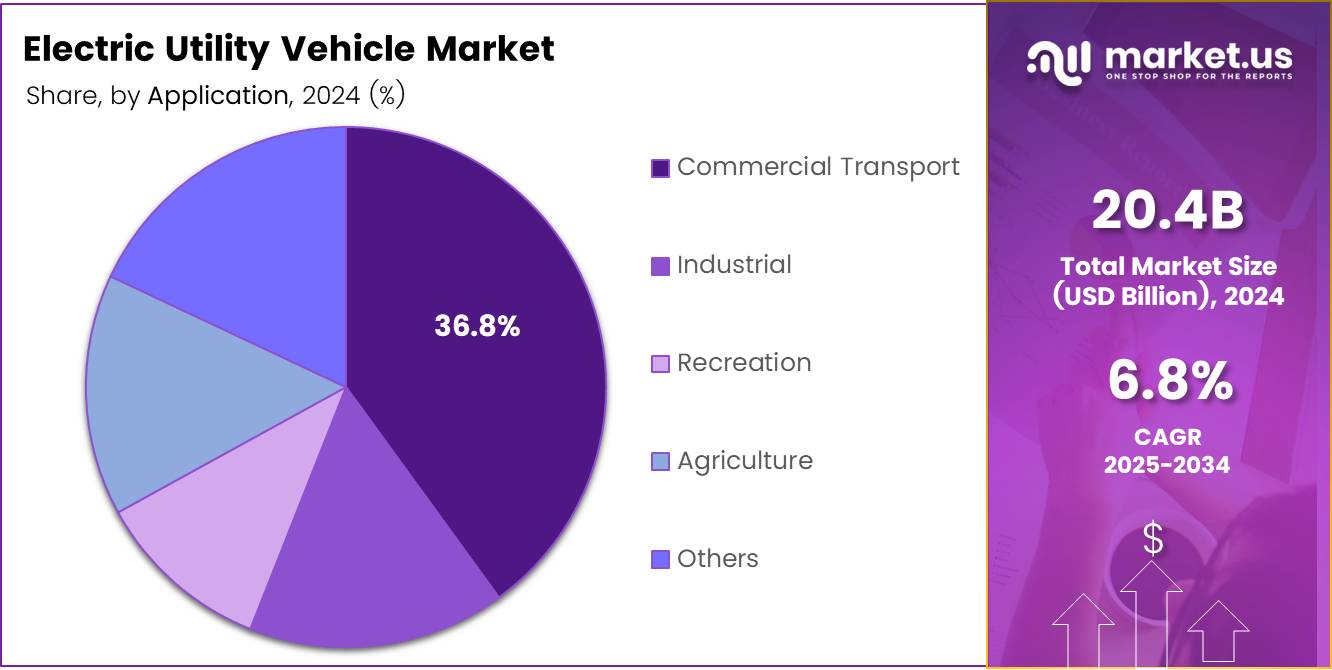
- The Commercial Transport segment held the largest share of 36.8% in the By Application Analysis segment in 2024.
- The Rear Wheel Drive (RWD) configuration dominated the By Drive Type Analysis segment with a 49.6% share in 2024.
- The Lithium-Ion battery type accounted for 58.3% of the market share in the By Battery Type Analysis segment in 2024.
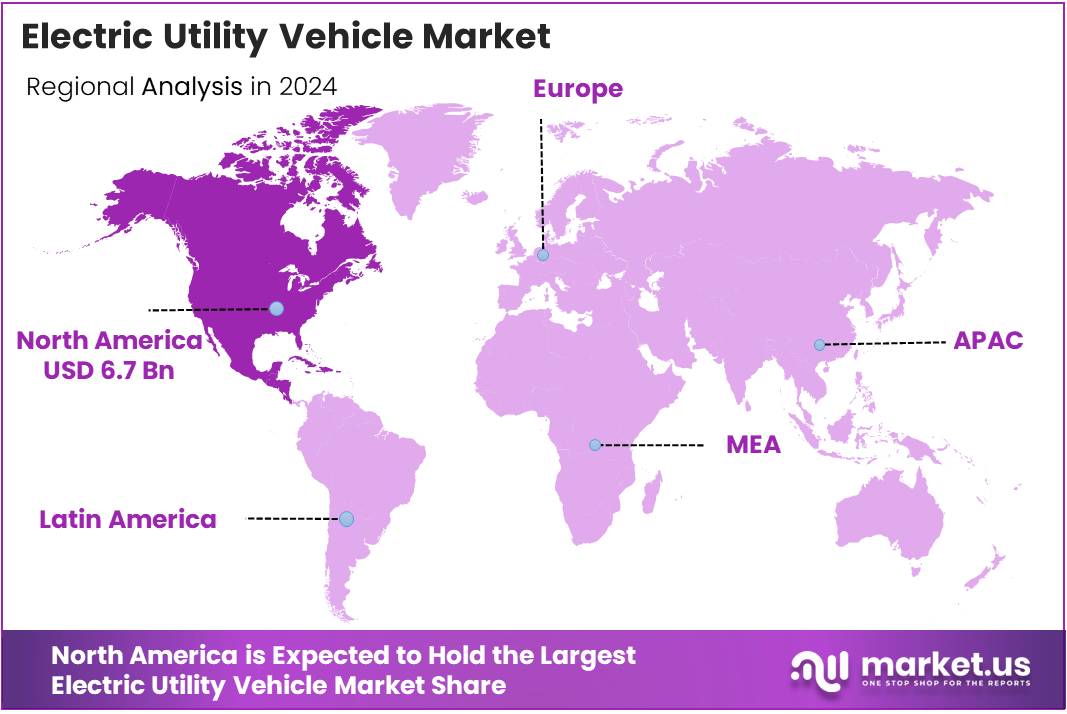
- North America captured the largest market share of 33.2%, valued at approximately USD 6.7 billion in 2024.
Report Overview
The Electric Utility Vehicle (EUV) market has been witnessing significant growth driven by advancements in sustainability, government regulations, and increasing demand for environmentally friendly transportation options.
As industries globally aim to reduce their carbon footprint, electric utility vehicles are becoming increasingly attractive due to their low operating costs and environmental benefits. These vehicles are used across a variety of sectors, including logistics, agriculture, and urban mobility, contributing to market expansion.
The EUV market is experiencing substantial growth, partly due to the increasing adoption of electric vehicles (EVs) across various segments. According to statistics, there are approximately 1.47 billion passenger cars in operation globally, a massive pool of vehicles that is gradually transitioning towards electrification.
This shift is aligned with efforts by governments worldwide to promote the use of EVs, aided by initiatives like tax incentives, grants, and subsidies. Additionally, electrification of utility vehicles presents a crucial opportunity for industries to achieve sustainability targets and optimize operations.
Government investments and favorable regulations are pivotal in accelerating the growth of the EUV market. In several regions, including North America and Europe, authorities are increasingly focusing on reducing emissions through stringent regulations and encouraging the adoption of zero-emission vehicles.
For instance, according to ACEA, petrol models saw a decrease of 25.8%, accounting for just 5.2% of the market share. On the other hand, the market for electrically-chargeable vans saw significant growth, increasing by 32.6% and capturing 8.7% of the market share, up from 5.7% in Q1 2024. This shift demonstrates a strong preference for cleaner alternatives in commercial transport.
The surge in demand for electric vans and utility vehicles is also a response to the ongoing push for urban mobility solutions and warehouse automation. More businesses are turning to EUVs for their ability to operate in urban environments with low emissions, contributing to improving air quality and meeting green logistics targets.
Additionally, many electric utility vehicles are being integrated with AI-powered fleet management systems, providing greater operational efficiency and cost savings.
With these developments, the EUV market offers promising growth opportunities. Governments’ commitment to carbon-neutral targets and expanding charging infrastructure will continue to fuel the adoption of electric utility vehicles. Moreover, as hybrid and fully electric models become increasingly available and cost-competitive, market penetration is expected to rise in both mature and emerging economies.
Vehicle Type Analysis
Electric UTV holds a dominant market position with a 34.2% share in the Electric Utility Vehicle Market in 2024.
In 2024, the Electric UTV segment emerged as the leader in the By Vehicle Type Analysis segment, commanding a significant share of 34.2% in the Electric Utility Vehicle Market. This dominance highlights the growing preference for Electric UTVs, owing to their versatile applications in various industries such as agriculture, construction, and recreational activities.
Electric UTVs are equipped to handle heavy-duty tasks, providing excellent off-road capabilities and superior performance in challenging environments. The strong market presence of Electric UTVs is likely attributed to their eco-friendly design, which caters to the increasing demand for sustainable transportation solutions.
The Electric Shuttle, Electric Utility Carts, Industrial Electric Utility, and Electric ATV segments also contribute to the overall market but trail behind Electric UTVs. However, their growth potential remains strong as these segments offer specialized solutions for niche markets, such as tourism, industrial use, and recreational activities.
Application Analysis
Commercial Transport holds a dominant position with a 36.8% share in the Electric Utility Vehicle Market in 2024.
In 2024, the Commercial Transport segment was the largest contributor in the By Application Analysis segment, holding a substantial market share of 36.8%. This dominance reflects the significant demand for electric vehicles in logistics, transportation, and delivery services, driven by sustainability goals and rising fuel costs.
Electric vehicles in the Commercial Transport sector offer cost-efficient and eco-friendly alternatives to traditional gasoline-powered vehicles. They are particularly appealing for last-mile delivery and public transportation, where reduced operational costs and zero emissions are key advantages. The shift towards electric mobility in this sector is further supported by government policies promoting green solutions.
Other sectors such as Industrial, Recreation, Agriculture, and Others also play important roles but with smaller shares in the market. Industrial applications of Electric Utility Vehicles, for instance, benefit from enhanced efficiency in warehouse and factory settings. Similarly, the Agricultural sector is exploring electric solutions for farm-related tasks, while the Recreation segment continues to thrive with electric ATVs and shuttles.
Drive Type Analysis
Rear Wheel Drive leads the market with a 49.6% share in the Electric Utility Vehicle Market in 2024.
In 2024, the Rear Wheel Drive (RWD) configuration emerged as the dominant drive type in the By Drive Type Analysis segment, capturing a remarkable 49.6% share of the Electric Utility Vehicle Market. This can be attributed to the benefits RWD offers in terms of better handling and improved weight distribution, making it ideal for heavy-duty vehicles and off-road applications, which are prevalent in the electric UTV and ATV markets.
RWD systems are also known for their durability and efficiency, providing excellent traction and stability, which are essential for utility vehicles operating in various industrial, agricultural, and recreational environments. The growing adoption of RWD in electric vehicles is driven by the demand for higher performance and reliability in challenging terrains.
While All-Wheel Drive (AWD) and Front-Wheel Drive (FWD) configurations remain significant, they trail behind RWD in terms of market share. AWD offers superior traction for off-road conditions, and FWD is typically preferred in light-duty applications due to its lower cost and efficiency. However, neither AWD nor FWD could match the market dominance of RWD in 2024.
Battery Type Analysis
Lithium-Ion leads with a dominant 58.3% share in the Electric Utility Vehicle Market in 2024.
In 2024, the Lithium-Ion battery type took the lead in the By Battery Type Analysis segment of the Electric Utility Vehicle Market, holding an impressive 58.3% share. Lithium-Ion batteries have become the preferred choice for electric vehicles due to their higher energy density, longer lifespan, and faster charging times compared to other battery technologies.
The rise of Lithium-Ion batteries aligns with the increasing demand for efficient, long-range electric vehicles. These batteries are known for their light weight and high performance, making them an ideal solution for the energy-intensive requirements of electric utility vehicles, particularly in sectors such as industrial and commercial transport.
Lead-acid batteries, while still used in some electric utility vehicles, account for a smaller market share. They are less efficient than Lithium-Ion batteries but continue to be favored in low-cost applications. Other battery technologies are emerging but have yet to make a significant impact on the market, with Lithium-Ion remaining the dominant player in the industry.
Key Market Segments
By Vehicle Type
- Electric UTV
- Electric Shuttle
- Electric Utility Carts
- Industrial Electric Utility
- Electric ATV
By Application
- Commercial Transport
- Industrial
- Recreation
- Agriculture
- Others
By Seating Capacity
- More than 2-Seater
- 1-Seater
- 2-Seater
By Drive Type
- Rear Wheel Drive
- All Wheel Drive
- Front Wheel Drive
By Battery Type
- Lithium-Ion
- Lead-acid
- Others
By Propulsion Type
- Battery Electric Vehicle
- Hybrid Electric
- Others
Drivers
Surge in Urban Micro-Mobility and Last-Mile Logistics Drives Electric Utility Vehicle Market Growth
The growing demand for urban micro-mobility and intra-campus transport is a key driver of the electric utility vehicle (EUV) market. With urbanization and population density increasing, electric utility vehicles offer an efficient and eco-friendly solution for short-distance travel, such as within city centers or large campuses. They are ideal for navigating congested streets and are increasingly used in urban logistics, where they help reduce traffic and emissions.
Governments worldwide are pushing for zero-emission fleets in municipal services, further boosting the market. Initiatives to transition public transport and city services to electric vehicles (EVs) aim to reduce air pollution and promote sustainability. This regulatory support is creating a strong demand for electric utility vehicles that meet these green standards.
Another key driver is the growing investment in last-mile logistics automation. As e-commerce grows, delivery companies are seeking efficient, low-emission vehicles to handle the last-mile delivery. Electric utility vehicles fit this need perfectly due to their smaller size, lower maintenance costs, and suitability for dense urban areas.
Restraints
Challenges in Adoption of Electric Utility Vehicles
One of the major challenges in the electric utility vehicle market is their limited towing and payload capacity, particularly for heavy-duty operations. While EVs are ideal for lighter tasks, they struggle with transporting heavy loads, which limits their applicability in certain industries like construction or long-haul logistics.
The high initial cost of electric utility vehicles is another significant restraint. Compared to traditional internal combustion engine (ICE) vehicles, EVs are more expensive upfront, which deters some businesses from making the switch despite lower operational costs in the long term.
Moreover, the lack of sufficient aftermarket service networks, especially in rural regions, is a concern. EVs require specialized maintenance and repair services, which are not as widely available outside urban centers. This limits their adoption in remote areas where service infrastructure is sparse.
Growth Factors
Growth Opportunities in the Electric Utility Vehicle Market
A significant growth opportunity in the electric utility vehicle market lies in integrating solar charging and renewable power stations. Solar-powered charging stations can help reduce the reliance on traditional energy grids, enabling EVs to operate in a more sustainable and cost-effective manner. This is particularly useful in remote or off-grid areas.
The development of AI-based fleet monitoring and telematics platforms is also a key growth area. These technologies allow fleet operators to track and optimize the performance of their electric vehicles, improving fleet management efficiency and reducing operational costs.
The electric utility vehicle market has significant potential for expansion into emerging markets with underdeveloped transport grids. In many developing regions, there is a lack of reliable public transport, creating an opportunity for electric vehicles to fill this gap. With low infrastructure investment and environmentally friendly solutions, EUVs can meet the transportation needs of these growing markets.
Emerging Trends
Trending Factors Shaping the Electric Utility Vehicle Market
One of the emerging trends in the electric utility vehicle market is the rise of subscription-based EV leasing models for enterprises. Companies are increasingly adopting subscription models to reduce the upfront costs of purchasing electric utility vehicles. This also allows for flexibility in fleet management, making it easier for businesses to scale operations based on demand.
The use of lightweight composite materials to extend vehicle range is another key trend. By making vehicles lighter, manufacturers can improve efficiency, reducing battery consumption and enhancing the range of electric utility vehicles, which is a critical factor for many businesses.
Autonomous utility vehicle prototypes for closed-loop systems are gaining traction as well. These vehicles can operate in predefined areas, like warehouses or factories, without human intervention. This trend has the potential to revolutionize logistics and manufacturing processes by improving efficiency and safety.
Regional Analysis
North America Dominates the Electric Utility Vehicle Market with a Market Share of 33.2%, Valued at USD 6.7 Billion
North America holds the largest share in the Electric Utility Vehicle market, commanding 33.2% of the market, which is valued at approximately USD 6.7 billion. This region benefits from strong government incentives, rising environmental concerns, and increasing demand for clean transportation solutions. The presence of leading electric vehicle manufacturers and robust infrastructure further propels growth in this region.
Europe Electric Utility Vehicle Market Trends
Europe is a key player in the Electric Utility Vehicle market, driven by stringent environmental regulations and strong sustainability initiatives. The market is supported by high adoption rates in countries such as Germany, the UK, and France, where electric utility vehicles are gaining popularity for both commercial and industrial use. The growing emphasis on reducing carbon emissions is expected to continue spurring demand for electric vehicles in the region.
Asia Pacific Electric Utility Vehicle Market Outlook
Asia Pacific is witnessing significant growth in the Electric Utility Vehicle market due to rapid urbanization, a large population base, and increasing government support for electric vehicles. Countries like China and Japan are leading the charge with favorable policies, incentives, and substantial investments in electric vehicle infrastructure. The demand for electric utility vehicles in sectors such as logistics, delivery services, and municipal operations is also rising steadily.
Middle East and Africa Electric Utility Vehicle Market Overview
The Electric Utility Vehicle market in the Middle East and Africa is in a nascent stage but is experiencing gradual growth. The region’s expanding interest in sustainable transportation solutions and the push toward reducing carbon footprints are expected to drive the market forward. Furthermore, increasing urbanization and investment in infrastructure, particularly in the UAE and Saudi Arabia, are contributing to a positive outlook for the market in the coming years.
Latin America Electric Utility Vehicle Market Insights
Latin America is beginning to witness steady growth in the Electric Utility Vehicle market, supported by government incentives and the growing awareness of environmental issues. While the market is still emerging, countries such as Brazil and Mexico are increasingly investing in electric vehicles for municipal and commercial purposes. The rise of electric utility vehicles is expected to be further propelled by the adoption of cleaner energy sources in the region.
Key Regions and Countries
North America
- US
- Canada
Europe
- Germany
- France
- The UK
- Spain
- Italy
- Rest of Europe
Asia Pacific
- China
- Japan
- South Korea
- India
- Australia
- Rest of APAC
Latin America
- Brazil
- Mexico
- Rest of Latin America
Middle East & Africa
- GCC
- South Africa
- Rest of MEA
Key Electric Utility Vehicle Company Insights
The global Electric Utility Vehicle (EUV) market in 2024 is expected to see significant contributions from several key players, each with distinct offerings and strategies aimed at expanding their market share.
Columbia Vehicle Group Inc. is poised to maintain its position as a leader in the EUV market, with a strong portfolio of electric vehicles designed for industrial, commercial, and recreational use. Known for their durable and versatile electric utility vehicles, Columbia is focused on developing environmentally friendly solutions tailored to a variety of applications.
Star EV Corporation is also a major player, leveraging its expertise in creating high-performance electric vehicles. The company is known for producing a range of utility vehicles that cater to both personal and business needs. Its focus on integrating advanced technologies and maintaining a commitment to sustainability gives it a competitive edge in the growing market.
HISUN is recognized for its robust electric utility vehicles that are widely used in both personal and commercial sectors. With a focus on innovation, HISUN continues to enhance its EV lineup with powerful, energy-efficient models, which have made a mark in the utility and recreational vehicle segments.
Polaris Inc., one of the most renowned names in the industry, has established itself as a leader in off-road and utility electric vehicles. The company’s commitment to high-performance engineering and its continuous expansion of electric-powered offerings positions it well for continued success in 2024 and beyond.
Top Key Players in the Market
- Columbia Vehicle Group Inc.
- Star EV Corporation
- HISUN
- Polaris Inc.
- Textron Specialized Vehicles Inc.
- Alke
- Marshell Green Power
- CLUB CAR
- American Landmaster
- Addax Motors
Recent Developments
- In January 2025, EV startup Harbinger successfully raised $100 million to meet growing demand for electric trucks, positioning itself for rapid expansion in the competitive market.
- In July 2024, Volvo secured $208 million in funding to accelerate the production of heavy-duty electric trucks, as part of its strategy to drive sustainability in commercial transportation.
- In March 2024, TELO announced a $5.4 million strategic fundraise, led by Neo, to further develop its cutting-edge electric truck technology and increase efficiency in the electric vehicle sector.
- In June 2024, Omega Seiki Mobility revealed plans to raise $40 million to scale up its electric truck manufacturing capacity, aiming to capture a larger share of the rapidly growing electric commercial vehicle market.









