


Report Overview
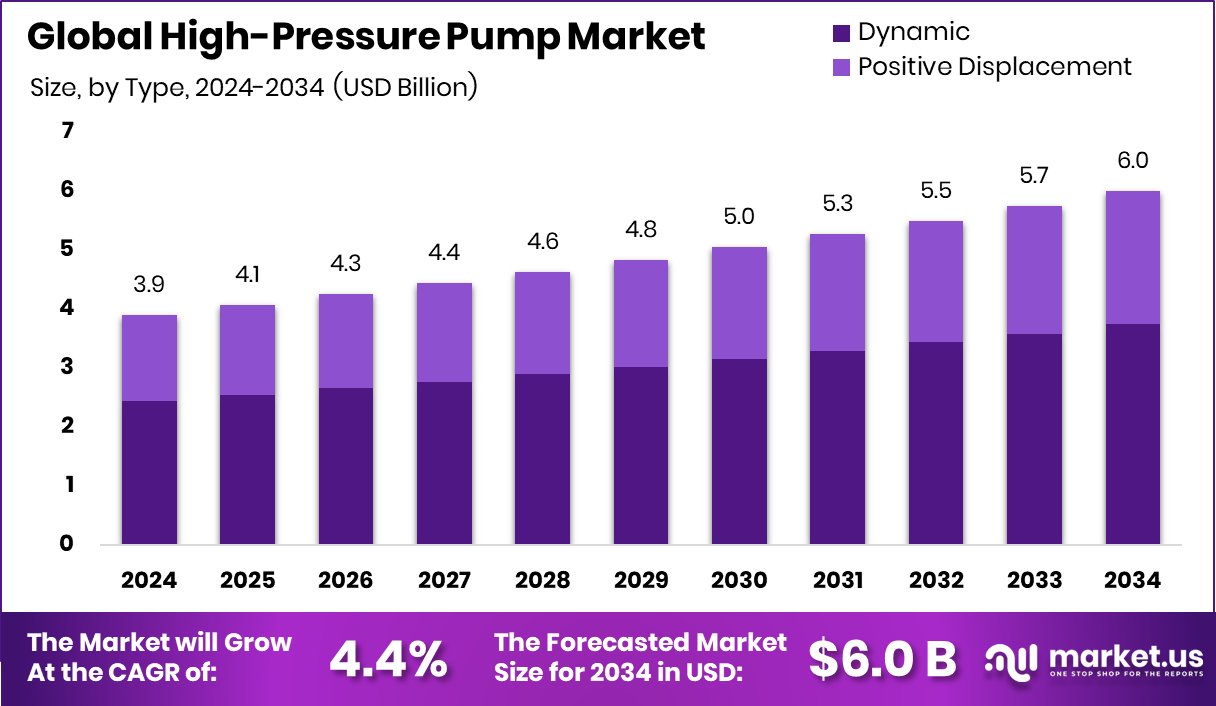
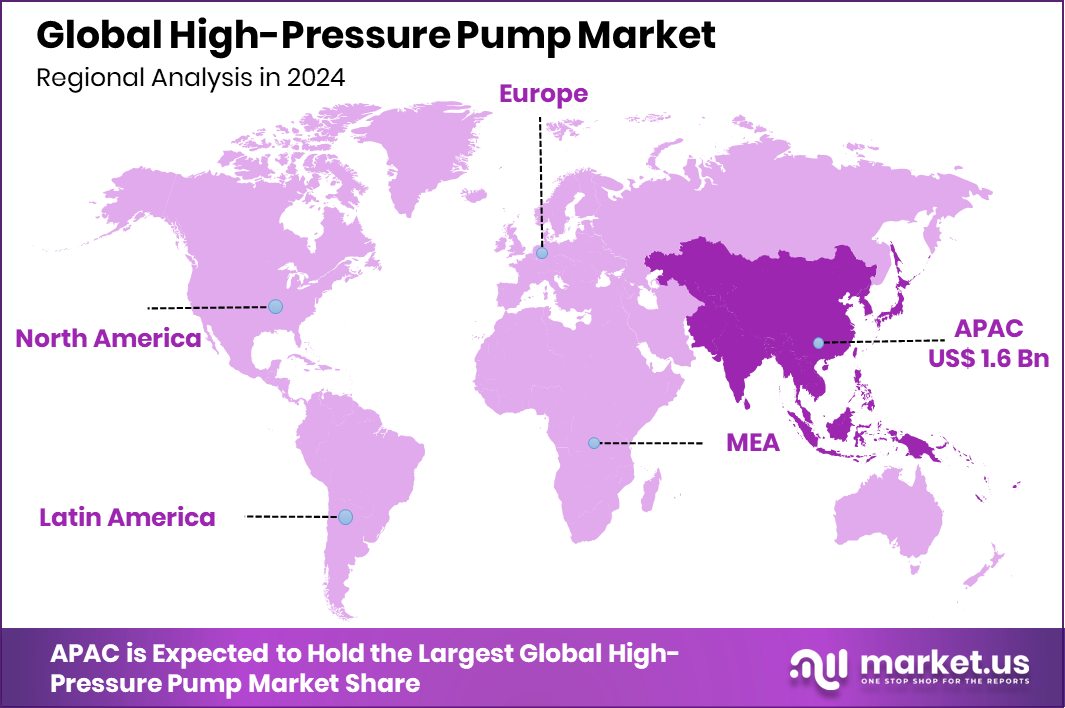
The Global High-Pressure Pump Market is expected to be worth around USD 6.0 billion by 2034, up from USD 3.9 billion in 2024, and grow at a CAGR of 4.4% from 2025 to 2034. Rapid industrialization drives Asia-Pacific’sUSD 1.6 Bn dominance in the high-pressure pump sector.
A high-pressure pump is a mechanical device designed to generate and maintain high-pressure output to move fluids through pipelines, machinery, or various industrial systems. These pumps are typically used in applications where fluid needs to be forced through a system at a significantly elevated pressure. Industries such as manufacturing, water treatment, oil and gas, and agriculture commonly rely on high-pressure pumps for applications like cleaning, water injection, and fuel systems.
The high-pressure pump market is expanding due to growing industrialization, urbanization, and an increasing need for automation in several sectors. As industries continue to scale and require more efficient systems, high-pressure pumps have become indispensable for operations that demand precise fluid handling and high output. This demand has been especially pronounced in sectors like oil and gas, where high-pressure pumps are critical for tasks like hydraulic fracturing and water injection.
One of the key growth factors driving the high-pressure pump market is technological innovation. Advancements in pump materials, energy efficiency, and automation are enabling companies to operate more cost-effectively while maintaining high performance. Furthermore, the increased adoption of automation and remote monitoring solutions in industrial applications is pushing demand for high-pressure pumps with enhanced functionalities.
The demand for high-pressure pumps is also bolstered by the increasing focus on sustainability and environmental protection. High-pressure pumps play an essential role in improving energy efficiency in many industrial processes, reducing waste, and minimizing environmental impact. The drive for greener solutions in industries such as water treatment, waste management, and energy generation is contributing significantly to this demand.
Key Takeaways
- The Global High-Pressure Pump Market is expected to be worth around USD 6.0 billion by 2034, up from USD 3.9 billion in 2024, and grow at a CAGR of 4.4% from 2025 to 2034.
- Dynamic pumps dominate the high-pressure pump market, holding a 62.4% share due to their efficiency in continuous fluid movement.
- Pumps operating up to 100 Bar lead with 54.7% demand and are favored for industrial and commercial applications.
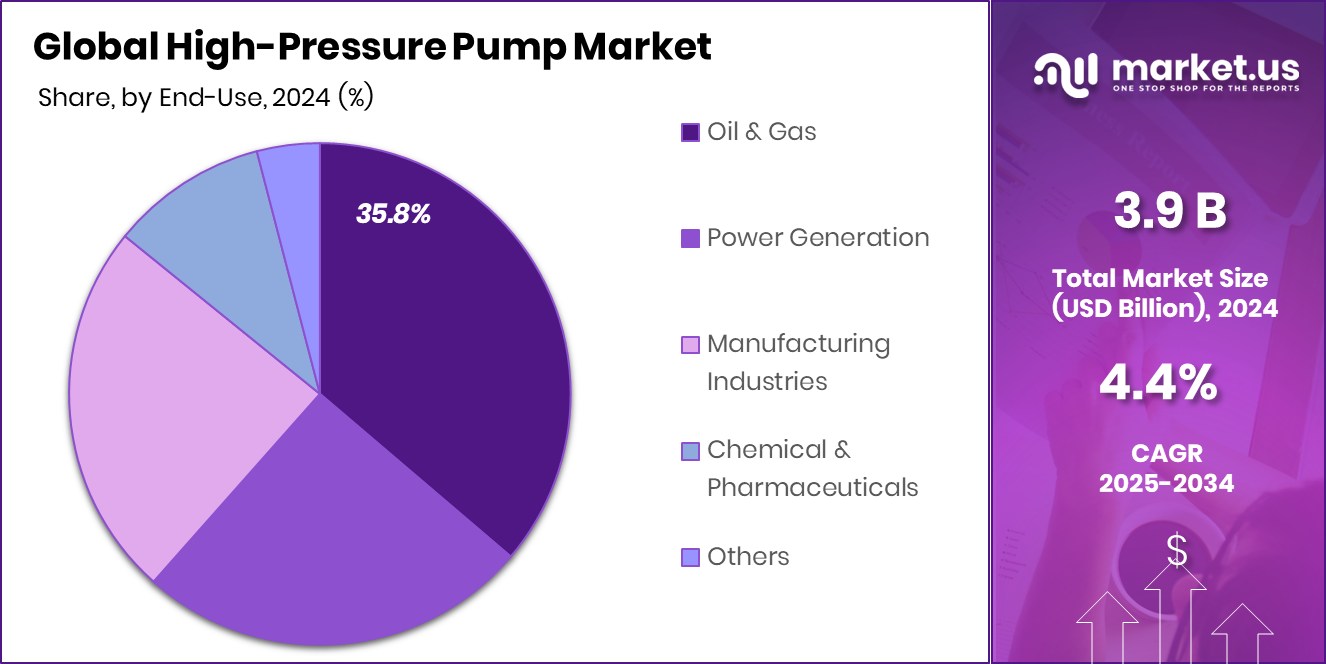
- The oil and gas sector accounts for 35.8% of the market, driven by extraction and refining needs.
- USD 1.6 Bn revenue reflects strong industrial demand across Asia-Pacific.
By Type Analysis
Dynamic pumps dominate with a 62.4% share in the high-pressure pump market.
In 2024, Dynamic held a dominant market position in the By Type segment of the High-Pressure Pump Market, capturing a 62.4% share. This strong foothold was driven by the widespread adoption of Dynamic’s high-pressure pumps across key industries such as oil & gas, water treatment, and manufacturing. The company’s advanced piston and plunger pump technologies played a crucial role in securing this leadership, offering superior efficiency and durability compared to alternatives.
The 62.4% market share reflects Dynamic’s ability to meet the growing demand for high-pressure solutions in critical applications like hydraulic systems, industrial cleaning, and chemical injection. Their pumps are favored for their reliability in extreme operating conditions, making them the preferred choice for heavy-duty operations. Additionally, continuous innovation in energy-efficient designs helped Dynamic maintain its competitive edge, aligning with industry trends toward sustainability.
By Pressure Analysis
Pumps ranging up to 100 bar hold 54.7% of the market demand.
In 2024, Bar to 100 Bar held a dominant market position in the By Pressure segment of the High-Pressure Pump Market, securing a 54.7% share. This segment’s leadership was driven by strong demand across industries requiring moderate to high-pressure applications, such as water jetting, agricultural spraying, and general industrial processes.
The 54.7% market share highlights the widespread preference for pumps operating within this pressure range, as they offer a balance between performance and energy efficiency. Their versatility makes them suitable for both light industrial tasks and more demanding operations, contributing to their high adoption rate. Additionally, the reliability and cost-effectiveness of Bar to 100 Bar pumps have made them a go-to choice for small and medium-sized enterprises looking for durable yet affordable solutions.
By End-Use Analysis
The oil & gas sector leads with 35.8% consumption.
In 2024, Oil and Gas held a dominant market position in the end-use segment of the high-pressure pump market, capturing a 35.8% share. This leadership stems from the sector’s heavy reliance on high-pressure pumps for critical operations like well injection, pipeline boosting, and refinery processes. The demanding nature of oilfield applications, where extreme pressures and harsh conditions are common, drives consistent demand for robust pumping solutions.
The 35.8% market share underscores the segment’s pivotal role in maintaining production efficiency and safety standards across upstream, midstream, and downstream activities. High-pressure pumps are essential for enhanced oil recovery (EOR) techniques, hydraulic fracturing, and chemical injection, ensuring optimal output in increasingly complex extraction environments.
Key Market Segments
By Type
- Dynamic
- Positive Displacement
By Pressure
- Bar to 100 Bar
- 101 Bar to 500 Bar
- Above 500 Bar
By End-Use
- Oil and Gas
- Power Generation
- Manufacturing Industries
- Chemicals and Pharmaceuticals
- Others
Driving Factors
Growing Demand from the Oil & Gas Industry
The oil and gas industry is the biggest driver of the high-pressure pump market. These pumps are essential for drilling, refining, and transporting oil and gas. They help in high-pressure water jetting, hydraulic fracturing, and pipeline maintenance.
As energy demand rises, companies explore deeper and tougher oil fields, needing stronger pumps. Strict safety rules also push the use of reliable high-pressure pumps. With more offshore and shale gas projects, the demand keeps growing. This sector’s need for efficiency and durability makes it a key factor in the pump market’s expansion.
Restraining Factors
High Maintenance and Operating Costs
One major challenge in the high-pressure pump market is their expensive upkeep and running costs. These pumps need regular servicing to prevent breakdowns, and replacement parts can be costly. The energy needed to run high-pressure pumps also leads to high electricity bills, especially in continuous operations. Industries using these pumps face budget pressures from both maintenance and energy consumption.
Small businesses sometimes avoid these pumps due to cost concerns. While advanced models are more efficient, their initial price remains high. This financial burden slows down market growth, as some customers look for cheaper alternatives despite lower performance.
Growth Opportunity
Smart Pump Technology Adoption Rising Fast
The biggest growth opportunity in the high-pressure pump market comes from smart, connected pump systems. These IoT-enabled pumps can monitor their performance, predict maintenance needs, and adjust operations automatically to save energy. Factories and plants are increasingly choosing these intelligent pumps because they reduce downtime and cut electricity costs by up to 30%.
Water treatment plants and oil refineries particularly benefit from real-time data tracking that prevents costly breakdowns. As more industries embrace Industry 4.0 automation, demand for these advanced pumps will surge. Manufacturers adding digital features to traditional high-pressure pumps will gain a significant market advantage. This technology shift creates a major opportunity as industries worldwide upgrade their equipment for better efficiency and control.
Latest Trends
Energy-Efficient Pumps Gaining Major Popularity
The hottest trend in high-pressure pumps is the shift toward energy-saving models. Manufacturers are now designing pumps that use less electricity while delivering the same powerful performance. These new-generation pumps help factories and plants cut their operating costs significantly while meeting strict environmental rules. Buyers prefer them because they save money on power bills over time, despite costing slightly more upfront.
Water treatment plants and manufacturing units are early adopters of this trend. The technology improvements include better motor designs, smart controls, and optimized fluid handling. As electricity prices rise globally, this focus on efficiency is changing how companies select their pumping equipment, making energy savings a top priority in purchase decisions.
Regional Analysis
Asia-Pacific leads with a 41.7% share in the high-pressure pump market valuation.
The Asia-Pacific region dominates the global high-pressure pump market, holding a commanding 41.7% share with a market valuation of USD 1.6 billion, driven by rapid industrialization, expanding manufacturing sectors, and heavy investments in oil & gas and water infrastructure. North America follows as a key market, supported by technological advancements in energy-efficient pumps and strong demand from shale gas operations.
Europe maintains steady growth, propelled by stringent environmental regulations and adoption of high-pressure pumps in chemical and food processing industries. The Middle East & Africa region shows significant potential, particularly in oilfield applications and desalination projects, while Latin America experiences moderate growth, with increasing usage in mining and agriculture sectors.
Asia-Pacific’s leadership stems from China and India’s booming industrial activities, along with Japan and South Korea’s focus on smart pump technologies. North America benefits from the U.S. and Canada’s robust energy and wastewater treatment demands.
Europe’s growth is anchored by Germany, France, and the UK’s emphasis on sustainable industrial solutions. The Middle East’s dominance in oil production ensures sustained pump demand, whereas Latin America’s mining and agricultural expansions contribute to gradual market progression.
Key Regions and Countries
- North America
- US
- Canada
- Europe
- Germany
- France
- The UK
- Spain
- Italy
- Rest of Europe
- Asia Pacific
- China
- Japan
- South Korea
- India
- Australia
- Rest of APAC
- Latin America
- Brazil
- Mexico
- Rest of Latin America
- Middle East & Africa
- GCC
- South Africa
- Rest of MEA
Key Players Analysis
Sulzer Ltd. stands out with its advanced engineered pumping solutions, particularly in oil & gas and water treatment applications. The company’s focus on energy-efficient designs and aftermarket services strengthens its position in mature markets like Europe and North America. However, its growth in emerging economies could benefit from localized manufacturing strategies.
The Weir Group PLC dominates in mining and abrasive slurry applications, with robust R&D driving durable, high-performance pumps. Its strong presence in the Asia-Pacific and Latin American mining sectors provides a competitive edge, though reliance on cyclical industries like mining poses revenue volatility risks.
KSB SE & Co. excels in customized pumping systems for industrial and infrastructure projects, backed by German engineering precision. Its broad product portfolio and service network support steady demand, but slower adoption of digital pump technologies may challenge its long-term innovation pace.
Top Key Players in the Market
- Sulzer Ltd.
- The Weir Group Pl
- KSB SE & CO. Cat Pumps
- Hammelmann
- Gea Group
- Maximator Gmbh
- Andritz
- Danfoss
- Grundfos
- The Weir Group PLC
Recent Developments
- In June 2024, Sulzer acquired a service company specializing in high-pressure pump maintenance to strengthen its aftermarket support in Europe and North America. This helps customers with faster repairs and maintenance.
- In May 2024, Weir acquired LCC Pumps, a company specializing in high-pressure pumping solutions for harsh environments. This helps Weir expand its industrial pump offerings.









