


Report Overview
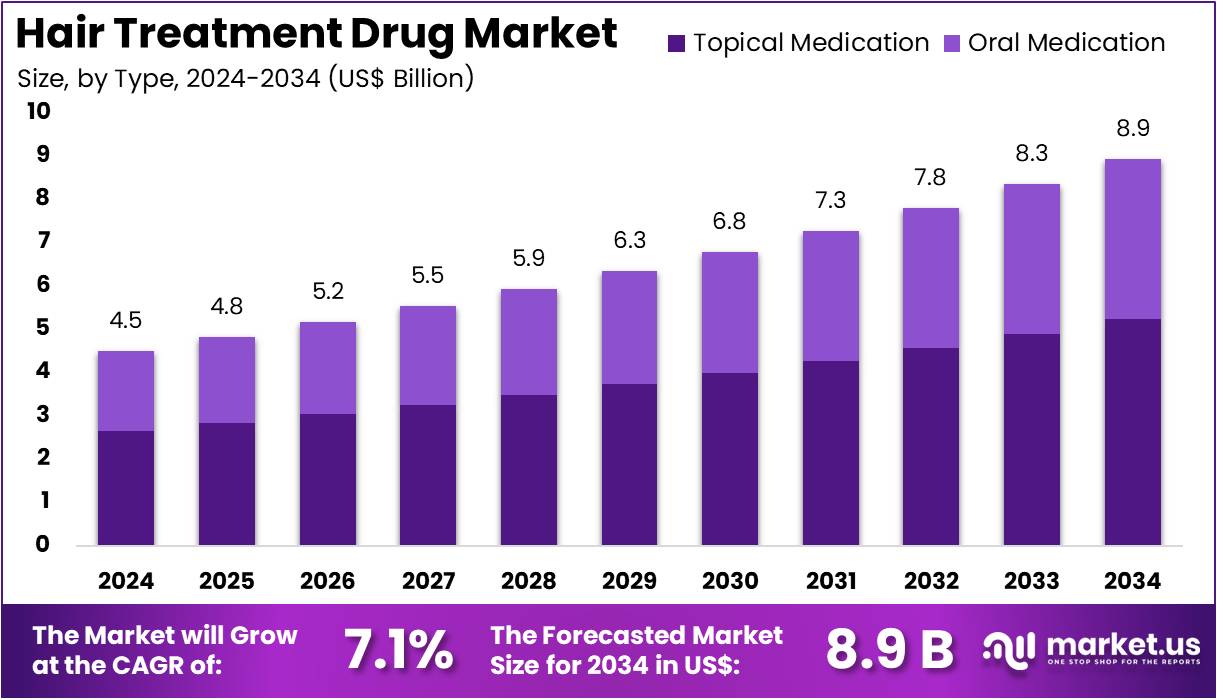
The Hair Treatment Drug Market size is expected to be worth around US$ 8.9 billion by 2034 from US$ 4.5 billion in 2024, growing at a CAGR of 7.1% during the forecast period 2025 to 2034.
Increasing awareness about hair loss conditions and the rising demand for effective treatments are driving the growth of the hair treatment drug market. Hair loss, particularly conditions like alopecia areata and male pattern baldness, has become a major concern for a significant portion of the population, leading to the development of innovative therapies.
In February 2024, the National Institute for Health and Care Excellence (NICE) endorsed Ritlecitinib, a newly authorized drug, for use within the NHS to treat severe alopecia areata. This recommendation marks a significant advancement in treatment options, offering affected patients an effective alternative. The growing interest in cosmetic procedures and the increasing awareness of available medical treatments are further fueling the demand for hair treatment drugs.
Additionally, recent advancements in pharmaceuticals have led to more personalized treatments that address the specific needs of individuals suffering from hair loss. As research continues, opportunities for new drug formulations that target various stages of hair growth and regeneration are expected to emerge. Moreover, the focus on non-invasive treatments and improved drug efficacy creates promising prospects for the market. These factors contribute to the increasing adoption of hair treatment drugs as a viable solution for hair loss management.
Key Takeaways
- In 2024, the market for hair treatment drug generated a revenue of US$ 4.5 billion, with a CAGR of 7.1%, and is expected to reach US$ 8.9 billion by the year 2034.
- The type segment is divided into topical medication and oral medication, with topical medication taking the lead in 2023 with a market share of 58.7%.
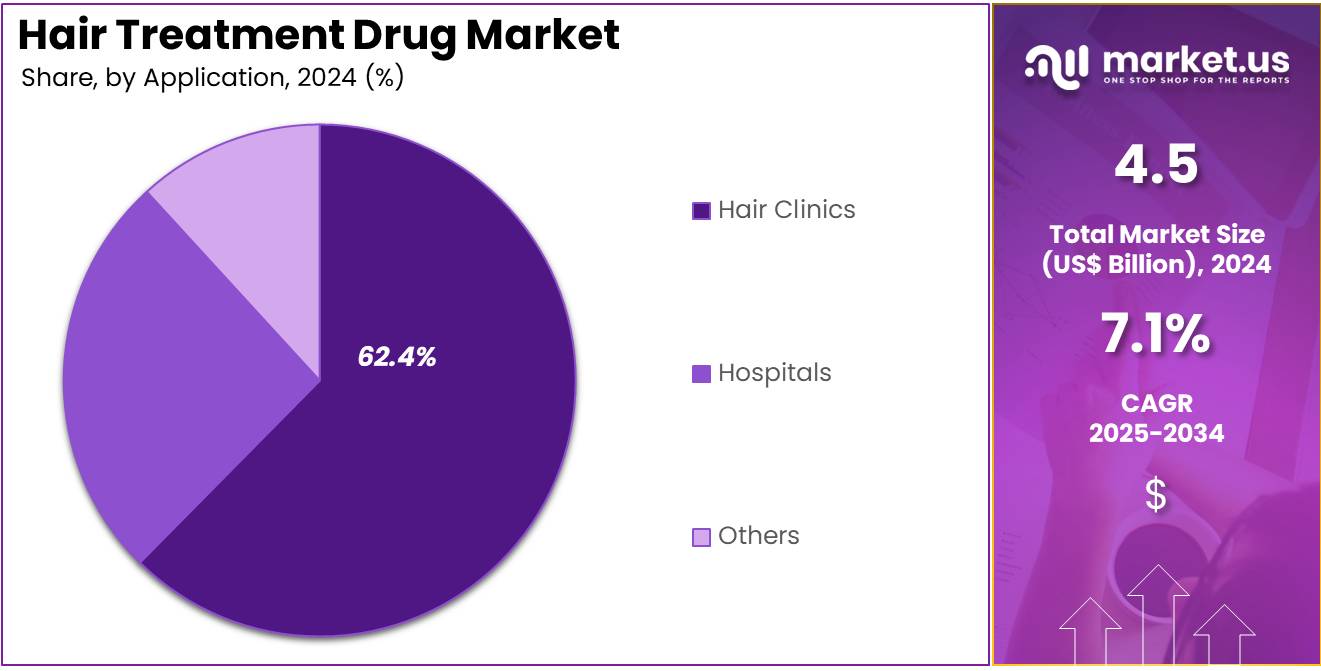
- Considering application, the market is divided into hair clinics, hospitals, and others. Among these, hair clinics held a significant share of 62.4%.
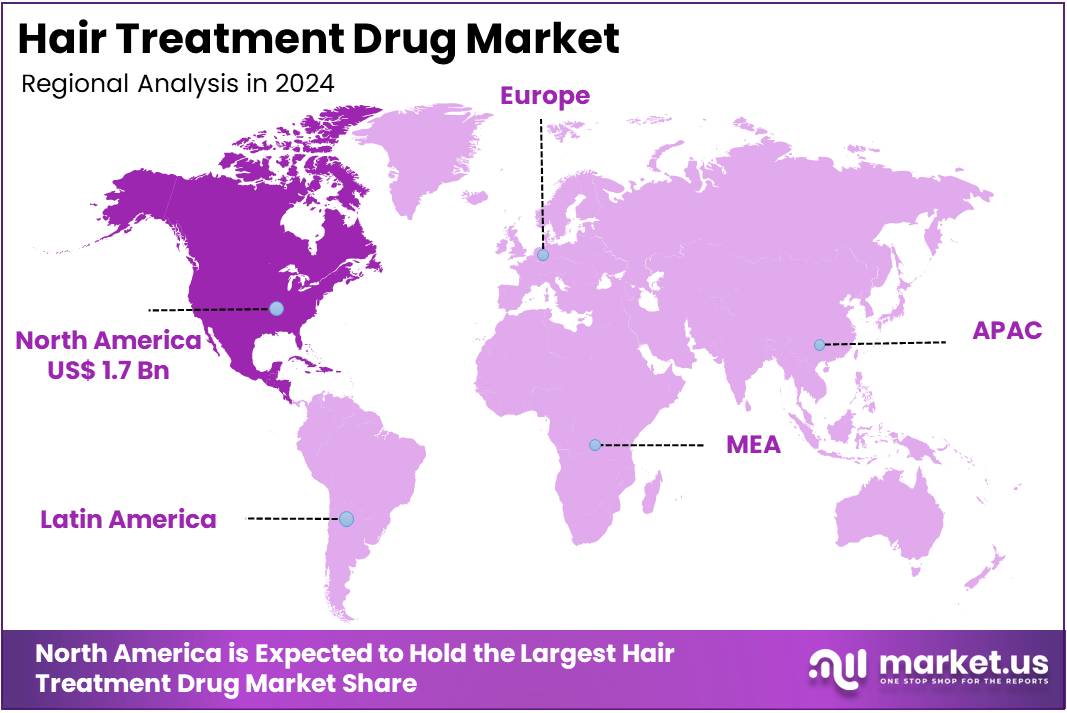
- North America led the market by securing a market share of 38.5% in 2023.
Type Analysis
The topical medication segment claimed a market share of 58.7% owing to the increasing preference for non-invasive treatments for hair loss and thinning. Topical medications, such as minoxidil, are commonly used as the first line of treatment for conditions like androgenetic alopecia, offering convenience and ease of application at home.
This segment’s growth is driven by the rising awareness of hair loss solutions and the growing demand for hair restoration treatments that are simple to use and effective. Additionally, innovations in topical formulations, including those that improve absorption and minimize side effects, are anticipated to further boost the adoption of topical hair treatments, supporting the segment’s expansion in the coming years.
Application Analysis
The hair clinics held a significant share of 62.4% due to the increasing demand for professional hair restoration services. Hair clinics are expected to remain the preferred choice for individuals seeking more advanced, personalized, and effective treatments for hair loss, including prescription medications and treatments such as hair transplants and platelet-rich plasma (PRP) therapy.
The segment’s growth is supported by the rising number of people seeking medical intervention for hair loss, as well as the growing focus on aesthetic treatments in both developed and developing markets. As patients seek professional and reliable solutions for their hair concerns, hair clinics are anticipated to see an increase in demand for both over-the-counter and prescription hair treatment drugs.
Key Market Segments
By Type
- Topical Medication
- Oral Medication
By Application
- Hair Clinics
- Hospitals
- Others
Drivers
Increasing Prevalence of Hair Loss Conditions is Driving the Market
The rising global prevalence of various hair loss conditions, including androgenetic alopecia (pattern baldness) and alopecia areata, is a significant driver for the hair treatment drug market. Factors such as genetic predisposition, hormonal imbalances, stress, and certain medical conditions contribute to this growing problem across diverse age groups. The National Council on Aging reported in April 2025 that 85% of men and 33% of women will experience some form of hair loss in their lifetimes, indicating a vast patient pool.
Specifically, male pattern baldness or androgenetic alopecia accounts for around 95% of male hair loss cases. Approximately 25% of men experiencing hair loss begin the process before they are twenty-one, while more than 50% of women may experience hair thinning after they turn 50. This widespread occurrence of hair loss creates a large and continuously expanding patient pool seeking effective pharmacological interventions to prevent further hair loss and promote regrowth, thereby fueling the demand for various treatment drugs.
Restraints
Side Effects and Efficacy Limitations of Existing Drugs are Restraining the Market
The hair treatment drug market faces restraint due to the notable side effects associated with existing medications and their varying degrees of efficacy across patients. Commonly used drugs like finasteride and minoxidil, while effective for many, can cause undesirable side effects such as sexual dysfunction, scalp irritation, or unwanted hair growth in other areas.
An FDA alert from April 2025 highlighted reports of adverse events, including erectile dysfunction, anxiety, suicidal ideation, brain fog, depression, and fatigue, associated with compounded topical finasteride products, with 32 such cases reported to the FDA Adverse Event Reporting System between 2019 and 2024. Furthermore, not all patients respond equally to current treatments, which prompts a search for more tolerable and universally effective solutions, posing a challenge for long-term adherence.
Opportunities
Growing Research and Development into Novel Therapies Creates Growth Opportunities
The active and expanding research and development landscape for novel hair treatment drugs presents significant growth opportunities. Pharmaceutical companies and biotechnology firms are investing in discovering and developing new compounds with different mechanisms of action, aiming for improved efficacy, reduced side effects, and broader applicability across various types of hair loss. This includes exploration of Janus Kinase (JAK) inhibitors, gene therapies, and other targeted approaches.
For instance, UCI Health announced in August 2024 the FDA approval of deuruxolitinib, a new oral JAK inhibitor, for adults with severe alopecia areata, marking it as the third FDA-approved medication for this condition, affecting an estimated 700,000 Americans. This continuous innovation addresses unmet patient needs and expands the therapeutic arsenal available, thereby fueling market expansion. Research and development expenditures by academic institutions in the US alone exceeded US$108 billion in FY 2023, reflecting a broader environment of robust scientific inquiry that can lead to new drug discoveries.
Impact of Macroeconomic / Geopolitical Factors
Macroeconomic factors such as economic stability and consumer disposable income significantly influence the hair treatment drug market. In times of economic growth, consumers are more likely to spend on non-essential treatments, including hair loss solutions. These purchases are often driven by personal confidence and aesthetic preferences. However, during economic downturns, discretionary spending tends to decrease. This shift can impact sales of hair treatment drugs, especially when consumers prioritize essential healthcare and daily living expenses over cosmetic treatments.
Geopolitical factors also play a vital role in shaping the market. Global trade policies, currency fluctuations, and pharmaceutical supply chain stability can directly affect drug availability and pricing. Disruptions in manufacturing hubs or restrictions in cross-border trade may lead to shortages or increased production costs. These challenges may hinder market growth or delay drug delivery, especially in regions dependent on imported pharmaceutical ingredients. Effective risk management and supply chain diversification have thus become strategic priorities for market players.
Despite economic or geopolitical fluctuations, long-term demand for hair treatment drugs remains steady. According to the United Nations’ World Population Prospects 2022, the global population aged 65 and above is expected to grow from 10% in 2022 to 16% by 2050. This age group is more prone to hair loss, ensuring sustained market need. Additionally, the strong emotional and psychological impact of hair loss helps maintain consumer interest, supporting market resilience even in periods of broader economic uncertainty.
Current US tariff policies can introduce complexities for the hair treatment drug market. Tariffs imposed on imported active pharmaceutical ingredients (APIs) or finished drug products could increase manufacturing costs for pharmaceutical companies. A report from Iethico in April 2025 indicated that new US tariffs on Chinese APIs, which are widely used, are expected to increase generic drug costs, potentially affecting the pricing of various pharmaceutical products, including hair treatment drugs. This could potentially translate to higher prices for hair treatment drugs, impacting patient affordability and uptake, especially for long-term treatments.
The Budget Lab at Yale reported in June 2025 that all 2025 tariffs could raise the overall US price level by 1.5% in the short run, equivalent to an average per-household consumer loss of US$ 2,500 in 2024 dollars. However, such tariffs might also incentivize domestic production of pharmaceutical ingredients and finished drugs within the US, potentially leading to a more secure and localized supply chain in the long term. While short-term challenges related to increased costs are a concern, the tariffs could foster greater self-sufficiency and resilience in the domestic pharmaceutical industry.
Latest Trends
Increasing Adoption of Telehealth for Consultations is a Recent Trend
A key trend in the hair treatment drug market is the growing use of telehealth platforms for consultations and prescriptions. This change is improving access to treatment for hair loss conditions, especially for patients in remote areas or those seeking convenient care. Telehealth allows for remote diagnosis, follow-up care, and prescription management without visiting clinics. It reduces time and travel barriers for patients, making it easier to start and maintain treatment. This digital shift is helping more people receive timely advice and therapy for hair-related conditions.
The expansion of virtual healthcare is influencing dermatology and hair care. A March 2025 report from Mastermind Behavior Services showed that 74% of physicians used telehealth in 2022. This is a major increase from just 14.3% in 2018. The sharp rise shows how telehealth has become a standard part of medical care. With easier access through online platforms, the use of hair treatment drugs is expected to grow steadily in the coming years.
Regional Analysis
North America is leading the Hair Treatment Drug Market
North America dominated the market with the highest revenue share of 38.5% owing to the high prevalence of hair loss conditions and the continuous development of new pharmaceutical treatments. The American Academy of Dermatology reports that androgenetic alopecia, or hereditary pattern baldness, affects an estimated 80 million Americans, including 50 million men and 30 million women. This highlights the vast patient population seeking effective solutions for hair loss.
The growing number of individuals affected by hair loss has spurred the development and approval of various treatments. The US Food and Drug Administration (FDA) plays a crucial role in facilitating market expansion by approving new therapies for hair loss.
For example, in July 2023, the FDA approved Litfulo (ritlecitinib) for severe alopecia areata in individuals aged 12 and older, providing an additional option for those struggling with this autoimmune condition. This approval complements existing treatments like finasteride and minoxidil, expanding the range of pharmacological interventions available to patients. As more individuals seek effective solutions, the market for hair treatment drugs in North America continues to grow, driven by increasing awareness and availability of advanced treatments.
The Asia Pacific region is expected to experience the highest CAGR during the forecast period
Asia Pacific is expected to grow with the fastest CAGR owing to several key factors such as increasing awareness of hair loss issues, rising disposable incomes, and a growing focus on aesthetics. As awareness of hair loss and its impact on personal appearance increases, more individuals are seeking solutions to address the condition.
Although precise region-wide data on hair loss prevalence from 2022-2024 is not readily available, a study conducted in Singapore revealed that 32% of men aged 17-26 suffer from androgenetic alopecia, with the prevalence rising to 100% in men aged 80 and older. This suggests that a significant portion of the population is affected by hair loss, with the prevalence increasing in the aging population. As healthcare infrastructure continues to improve across the region, more individuals are expected to seek medical treatments for hair loss.
Additionally, rising disposable incomes in many Asia Pacific countries are enabling more people to afford hair treatment solutions. The increased availability of dermatological services in the region further drives the demand for hair treatment drugs, as more people gain access to professional care. Consequently, the growing awareness, improved healthcare access, and rising consumer spending are likely to fuel the market’s expansion in the Asia Pacific region.
Key Regions and Countries
- North America
- US
- Canada
- Europe
- Germany
- France
- The UK
- Spain
- Italy
- Russia
- Netherland
- Rest of Europe
- Asia Pacific
- China
- Japan
- South Korea
- India
- Australia
- New Zealand
- Singapore
- Thailand
- Vietnam
- Rest of APAC
- Latin America
- Brazil
- Mexico
- Rest of Latin America
- Middle East & Africa
- South Africa
- Saudi Arabia
- UAE
- Rest of MEA
Key Players Analysis
Key players in the hair treatment drug market pursue growth through strategic investments in research and development, expanding product portfolios, and forming strategic partnerships. They focus on developing innovative therapies, including oral and topical medications, to address a wide range of hair loss conditions such as androgenetic alopecia and alopecia areata.
Advancements in drug formulations aim to improve patient compliance and therapeutic outcomes. Collaborations with academic institutions and other pharmaceutical companies enable these organizations to leverage complementary expertise and accelerate the development of novel treatments. Additionally, they emphasize expanding their presence in emerging markets to capitalize on the growing demand for hair restoration solutions.
Hims & Hers Health Inc., a prominent player in this domain, offers a comprehensive suite of hair treatment options, including prescription medications and over-the-counter products. Founded in 2017 and headquartered in San Francisco, California, Hims & Hers provides telehealth services that facilitate access to healthcare professionals for consultations and prescriptions. The company’s platform enables patients to receive personalized treatment plans for various conditions, including hair loss, from the comfort of their homes. Hims & Hers continues to expand its product offerings and services to meet the evolving needs of its customer base.
Top Key Players in the Hair Treatment Drug Market
- Sun Pharma
- Incyte Corporation
- Follicum AB
- Reddy’s Laboratories
- Daiichi Sankyo
- Cipla
- Aclaris Therapeutics
- AbbVie
Recent Developments
- In July 2024, Sun Pharma secured approval from the US FDA for LEQSELVI (deuruxolitinib), a novel Janus Kinase (JAK) inhibitor targeting autoimmune disorders in adults, particularly severe alopecia areata. This milestone followed Sun Pharma’s US$ 576 million acquisition of Concert Pharmaceuticals, which incorporated the drug into its growing pipeline.
- In the first quarter of fiscal 2024, Cipla reported a notable rise in profits, driven by strong sales performance in North America. The company posted an 18.3% increase in consolidated net profit, totaling US$ 140.8 million, with a 7% growth in overall revenue.









