


Report Overview
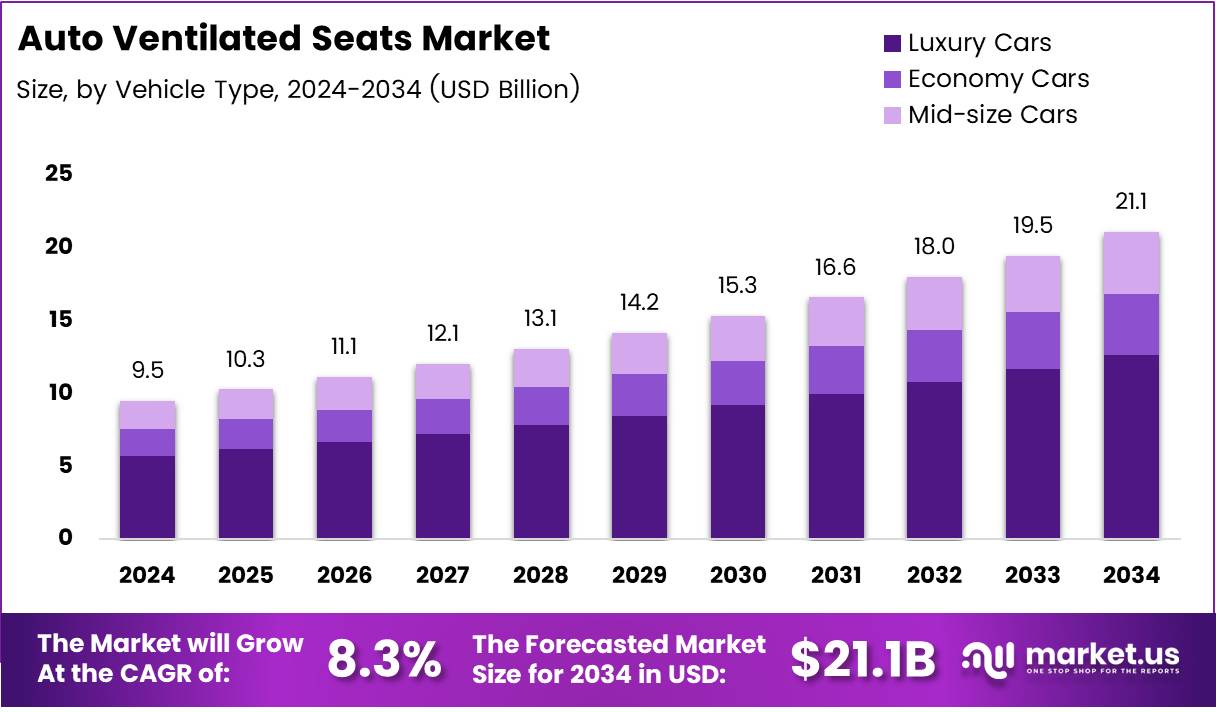
The Global Auto Ventilated Seats Market size is expected to be worth around USD 21.1 Billion by 2034, from USD 9.5 Billion in 2024, growing at a CAGR of 8.3% during the forecast period from 2025 to 2034.
The auto ventilated seats market is steadily emerging as a significant niche within the automotive interior systems segment. These seats integrate active ventilation technologies that circulate air through the seat cushions, enhancing passenger comfort by reducing sweating and maintaining a balanced temperature. As customer preferences evolve, manufacturers are responding with advanced climate control solutions to strengthen their competitive positioning.
Interestingly, growing consumer demand is one of the core growth drivers. According to Autocarpro, 78% of surveyed Indian car owners ranked ventilated seats as their top comfort feature—surpassing all other cabin upgrades. This strong consumer preference reflects a shift toward premium in-cabin experiences, even in mass-market vehicles. Consequently, OEMs are increasingly integrating ventilated seats in mid-range models to capture wider customer segments.
Furthermore, ventilated seats offer environmental benefits, aligning with global sustainability goals. According to Innovations, if all passenger vehicles had ventilated seats, there could be a 7.5% reduction in national air-conditioning fuel use. This potential energy saving aligns well with governmental objectives to improve vehicle fuel efficiency and reduce emissions, making ventilated seating systems an attractive technology from both an environmental and regulatory perspective.
In response, several governments are actively encouraging automotive innovations that reduce energy consumption. Many regulatory bodies are offering subsidies or tax incentives to manufacturers adopting technologies that contribute to lower vehicle emissions. These supportive policies indirectly boost the adoption of ventilated seating technologies, creating new business opportunities for component suppliers and technology developers.
Moreover, rising disposable incomes, especially in emerging economies like India, China, and Southeast Asia, are driving consumers to seek better comfort features in vehicles. This trend is pushing automakers to diversify their offerings and introduce ventilated seats even in entry-level models. As market penetration increases, suppliers who can provide cost-effective and efficient ventilation systems are likely to gain significant market share.
Simultaneously, automotive interior suppliers are investing heavily in research and development to advance ventilated seat technologies. Innovations such as smart climate-controlled seats, integration with seat occupancy sensors, and AI-driven thermal management are being explored. These developments not only improve passenger comfort but also contribute to overall vehicle energy efficiency, adding further value to the consumer.
Global partnerships are also emerging as key growth enablers. Many OEMs are collaborating with specialist seat manufacturers to co-develop innovative ventilated seating systems. These collaborations ensure access to cutting-edge technologies while optimizing manufacturing costs and accelerating time-to-market for new models equipped with advanced comfort features.
Additionally, rising awareness regarding driver fatigue and long-term health effects of poor seating ergonomics has increased the demand for ventilated seats. Consumers now consider comfort features a critical factor in their purchasing decisions. This behavioral shift creates consistent growth opportunities for automakers and interior system suppliers across both new vehicle sales and the aftermarket segment.
Looking ahead, technological convergence with electric vehicles (EVs) is expected to further stimulate the market. As EV manufacturers emphasize energy efficiency and comfort, ventilated seats offer an effective solution to minimize HVAC loads and extend driving range. This synergy presents lucrative opportunities for suppliers willing to invest in compatible designs for next-generation EV platforms.
Key Takeaways
- The Global Auto Ventilated Seats Market is projected to reach USD 21.1 Billion by 2034, growing from USD 9.5 Billion in 2024 at a CAGR of 8.3% during 2025–2034.
- In 2024, Luxury Cars dominated the Vehicle Type segment due to increasing demand for advanced comfort features among affluent consumers.
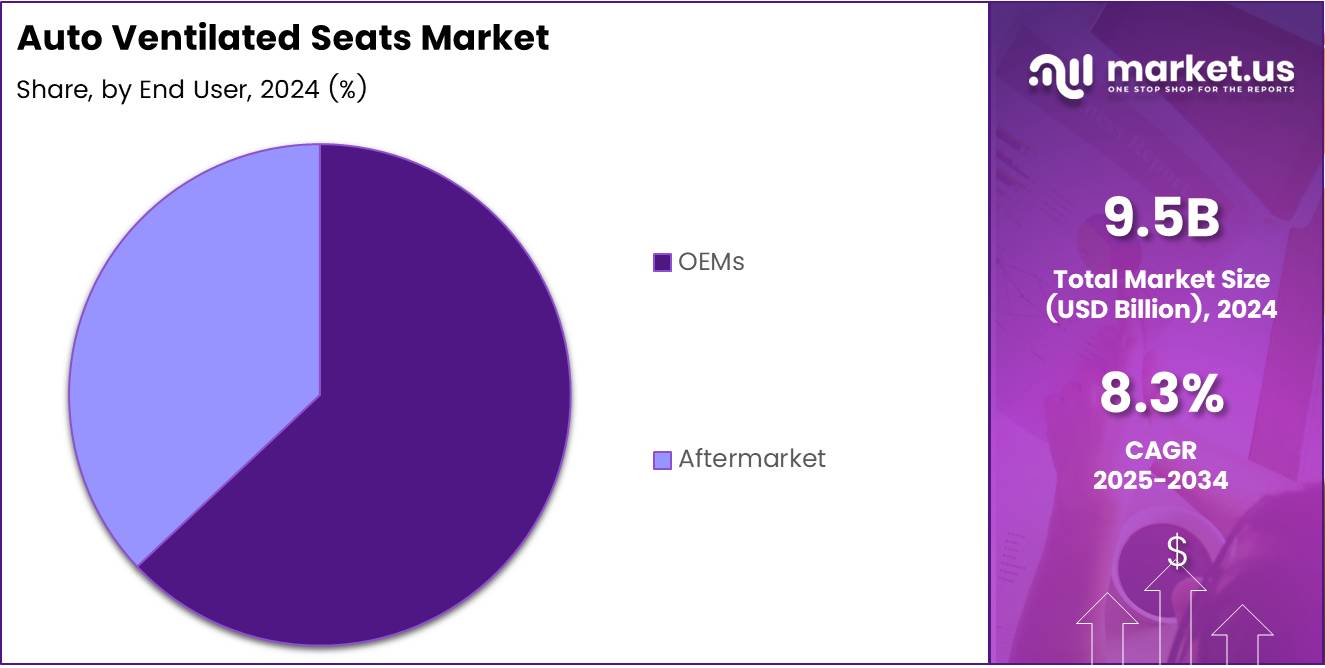
- In 2024, OEMs led the End User segment as manufacturers increasingly integrate ventilated seats during vehicle design for better performance and differentiation.
- In 2024, Axial Fan type dominated the Fan Type segment because of its efficient airflow, compact size, lower cost, and energy efficiency, making it the preferred choice for OEMs.
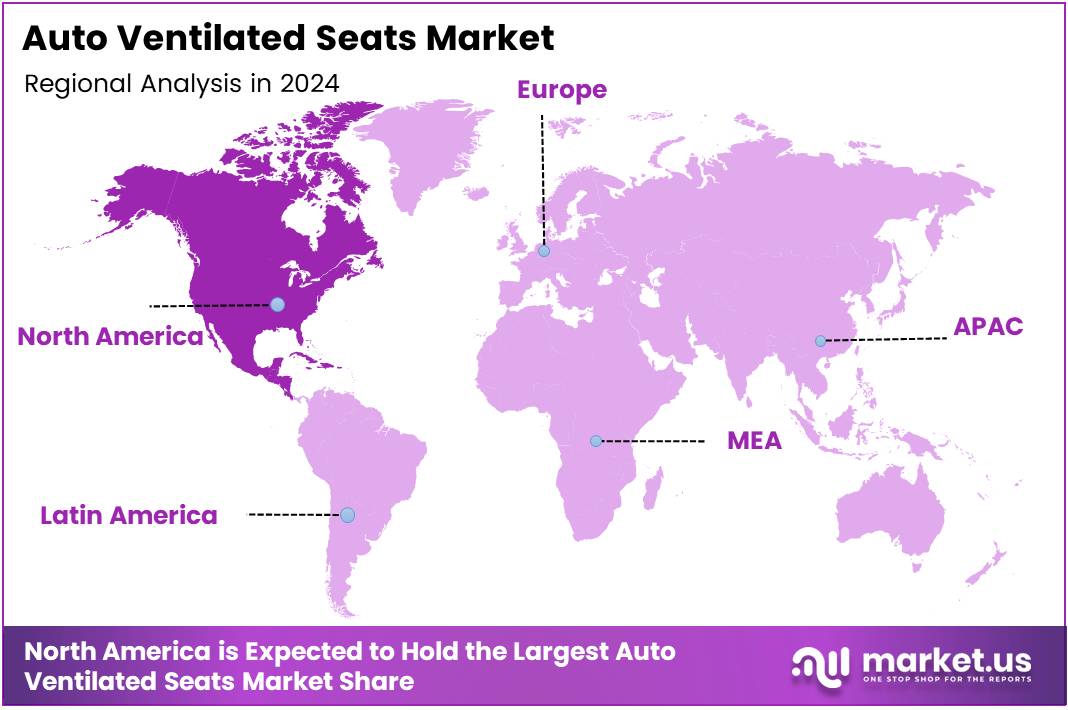
- In 2024, North America secured a leading position in the regional market, supported by high disposable income, strong demand for comfort features, rapid adoption of automotive technologies, and rising electric vehicle popularity.
Vehicle Type Analysis
Luxury Cars dominate with highest share due to rising demand for premium comfort features.
In 2024, Luxury Cars held a dominant market position in By Vehicle Type Analysis segment of Auto Ventilated Seats Market. The growing demand for enhanced comfort and advanced interior features in high-end vehicles continues to drive the adoption of ventilated seating solutions. Luxury car manufacturers increasingly integrate such technologies to attract affluent buyers who prioritize driving comfort.
Economy Cars are gradually adopting auto ventilated seats as customer expectations shift towards improved comfort even in budget segments. The rising competition among automakers to offer premium features in affordable models is encouraging the integration of ventilated seating in this category.
Mid-size Cars are witnessing steady growth in demand for ventilated seats due to their balanced offering of comfort and affordability. Consumers in this segment seek enhanced driving experiences without significantly higher costs, making ventilated seats an attractive value addition.
End User Analysis
OEMs dominate with highest share due to seamless integration in new vehicle models.
In 2024, OEMs held a dominant market position in By End User Analysis segment of Auto Ventilated Seats Market. Original Equipment Manufacturers leverage auto ventilated seats as a key differentiator to attract customers and enhance vehicle comfort. Early integration of these systems during vehicle design ensures optimal performance, which strengthens their dominance.
The Aftermarket segment is growing as existing vehicle owners seek to upgrade their seating comfort. Rising awareness about the benefits of ventilated seats and the availability of retrofit solutions contribute to the increasing aftermarket demand. However, installation complexity and compatibility issues slightly limit the pace of adoption compared to OEMs.
Fan Type Analysis
Axial Fan leads with highest share due to its efficient airflow and cost-effectiveness.
In 2024, Axial Fan held a dominant market position in By Fan Type Analysis segment of Auto Ventilated Seats Market. These fans offer efficient airflow while maintaining a compact design, making them ideal for automotive seat applications where space is limited. Their lower cost and energy consumption further contribute to widespread OEM preference.
Radial Fans, while slightly less common, offer superior pressure stability and noise control, which appeal to luxury vehicle segments focusing on a quieter cabin experience. As noise reduction becomes a critical factor, radial fan adoption may see incremental growth in premium vehicle lines.
Key Market Segments
By Vehicle Type
- Luxury Cars
- Economy Cars
- Mid-size Cars
By End User
- OEMs
- Aftermarket
By Fan Type
- Axial Fan
- Radial Fan
Drivers
Rising Demand for Enhanced Cabin Comfort in Electric Vehicles Drives Market Growth
The rising popularity of electric vehicles (EVs) is pushing carmakers to enhance cabin comfort features to attract buyers. Ventilated seats help regulate temperature, offering a more comfortable experience, especially during long drives. As EV buyers often seek premium features, the demand for auto ventilated seats is growing rapidly.
Luxury features, once limited to high-end models, are now finding their way into mid-range vehicles. Automakers are offering ventilated seats in these segments to differentiate their products and meet customer expectations for comfort. This shift makes ventilated seating more mainstream and boosts overall market growth.
The growing ride-sharing and premium taxi services are also contributing to the market expansion. Operators of these services prioritize passenger comfort to gain customer loyalty. Ventilated seats offer an extra level of comfort, making them an attractive feature for fleets of luxury taxis and ride-sharing vehicles.
Restraints
Limited Penetration in Low-Cost Vehicle Segments Restricts Market Growth
Despite the growing demand, ventilated seats remain largely absent from low-cost vehicle segments. High production and installation costs make it challenging for budget carmakers to include these features without affecting profit margins, limiting market penetration in price-sensitive regions.
The shortage of specialized components and raw materials further challenges the market. Ventilated seat systems rely on specific materials and small, precision-engineered parts. Any disruption in the supply chain, whether due to global events or logistical issues, can delay production schedules and increase costs, affecting market stability.
Moreover, smaller manufacturers struggle to access advanced manufacturing technologies required for producing ventilated seat components. This results in limited competition and slower innovation, restricting the overall market potential.
Growth Factors
Integration with Smart Climate Control Systems Opens New Growth Opportunities
The integration of ventilated seats with smart climate control systems presents a strong growth opportunity. These systems adjust seat ventilation based on cabin temperature, humidity, and passenger preferences, enhancing overall driving comfort and attracting tech-savvy consumers.
Development of lightweight ventilation mechanisms is another promising area. Lightweight components improve fuel efficiency and align with stricter emission regulations. Automakers investing in such innovations can offer ventilated seats without compromising vehicle performance, widening their appeal.
Consumers increasingly seek personalized features in their vehicles. Offering customization options for seat ventilation intensity, materials, and designs allows manufacturers to meet diverse customer preferences, driving higher sales and customer satisfaction.
Emerging automotive markets with rising disposable incomes offer untapped potential. As consumers in developing countries seek premium features, the demand for ventilated seats is expected to grow, especially as these markets mature and competition intensifies.
Emerging Trends
Adoption of AI-Driven Adaptive Seat Ventilation Systems Shapes Market Trends
AI-driven adaptive seat ventilation systems are transforming market dynamics. These systems analyze real-time data such as body temperature, weight distribution, and environmental conditions to automatically adjust ventilation levels, offering a highly personalized comfort experience that appeals to modern drivers.
Sustainability trends are also influencing the market. Manufacturers are increasingly using recyclable and eco-friendly materials for ventilated seat production. This not only supports global environmental goals but also attracts environmentally conscious consumers who prioritize sustainability in their purchase decisions.
Collaboration between automakers and tech startups is fostering innovation in smart seating solutions. Startups bring advanced sensor technologies and AI algorithms, while automakers provide manufacturing and market reach. This synergy accelerates the development of next-generation ventilated seats that combine comfort, technology, and intelligence.
Regional Analysis
North America Dominates the Auto Ventilated Seats Market
In 2024, North America secured a commanding position in the auto ventilated seats market, driven by strong consumer demand for comfort features in both luxury and mid-range vehicles. The high disposable income levels, rapid adoption of advanced automotive technologies, and growing preference for enhanced cabin experience contributed significantly to this dominance. Furthermore, the rising popularity of electric vehicles in the region continues to fuel demand for ventilated seating solutions.
Europe Auto Ventilated Seats Market Trends
Europe exhibits steady growth in the auto ventilated seats market, supported by stringent regulatory standards on vehicle emissions and growing consumer interest in sustainable mobility. The region’s strong presence of premium car manufacturers and increasing focus on comfort and safety enhancements are propelling the integration of ventilated seats across various vehicle segments.
Asia Pacific Auto Ventilated Seats Market Trends
Asia Pacific is emerging as a lucrative market, primarily due to the growing automotive industry in countries such as China, Japan, and India. Rising urbanization, expanding middle-class population, and increasing demand for feature-rich vehicles are encouraging automakers to incorporate ventilated seating options. Additionally, rising awareness of in-cabin air quality and comfort features is driving further growth.
Middle East and Africa Auto Ventilated Seats Market Trends
The Middle East and Africa region is witnessing gradual growth, attributed to the increasing preference for luxury vehicles in affluent economies and harsh climatic conditions that make ventilated seats a desirable feature. However, the overall market expansion is moderated by the relatively smaller automotive base compared to other regions.
Latin America Auto Ventilated Seats Market Trends
Latin America shows a modest but growing demand for auto ventilated seats, driven by the rising availability of premium vehicle models and improving economic conditions in key markets. As consumer preferences shift toward enhanced driving comfort, automakers are gradually offering ventilated seating features in mid-tier and high-end vehicle segments.
Key Regions and Countries
North America
- US
- Canada
Europe
- Germany
- France
- The UK
- Spain
- Italy
- Rest of Europe
Asia Pacific
- China
- Japan
- South Korea
- India
- Australia
- Rest of APAC
Latin America
- Brazil
- Mexico
- Rest of Latin America
Middle East & Africa
- GCC
- South Africa
- Rest of MEA
Key Auto Ventilated Seats Company Insights
The global auto ventilated seats market in 2024 witnesses strategic advancements led by key players focusing on product innovation, technological integration, and global expansion to meet evolving consumer preferences.
Toyota Boshoku Corporation continues to strengthen its market position by leveraging its extensive expertise in automotive interiors, introducing advanced ventilated seat systems that enhance cabin comfort while improving energy efficiency, particularly aligning with the rising demand in electric and hybrid vehicles.
NHK Spring Co., Ltd. capitalizes on its robust research and development capabilities, offering ventilated seat solutions with superior ergonomic design and lightweight materials, catering to automakers seeking enhanced fuel efficiency and passenger comfort. Its strong relationships with leading OEMs provide a competitive edge in securing long-term supply contracts.
TS Tech Co., Ltd. focuses on diversifying its product portfolio by integrating smart technologies such as climate-controlled seating and user-adjustable ventilation systems. This positions the company favorably in premium and mid-range vehicle segments where consumers increasingly prioritize luxury features.
DURA Automotive Systems emphasizes innovation in modular seating platforms, allowing automakers to easily customize ventilated seat features across various vehicle models. Its investment in flexible manufacturing capabilities ensures scalability and rapid response to market shifts, supporting its growth across North America and emerging markets.
Overall, these companies demonstrate strong adaptability by aligning their strategies with trends such as electric vehicle adoption, increased ride-sharing services, and consumer demand for enhanced comfort, driving the auto ventilated seats market’s sustained growth through 2024 and beyond.
Top Key Players in the Market
- Toyota Boshoku Corporation
- NHK Spring Co., Ltd.
- TS Tech Co., Ltd.
- DURA Automotive Systems
- Woodbridge Foam Corporation
- Hyundai Transys
- Brose Fahrzeugteile GmbH & Co. KG
- Grammer AG
- Johnson Electric Holdings Limited
- TACHI-S Co., Ltd.
Recent Developments
- In April 2024, Vehicle Accessories announced the acquisition of Maxton Group to strengthen its product portfolio in performance-oriented exterior vehicle accessories. This strategic move is expected to broaden its reach across multiple international automotive aftermarket segments.
- In January 2025, UVeye secured $191 million in funding to address the rapidly growing demand for its AI-powered vehicle inspection systems. The investment will support the company’s expansion into new markets and accelerate innovation in automated vehicle diagnostics.
- In May 2025, Lumax Auto disclosed its plan to fully acquire IAC India, the exclusive supplier of panels for Mahindra’s BE6 and XEV 9e models. This acquisition will enhance Lumax Auto’s capabilities in premium vehicle panel manufacturing and deepen its relationship with Mahindra.
- In January 2025, Latham & Watkins advised RealTruck, Inc. in its acquisition of Vehicle Accessories Group. This transaction will allow RealTruck to expand its product offerings and strengthen its position in the growing vehicle accessories aftermarket.









