


Report Overview
The mHealth Apps Market size is forecasted to be valued at US$ 165.8 billion by 2034 from US$ 38.9 billion in 2024, growing at a CAGR of 15.6% during the forecast period 2025 to 2034.
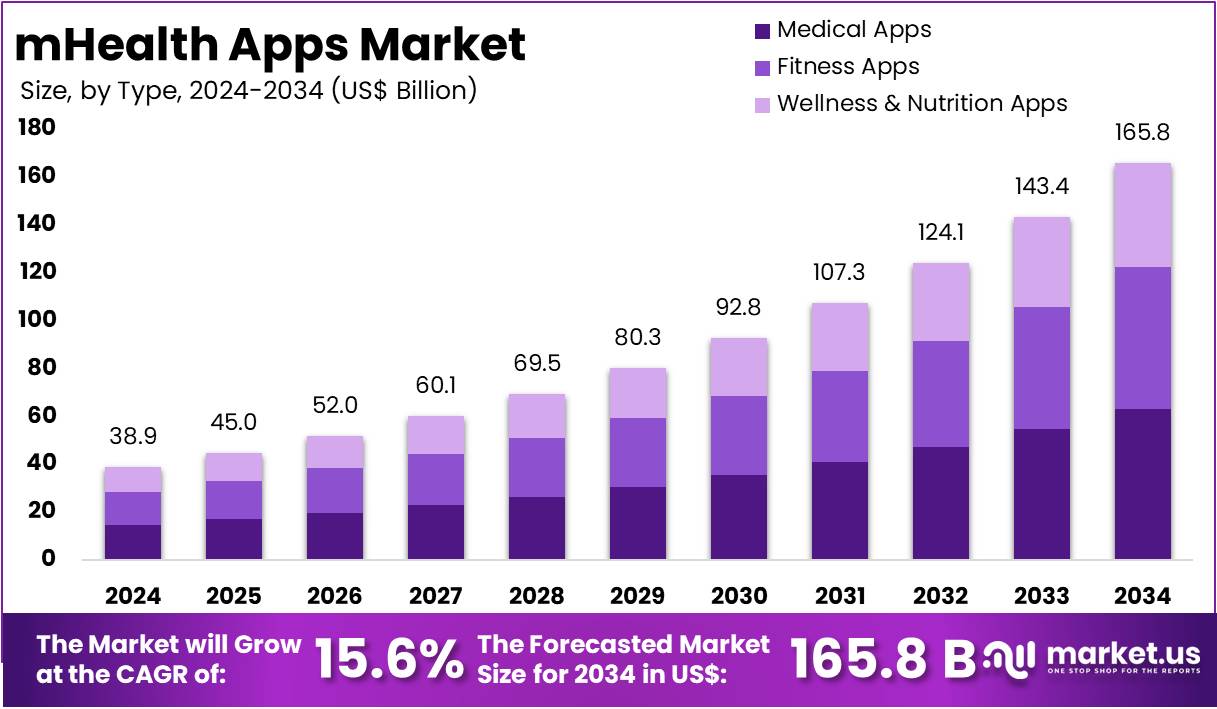
The mHealth apps market has been rapidly evolving, driven by the increasing penetration of smartphones, rising health awareness, and the growing adoption of digital healthcare solutions. With the advancement in mobile technology, mHealth apps are now playing a crucial role in healthcare management by providing users with tools for fitness tracking, mental health management, chronic disease monitoring, and personalized healthcare recommendations. The growing demand for these apps is attributed to the convenience they offer, enabling individuals to monitor their health and wellness remotely at any time, thus reducing the dependency on in-person consultations and visits to healthcare facilities.
The increasing prevalence of chronic conditions like diabetes, hypertension, and obesity has further propelled the demand for mobile health applications. These apps allow users to track their symptoms, medication adherence, and lifestyle factors, which is particularly beneficial for people managing long-term health conditions. For example, diabetes management apps provide personalized blood glucose monitoring and offer users recommendations on managing their condition through dietary and lifestyle adjustments, helping to prevent complications and reduce healthcare costs.
The latest International Diabetes Federation (IDF) Diabetes Atlas for 2025 reports that 11.1% of the global adult population, or one in nine people aged 20-79, are living with diabetes. Alarmingly, over 40% of them remain unaware of their condition. By 2050, it is projected that 1 in 8 adults, approximately 853 million people, will be affected by diabetes, marking an increase of 46%. Furthermore, these apps empower users to take a proactive role in managing their health, leading to better overall health outcomes and reducing the burden on healthcare systems.
The rise in telemedicine, particularly accelerated by the COVID-19 pandemic, has also contributed significantly to the growth of the mHealth apps market. During the pandemic, there was an increased reliance on virtual consultations and remote monitoring, which allowed healthcare providers to continue patient care while adhering to social distancing measures. Post-pandemic, there has been a notable shift in patient behavior, with individuals now taking a more proactive role in their healthcare.
The average number of consultations per user per year has risen from 2.0 in 2019 to 3.2 in 2023. Female consultations increased from 1.9 to 2.8, while male consultations saw a rise from 2.0 to 3.5 consultations per 100 users annually. mHealth apps facilitated these services by enabling remote consultations, health tracking, and even mental health support, thus ensuring that essential healthcare services remained accessible. This shift in healthcare delivery models has further cemented the value of mHealth apps in modern healthcare systems.
Advancements in artificial intelligence (AI) and machine learning (ML) have enabled mHealth apps to become even more personalized and efficient. By incorporating AI algorithms, these apps can analyze user data to provide real-time insights, detect patterns, and offer tailored health recommendations. For instance, AI-powered fitness apps can analyze an individual’s exercise habits and provide feedback on improving performance or avoiding injury. Similarly, AI-driven mental health apps can monitor mood changes and offer customized therapeutic exercises, making mental health management more accessible and effective.
Key Takeaways
- In 2024, the market for mHealth apps generated a revenue of US$ 38.9 billion, with a CAGR of 15.6%, and is expected to reach US$ 165.8 billion by the year 2034.
- By type, Medical Apps dominated the market with 38.2% share in 2024.
- Based on usage segment, chronic disease management held the largest share of 34.0% share in 2024.
- iOS platform captured the maximum revenue share of 41.5% in 2024.
- By end-user, Patients segment was the dominant, holding a market share of 62.9% in 2024.
- North America held the largest share of 37.0% in 2024 in the global market.
Type Analysis
The medical apps segment has become the largest and most rapidly growing category within the mHealth apps market holding 38.2% share in 2024. This growth is driven by the increasing prevalence of chronic diseases, technological advancements, and the growing demand for accessible healthcare solutions. Medical apps cover a wide array of functionalities, including chronic disease management, medication adherence, remote patient monitoring, and telemedicine, which all contribute to the segment’s significant market share.
A key factor driving the growth of the medical apps segment is the rising consumer preference for self-care and prevention. Health-conscious consumers are turning to medical apps to monitor their well-being and prevent diseases before they occur. Another significant factor propelling the medical apps market is the growing integration of wearable technology with mobile health applications.
Wearable devices such as smartwatches and fitness trackers have become mainstream, with people increasingly using them to track everything from heart rate and sleep patterns to physical activity levels. In May 2025, a study by researchers at the University of Tsukuba found that using a gamified sleep-tracking app led to improvements in sleep quality and reductions in body mass index (BMI) among users.
Usage Analysis
Chronic disease management has emerged as the most significant application of mHealth apps with 34.0% share in 2024, driven by the increasing prevalence of conditions such as diabetes, hypertension, cardiovascular diseases, and cancer among others. These conditions necessitate continuous monitoring and management, areas where mHealth apps have proven to be particularly effective.
An example is the BOOST Thyroid app, developed for individuals with Hashimoto’s disease. This app allows users to track symptoms, medication adherence, and lab results, providing a comprehensive view of their health status. Studies have shown that users of the BOOST Thyroid app experienced fewer doctor visits, reduced anxiety, and better symptom management, highlighting the app’s effectiveness in managing chronic conditions. Another example is the AHOMKA platform, developed by the School of Engineering in Ghana, which showed positive results in facilitating communication between patients at high risk for heart attacks or strokes and their healthcare providers.
The widespread adoption of mHealth apps for chronic disease management is also evident in the growing number of such applications available. For instance, a 2022 study identified 42 apps dedicated to managing chronic diseases, including diabetes, hypertension, and general noncommunicable diseases. These apps often include features like symptom tracking, medication reminders, and educational resources, all aimed at empowering users to take control of their health.
Platform Analysis
The iOS platform holds a dominant position with 41.5% share in the mHealth apps market in 2024, primarily due to its seamless integration with Apple’s ecosystem, high user engagement, and the strong preference for iOS among healthcare professionals and tech-savvy consumers. One of the key factors contributing to iOS’s leadership in the market is its deep integration with Apple’s HealthKit and Apple Watch, creating a unified and comprehensive health management system. iOS users can easily track various health metrics such as heart rate, sleep patterns, and physical activity, all within a single, cohesive ecosystem. This integration provides a user-friendly experience, making iOS the preferred platform for health app developers.
Moreover, the iOS platform benefits from the premium nature of Apple devices, which are widely adopted by healthcare professionals. The combination of iPhones, iPads, and the Apple Watch creates a robust platform for mHealth apps, making them ideal for both personal and clinical use. With features like automatic syncing across devices, users can seamlessly transition between their phone, tablet, or wearable device, all while maintaining access to their health data. This cross-device functionality has contributed to the popularity of iOS-based health apps, as users can access their data and health metrics at any time, from anywhere.
Additionally, iOS’s strict app review process ensures that health apps meet high standards of security and performance. This is especially critical in the healthcare industry, where user trust and data protection are of paramount importance. Apple’s focus on security, encryption, and privacy protection makes iOS a preferred choice for both developers and users who are concerned about the confidentiality of their health data. Health app developers are encouraged by this secure environment to create apps that users can trust, further cementing iOS’s dominance in the space.









