


Report Overview
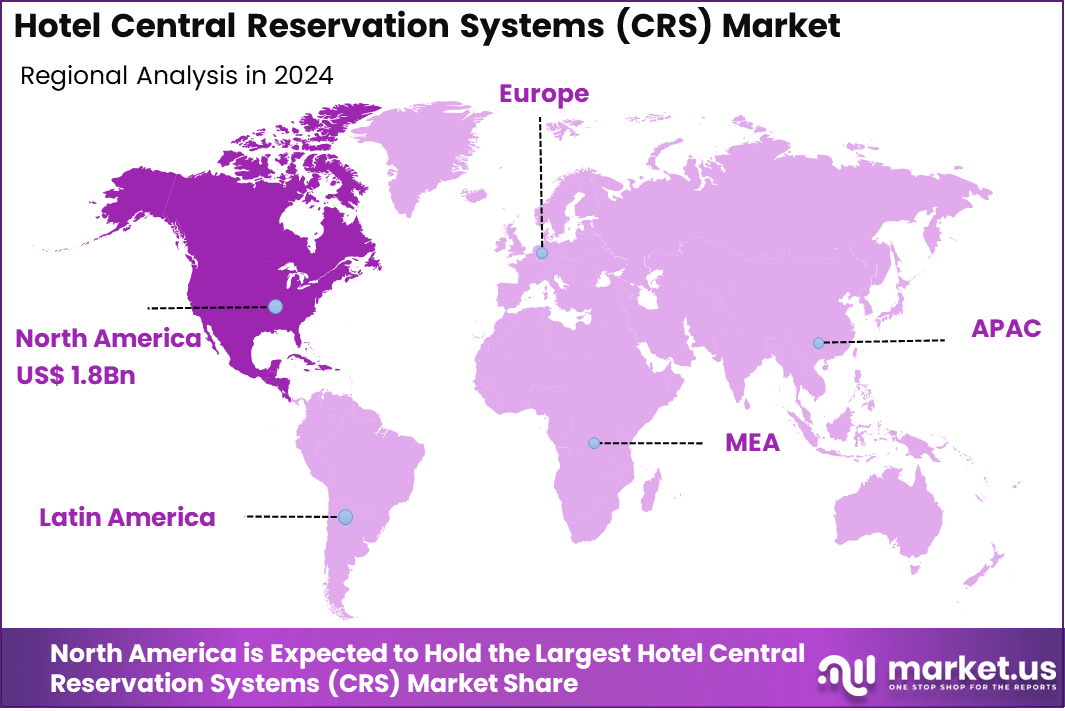
The Global Hotel Central Reservation Systems (CRS) Market size is expected to be worth around USD 11.13 billion by 2034, from USD 4.97 billion in 2024, growing at a CAGR of 8.4% during the forecast period from 2025 to 2034. In 2024, North America held a dominant market position, capturing more than a 36.2% share, holding USD 1.8 million in revenue.
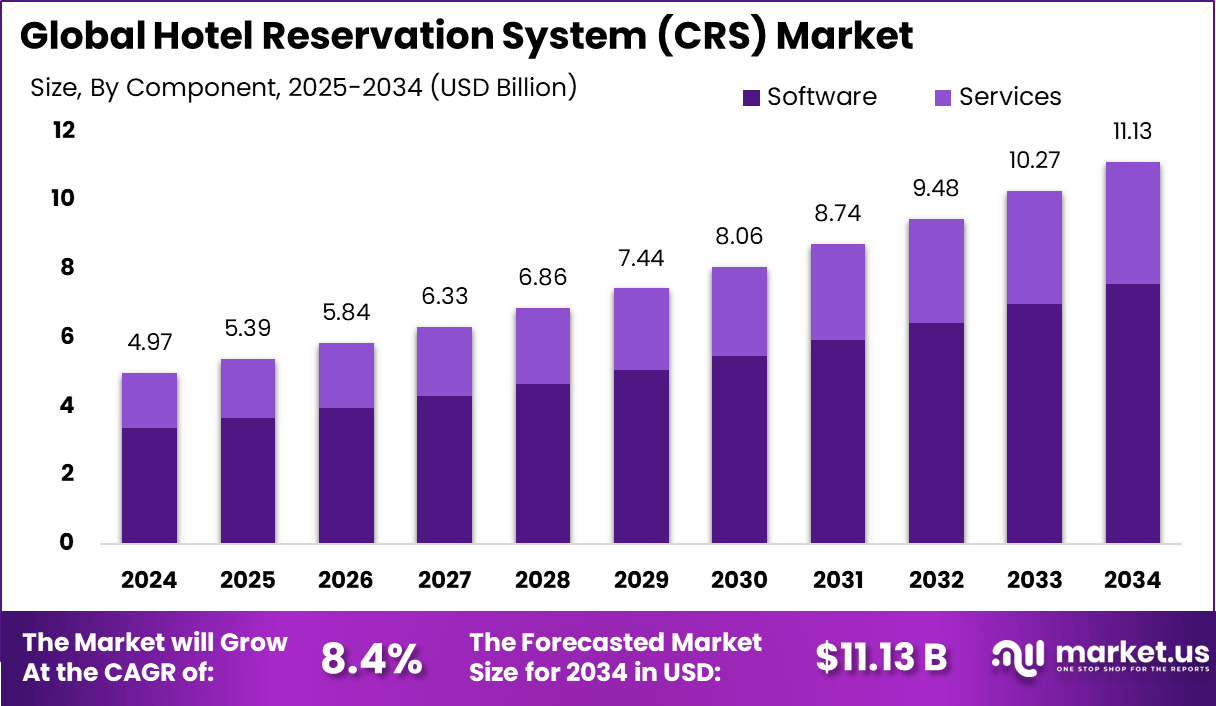
The Hotel Central Reservation Systems (CRS) market represents a critical infrastructure in the global hospitality ecosystem. These systems enable hotels to manage room inventory, rates, and bookings centrally across multiple channels, including direct websites, OTAs, and GDS platforms. The shift from traditional booking tools to integrated, real-time CRS platforms is being driven by the demand for operational efficiency and consistent guest experience.
The growth of the CRS market can be attributed to the rising digitalization of hotel operations. As more bookings occur online, hotels need robust systems that provide instant room visibility and pricing updates across all platforms. A key factor includes the increase in multichannel distribution strategies. Hotels now rely on CRS to avoid overbooking, reduce double-booking errors, and align inventory with demand surges.
Scope and Forecast
| Segment | Leading Share | Market Driver |
|---|---|---|
| Component | Software: 68% | Need for automation, scalability, and integration |
| Deployment | Cloud-based: 63% | Flexibility, scalability, lower total cost of ownership |
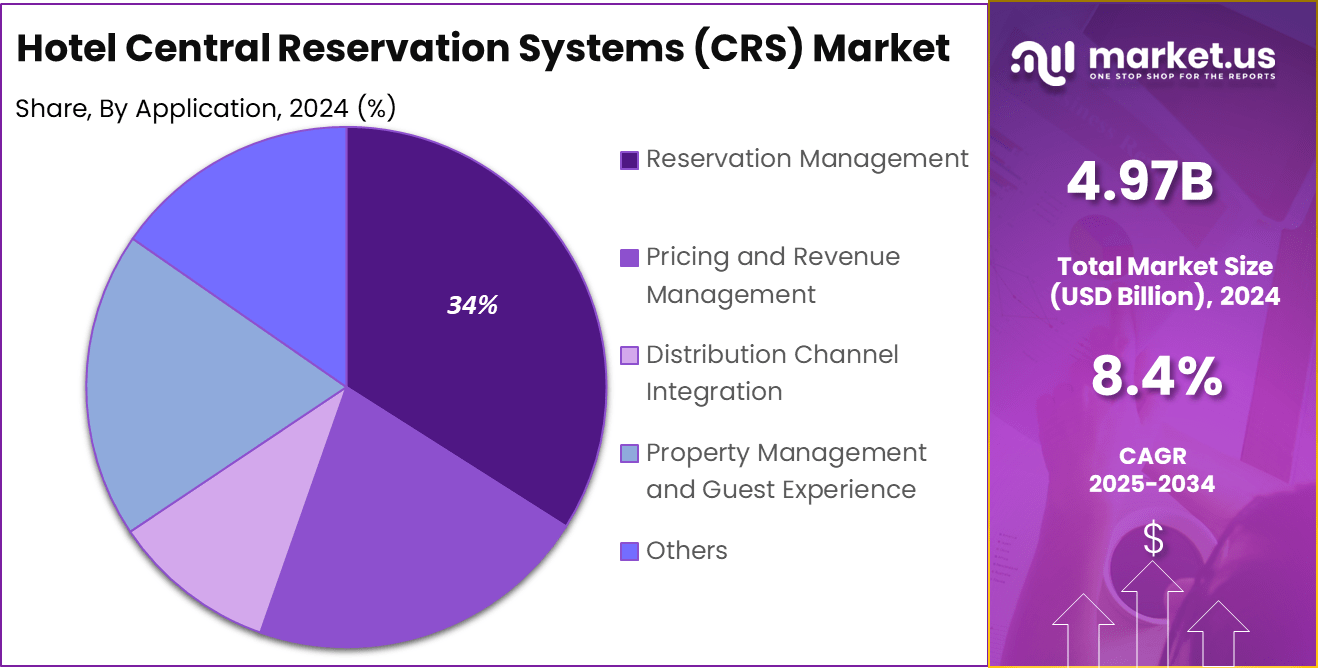
| Application | Reservation Mgmt: 34% | Focus on booking accuracy and inventory control |
| End-User | Luxury Hotels: 38% | Complex operations, demand for premier guest experience |
Key Market Segments
By Component
- Software
- Standalone CRS
- Integrated hotel property management system
- Services
- Consulting
- Implementation
- Support
By Deployment
- On Premise
- Cloud-Based
By Application
- Reservation Management
- Pricing and Revenue Management
- Distribution Channel Integration
- Property Management and Guest Experience
- Others
By End-User
- Luxury Hotels
- Resorts
- Others
Driving Factor
Growing preference for contactless booking and digital check-in/check-out.
In the post-pandemic era, both guests and hotel operators have prioritized safety, hygiene, and convenience, leading to the rapid adoption of contactless technologies. Hotel CRS platforms have evolved to support digital guest journeys by enabling mobile-based reservations, automated check-ins, room selection, and even digital key access without requiring physical interaction with front desk staff.
According to Oracle’s Hospitality Industry survey, 71% of travelers prefer hotels that offer self-service technology, and over 60% want contactless check-in/check-out options. Major hotel chains like Marriott International and Hilton have invested heavily in mobile applications integrated with their CRS and PMS systems to allow guests to manage their stay entirely through smartphones.
For example, Hilton’s Digital Key service, available in over 80% of its hotels globally, allows users to skip the front desk and access rooms using their mobile phones. CRS platforms are increasingly incorporating these capabilities to enhance the guest experience and streamline operations.
Restraining Factor
High initial implementation and training costs, especially for small and independent hotels.
While CRS platforms offer long-term efficiency and improved guest experience, the upfront investment in software licensing, customization, integration with existing property management systems (PMS), and employee training can be substantial. These costs pose a barrier to entry for smaller properties operating on limited budgets.
For instance, setting up a full-featured CRS with cloud integration, channel management, and mobile support can cost anywhere from $1,500 per year to upwards of $10,000+ per year, depending on the vendor, the number of properties and rooms, and the specific features included.
In addition to licensing fees, hoteliers must invest in IT infrastructure upgrades and ongoing staff training to ensure optimal usage of the system. A survey by Software Advice found that 35% of independent hotels cited affordability as the primary reason for not adopting advanced hotel management technologies.
Many small hoteliers also struggle with the complexity of integrating CRS with legacy systems or lack the in-house expertise to manage digital platforms, making them reliant on third-party consultants or service providers, adding to the cost. As a result, these hotels often delay or forego CRS implementation, limiting the overall market penetration of these solutions in the budget and mid-tier segments.
Growth Opportunity
Opportunities to offer mobile-optimized CRS platforms for smartphone-based guest bookings.
With mobile becoming the dominant channel for travel planning and hotel reservations, CRS vendors that offer mobile-friendly interfaces and native app integration are well-positioned to gain market share. According to latest research, over 60% of hotel bookings in 2023 were made via mobile devices, and this trend is expected to rise as digital-native travelers prioritize convenience and instant access.
Mobile-optimized CRS platforms enable guests to search for rooms, view real-time availability, compare prices, and complete bookings directly from their smartphones, often in a matter of seconds. This capability not only enhances the user experience but also improves direct booking rates, reducing a hotel’s dependency on commission-based third-party booking channels.
For example, Marriott Bonvoy and Hilton Honors apps, both integrated with CRS systems, allow guests to make reservations, check in/check out, and manage loyalty points seamlessly via mobile. Smaller hotels and boutique properties also benefit from mobile CRS platforms that support quick integration with payment gateways, push notifications, and multilingual support.
As mobile penetration deepens in emerging markets like India, Southeast Asia, and Latin America, vendors that prioritize smartphone-first CRS solutions will unlock significant growth and customer loyalty opportunities.
Latest Trends
Rising use of AI chatbots and virtual assistants for guest communication and booking
Hotels are increasingly integrating AI-powered tools within their CRS platforms to automate and personalize interactions across the guest journey from booking inquiries and confirmations to in-stay support and post-checkout feedback. These tools enhance operational efficiency while providing guests with 24/7 instant assistance.
According to a report by Oracle Hospitality, 77% of hotel executives believe AI chatbots improve customer service, and nearly 50% of travelers are comfortable interacting with bots for basic queries and bookings. AI assistants like “Connie” by Hilton, powered by IBM Watson, and Edwardian Hotels’ “Edward”, offer real-time responses to guest requests, FAQs, and even reservation modifications.
Smaller hotels are also adopting third-party chatbot solutions that integrate directly with CRS and PMS systems, enabling seamless room availability checks, upselling services, and secure payment processing through messaging apps like WhatsApp, Facebook Messenger, and hotel websites.
Key Player Analysis
The Hotel Central Reservation Systems (CRS) Market is moderately consolidated, with a few major players accounting for a significant share of the overall market. Leading companies such as Sabre Hospitality, Oracle Hospitality (OPERA PMS), Amadeus, and Hotelogix collectively hold over 50% of the global market share.
Among them, Sabre’s SynXis CRS is one of the most widely adopted platforms, especially among large hotel chains, managing approximately 42% of global chain hotel reservations. Amadeus, another key player, powers CRS solutions for over 35,000 hotels worldwide, offering robust integrations with GDS, booking engines, and loyalty systems.
Oracle’s OPERA is renowned for its enterprise-level CRS-PMS integration, particularly in luxury and resort segments. Hotelogix, eZee FrontDesk, and roomMaster dominate the small-to-medium hotel segment by offering cost-effective cloud-based CRS solutions.
Other significant players include MSI CloudPM, Rezlynx PMS, Vertical Booking, SHR, GuestCentric, D-EDGE, and The Access Group, all of which focus on providing tailored, scalable solutions for varying hotel sizes and types.
Top Key Players
- Hospitality Solutions (Sabre Hospitality)
- OPERA Property Management System (Oracle)
- eZee Front desk
- roommaster
- Hotelogix PMS
- MSI CloudPM
- Rezlynx PMS
- CenDyn
- Vertical booking
- Amadeus
- eRevMax
- SHR
- GuestCentric
- D-EDGE
- The Access Group
- Other Key Players
Recent Developments
- In June 2025, Omni Hotels & Resorts adopted OPERA Cloud Central, with plans to integrate OPERA PMS and Simphony POS across its 50+ North American properties to unify reservations, CRM, and distribution.
- In April 2025, Sabre Hospitality, a division of Sabre Corporation, has announced the renewal of its strategic agreement with Kerzner International. Under this renewed partnership, Kerzner will enhance its distribution strategy by leveraging Sabre’s SynXis platform, including the SynXis Booking Engine, to offer ancillaries alongside room reservations.
- In February 2025, Absolute Hotel Services began rolling out OPERA Cloud and Simphony POS across 23 properties (~3,600 rooms), aiming for full global deployment by early 2026.
- In June 2024, Red Sea Global (Saudi Arabia) deployed OPERA Cloud Central across its luxury resorts to support distribution, loyalty, and guest engagement with unified operations.

- 蓝茶市场(2026—2031)
0评论2026-09-15

- 泡沫材料市场(2026—2031)
0评论2026-09-15

- 重铬酸钠市场(2026—2031)
0评论2026-09-15

- 家族性淀粉样多发性神经病(FAP)市场(2026—2031)
0评论2026-09-15

- 次氯酸钙市场(2026—2031)
0评论2026-09-15

- 海上储能市场(2026—2031)
0评论2026-09-12

- 混凝土市场(2026—2031)
0评论2026-09-12

- 矫形器械市场(2026—2031)
0评论2026-09-12

- 木质素基树脂市场(2026—2031)
0评论2026-09-12

- 聚碳酸酯二元醇市场(2026—2031)
0评论2026-09-12